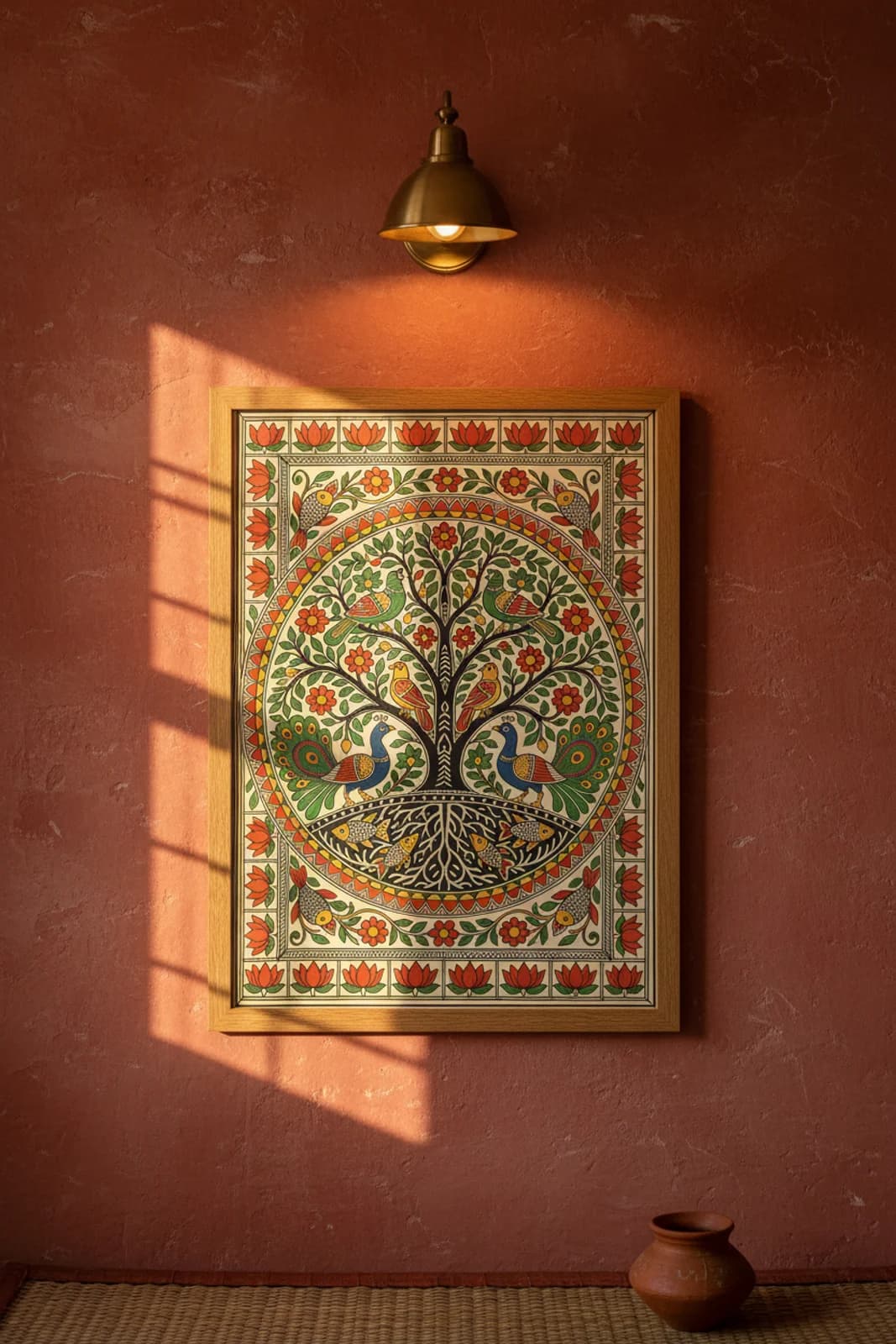
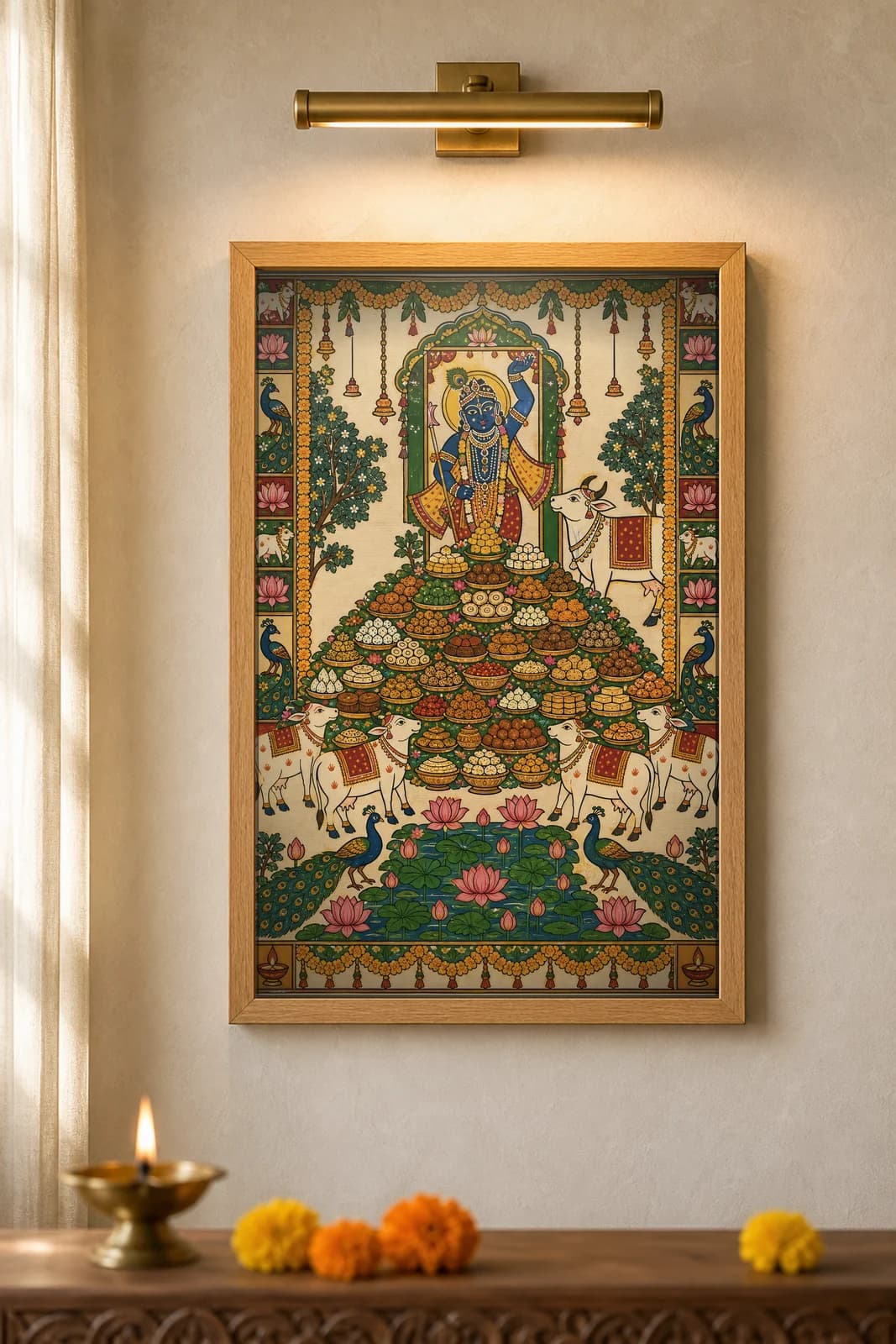
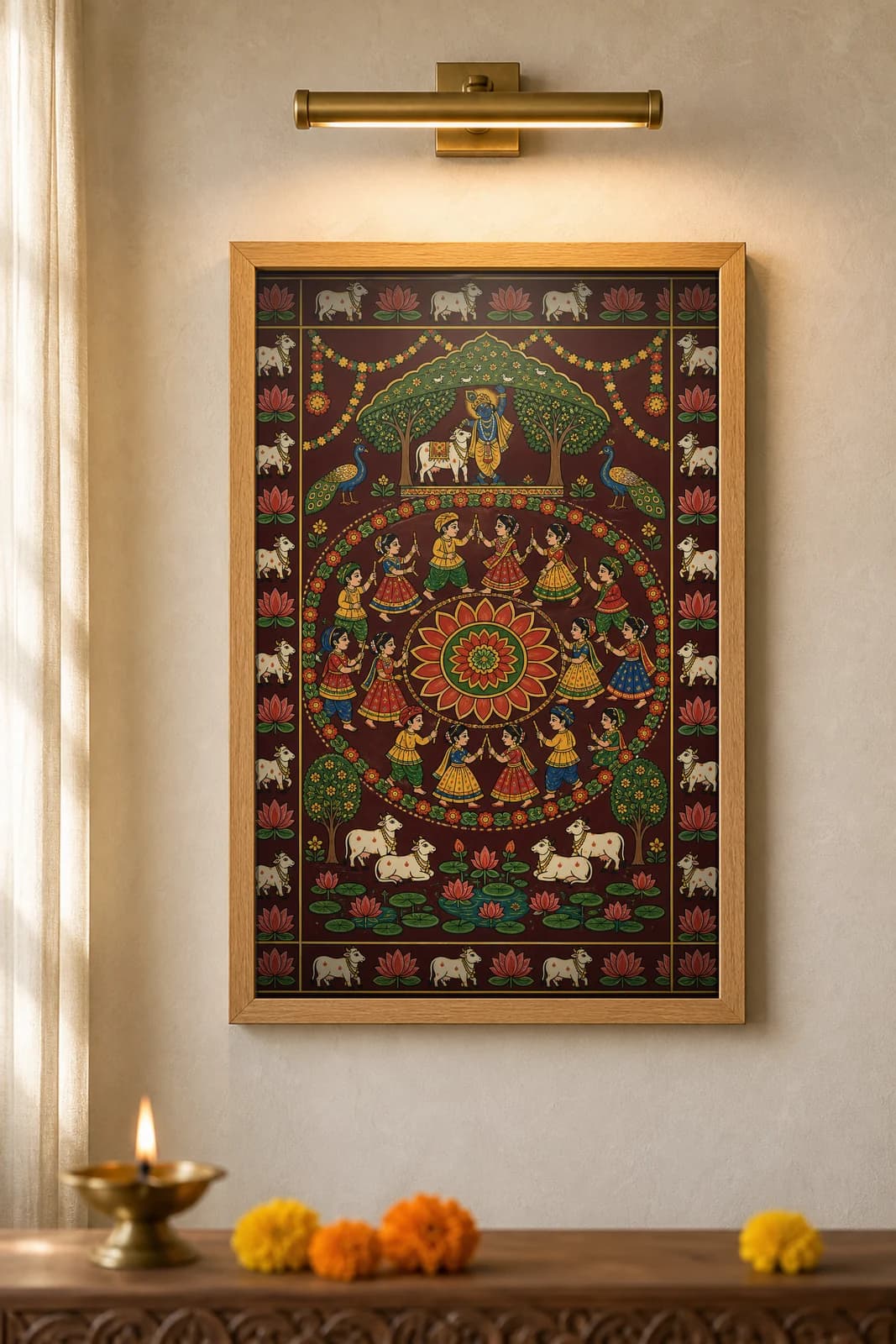
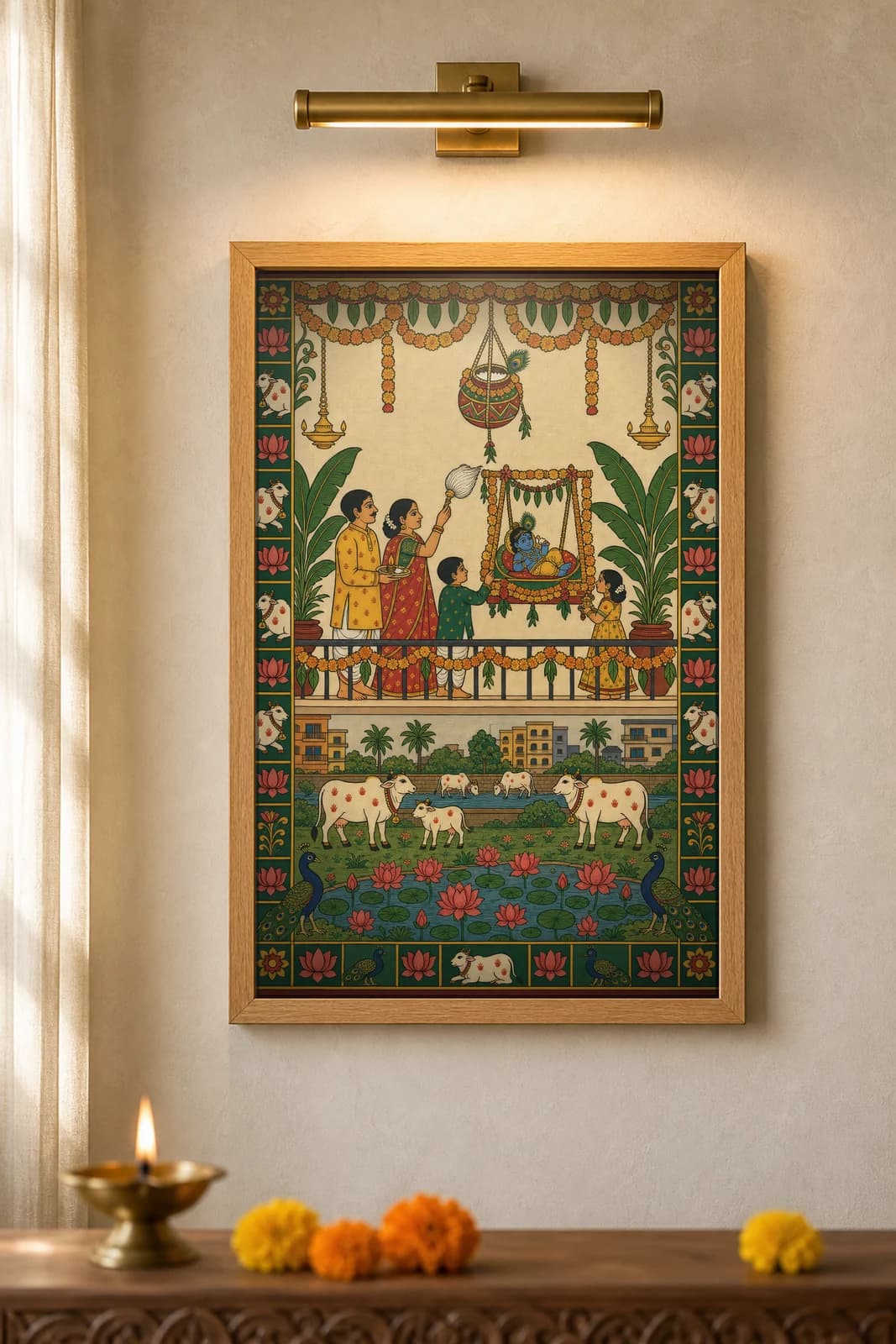
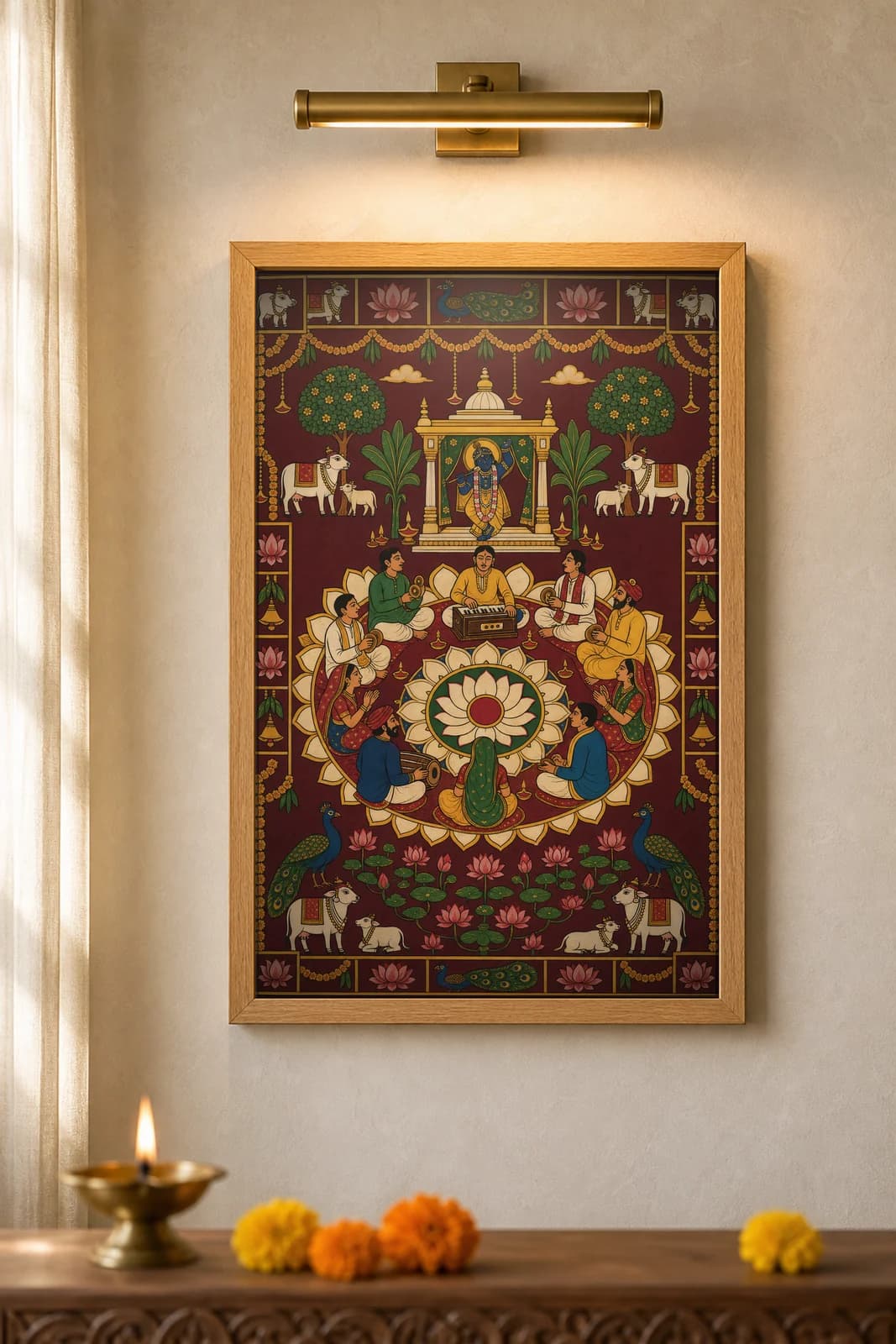
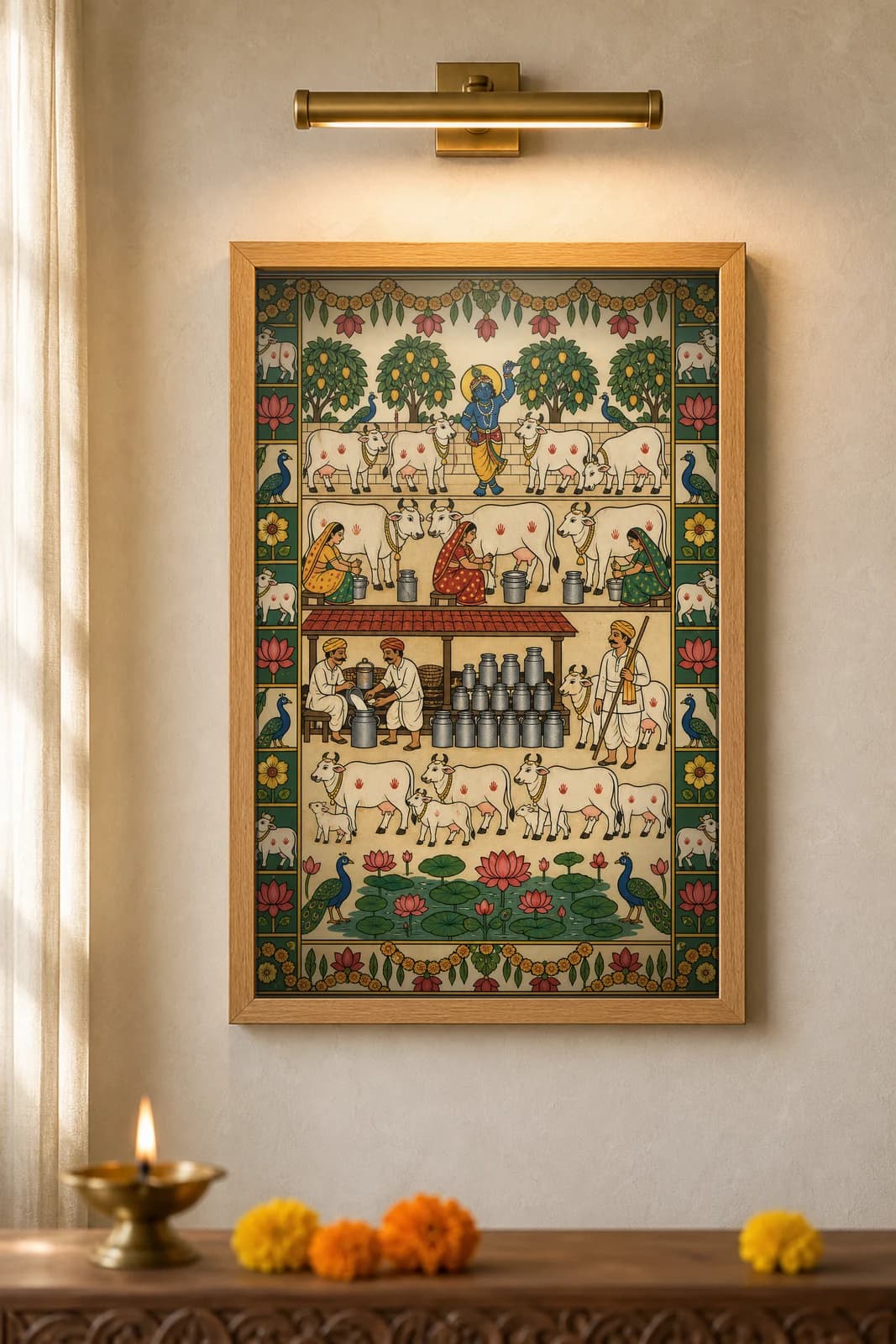
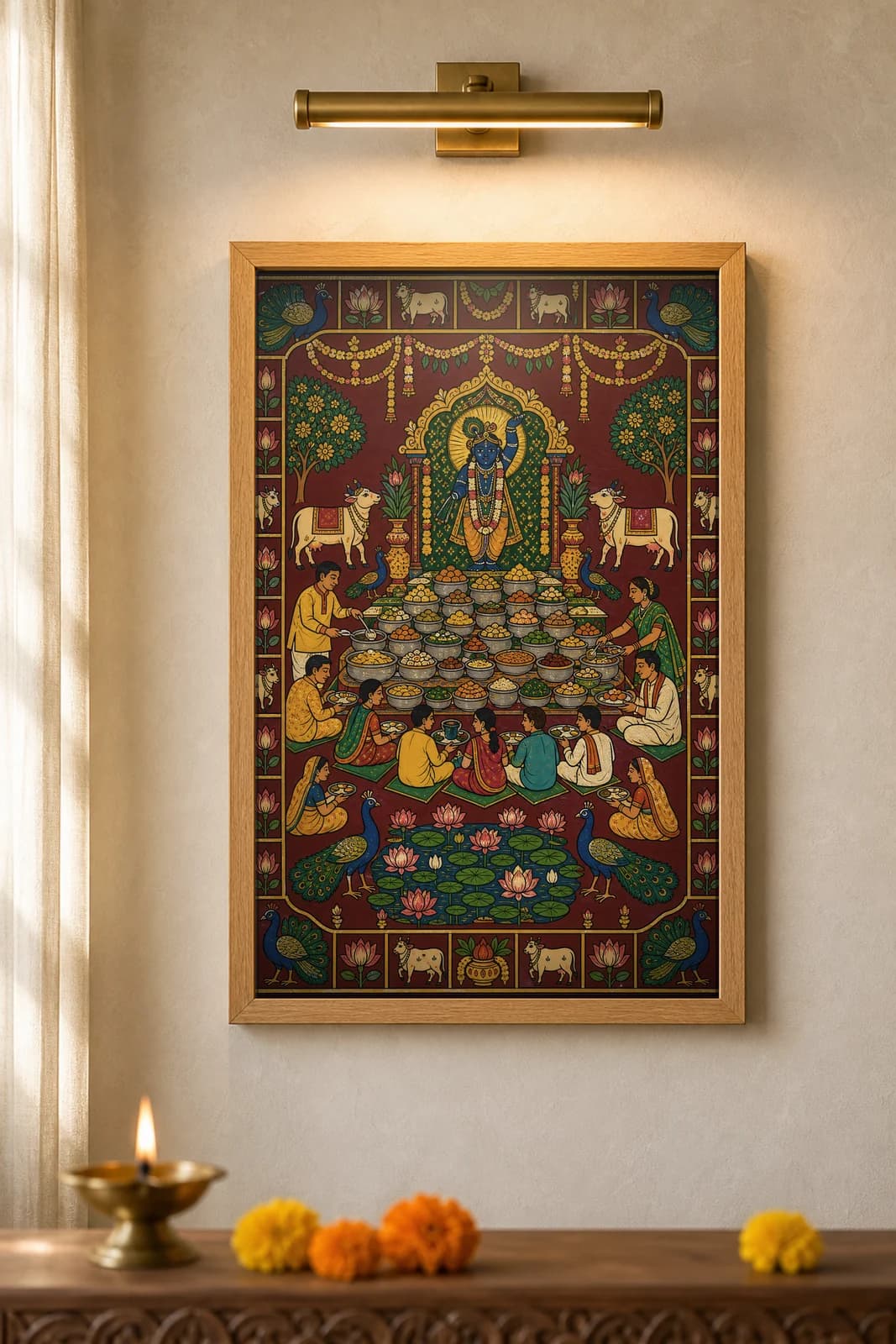
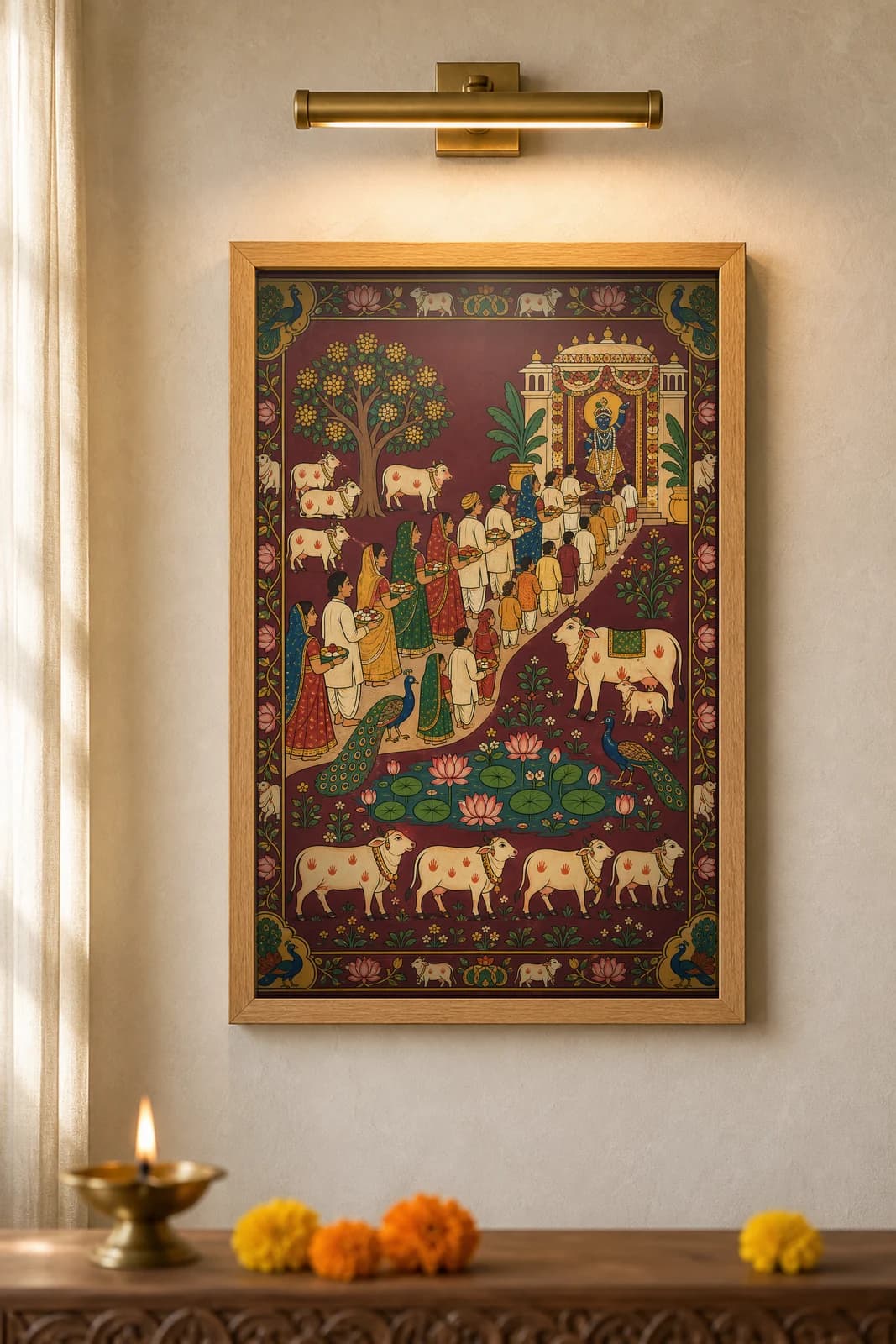
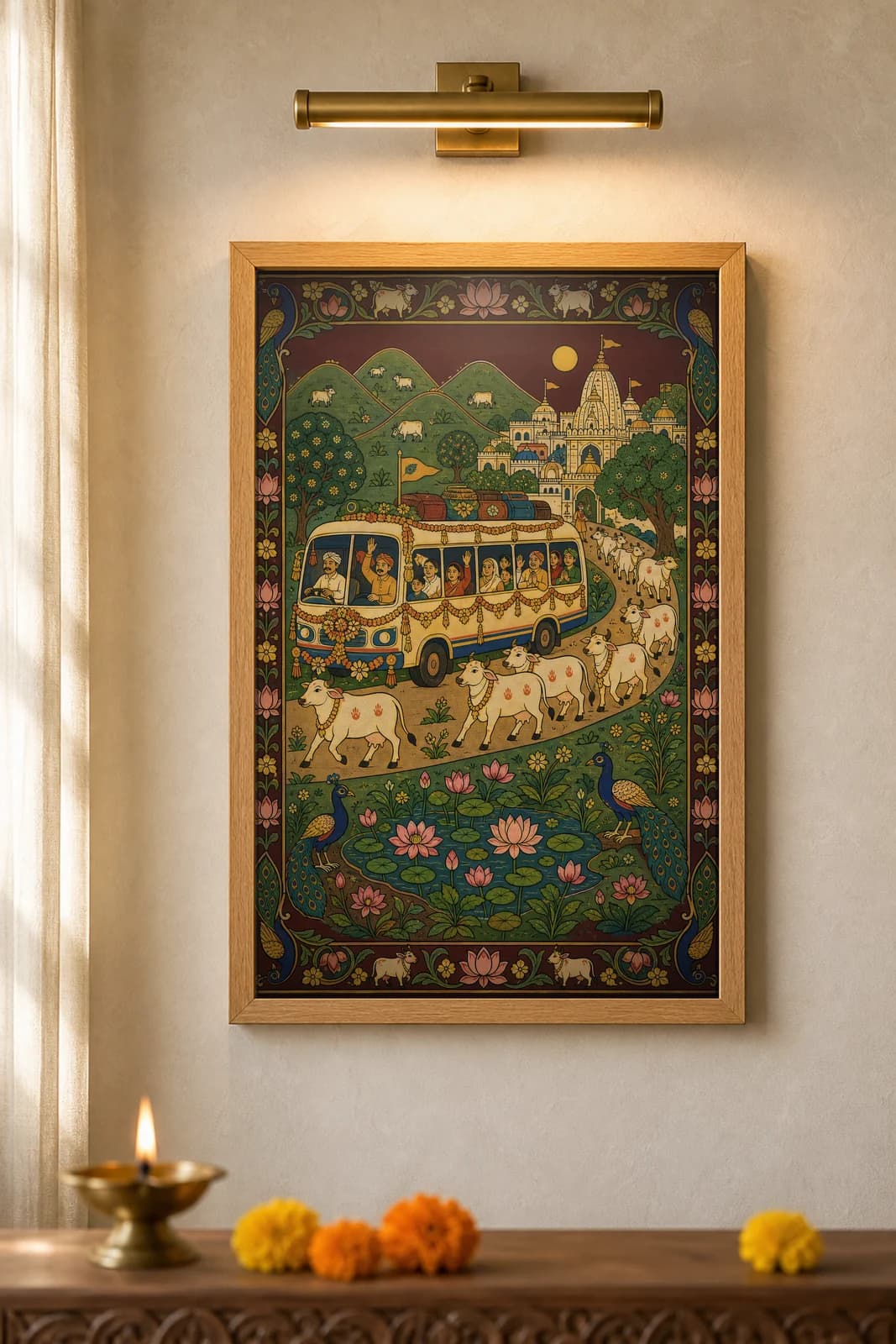
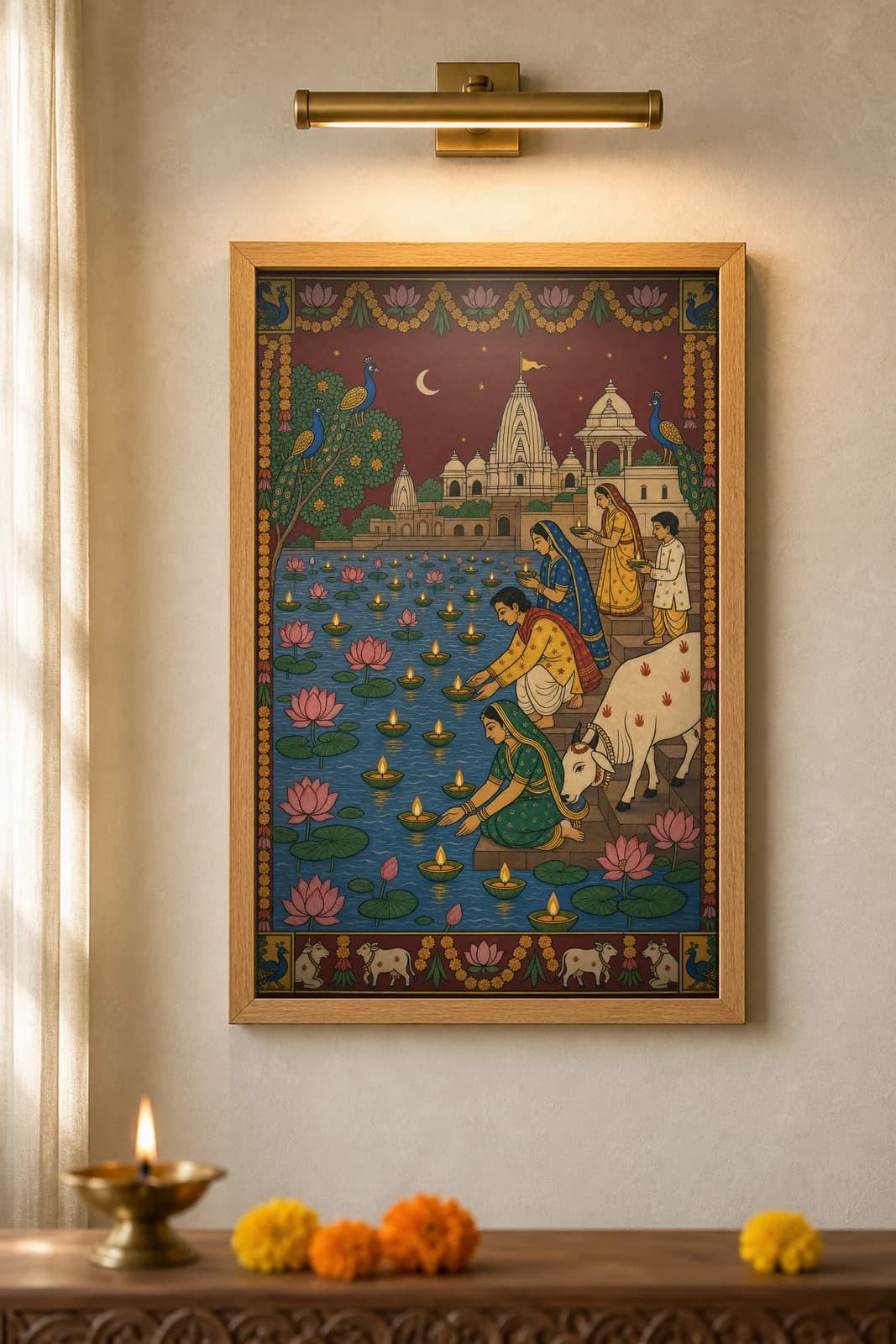
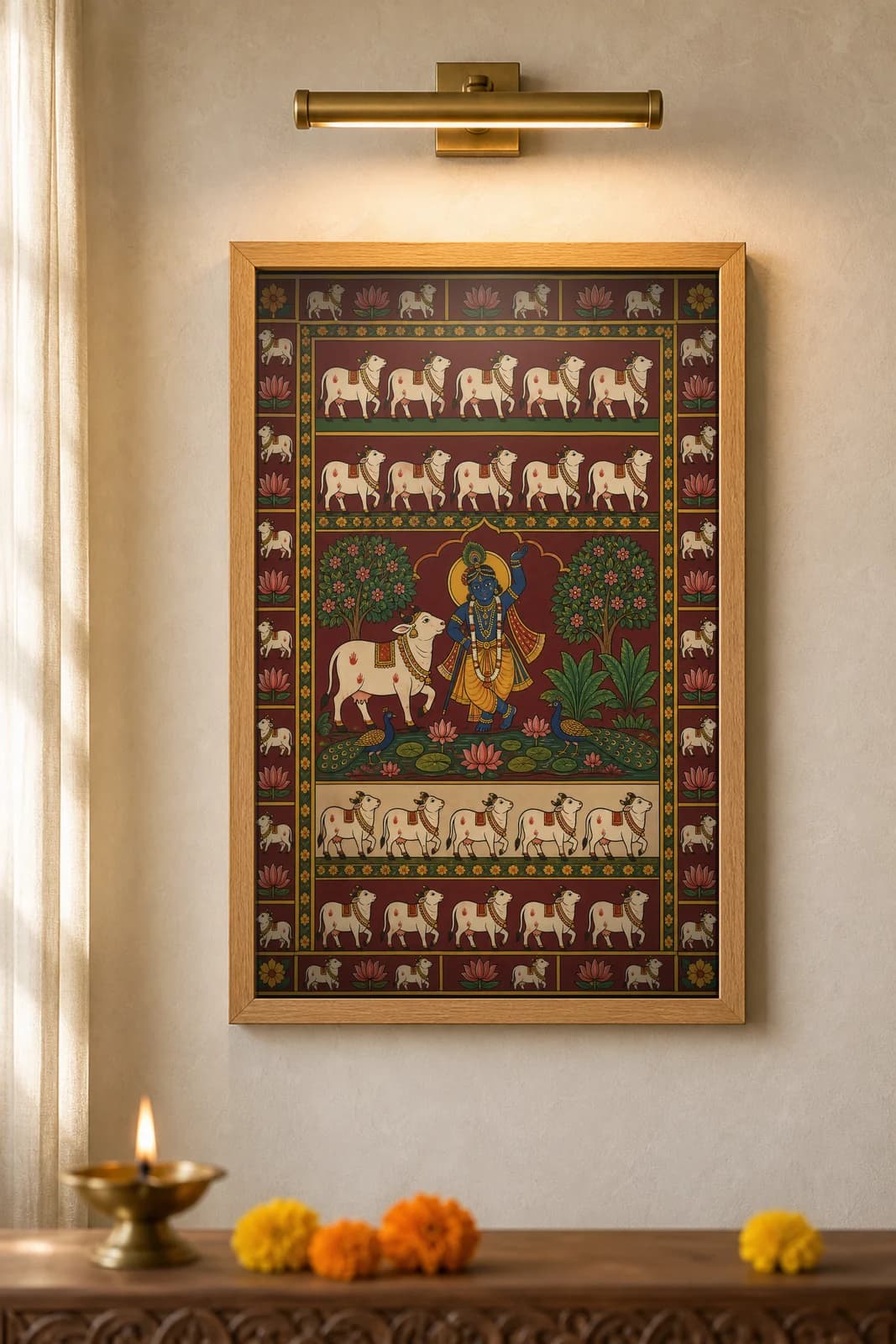
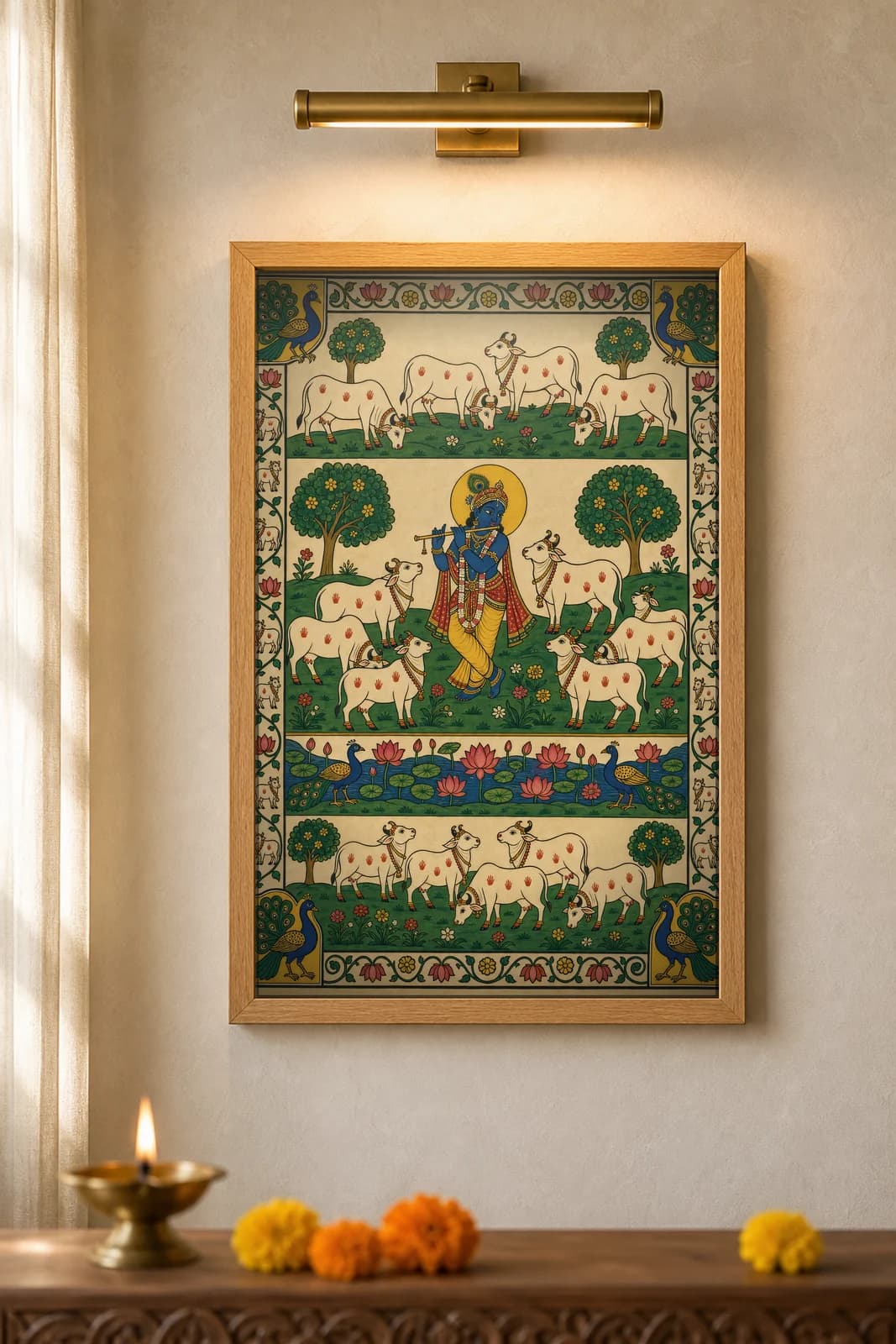
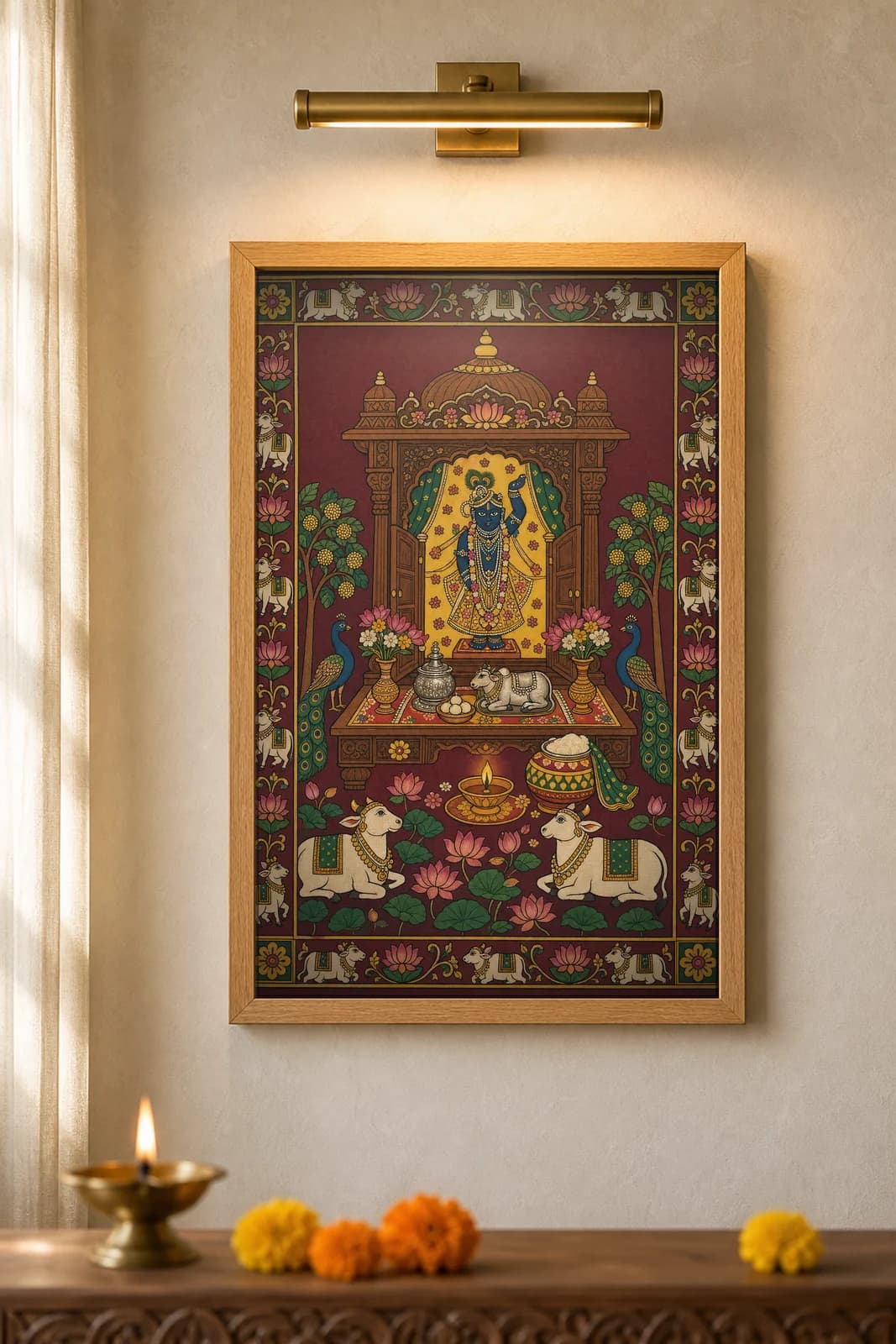
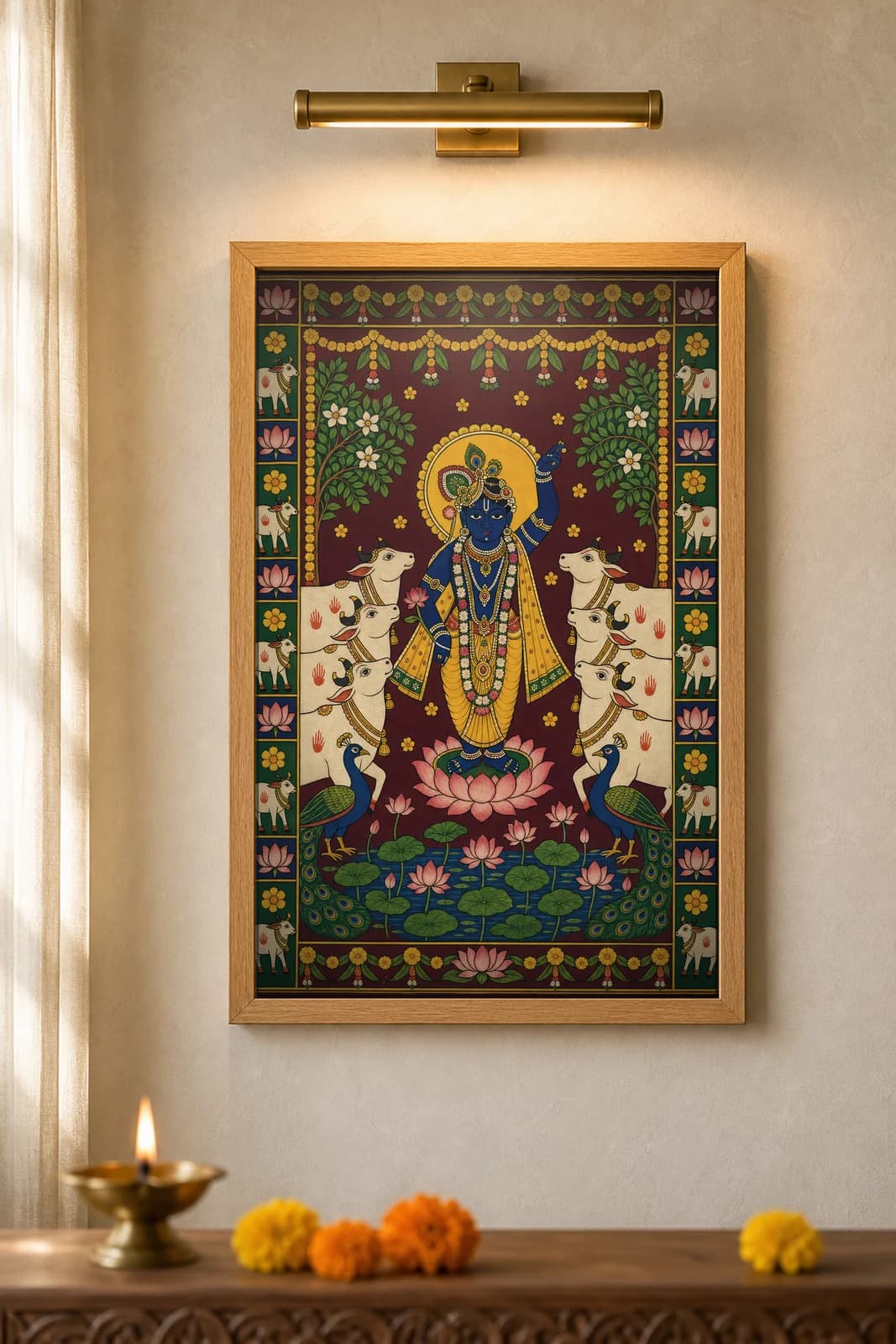
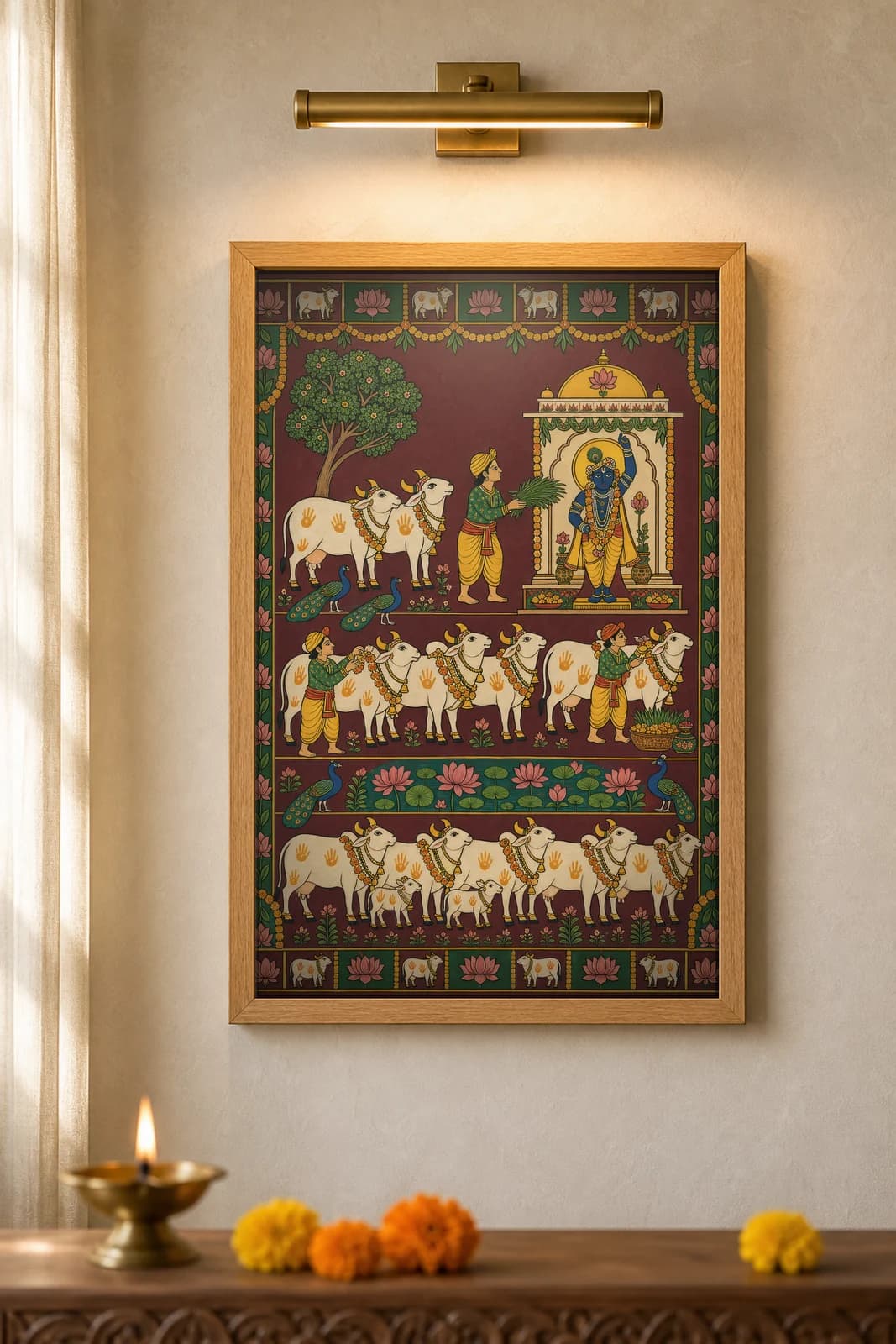
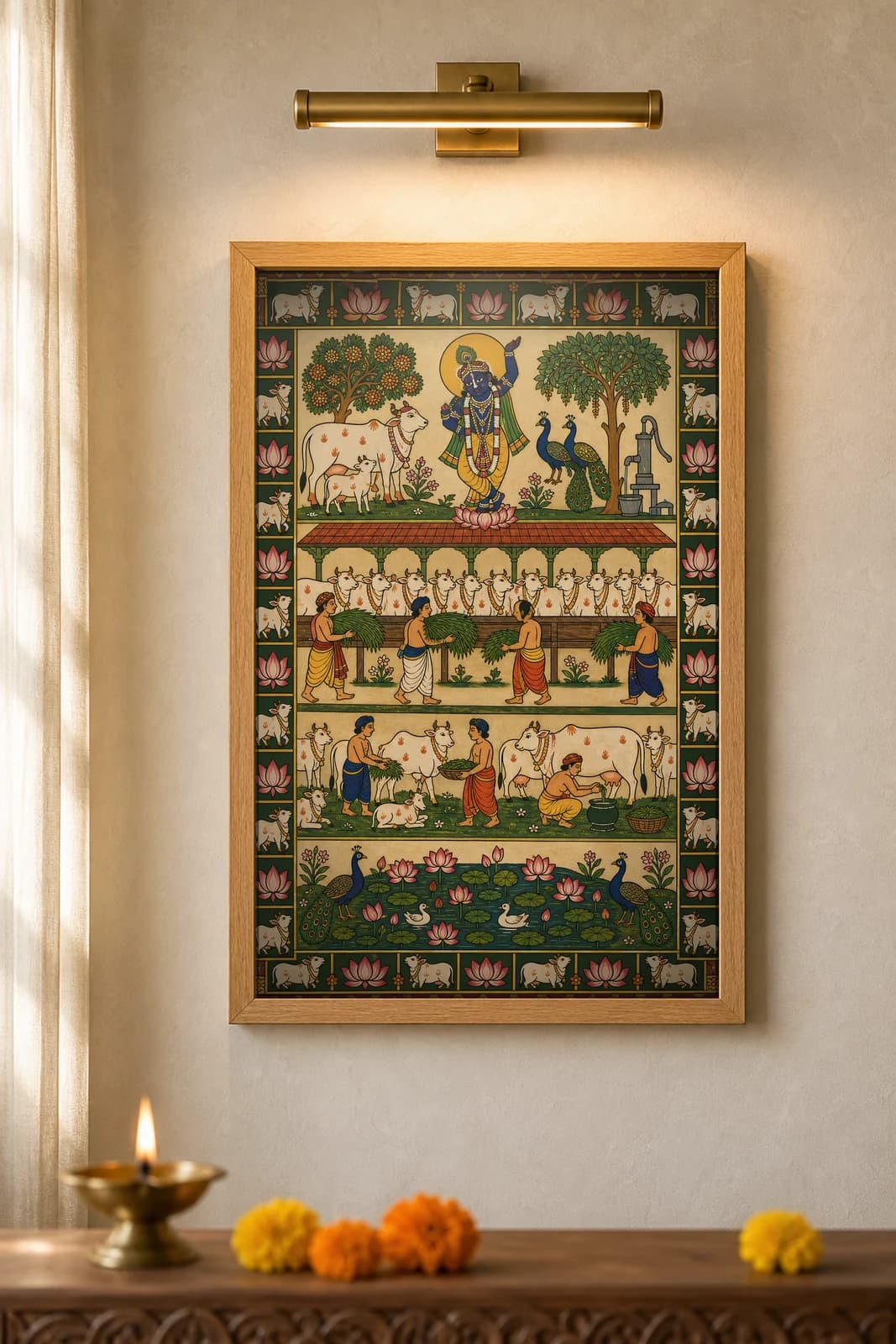
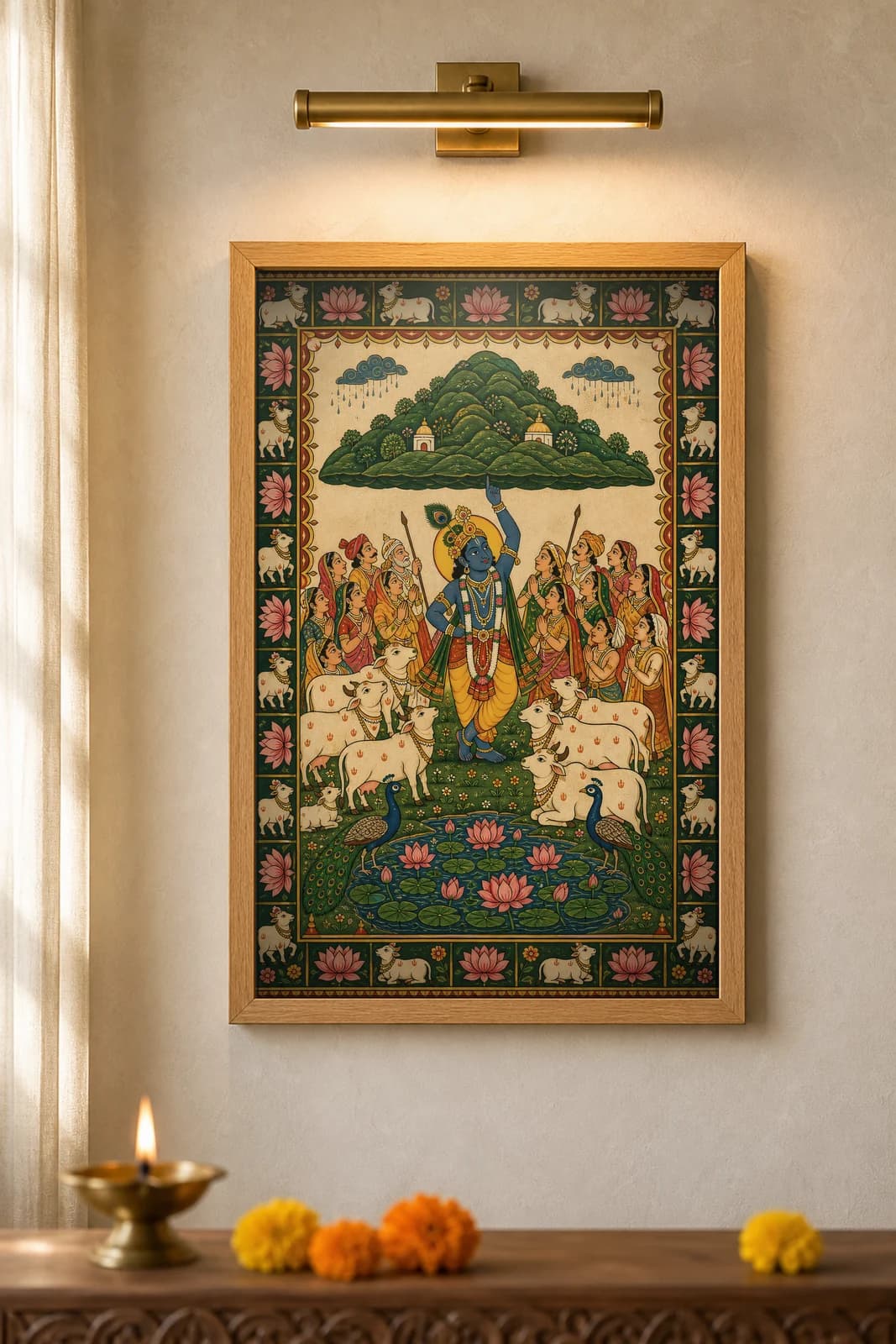
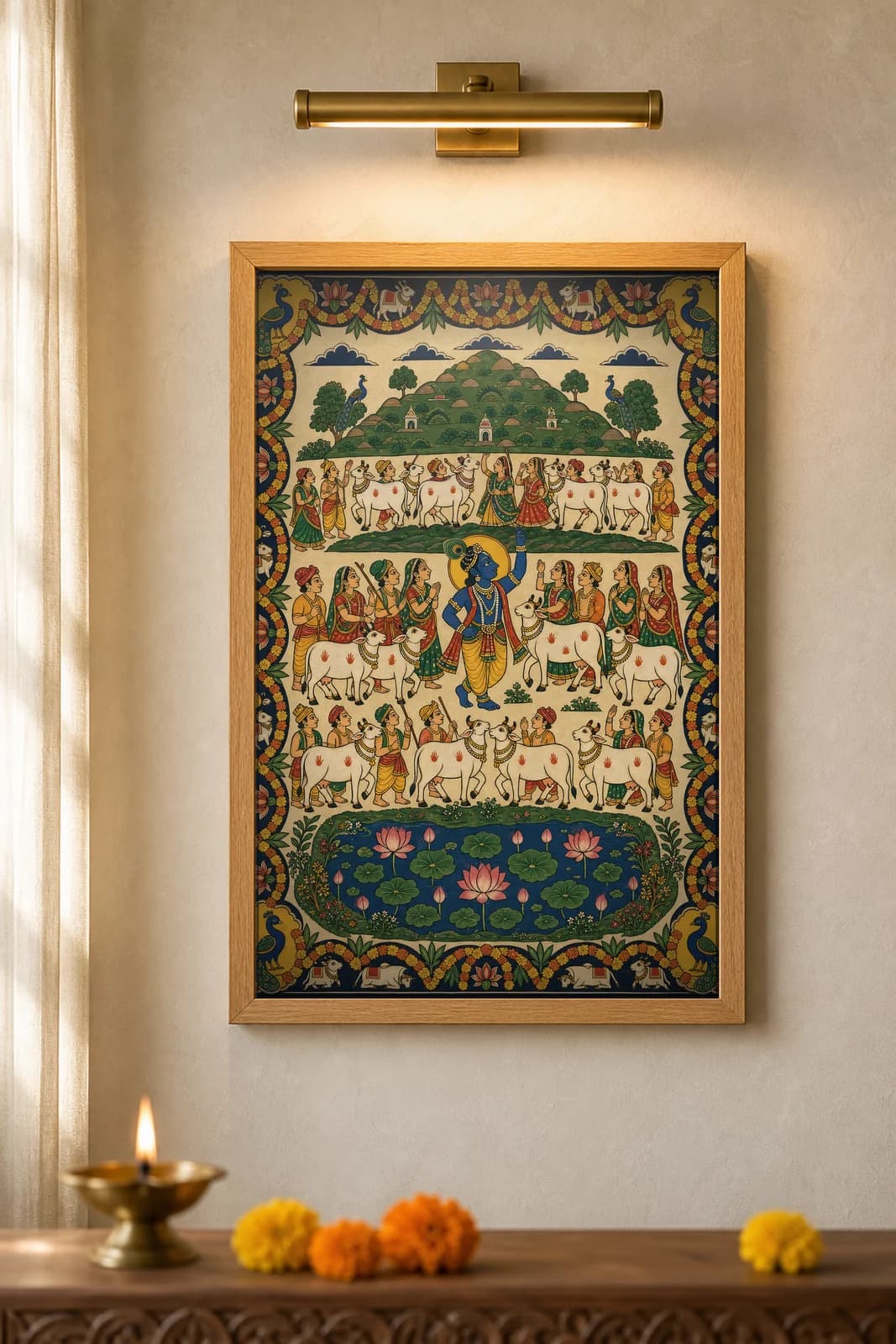
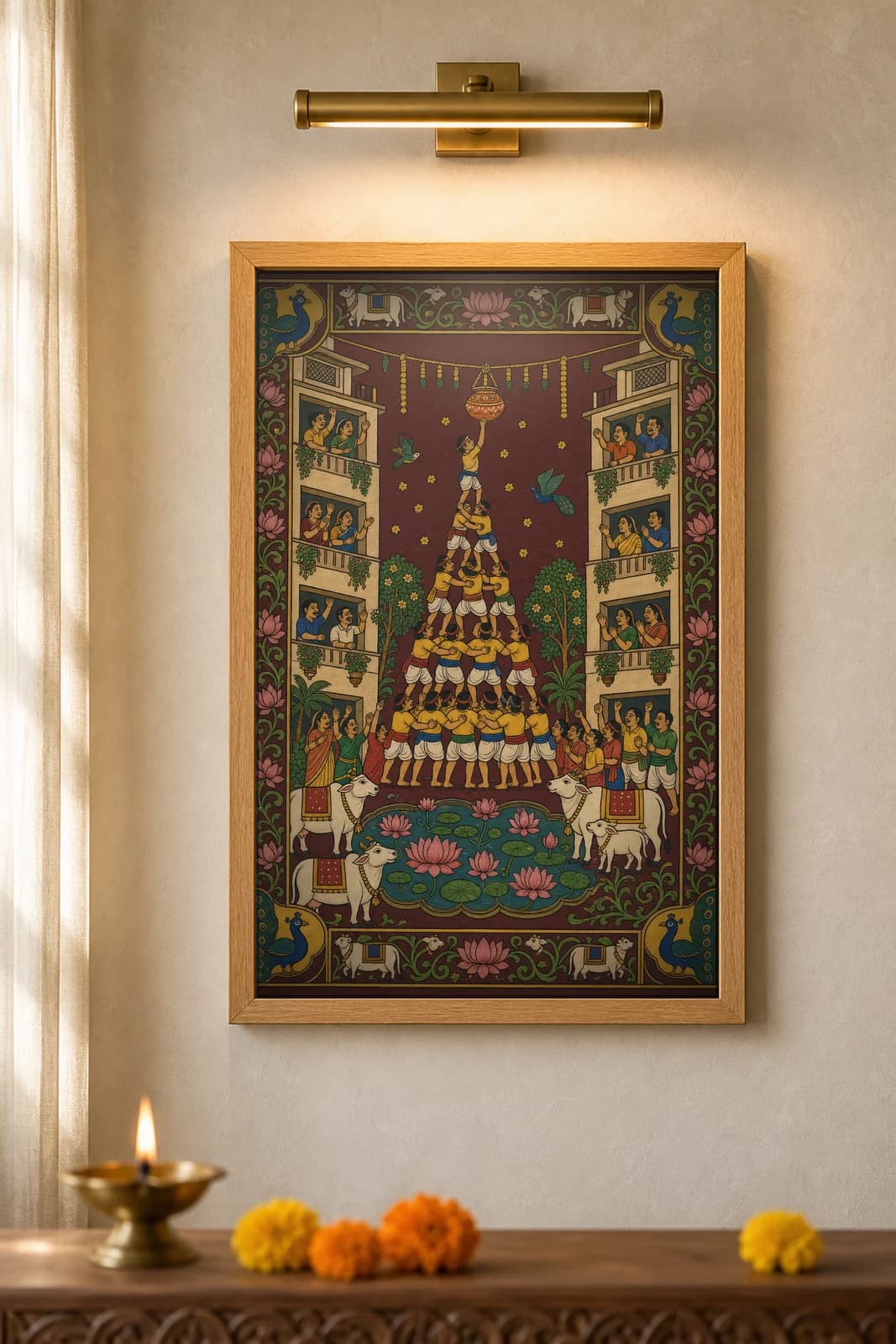
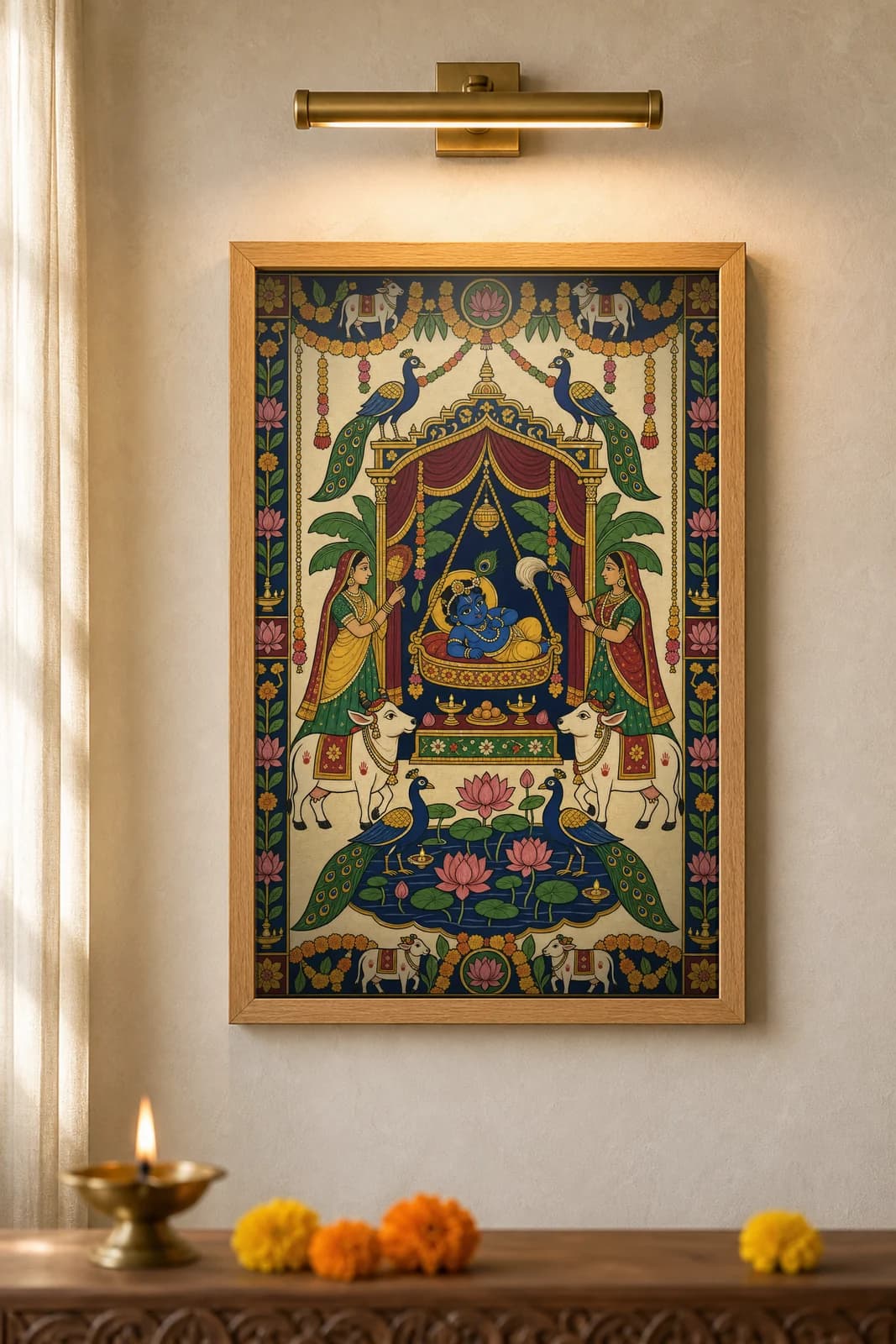
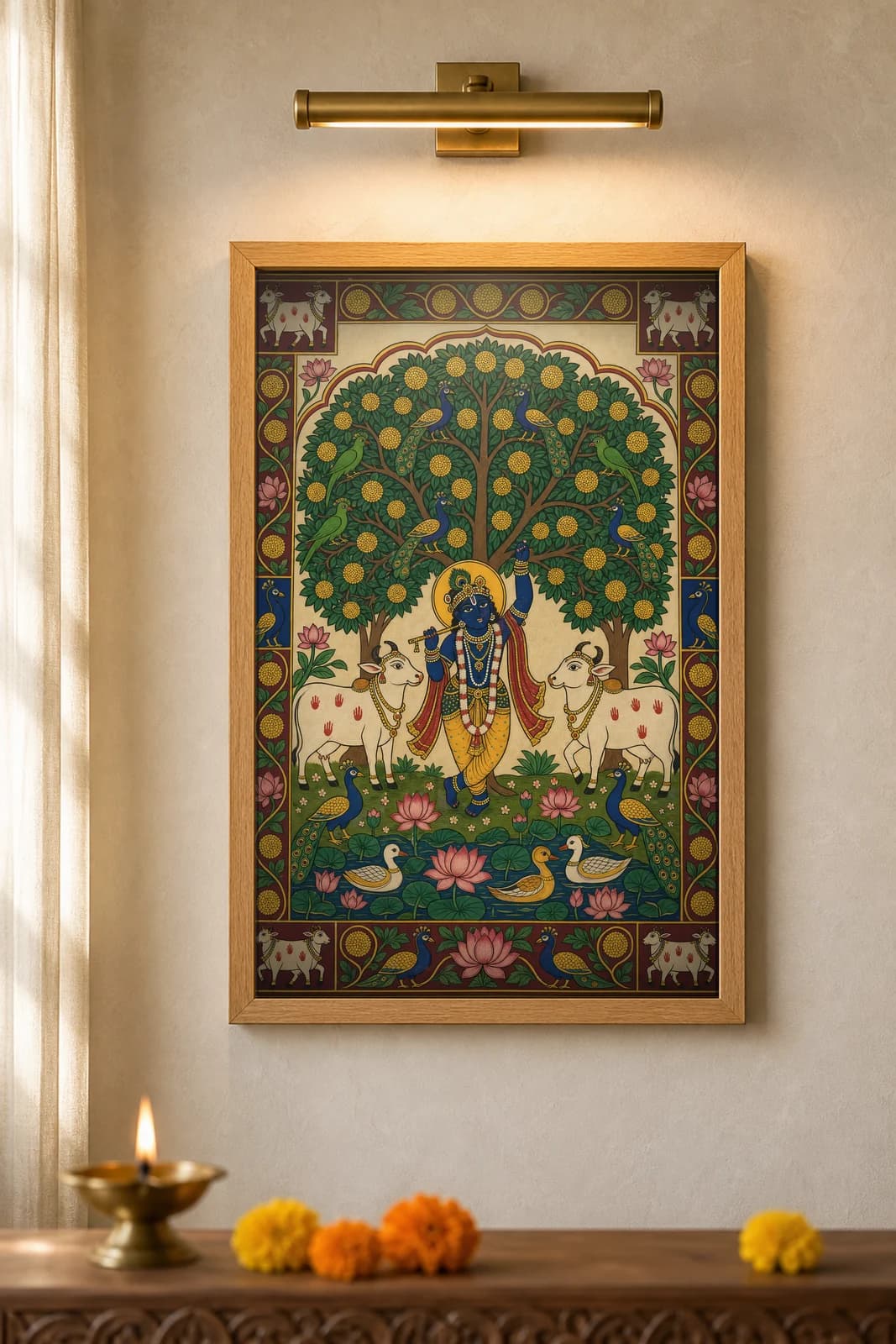
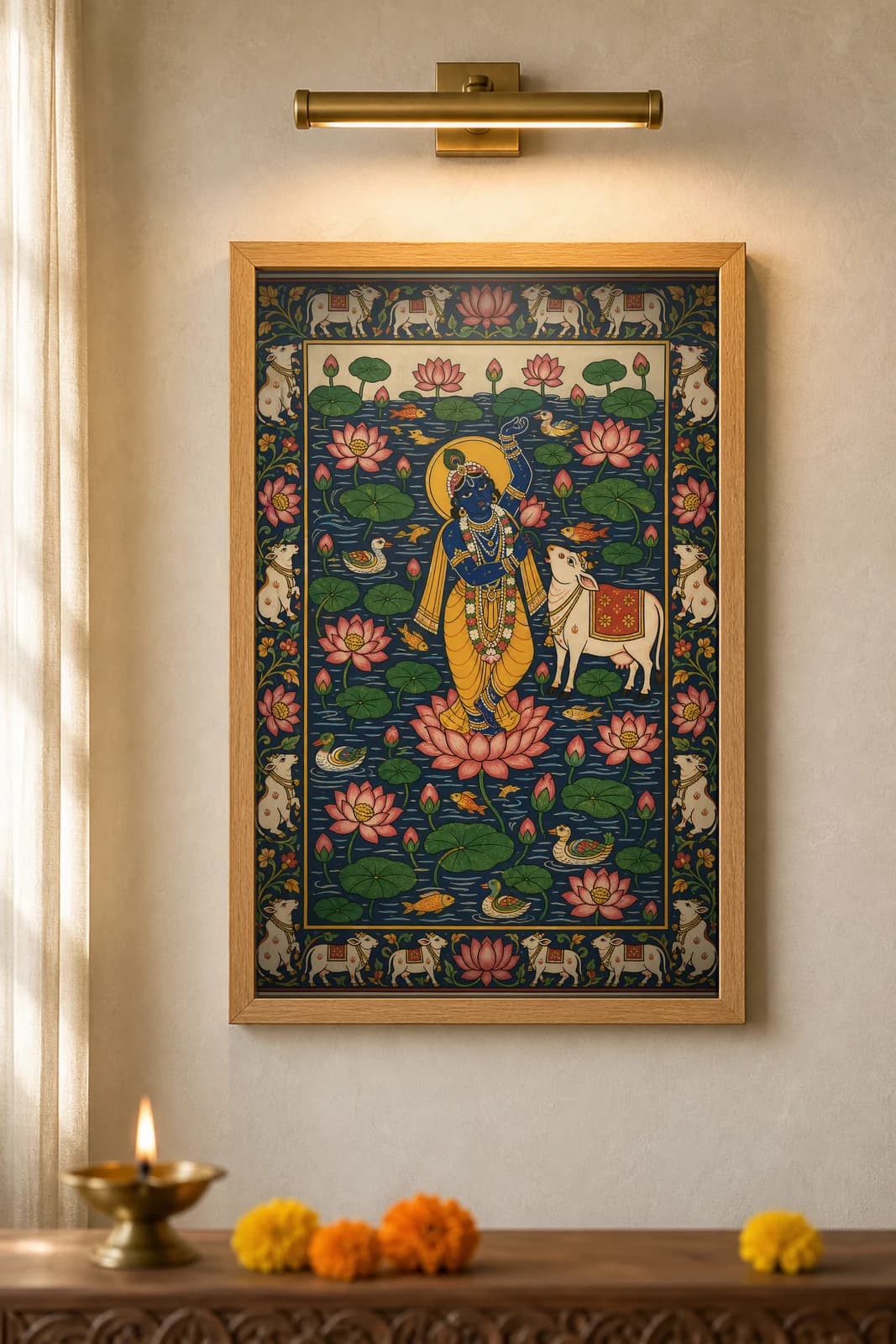
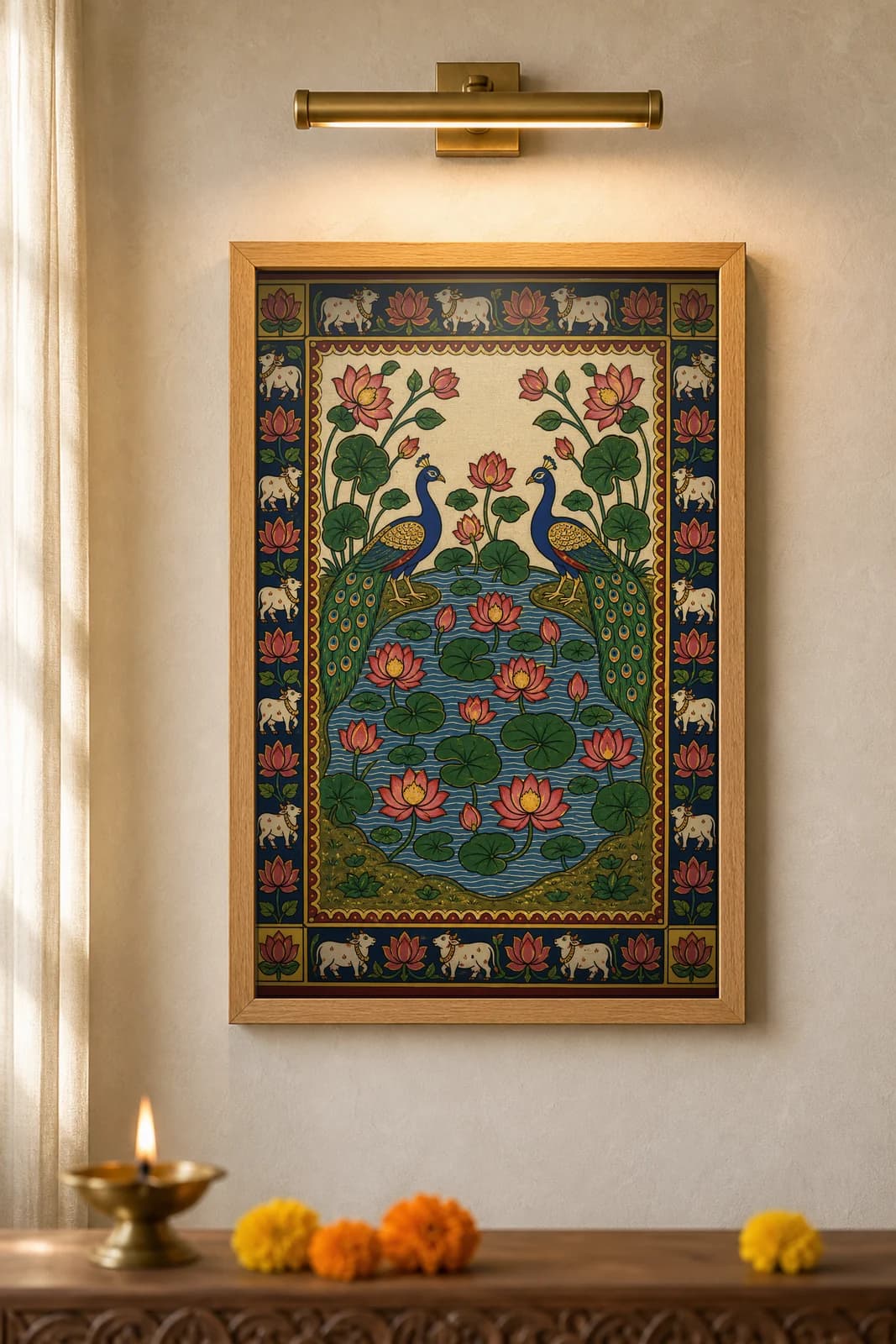
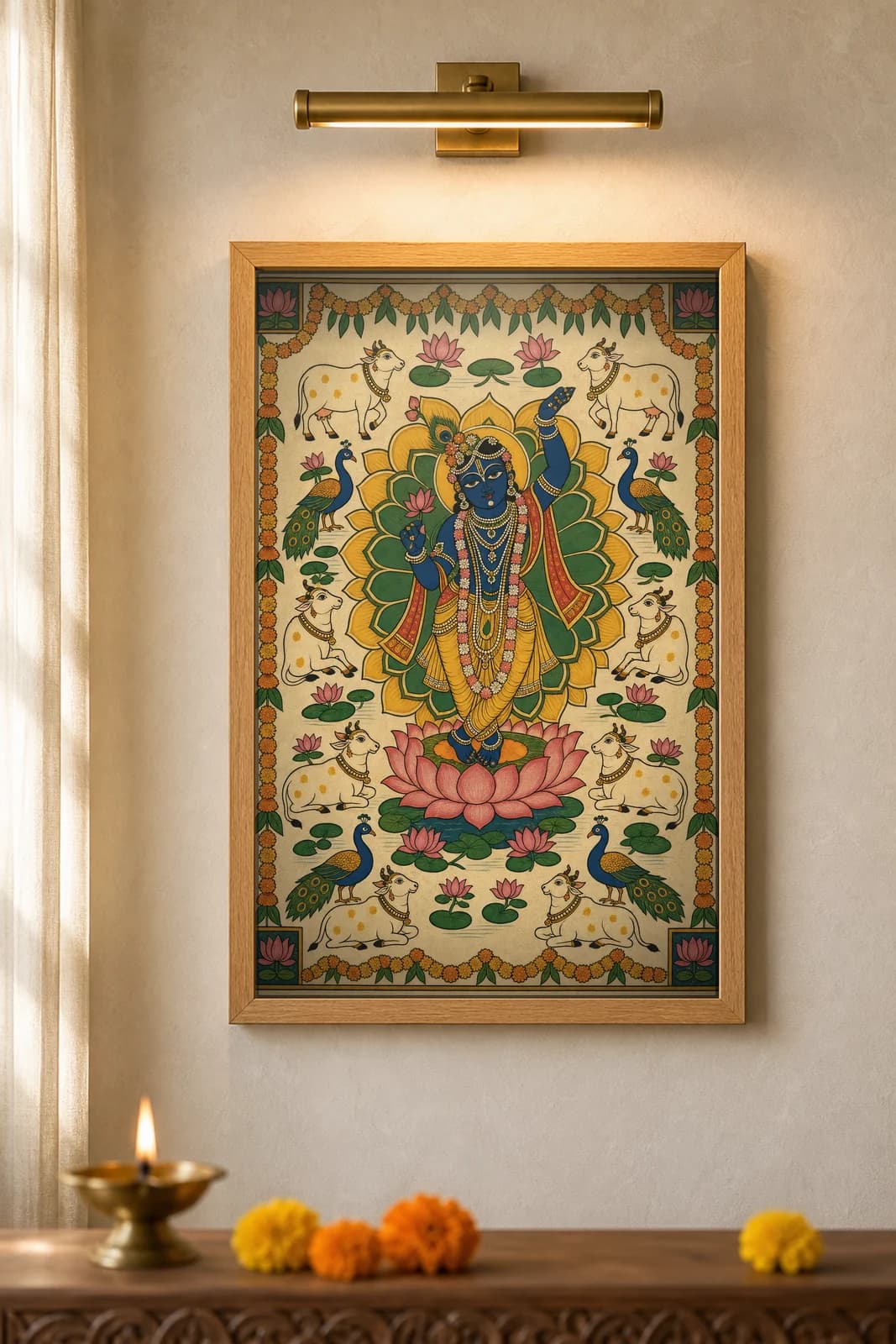
Bilva Green — 47 museum-grade prints in this palette. Kalpavriksha — the wish-fulfilling tree of Hindu and broader South Asian cosmology — appears throughout Mithila wall painting as the cosmic column linking earth and sky. In Kohbar wedding-chamber programmes, Brahmin women painted the tree as central spine alongside bamboo, fish, and lotus auspicious symbols; Bharni style floods those forms with vermillion, turmeric, and bilva-green natural pigments within bold lampblack outlines. Annakut ('mountain of food') is the great offering after Diwali in the Pushtimarg (Vallabh) tradition, when a heap of cooked dishes is offered to Shrinathji — the child-Krishna who lifted Mount Govardhan — at the Nathdwara haveli-temple in Rajasthan. A pichhwai (literally 'that which hangs at the back') is the painted cloth hung behind the deity to set the seasonal scene; this design borrows that grammar to frame a community bhandara. Annakut ('mountain of food') marks the day after Diwali in the Pushtimarg (Vallabh) tradition, recalling how the child-Krishna — Shrinathji, the Govardhan-lifter — raised Mount Govardhan to shelter the cowherds and their cattle, then received a mountain of food in thanks. A pichhwai (literally 'that which hangs at the back') is the painted cloth hung behind the deity at the Nathdwara haveli-temple in Rajasthan to set the seasonal scene.

$49