Browse prints by where they hang — curated for each room's tone, scale and palette. 195 curated rooms span 16,537 museum-grade prints — from the Study, Home Office, Entryway and beyond — each sized, toned and framed for where it hangs.
195 rooms


COOPER T51 (Europe, 1959) — independent Formula 1 engineering tribute art; not affiliated with FIA, Formula One, or Cooper Car Company. Fan-art disclaimer applies.
from $49


COOPER T51 (Europe, 1959) — independent Formula 1 engineering tribute art; not affiliated with FIA, Formula One, or Cooper Car Company. Fan-art disclaimer applies.
from $49


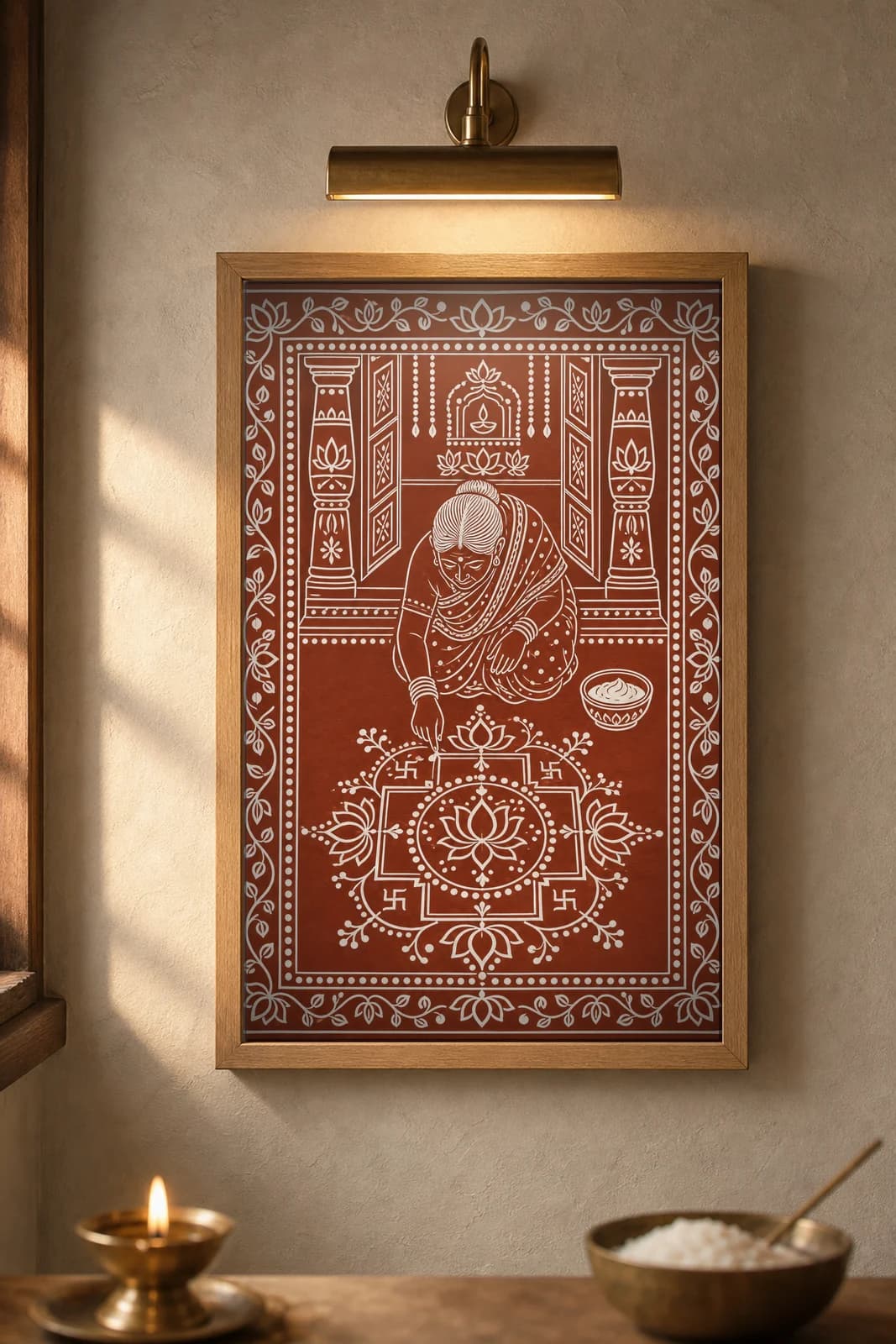
Aipan is the ritual floor- and wall-art of the Kumaon region of Uttarakhand, made traditionally by Kumaoni women with white rice-paste (biswar) drawn by fingertip onto a geru — red-ochre earth — ground, most often at thresholds, courtyards and household shrines before festivals and life-rites. The strictly two-tone white-on-geru discipline is the heart of the form and distinguishes it from multicolour Mithila/Madhubani work. Drawing the maker herself nods to how the craft survives: passed hand to hand down the women of a household. Aipan received a Geographical Indication (GI) tag around 2021, recognising it as a craft of Uttarakhand.
from $49


Aipan is the ritual floor- and wall-art of the Kumaon region of Uttarakhand, made traditionally by Kumaoni women with white rice-paste (biswar) drawn by fingertip onto a geru — red-ochre earth — ground, most often at thresholds, courtyards and household shrines before festivals and life-rites. The strictly two-tone white-on-geru discipline is the heart of the form and distinguishes it from multicolour Mithila/Madhubani work. Drawing the maker herself nods to how the craft survives: passed hand to hand down the women of a household. Aipan received a Geographical Indication (GI) tag around 2021, recognising it as a craft of Uttarakhand.
from $49


COOPER T51 (Europe, 1959) — independent Formula 1 engineering tribute art; not affiliated with FIA, Formula One, or Cooper Car Company. Fan-art disclaimer applies.
from $49


Aipan is the ritual floor- and wall-art of the Kumaon region of Uttarakhand, made traditionally by Kumaoni women with white rice-paste (biswar) drawn by fingertip onto a geru — red-ochre earth — ground, most often at thresholds, courtyards and household shrines before festivals and life-rites. The strictly two-tone white-on-geru discipline is the heart of the form and distinguishes it from multicolour Mithila/Madhubani work. Drawing the maker herself nods to how the craft survives: passed hand to hand down the women of a household. Aipan received a Geographical Indication (GI) tag around 2021, recognising it as a craft of Uttarakhand.
from $49


COOPER T51 (Europe, 1959) — independent Formula 1 engineering tribute art; not affiliated with FIA, Formula One, or Cooper Car Company. Fan-art disclaimer applies.
from $49


COOPER T51 (Europe, 1959) — independent Formula 1 engineering tribute art; not affiliated with FIA, Formula One, or Cooper Car Company. Fan-art disclaimer applies.
from $49


COOPER T51 (Europe, 1959) — independent Formula 1 engineering tribute art; not affiliated with FIA, Formula One, or Cooper Car Company. Fan-art disclaimer applies.
from $49


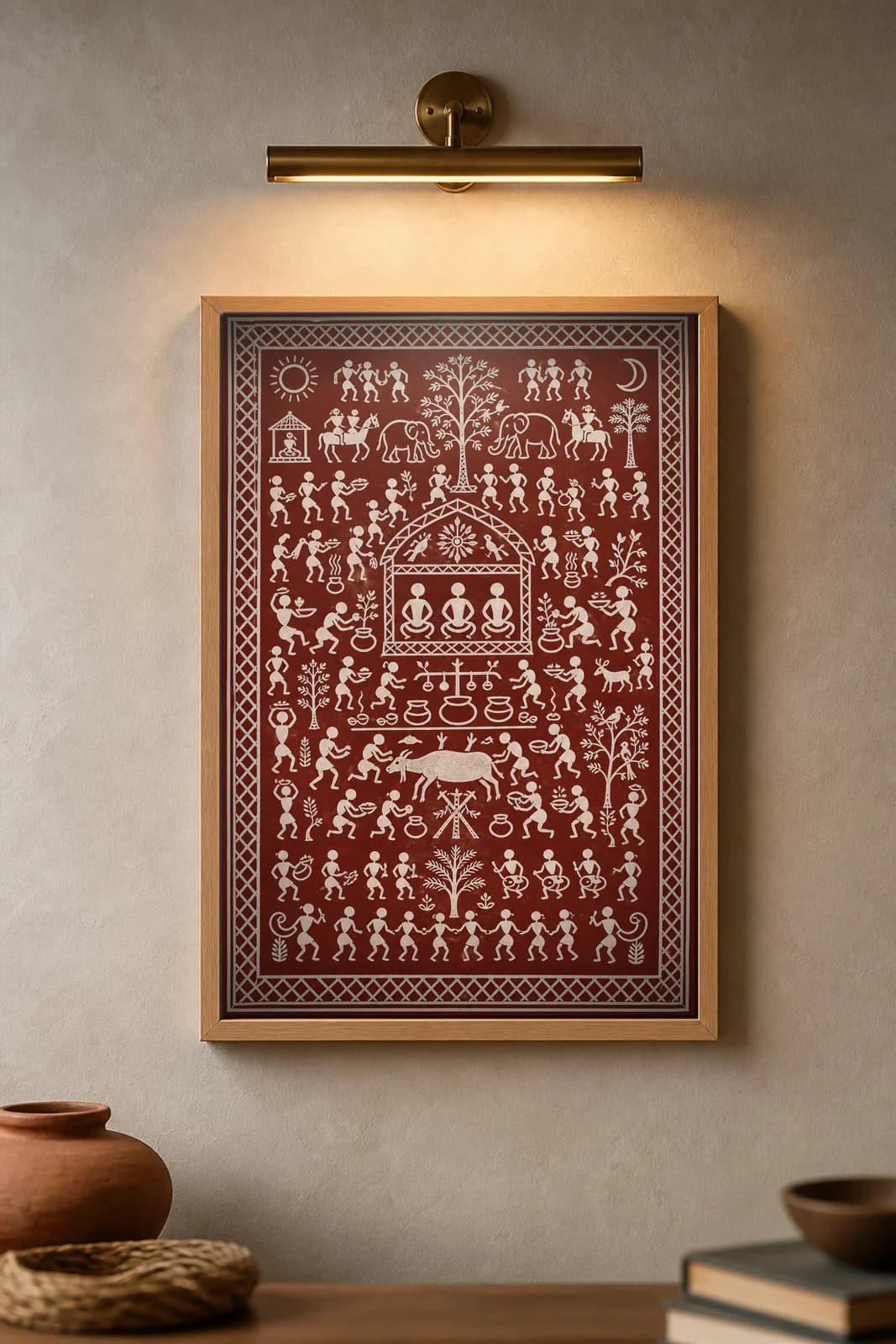
DESIGN BRIEF: the brief was the moment after the cut, so the hero is a large oval medallion holding the threshing floor itself — pairs of yoked oxen walking a circle over the grain while figures drive them and toss it with winnowing forks — and the rest of the harvest stacks in bands above and below. We held the fill to medium and kept the fish-net frame open rather than a packed mesh, with clear oxblood ground around the oval so the oxen, the sheaves and the winnowing read at a glance. The figures are the rounded, faceless, bent-knee Saura type — never Warli's joined triangles — and there is no perspective depth; the oval is a flat enclosure, not a bird's-eye view. Threshing by treading is how paddy and millet are separated on a Lanjia Saura hill village floor, a shared task that the granary box at the top and the carriers along the foot tie together.
from $49


COOPER T51 (Europe, 1959) — independent Formula 1 engineering tribute art; not affiliated with FIA, Formula One, or Cooper Car Company. Fan-art disclaimer applies.
from $49
DESIGN BRIEF: the brief was the moment after the cut, so the hero is a large oval medallion holding the threshing floor itself — pairs of yoked oxen walking a circle over the grain while figures drive them and toss it with winnowing forks — and the rest of the harvest stacks in bands above and below. We held the fill to medium and kept the fish-net frame open rather than a packed mesh, with clear oxblood ground around the oval so the oxen, the sheaves and the winnowing read at a glance. The figures are the rounded, faceless, bent-knee Saura type — never Warli's joined triangles — and there is no perspective depth; the oval is a flat enclosure, not a bird's-eye view. Threshing by treading is how paddy and millet are separated on a Lanjia Saura hill village floor, a shared task that the granary box at the top and the carriers along the foot tie together.
from $49


The Hawker Hurricane accounted for roughly fifty-five percent of RAF Fighter Command victories during the Battle of Britain — a statistic that reframes the Spitfire narrative without diminishing either airframe. Polish No. 303 Squadron, commemorated on the plate crest, became the highest-scoring Allied unit in the campaign flying Hurricanes from Northolt. The Mk II's cannon-armed wing variants foreshadowed the ground-attack role Hurricanes performed across Malta, Burma, and the Russian front long after 1940.
from $49


Aipan is the ritual floor- and wall-art of the Kumaon region of Uttarakhand, made traditionally by Kumaoni women with white rice-paste (biswar) drawn by fingertip onto a geru — red-ochre earth — ground, most often at thresholds, courtyards and household shrines before festivals and life-rites. The strictly two-tone white-on-geru discipline is the heart of the form and distinguishes it from multicolour Mithila/Madhubani work. Drawing the maker herself nods to how the craft survives: passed hand to hand down the women of a household. Aipan received a Geographical Indication (GI) tag around 2021, recognising it as a craft of Uttarakhand.
from $49


Khovar is the marriage wall art of Hazaribagh district, Jharkhand, combed by women of tribal and Kurmi communities onto the bridal chamber before a wedding, using a sgraffito technique — wet white kaolin slip over a dark base coat, combed and scratched away with a broken comb so the dark ground reads as line. Paired fish are a classic Khovar fertility motif, promising plenty and increase to the new household, alongside lotus and peacocks. Together with the harvest art Sohrai it received a Geographical Indication tag in 2020 as 'Sohrai Khovar Painting (Jharkhand)'.
from $49


Kalighat Pat grew up in 19th-century Kolkata, painted by migrant patua (chitrakar) scroll-painters who settled near the Kalighat Kali temple and sold quick watercolour souvenirs to pilgrims. Working on mill-made paper with a bold single black brush outline and soft 'boneless' shaded strokes on a plain ground, they painted gods and goddesses alongside what is often called India's first modern social satire — sharp, affectionate caricatures of the colonial 'babu' and the hypocrisies of Calcutta life. Kalighat has no standalone GI; it sits within the Bengal Patachitra tradition, which received its GI tag in 2018.
from $49


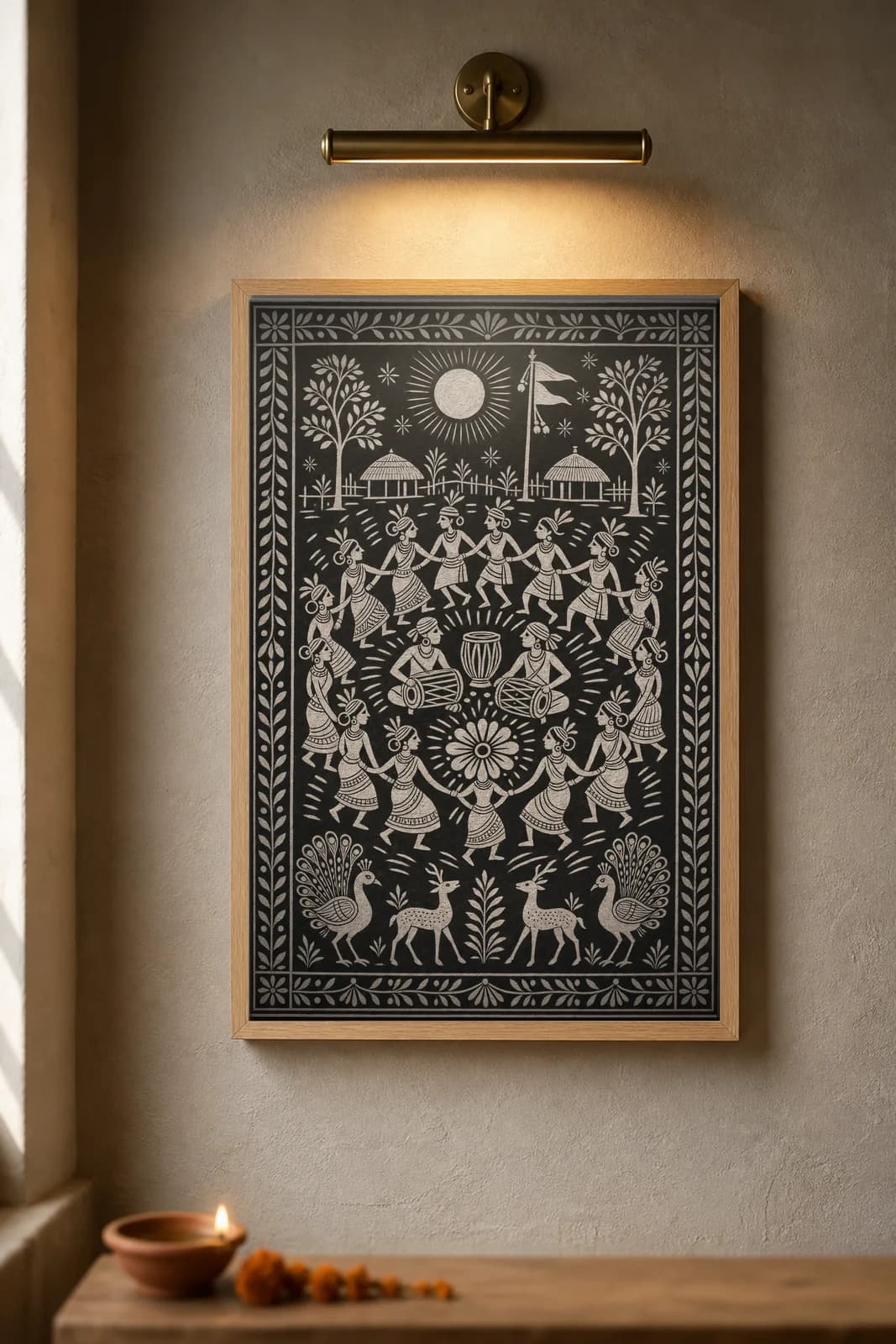
Aipan is the ritual floor- and wall-art of the Kumaon region of Uttarakhand, made traditionally by Kumaoni women with white rice-paste (biswar) drawn by fingertip onto a geru — red-ochre earth — ground. The Bagwal is an old stone-throwing fair held at the Varahi (Maa Barahi) temple at Devidhura in Champawat district, in which two groups pelt each other — now largely with flowers and fruit — until the priest calls a halt; it is one of Kumaon's best-known living fairs. The strict two-tone white-on-geru discipline distinguishes Aipan from multicolour Mithila work; the craft received a Geographical Indication (GI) tag around 2021.
from $49


Tiangong represents the culmination of China's decades-long human spaceflight programme — from Shenzhou capsules to a permanent orbital facility capable of hosting international experiment payloads and domestic science priorities. The station's T-shaped configuration optimised module docking and solar array exposure while demonstrating CNSA's ability to assemble complex structures in orbit through robotic and crewed operations. Tiangong sits in cultural conversation with Mir and ISS as the third major paradigm of modular station architecture in low Earth orbit.
from $49


Aipan is the ritual floor- and wall-art of the Kumaon region of Uttarakhand, made traditionally by Kumaoni women with white rice-paste (biswar) drawn by fingertip onto a geru — red-ochre earth — ground, most often at thresholds, courtyards and household shrines before festivals and life-rites. The strictly two-tone white-on-geru discipline is the heart of the form and distinguishes it from multicolour Mithila/Madhubani work. Drawing the maker herself nods to how the craft survives: passed hand to hand down the women of a household. Aipan received a Geographical Indication (GI) tag around 2021, recognising it as a craft of Uttarakhand.
from $49


Tiangong represents the culmination of China's decades-long human spaceflight programme — from Shenzhou capsules to a permanent orbital facility capable of hosting international experiment payloads and domestic science priorities. The station's T-shaped configuration optimised module docking and solar array exposure while demonstrating CNSA's ability to assemble complex structures in orbit through robotic and crewed operations. Tiangong sits in cultural conversation with Mir and ISS as the third major paradigm of modular station architecture in low Earth orbit.
from $49


The Hawker Hurricane accounted for roughly fifty-five percent of RAF Fighter Command victories during the Battle of Britain — a statistic that reframes the Spitfire narrative without diminishing either airframe. Polish No. 303 Squadron, commemorated on the plate crest, became the highest-scoring Allied unit in the campaign flying Hurricanes from Northolt. The Mk II's cannon-armed wing variants foreshadowed the ground-attack role Hurricanes performed across Malta, Burma, and the Russian front long after 1940.
from $49


The Hawker Hurricane accounted for roughly fifty-five percent of RAF Fighter Command victories during the Battle of Britain — a statistic that reframes the Spitfire narrative without diminishing either airframe. Polish No. 303 Squadron, commemorated on the plate crest, became the highest-scoring Allied unit in the campaign flying Hurricanes from Northolt. The Mk II's cannon-armed wing variants foreshadowed the ground-attack role Hurricanes performed across Malta, Burma, and the Russian front long after 1940.
from $49


COOPER T51 (Europe, 1959) — independent Formula 1 engineering tribute art; not affiliated with FIA, Formula One, or Cooper Car Company. Fan-art disclaimer applies.
from $49


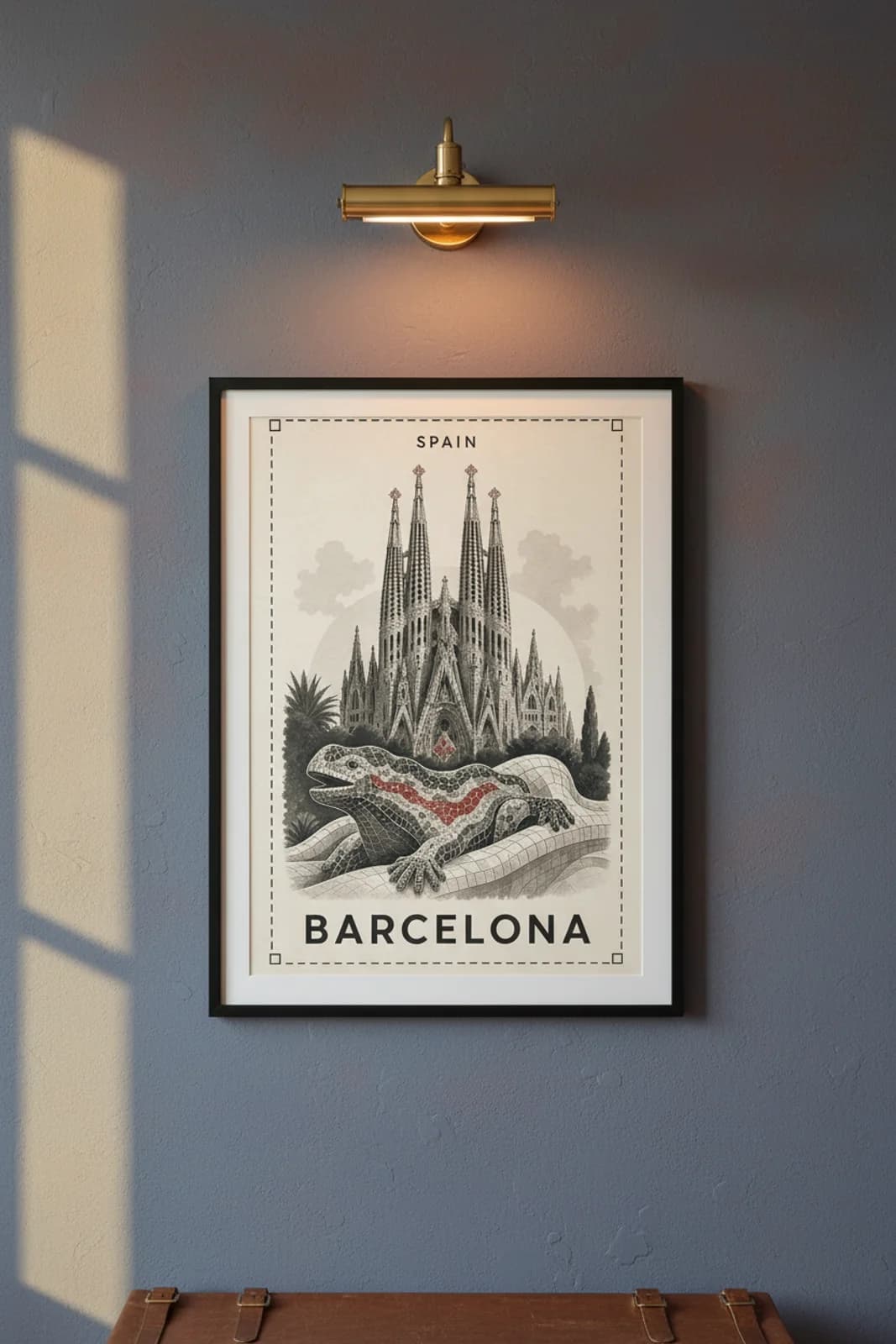
Spain · Sagrada Família towers and mosaic Park Güell lizard — contemporary illustrated stamp print inspired by global city landmark traditions, not an official postal issue.
from $49