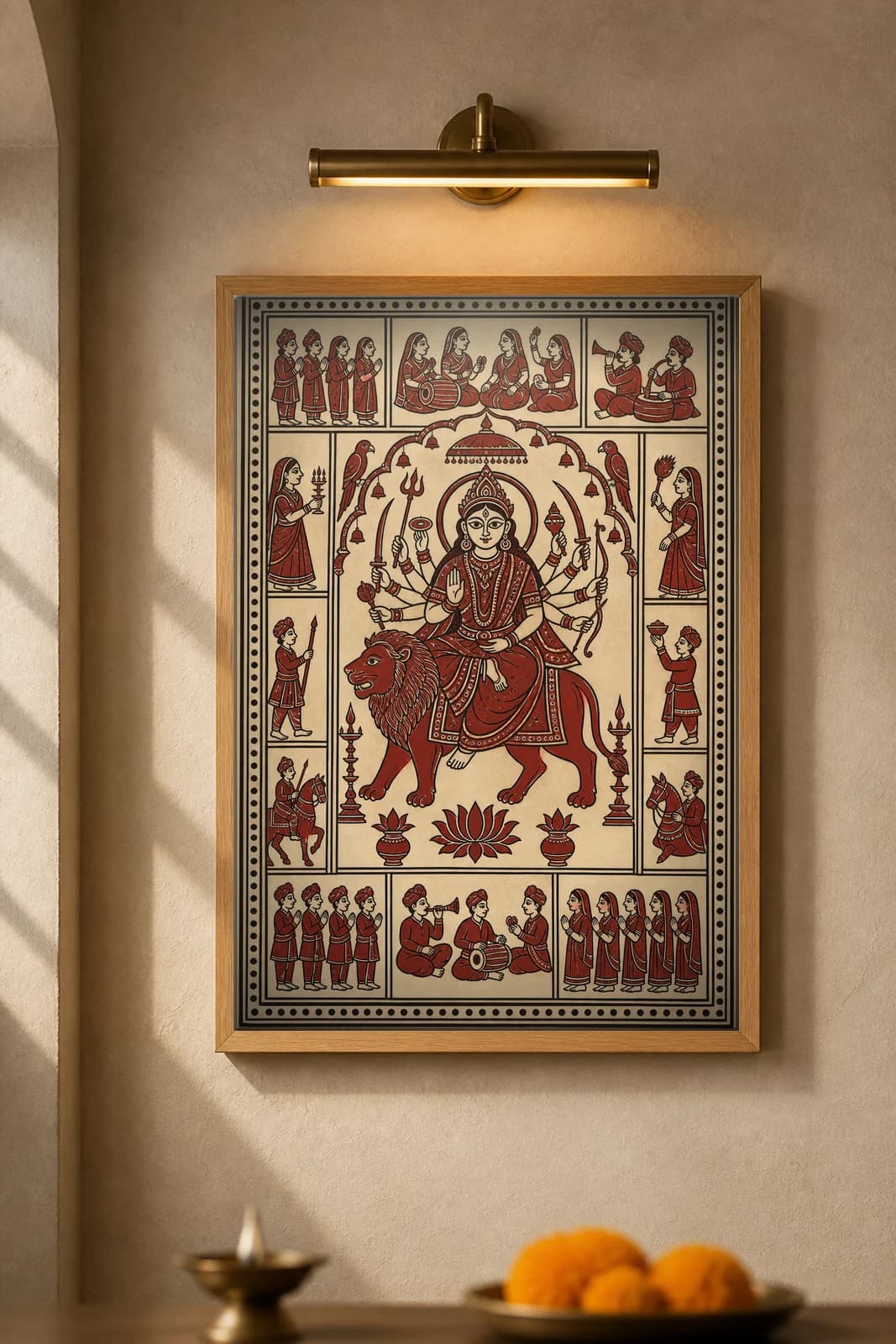
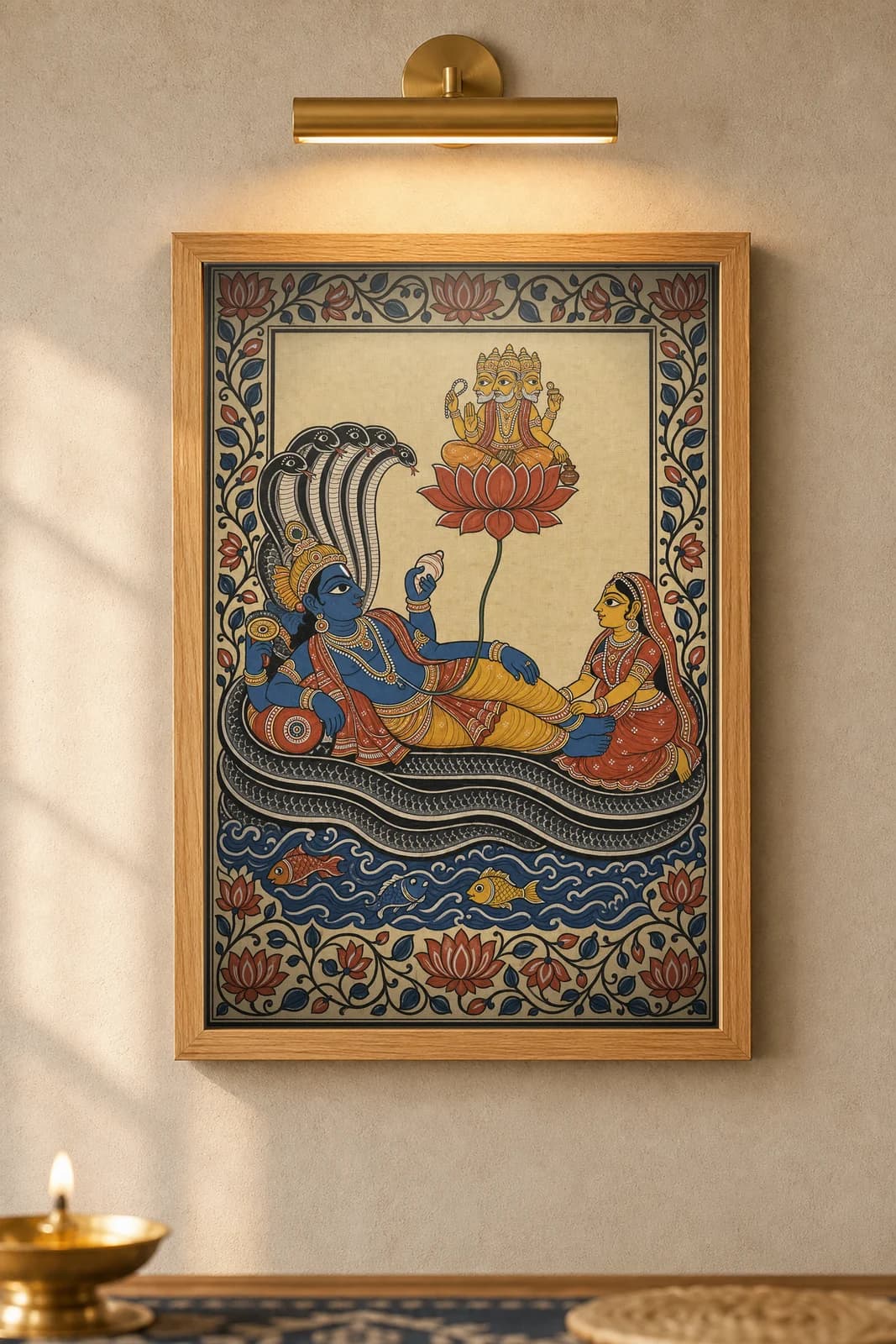
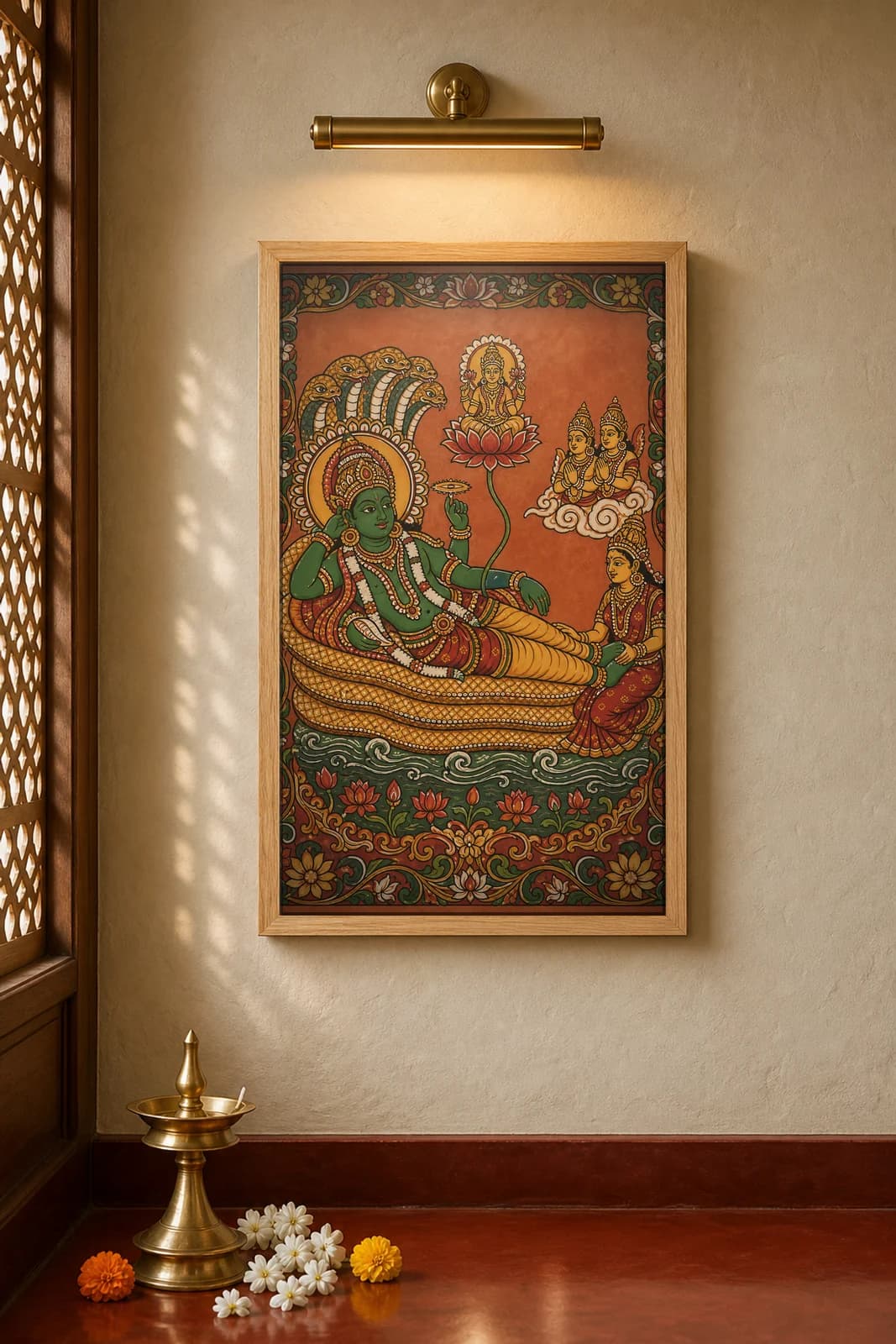
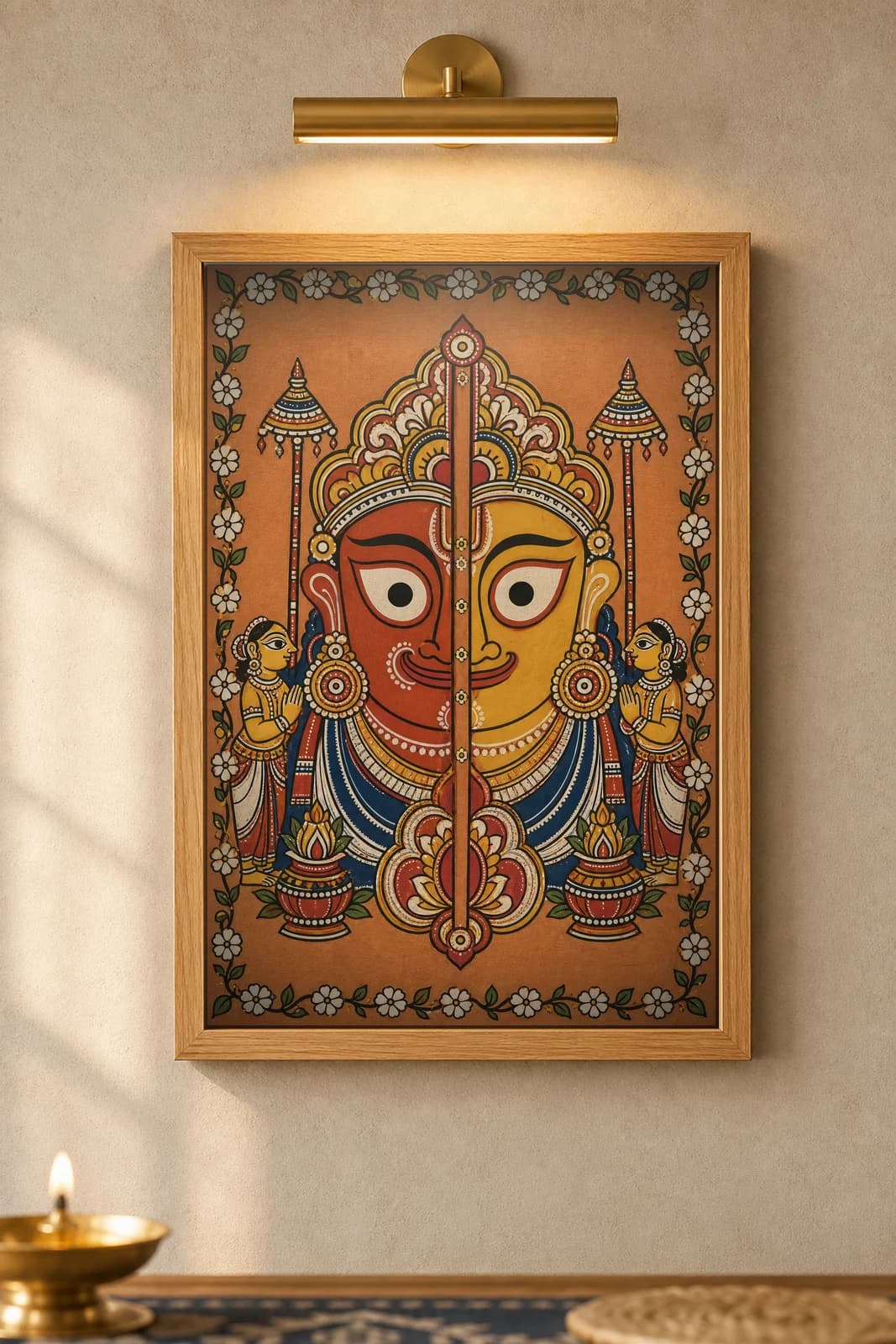
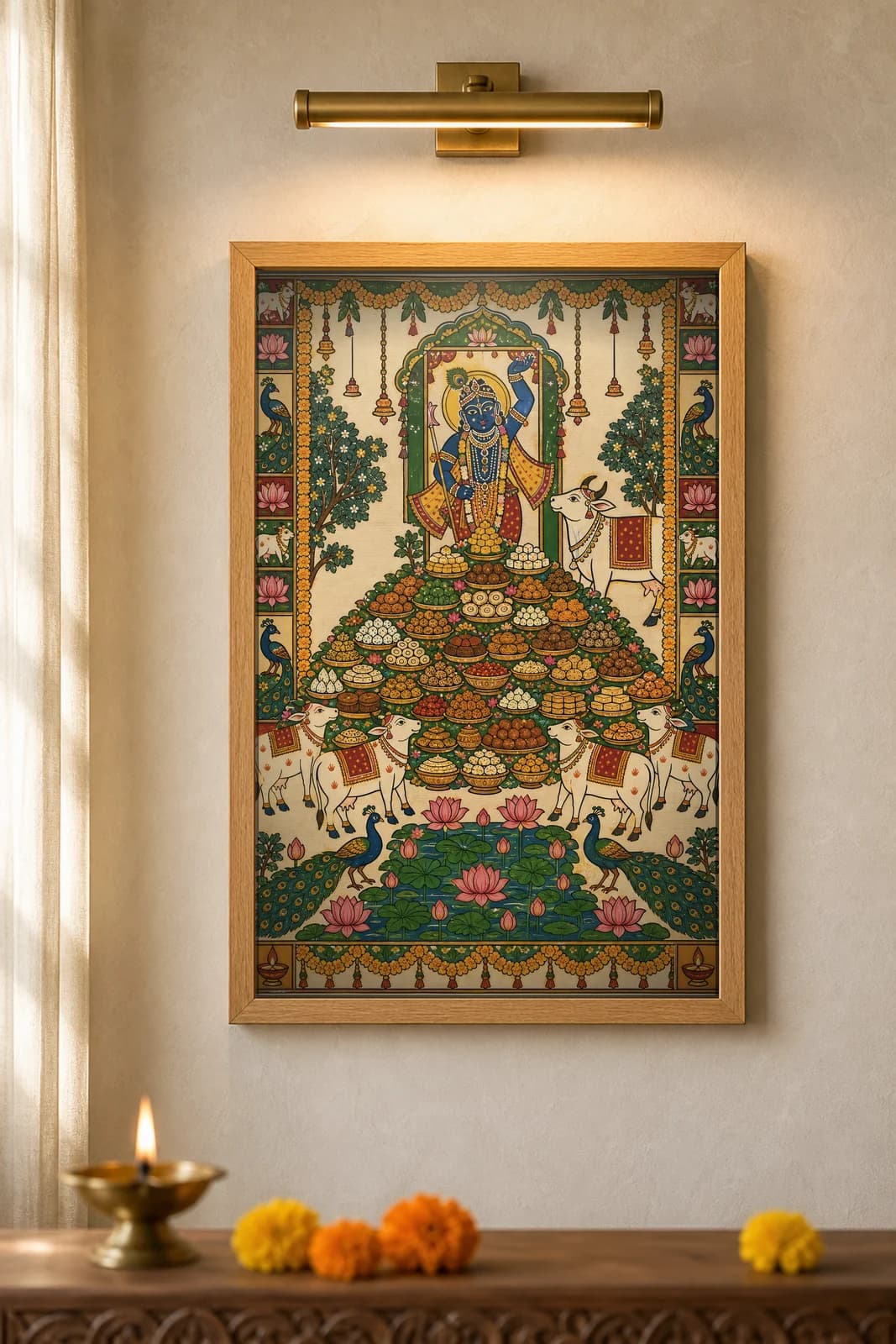
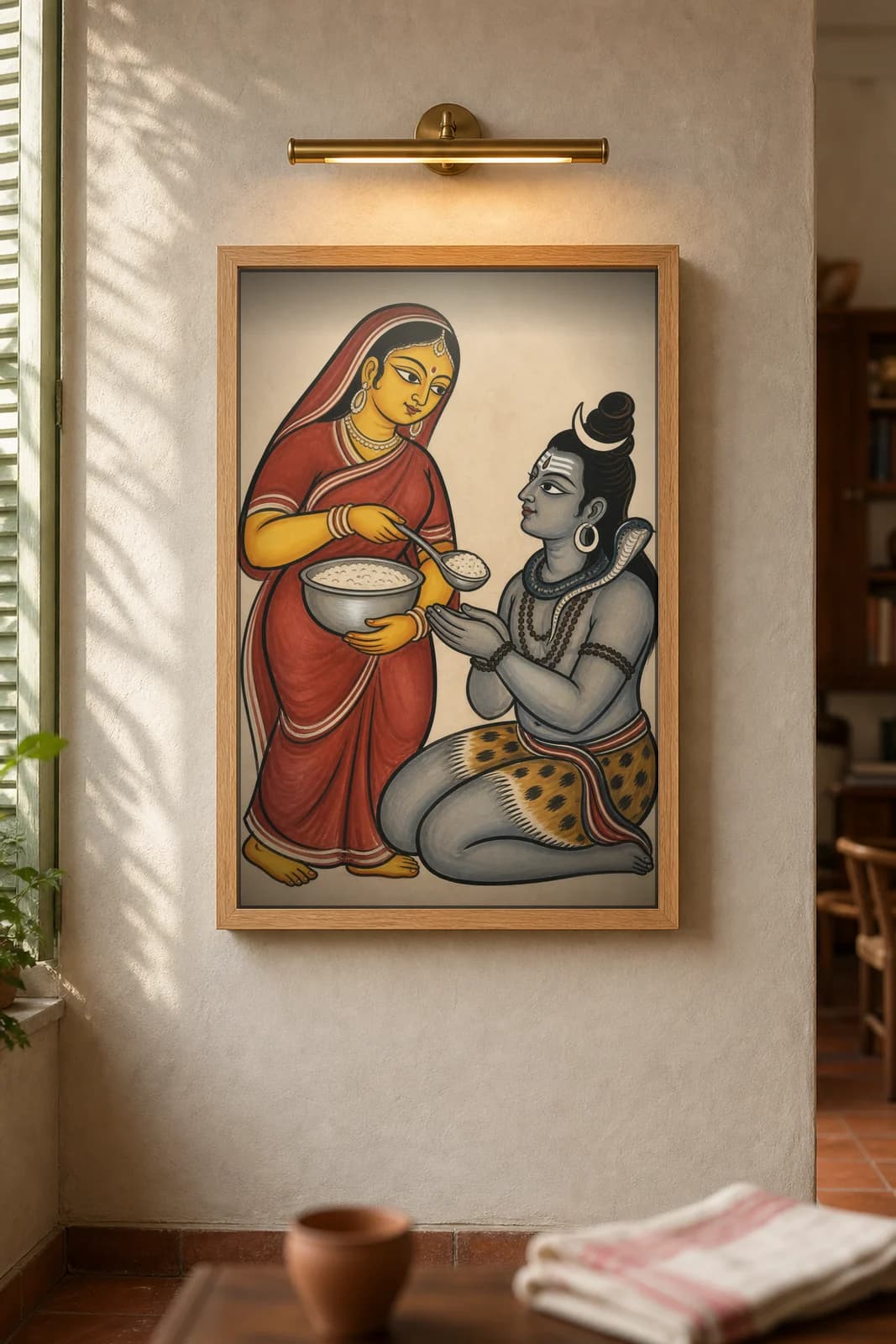
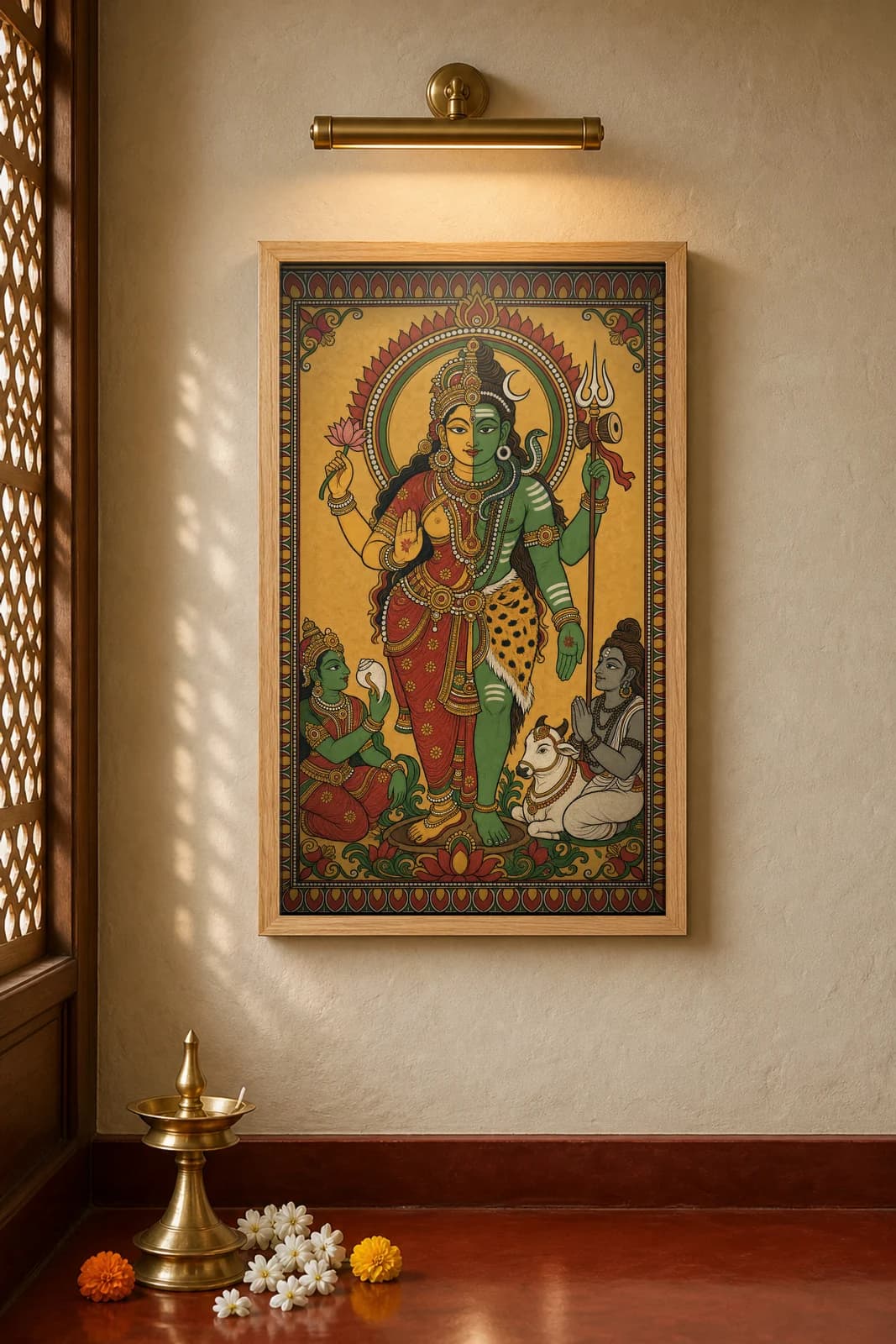
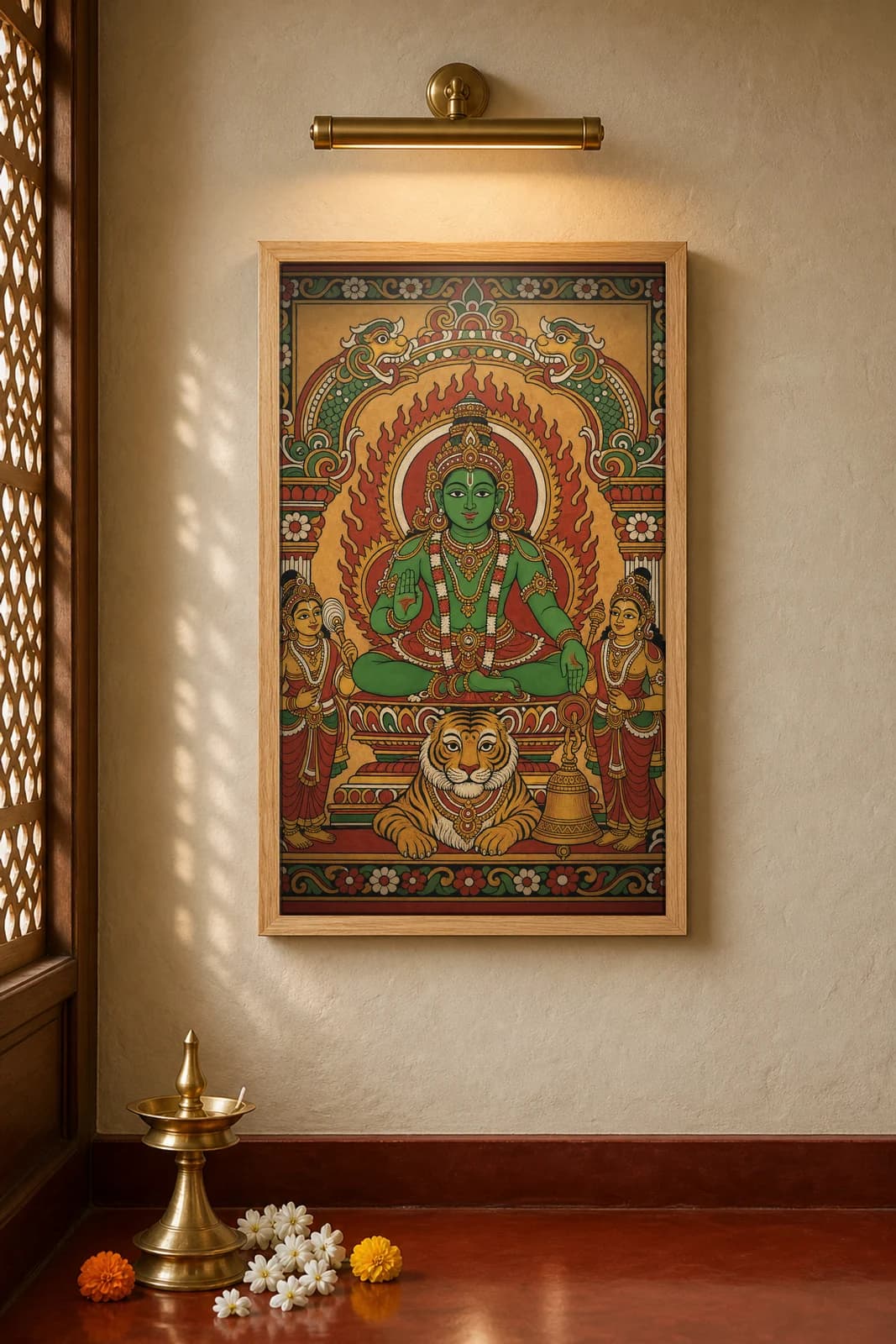
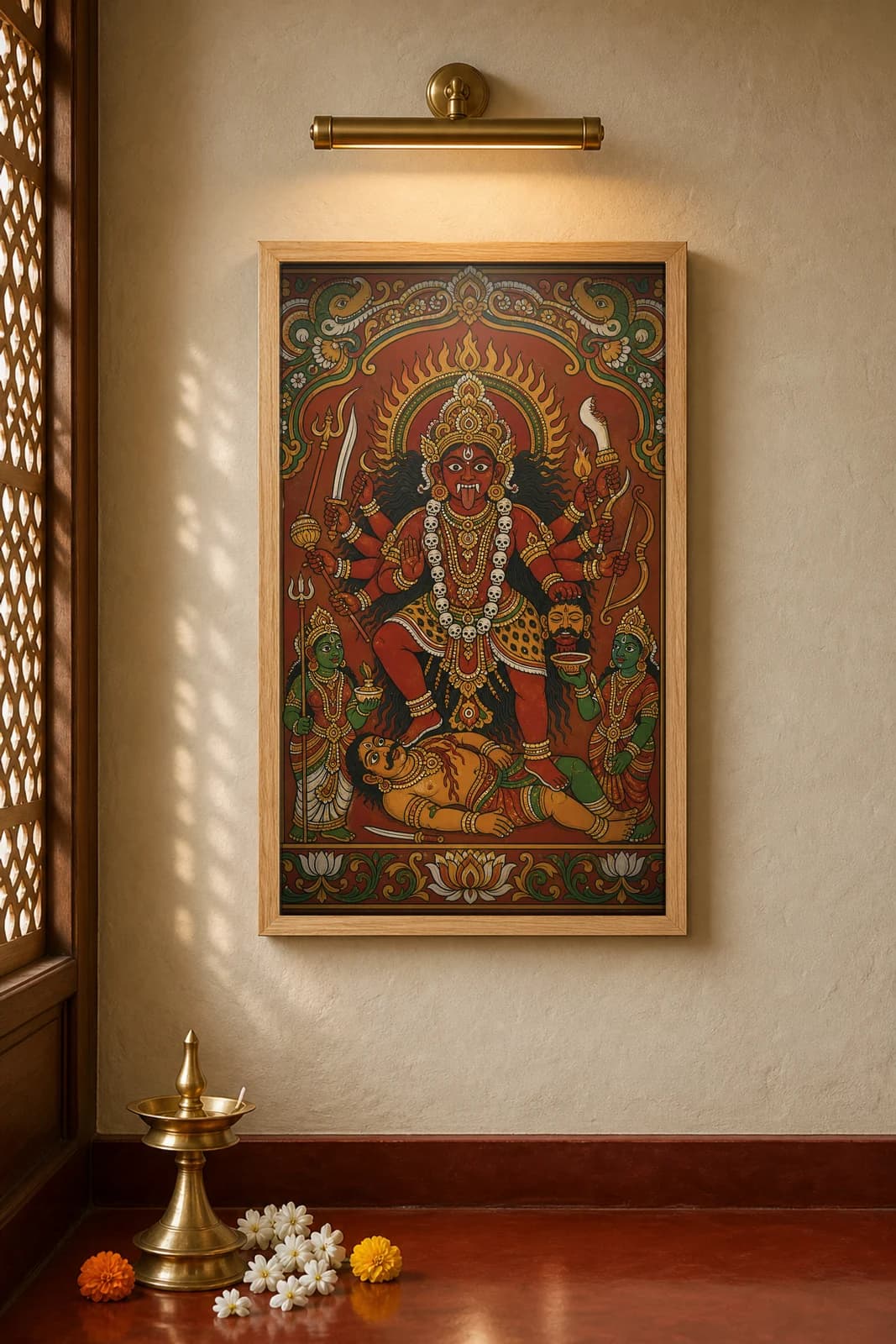
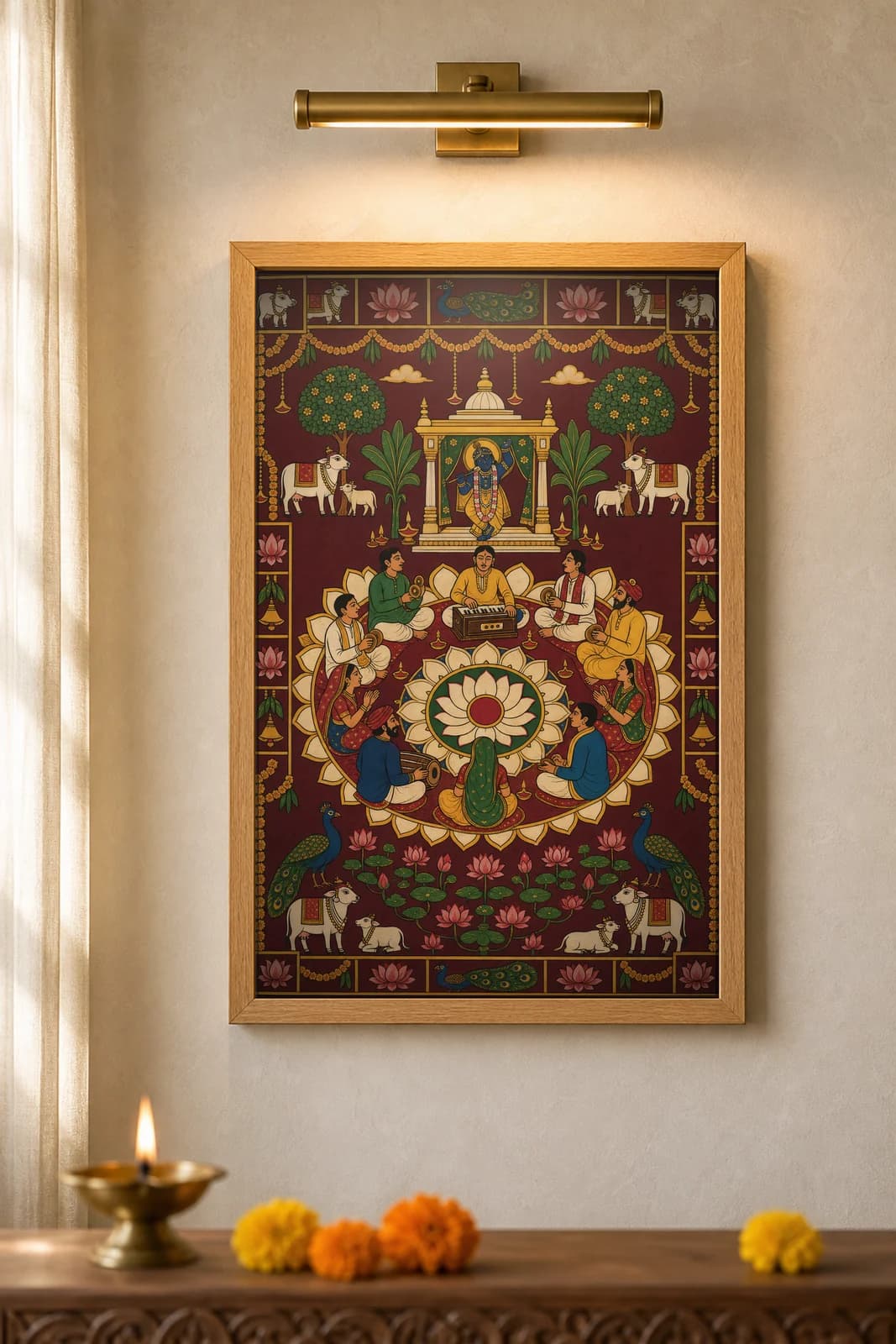
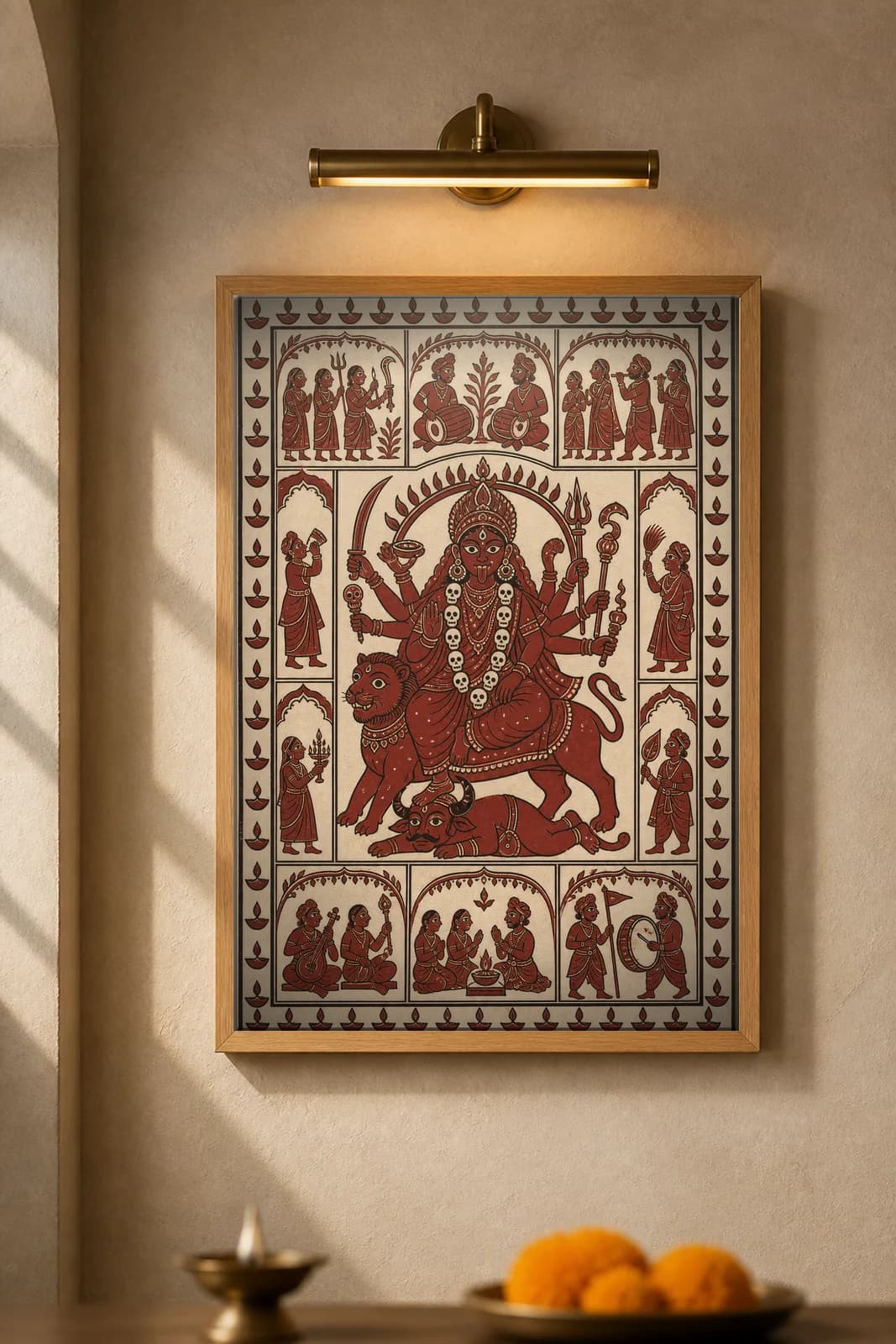
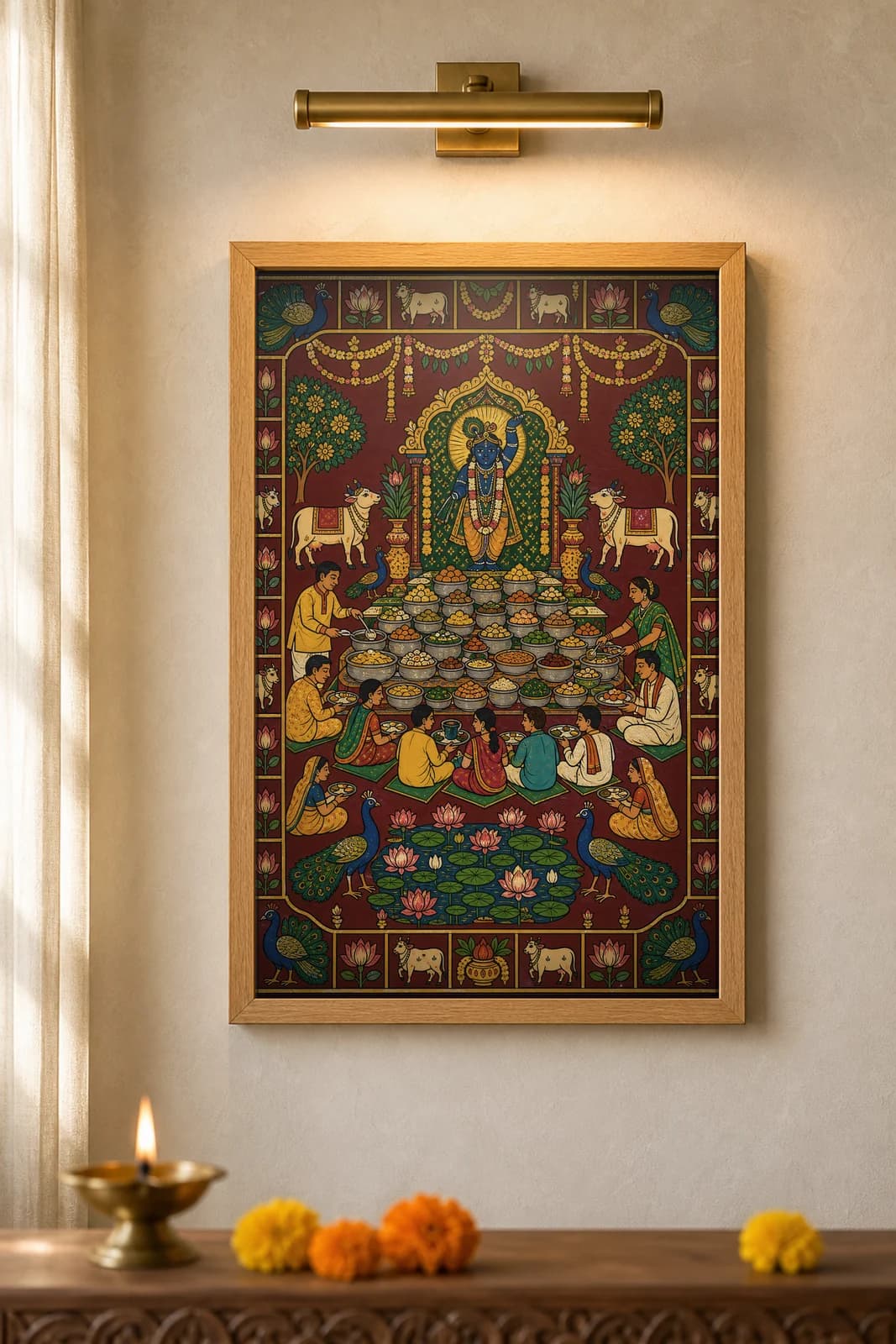
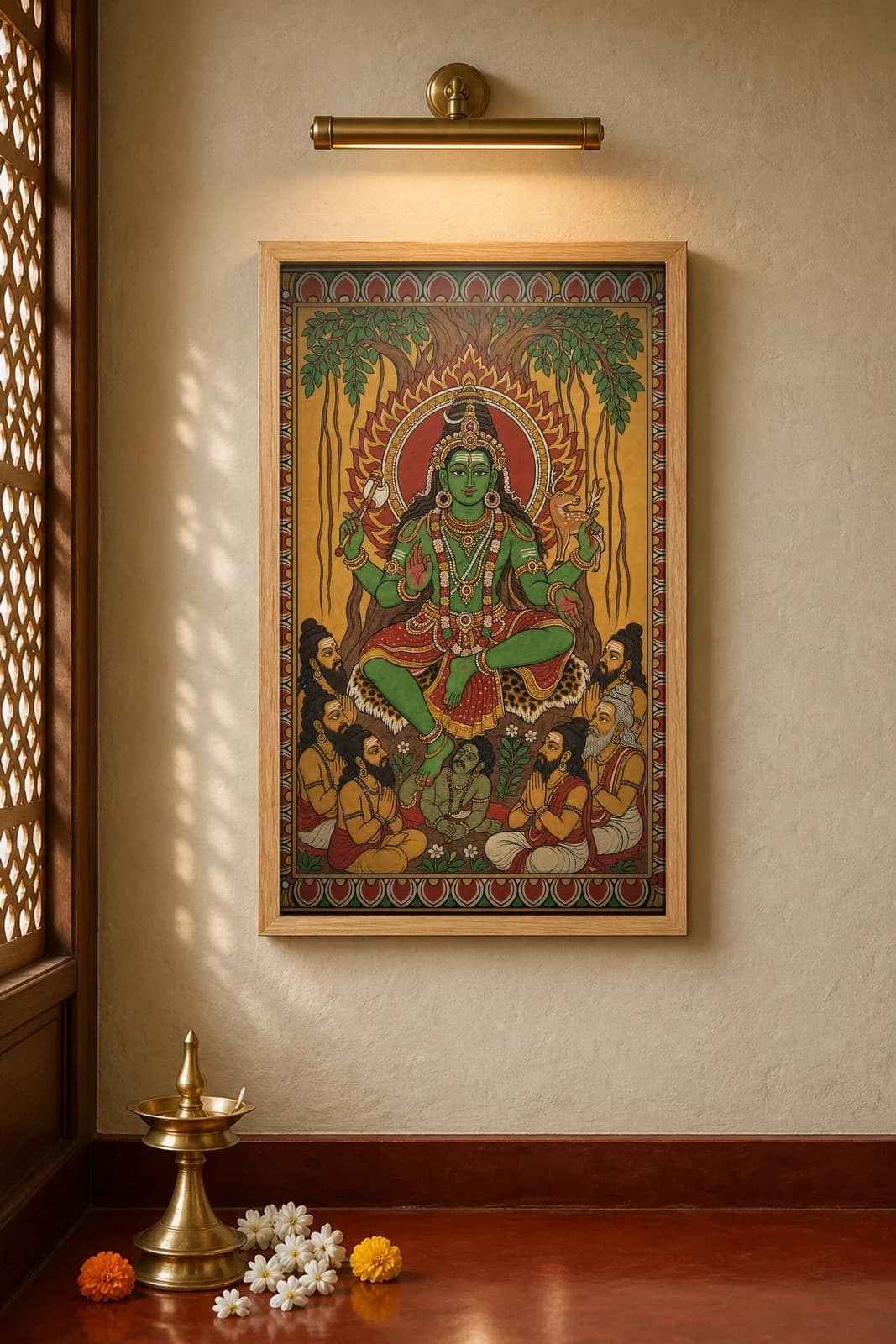
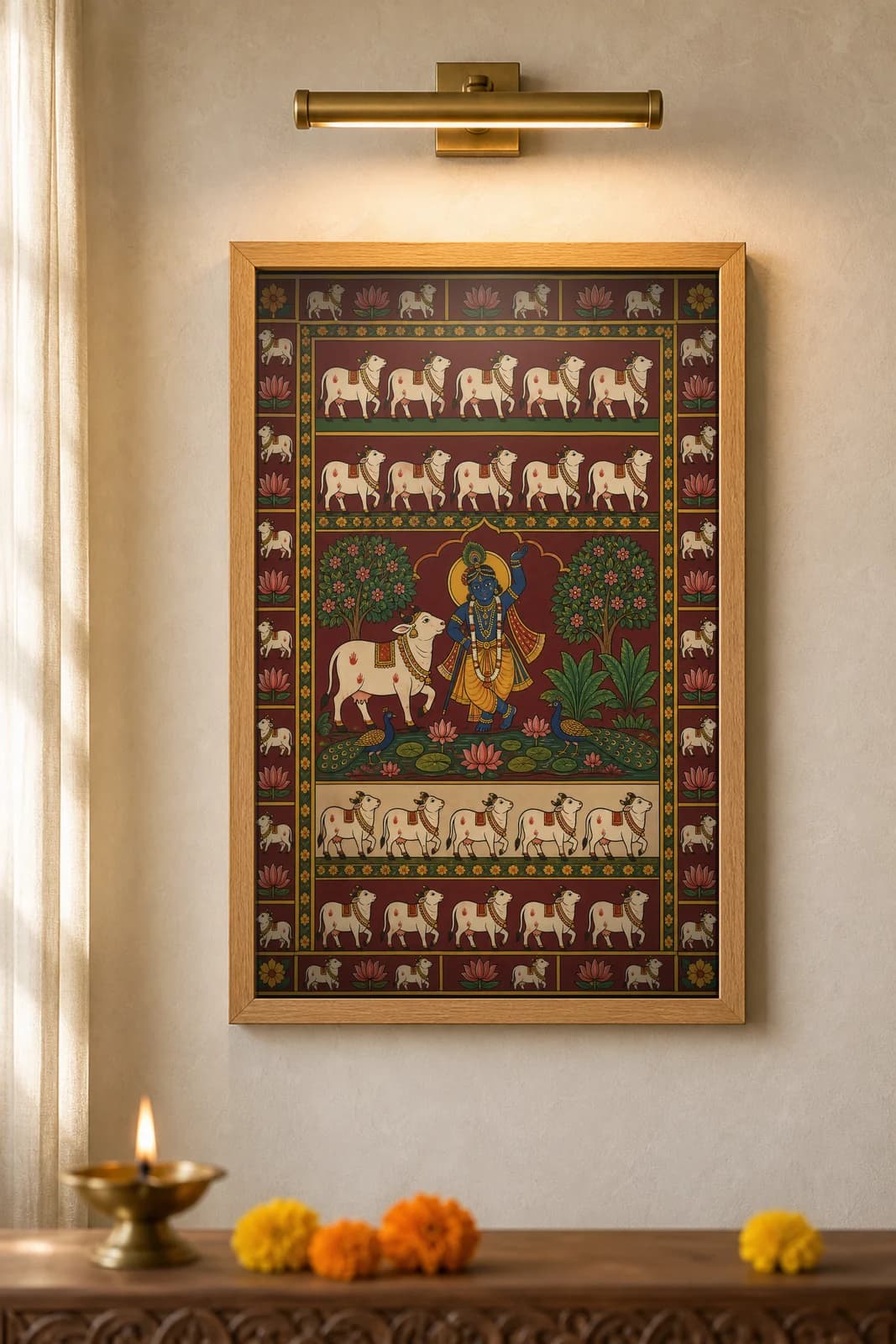
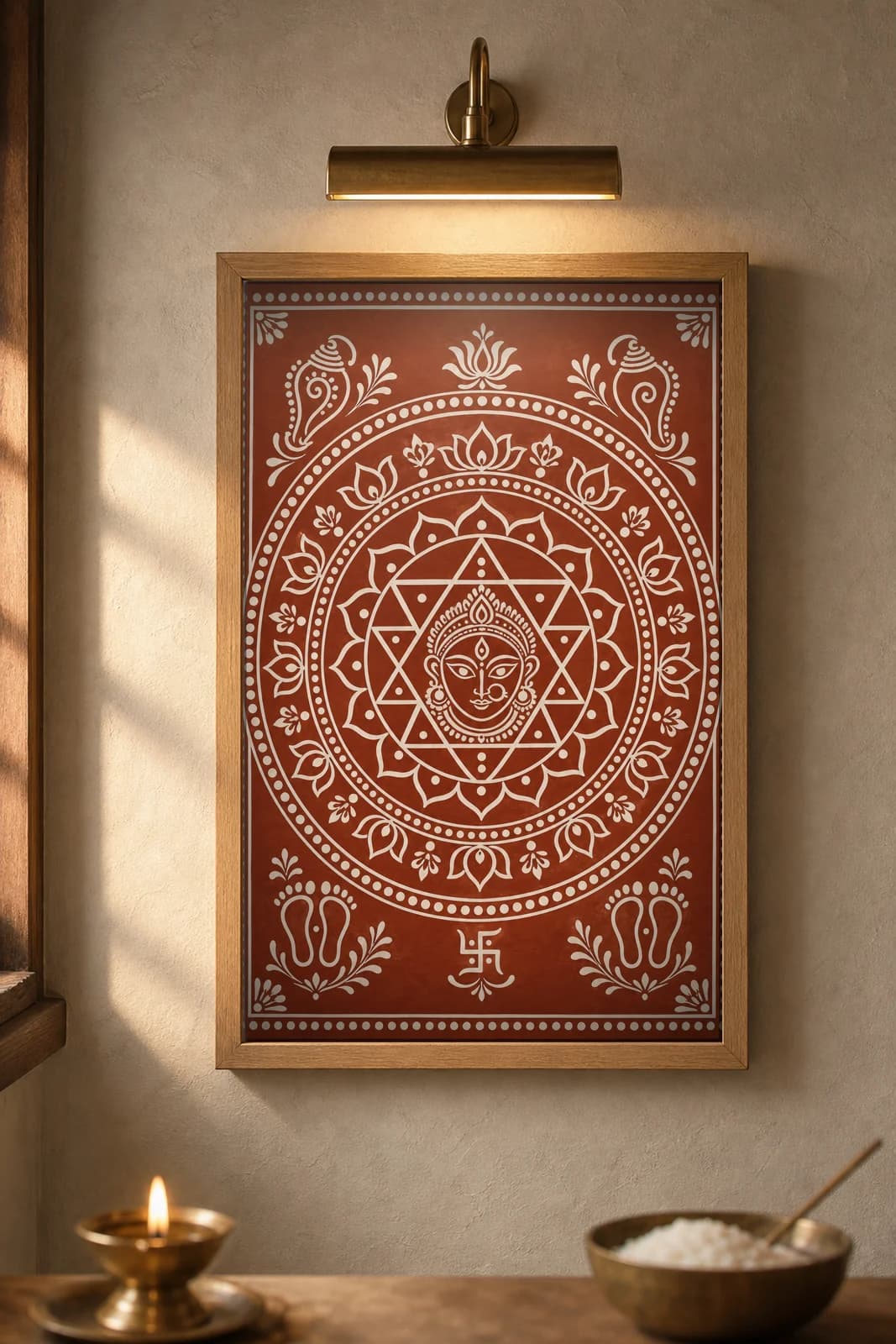
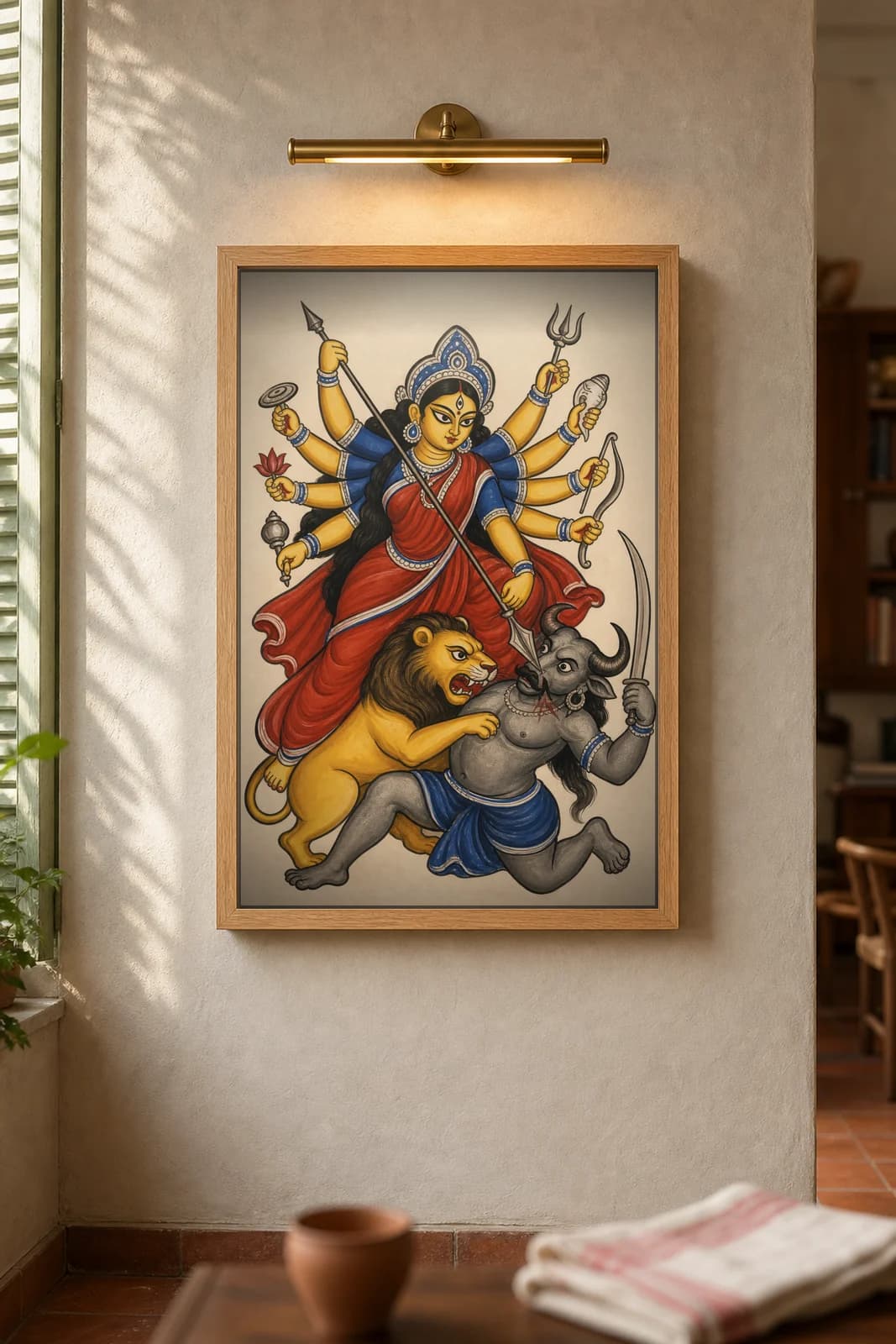
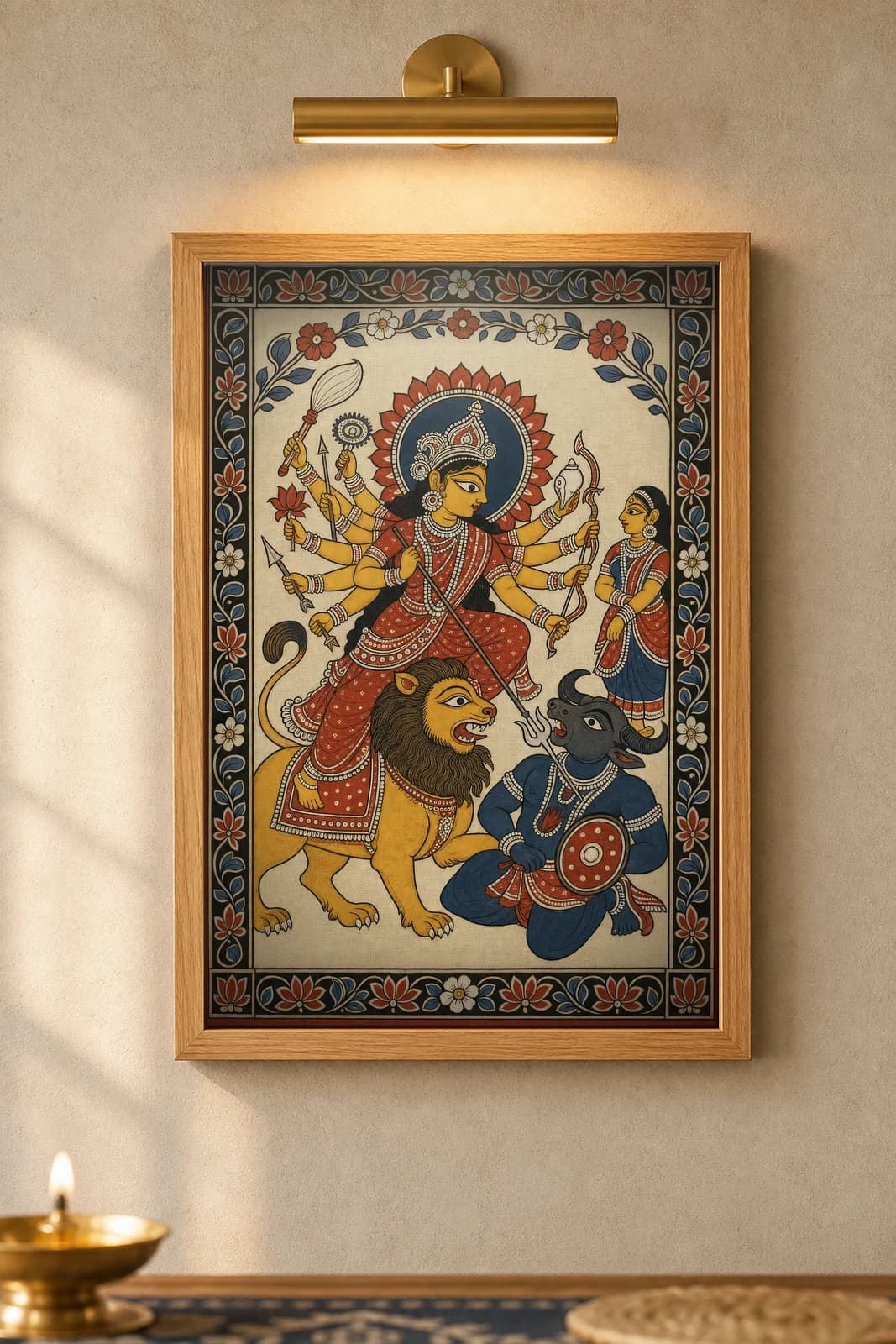
Hindu Deity Art — 127 museum-grade prints on the theme. Kalighat Pat grew up in 19th-century Kolkata, painted by migrant patua (chitrakar) scroll-painters who settled near the Kalighat Kali temple and sold quick watercolour souvenirs to pilgrims. Working on mill-made paper with a bold single black brush outline and soft 'boneless' shaded strokes on a plain ground, they painted gods and goddesses alongside what is often called India's first modern social satire — sharp, affectionate caricatures of the colonial 'babu' and the hypocrisies of Calcutta life. Aipan is the ritual floor- and wall-art of the Kumaon region of Uttarakhand, made traditionally by Kumaoni women with white rice-paste (biswar) drawn by fingertip onto a geru — red-ochre earth — ground. A Durga yantra is drawn for the goddess at Navratri, with Ashtami — the eighth day — a high point of the worship; interlocking triangles, lotus rings, conch, footprints and swastika are the auspicious vocabulary of the rite. Ardhanareeswara — the half-Shiva, half-Parvati form — embodies the inseparability of the masculine and feminine principles, and it is a natural subject for bhitti chitra, Kerala's temple-mural tradition that flourished roughly from the 16th to 19th century and is still painted today. These murals use the panchavarna five-colour system — red, yellow, green, black and white over an ochre ground — in flat opaque fields bounded by a bold lamp-black outline, with the school's elongated lotus-shaped eyes.


$49


$49


$49

$49


$49


$49

$49