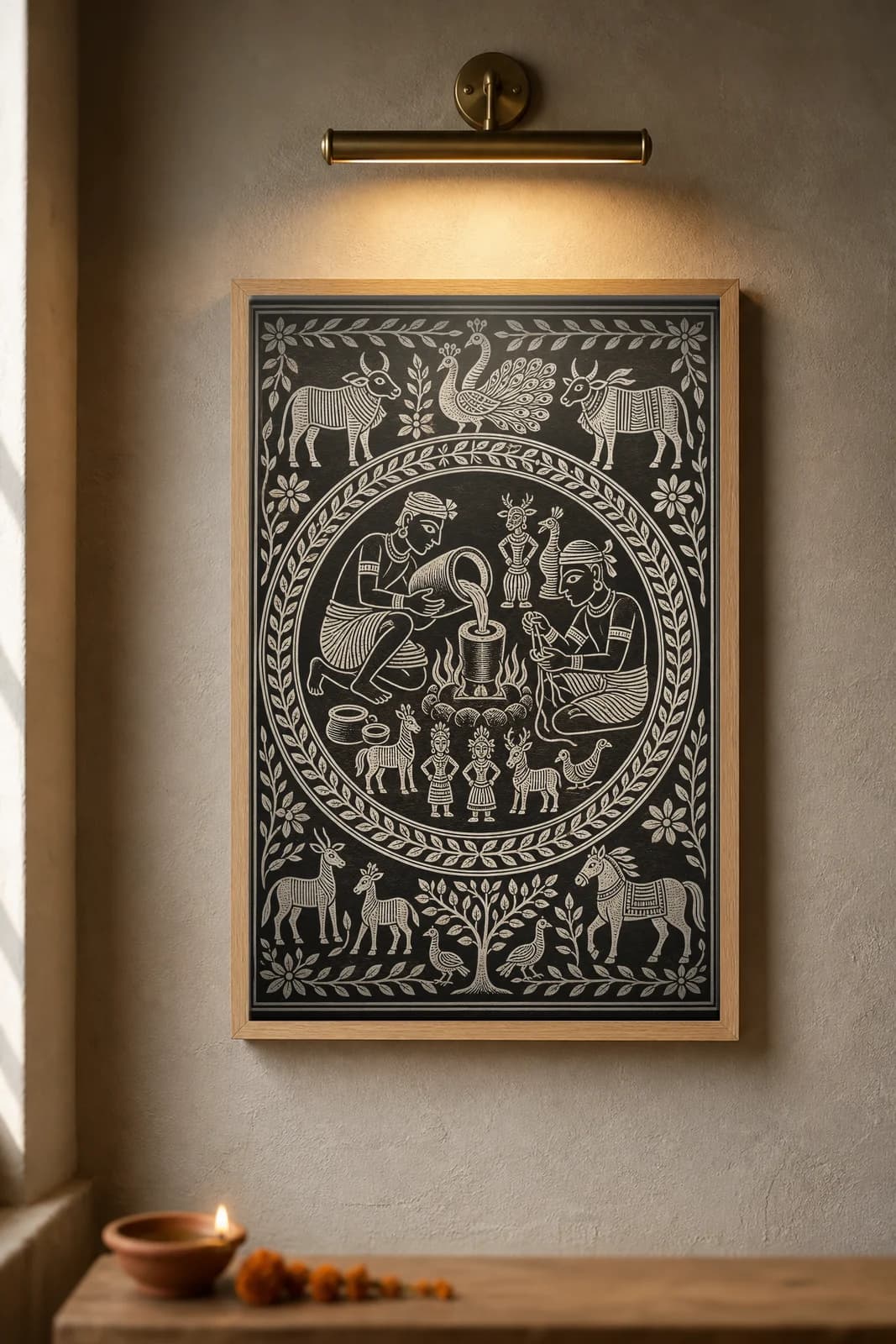
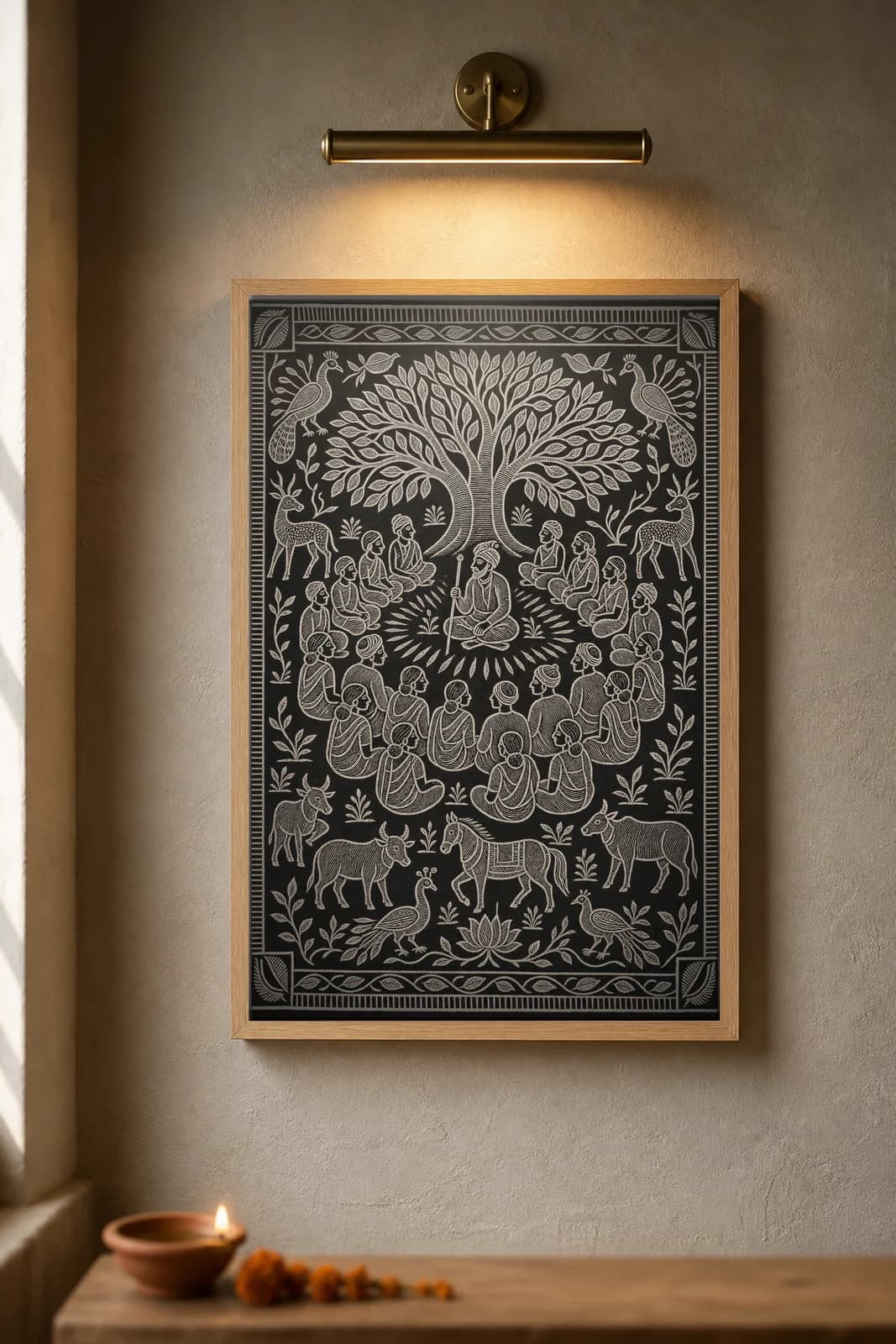
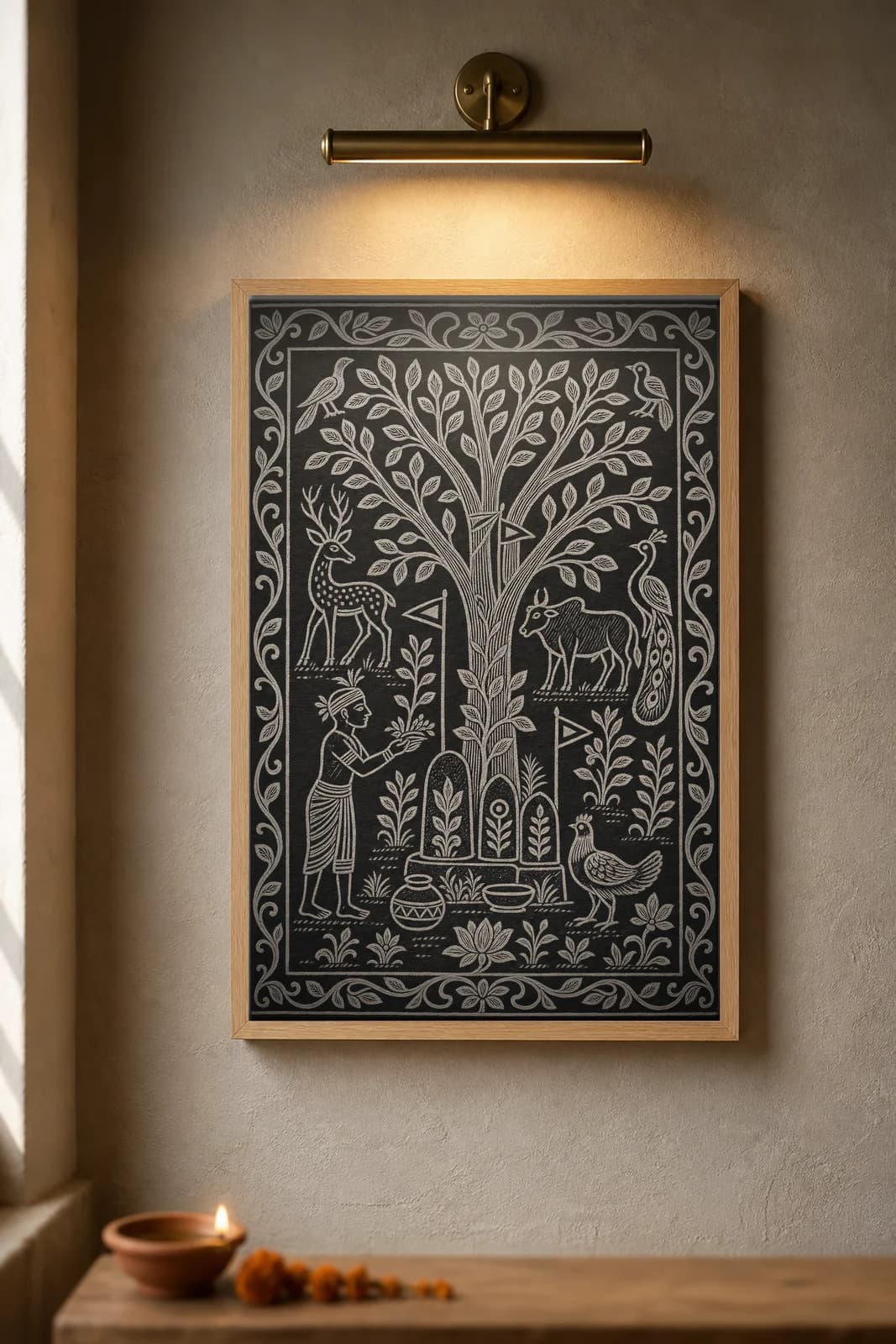
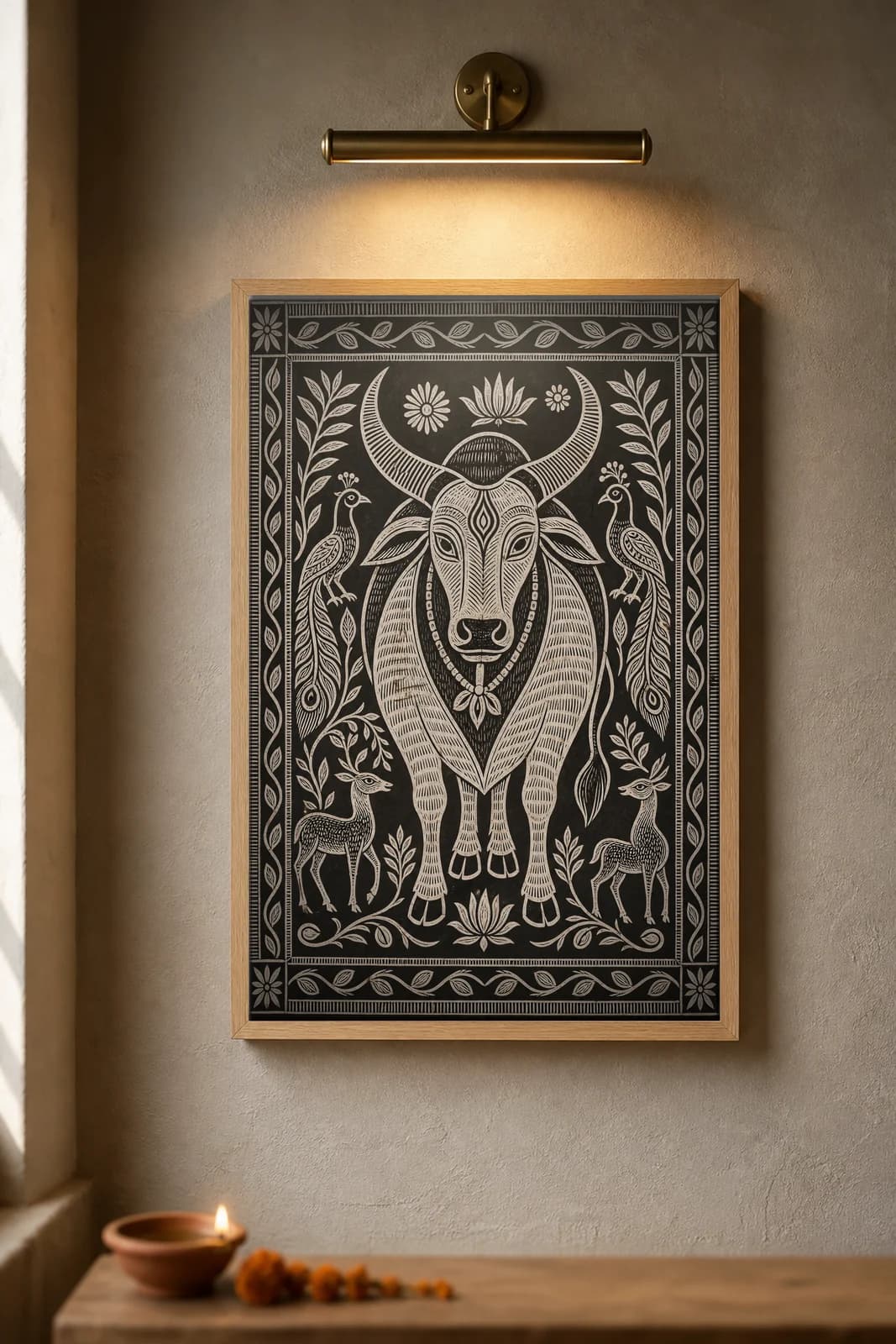
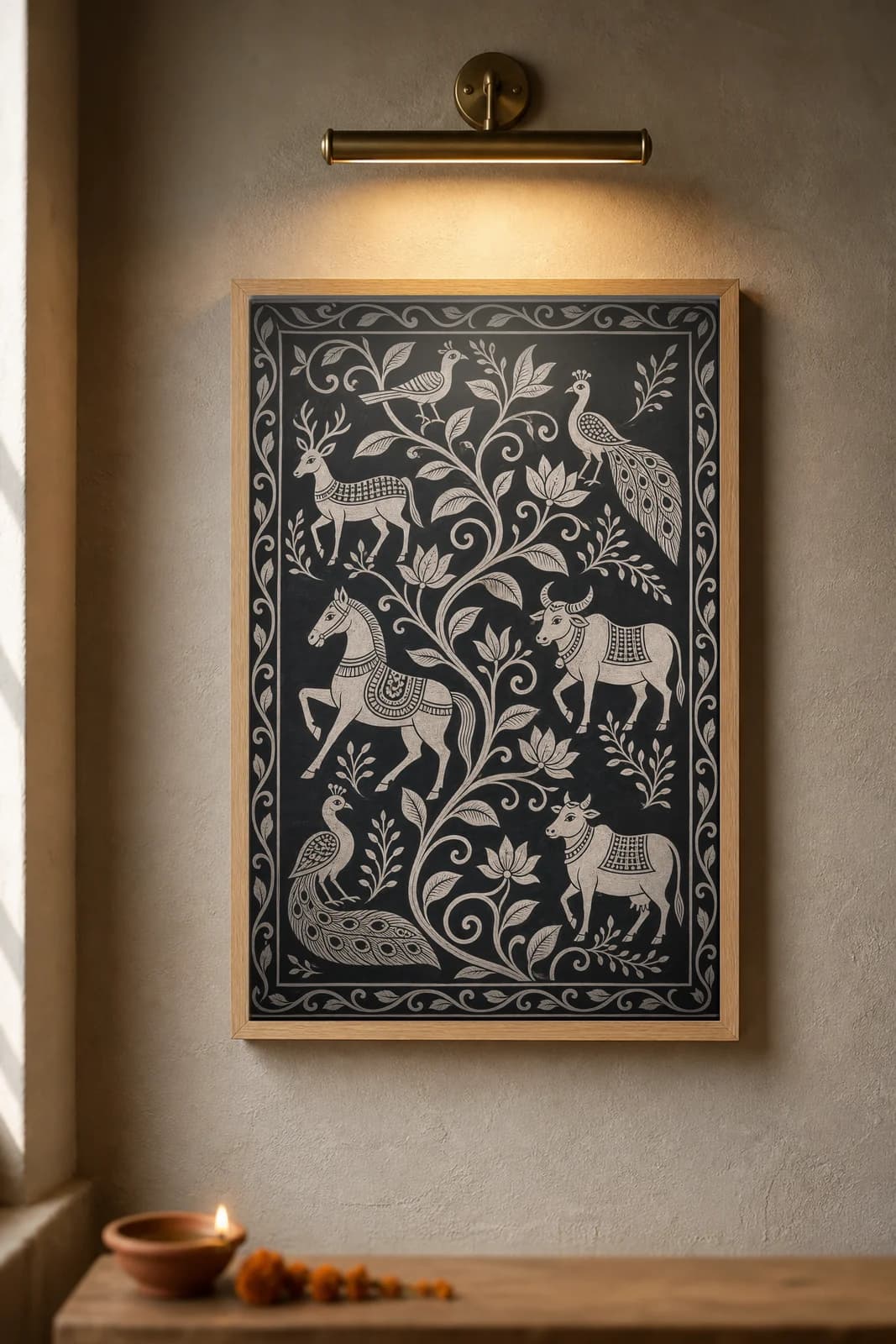
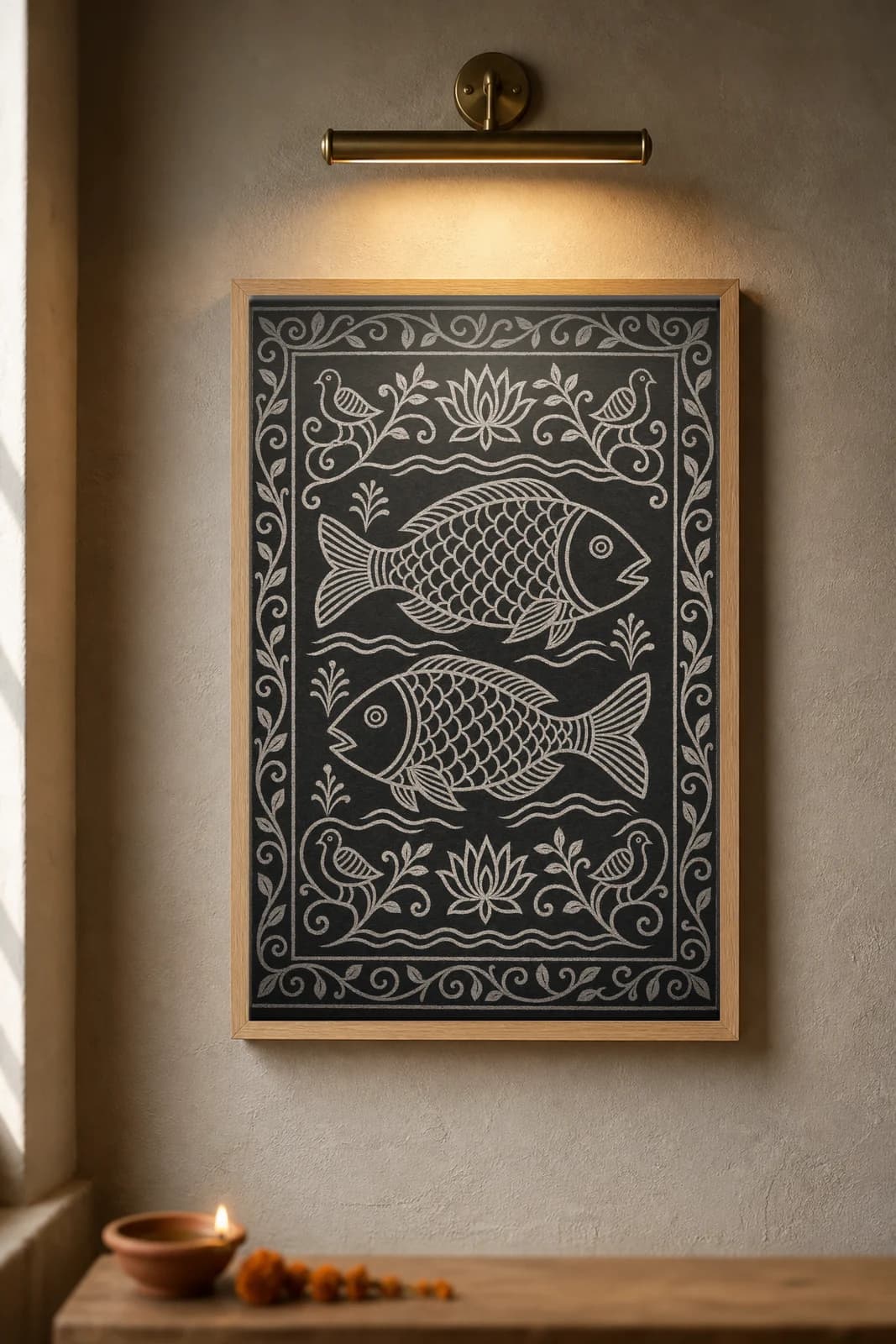
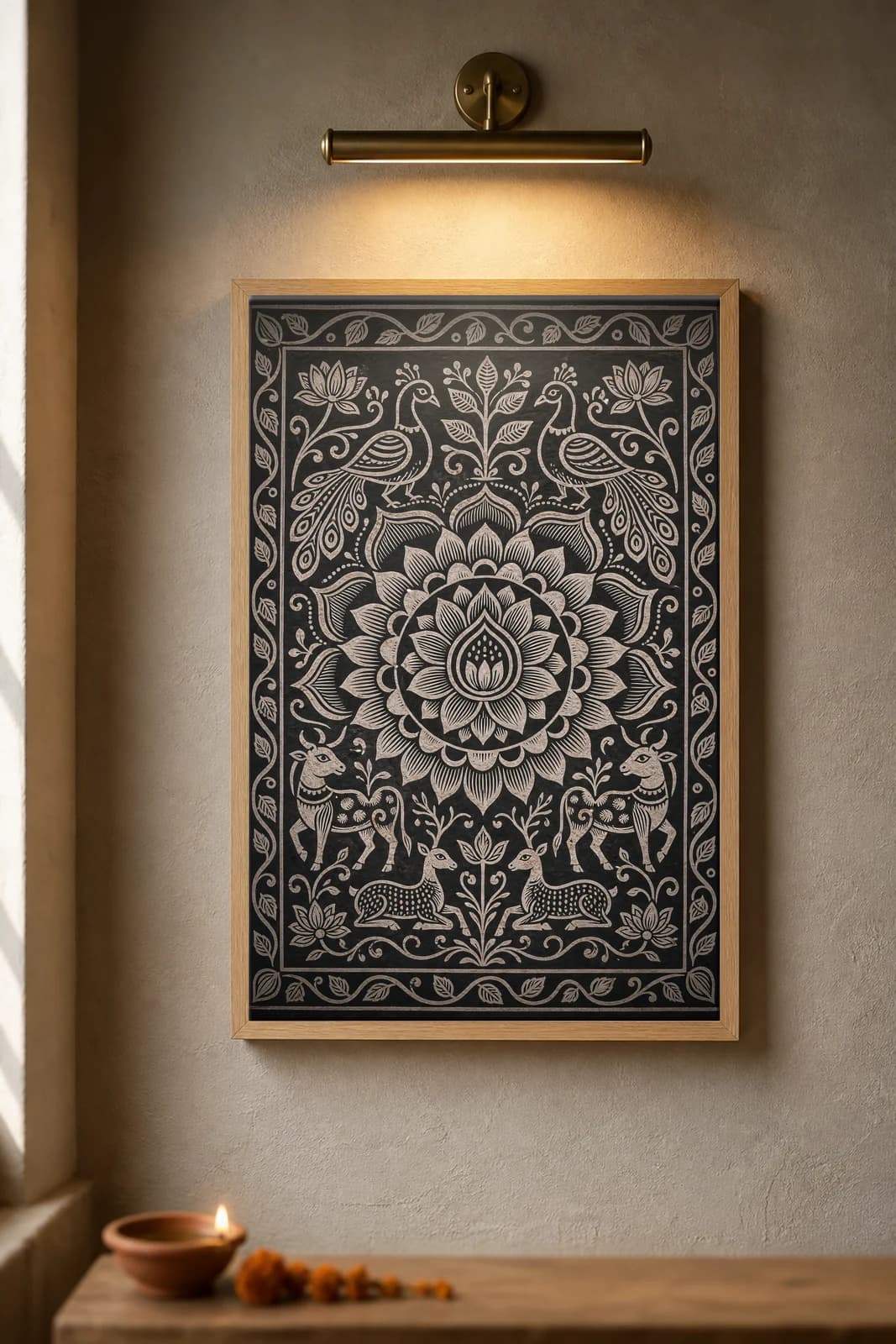
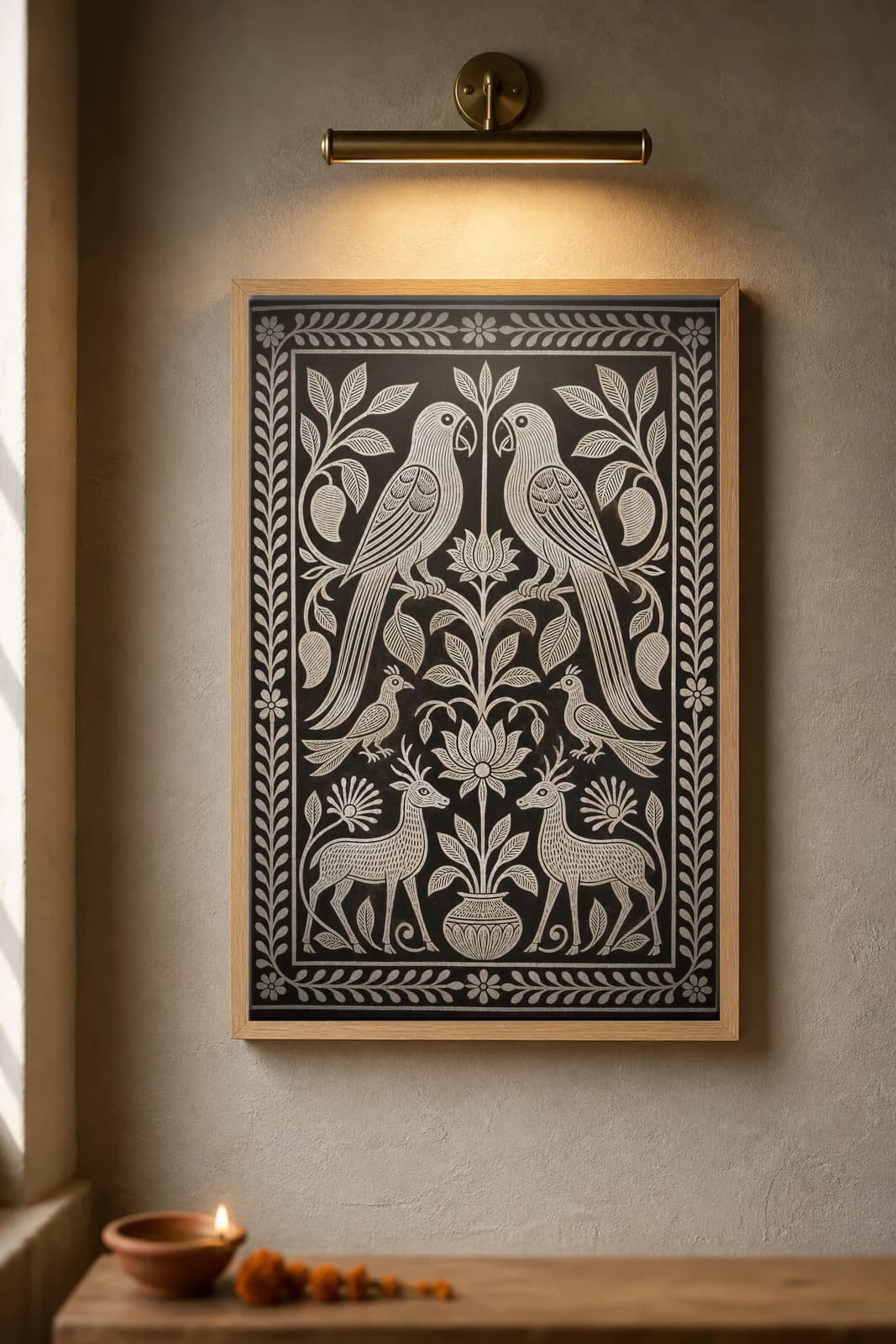
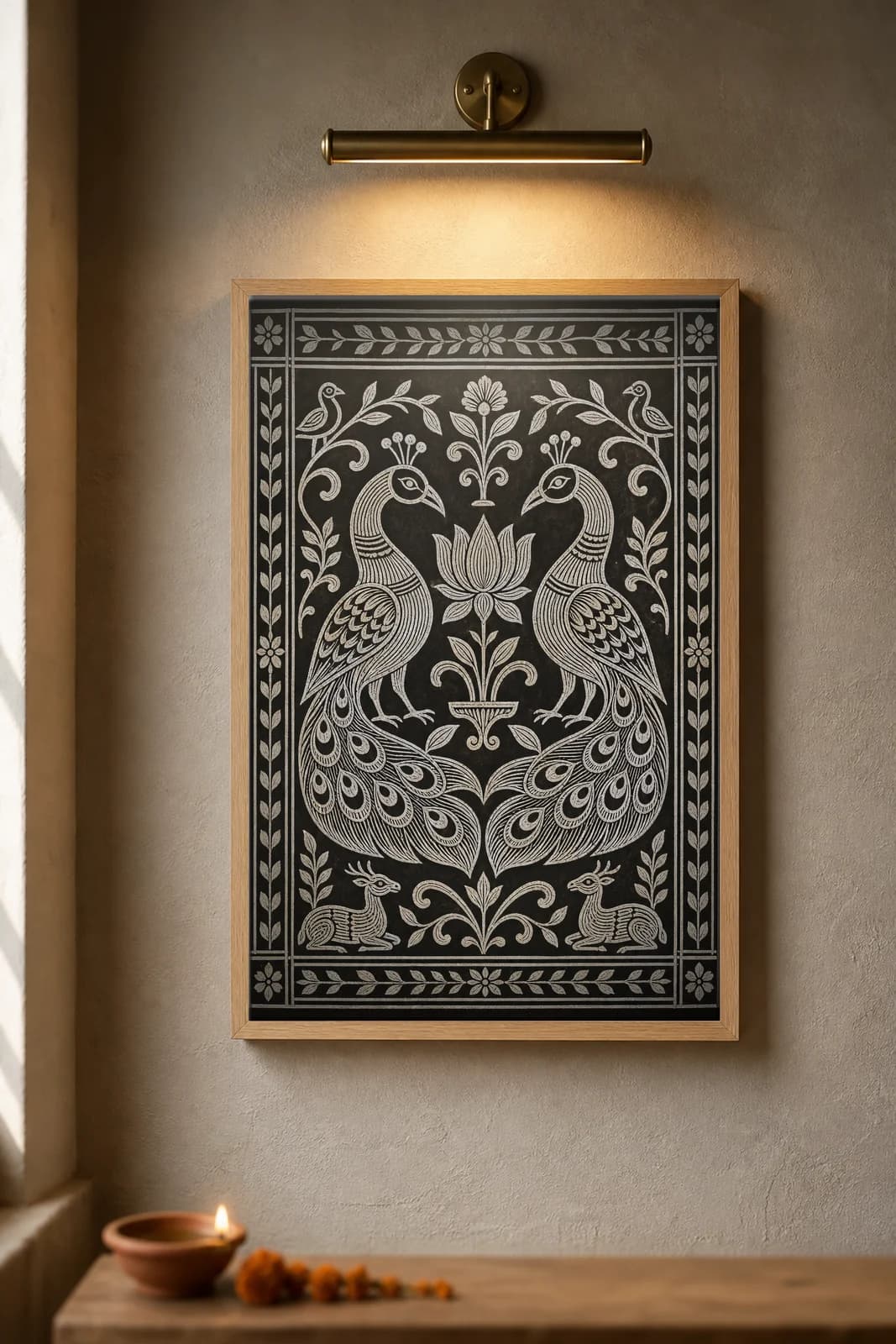
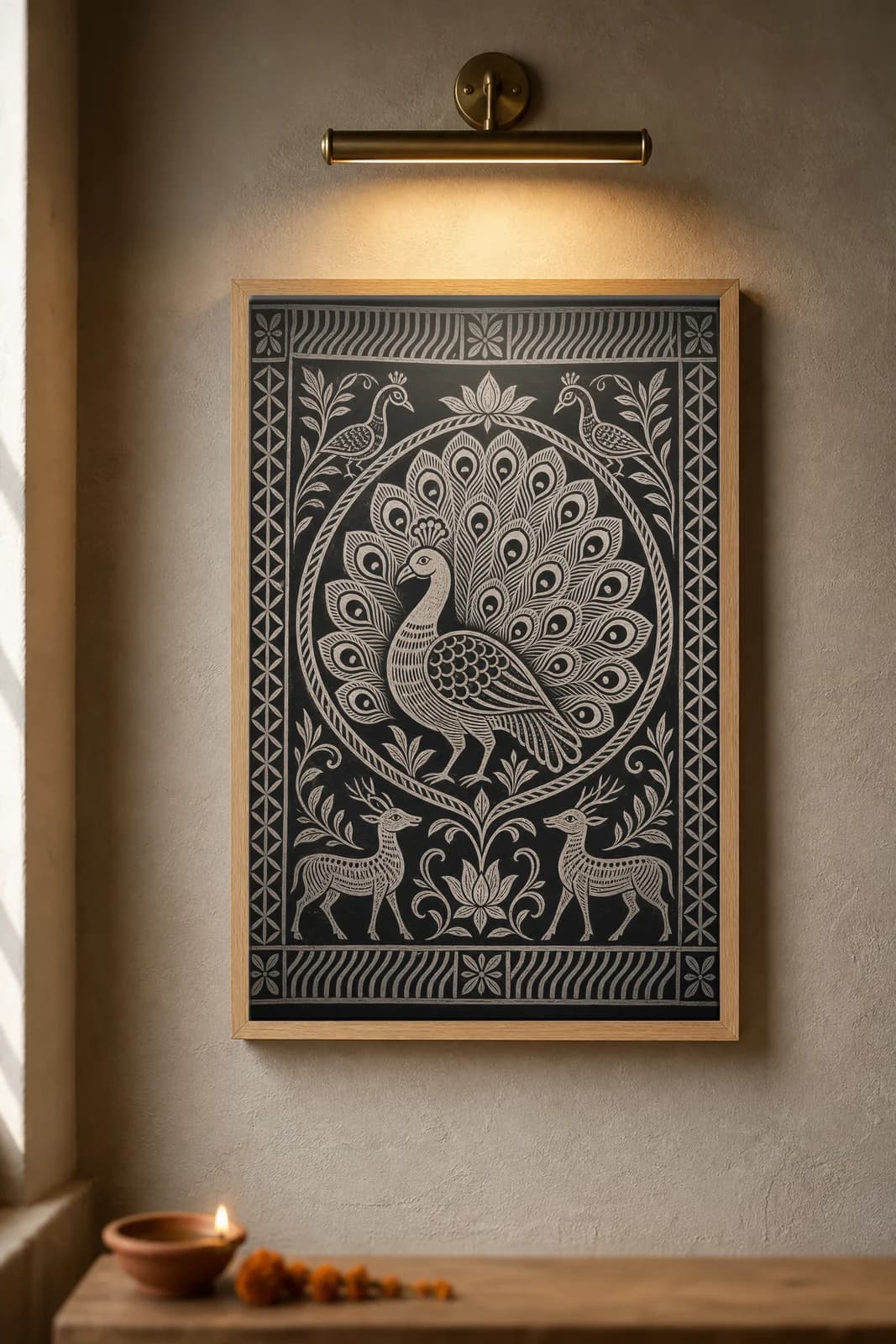
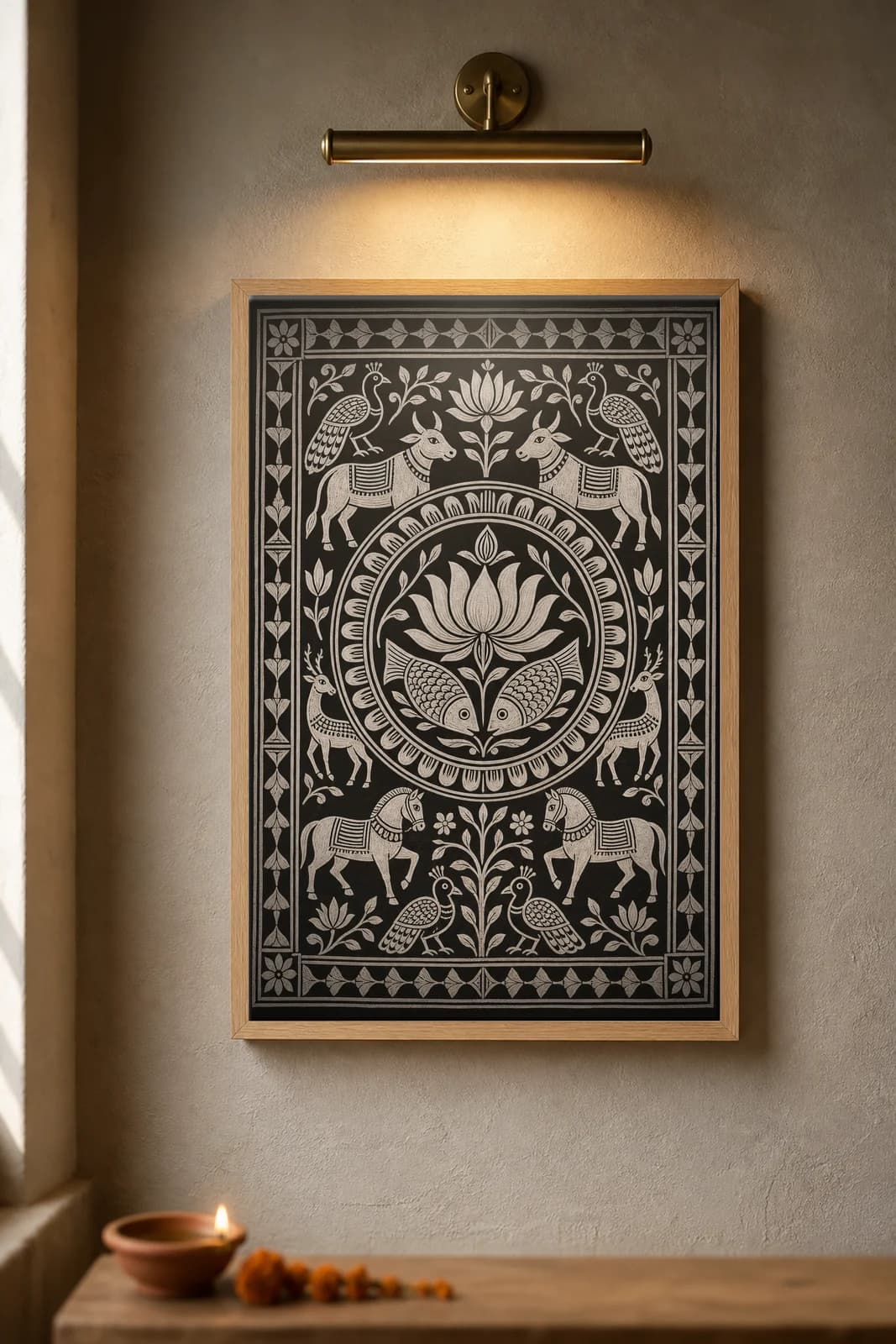
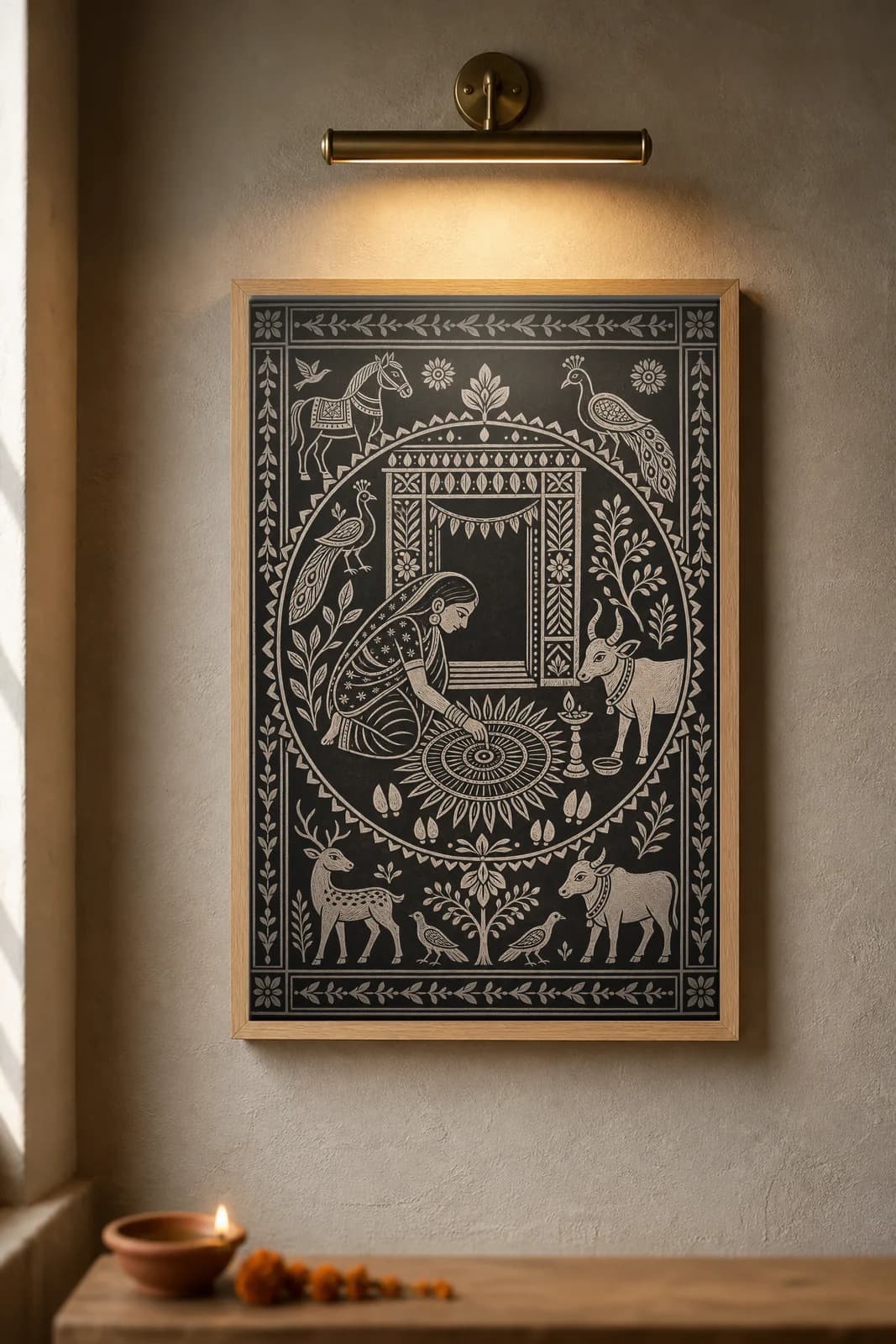
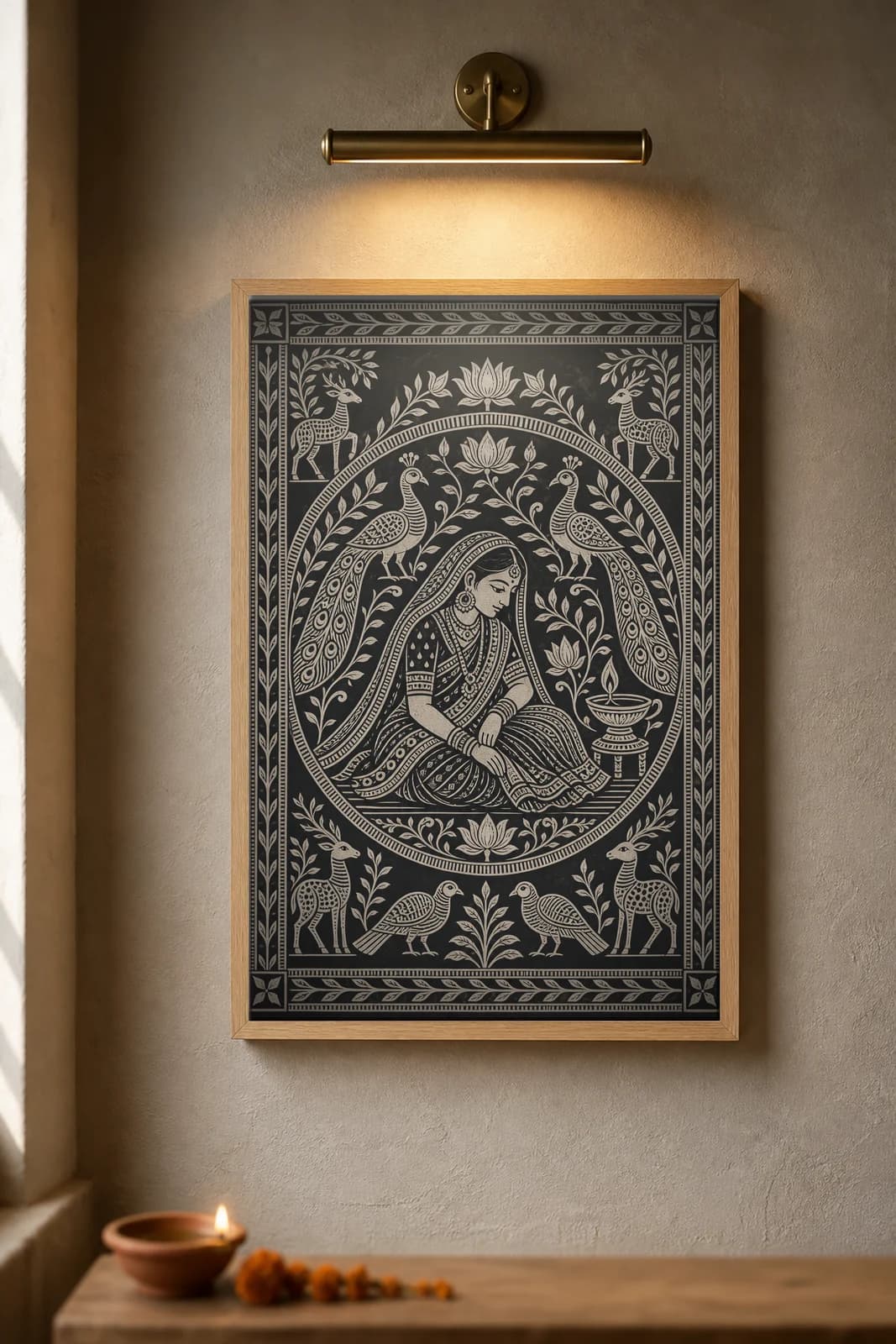
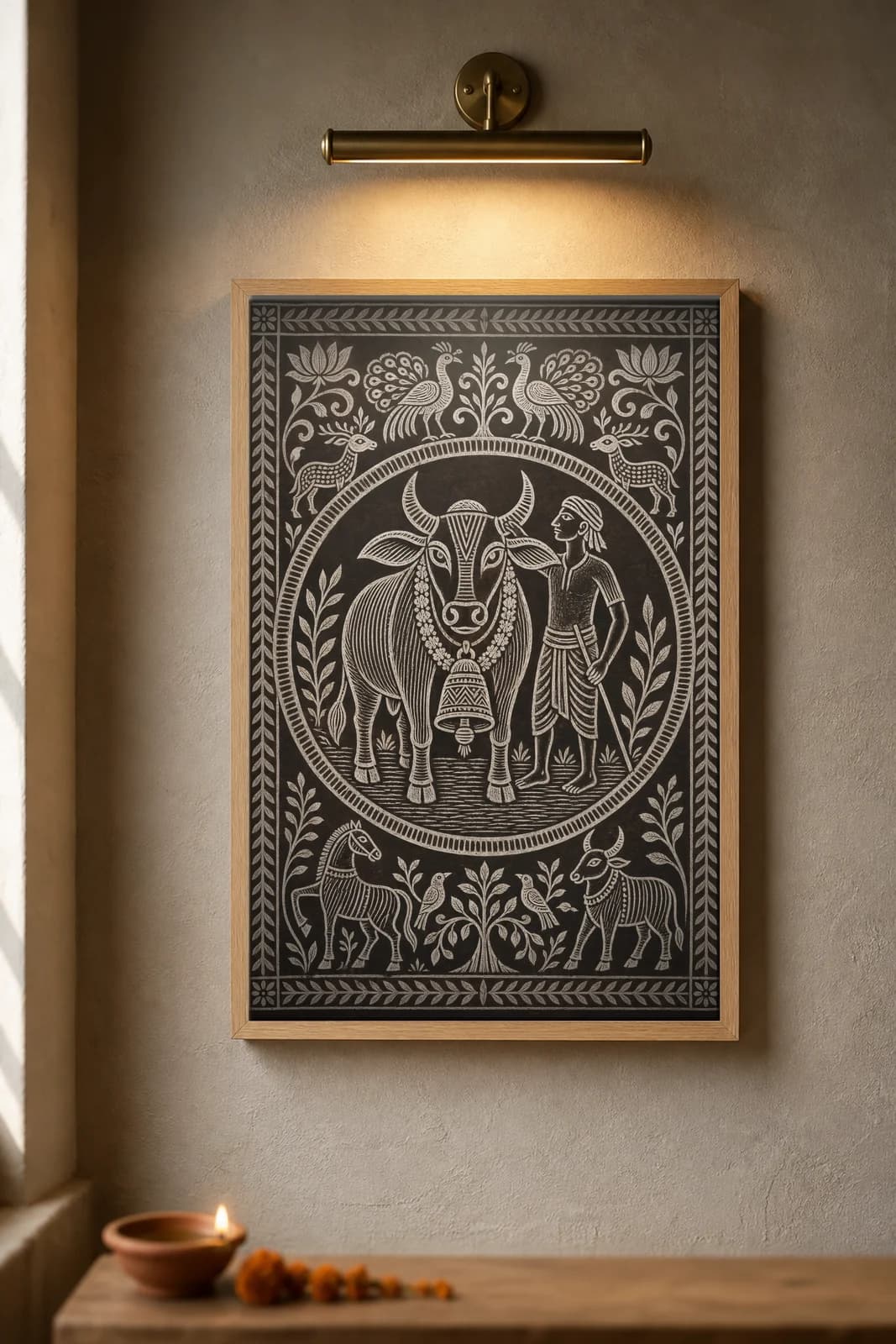
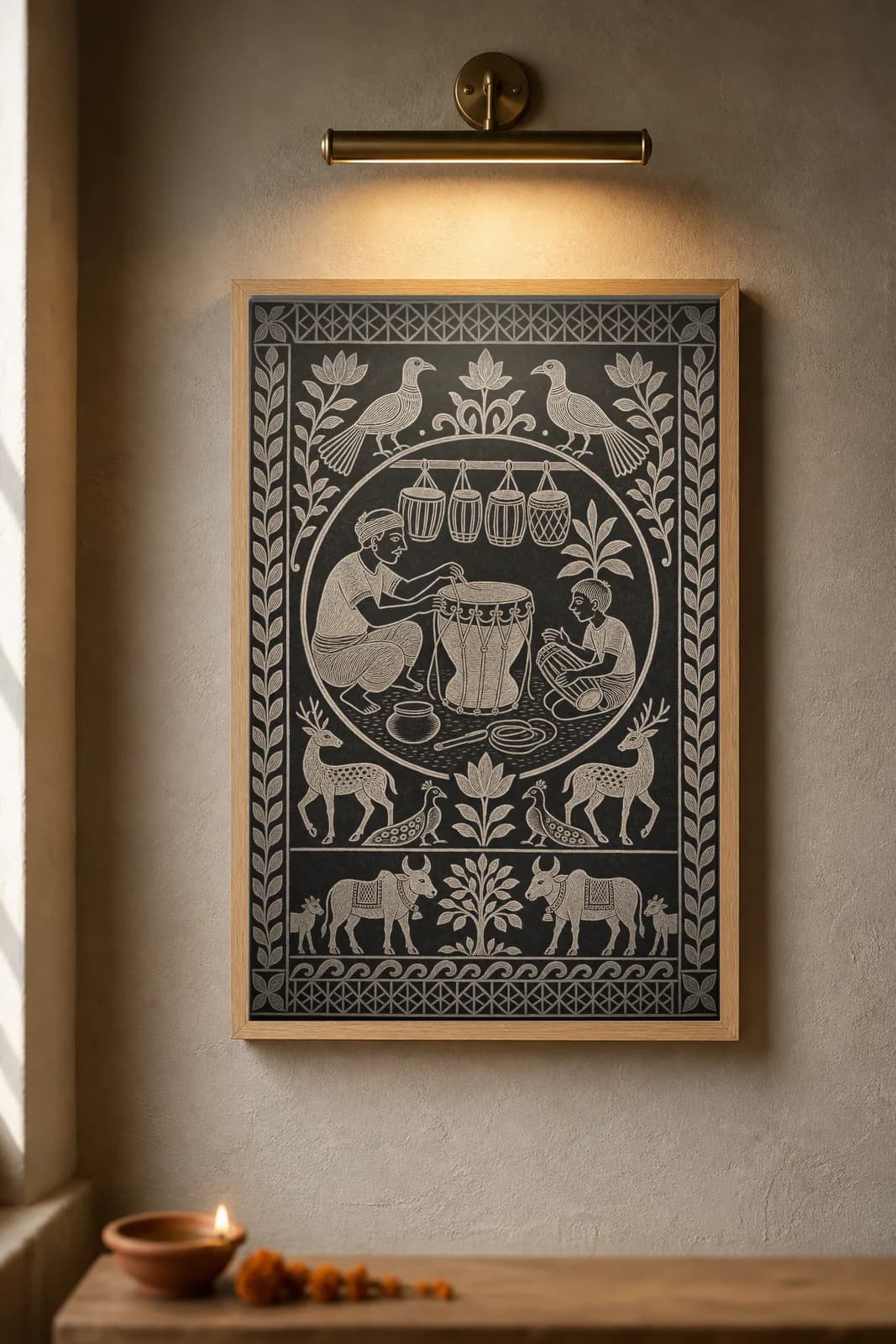
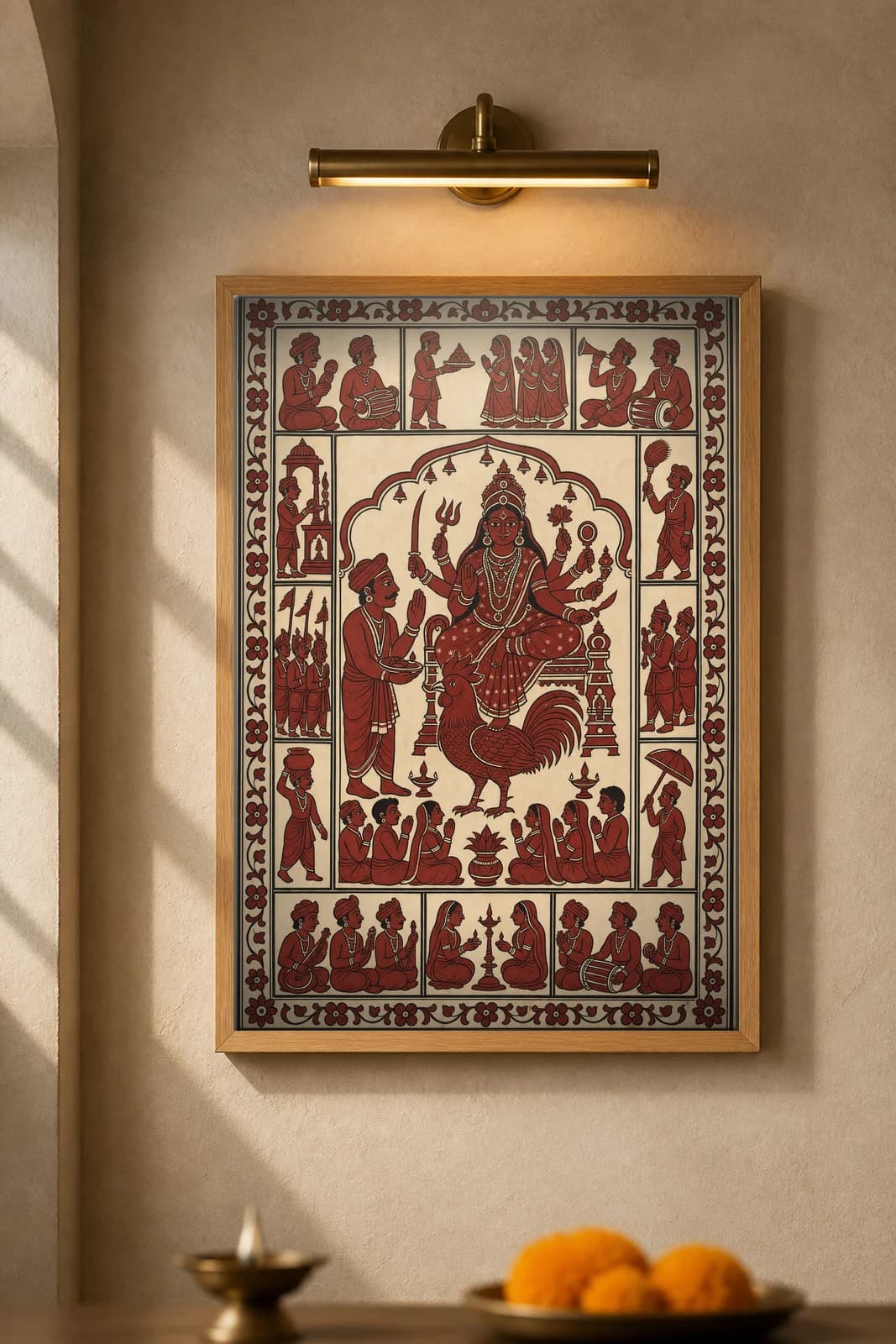
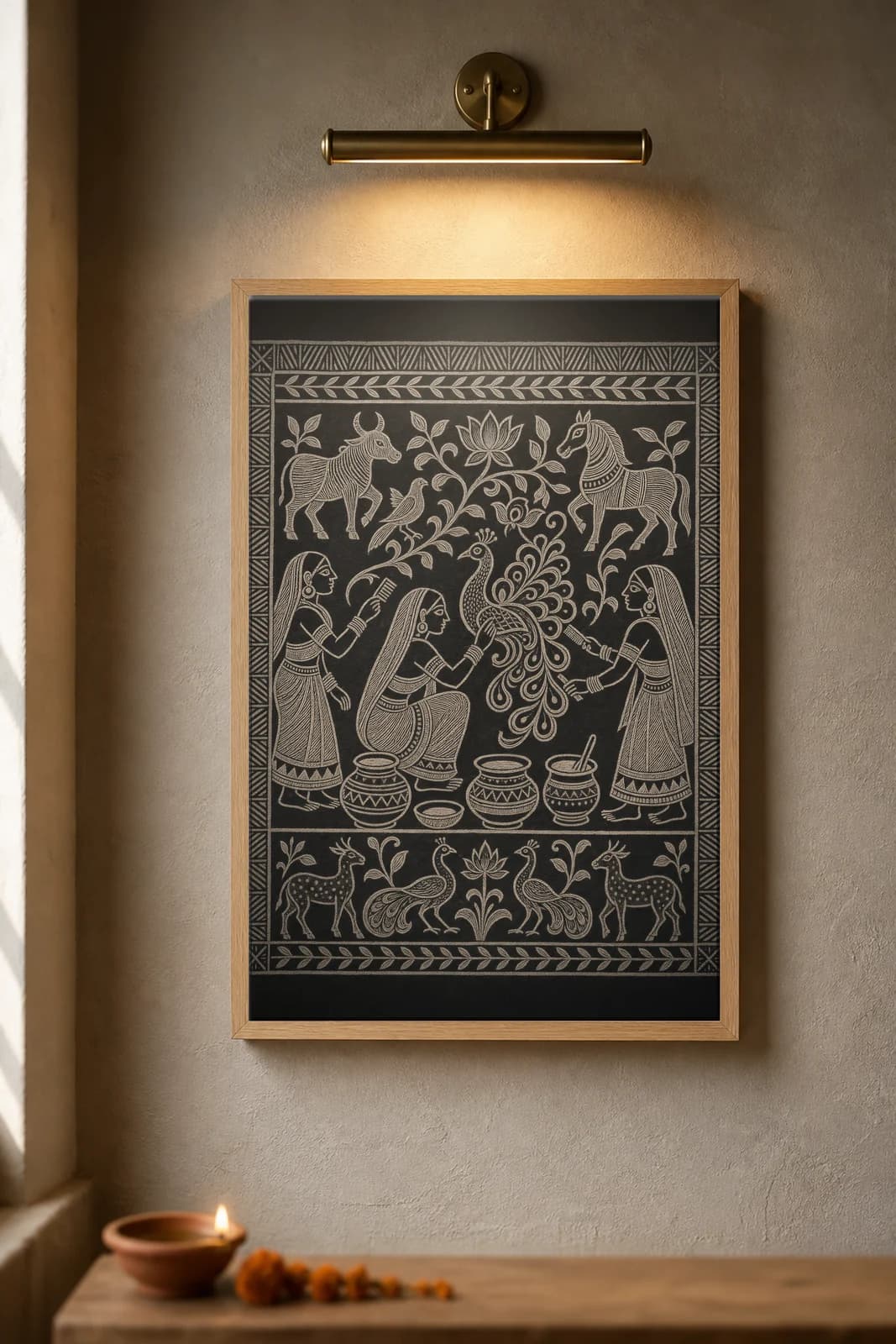
Ceremonial Calm — 18 museum-grade prints that set the mood. Khovar is the marriage wall art of Hazaribagh district, Jharkhand, combed by women of tribal and Kurmi communities onto the bridal chamber before a wedding, using a sgraffito technique — wet white kaolin slip over a dark base coat, combed and scratched away with a broken comb so the dark ground reads as line. Paired fish are a classic Khovar fertility motif, promising plenty and increase to the new household, alongside lotus and peacocks. Mata ni Pachedi means 'the cloth of the Mother Goddess' — a ritual shrine textile of the Vaghri / Devipujak ('worshippers of the Goddess') community of Ahmedabad, Gujarat. Historically barred from temples, the community painted the Goddess on cloth and carried their own portable shrine. Khovar is the marriage and household wall art of Hazaribagh district, Jharkhand, combed by women of tribal and Kurmi communities using a sgraffito technique — a wet white kaolin slip over a dark base coat, combed and scratched away with a broken comb so the dark ground reads as line. The aripan (also called aripana or chowk) is the auspicious threshold floor drawing women lay at the door around harvest, Sohrai and weddings to welcome cattle, guests and fortune, often with a lit diya.