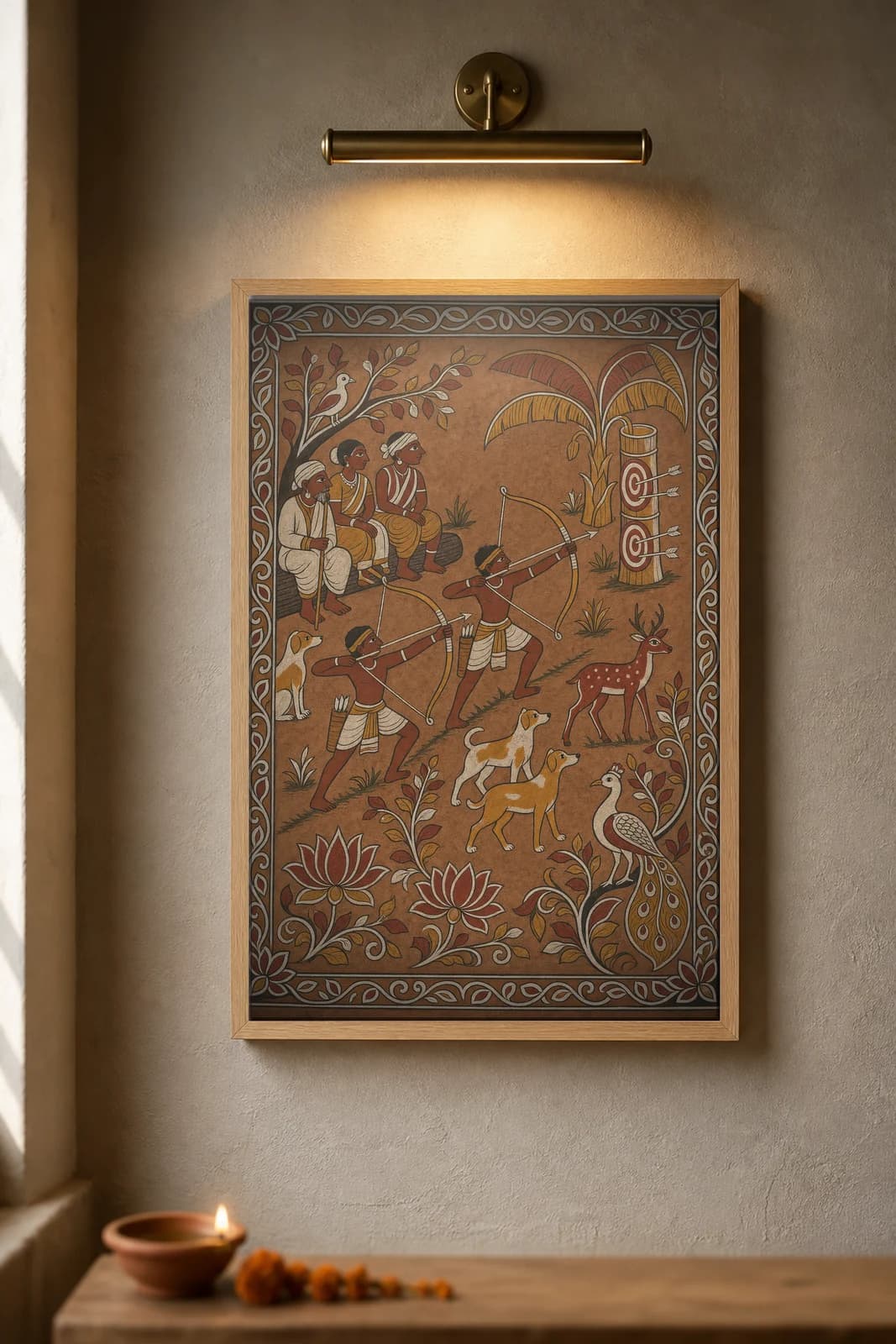
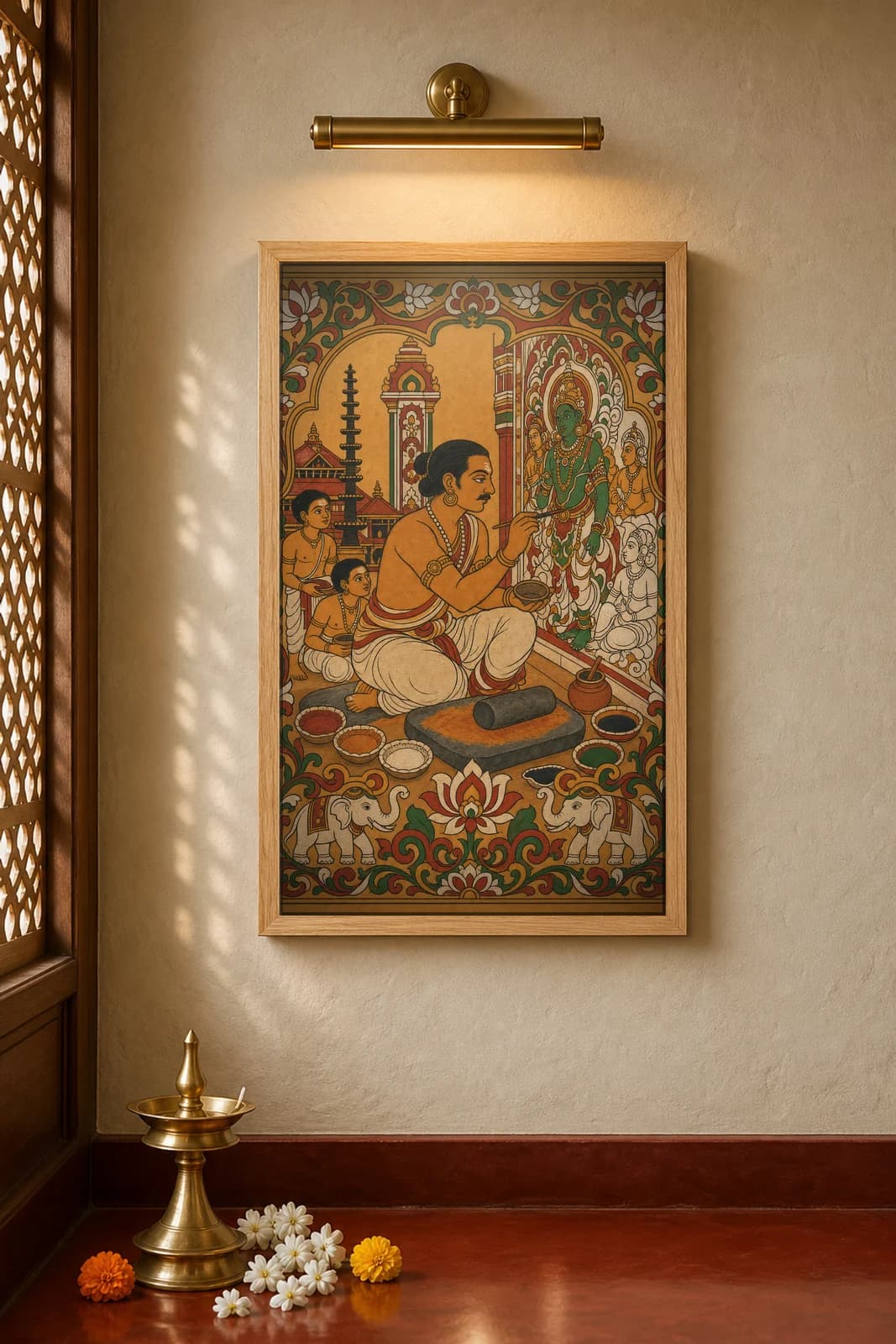
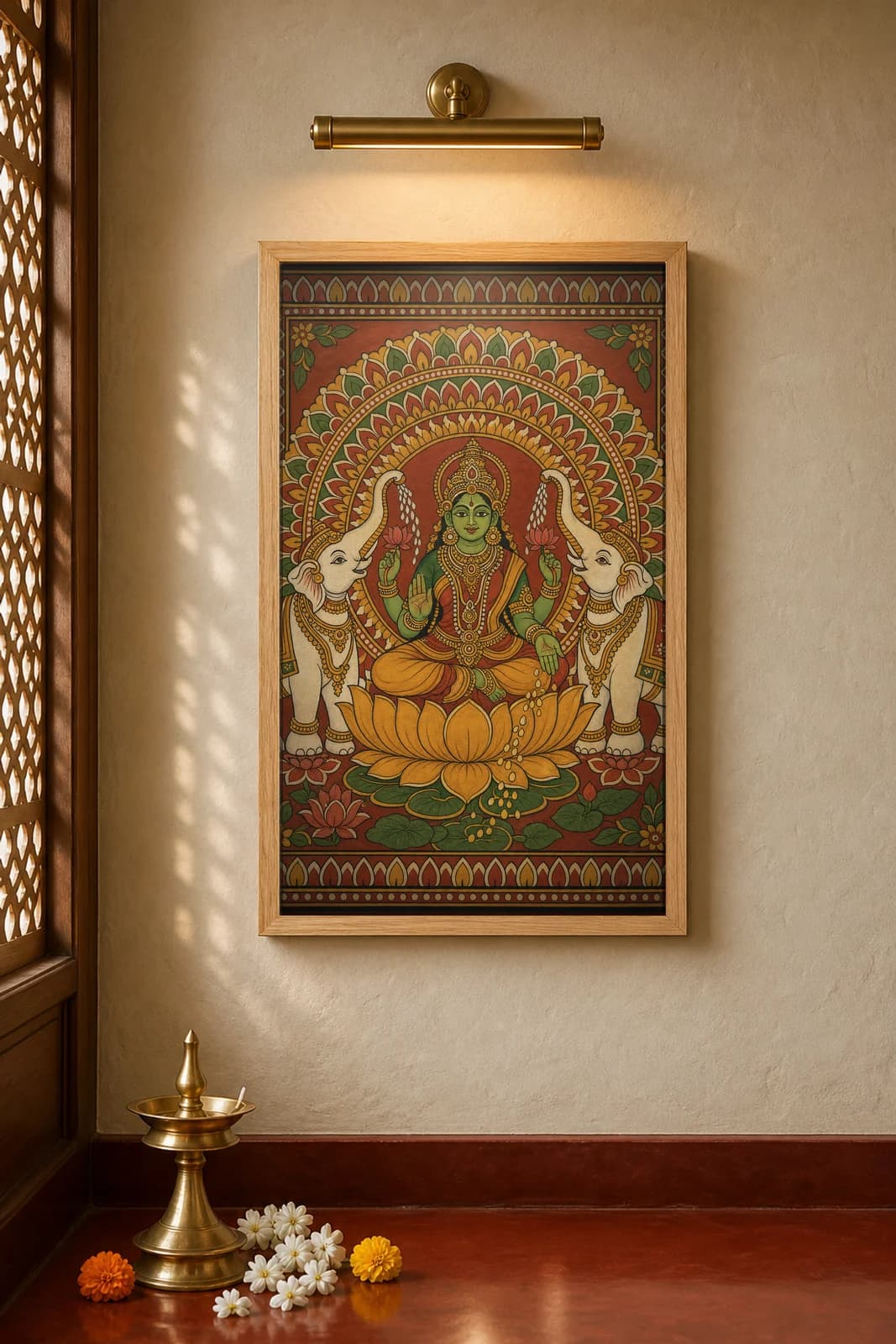
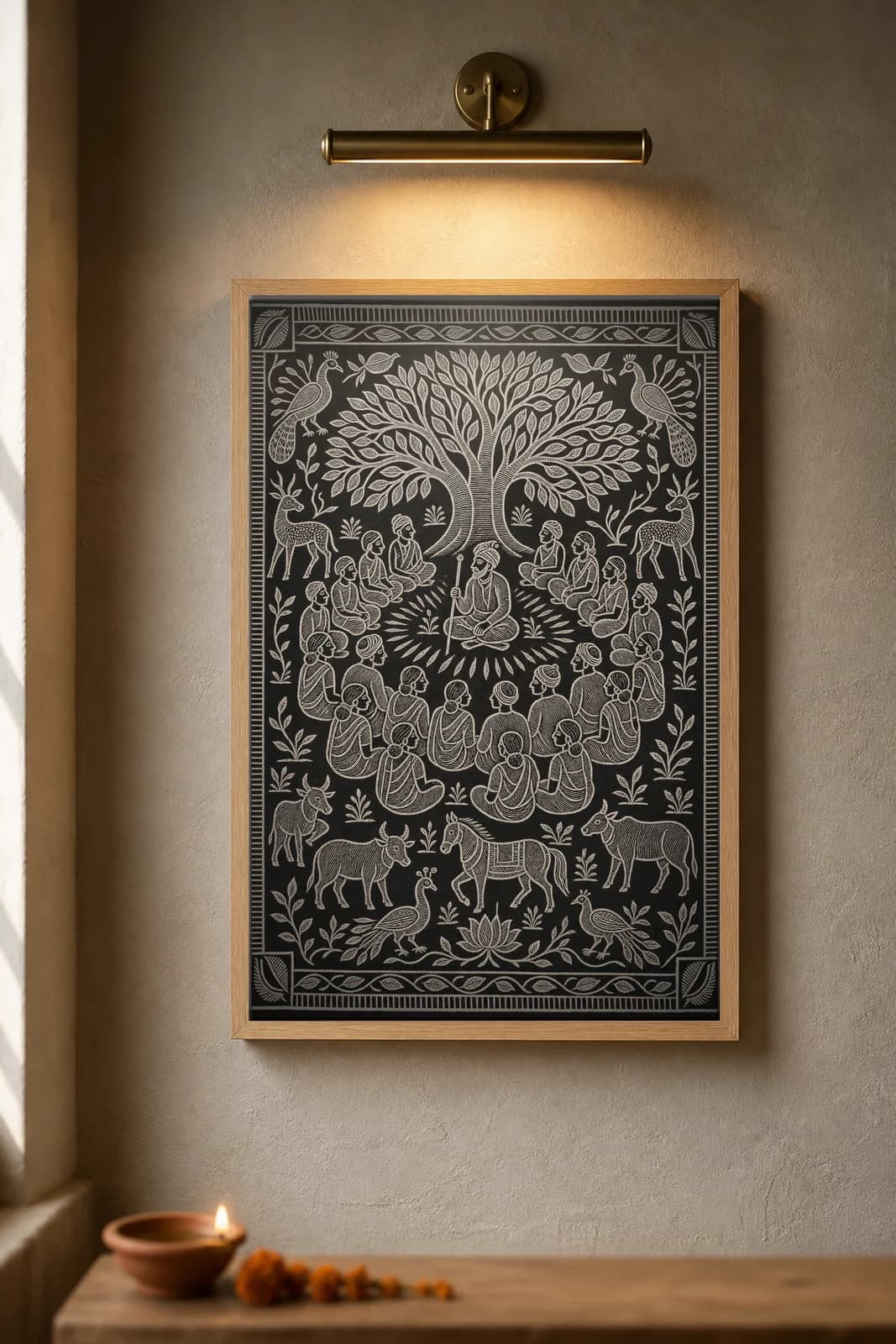
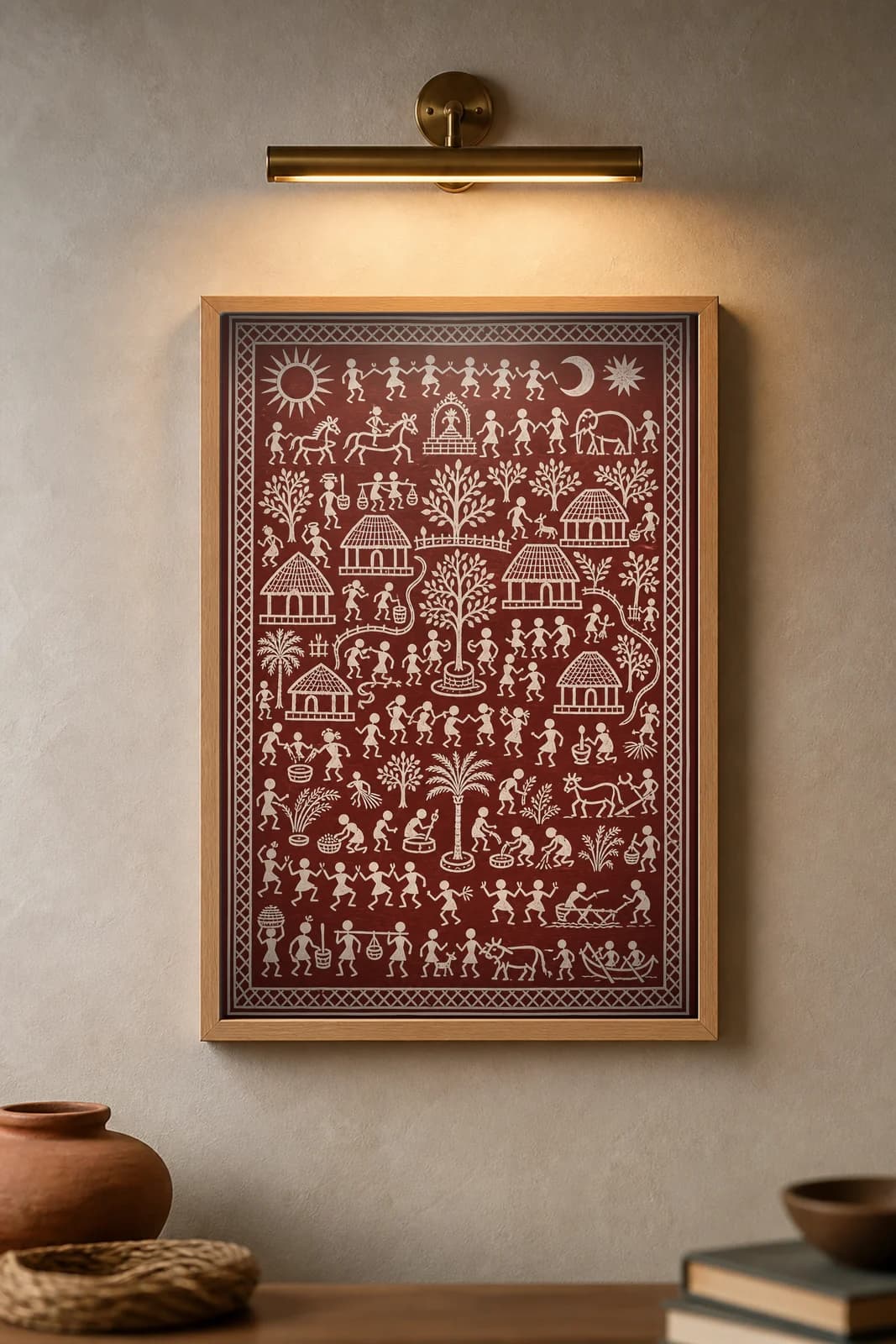
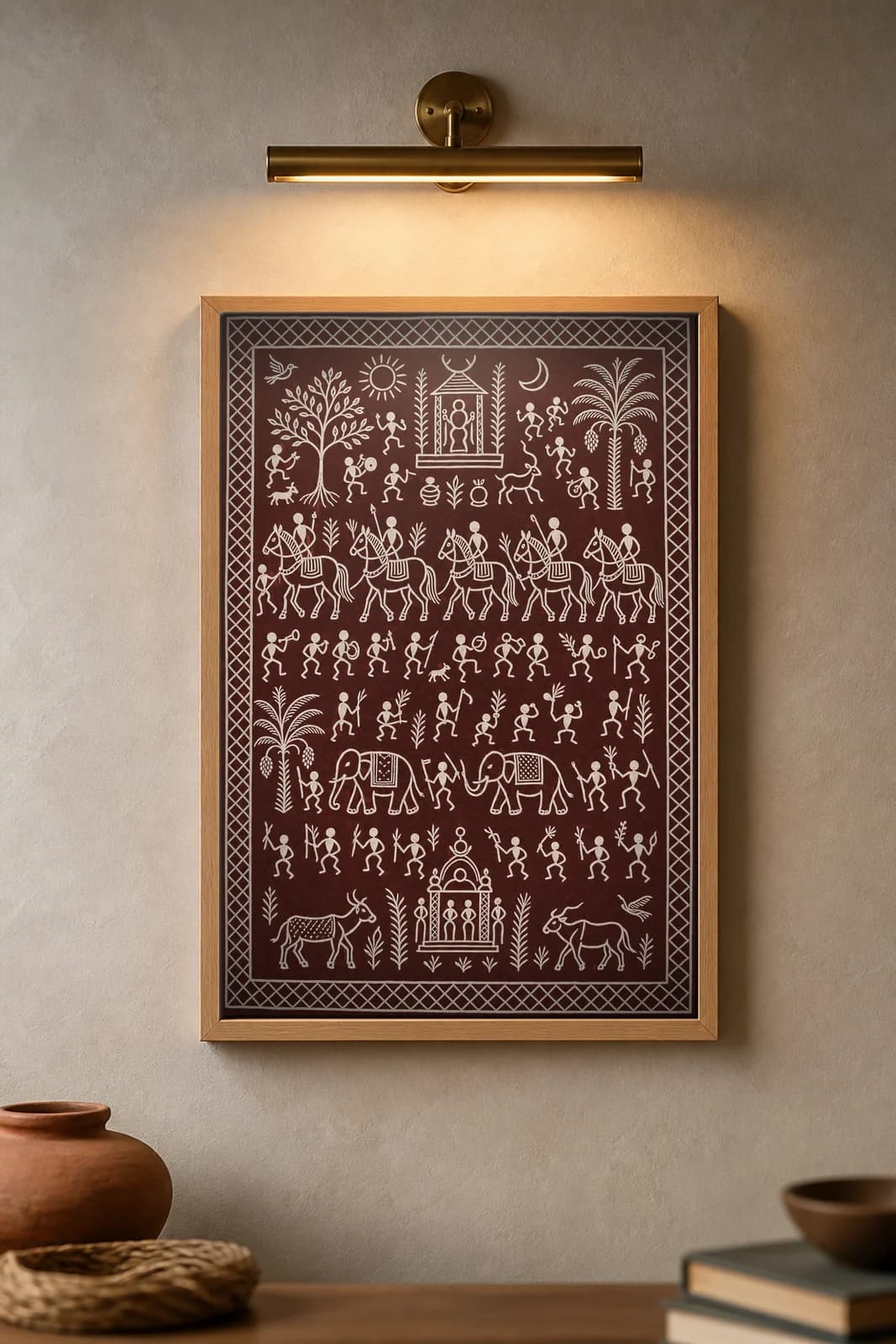
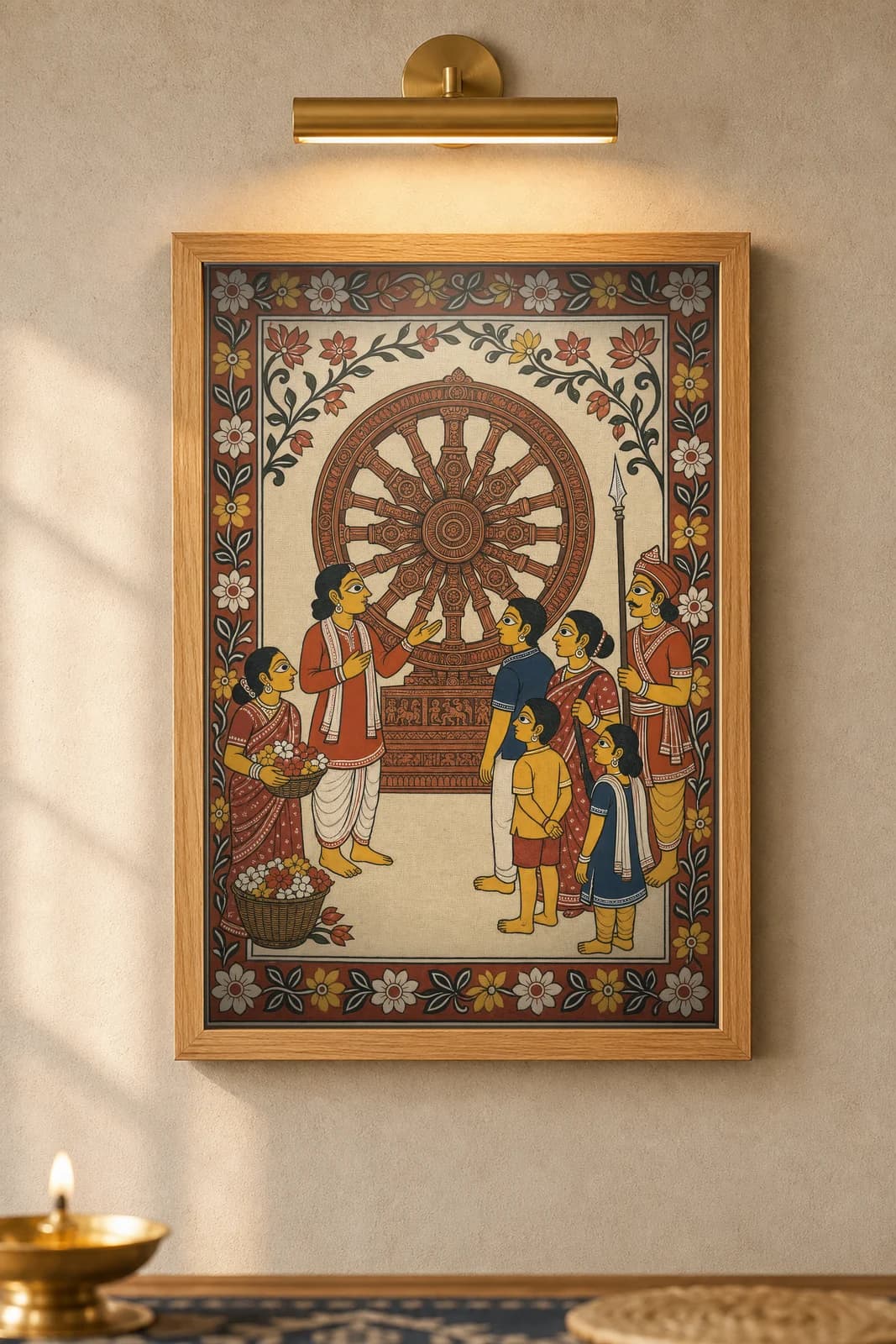
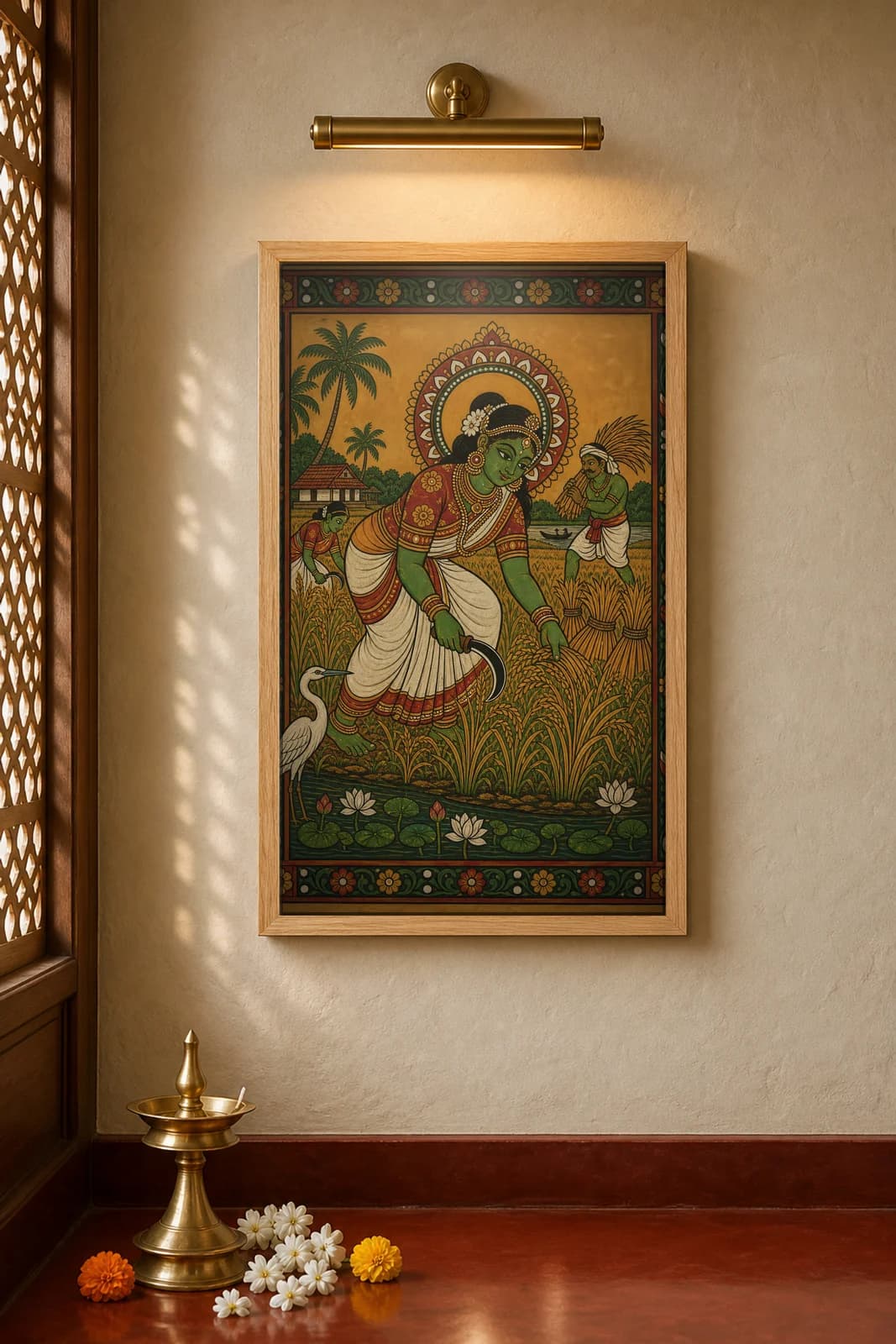
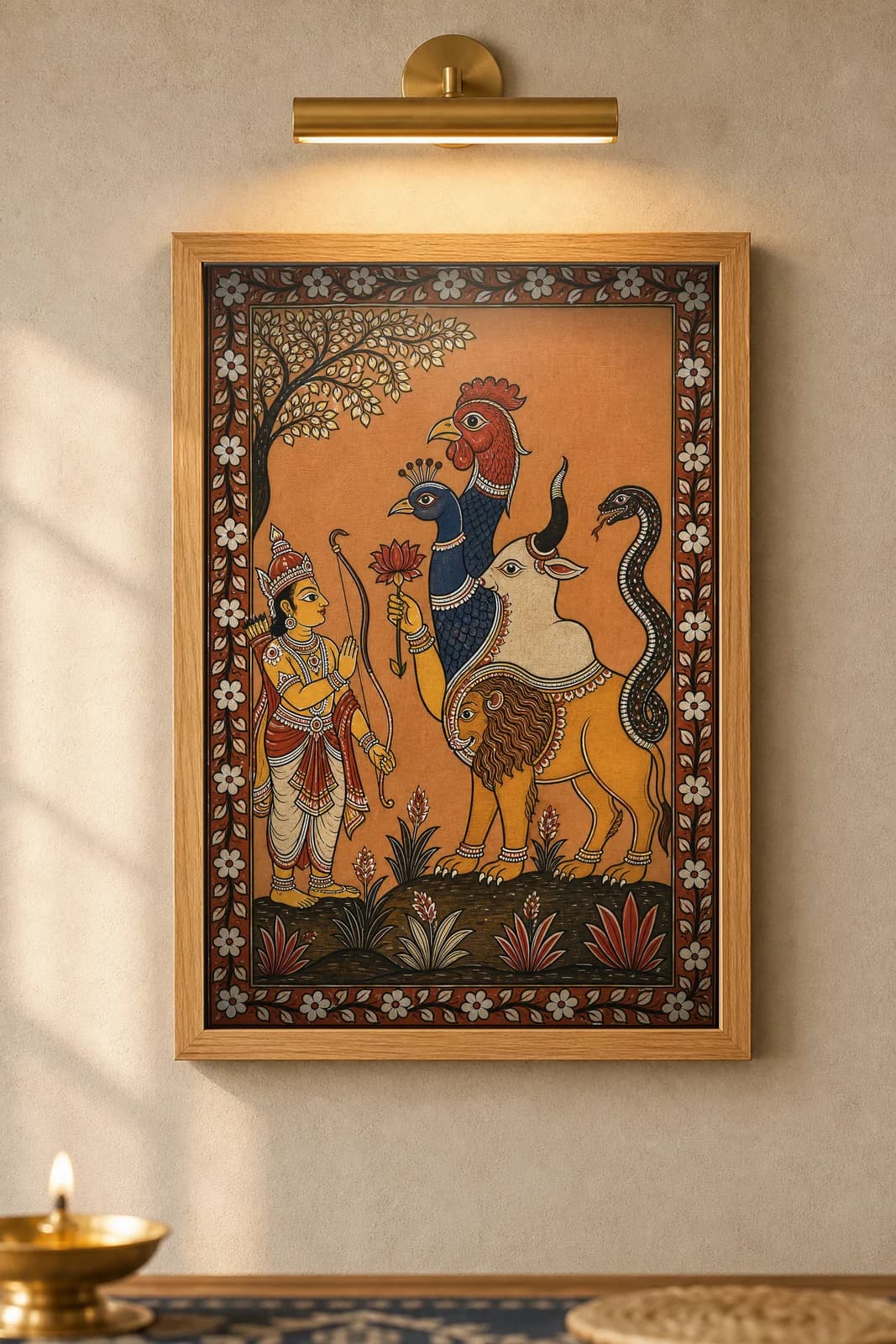
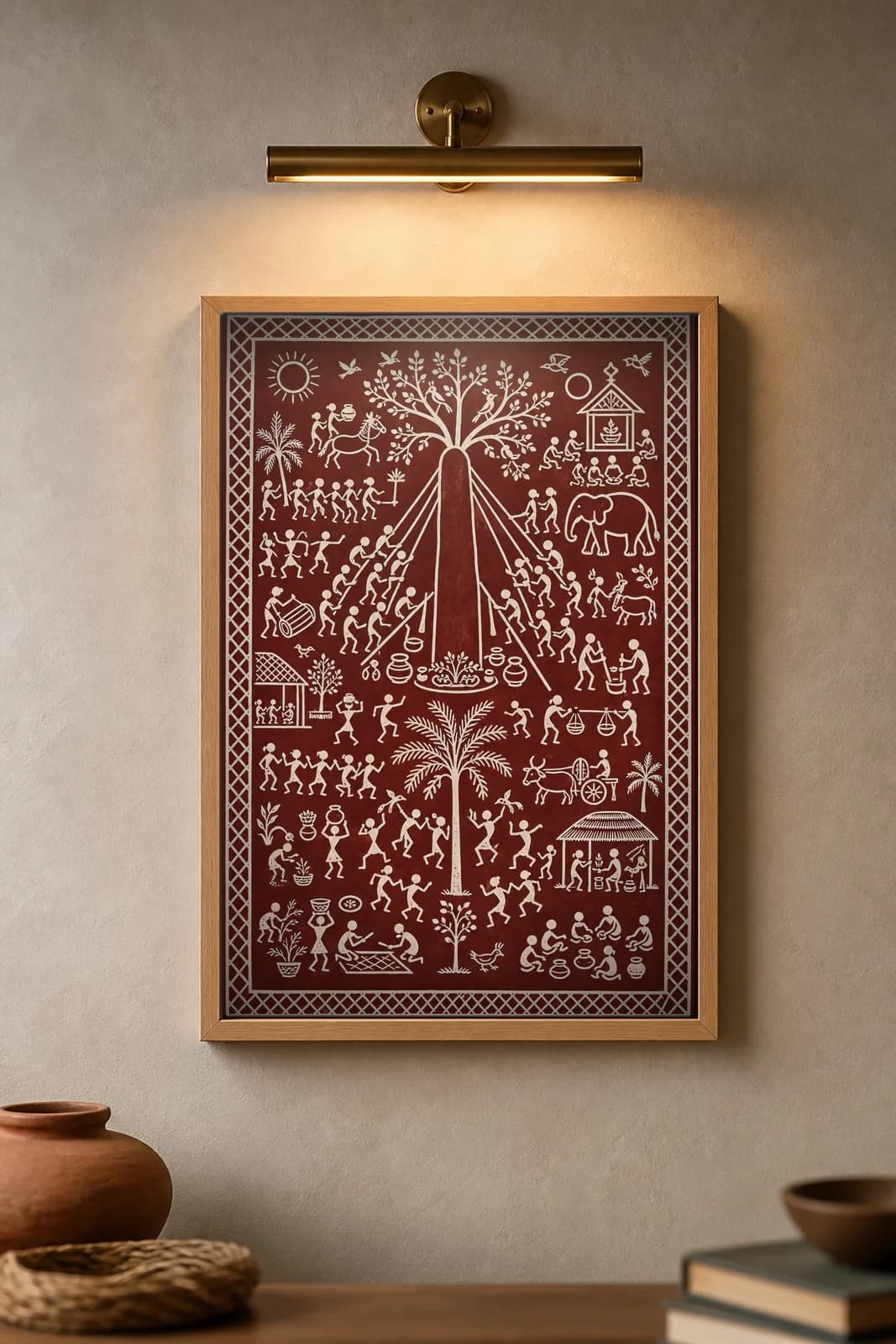
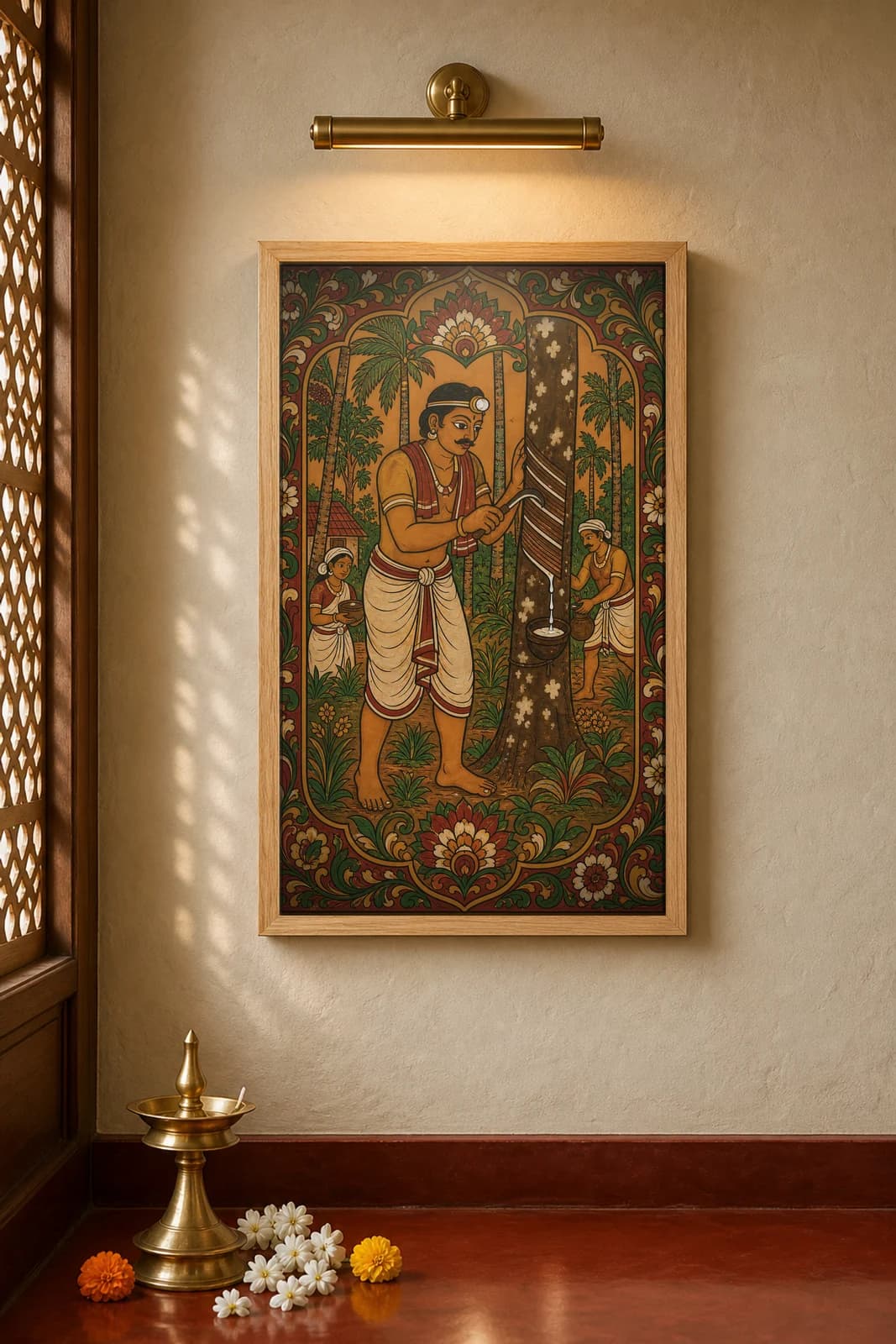
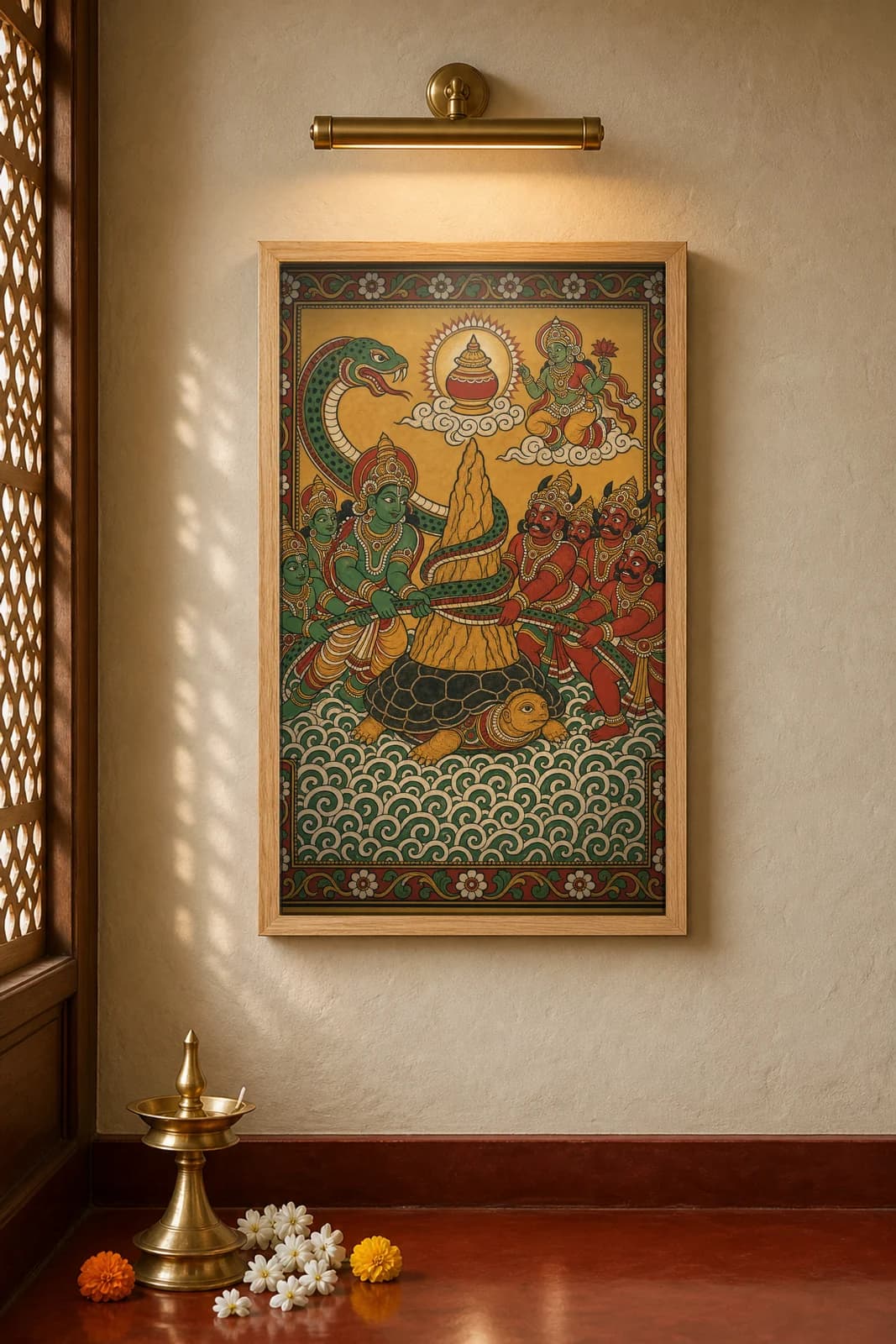
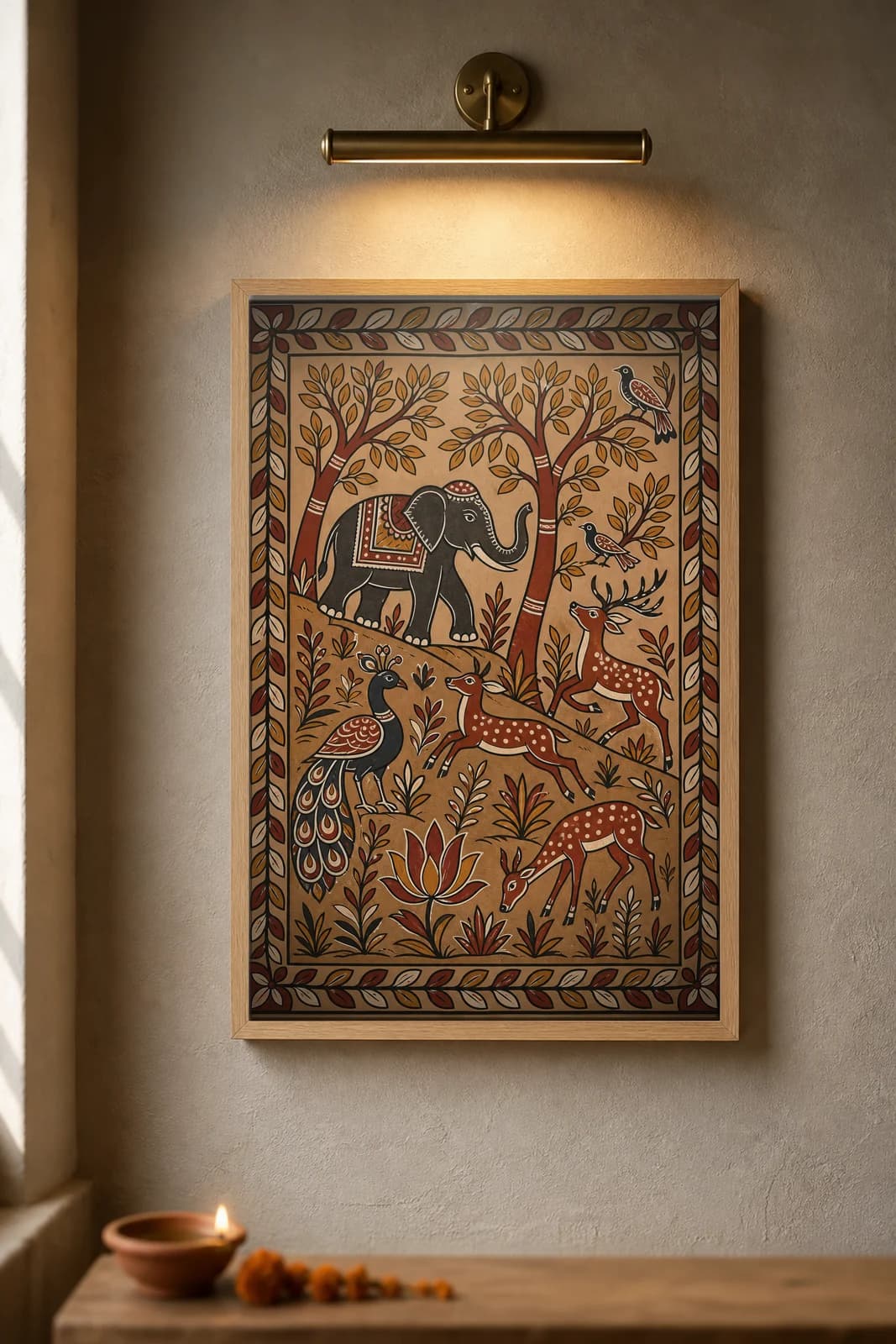
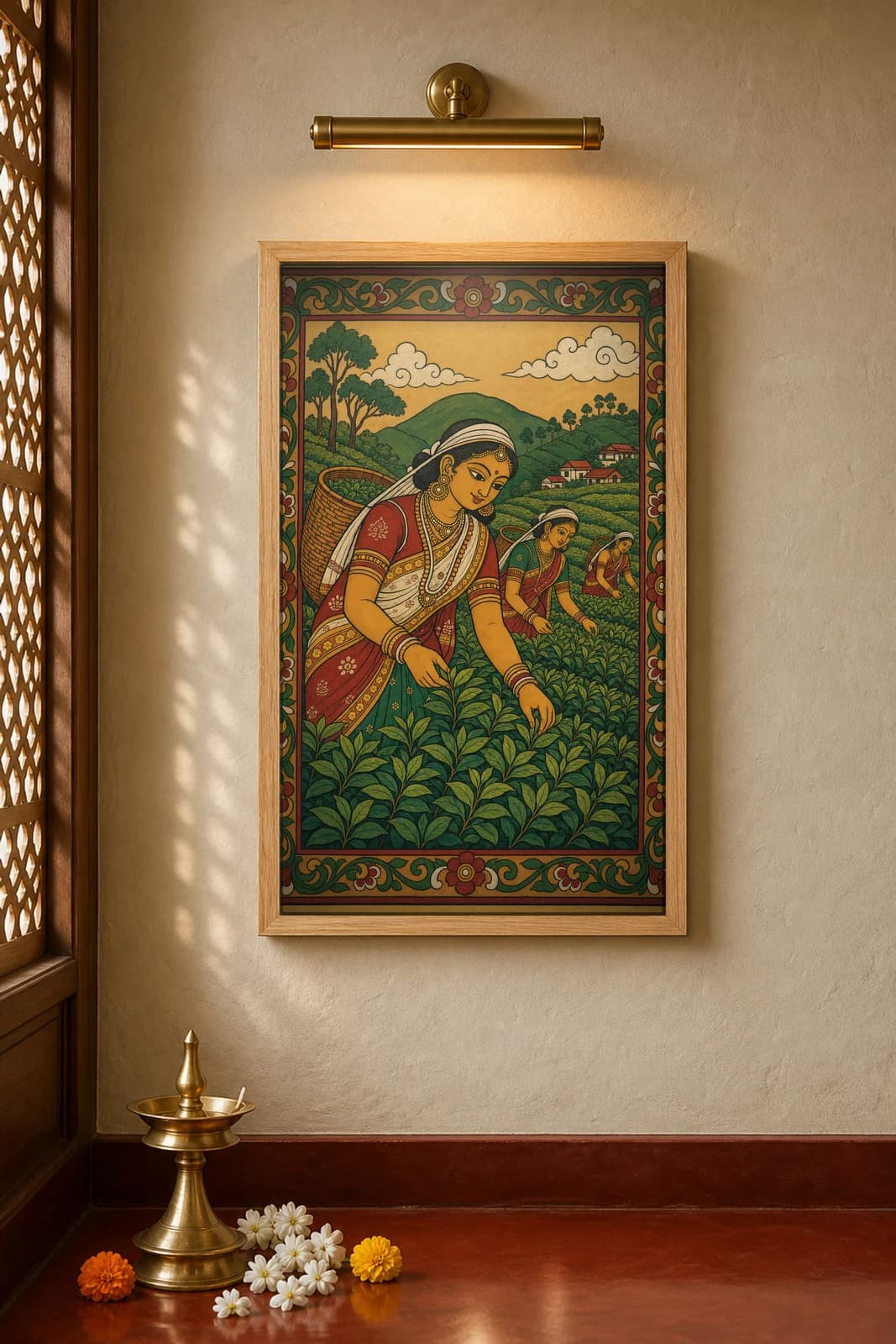
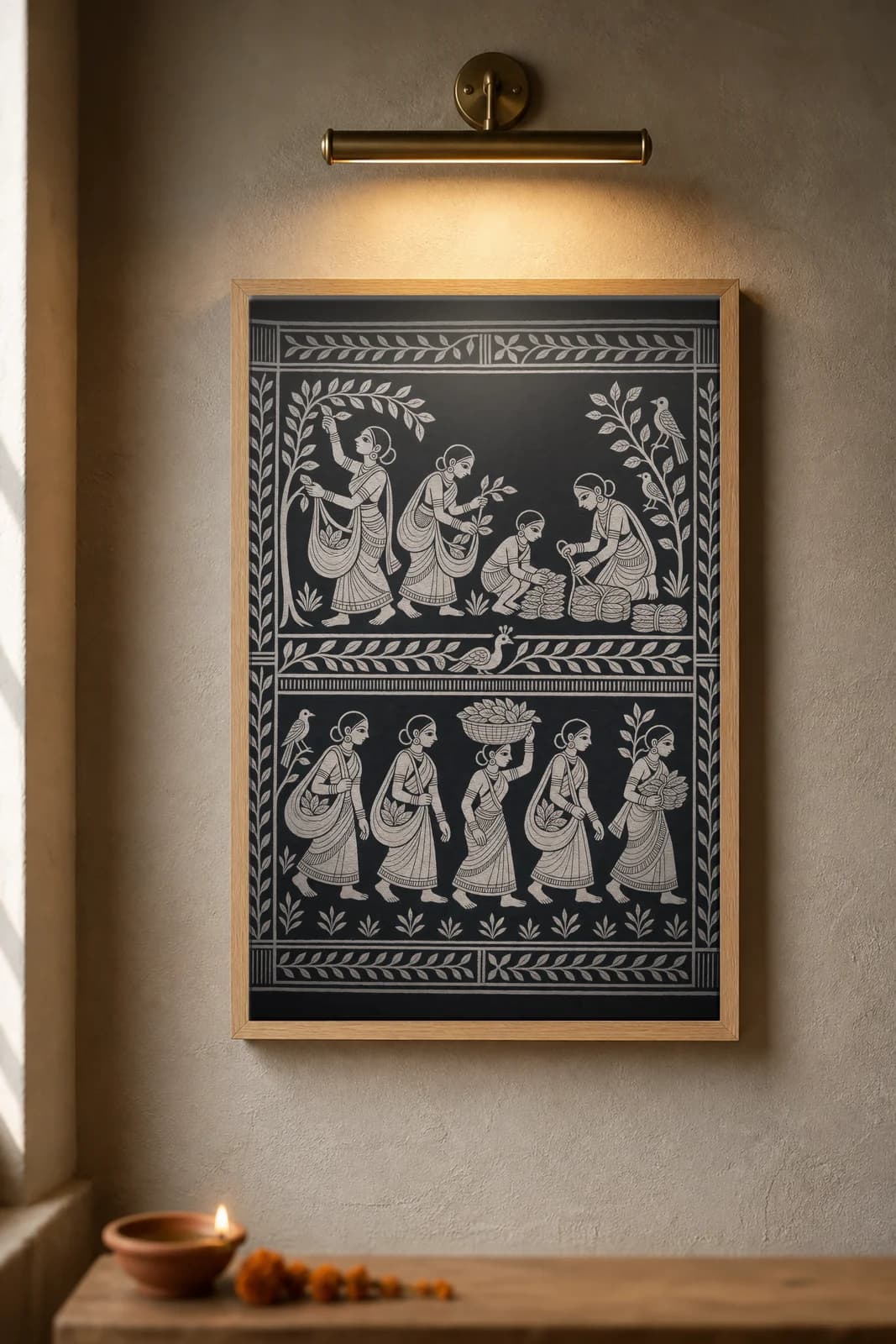
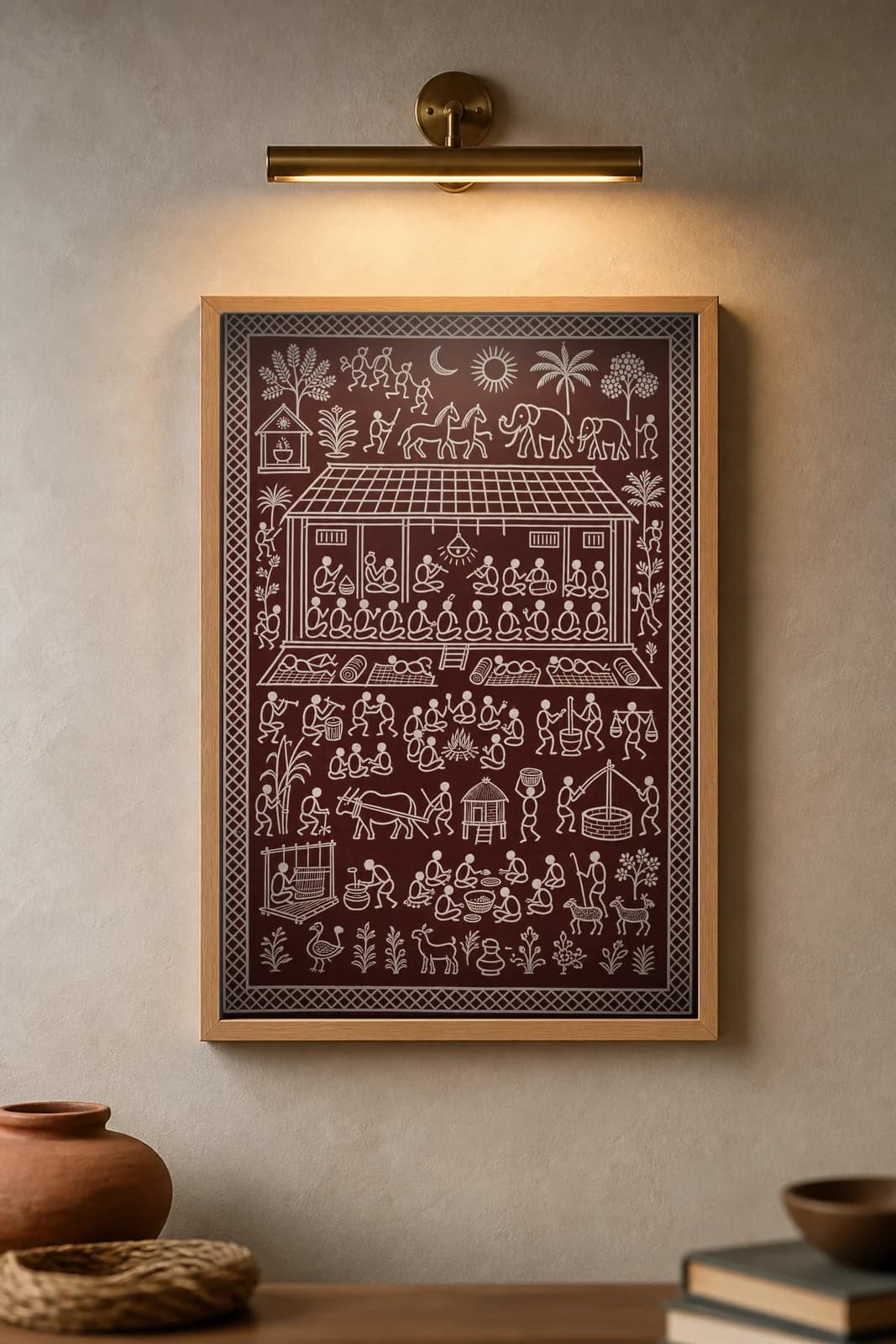
Office — 19 museum-grade prints sized and toned for the room. DESIGN BRIEF: the brief was the communal youth hall, an interior crowded with seated figures, so we cut its front wall away and drew the rows of young people straight on under one wide roof, a standing elder with a raised hand at the centre, and set the village day around it — ploughing, weaving, cooking, the well. We held the fill to medium and kept the fish-net frame open rather than a packed mesh, so even with the hall full the oxblood ground threads through and each seated row and chore stays legible. Sohrai is a harvest-season wall art of Hazaribagh district, Jharkhand, painted by women of tribal and Kurmi communities in natural earth pigments — manganese black, hematite red, kaolin white and ochre yellow — on a daubed mud wall to welcome cattle home after the rice harvest, around Diwali. The forest creatures the communities live among — elephants, deer, peacocks — recur on these walls as a celebration of the wild country around the village. Gajalakshmi — Lakshmi flanked by elephants who anoint her with water from raised pots — is one of the most auspicious forms of the goddess of fortune and abundance, an ancient motif across Indian temple art. Here she is painted in bhitti chitra, Kerala's temple-mural tradition that flourished roughly from the 16th to 19th century and is still painted today, in its ornamental-mandala mode: flat panchavarna pigments (red, yellow, green, black, white over an ochre ground), a bold lamp-black outline, the radial lotus-mandala prabha and the school's elongated lotus-shaped eyes.


$49


$49


$49