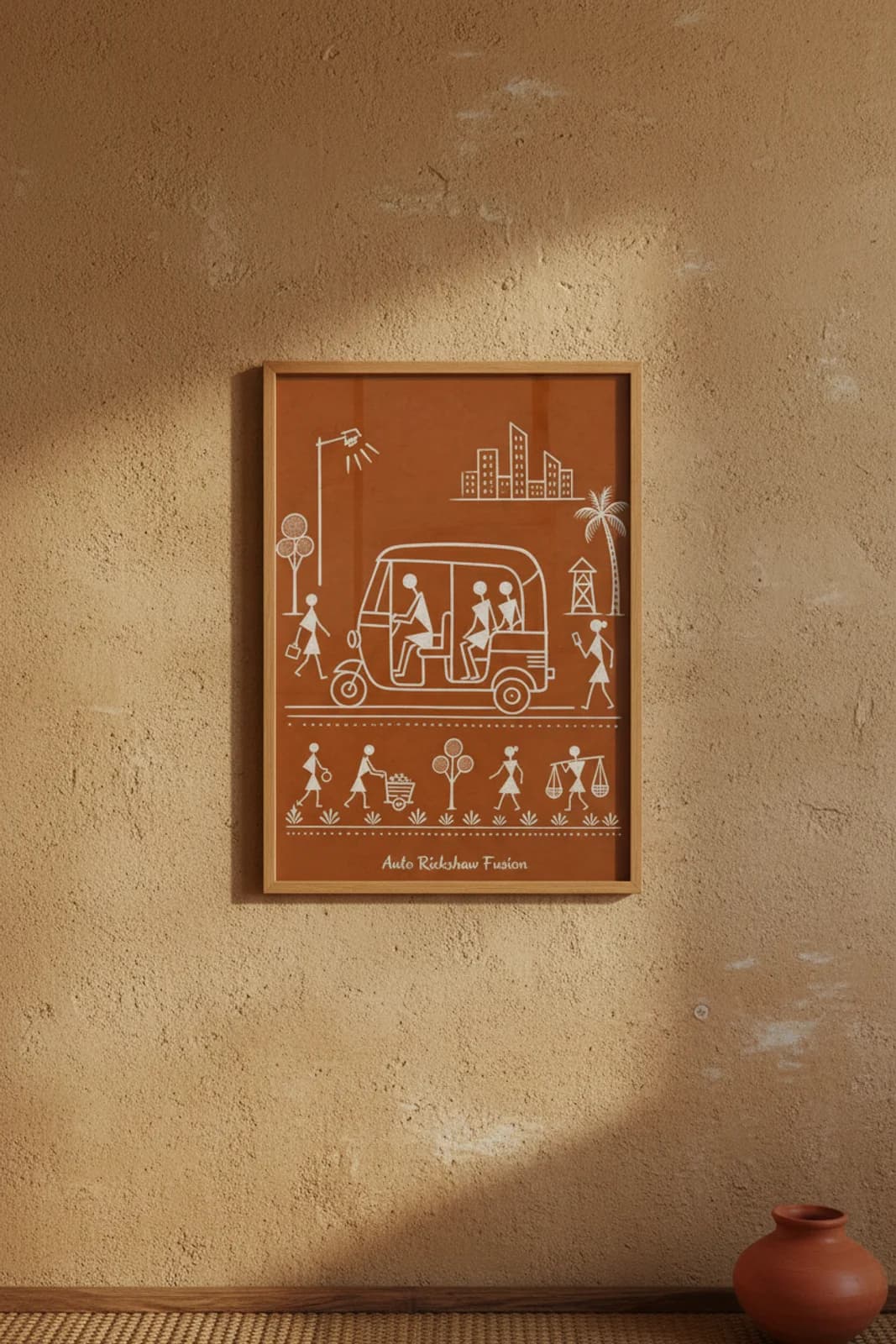
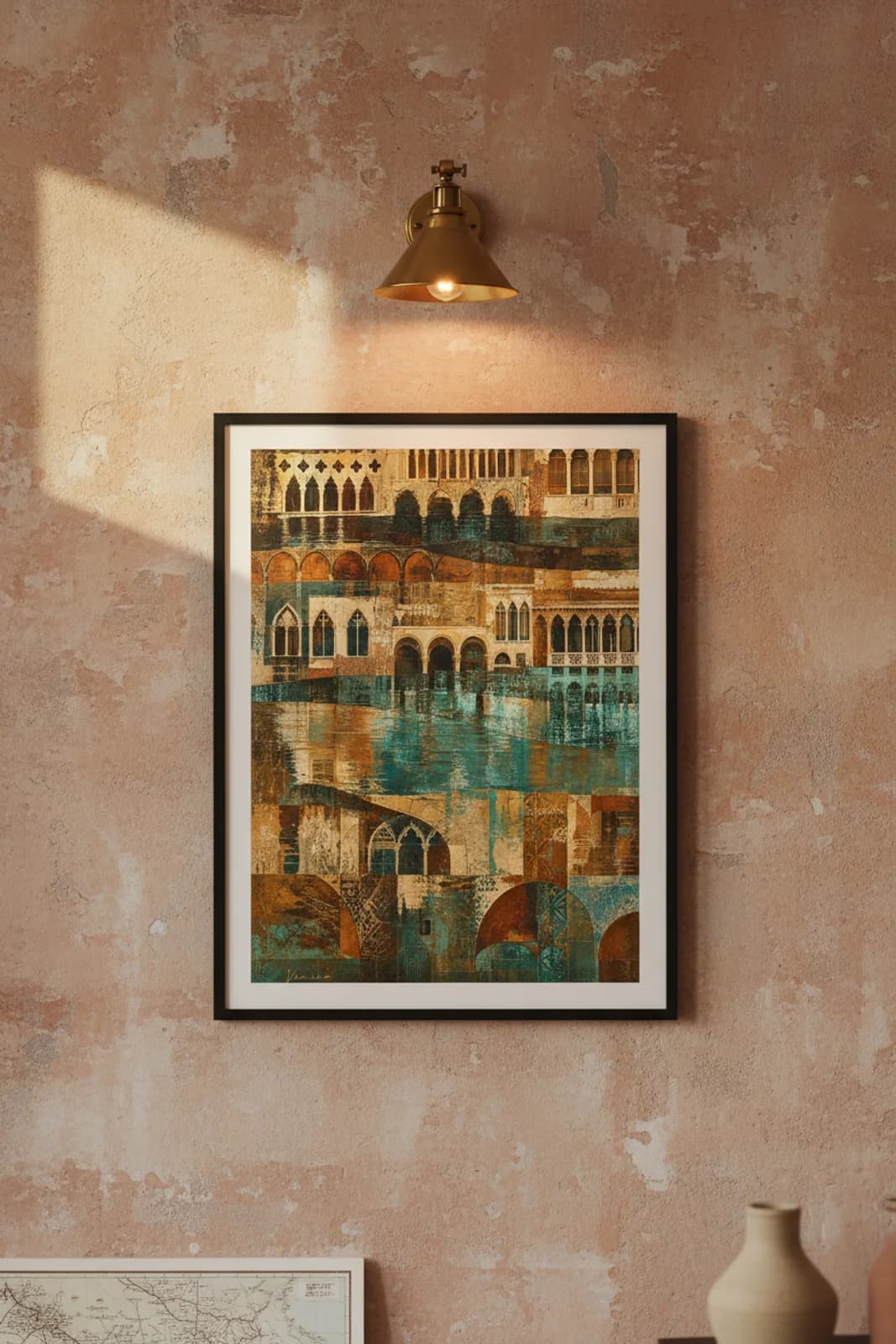
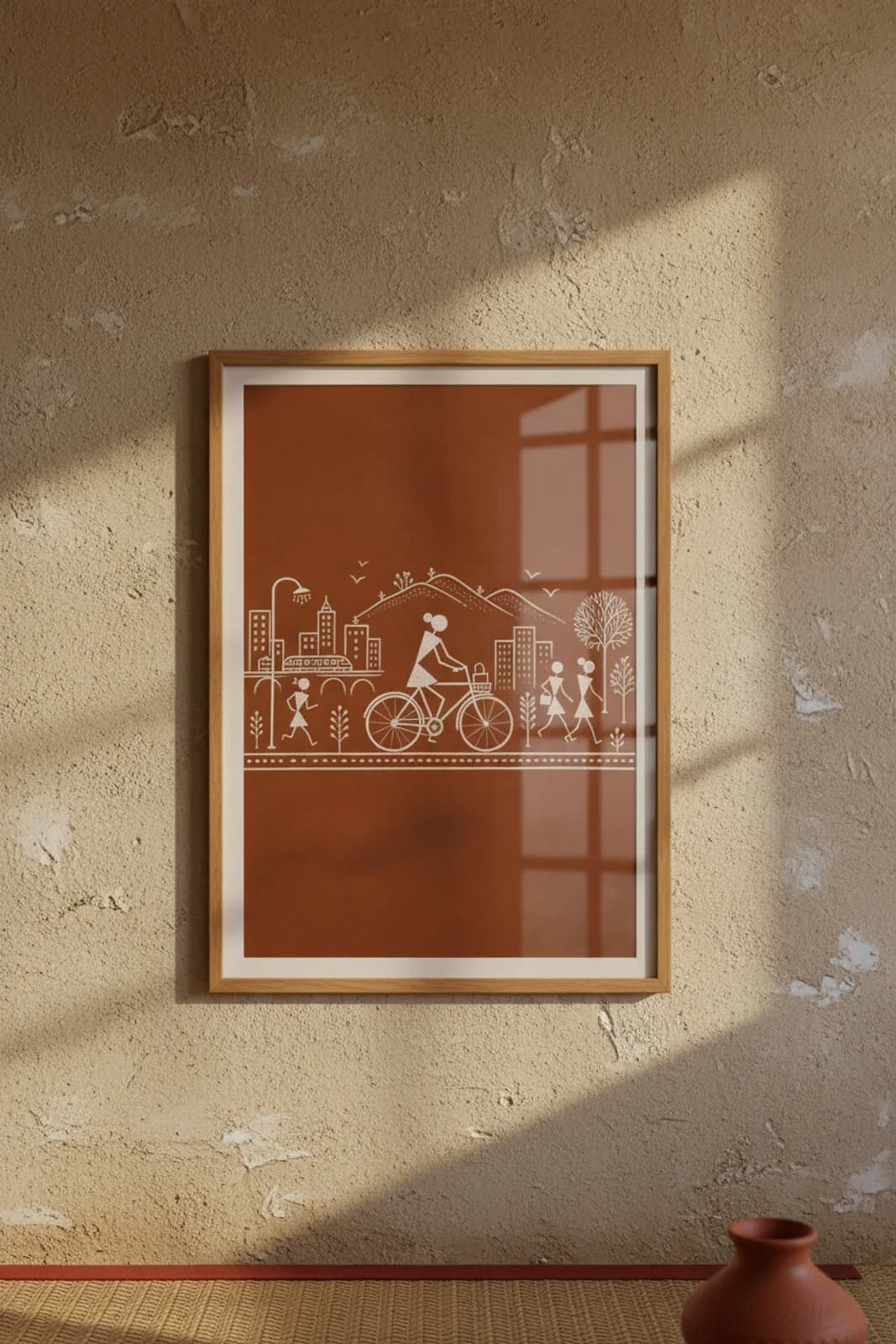
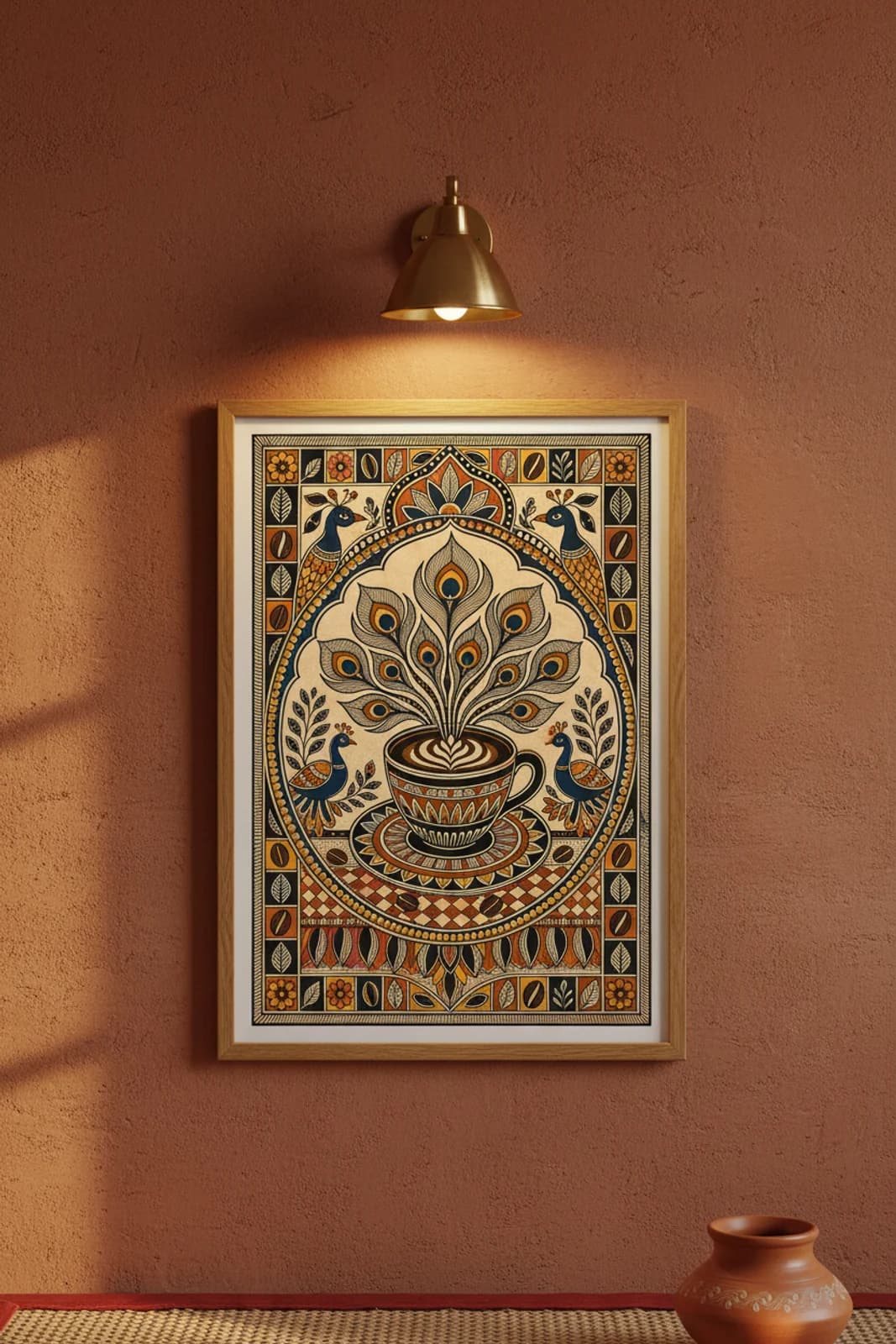
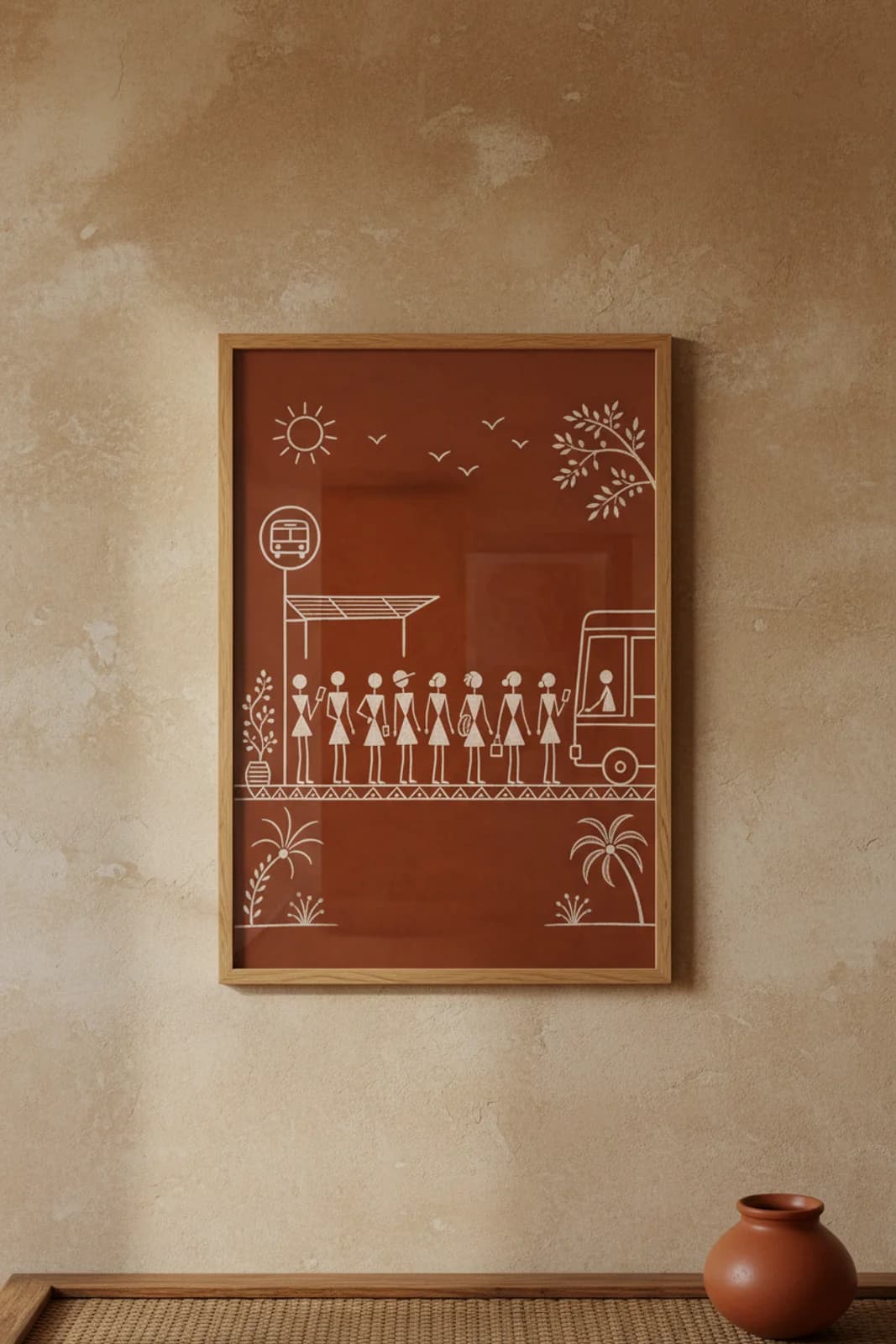
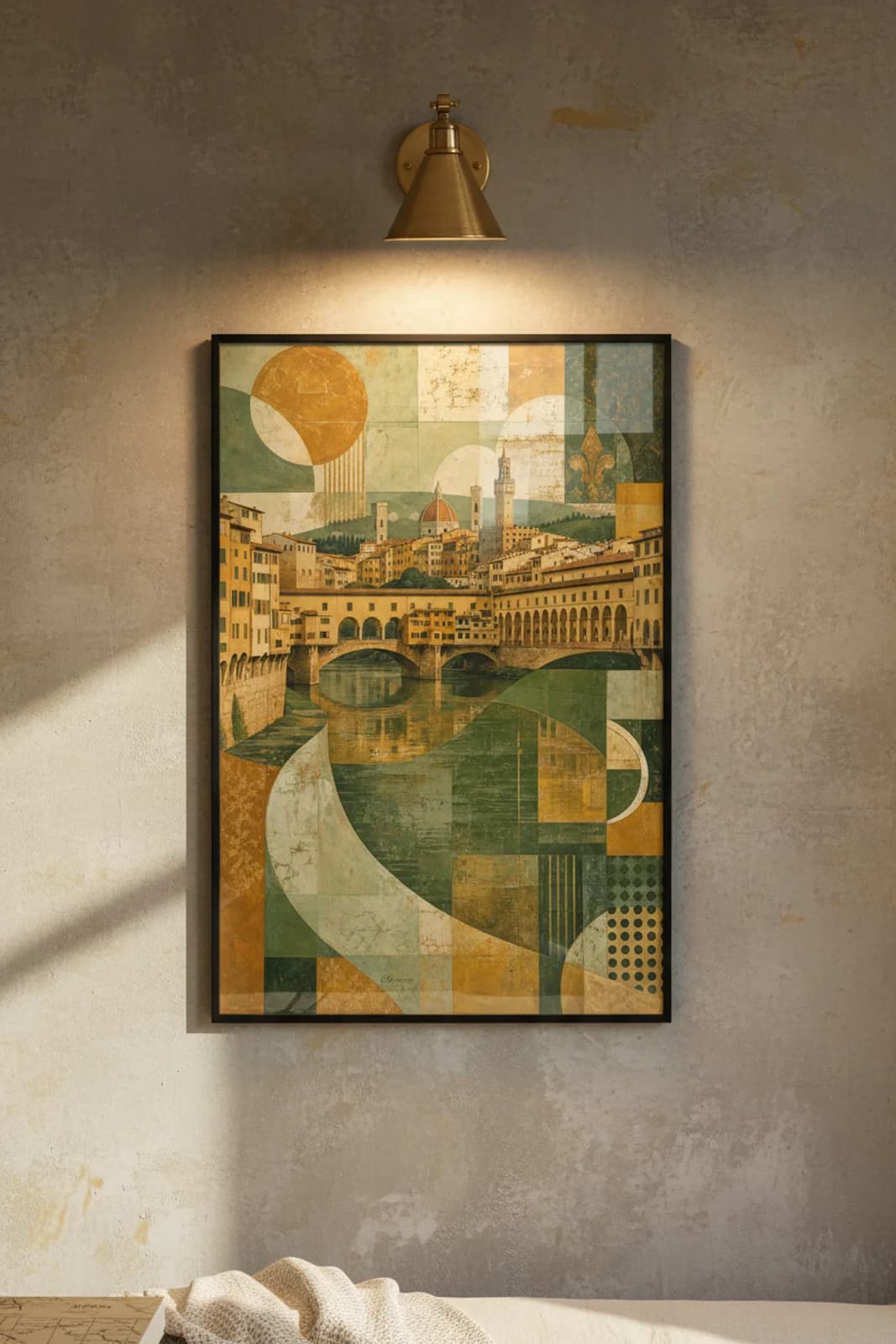
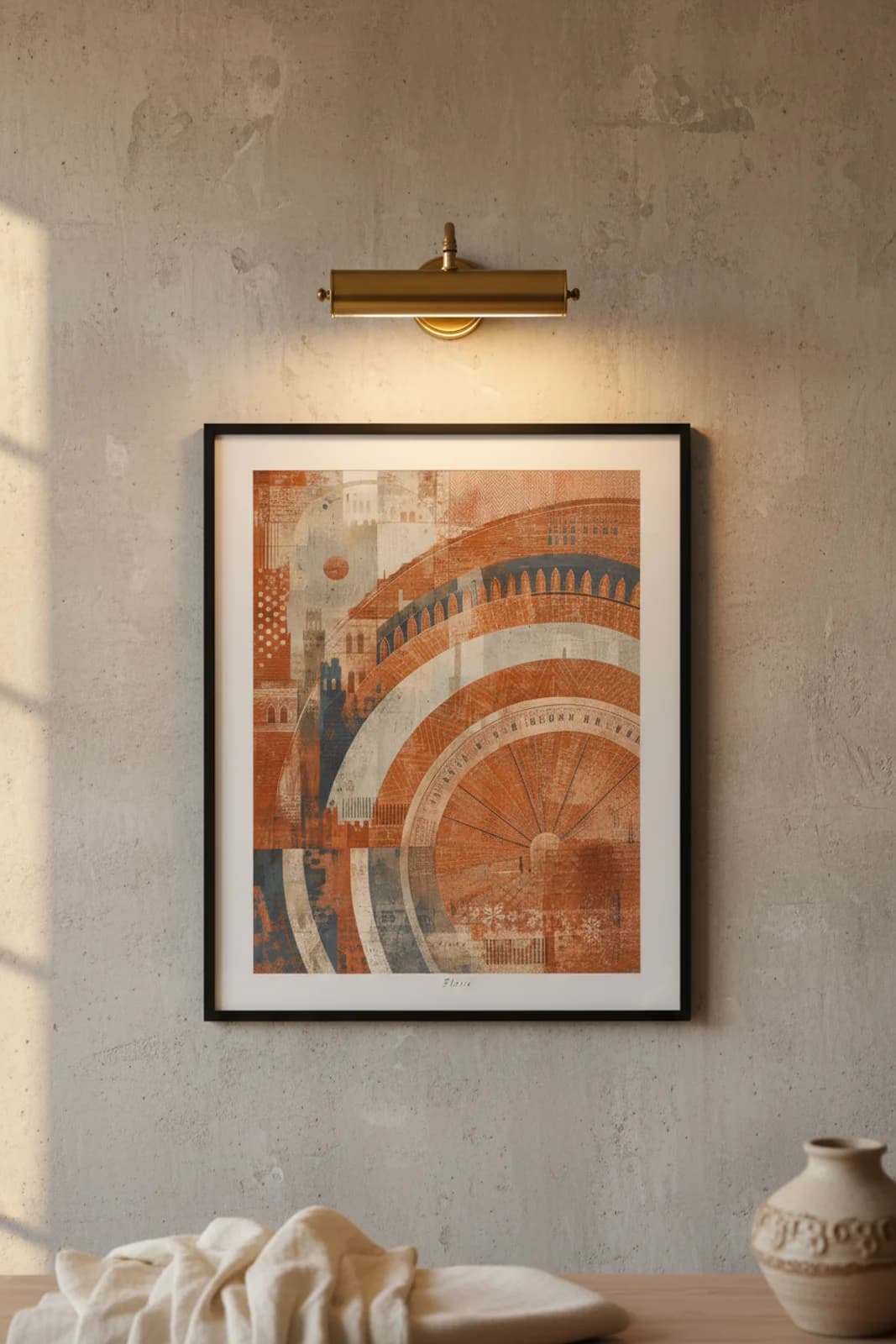
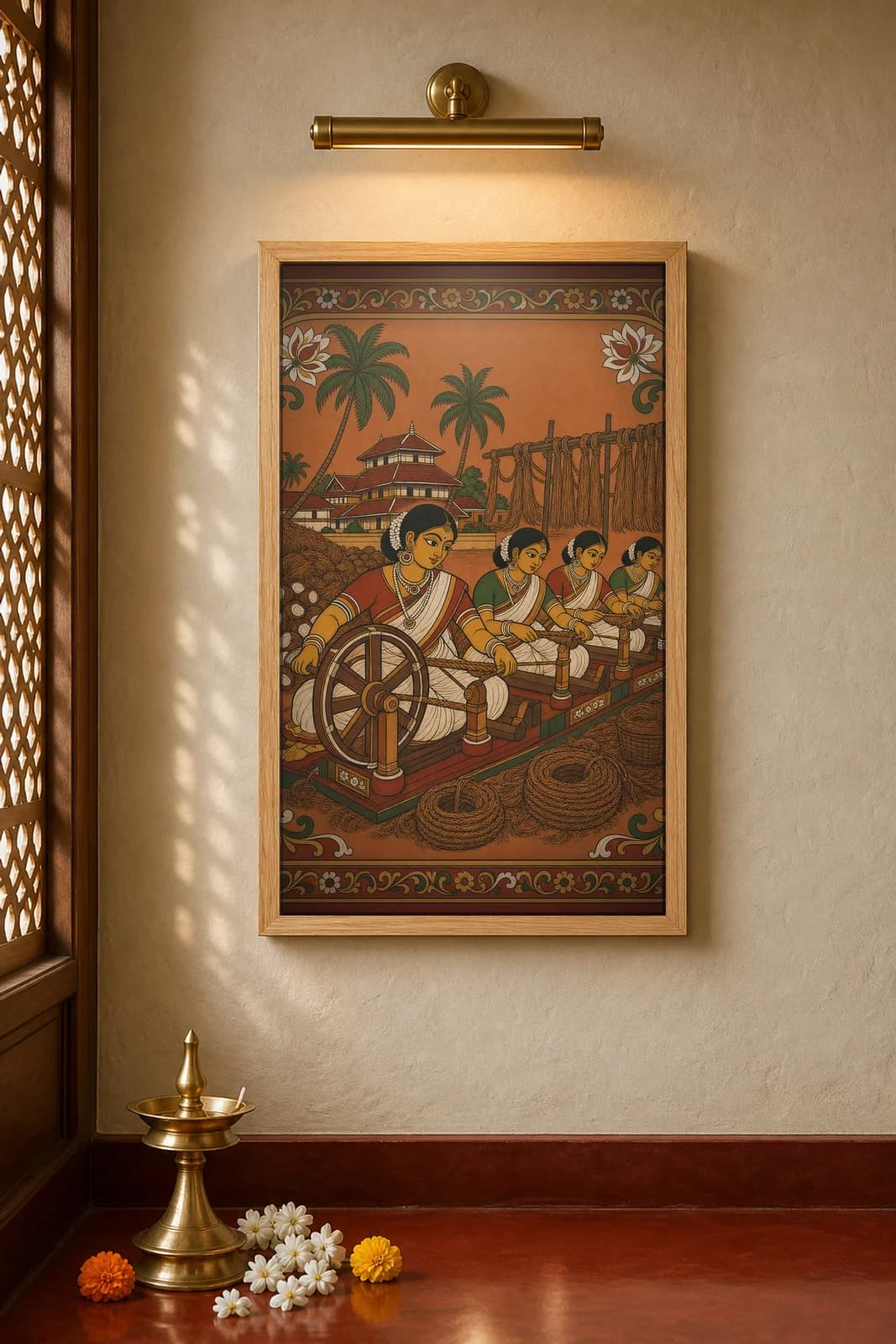
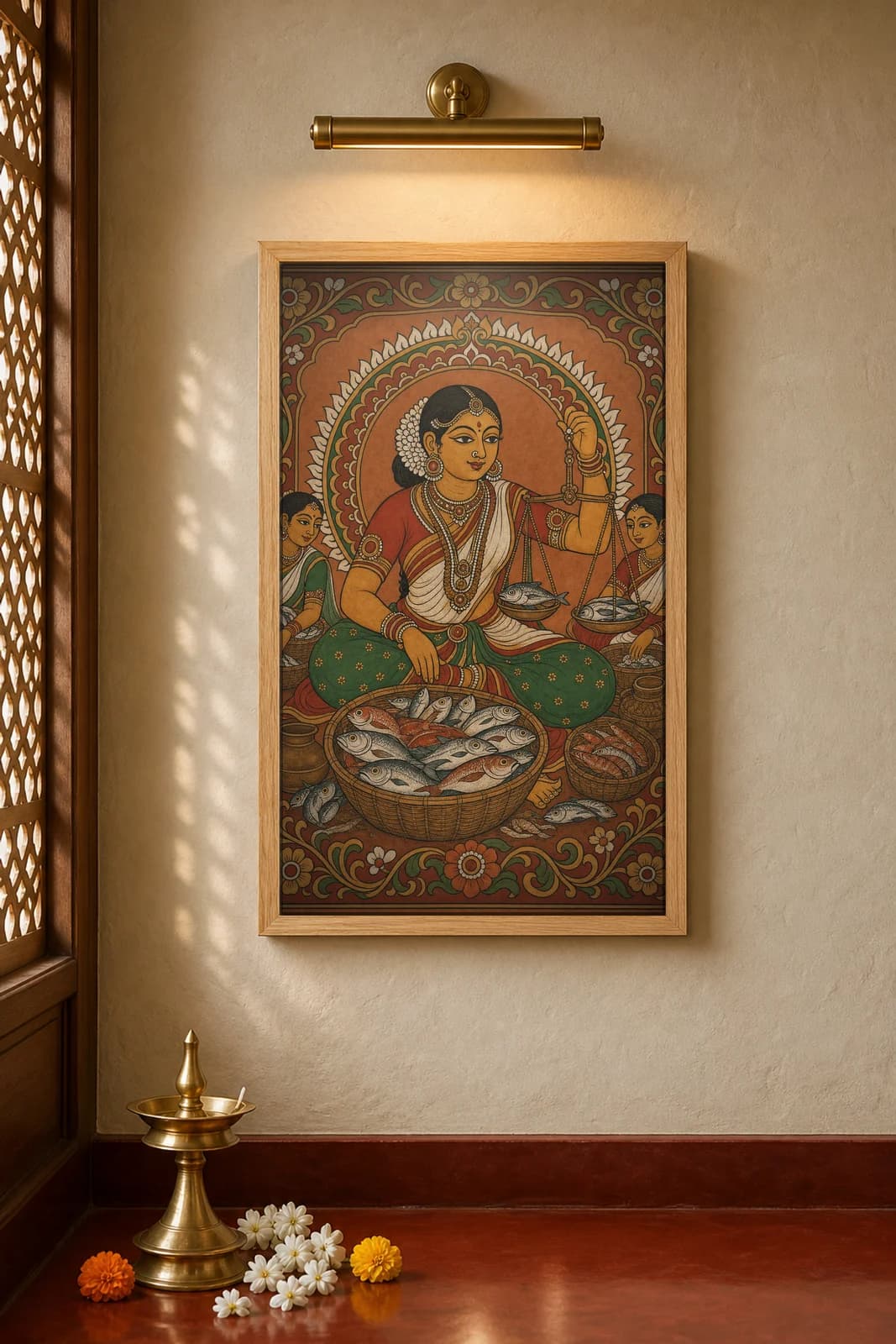
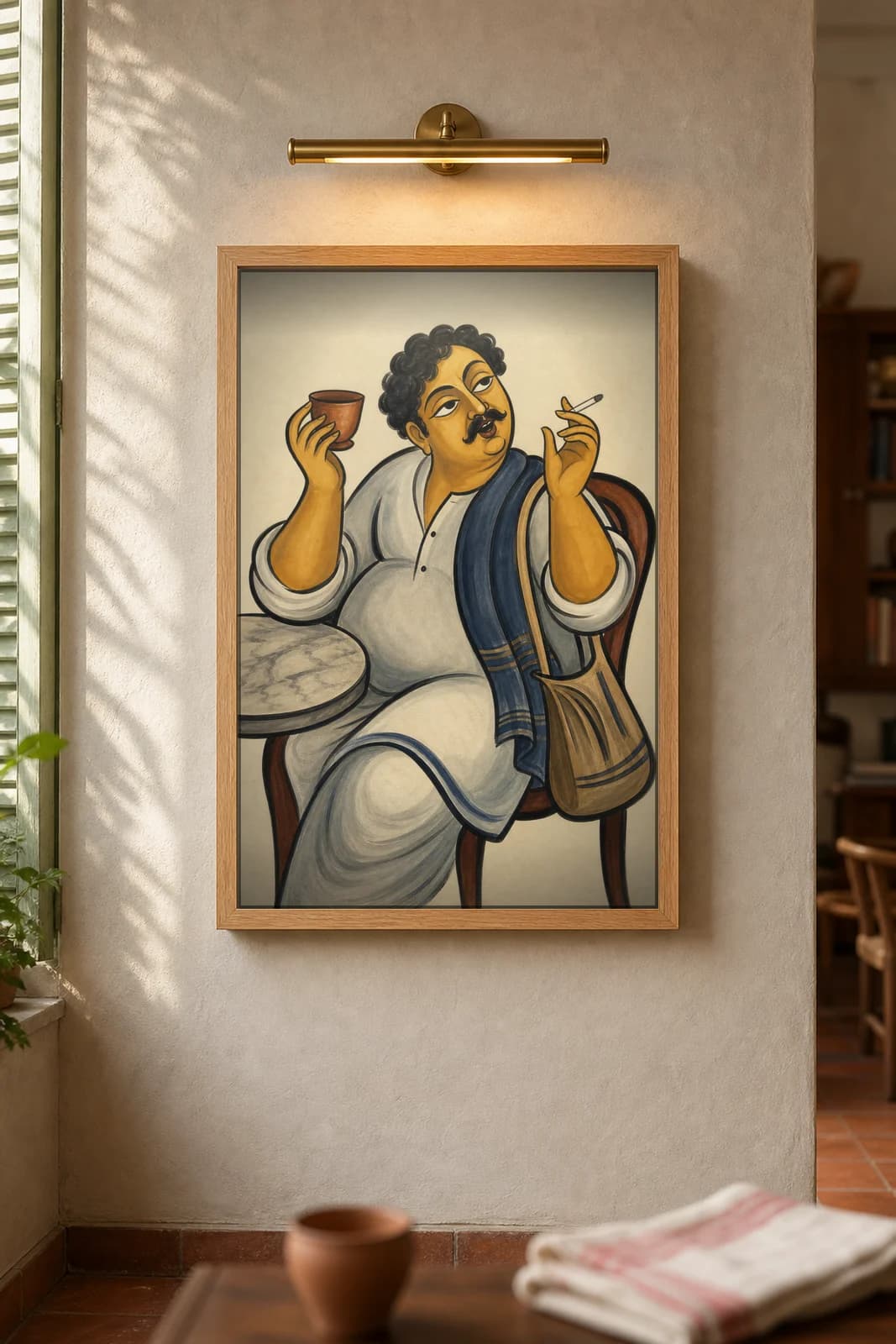
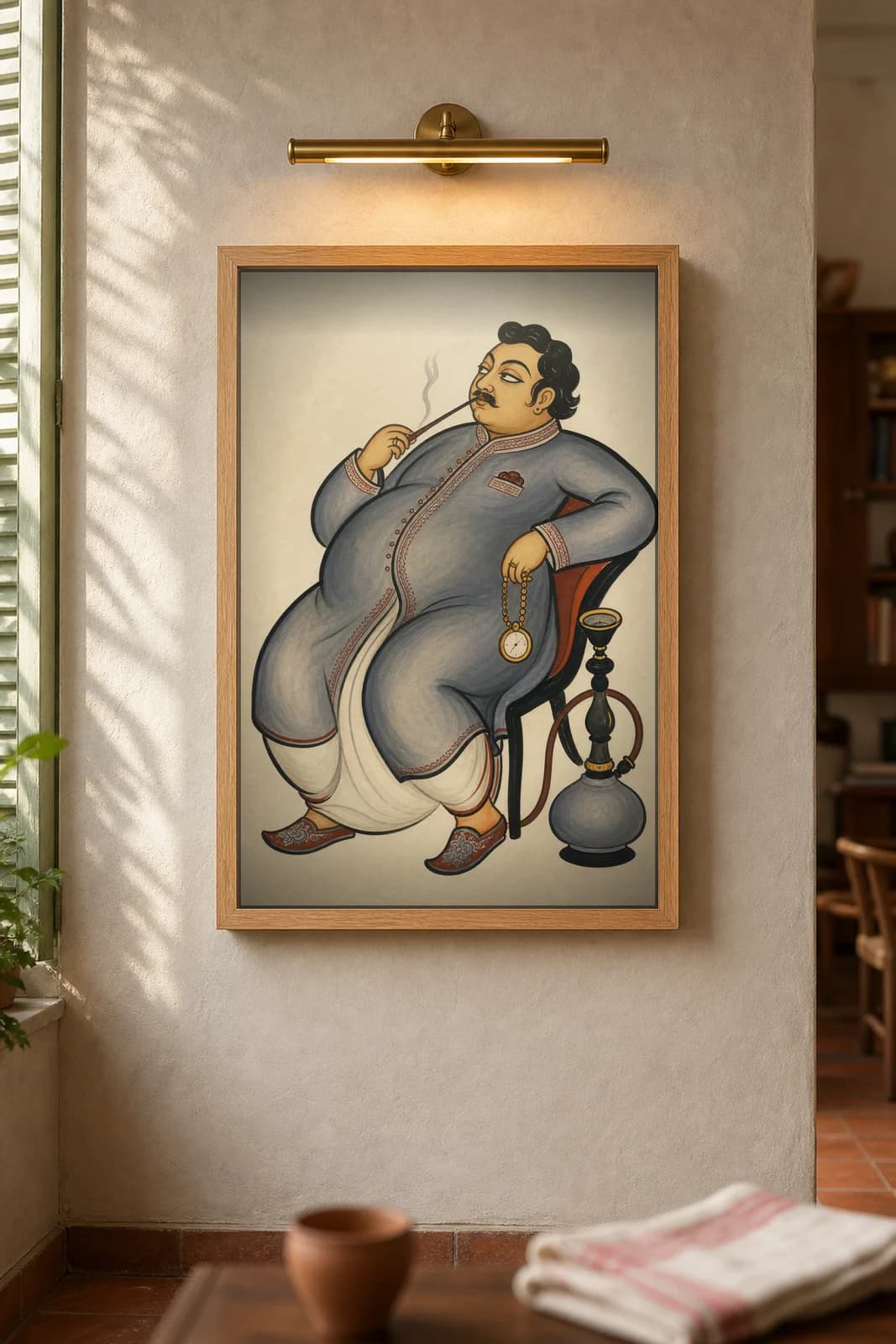
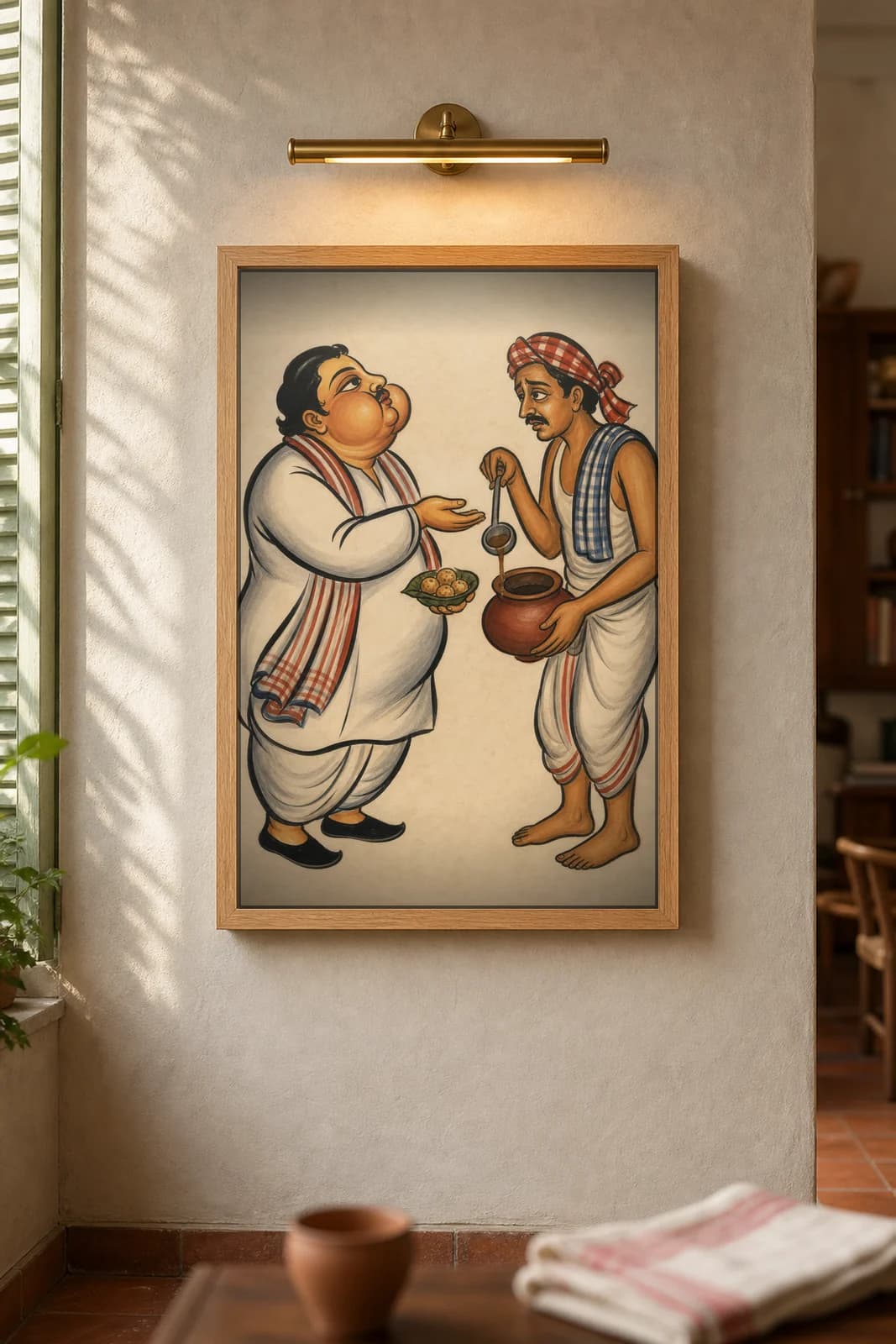
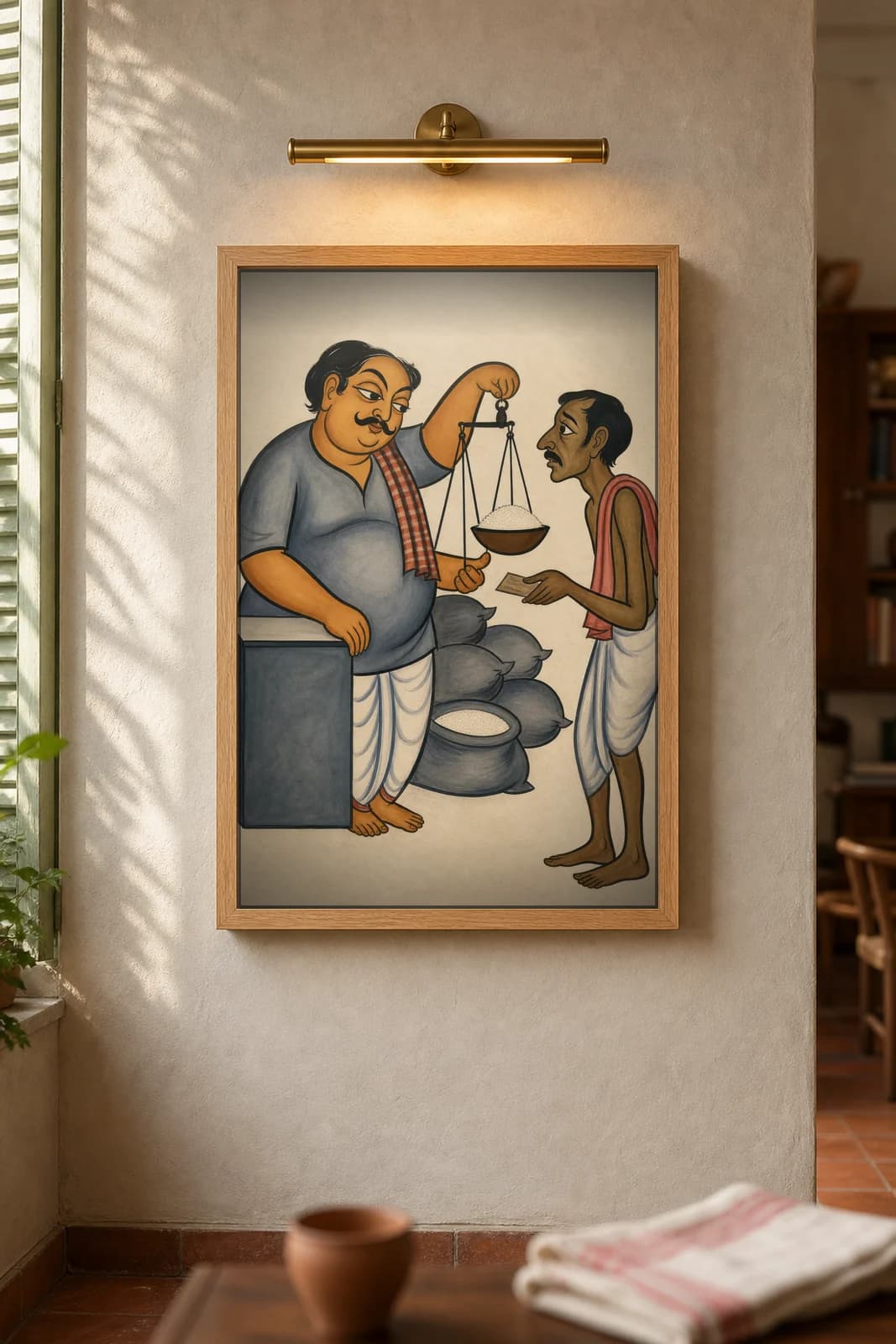
Terracotta — 21 museum-grade prints in this palette. Kalighat Pat grew up in 19th-century Kolkata, painted by migrant patua (chitrakar) scroll-painters who settled near the Kalighat Kali temple and sold quick watercolour souvenirs to pilgrims. Working on mill-made paper with a bold single black brush outline and soft 'boneless' shaded strokes on a plain ground, they painted gods and goddesses alongside what is often called India's first modern social satire — sharp, affectionate caricatures of the colonial 'babu' and the hypocrisies of Calcutta life. Warli painting belongs to the Warli Adivasi community of the North Sahyadri range in Maharashtra — Dahanu, Talasari, Jawhar, Palghar, and Mokhada among its heartland centres. Traditionally women painted white rice-flour paste on red ochre cow-dung or mud-plastered hut walls during weddings and harvest rituals; geometric circles, triangles, and squares depict daily life, farming, fishing, and communal celebration without perspective or shading. Florence — Firenze in Italian — is widely regarded as the birthplace of the Renaissance, with Filippo Brunelleschi's dome for Santa Maria del Fiore completed in 1436 and still the defining silhouette of the Tuscan capital. The Ponte Vecchio, a medieval closed-spandrel bridge lined with shops, has crossed the Arno since the fourteenth century; the golden fleur-de-lis (Giglio di Firenze) remains the city's historic civic emblem, echoing the ENIT and Italian State Railway travel posters that popularised the Duomo skyline abroad from the 1930s onward.