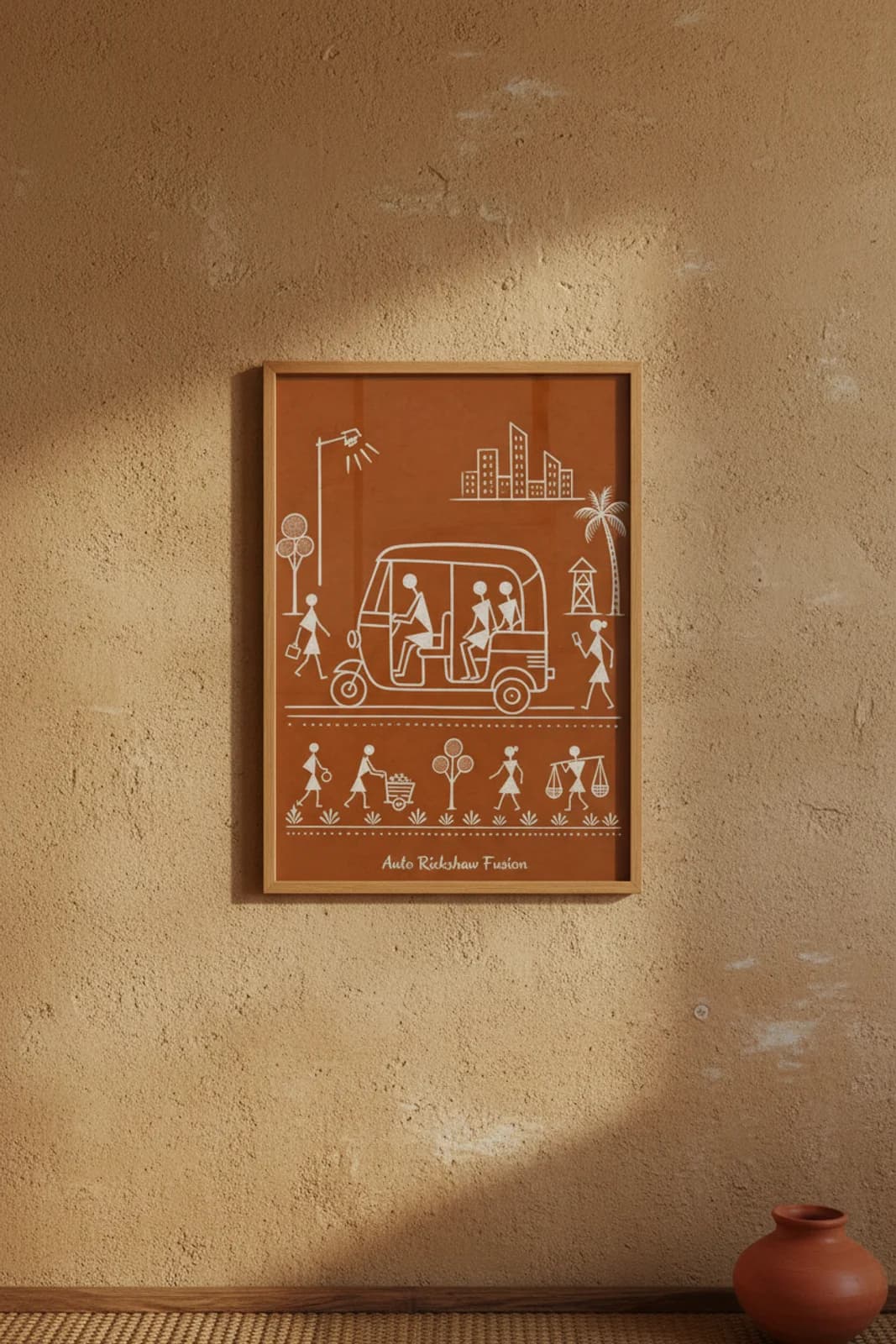
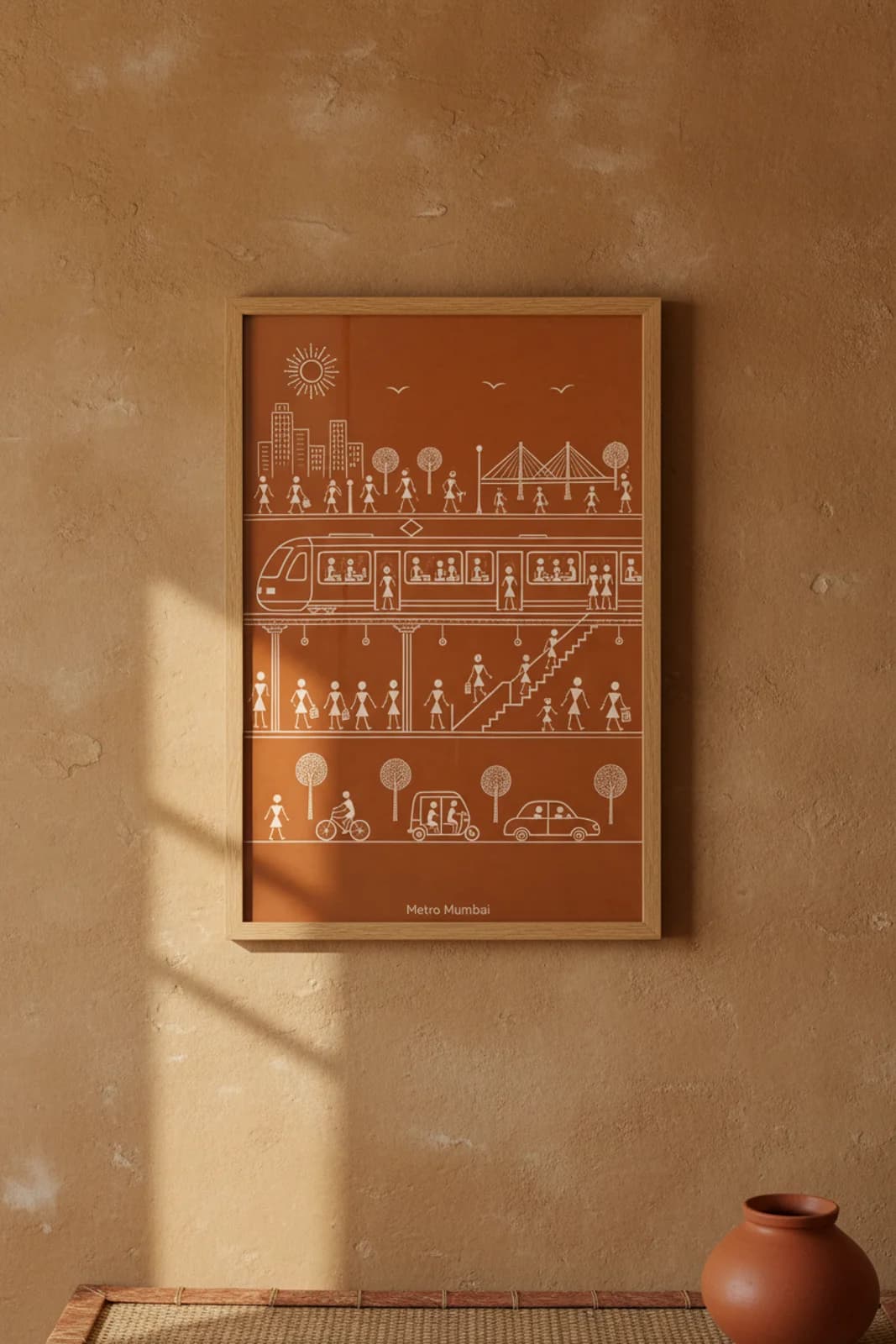
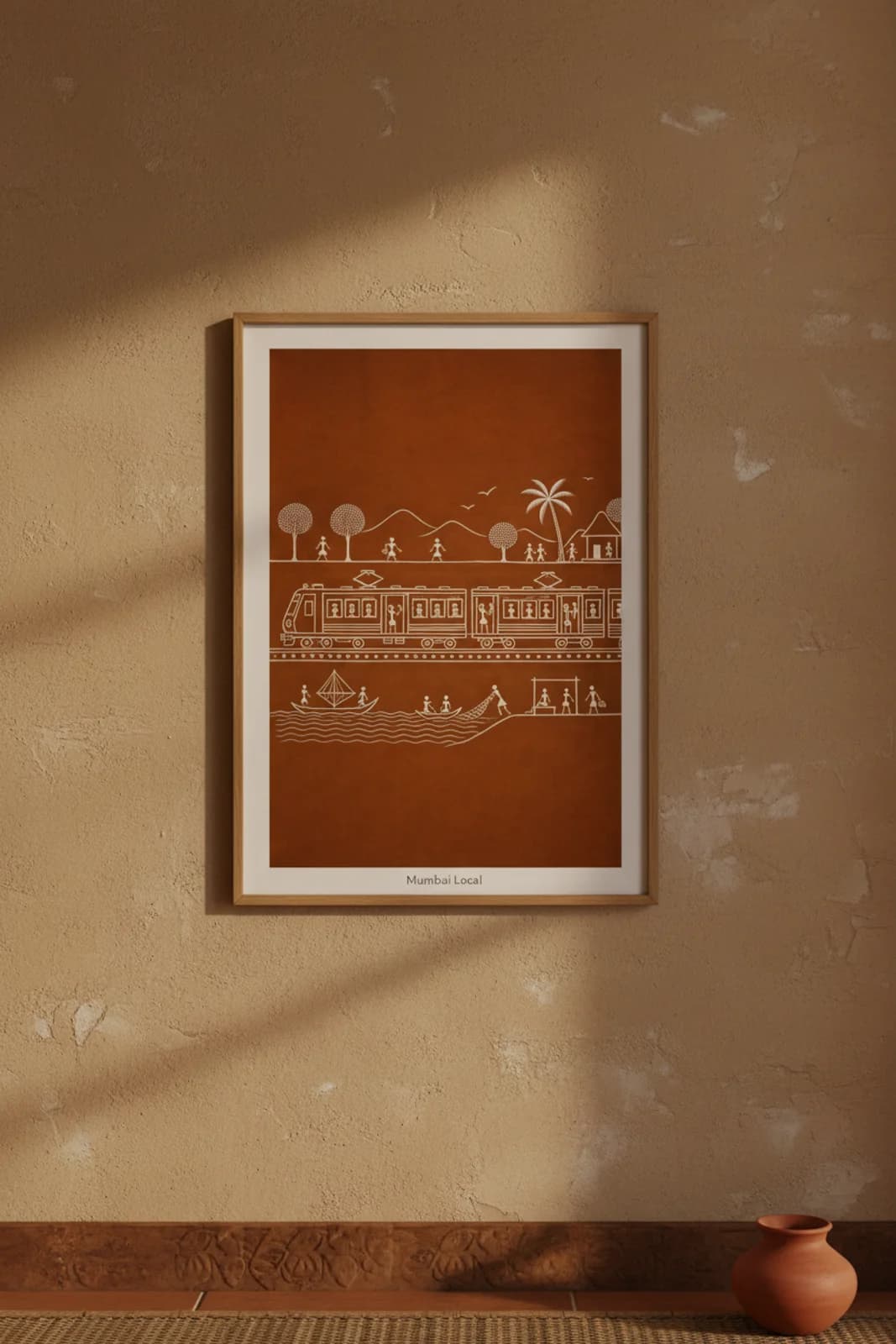
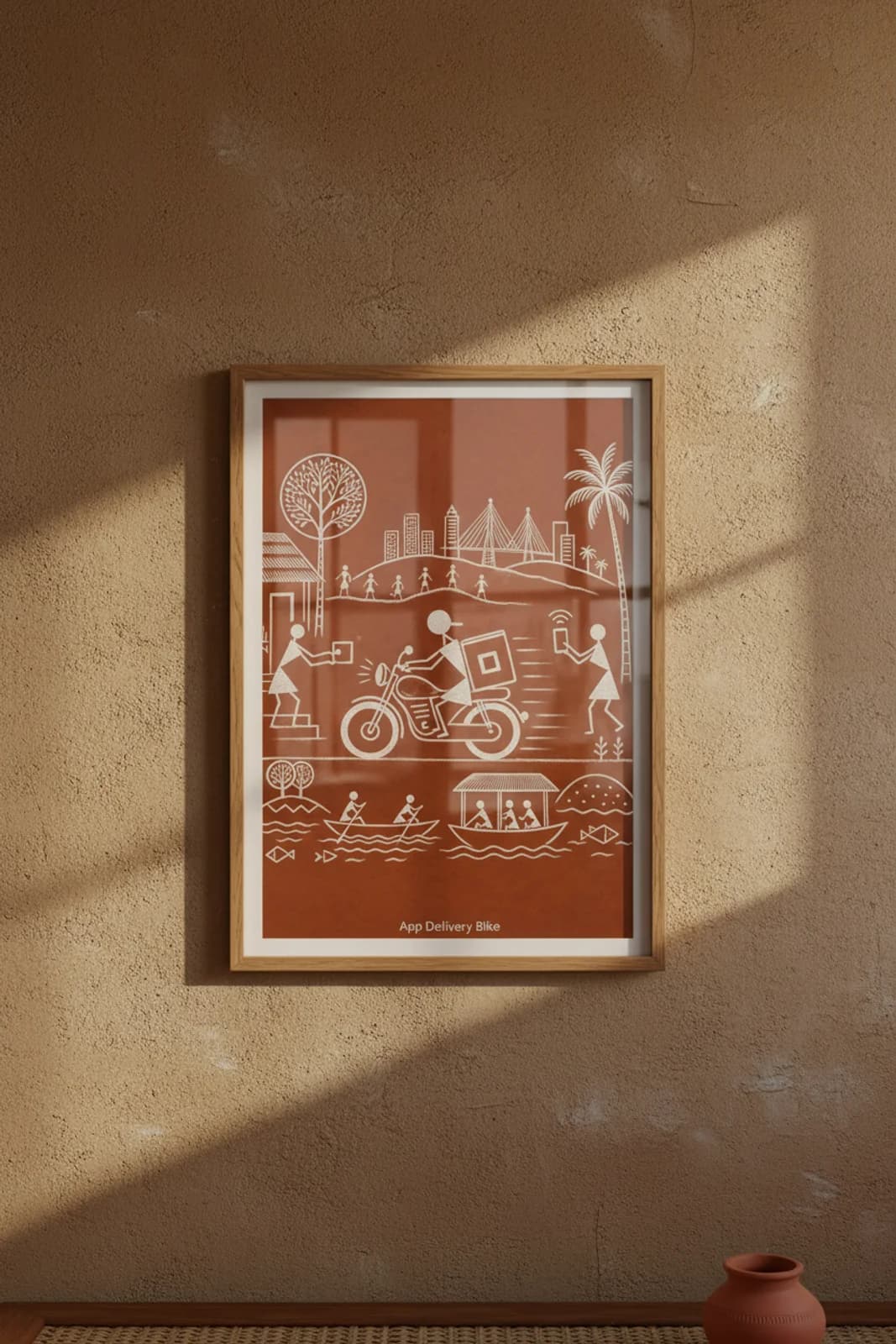
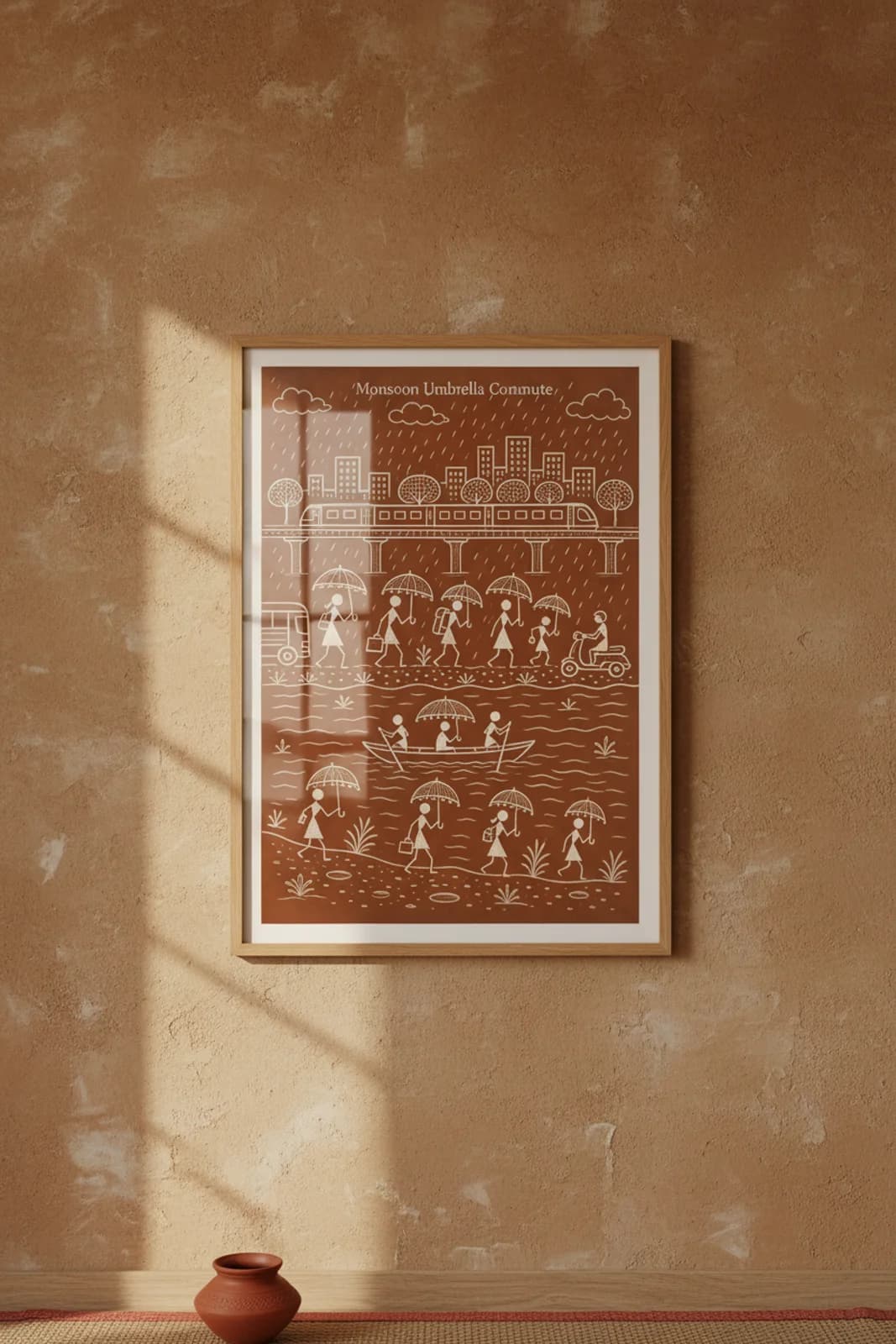
DESIGN BRIEF: Urban-fusion Warli only works when the modern object earns its geometry instead of being pasted onto a tourist spiral. Horizontal-band symmetry keeps the auto rickshaw as a readable side-profile hero across the mid canvas — the same register Warli artists use for bullock carts and river boats — so the translation problem is structural, not decorative. I refused chauk-central layout and any tarpa dance ring because neither belongs on a street commute; the sacred square stays off this panel. Wheels become circles, bodies stay paired triangles with circle heads, the canopy is one continuous white arc, and the phone in the walker's hand is a flat rectangle the way a hut wall is a square — no perspective cab, no shaded metal. Above the hero band, Mumbai reads as window-grid rectangles and a palm vertical, not a photographic skyline; below, a village-procession frieze grounds the fusion in the daily-walk grammar Warli already owned before autos existed. Light-mid density leaves ochre breathing room so the line discipline stays airy, not Madhubani-packed.
 WALLIMILIST