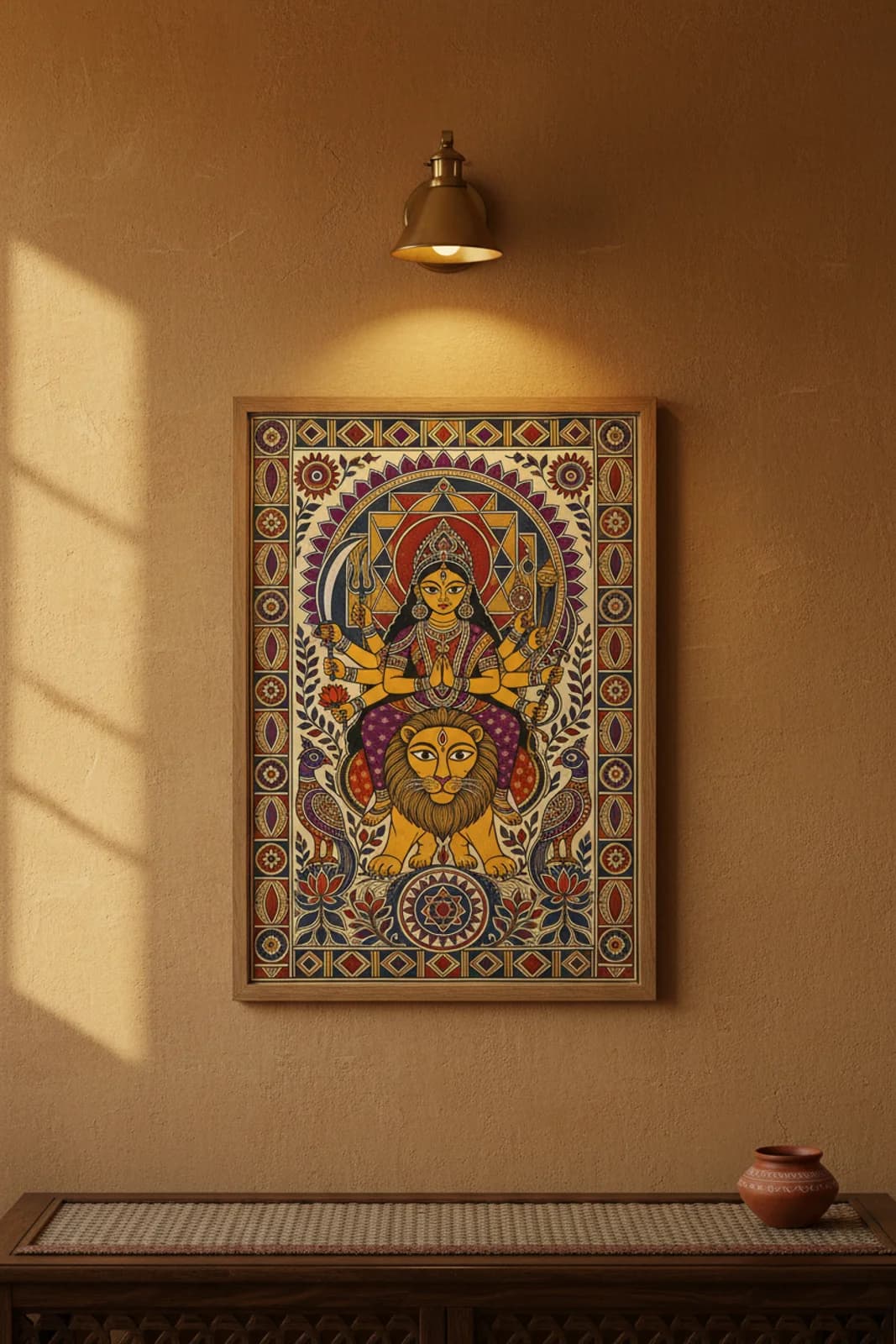
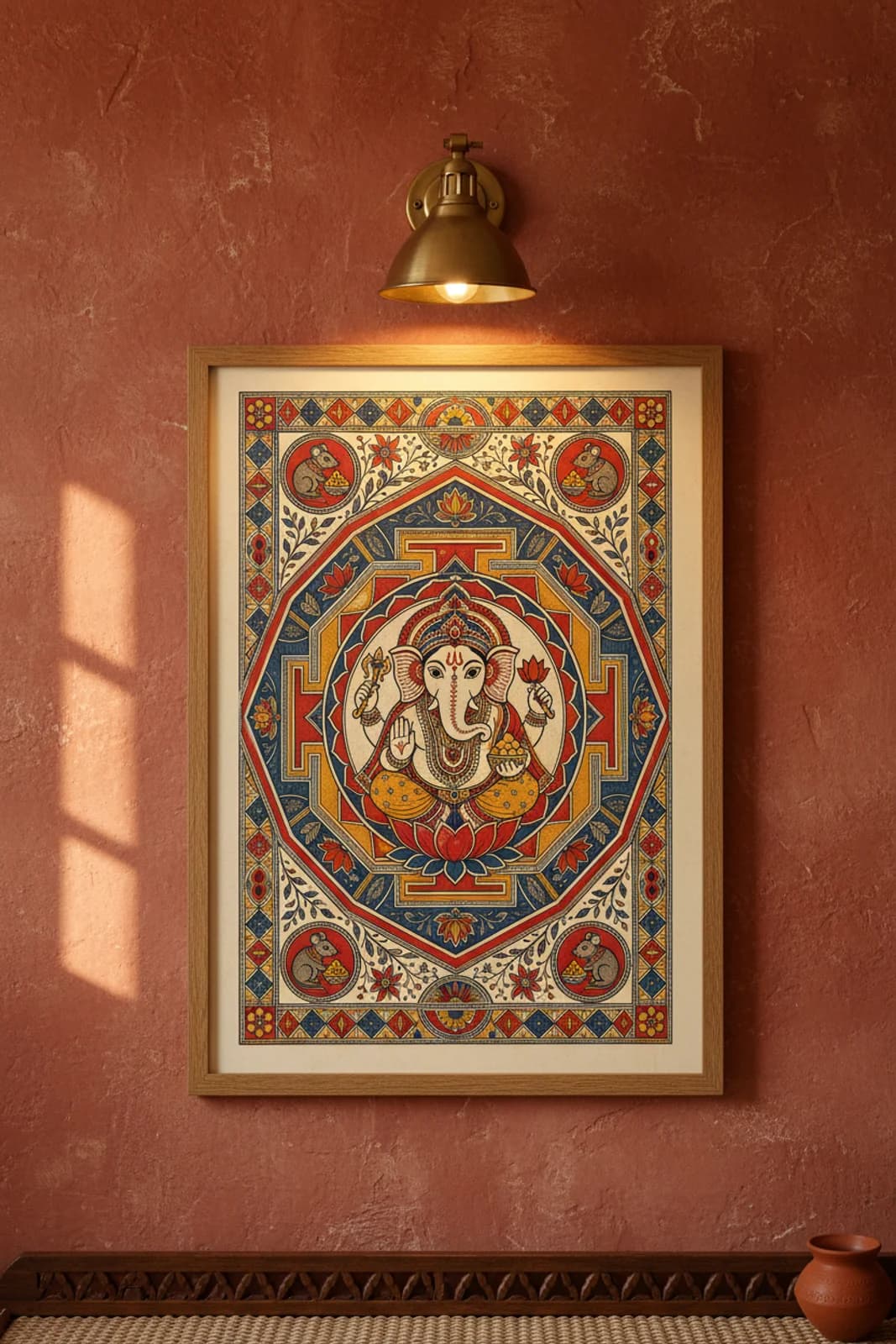
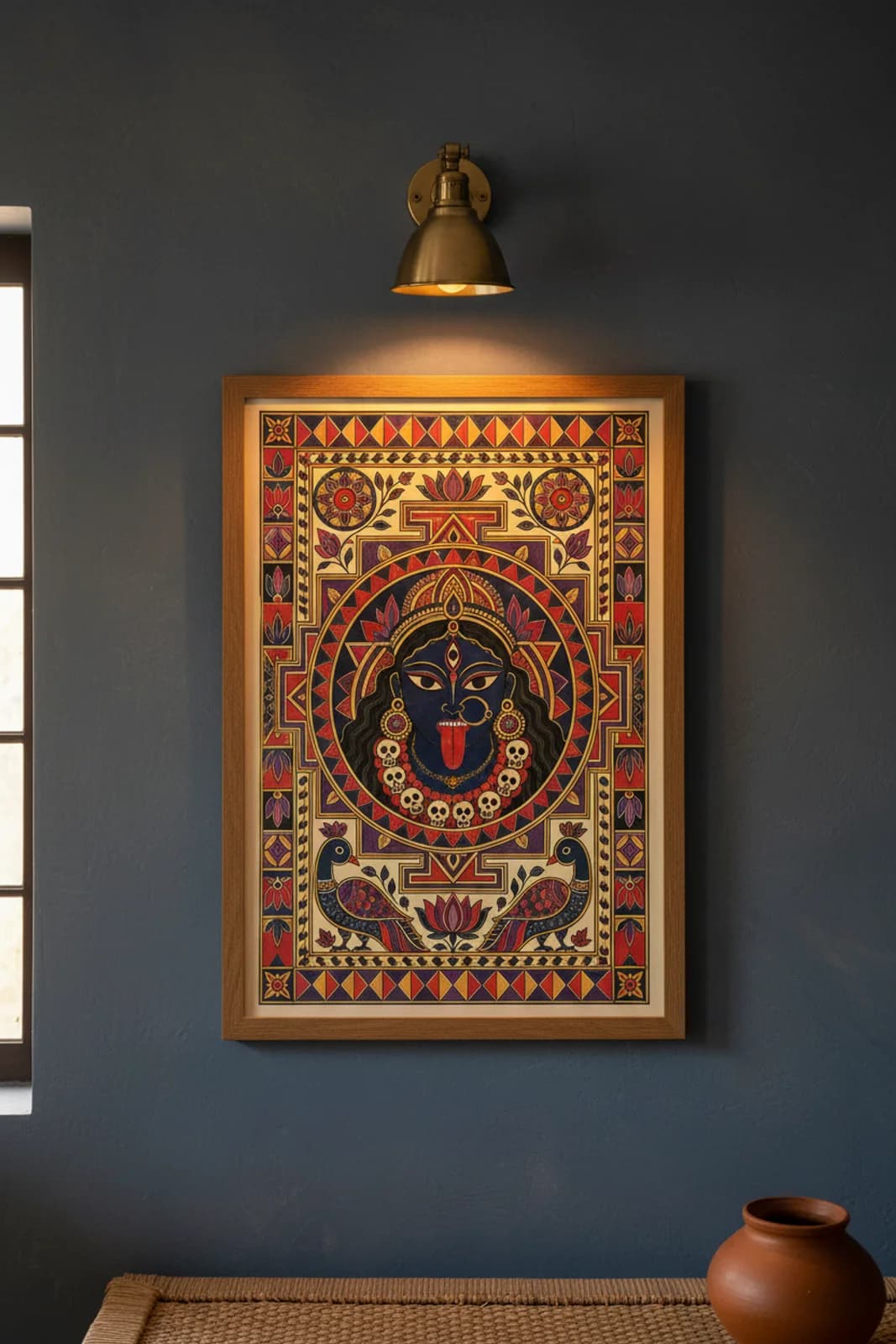
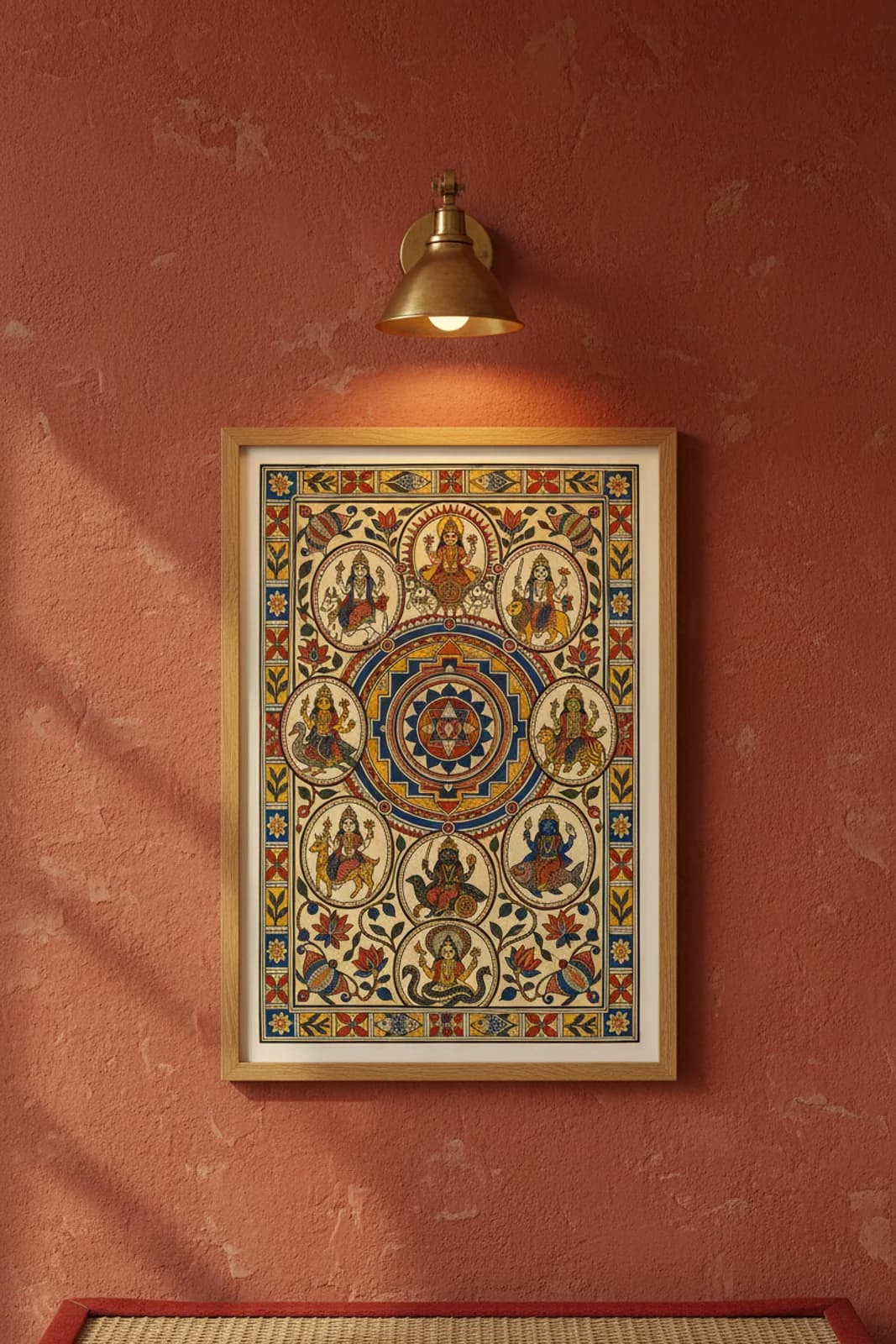
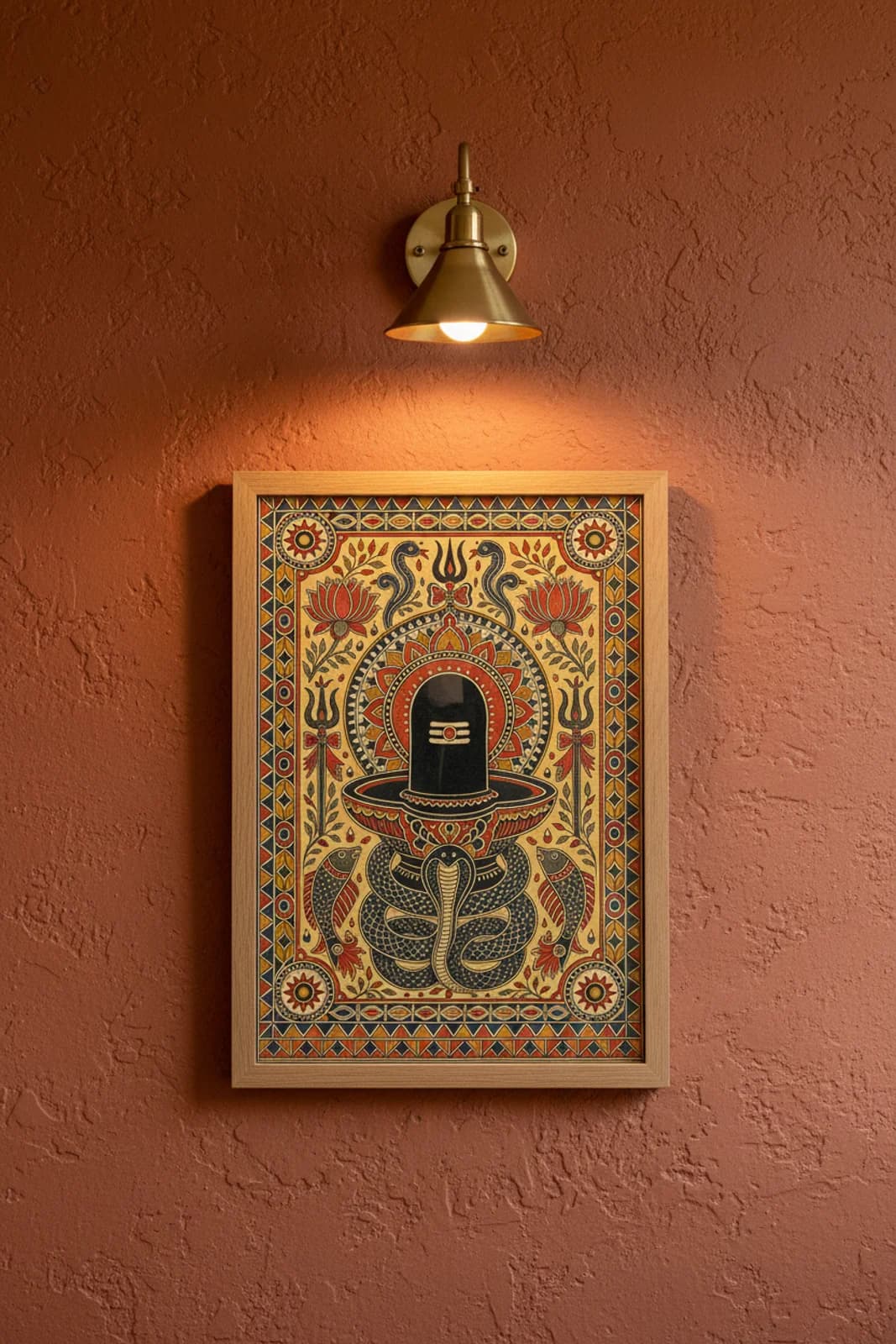
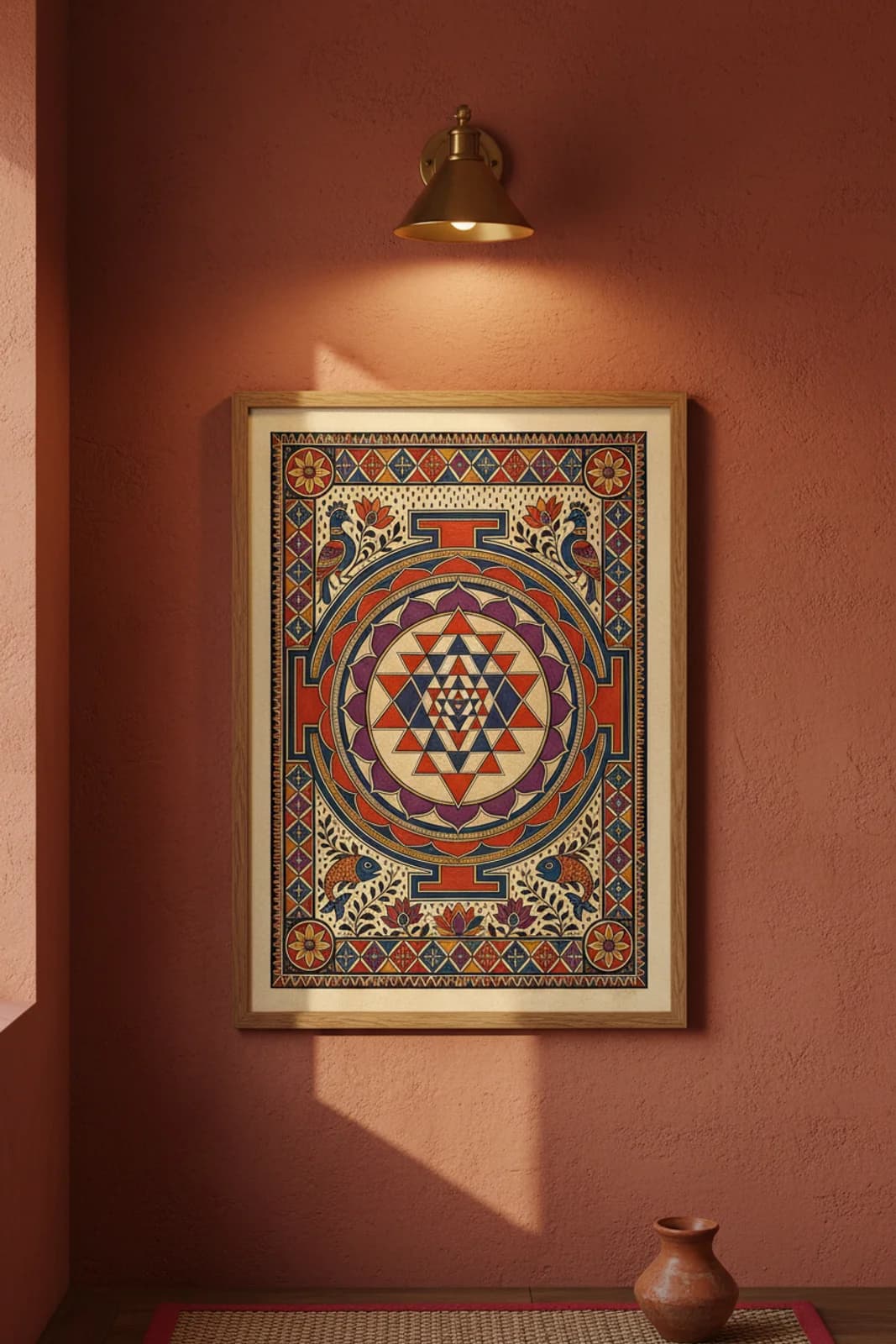
Tantrik Madhubani Prints — 6 museum-grade prints on the theme. Tantrik is one of five historically distinct Madhubani styles — alongside Bharni, Kachni, Godna, and Kohbar — traditionally associated with Brahmin women painters in the Mithila region and characterised by esoteric deities, yantras, and sacred geometry rather than daily-life narrative. Kali (Mahakali, Adishakti) appears in tantric Mithila panels as symbolic face, full figure, or yantra-centred diagram — especially around Kali Puja and Navratri when Shakti imagery guards household walls. Tantrik — from Tantra's ritual and yantra tradition — is one of five recognised Madhubani styles alongside Bharni, Kachni, Godna, and Kohbar, distinguished by sacred geometry, interlocking triangles, bindu-centred mandalas, and esoteric deity iconography rather than garden narrative or tattoo stipple. Navagraha — the nine celestial grahas Surya, Chandra, Mangala, Budha, Brihaspati, Shukra, Shani, Rahu, and Ketu — appear in Mithila Aripana floor art, Kohbar wedding walls, and temple folk panels as blessings from sun, moon, and planetary powers; Creative Mithila and village ritual documentation note their presence during Vat Savitri, Madhushravani, and post-wedding ceremonies alongside Surya and Chandrama. Tantrik — one of five classical Madhubani style families alongside Bharni, Kachni, Godna, and Kohbar — is the Mithila tradition devoted to esoteric sacred geometry, yantra diagrams, and Shakta-Tantra symbolism rather than festival deity portraiture. Village artists in the Madhubani district translated Shri Yantra — regarded in Tantric texts as the king among yantras, a mathematical diagram of cosmic creation through Shiva-Shakti union — into folk panels where interlocking upward and downward triangles represent masculine and feminine divine principles meeting at the bindu centre.