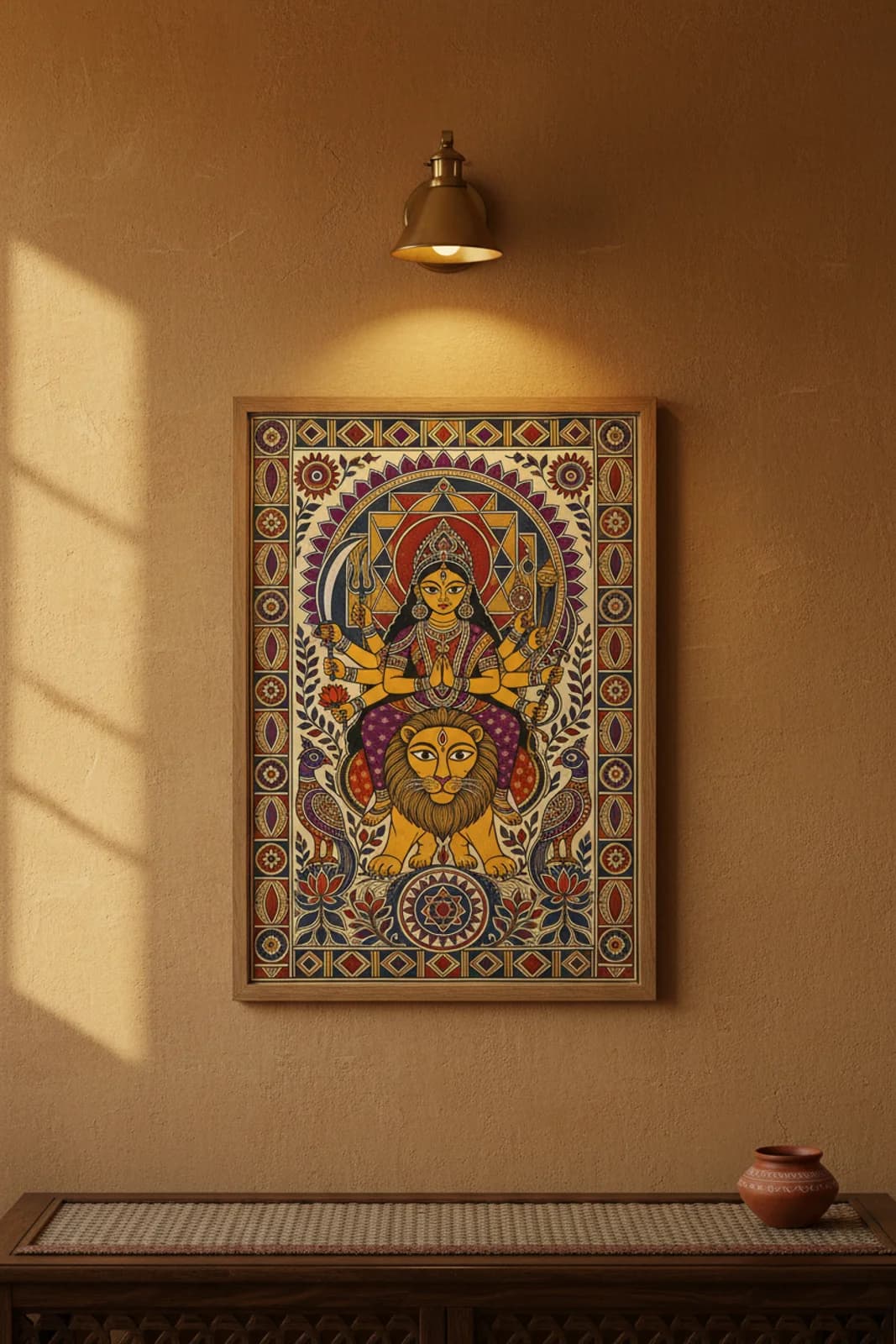
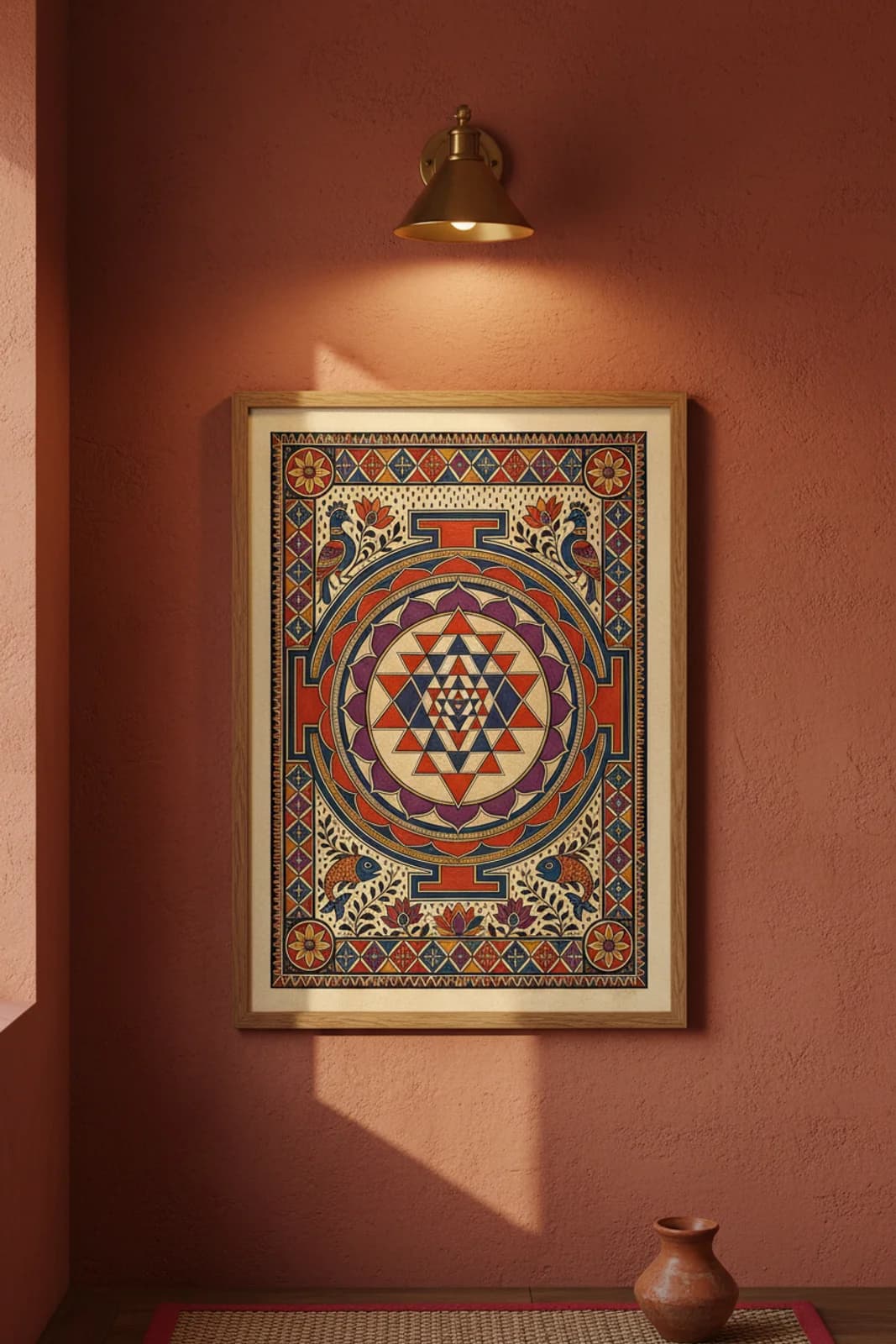
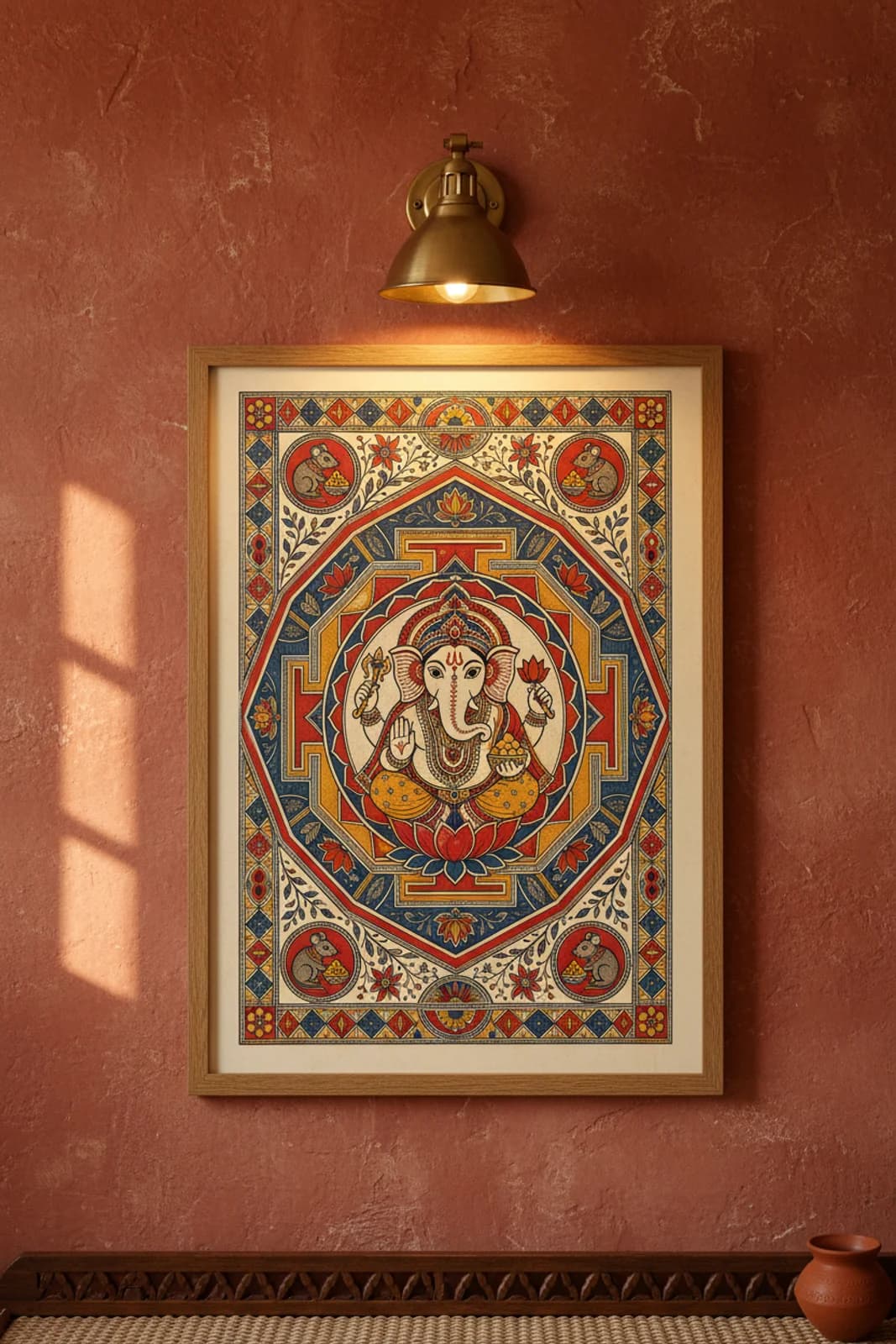
DESIGN BRIEF: Tantrik Madhubani needs a deity and a diagram to share the same breath — if the yantra floats separately from the figure, the panel reads like clip art pasted on geometry. Vertical-bilateral symmetry solves that: Durga and her lion vahana sit on a single spine so the weapon array mirrors left and right while the interlocking square-triangle halo behind her head behaves like a Sri Yantra fragment scaled to folk proportions. I kept the Ashtabhuja form because eight arms let each attribute — khadga, trishul, lotus, gada, chakra — occupy its own readable silhouette without crowding the anjali mudra at the chest. The Shatkona mandala at the base anchors the composition the way tantric floor diagrams anchor a puja asana: lion stride above, six-pointed star below, peacocks at the corners guarding the threshold. Border diamonds repeat the yantra vocabulary so the frame is not decorative filler but the same geometric grammar extended to the edge — path-line hatching inside every flat colour field keeps the medium-density fill honest to Kachni discipline within a Tantrik palette.
 WALLIMILIST