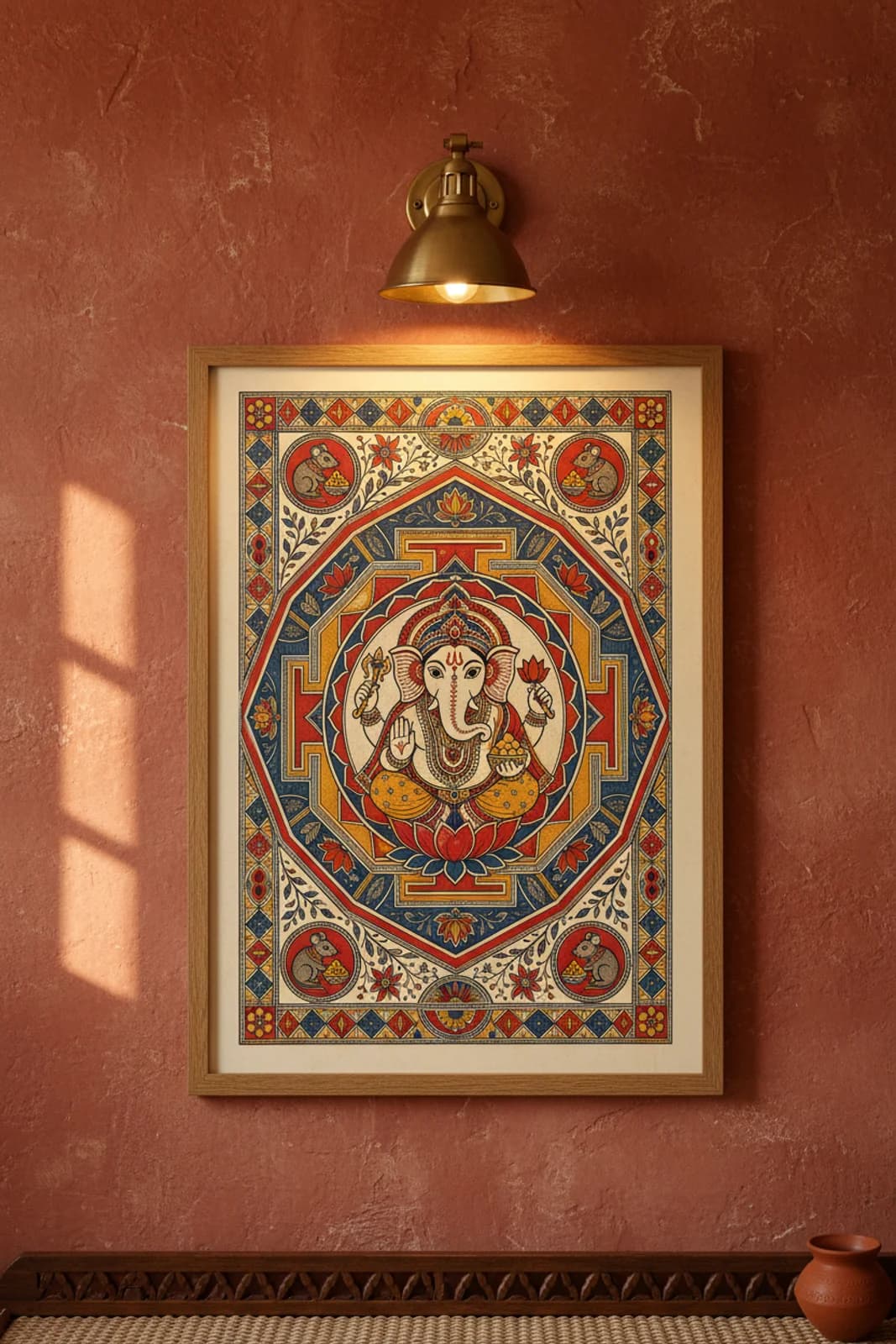
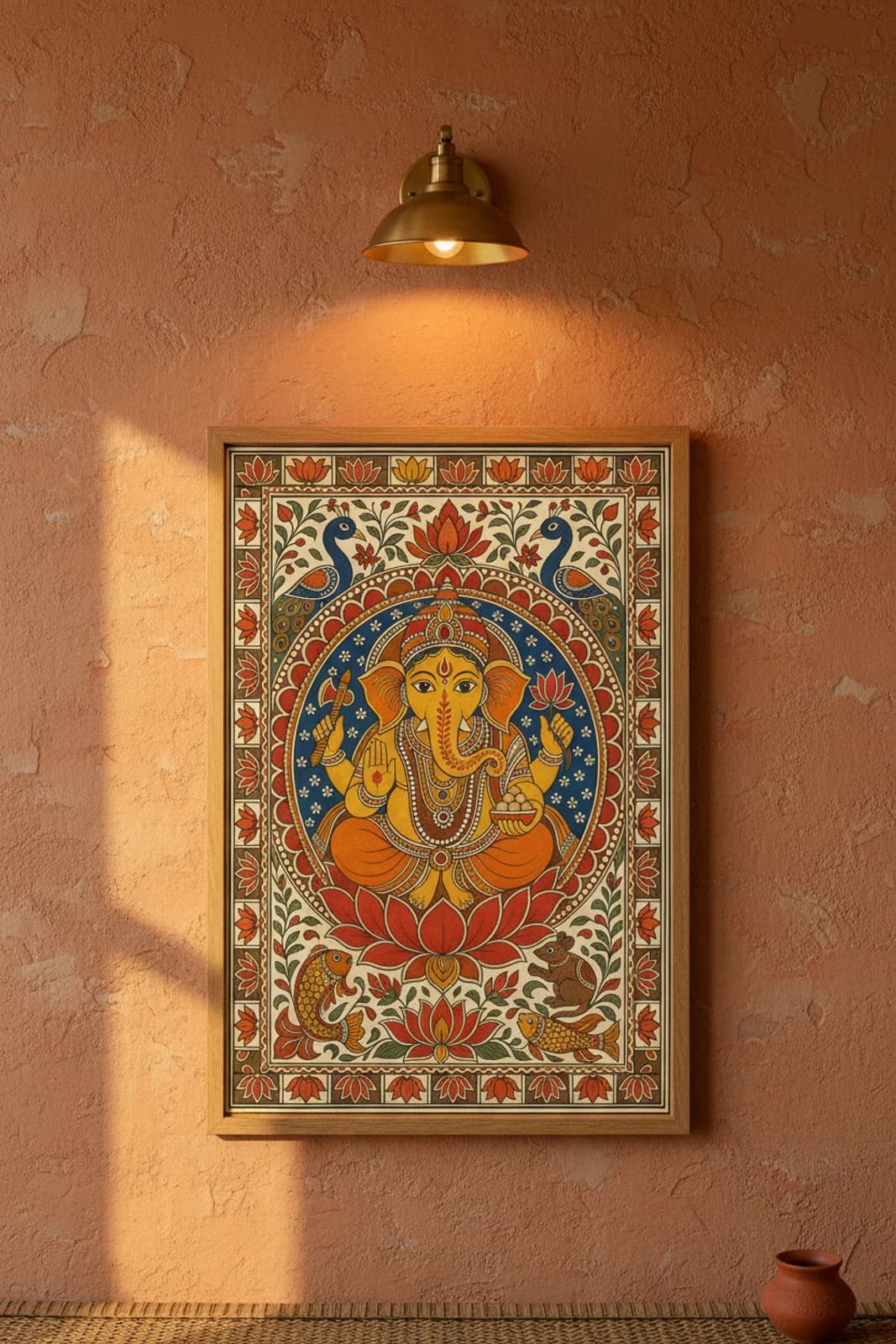
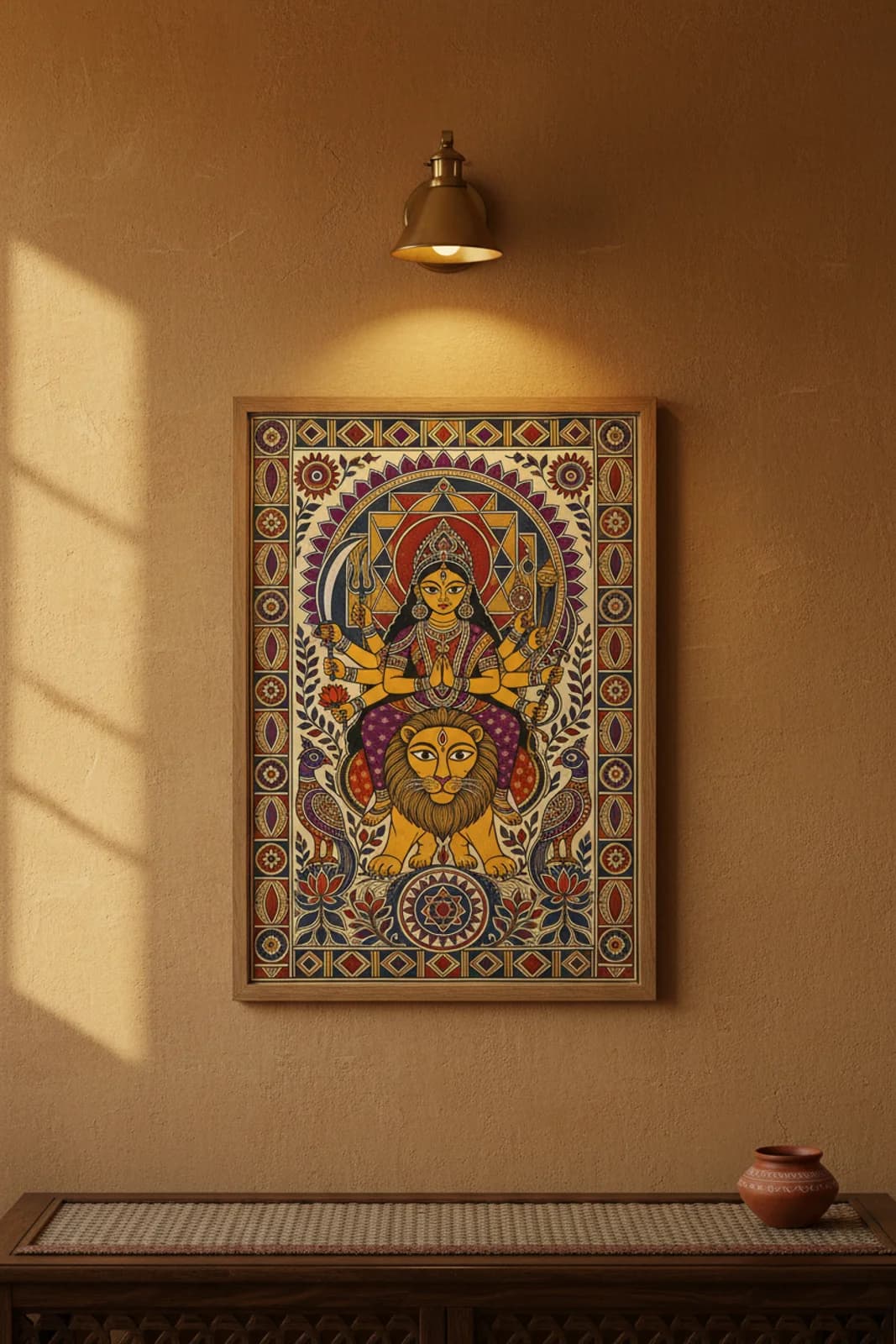
DESIGN BRIEF: A Ganesha yantra in Tantrik Madhubani cannot treat the deity and the geometry as separate layers — if Ganesha floats above a generic mandala, the panel reads like a calendar illustration pasted on rangoli. Radial-mandala symmetry was the layout fix: the octagonal yantra frame shares a single centre with the seated figure so the lotus seat, petal ring, and stepped cardinal projections all orbit the same bindu. I chose four arms rather than the common six or eight because each attribute — lotus, ankush, abhaya, modak bowl — needs its own readable silhouette inside the inner petal circle without crowding the crown. The corner mice are not cute filler: in tantric folk panels the vahana guards the threshold of the diagram the way a temple mouse attends the prasad bowl. Modak medallions repeat in all four corners so the sweet-offering symbolism echoes the bowl in Ganesha's lower left hand. Border diamond lattice extends the yantra vocabulary to the edge — same ochre-vermillion-indigo grammar, same path-line hatching inside every flat colour field — so the frame is continuation of the sacred geometry, not decoration pasted around it.
 WALLIMILIST