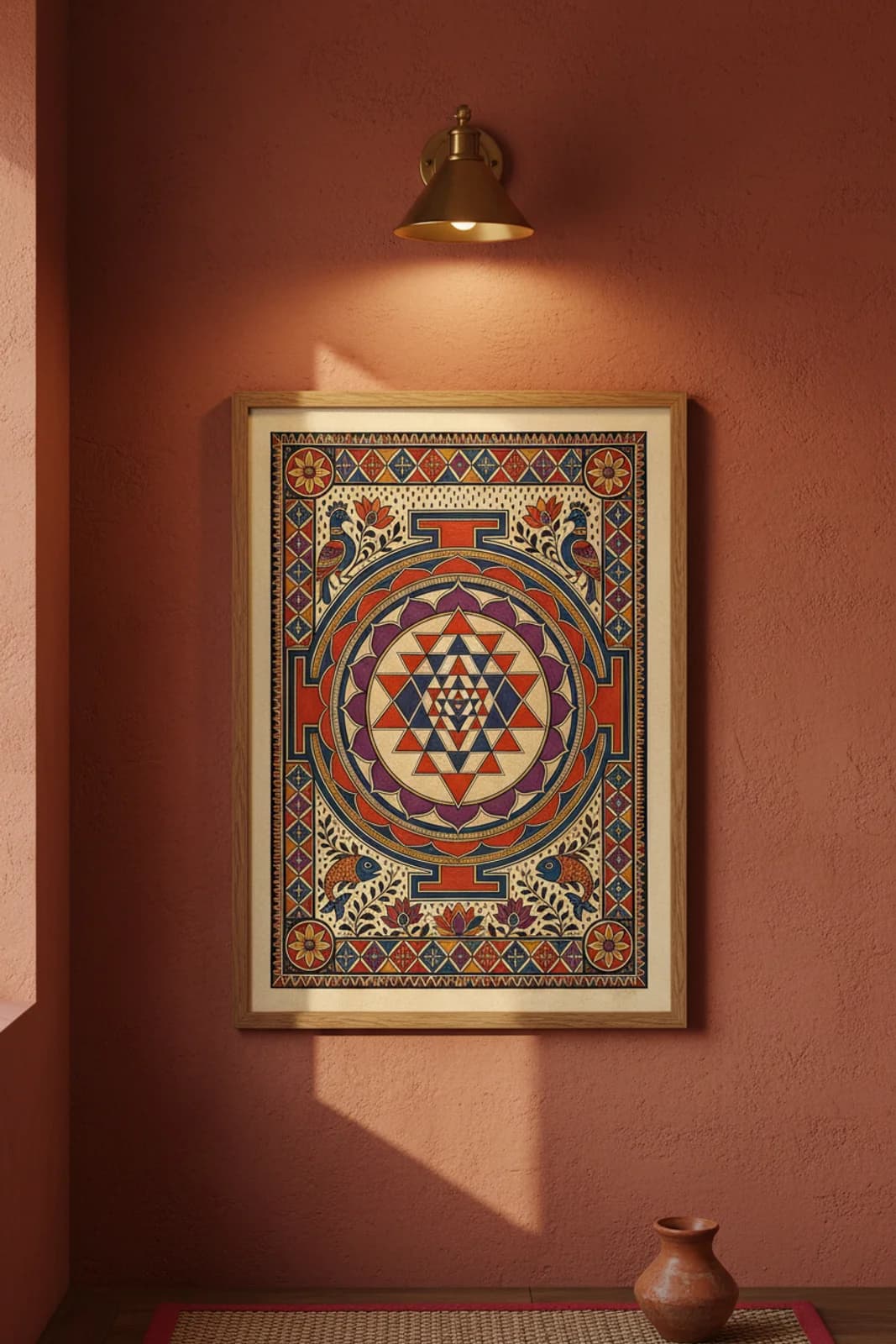
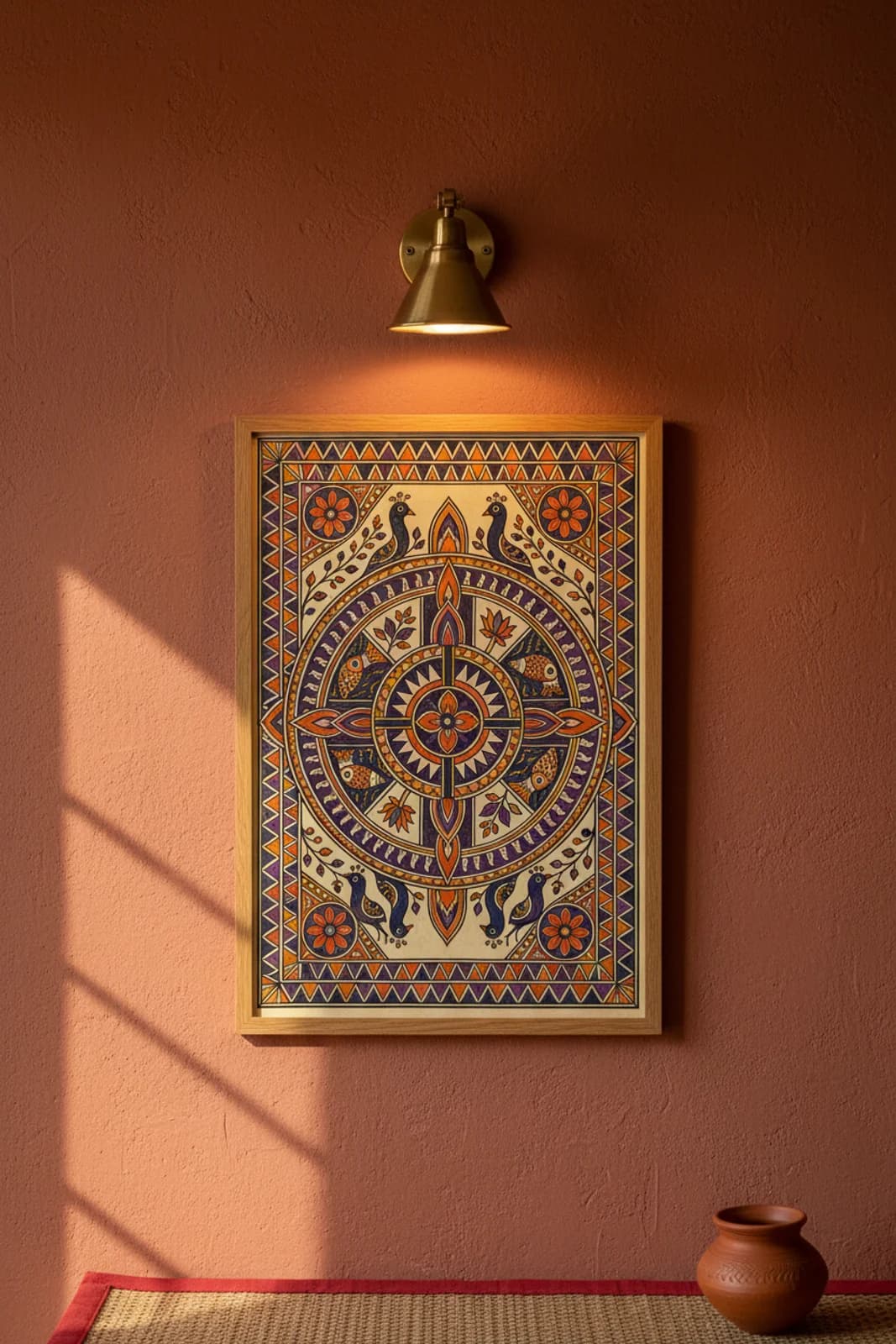
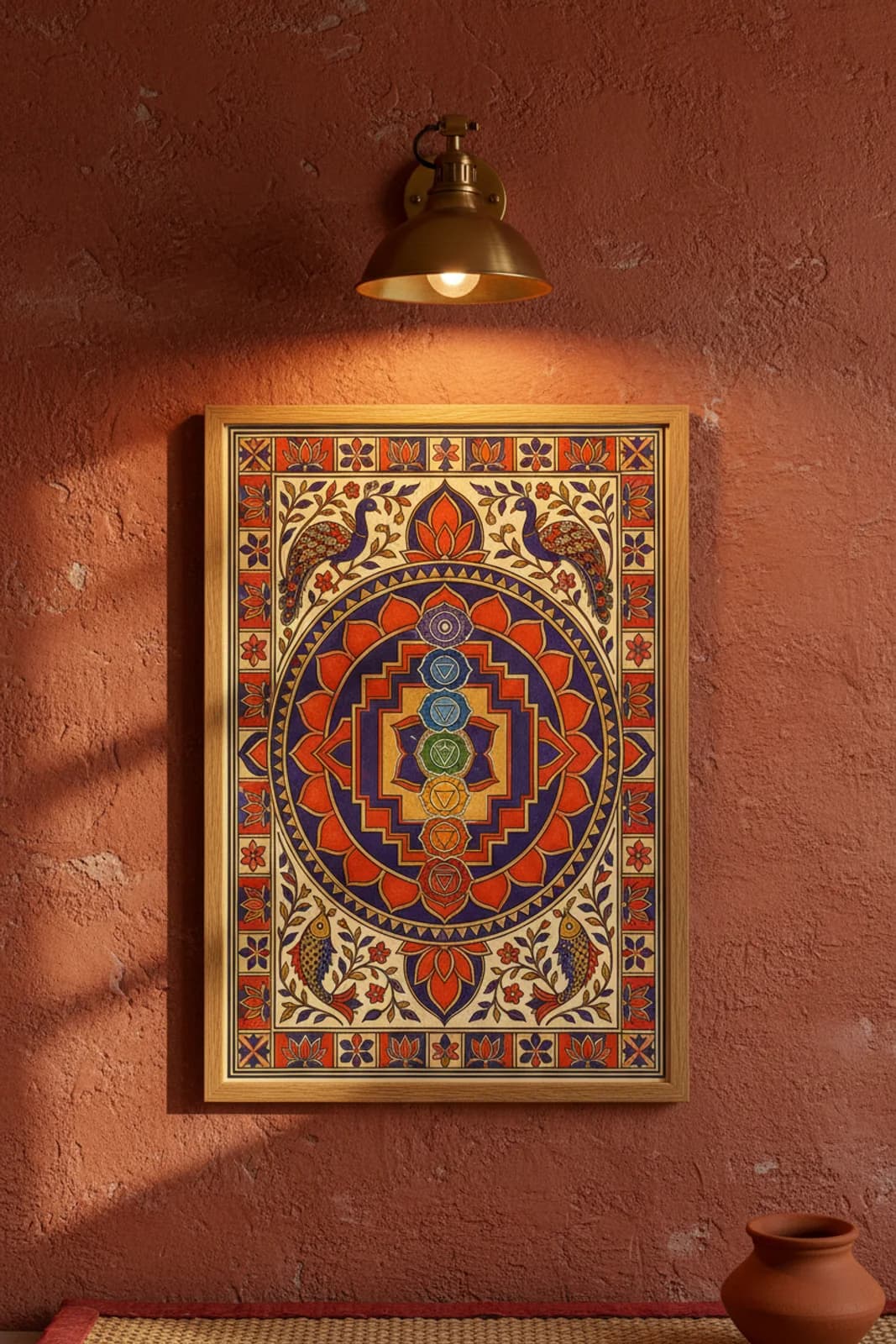
DESIGN BRIEF: A Sri Yantra in Madhubani cannot read like a textbook diagram pasted onto folk paper — Tantrik Mithila panels treat yantra as living threshold geometry, not engineering blueprint. Radial-mandala symmetry solves the legibility problem: every interlocking triangle mirrors across the vertical axis so the bindu stays centred and the bhupura earth-square reads as a doorway rather than a decorative frame. I kept the triangle count at nine — the classical Shri Chakra configuration — but filled each field in alternating vermillion and indigo Bharni flat colour with double black outlines, because Tantrik village panels in Madhubani district favour bold pigment blocks over Kachni hatching alone for yantra cores. The two lotus petal rings — eight purple inner, sixteen red outer — borrow temple-folk convention where lotus purity wraps the geometric bindu before the square gate opens outward. Corner peacocks and fish are not ornamental filler: peacocks crown the upper threshold as beauty and vigilance guardians, fish anchor the lower corners as abundance symbols, all facing inward so the protective border does not float empty. Cream interstitial fields carry Kachni vertical dash texture because authentic Mithila practice leaves no ground bare — the yantra breathes inside folk density, not on sterile white. The outer diamond lattice border anchors the panel in geometric folk grammar without importing Kohbar wedding narrative or Bharni deity figuration.
 WALLIMILIST