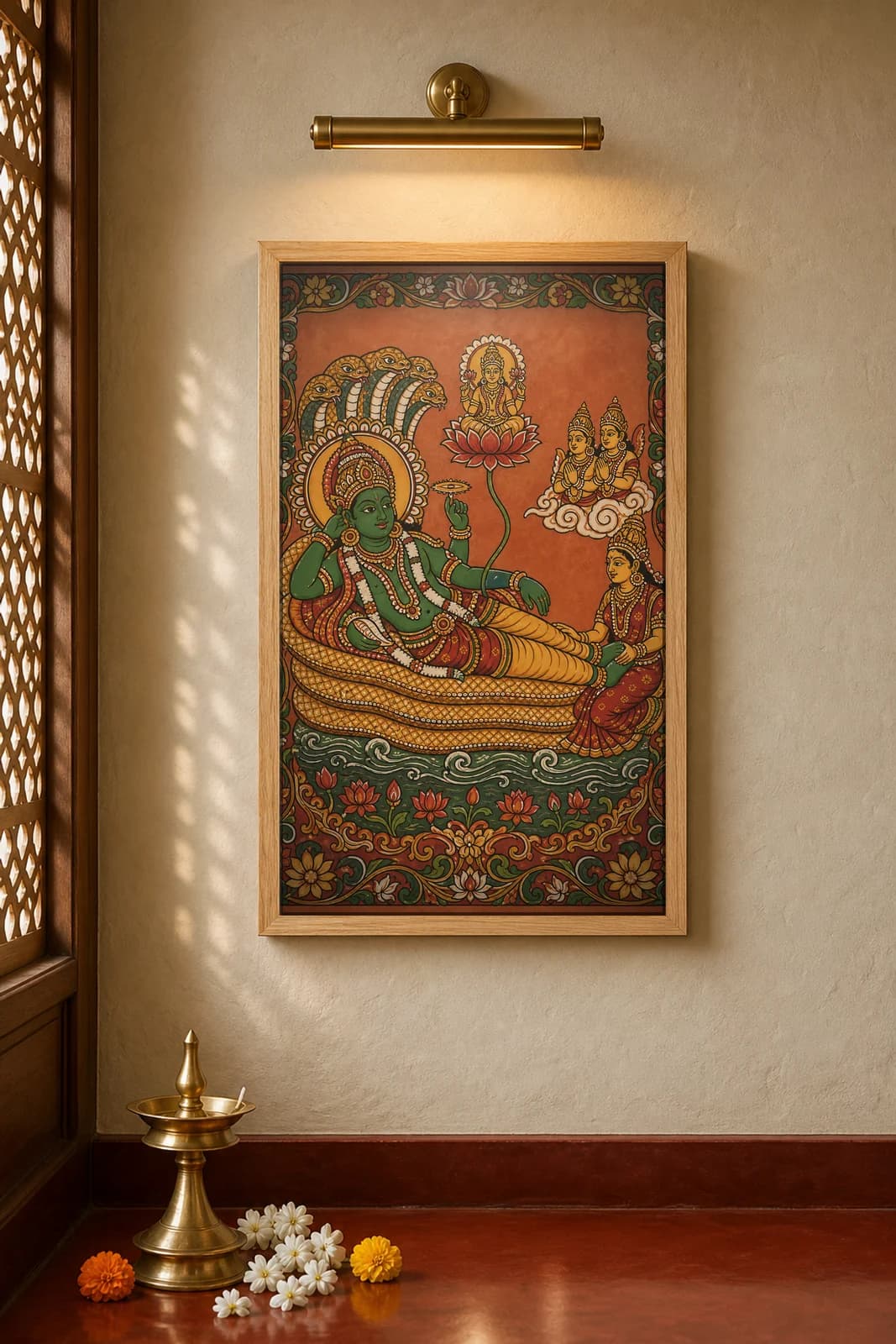
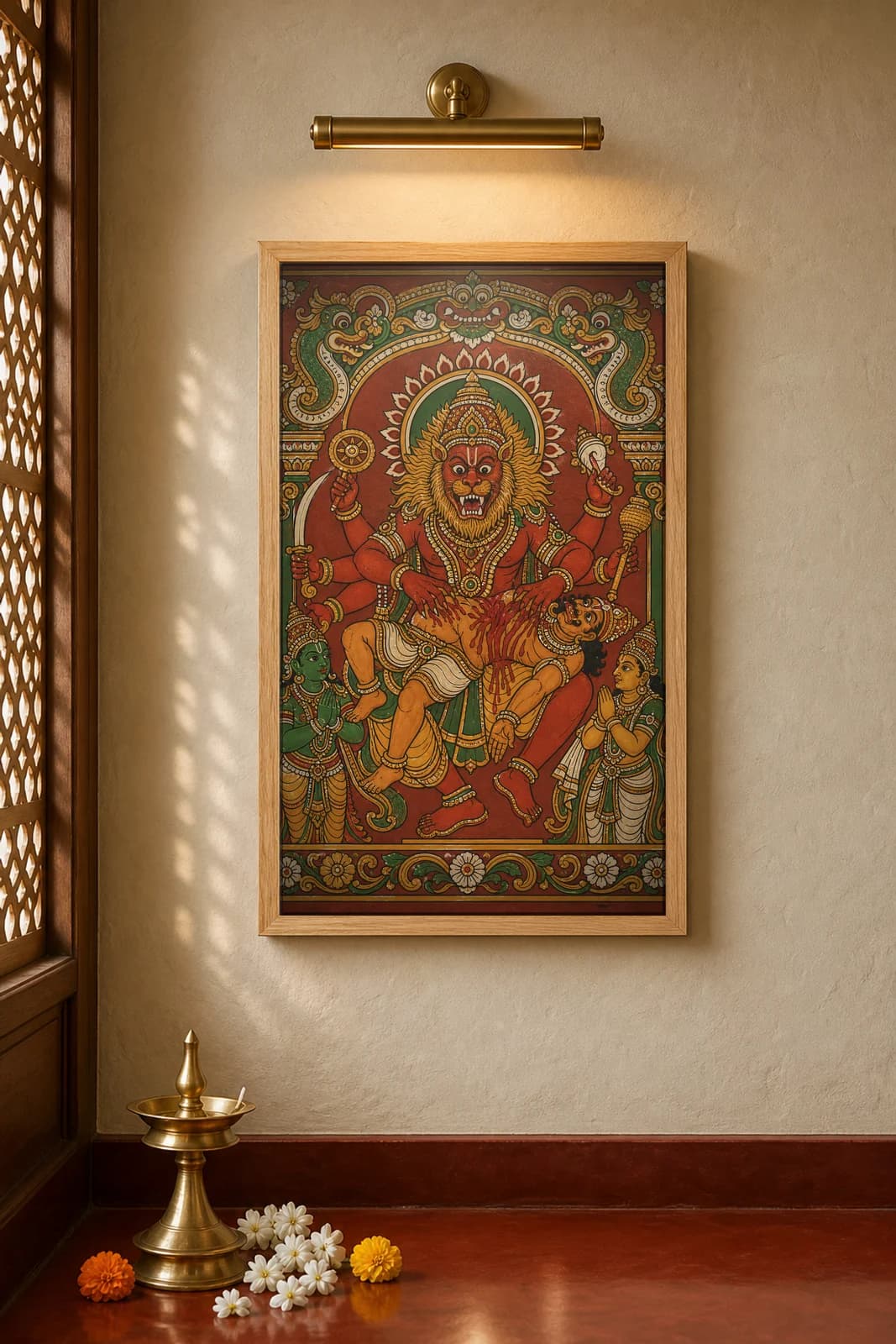
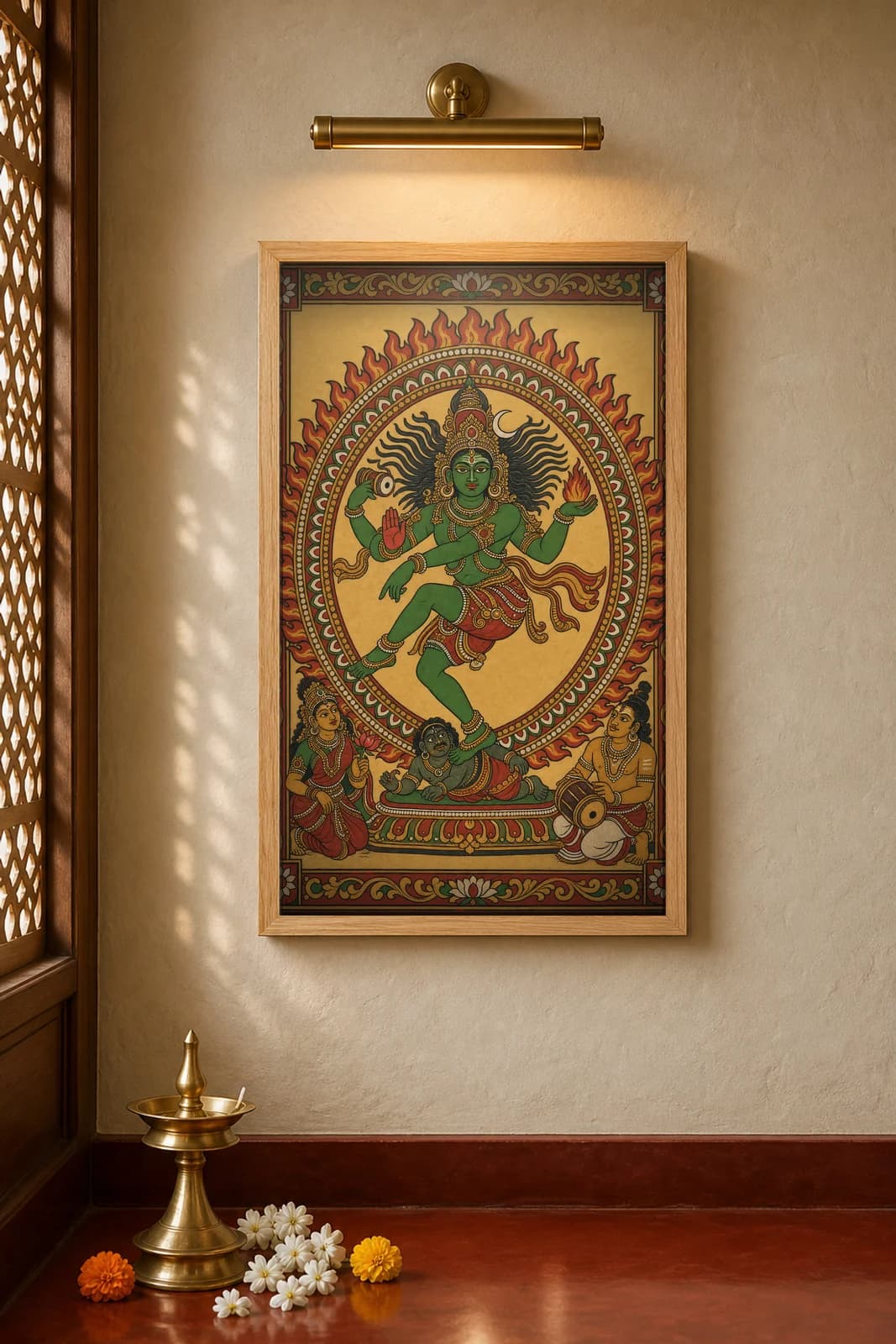
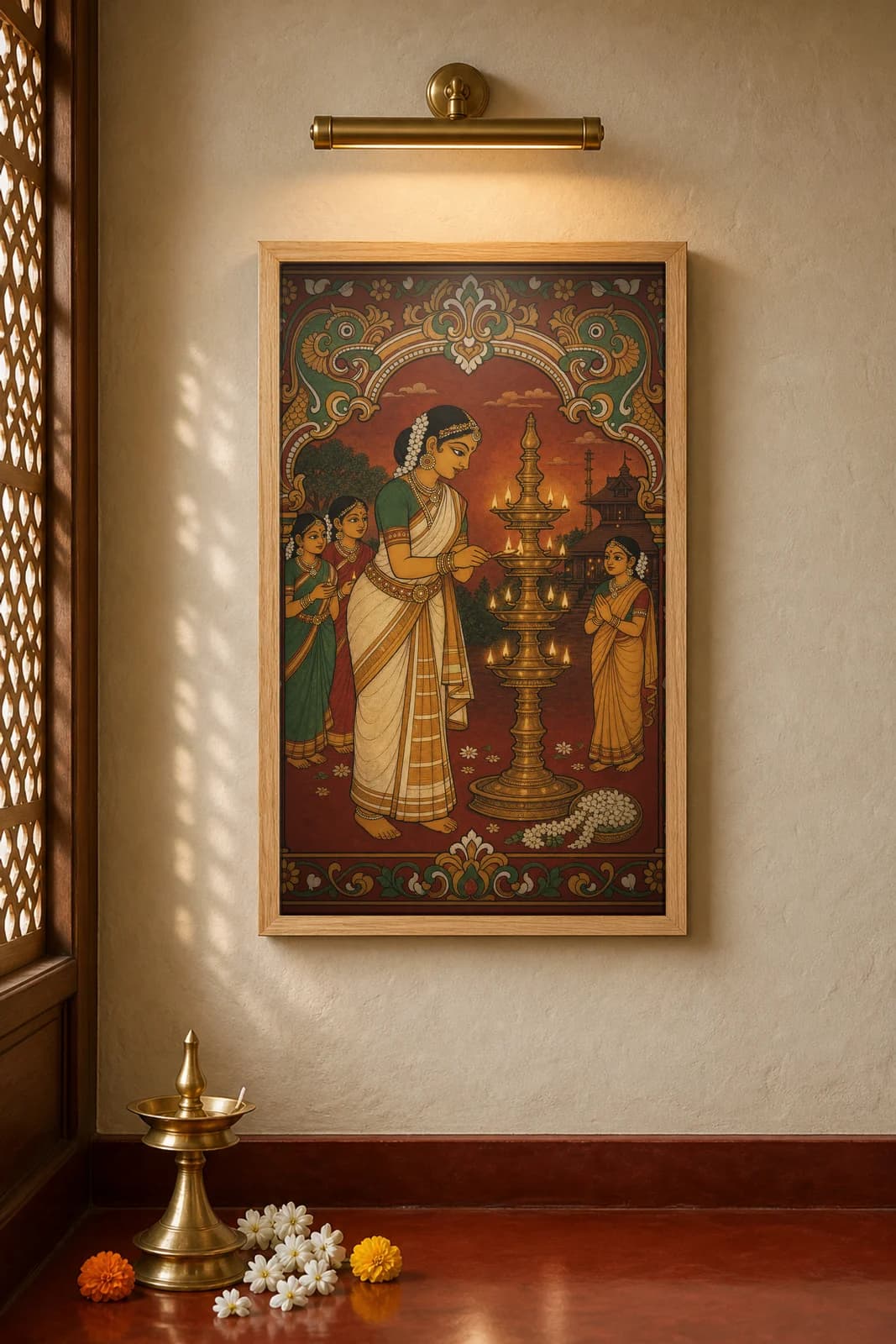
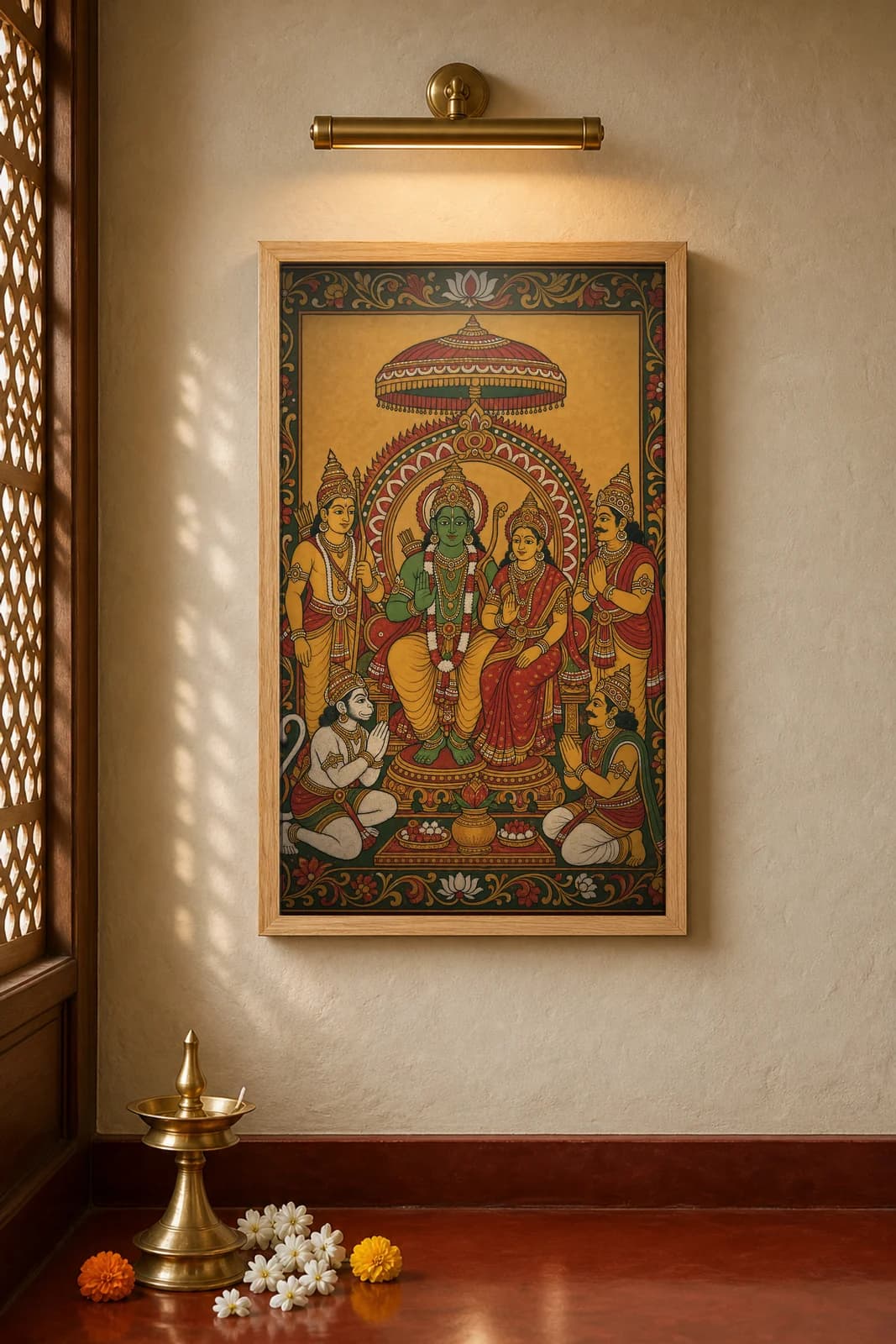
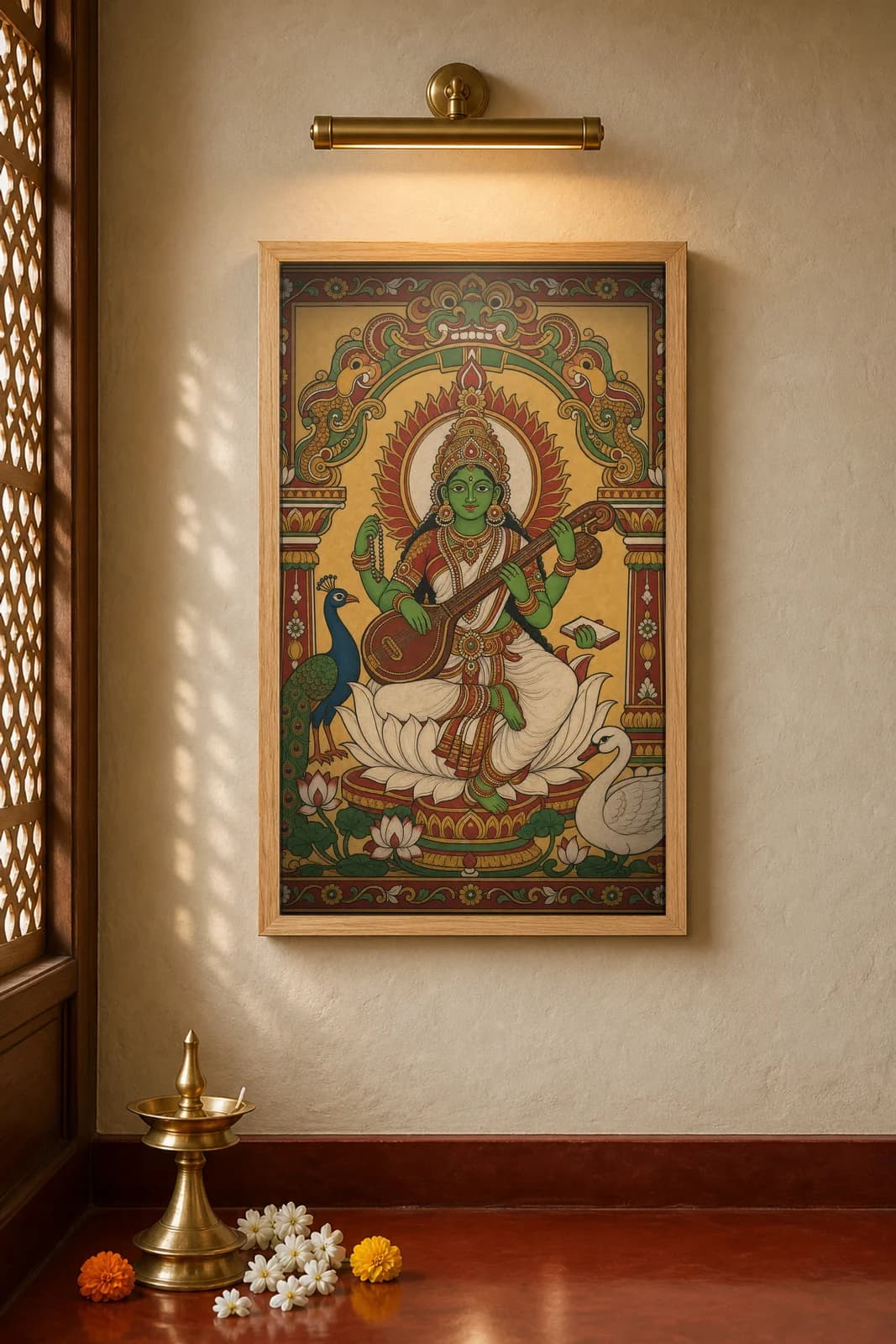
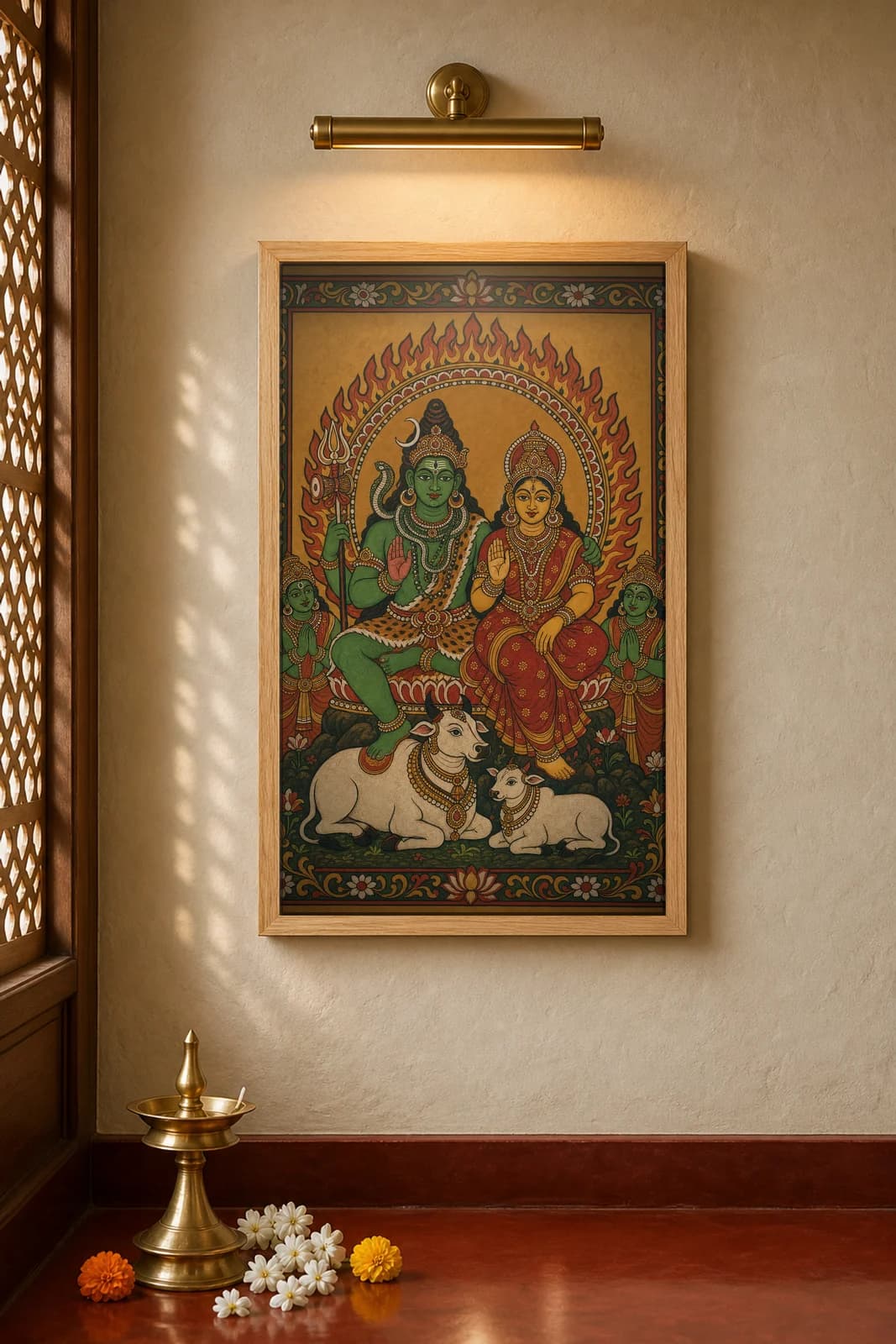
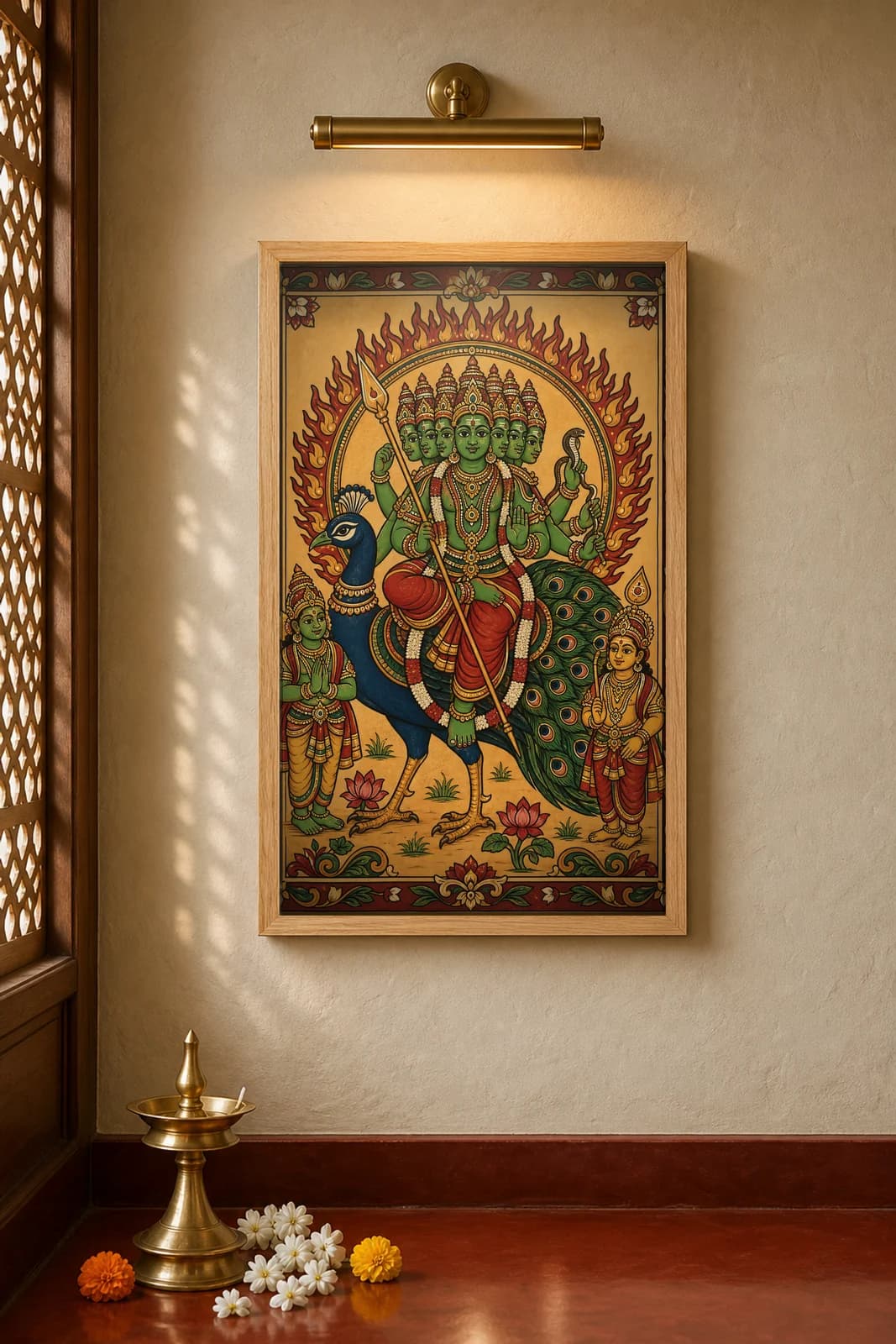
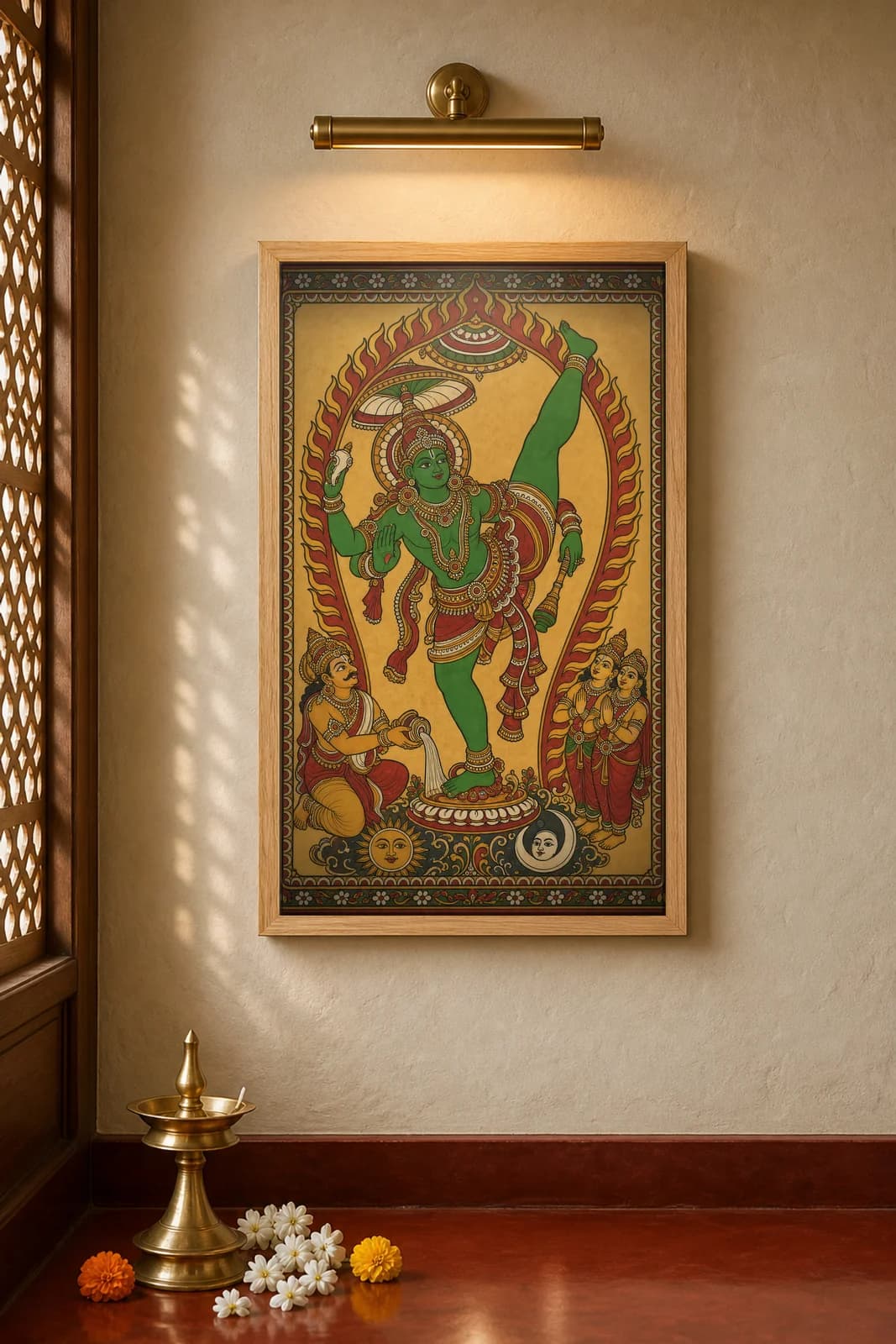
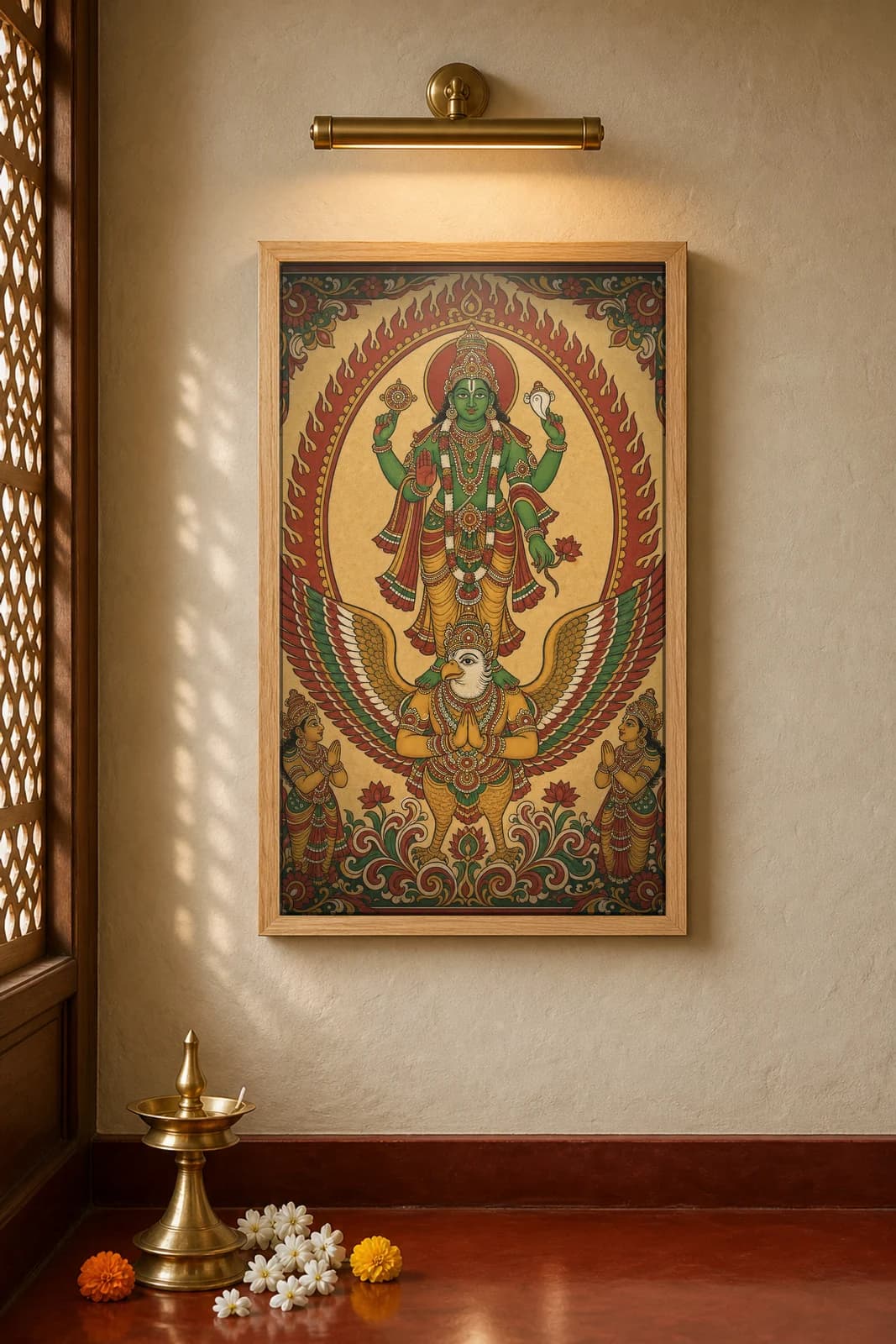
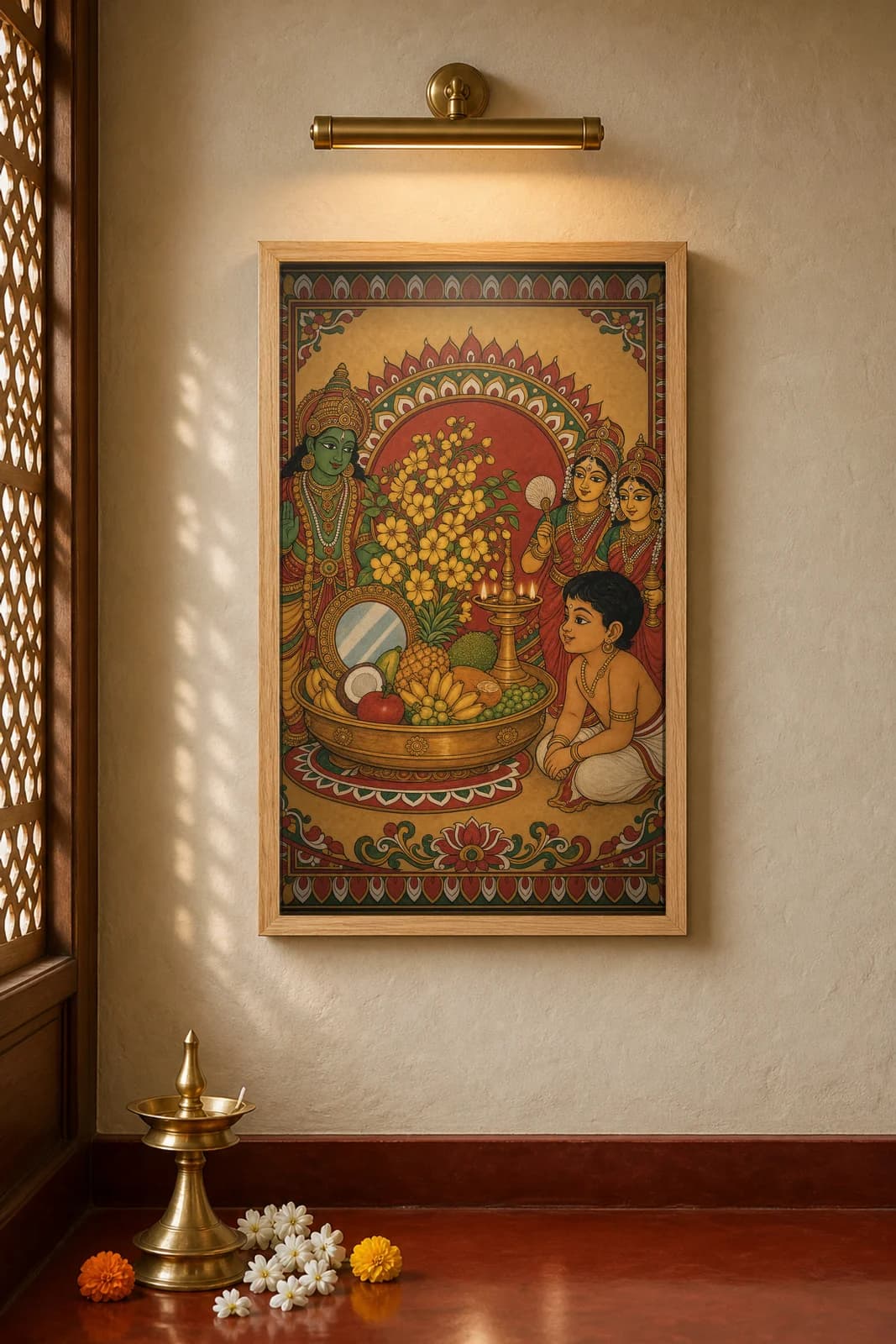
Prayer Corner — 11 museum-grade prints sized and toned for the room. Narasimha is the fourth avatar of Vishnu — the man-lion who emerges at twilight from a pillar to kill the demon king Hiranyakashipu, neither man nor beast, neither inside nor outside, neither day nor night, closing every clause of the demon's boon to protect his devotee Prahlada. He is a recurring subject of bhitti chitra, Kerala's temple-mural tradition, which uses the panchavarna five-colour system — red, yellow, green, black and white over an ochre or red ground — in flat opaque fields bounded by a bold lamp-black outline, with the school's signature elongated lotus-shaped eyes. Nataraja — Shiva as Lord of the Dance — performs the Ananda Tandava, the dance through which the cosmos is created, sustained and dissolved; the ring of flame is the prabhamandala, the circle of the universe, and the trampled dwarf Apasmara is ignorance subdued. The four hands carry the damaru of creation, the fire of destruction, the gesture of fearlessness, and the sweep toward the raised foot of liberation. The nilavilakku is Kerala's tall standing brass oil lamp, lit at dusk — the sandhya deepam — in homes and temples alike; the act of lighting it marks the threshold between day and evening and is a small daily devotion. The picture is built in the idiom of bhitti chitra, Kerala's temple-mural tradition, which uses the panchavarna five-colour system — red, yellow, green, black and white over an ochre or red ground — in flat opaque fields bounded by a bold lamp-black outline, with the school's signature elongated lotus-shaped eyes.