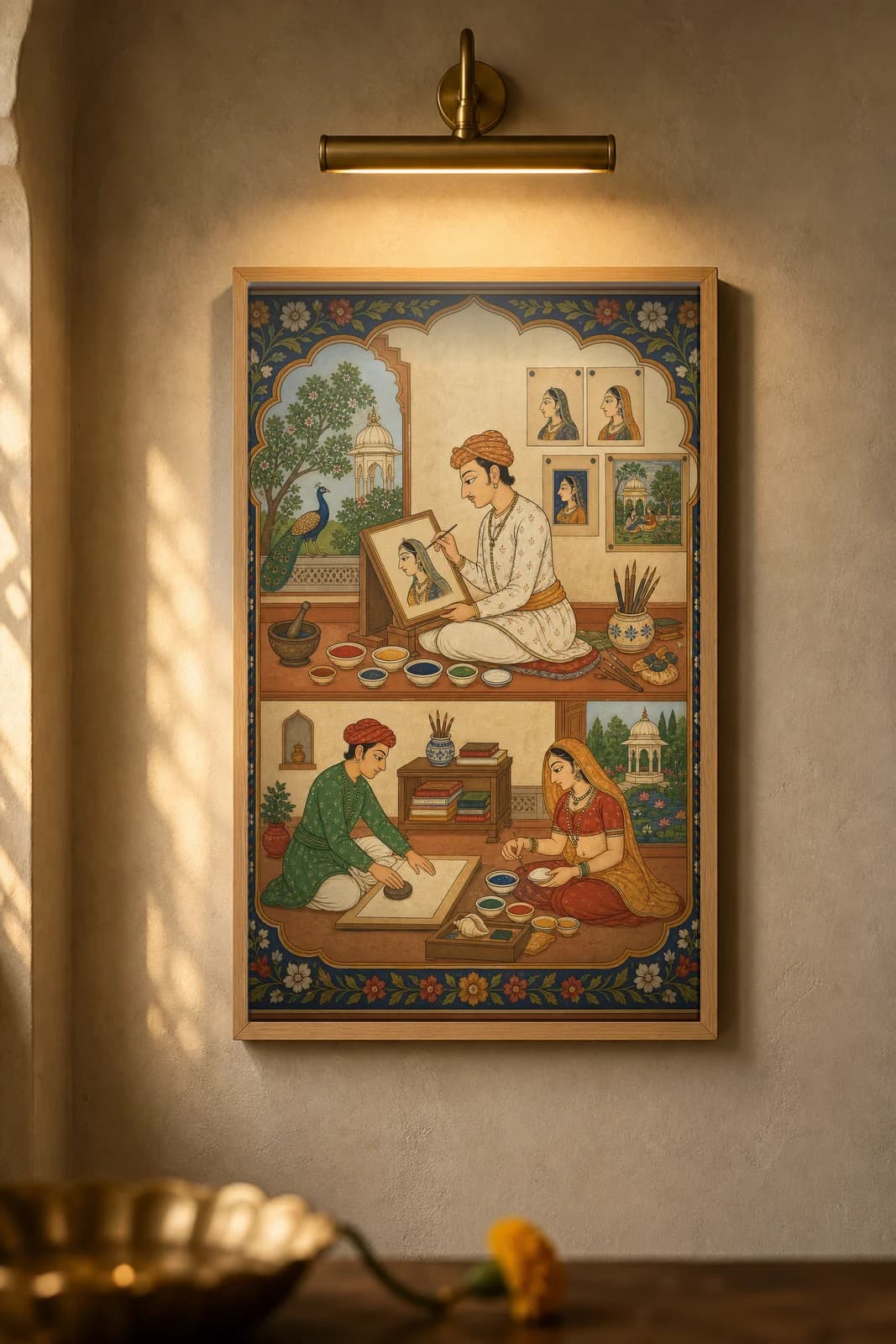
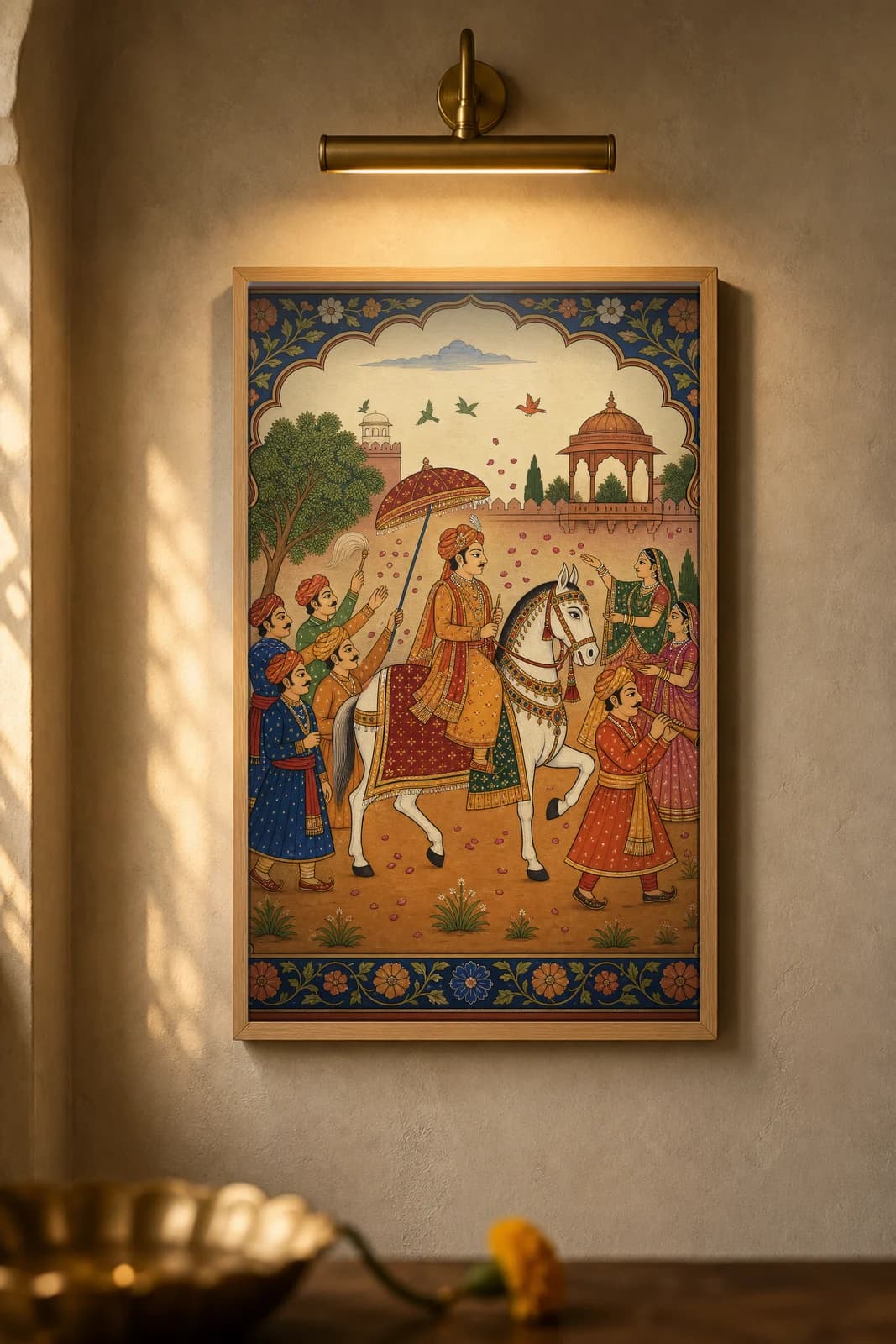
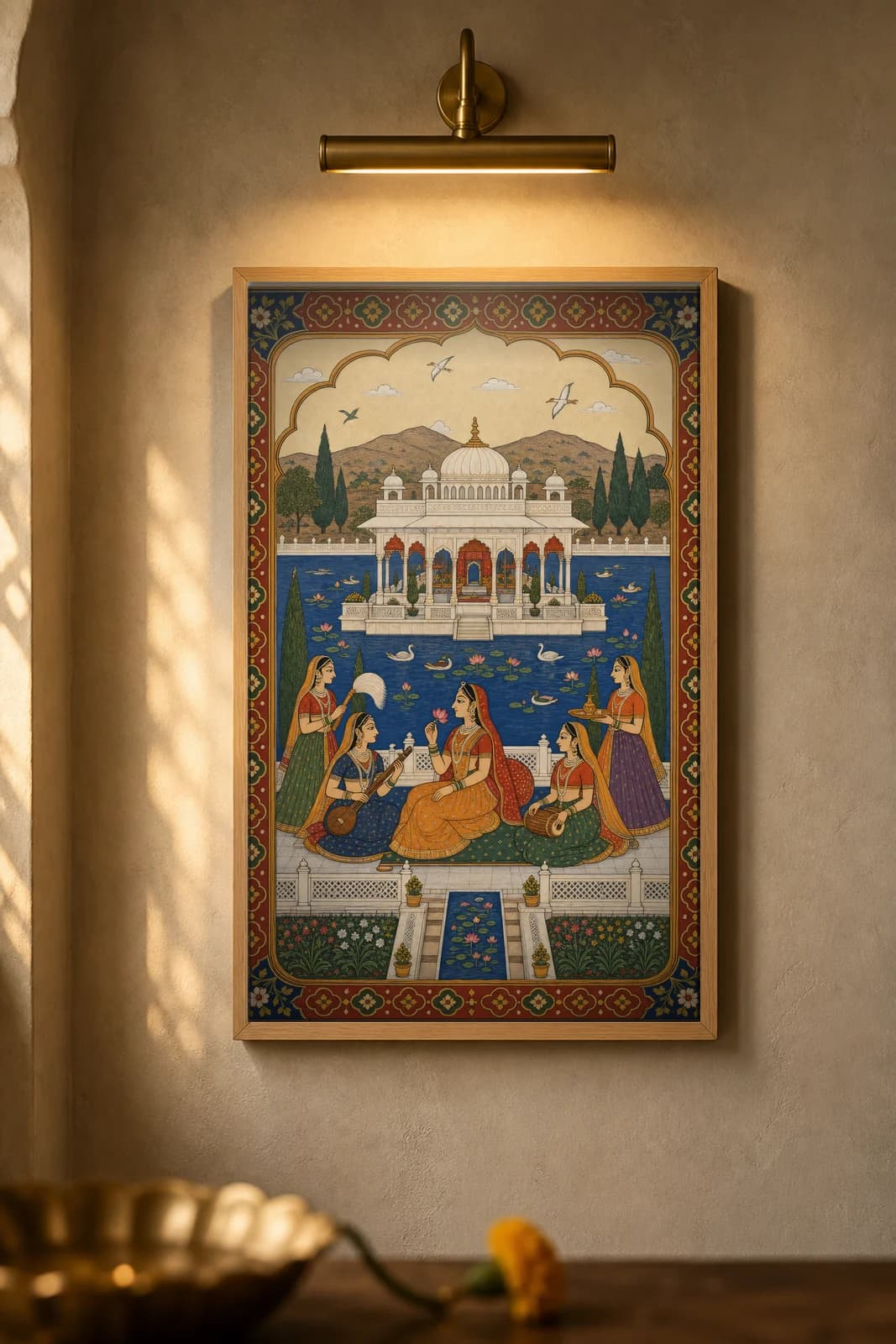
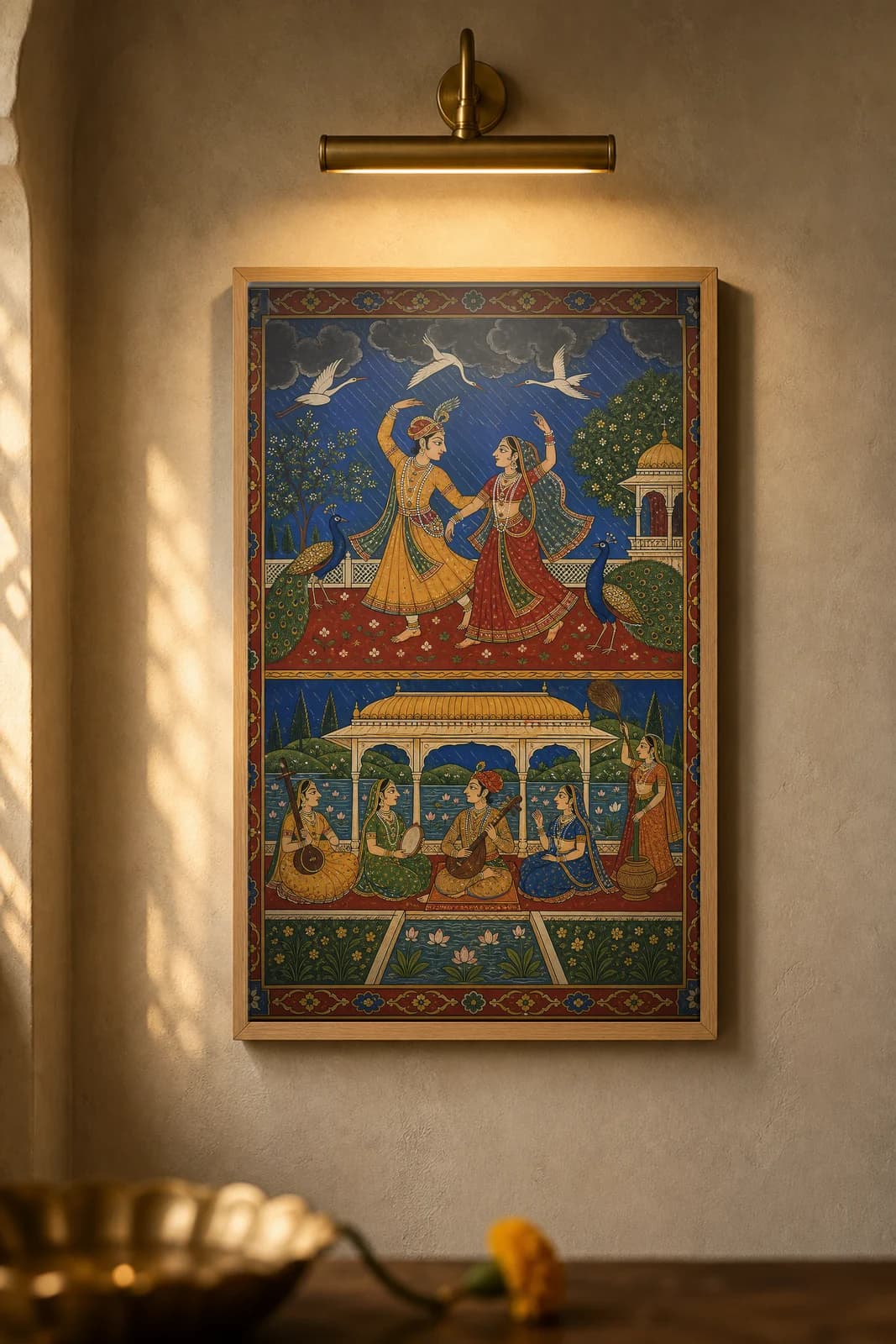
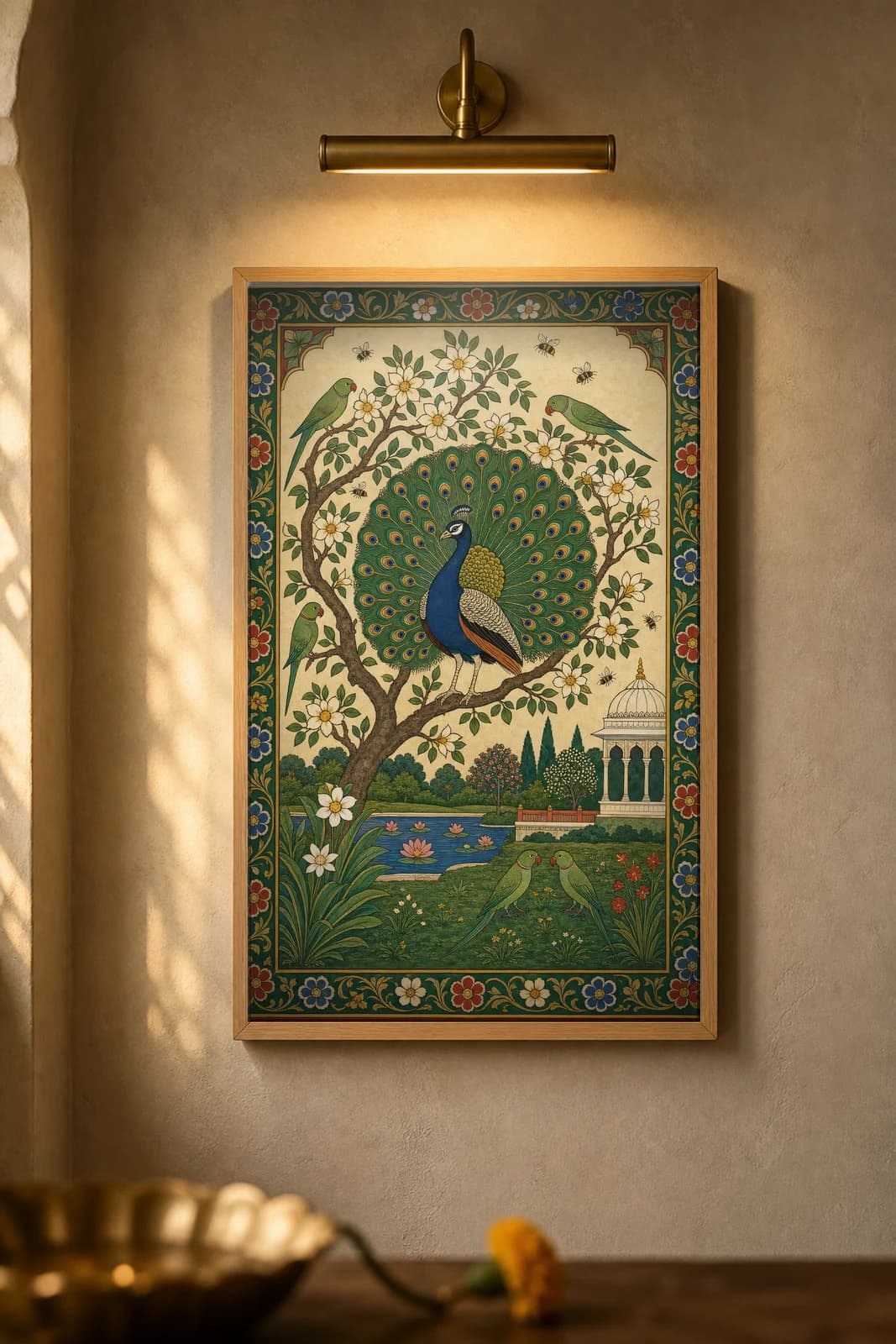
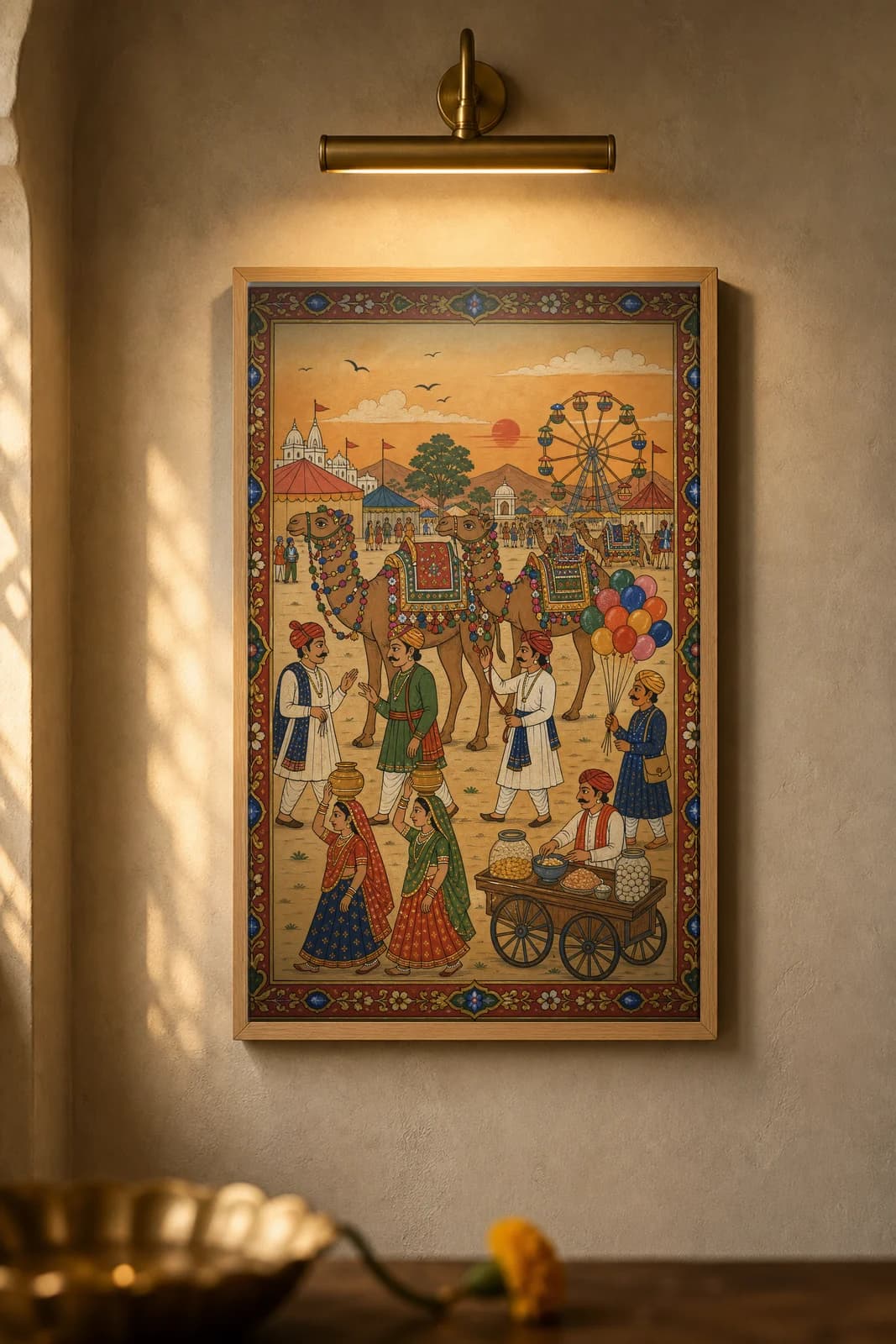
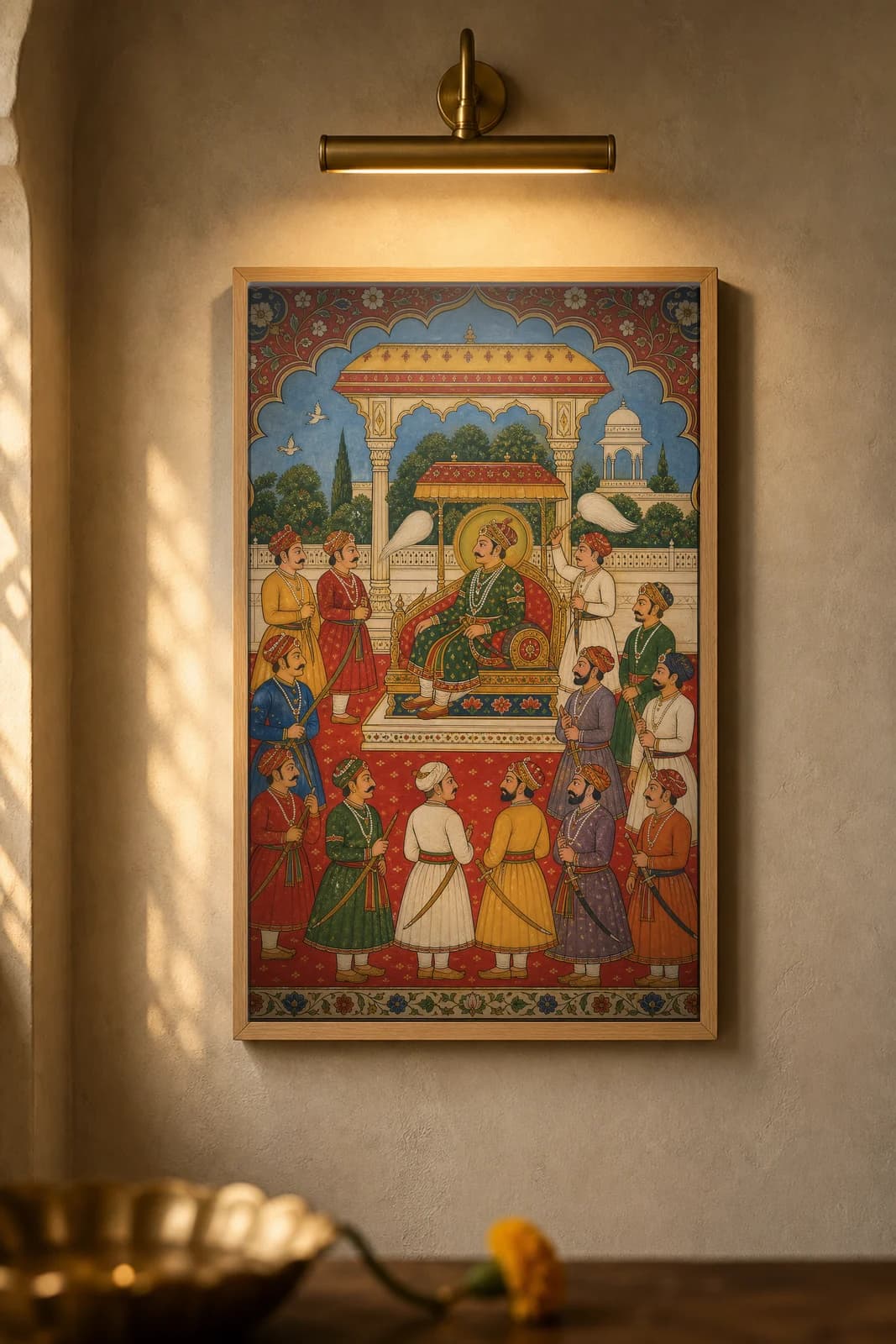
Boutique Hotel Suite — 7 museum-grade prints sized and toned for the room. Kishangarh, the small Rajasthan court that flourished in the 18th century under Raja Sawant Singh, gave Indian miniature its most idealised feminine profile — the arched brow and fish-curved eye fixed by the painter Nihal Chand and known as Bani Thani. A miniature begins long before that face: wasli paper is built up and burnished smooth with an agate stone, mineral pigments (hingul vermillion, lapis ultramarine, malachite green, orpiment yellow) are ground and bound in shell cups, and the drawing is laid in fine black-brown line with a squirrel-hair brush, 'gold' rendered as flat ochre. Mewar, ruled from Udaipur, is among the oldest and boldest of the Rajput miniature schools — known for flat saturated grounds, frontal symmetry and clear court hierarchy rather than the soft naturalism of the Pahari hills. Lake palaces such as Jag Niwas and Jag Mandir on Lake Pichola were a favourite Udaipur subject, painted as flat marble pavilions on a single blue water field. Mewar, ruled from Udaipur, produced some of the most formal durbar scenes in Rajput painting, in which the maharana — often haloed to mark sacred kingship — is shown enthroned amid ranked nobles, fan-bearers and standard-holders. The flat red ground, frontal symmetry and scale-by-rank hierarchy are Mewar signatures, distinct from the softer Pahari naturalism of Kangra.


$49

$49

$49

$49

$49

$49