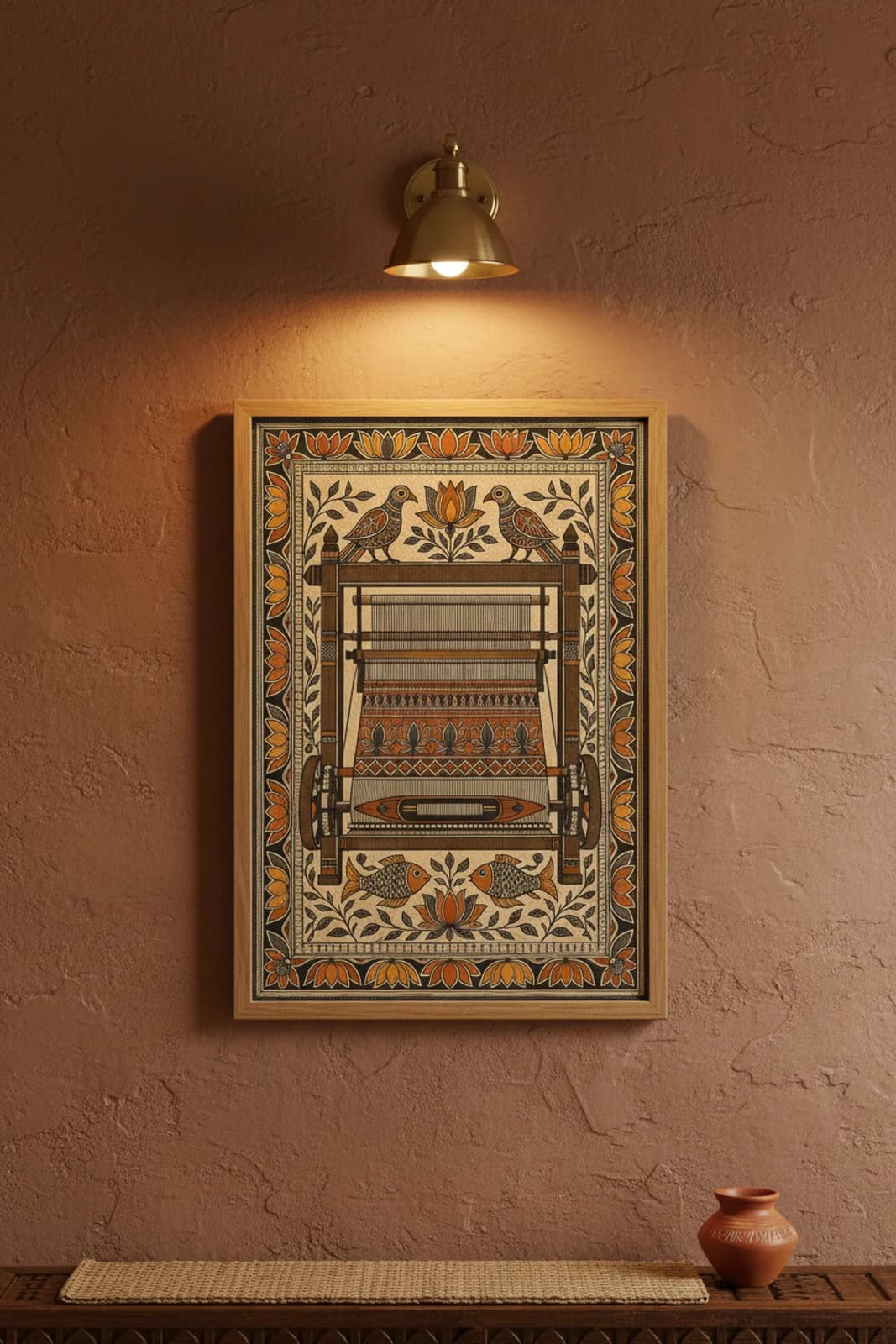
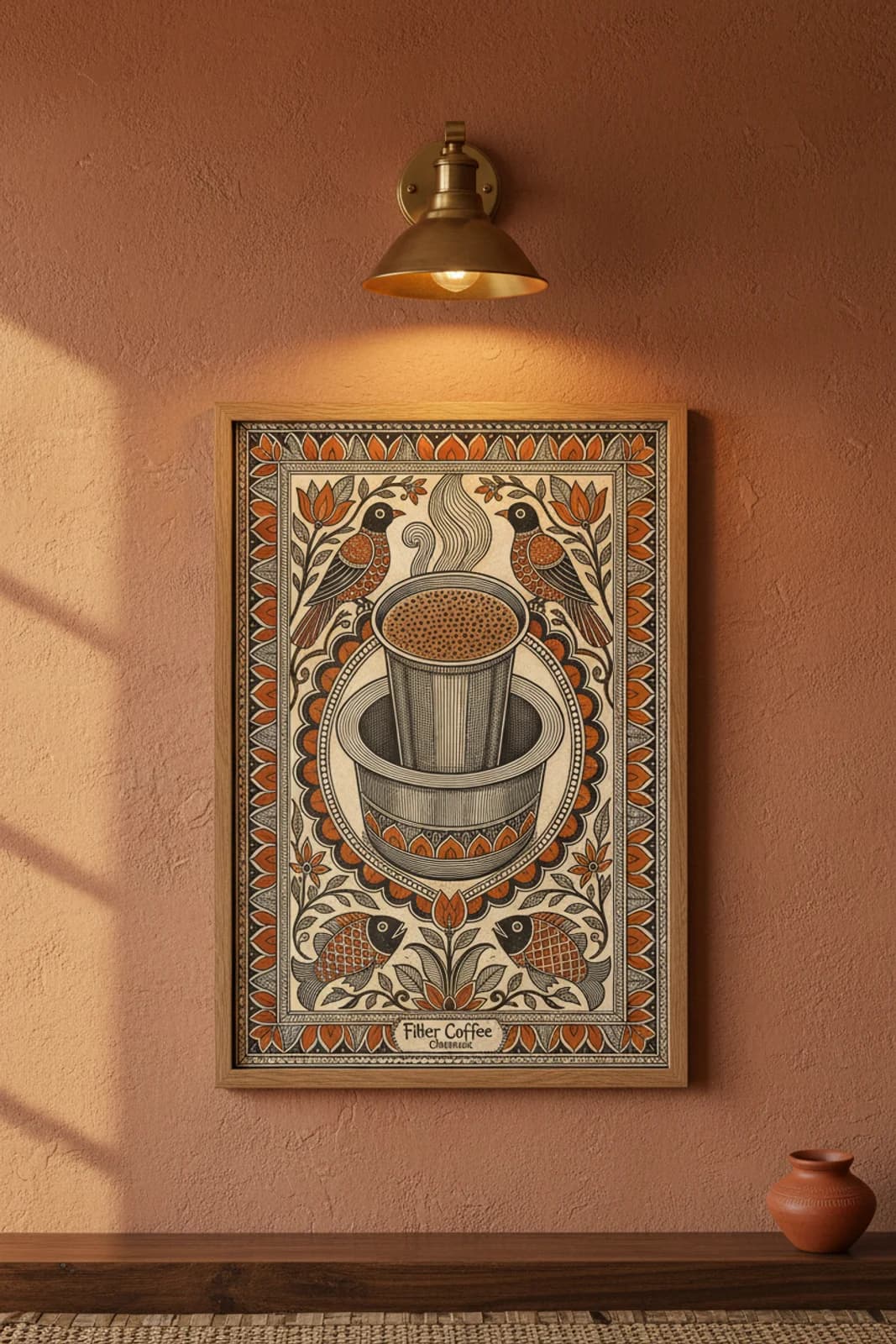
DESIGN BRIEF: Handloom workshops do not photograph well inside Mithila contour — steel tensioners and fluorescent light break folk flatness. Kachni solves the translation: warp becomes vertical hatching columns, timber frame reads as double-outlined ritual furniture, and the real narrative lives in the horizontal bands on the cloth face — zigzag geometry, five-lotus repeat, cross-hatch stripes — the same horizontal register Kayastha women once painted on Tussar saree aanchal and pallu borders. Horizontal-bilateral symmetry keeps the weaving story legible left-to-right while the loom stays centred on a vertical spine like a Kohbar wall post. Birds on the upper beam and fish at the base are not decorative filler — they are classical Mithila threshold grammar (aerial abundance above, aquatic fertility below) anchoring a contemporary Varanasi craft subject inside tradition. I resisted adding weaver portraits or workshop clutter; the shuttle, wheels, and band narrative carry enough labour memory without breaking the no-typography canvas rule.
 WALLIMILIST