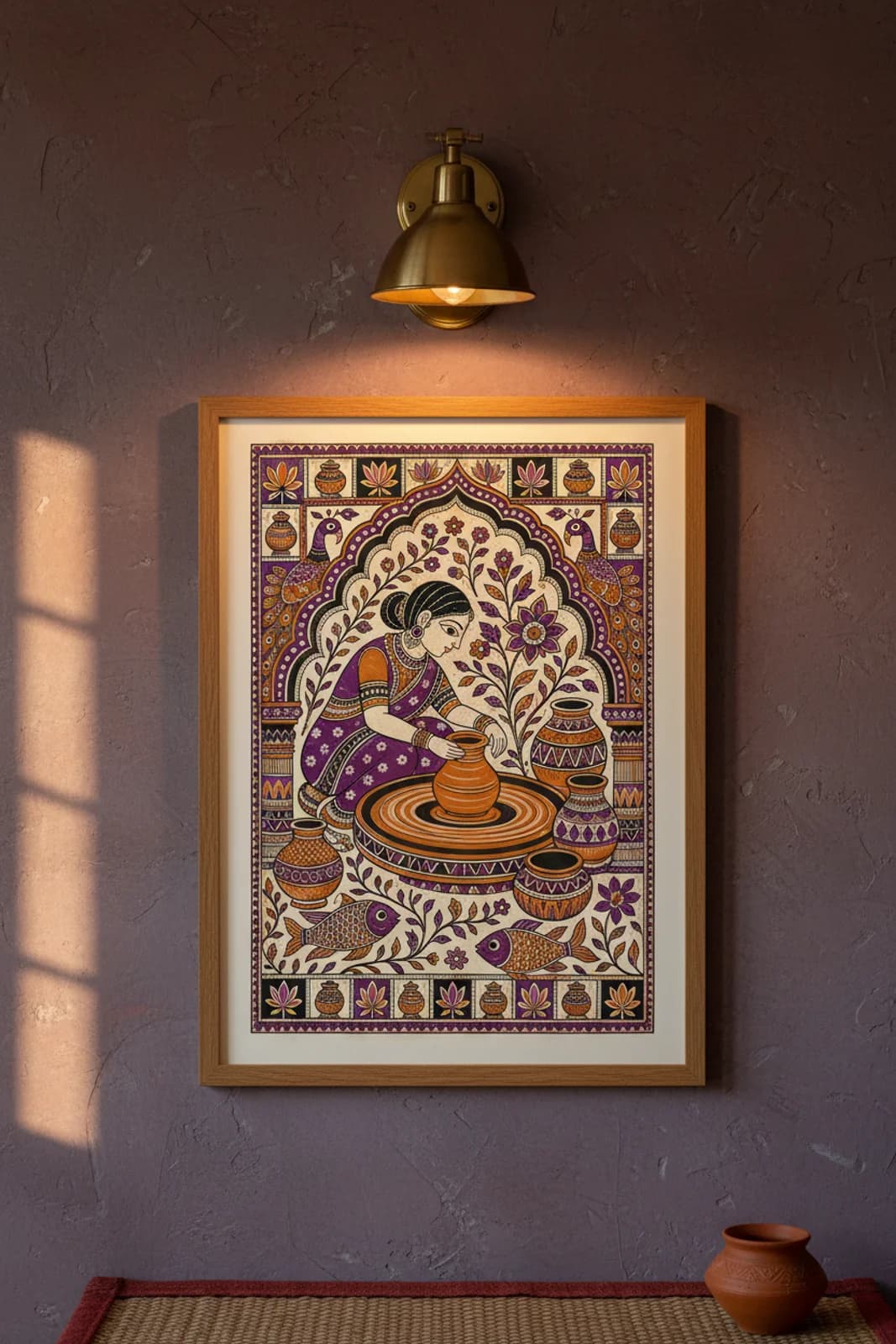
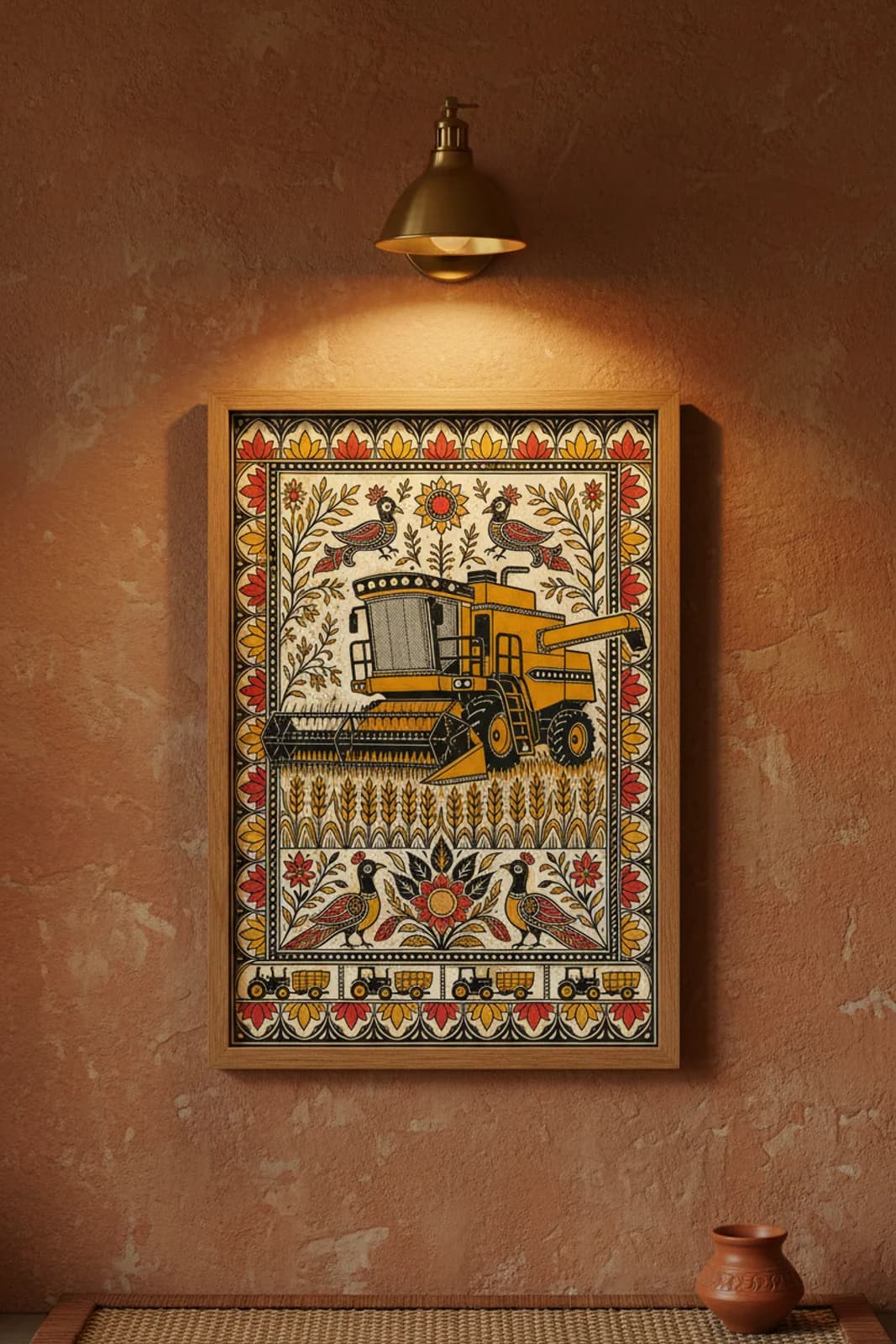
DESIGN BRIEF: Pottery belongs in Madhubani grammar more naturally than most fusion subjects — Mithila women have painted kumhar wheels and matki vessels on wedding walls for generations, and Khurja's wheel-thrown terracotta now carries hand-painted Mithila bands in living craft markets. The translation problem was motion: a documentary side-angle potter photograph would break folk flatness, so radial-mandala symmetry puts the wheel itself at the ritual centre — concentric rings as mandala orbit, forming pot as bindu, finished vessels as satellite moons. Bharni made sense because purple saree fields, terracotta blouse bands, and orange wheel rings need saturated flat reads the way Brahmana painters once filled deity panels — not the parallel hatching discipline of Kayastha Kachni alone. We framed the potter inside a scalloped torana arch so the craft scene reads as threshold ceremony rather than factory floor, crowned peacocks and base fish anchoring four-direction guardian logic without importing full Kohbar wedding narrative. Border tiles alternate lotus and kalash so the frame repeats vessel grammar — the same problem classical painters solved when no ground could stay empty.
 WALLIMILIST