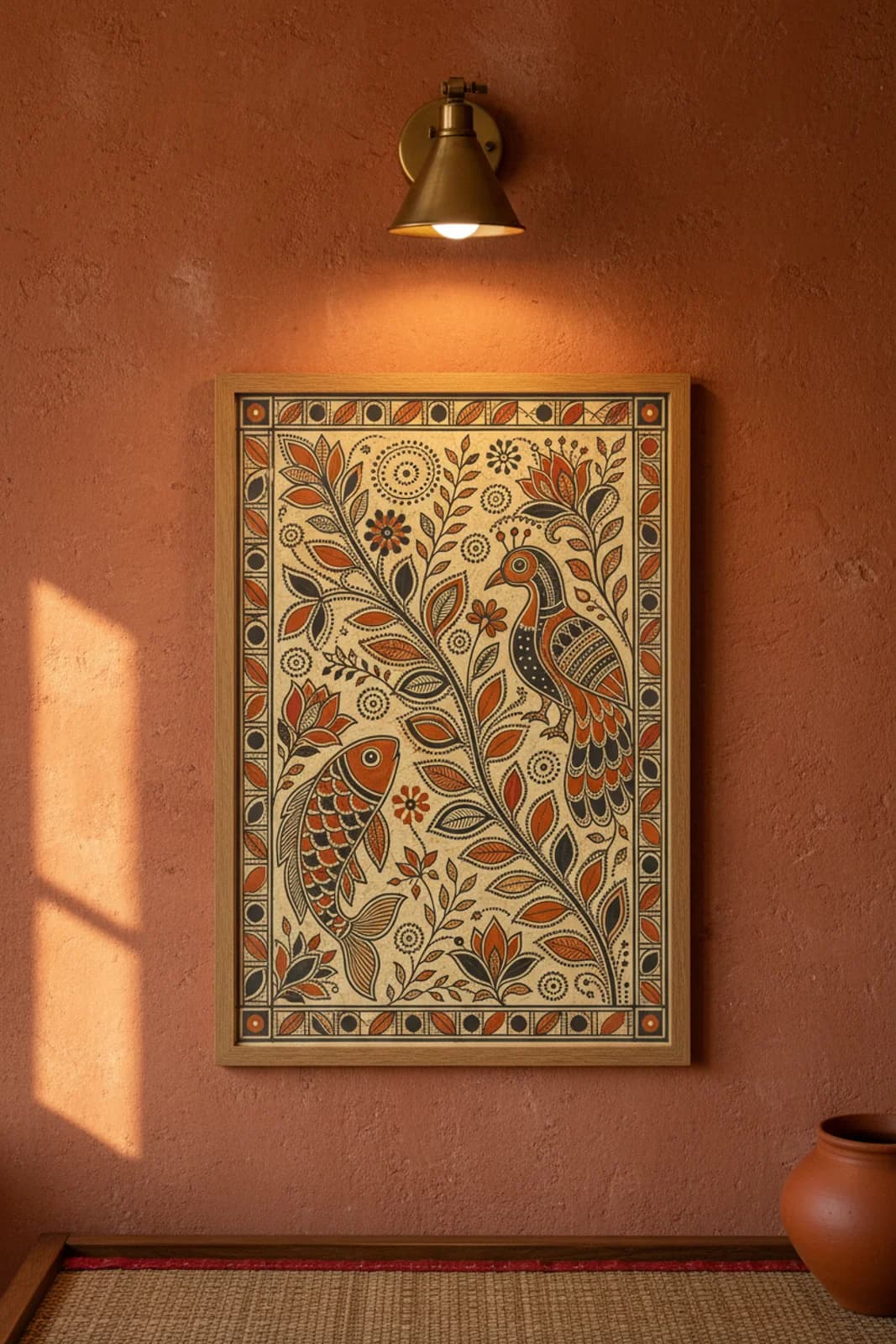
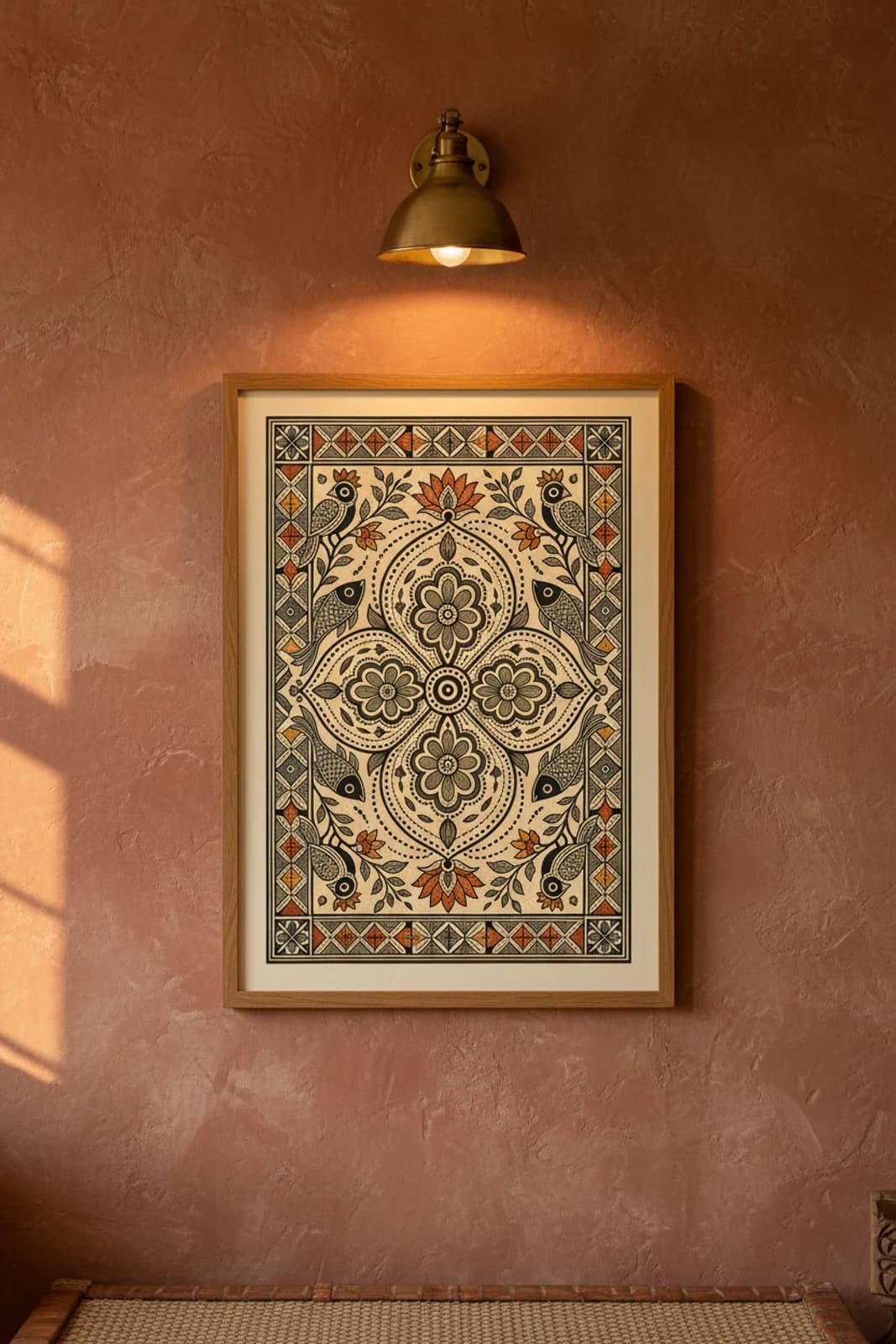
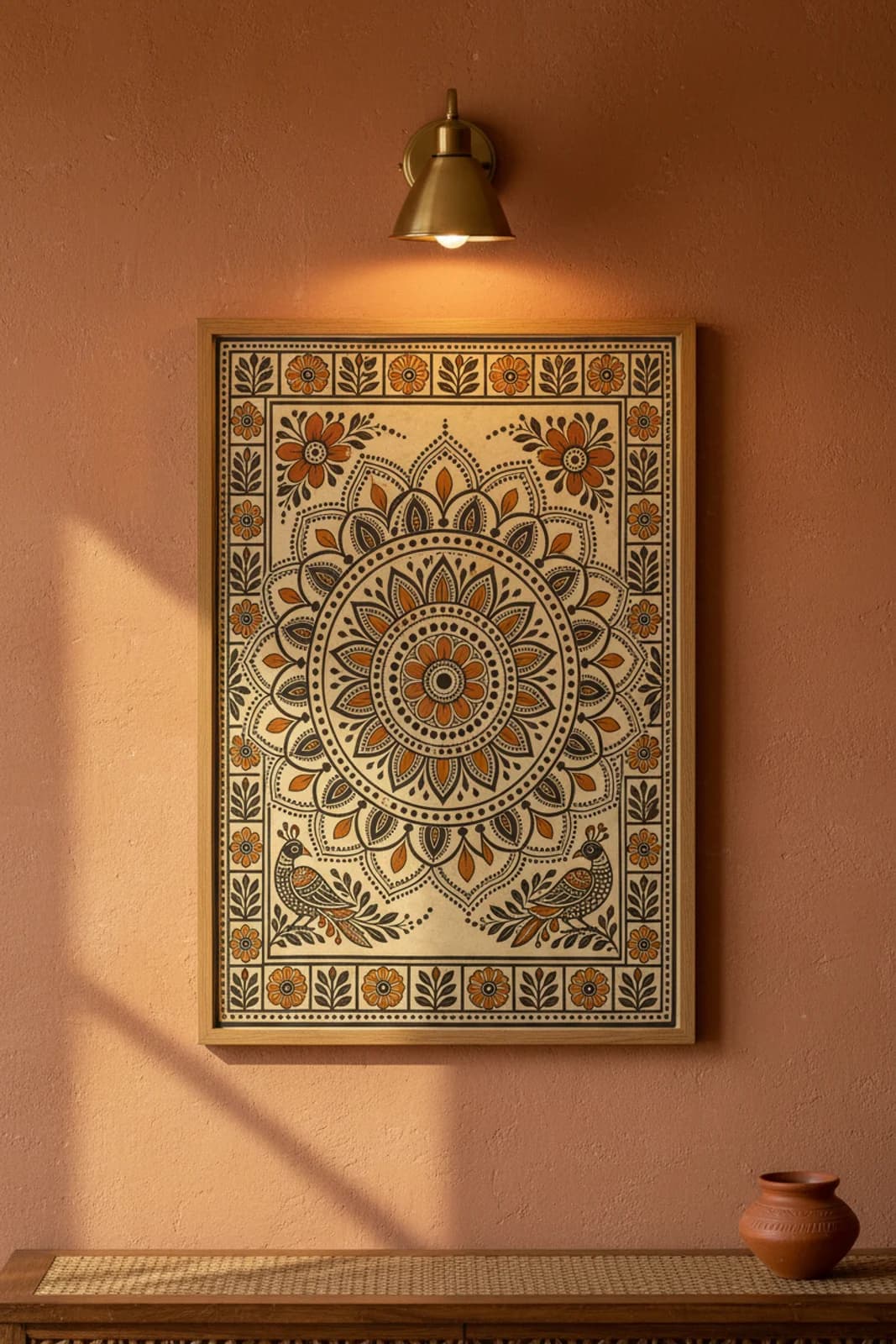
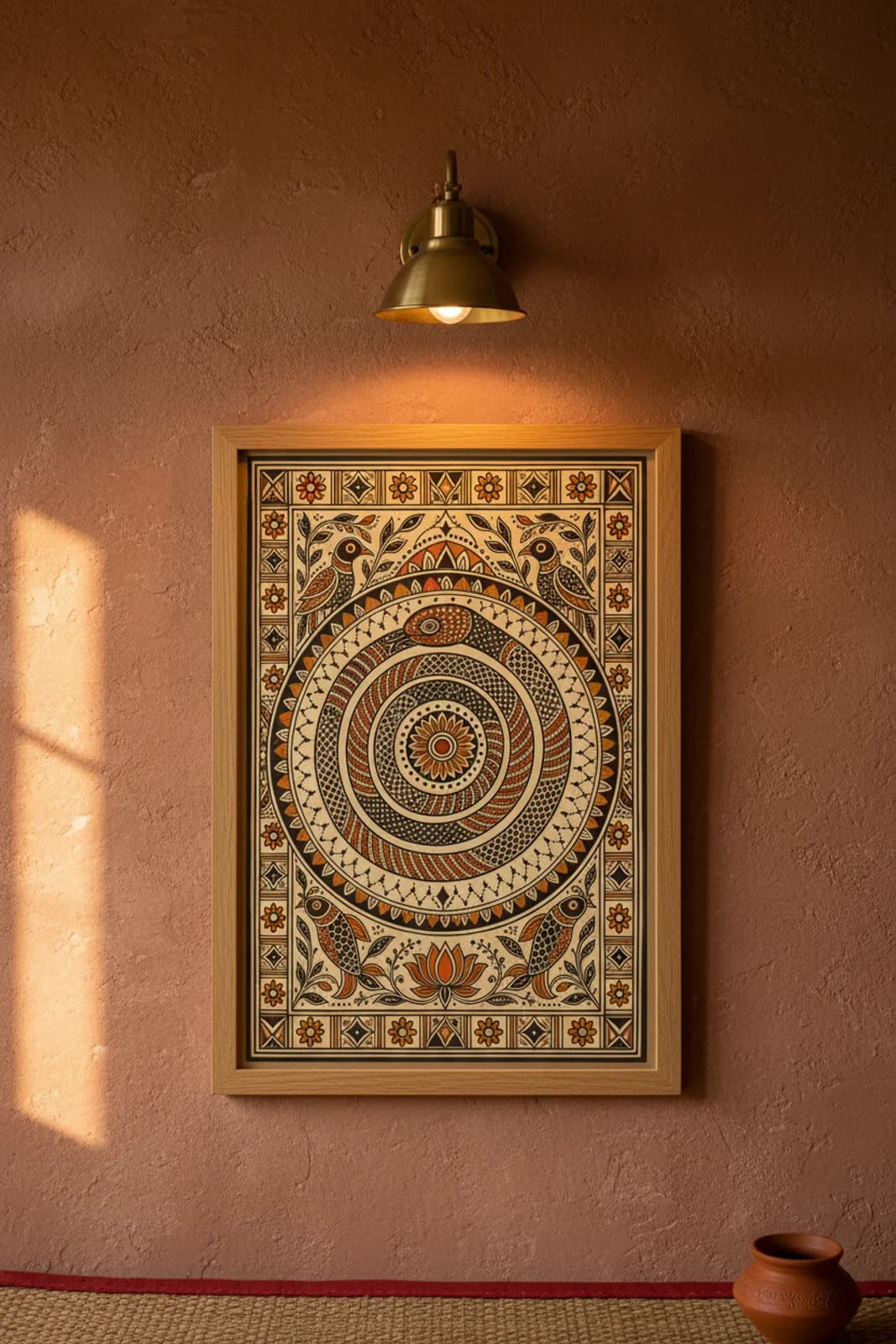
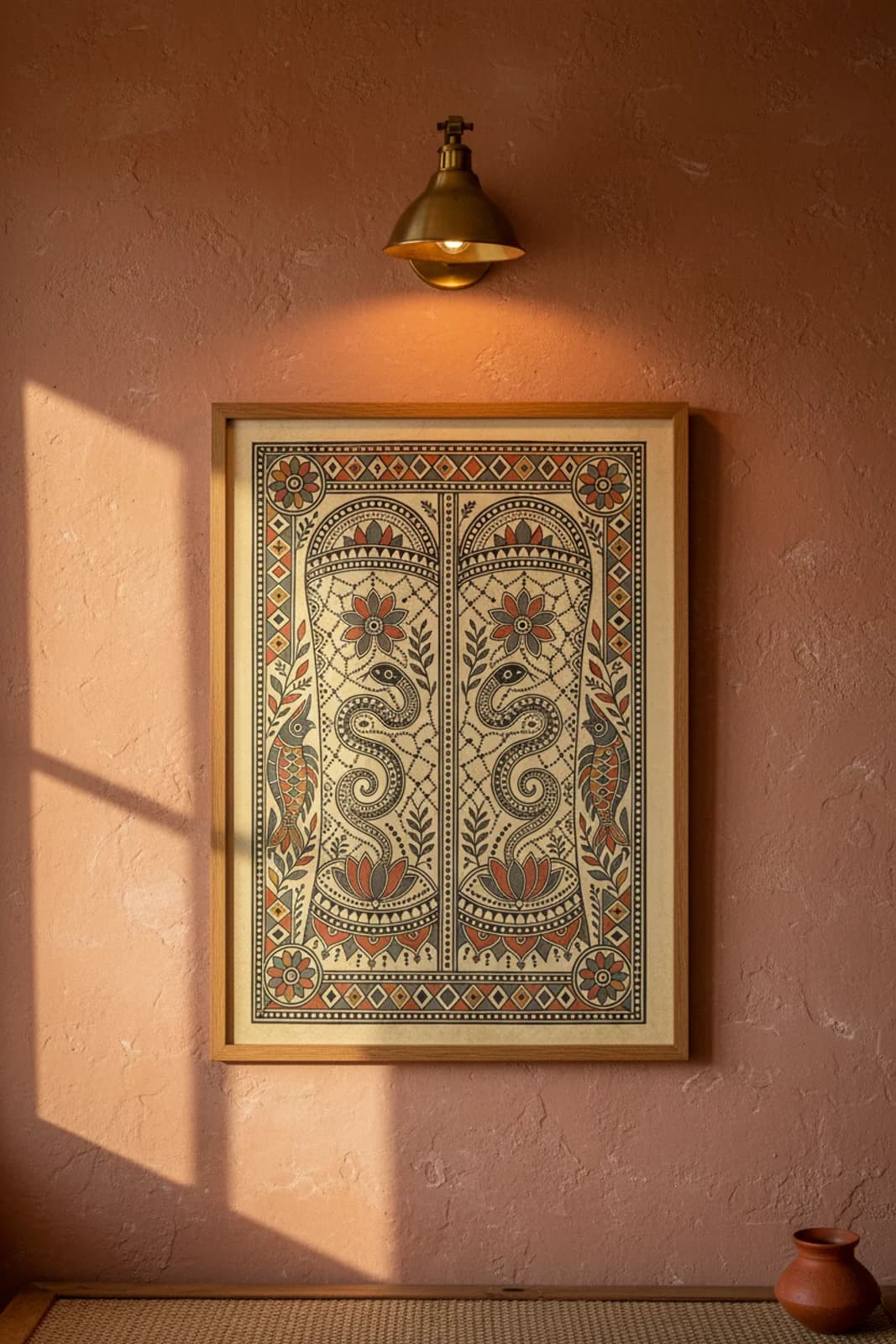
DESIGN BRIEF: Godna on paper has to solve a translation problem — the original motifs lived on forearms and calves as horizontal scroll bands, not portrait panels. Diagonal-flow symmetry lets a single ancestral vine read as movement rather than a cropped tattoo strip: the stem runs bottom-right to top-left so the eye follows the same sweep a needle once traced along skin. I kept the double-lined stem with a dotted channel between the contours because that punctured rhythm is the fingerprint of Godna — not Kachni hatching, not Bharni flat fill, but the dash-and-dot inventory Nattin tattoo artists used when jewellery was out of reach. Bird and fish sit on opposite sides of the vine not for narrative drama but for weight balance: the fan tail and scaled body occupy the lower-left and mid-right corners so the cream ground never feels like empty margin. Concentric dot rings scatter through the field the way tattoo fillers packed unused skin — each ring is a miniature mandala without claiming tantric deity status. The border repeats circle-and-leaf cells scaled from band-tattoo vocabulary; corner orange bindu squares anchor the frame the way a wrist cuff once capped a scroll pattern.
 WALLIMILIST