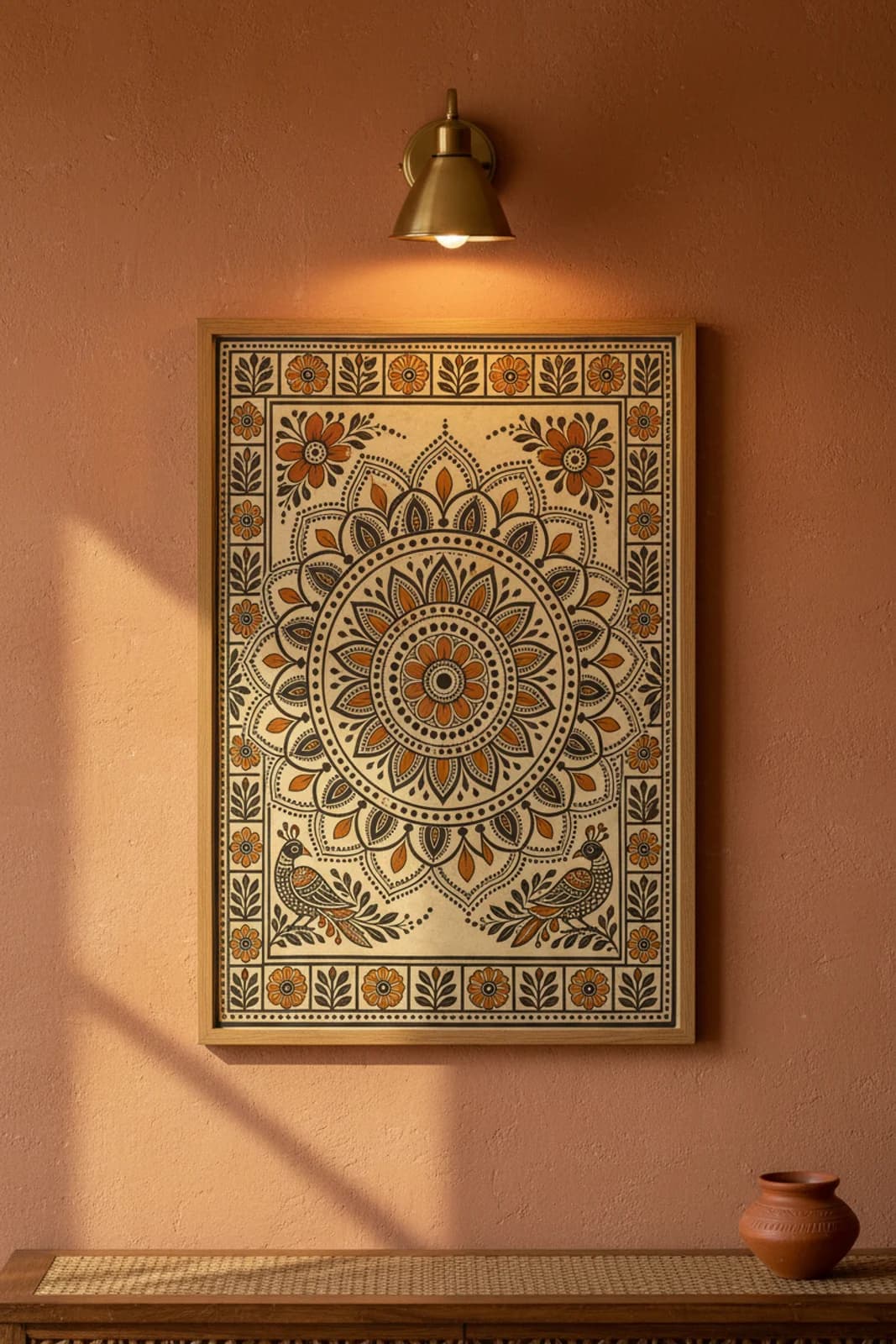
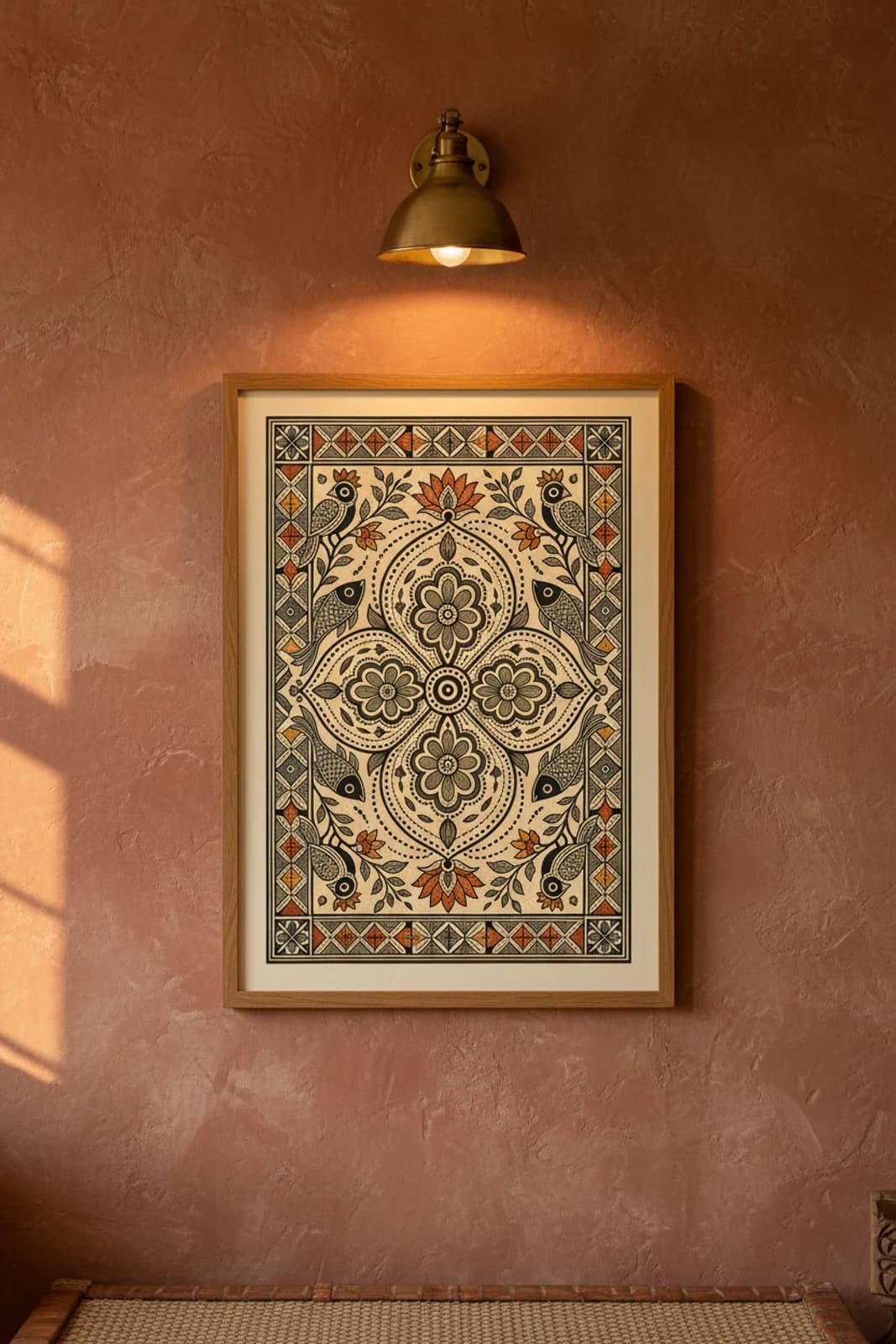
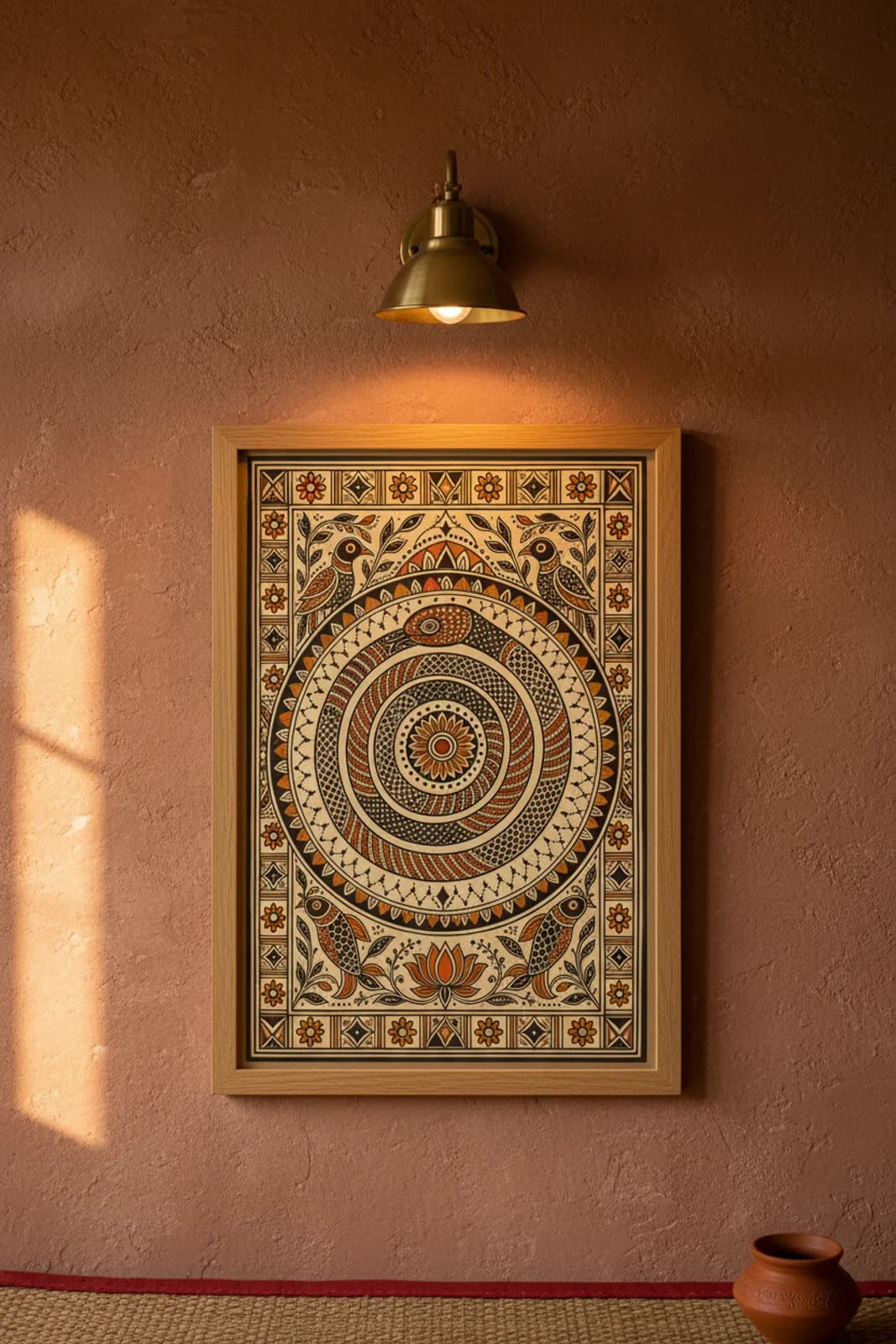
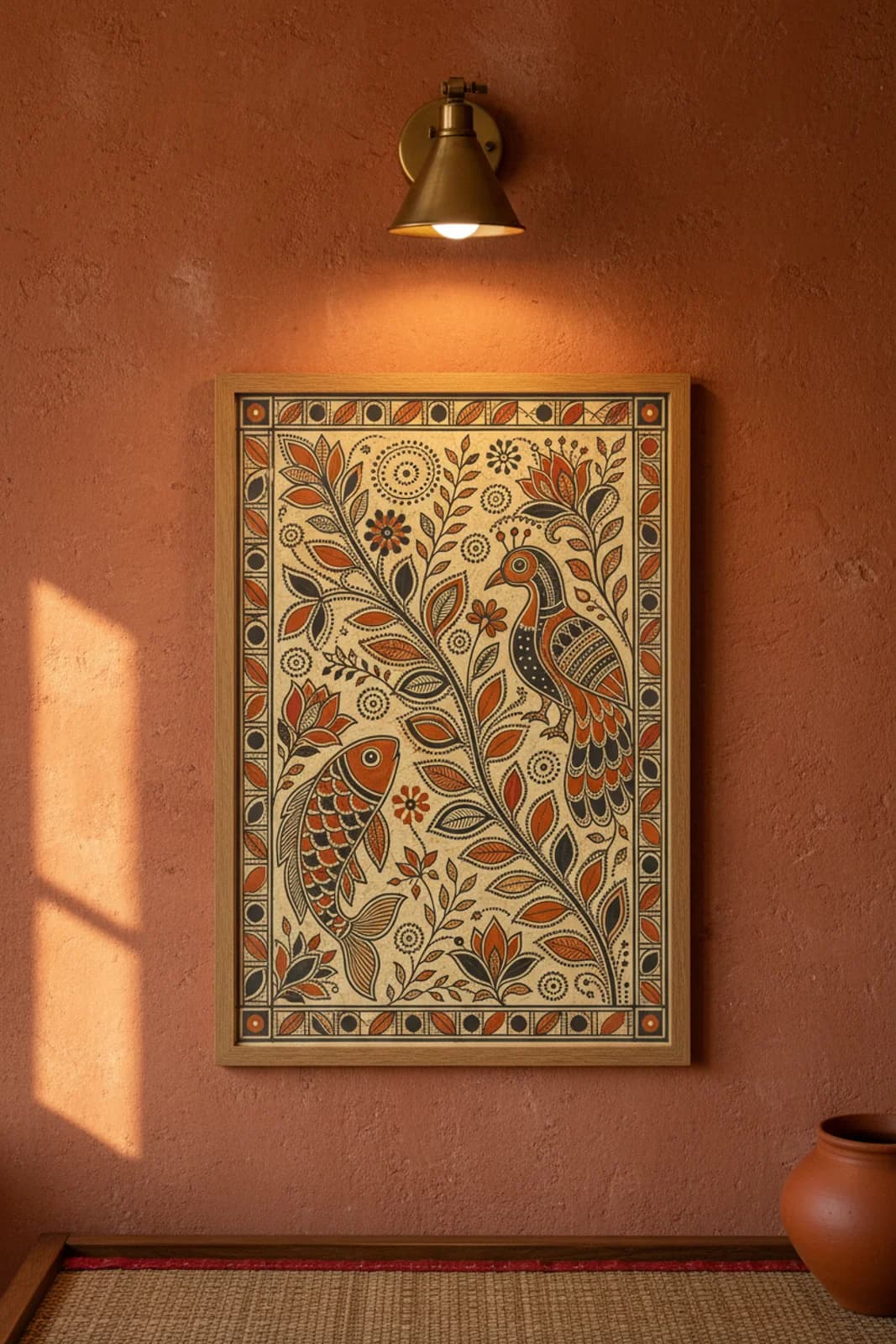
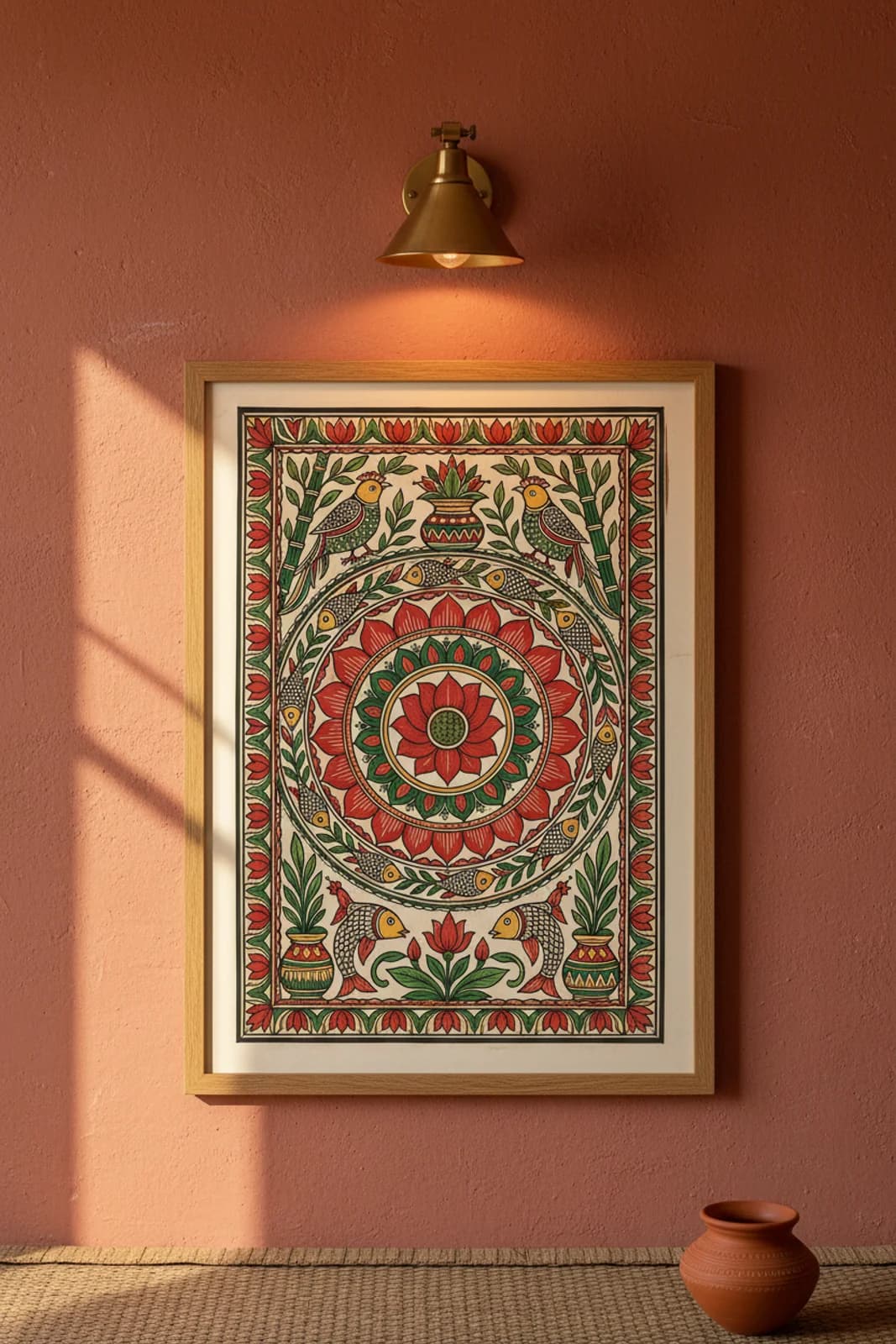
The brief was restraint inside repetition: take the concentric floral godna women wore on forearms and wrists in Simri — dot rings, dashed petals, one warm pigment only — and scale it to a wall mandala without letting Bharni colour creep in. Godna solves that through stipple. Every ring is legible because lampblack dots carry the rhythm that tattoo artists once punched into skin; terracotta ochre appears only where a petal or corner flower needs a breath of warmth, never as a flat fill field. Radial-mandala symmetry was non-negotiable — unlike the diagonal vine-scroll or horizontal dash-grid siblings in this Godna set, a concentric flower reads as a single protective medallion, the same geometry Maithil women inked as circular neck patterns and wrist bands. The layout problem was corner balance: the mandala alone would float, so large terracotta corner flowers with dot trails anchor the upper field while mirrored peacocks at the base reintroduce faunal tattoo vocabulary — birds and leaves from hand and ankle godna — without breaking the central orbit. What we kept from tattoo source: dot density, dashed stem logic, ochre-only accent rule. What we scaled for print: ring count, border panel count, peacock pair as lower guardians.
 WALLIMILIST