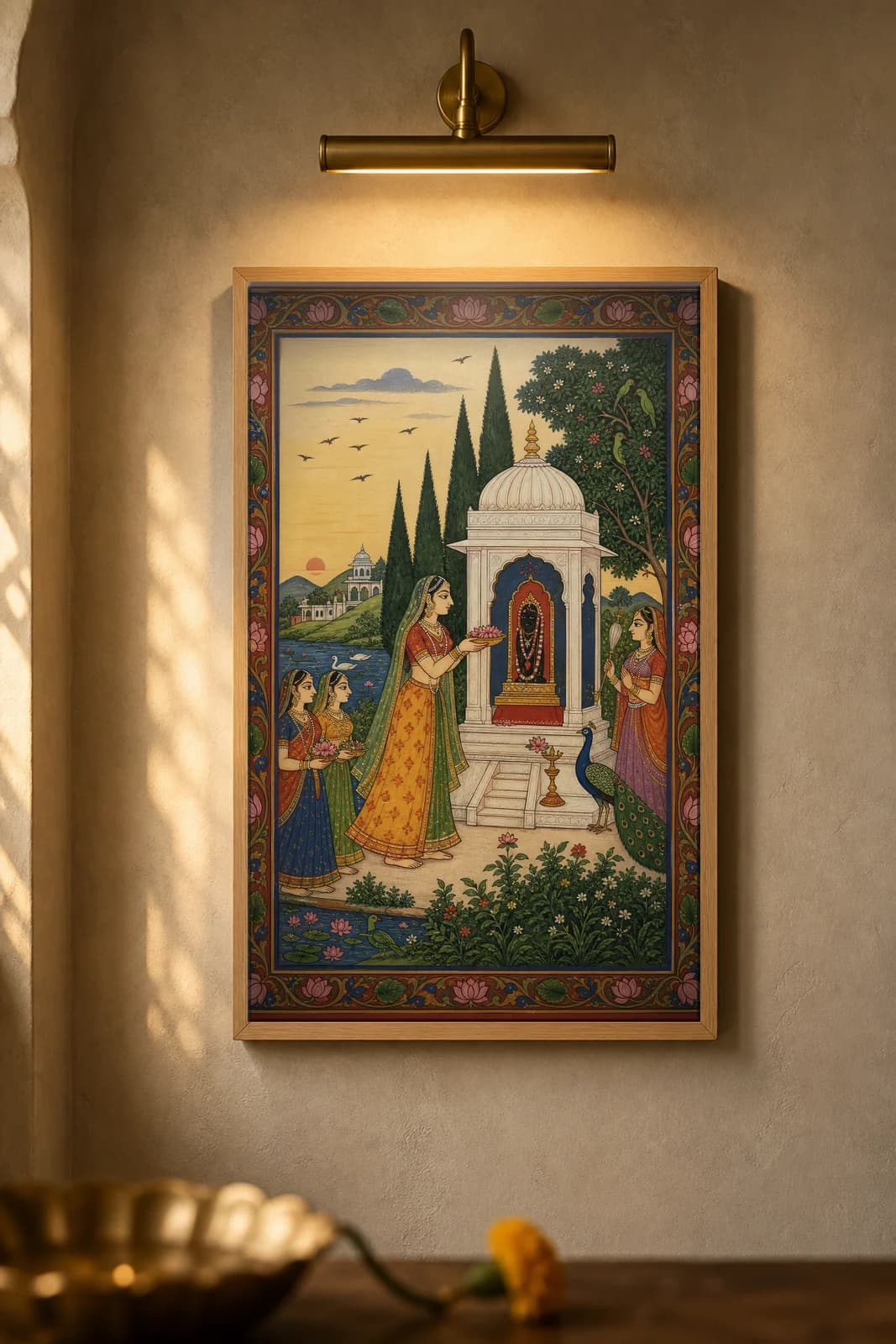
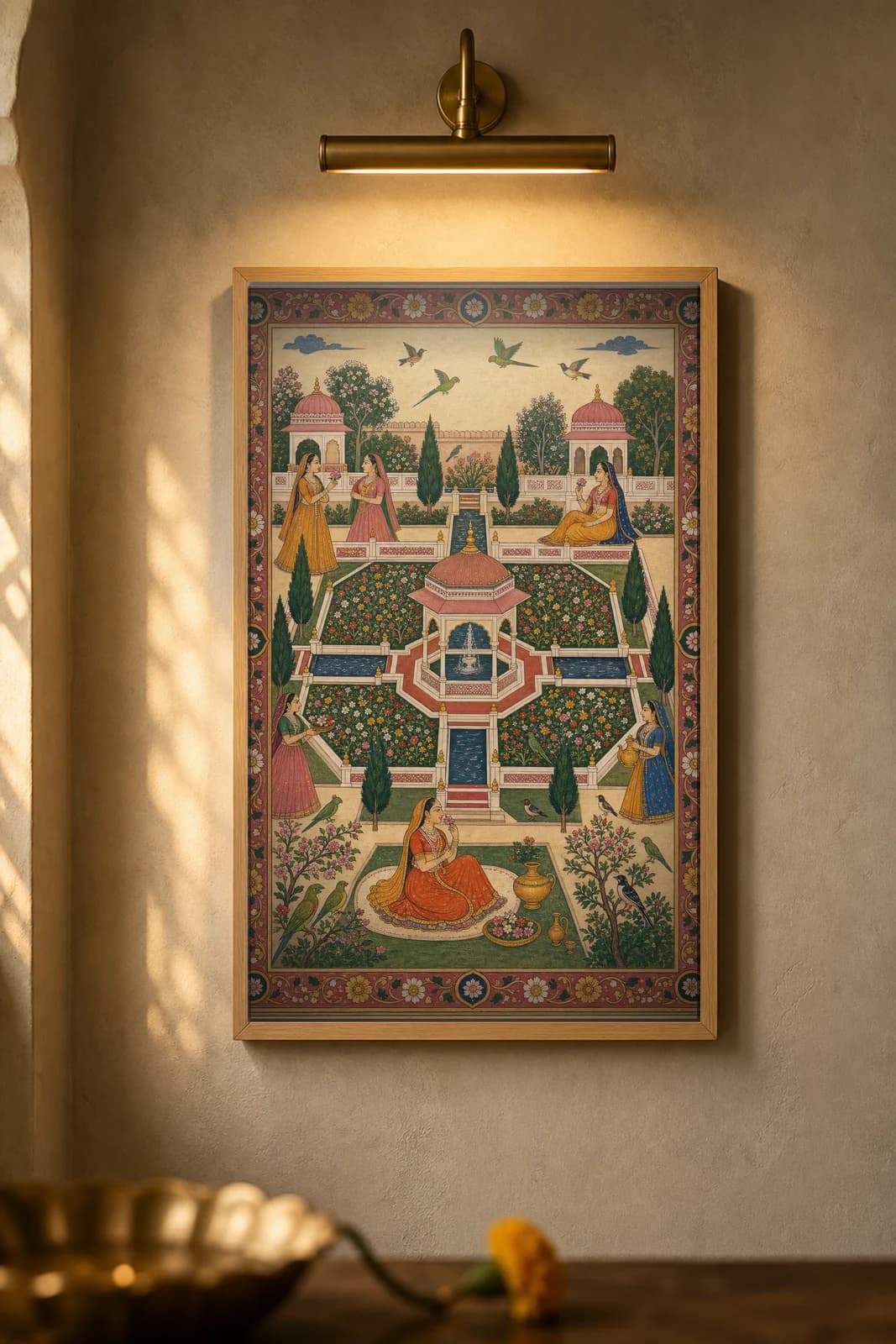
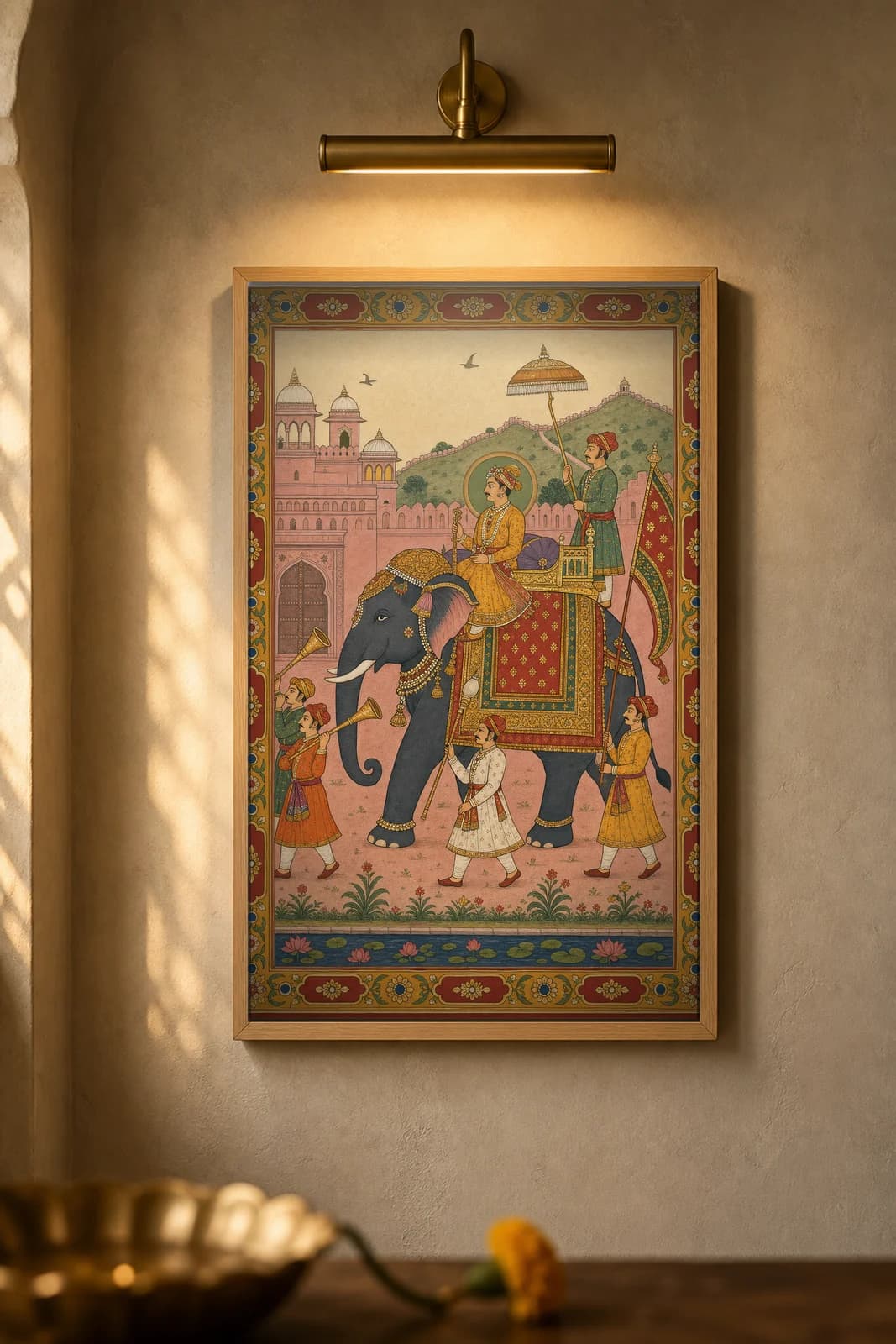
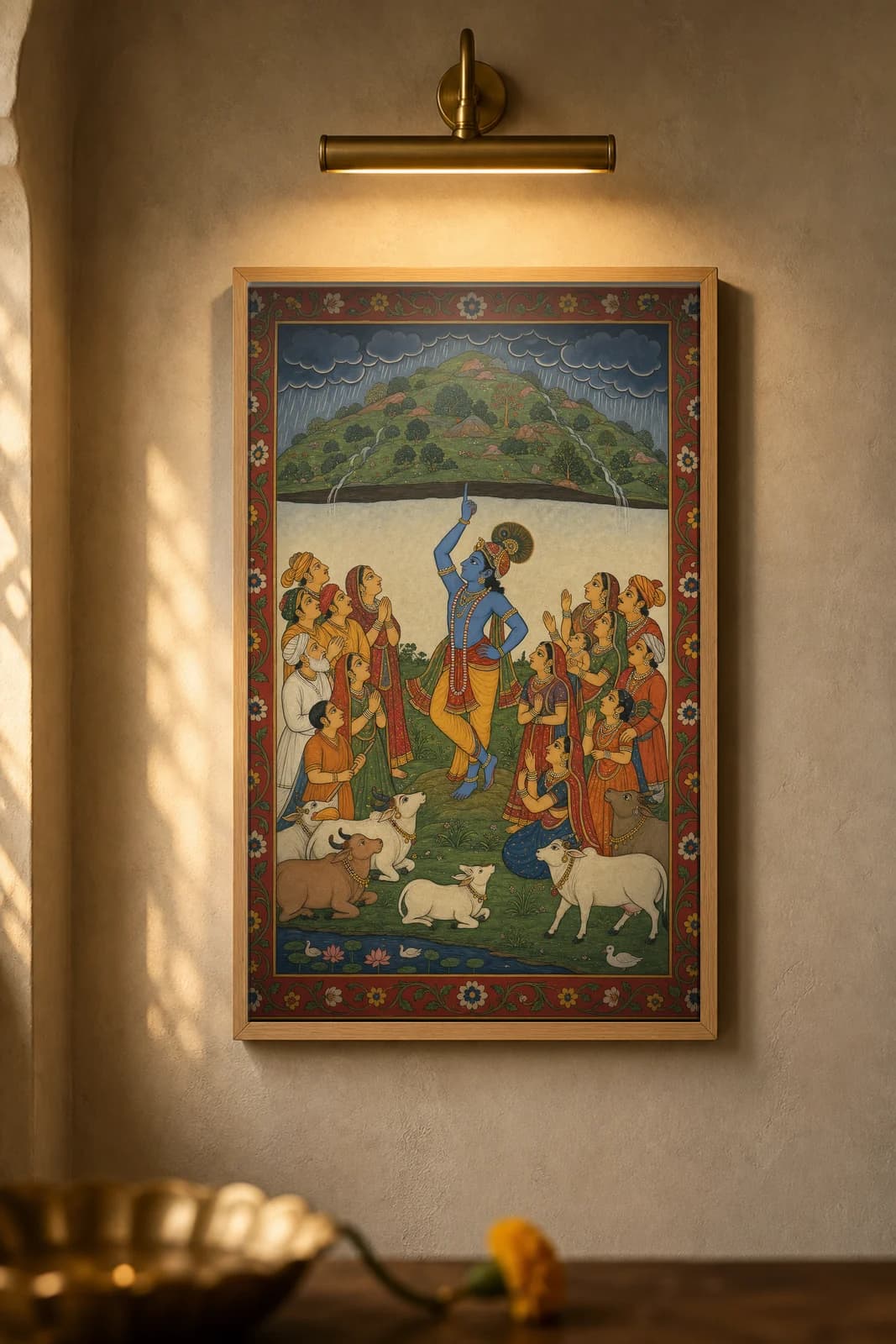
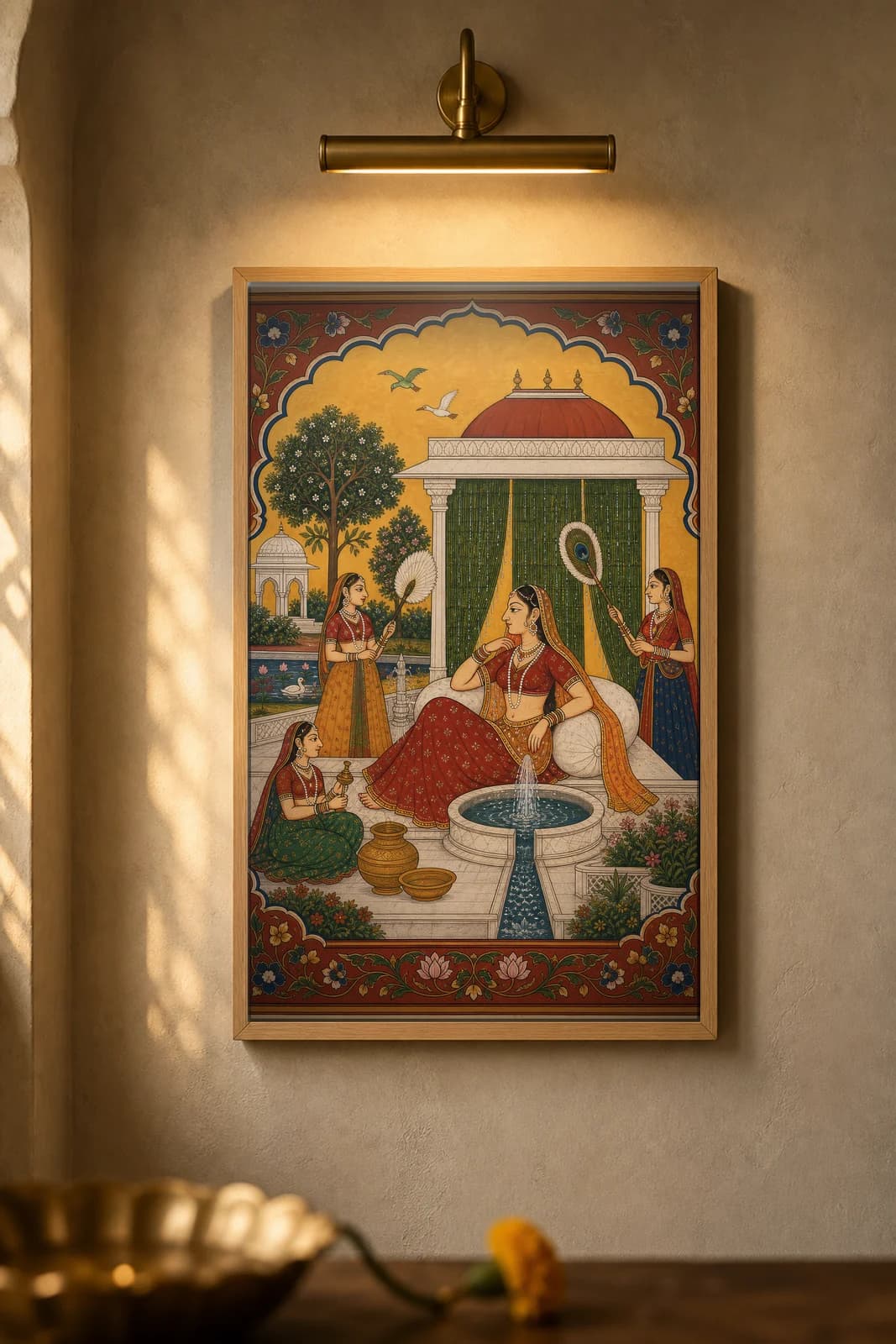
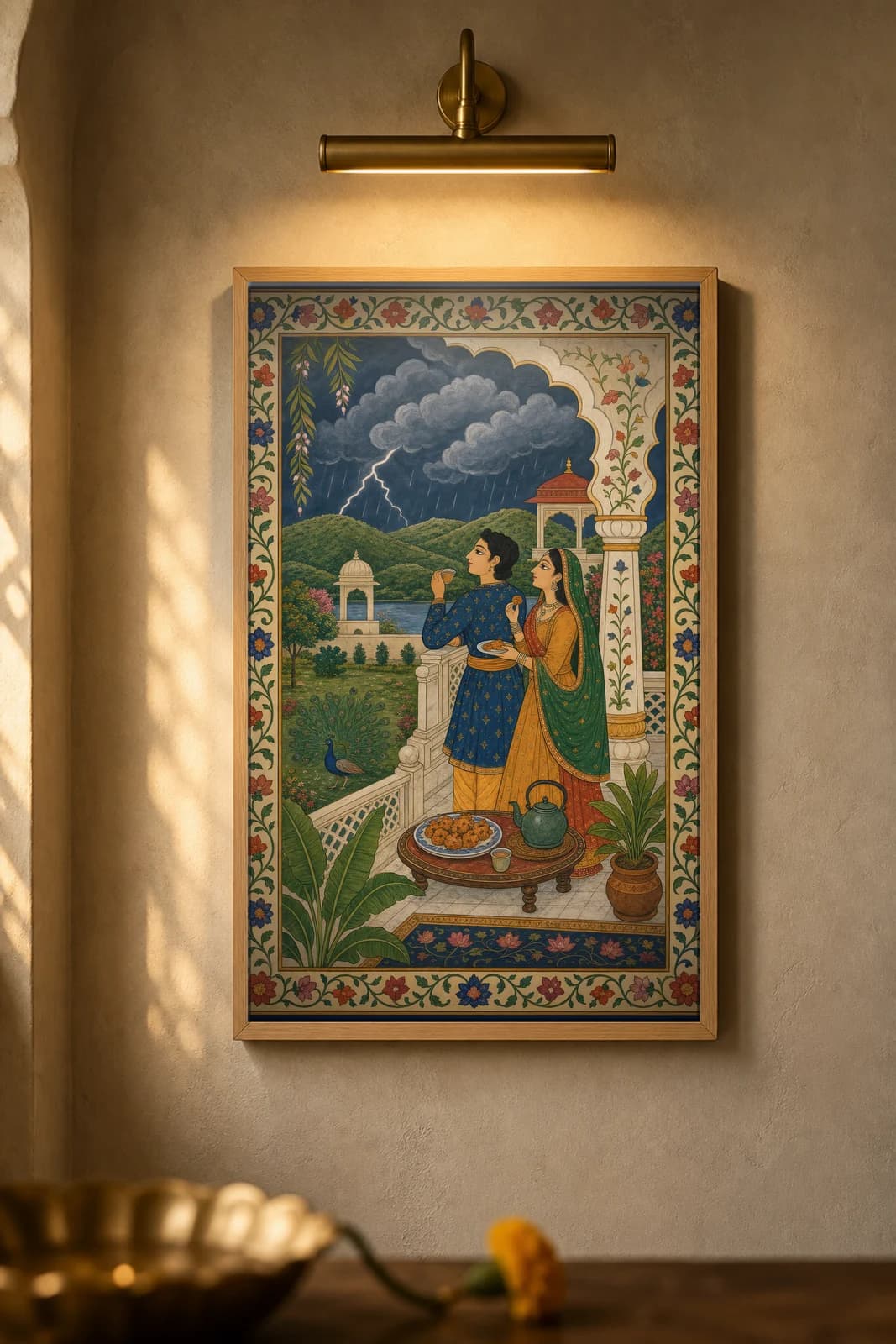
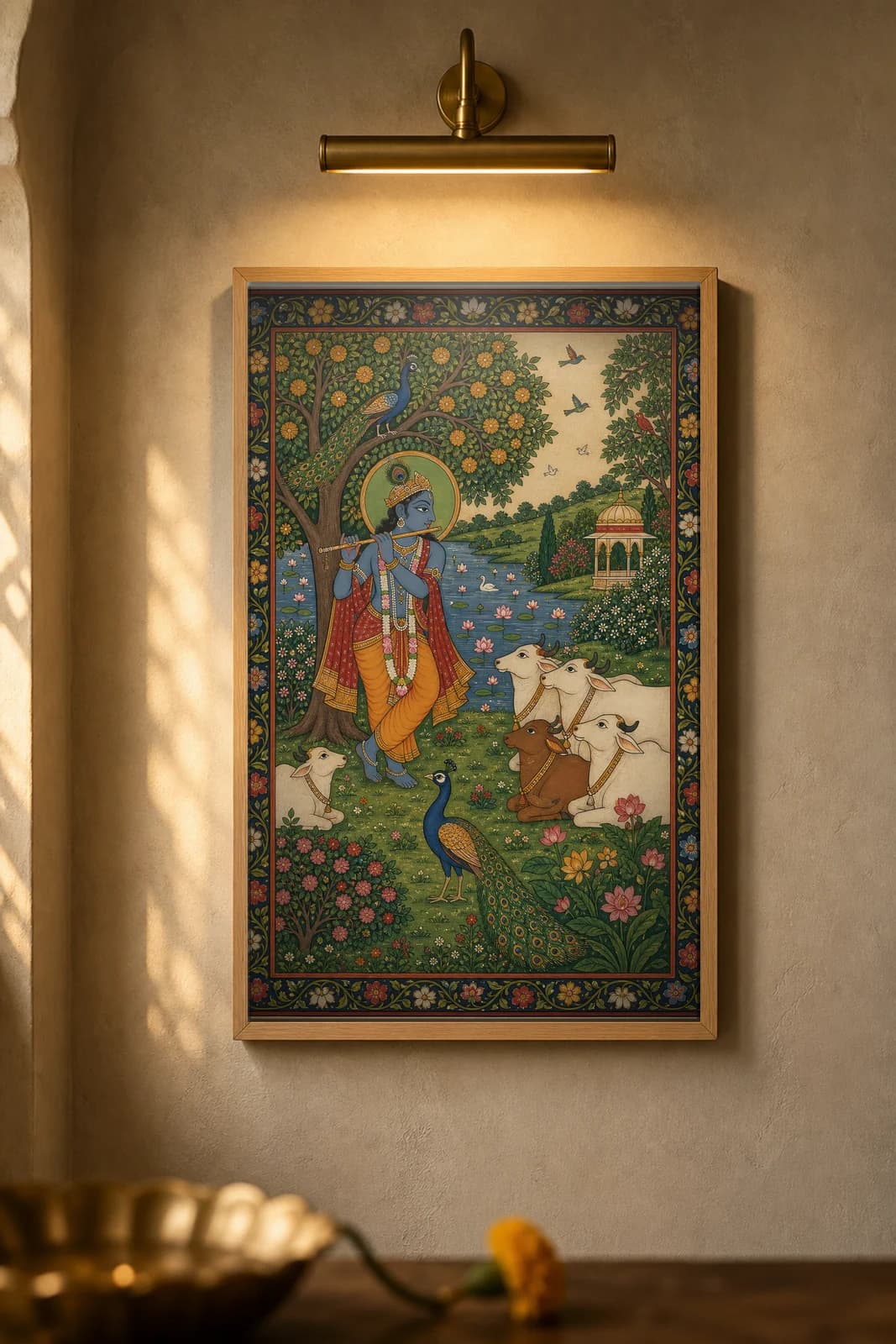
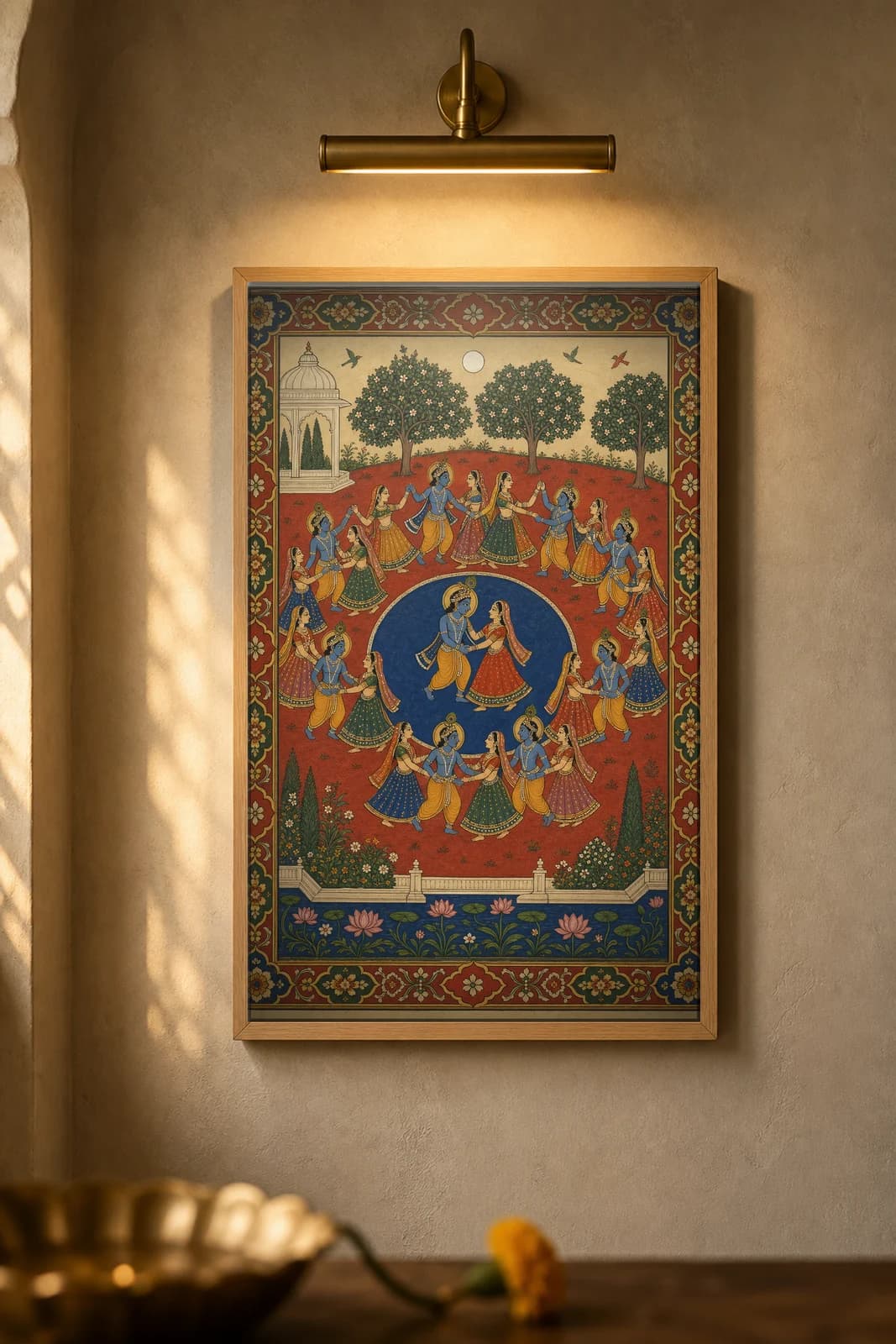
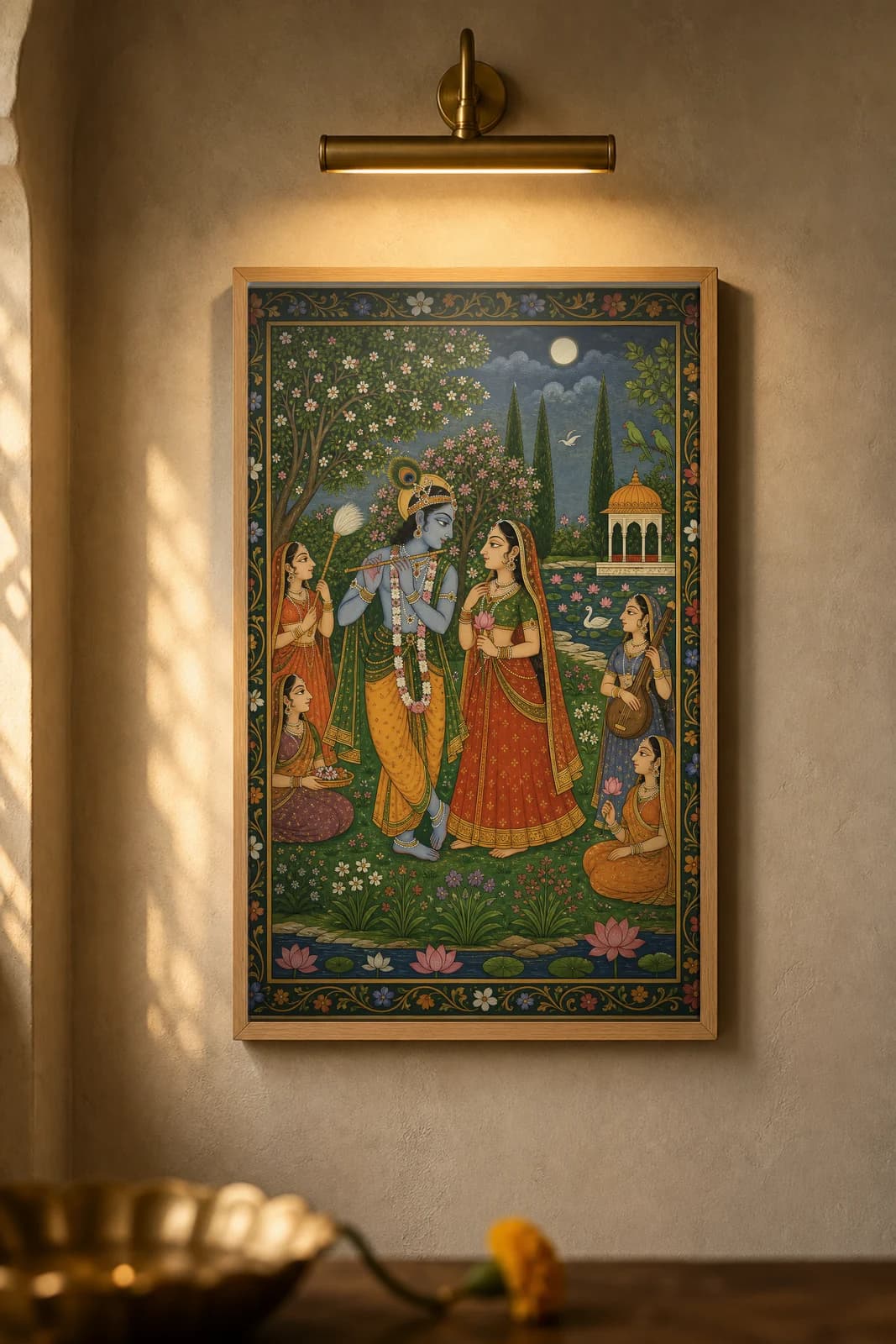
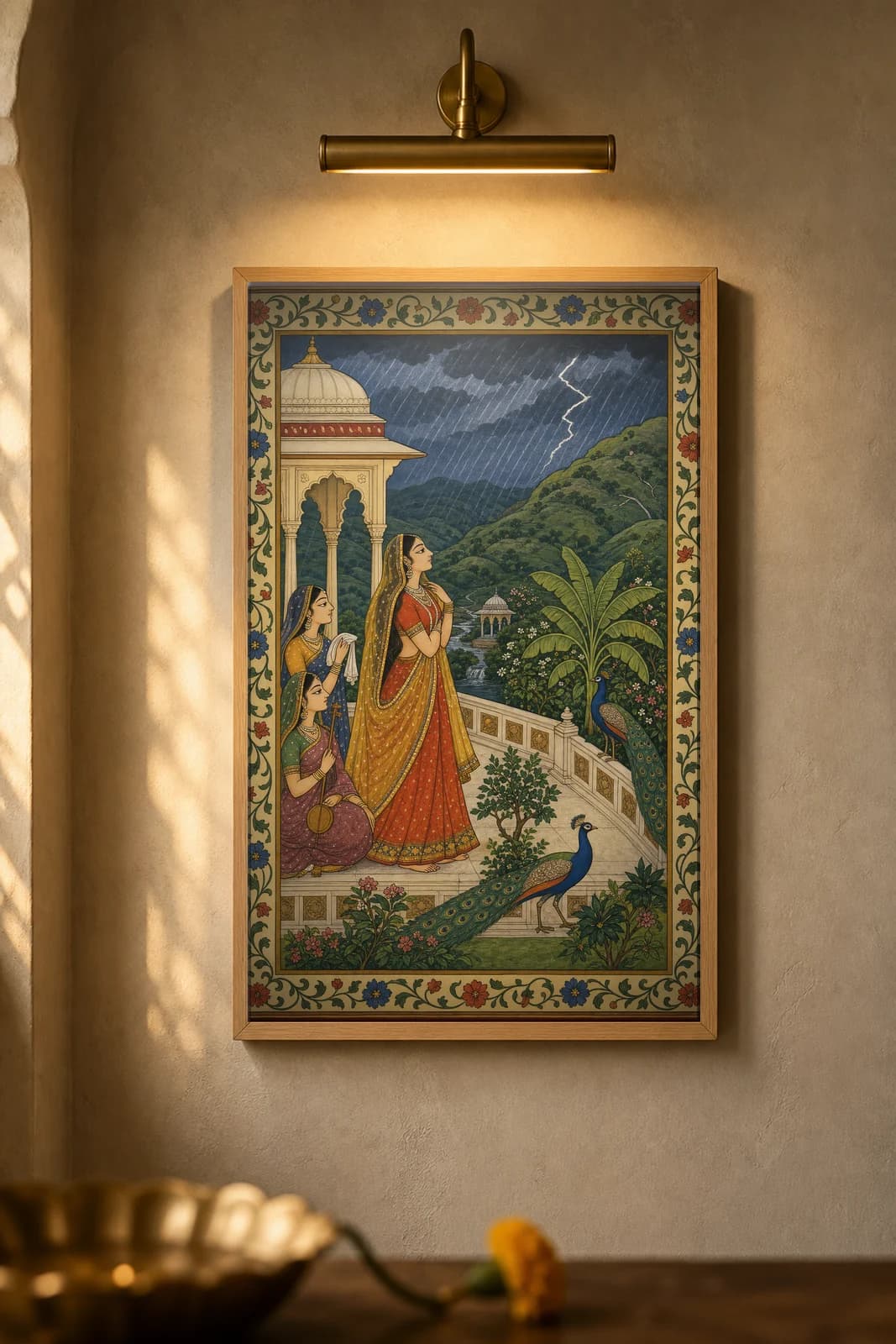
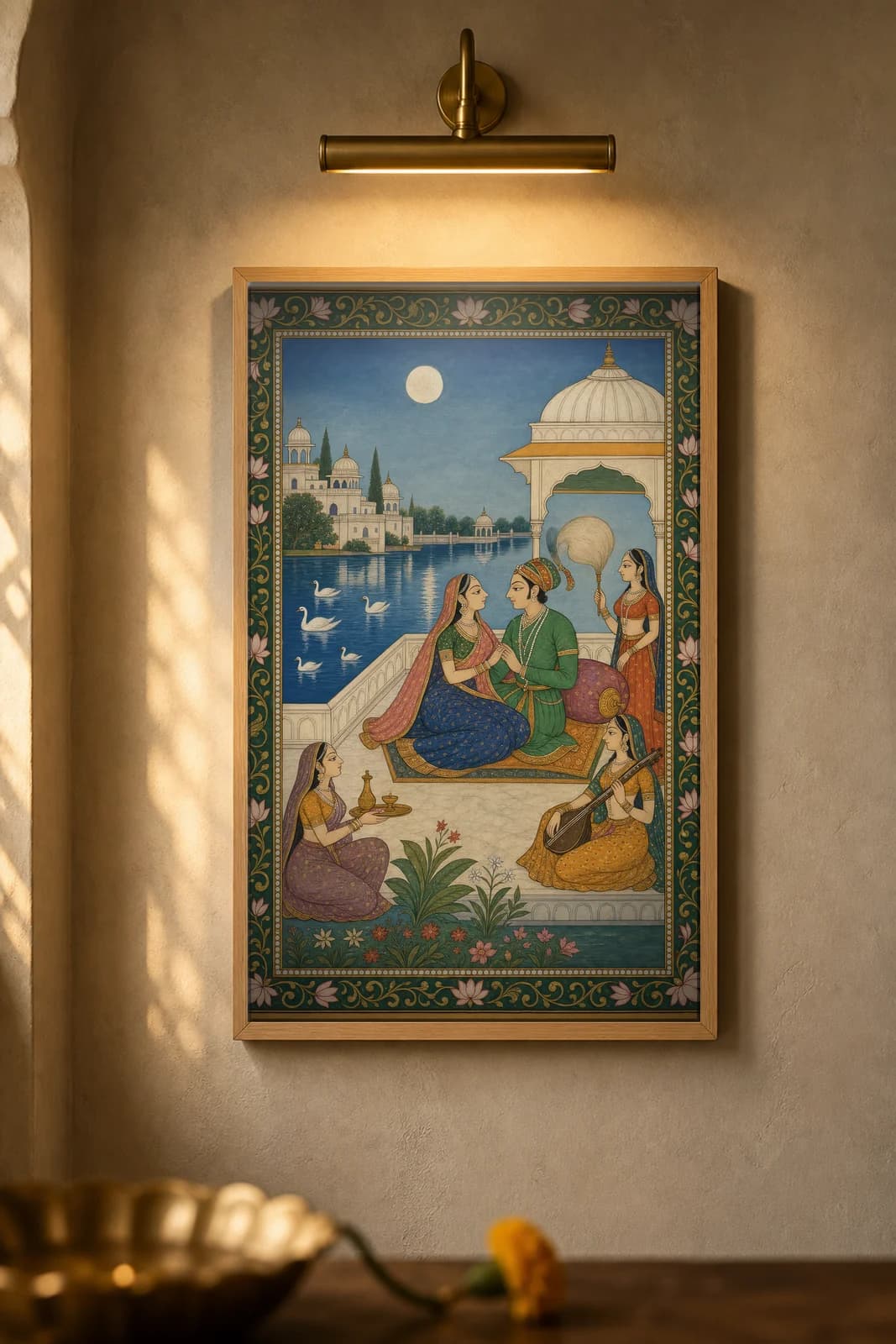
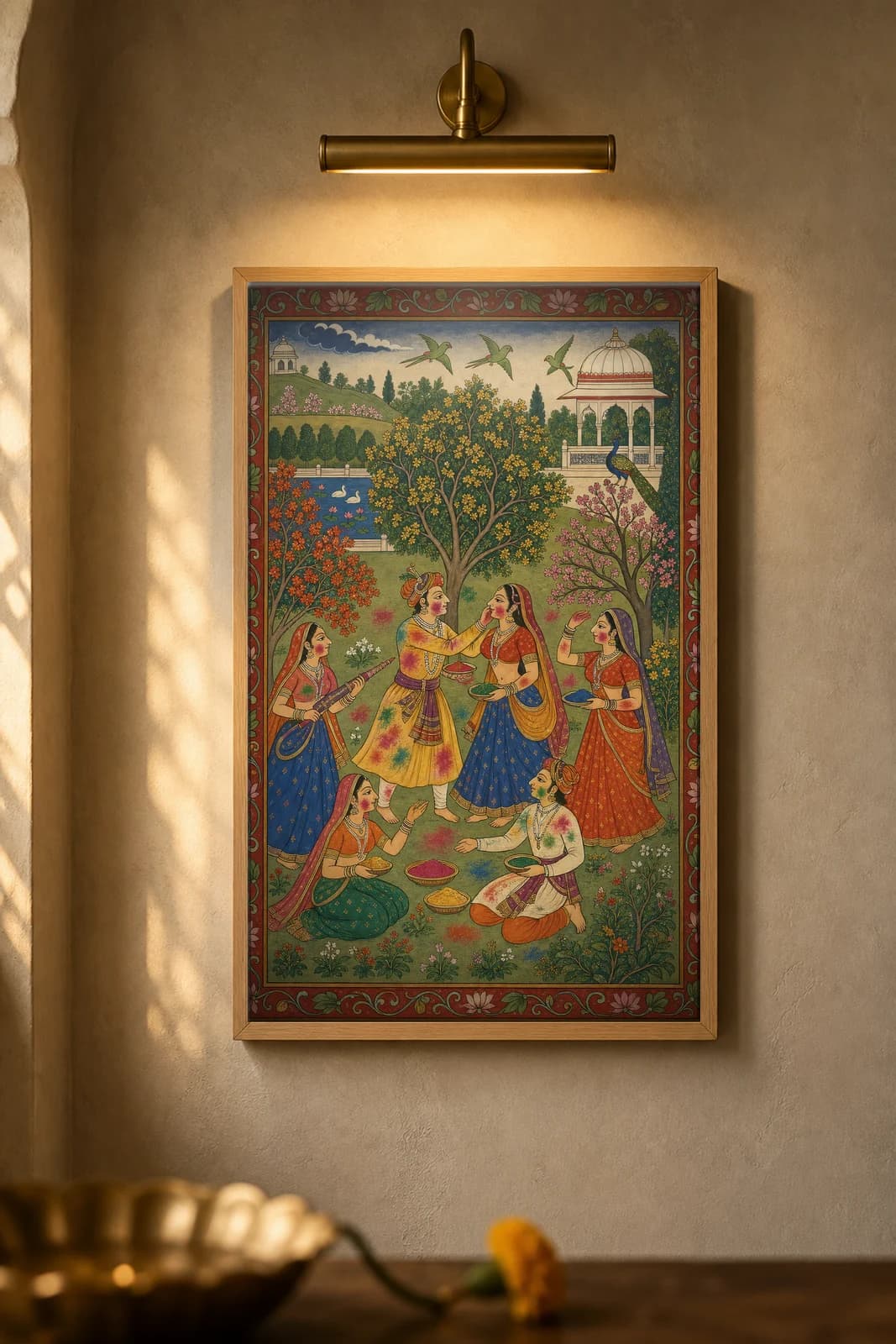
Orpiment Gold Yellow — 12 museum-grade prints in this palette. This fusion is built on the Baramasa-Sawan convention of the Pahari and Rajasthani courts, in which the monsoon month is staged as a marble terrace, storm clouds, lightning and dancing peacocks — usually carrying the mood of viraha, a heroine's longing for her absent beloved. The grammar here follows the Kangra Pahari school, prized within the Rajput miniature umbrella for soft green hills and lyrical naturalism. The Baramasa ('twelve months') is a poetic cycle that pairs each month with a mood of love and a seasonal scene; Grishma, the high-summer month, is conventionally shown with fountains, water channels and khus-grass screens that cooled palace interiors. This treatment follows the Marwar school centred on Jodhpur, known within the Rajput miniature umbrella for intense saffron and deep-red desert grounds and a jewel-bright palette. The Baramasa ('twelve months') pairs each month with a mood of love; Sharad, the clear autumn month, is associated with Sharad Purnima — the harvest full moon held to be the brightest and most auspicious of the year, also the night of Krishna's moonlit raas in Vaishnava lore. This treatment follows the Kishangarh school of mid-18th-century Rajasthan, which flourished under Raja Sawant Singh and his painter Nihal Chand and is known within the Rajput miniature umbrella for refined pastel grounds, lapis skies and idealized cool harmony.


$49