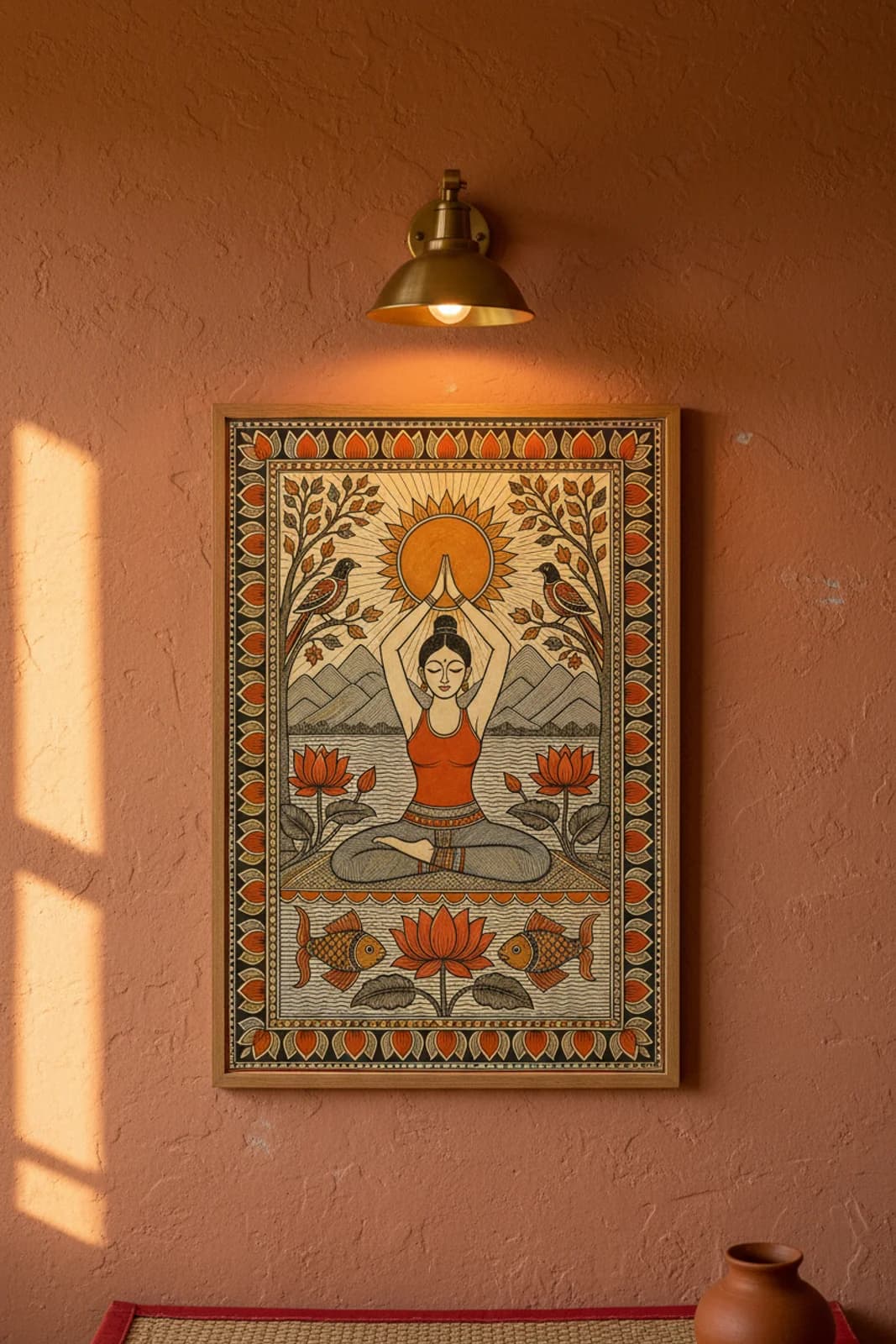
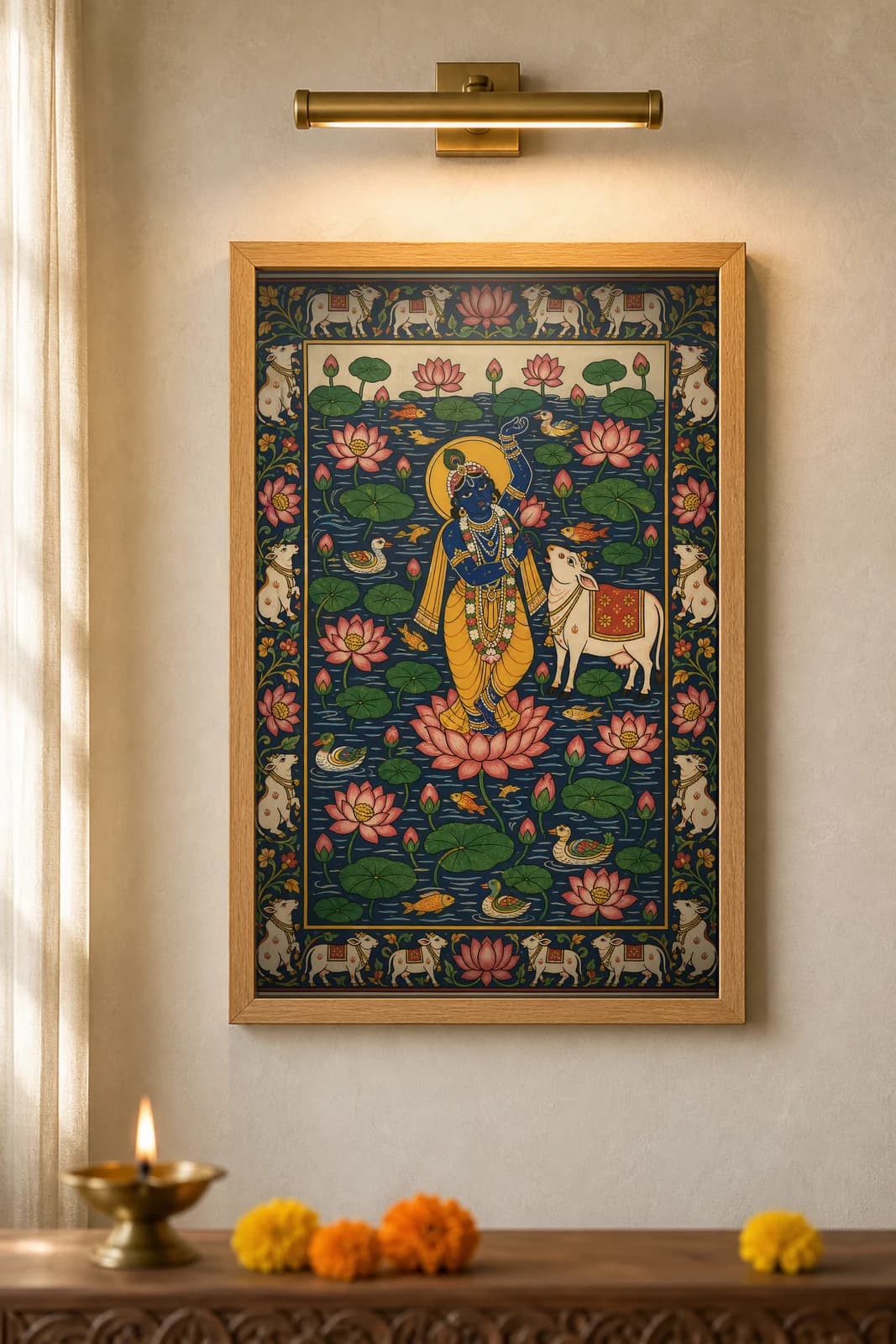
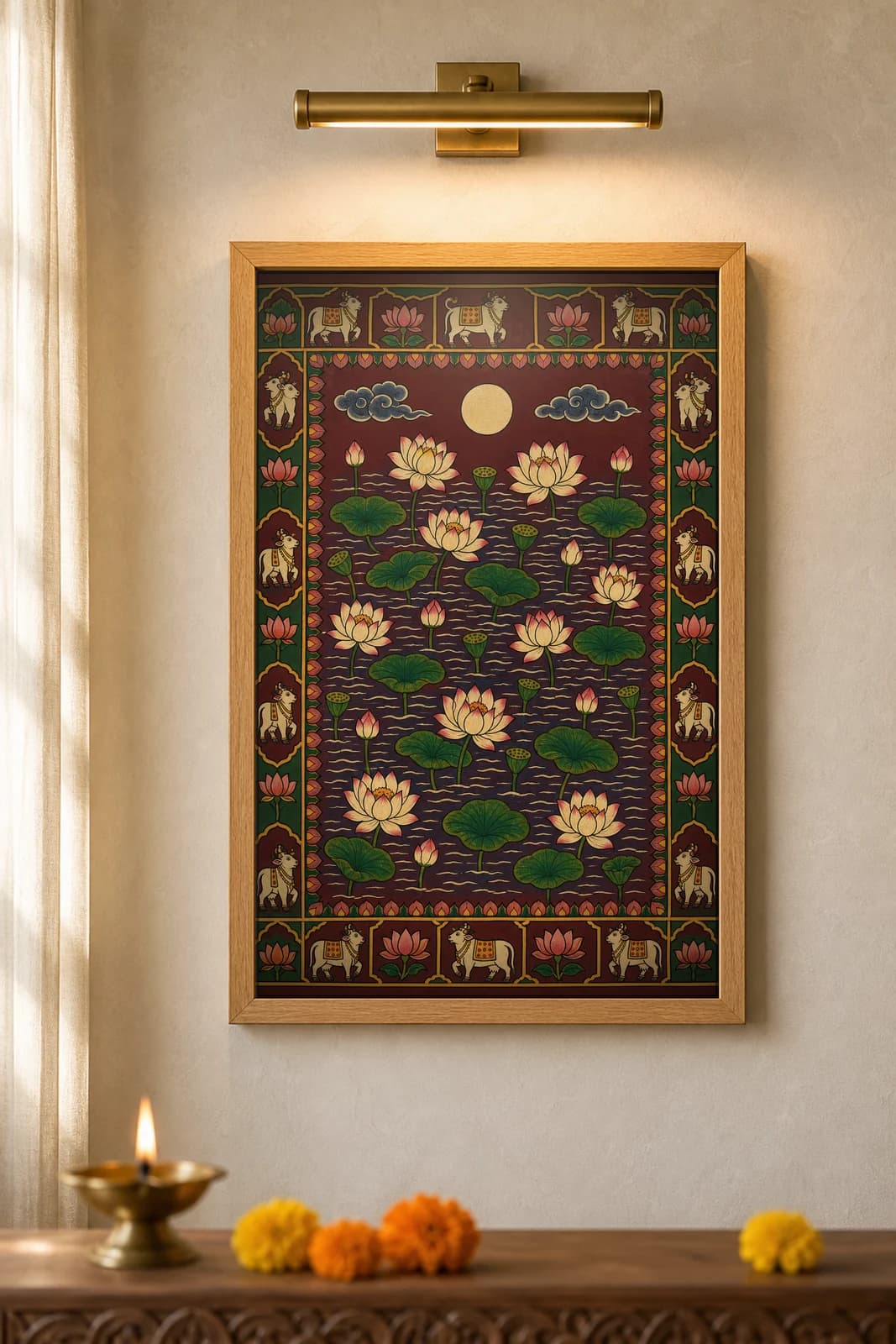
Hospitality Spa — 3 museum-grade prints sized and toned for the room. Kachni — line art — is the Madhubani style associated with Kayastha community artists in the Mithila region, built from fine parallel hatching, stipple, and cross-hatching rather than the saturated flat colour fields of Brahmin Bharni deity panels. Padmasana and anjali mudra carry long yogic association: lotus seat for grounded meditation, prayer hands for reverence and centreing — practices documented along the Ganges at Rishikesh and Haridwar for centuries, amplified globally through modern International Yoga Day observance and contemporary wellness tourism. The lotus pond, or kamal-talai, is among the most cherished pichwai motifs — the lotus signifying divine presence, and the tank recalling the temple's own kamal-talai at Nathdwara, where Shrinathji, the child-Krishna, is worshipped in the Pushtimarg (Vallabh) tradition. A pichhwai (literally 'that which hangs at the back') is the painted cloth hung behind the deity to set such scenes. The lotus is among the most cherished pichwai motifs, signifying divine presence, and the lotus tank (kamal-talai) recalls the temple's own pond at Nathdwara, where Shrinathji, the child-Krishna, is worshipped in the Pushtimarg (Vallabh) tradition. A pichhwai (literally 'that which hangs at the back') is the painted cloth hung behind the deity; figureless lotus and floral pichwais are a recognised type, set to evoke a season or mood.