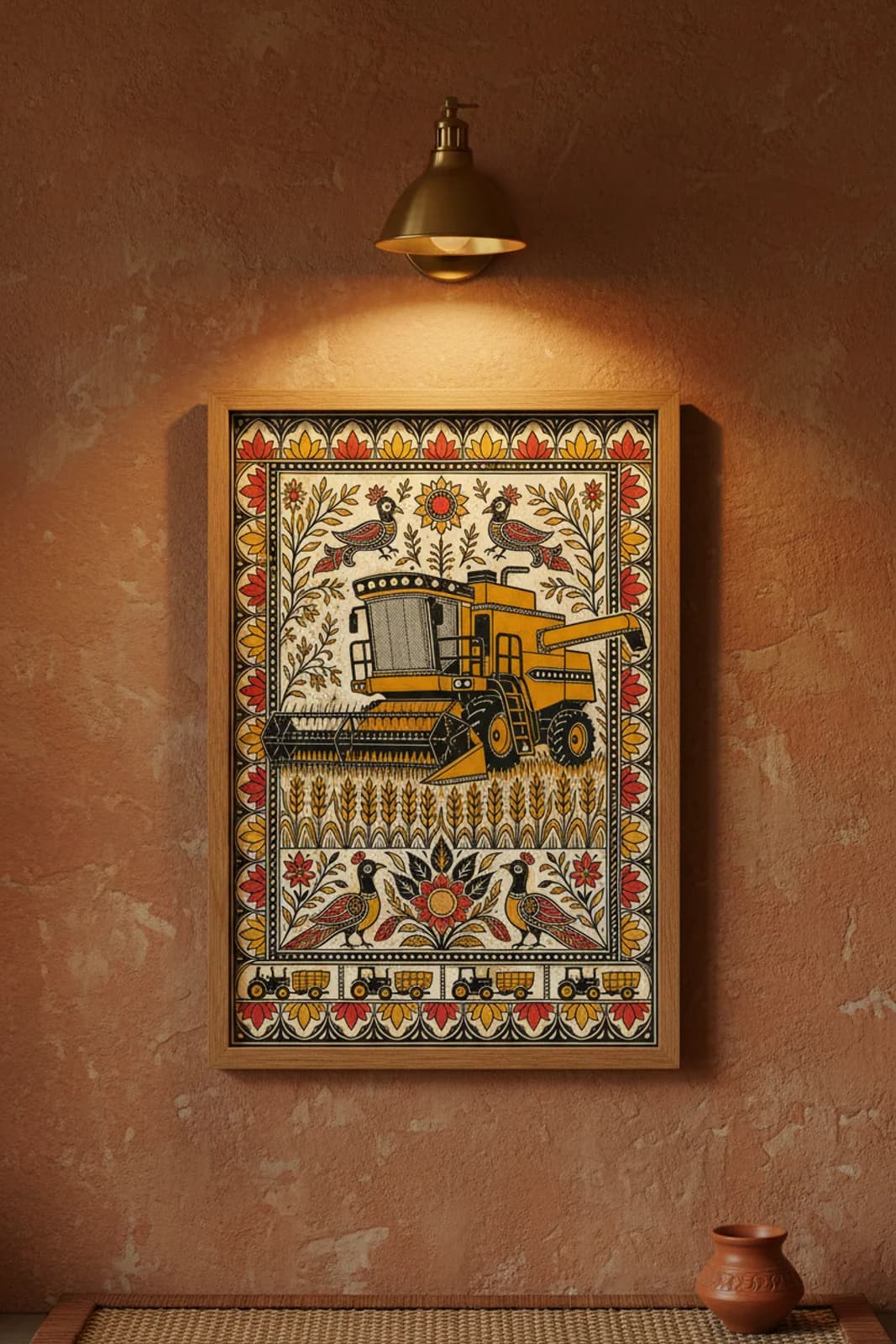
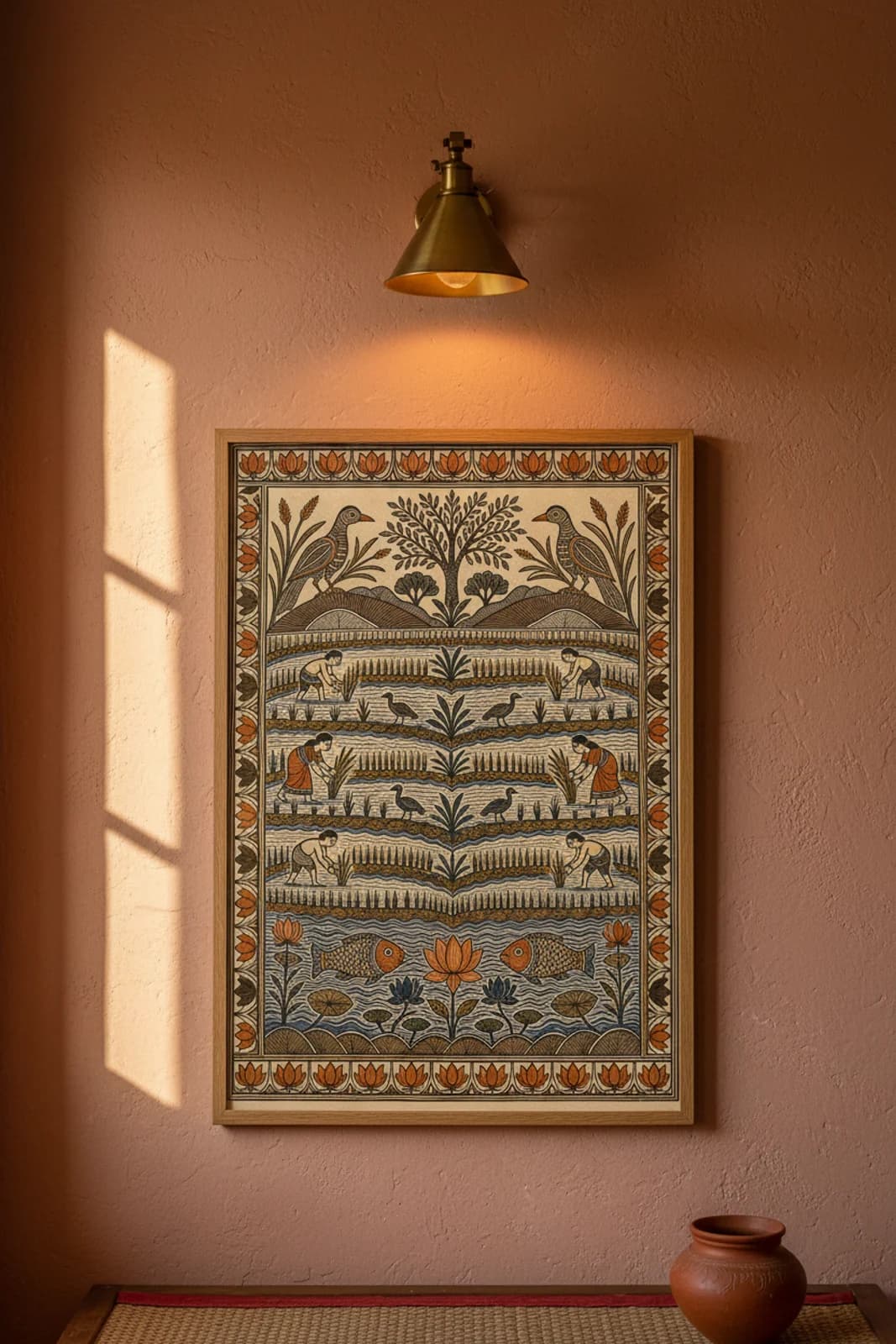
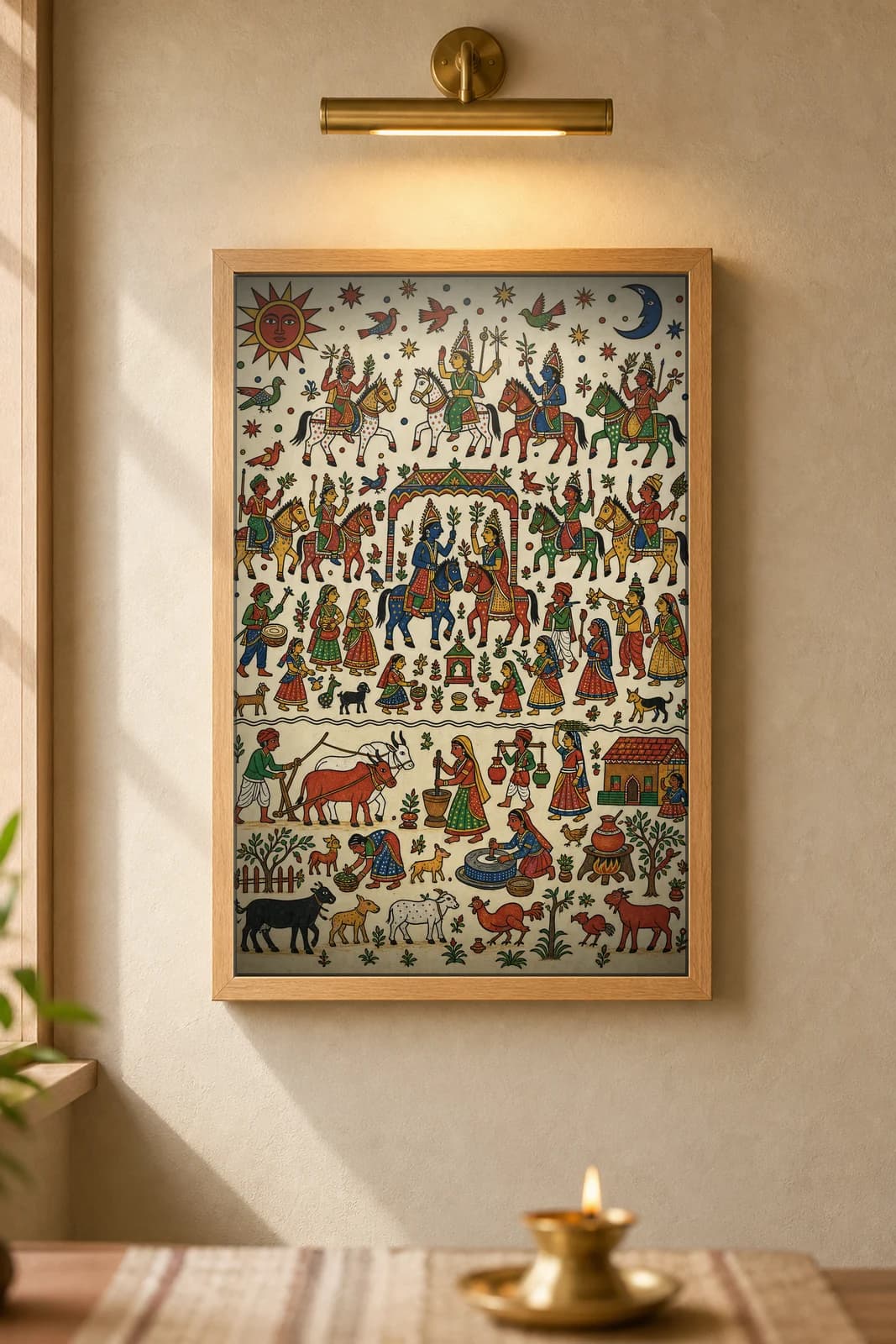
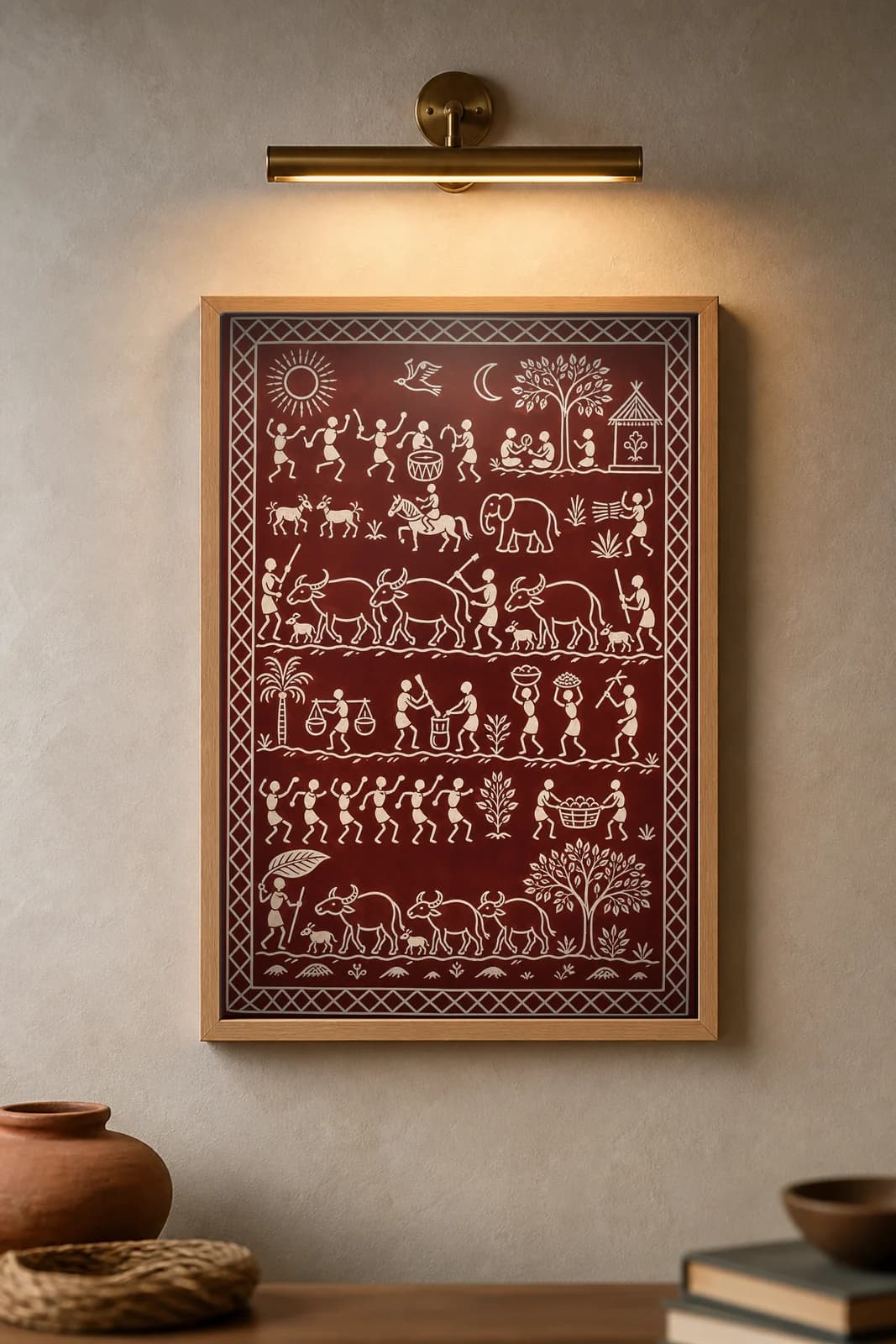
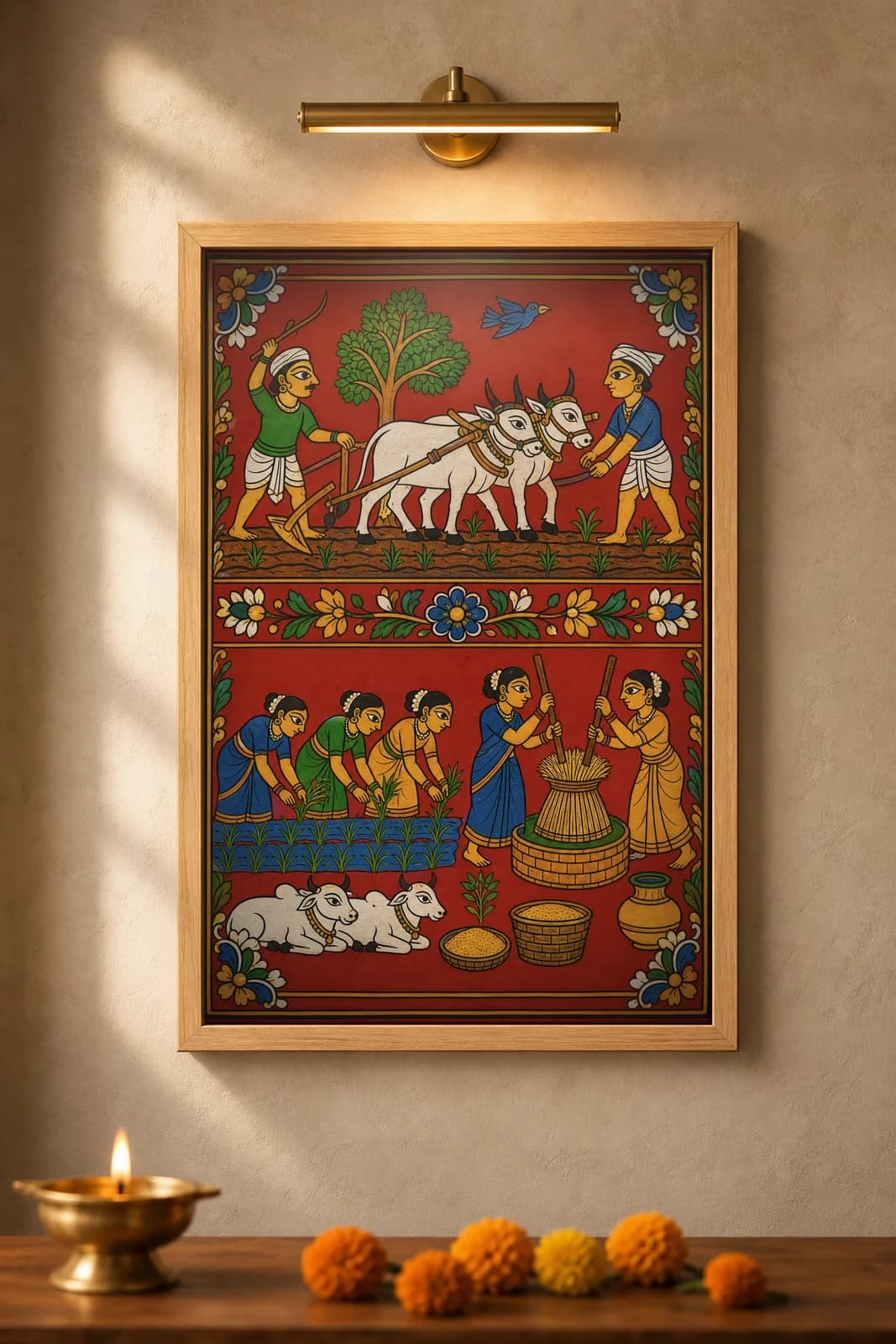
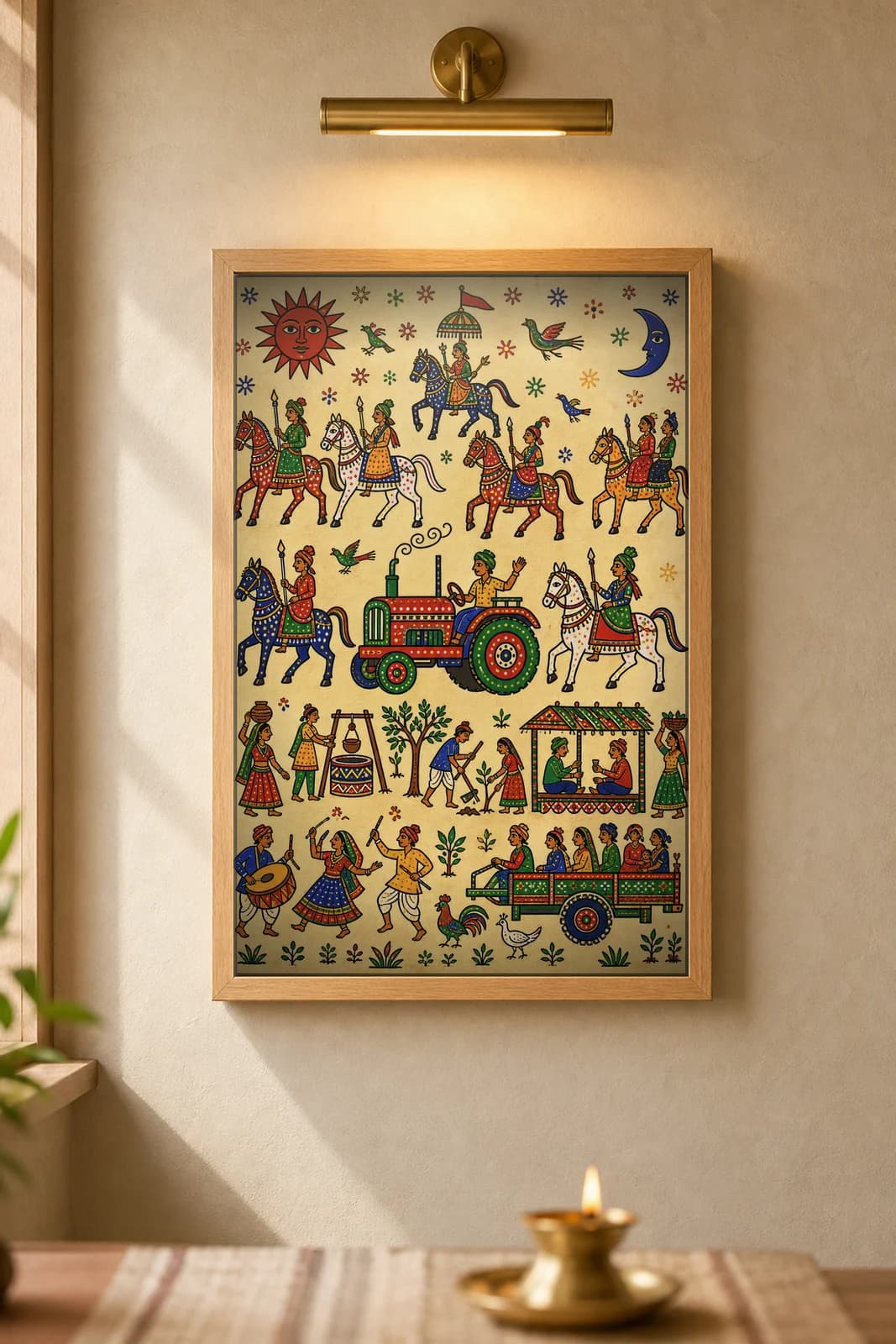
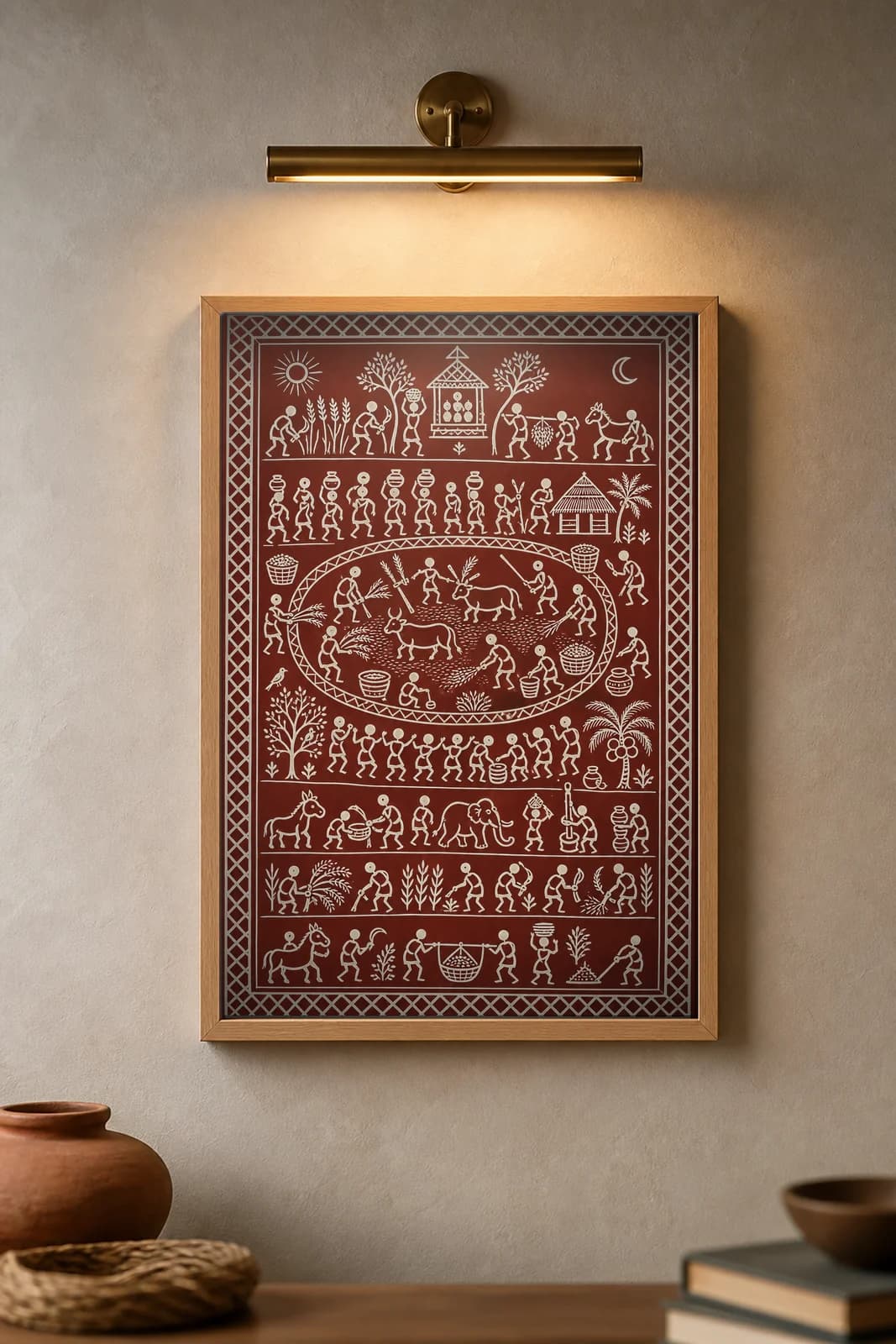
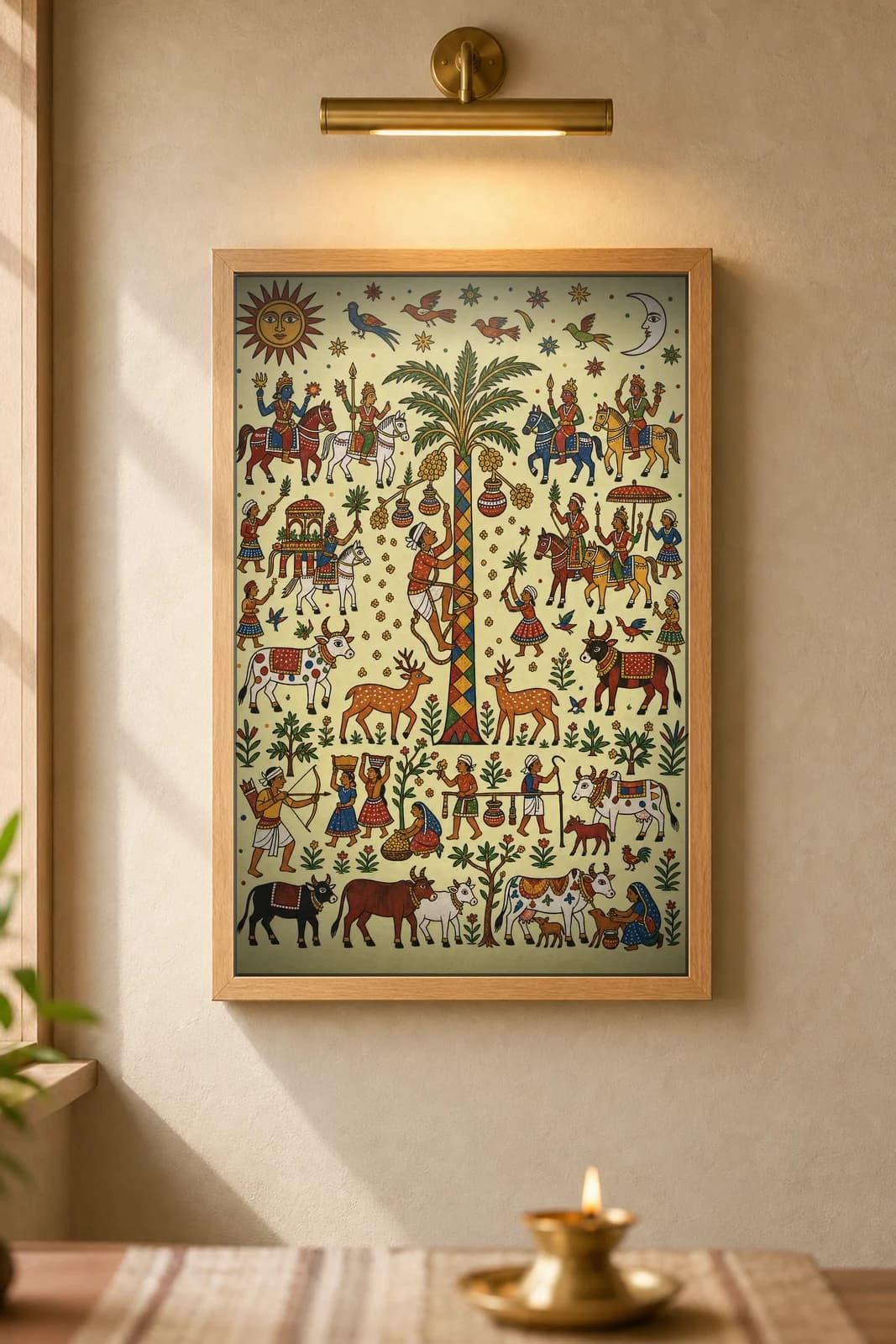
Farmhouse — 8 museum-grade prints sized and toned for the room. DESIGN BRIEF: the brief was the moment after the cut, so the hero is a large oval medallion holding the threshing floor itself — pairs of yoked oxen walking a circle over the grain while figures drive them and toss it with winnowing forks — and the rest of the harvest stacks in bands above and below. We held the fill to medium and kept the fish-net frame open rather than a packed mesh, with clear oxblood ground around the oval so the oxen, the sheaves and the winnowing read at a glance. Cheriyal scrolls come from Cheriyal village in Telangana's Siddipet district, painted for generations by the Nakashi artist community on a signature red ground. Beyond the epics, the scrolls recorded agrarian and village life in stacked horizontal registers, the form travelling balladeers used to narrate a sequence of scenes. Bharni — literally "to fill" — is the Mithila colour-flood style historically associated with Brahmin women painters in villages such as Jitwarpur, Ranti, and Rasidpur; bold black outlines enclose vermillion, turmeric, and ochre fills on wedding walls and, after the 1960s Bihar drought commercialisation, on handmade paper. Harvest scenes belong to the oldest Mithila subject matter: women gathering grain, chaurchan and kojagara festival panels, and Anaj ka Aashirwad motifs that celebrate agrarian labour and seasonal reward — Ambika Devi and other contemporary masters still paint harvest women in Bharni fill for farmhouse and cultural interiors.