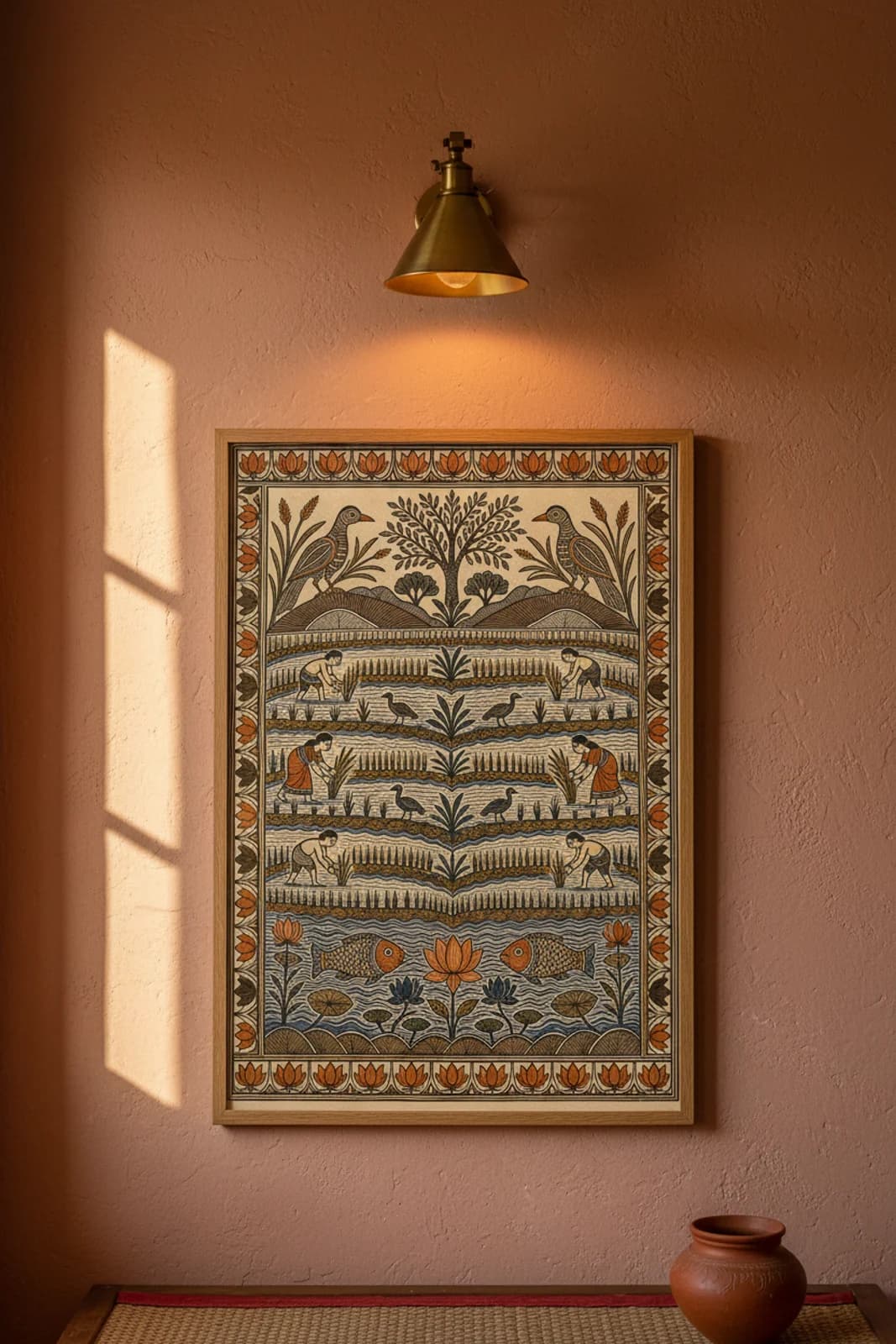
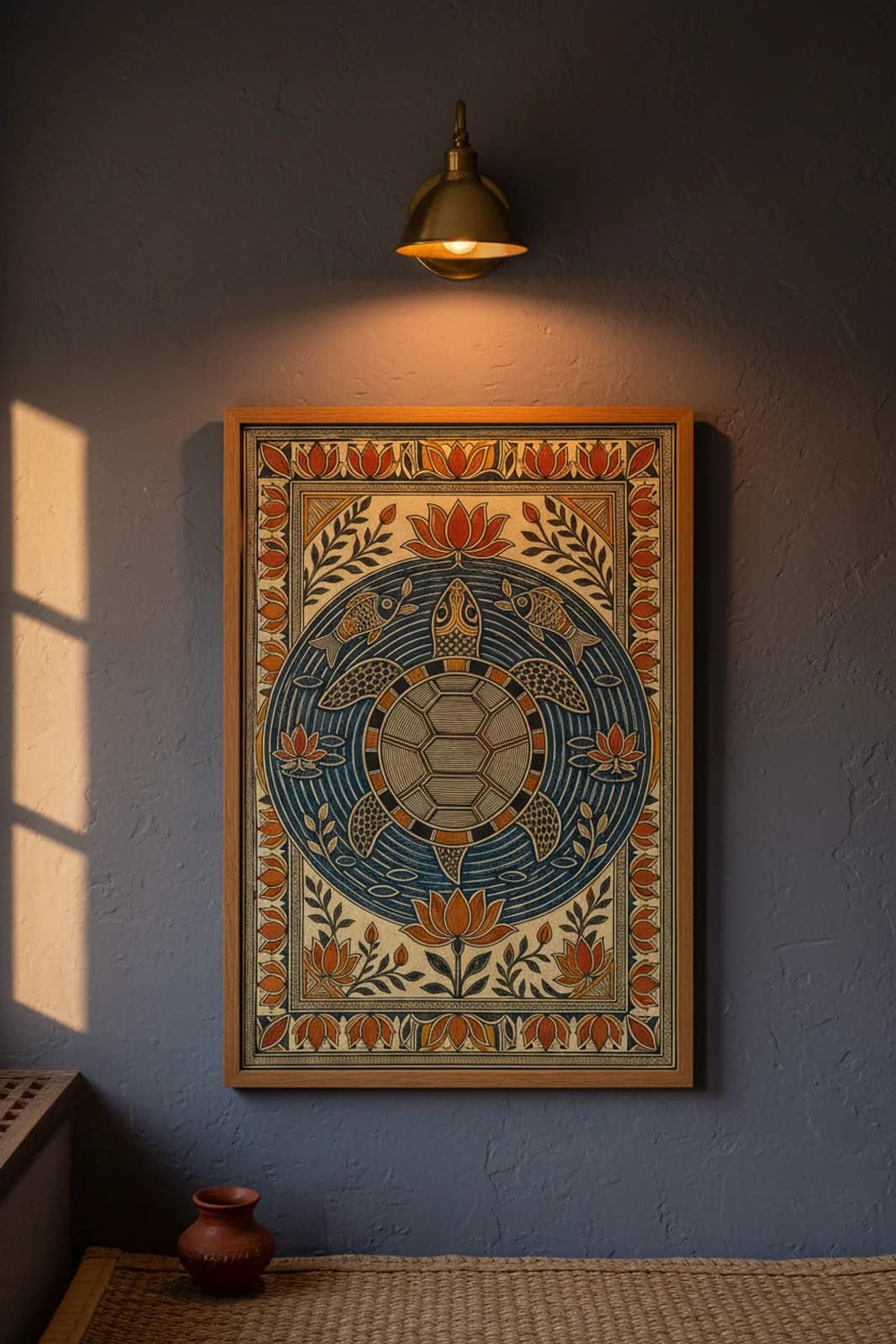
DESIGN BRIEF: Simri village panels treat rice not as background scenery but as the horizontal grammar of the wall — terraced bands, flooded lines, bent planters — and Kachni is the only style that keeps that rhythm legible without Bharni colour swallowing the water. Horizontal-bilateral symmetry solves the narrative problem: farmers mirror left and right across a central plant spine so the eye reads labour as ritual repetition, not a one-sided anecdote. I stacked three registers — hill and crane above, paddy centre, fish-lotus pond below — because Mithila agricultural walls often compress sky, field, and water into one vertical scroll the way a monsoon day moves from dawn mist to midday planting to evening pond. The middle band carries the weight: six planters in three terrace tiers, each row of seedlings built from vertical hatch strokes, water rendered as parallel indigo waves rather than solid blue blocks. Corner cranes and bottom fish are not decorative padding — they anchor the fertility cycle (bird above, grain centre, aquatic abundance below) that Kohbar and harvest panels share without importing wedding narrative. Border lotus in profile repeats the pond motif outward so the frame participates in the same line discipline as the terraces.
 WALLIMILIST