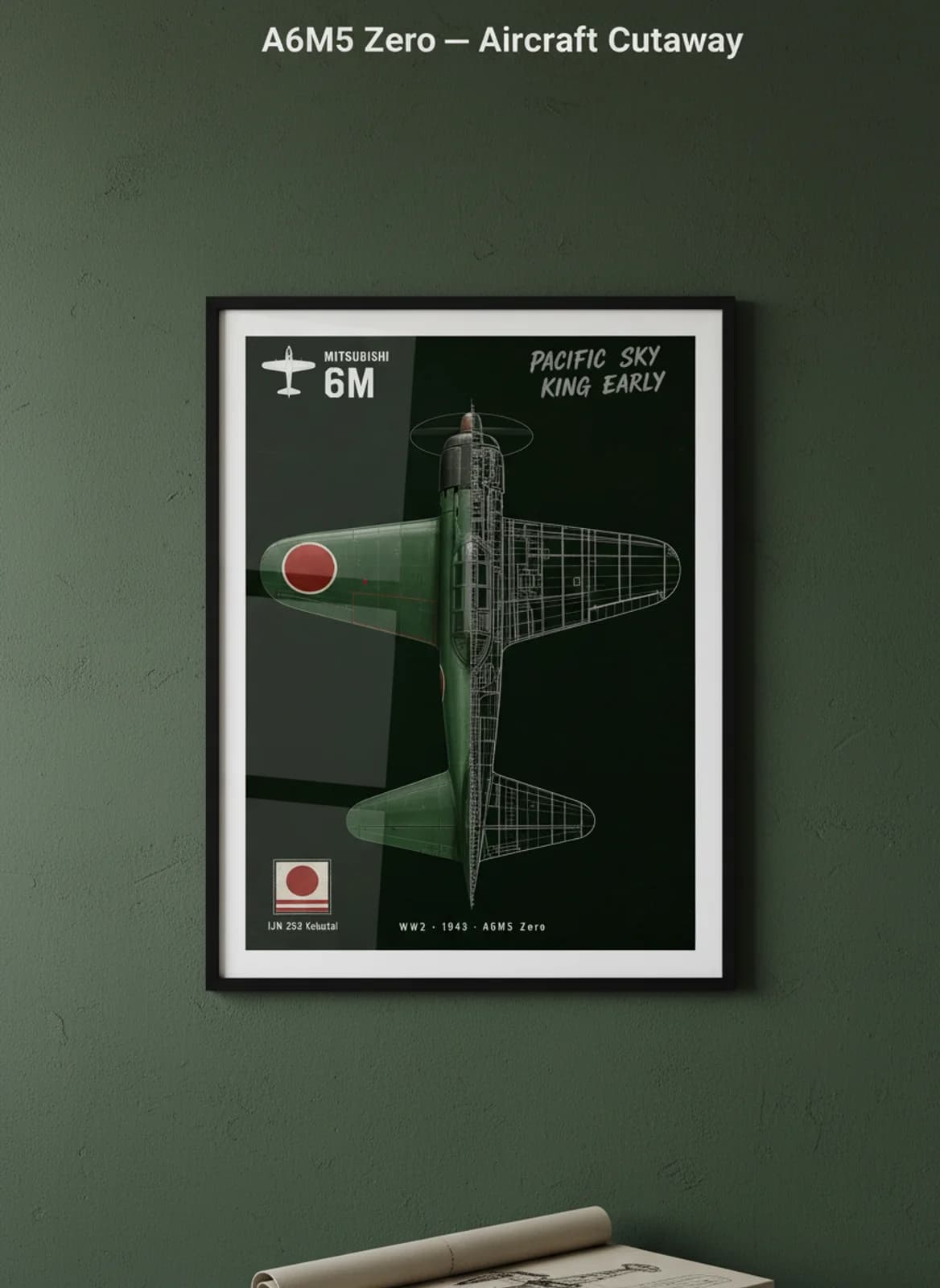
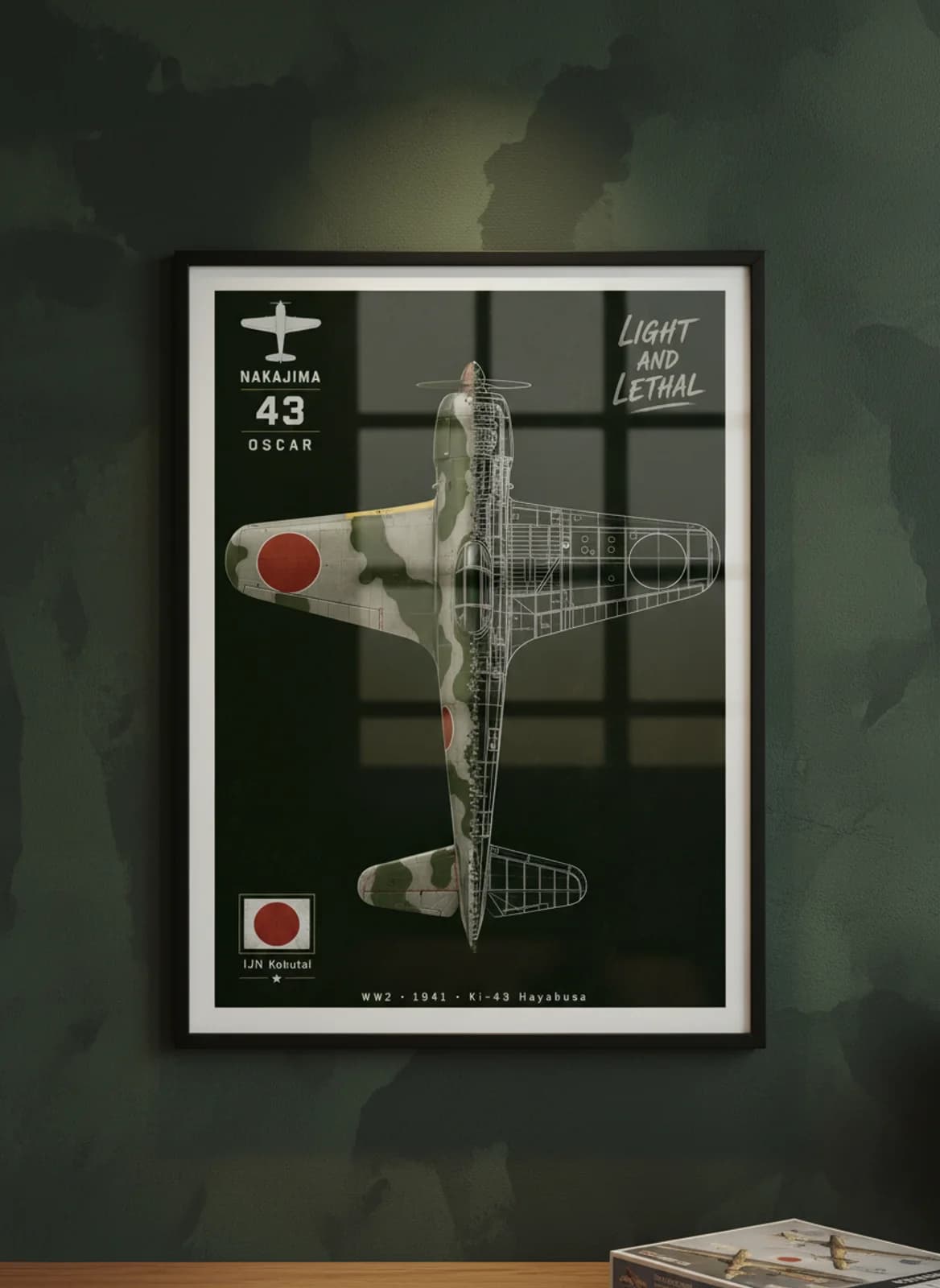
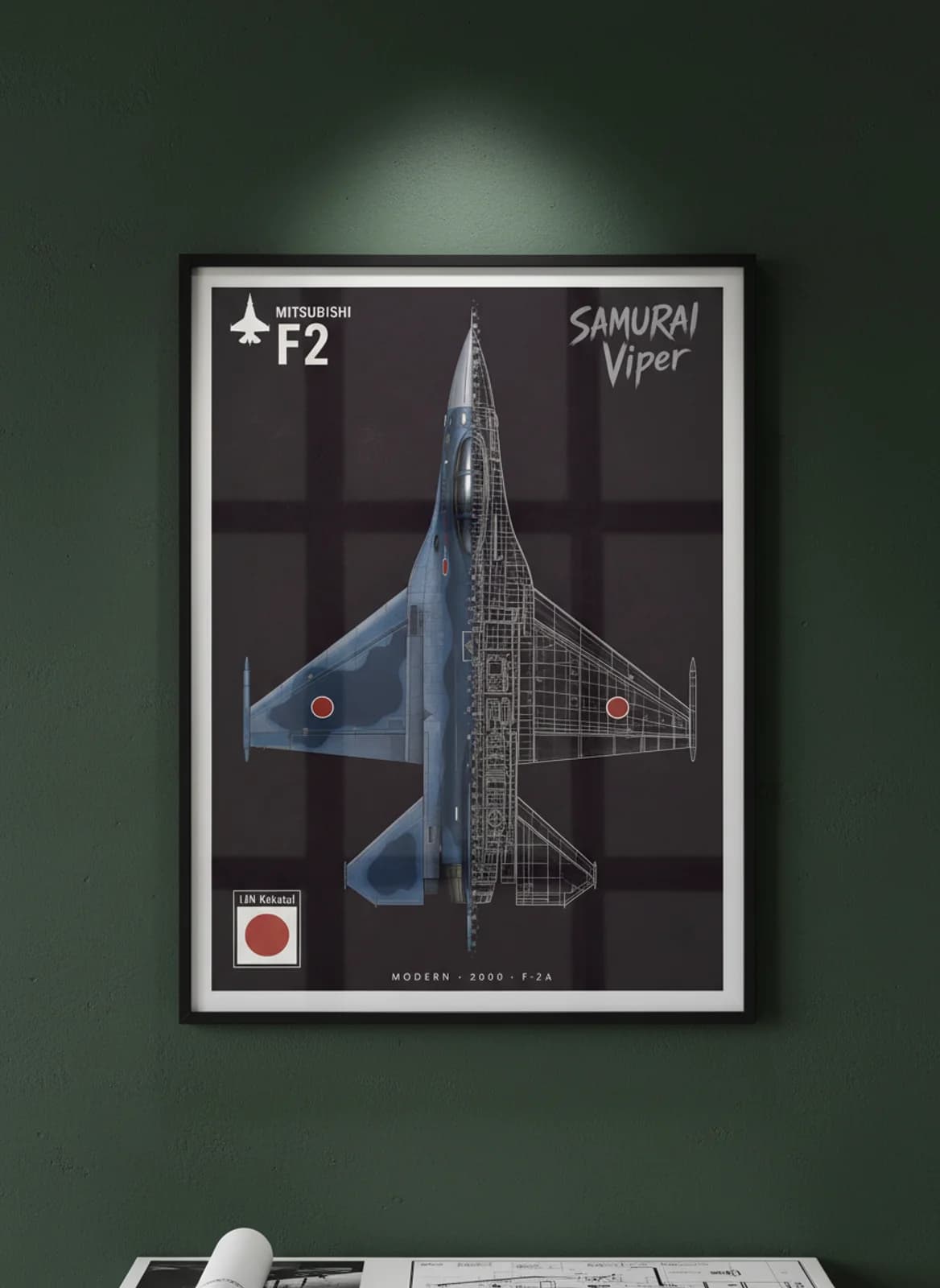
Japan — 5 museum-grade prints from this operator. The Mitsubishi F-2 emerged from Japan's FS-X programme as the most significant indigenous fighter co-development since the F-1 support fighter — blending Lockheed Martin F-16 design lineage with Mitsubishi Heavy Industries composite expertise and JASDF-specific mission tailoring. The enlarged wing and anti-ship focus reflected island-chain defence priorities across the East China Sea and Pacific approaches. The Mitsubishi A6M Zero defined Japanese carrier aviation from 1940 through the mid-Pacific campaign, combining extreme range and agility in an airframe that shocked Allied pilots who initially dismissed Japanese fighter design. The A6M5 Model 52 represented the final major production refinement before dedicated interceptors and late-war jet projects diverted factory capacity. The Ki-43 Hayabusa defined Japanese Army fighter doctrine in the opening year of the Pacific War — a philosophy that prioritised manoeuvrability over survivability until Allied pilots adapted tactics and brought superior firepower. Oscar pilots over Malaya, Burma, and China taught Commonwealth and American units harsh lessons about turn combat before the arrival of Hellcats and Mustangs shifted the calculus.