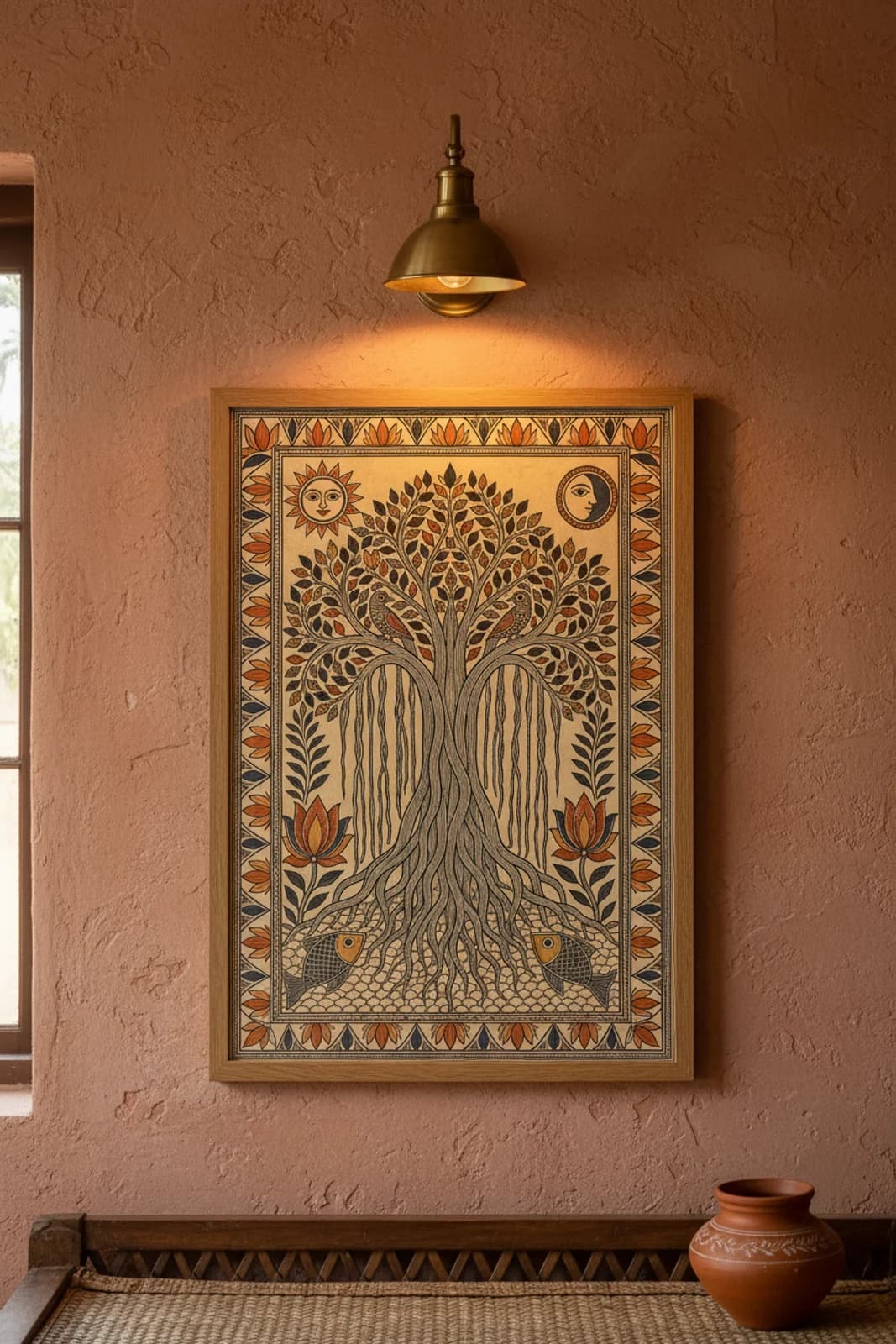
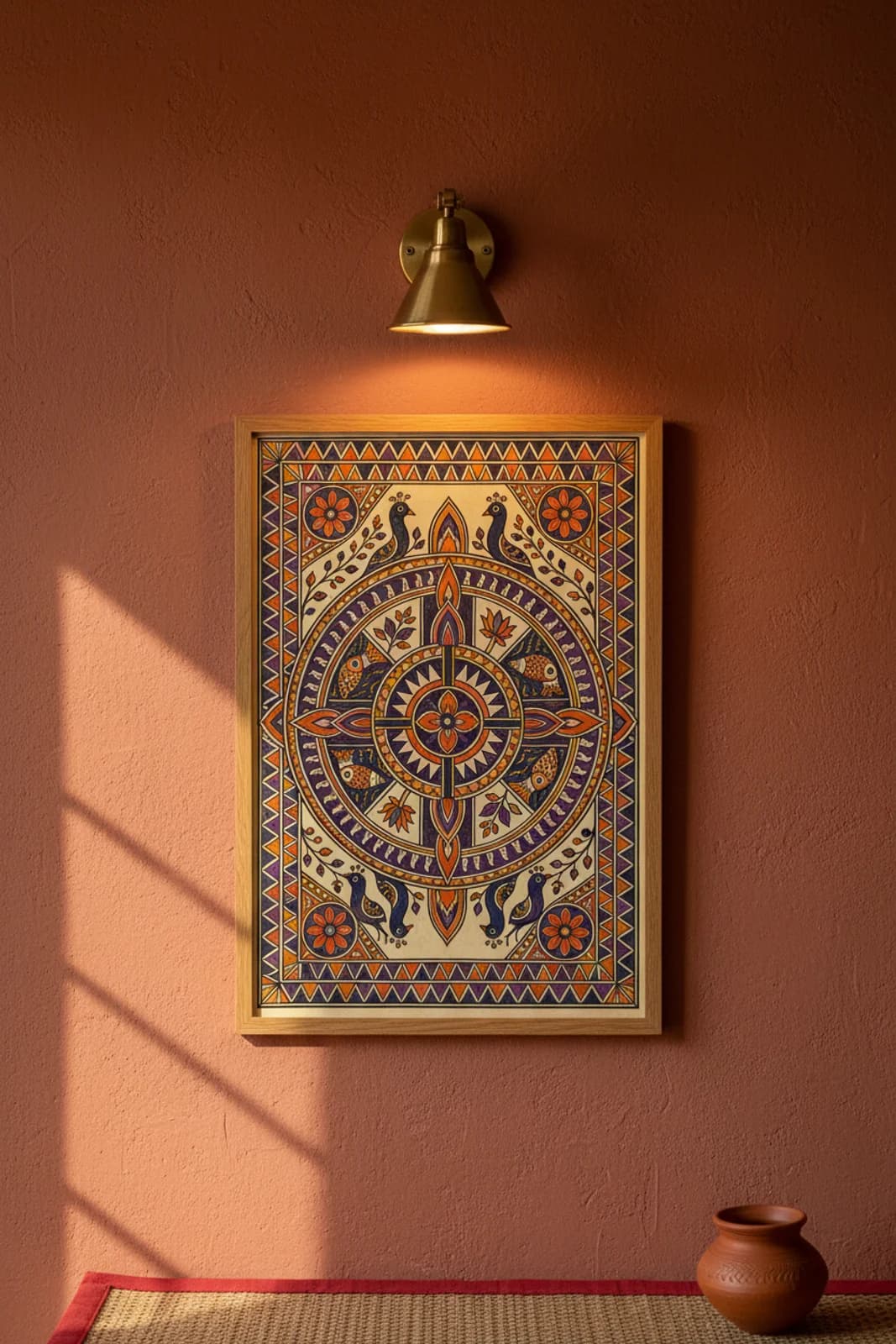
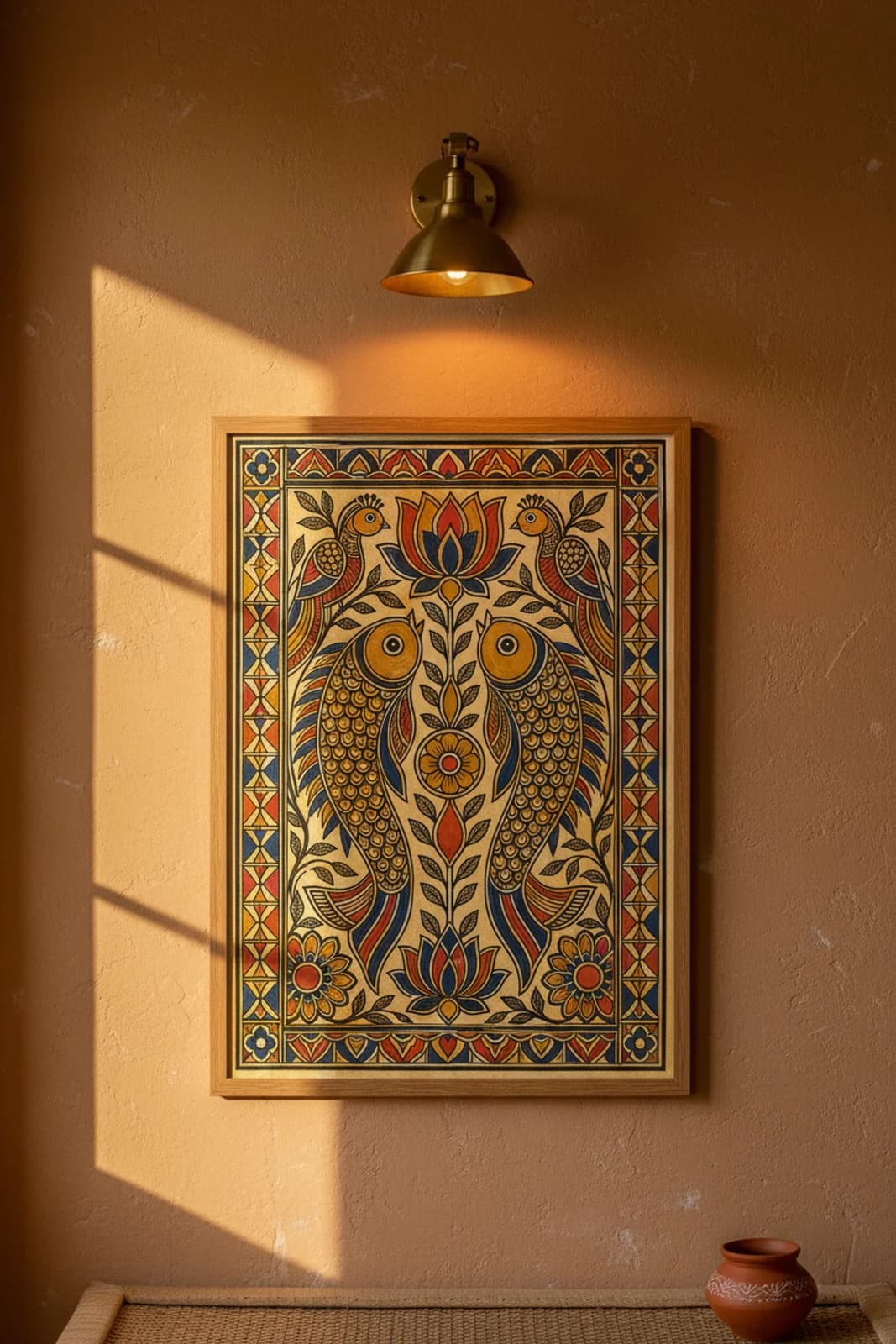
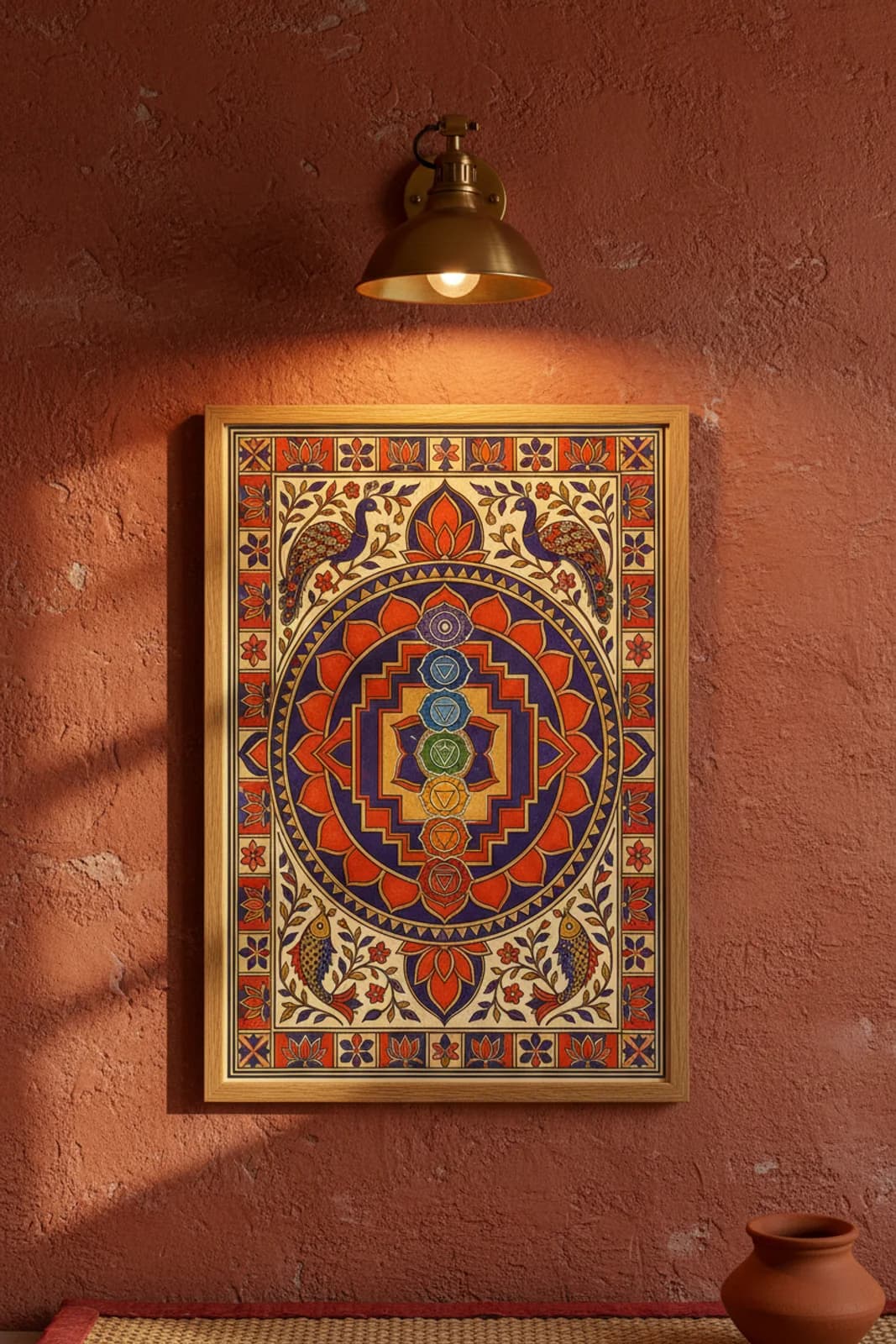
Ritual Adjacent — 4 museum-grade prints that set the mood. Madhubani painting — also called Mithila or bhitti chitra — developed among Maithil women who originally rendered ritual imagery on freshly plastered mud walls in the Mithila region of Bihar and adjoining Nepal. The banyan (Ficus benghalensis, vata vriksha) appears in folk panels as a village shade tree and as a tree-of-life analogue related to kalpavriksha iconography in kohbar wedding-chamber schemes, where lotus ponds, bamboo, fish, and paired birds surround auspicious union symbols. Tantrik Madhubani is the Mithila sub-style devoted to yantra geometry, mandala rings, and sacred symbolic forms rather than narrative festival scenes. Where Bharni fills large deity fields and Kachni textures through parallel hatching alone, Tantrik paintings function closer to visual mantras — concentric expansion from a central bindu, symmetrical axes, and colour codes tied to tantric and yogic practice. Geru — also spelled geroo — is a natural iron-oxide ochre pigment (hematite) used across Indian folk traditions as both colour and wall preparation: in Mithila villages, cow-dung and geru washes once coated mud walls before ritual painting, creating the warm rust-brown ground against which lampblack and rice-paste white performed. Art historian Neel Rekha and earlier writers including Pupul Jayakar classify Geru as one of the distinct Madhubani style families that emerged when women artists moved from ephemeral wall work to paper in the 1960s–70s — characterised by strong black lines, minimal ornament, and ochre-dominant palettes, distinct from Kayastha Kachni line density and Brahmin Bharni colour fill.