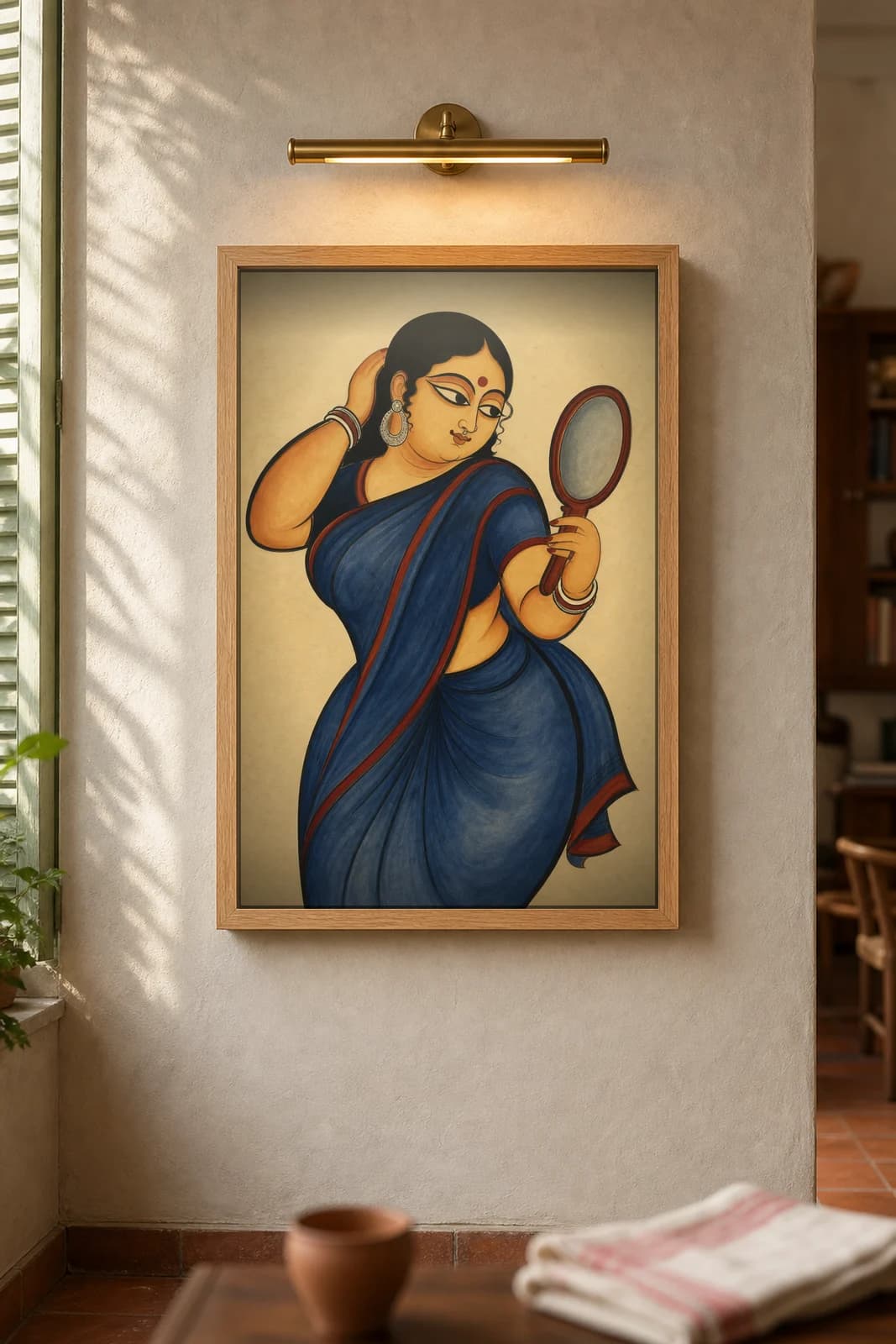
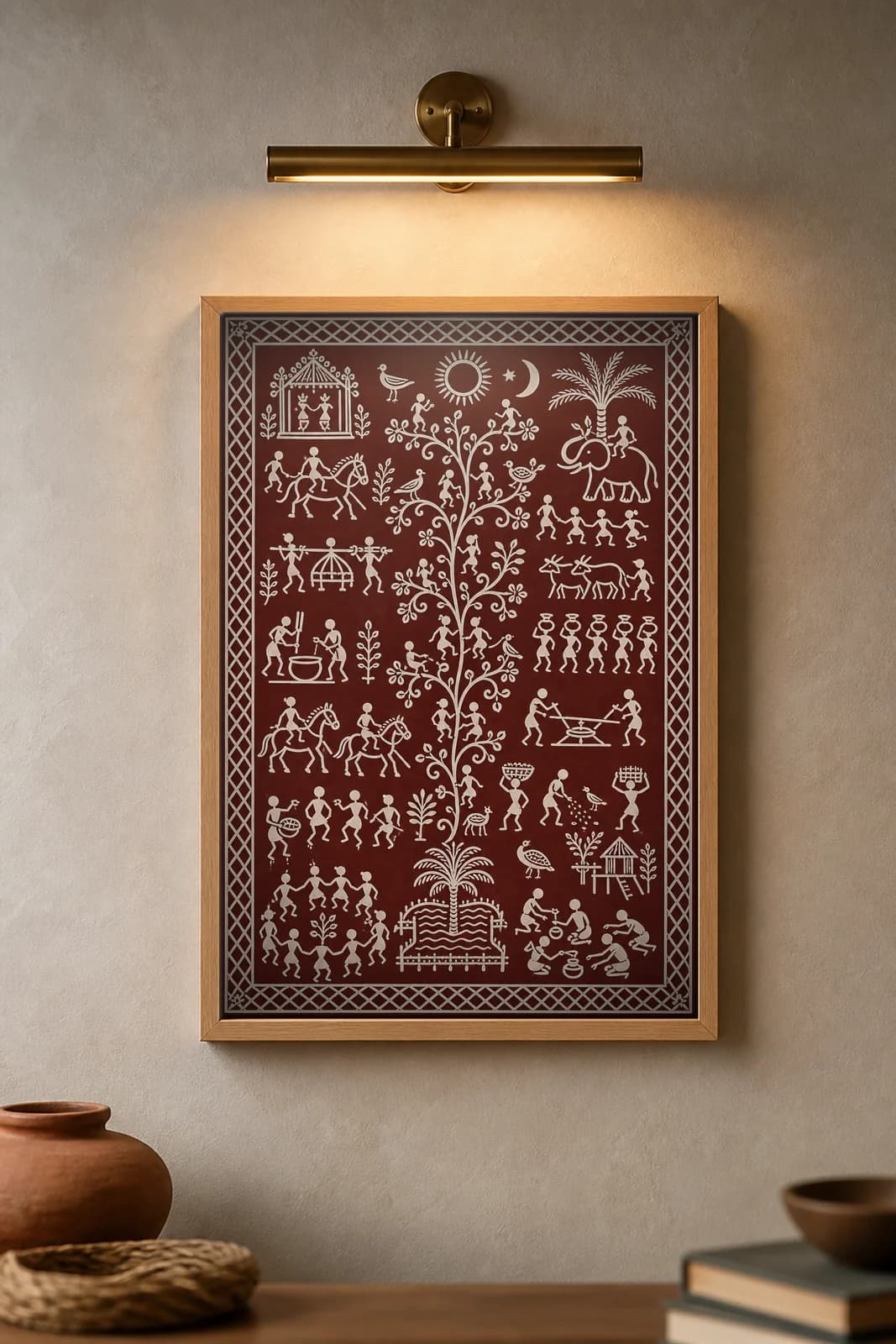
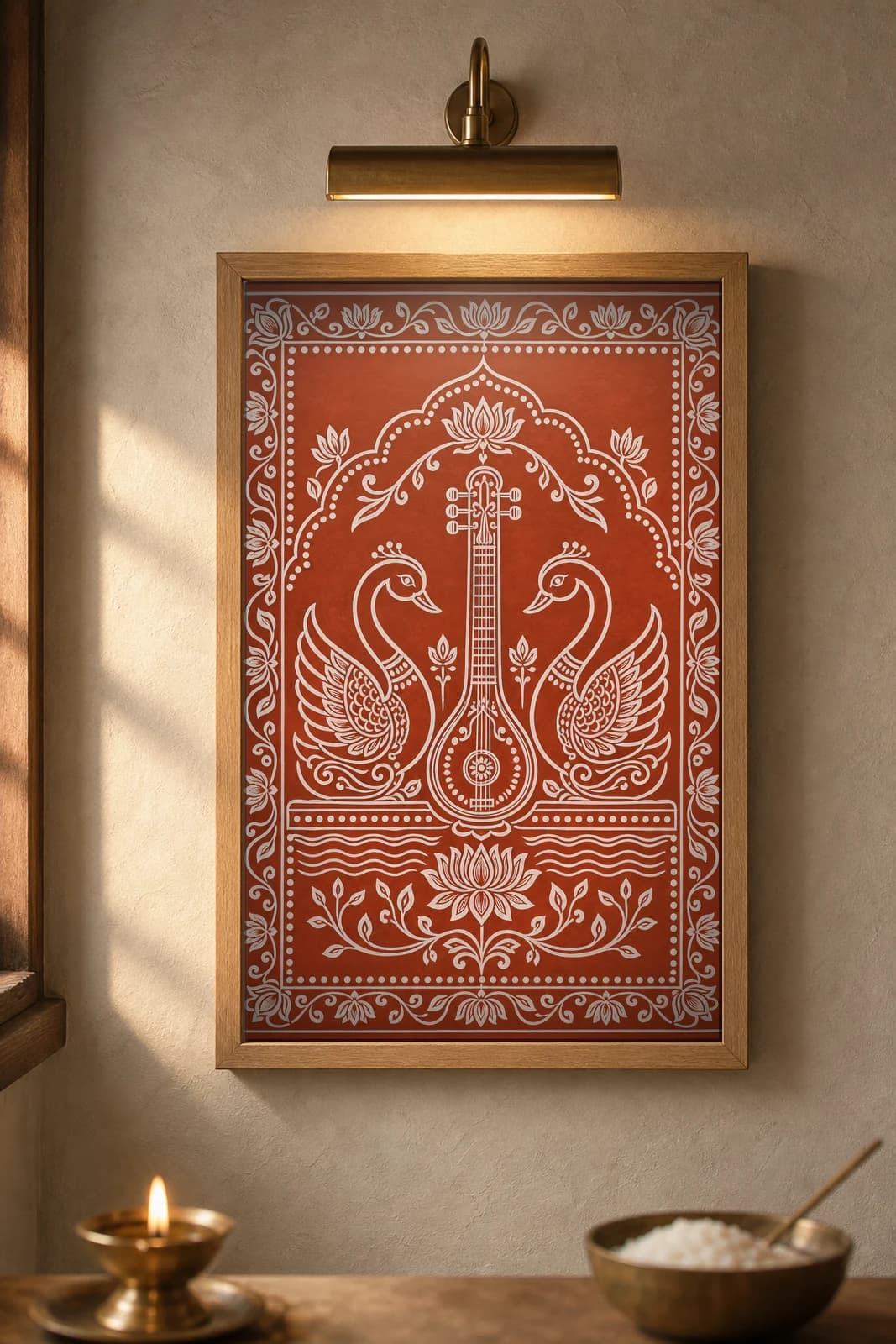
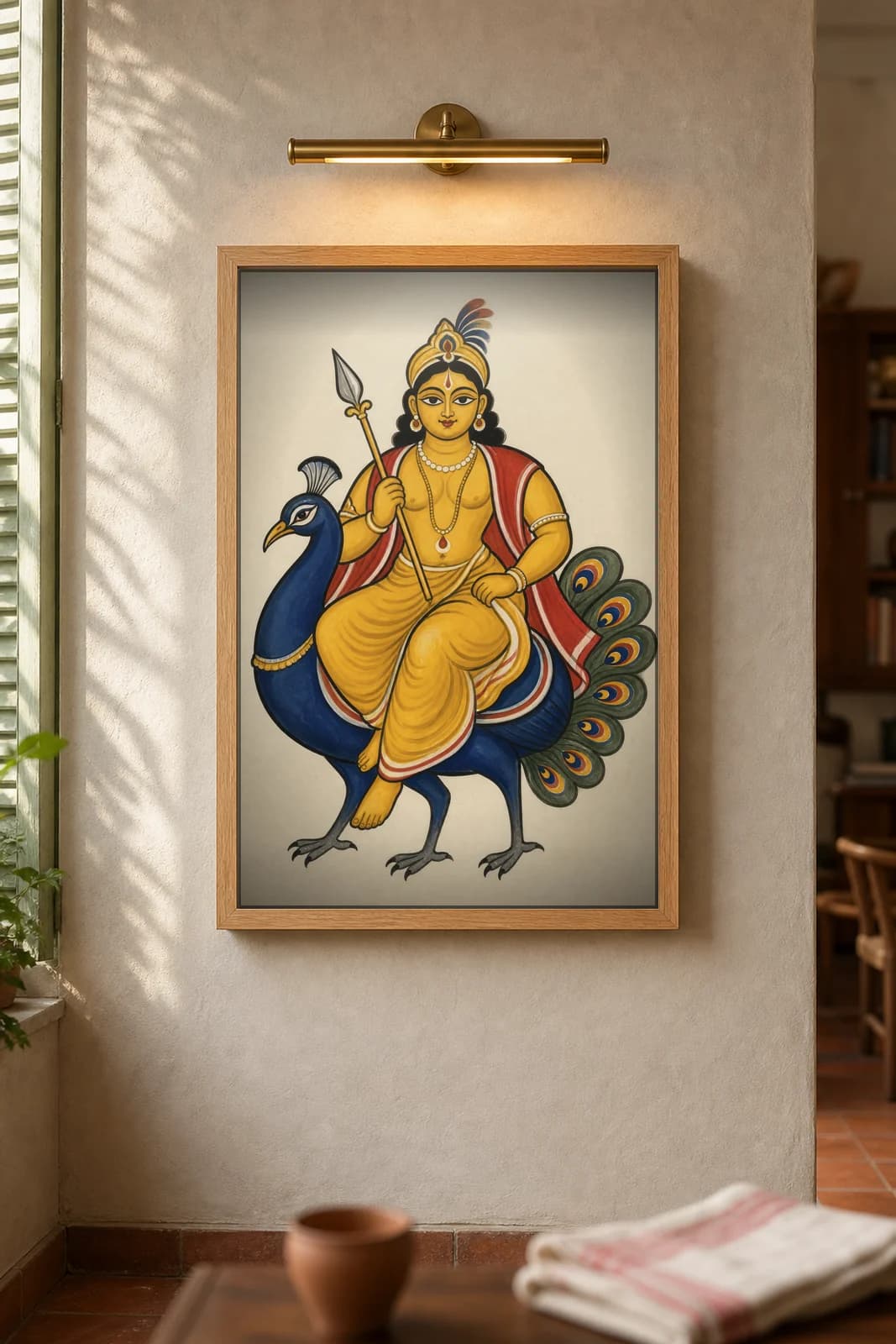
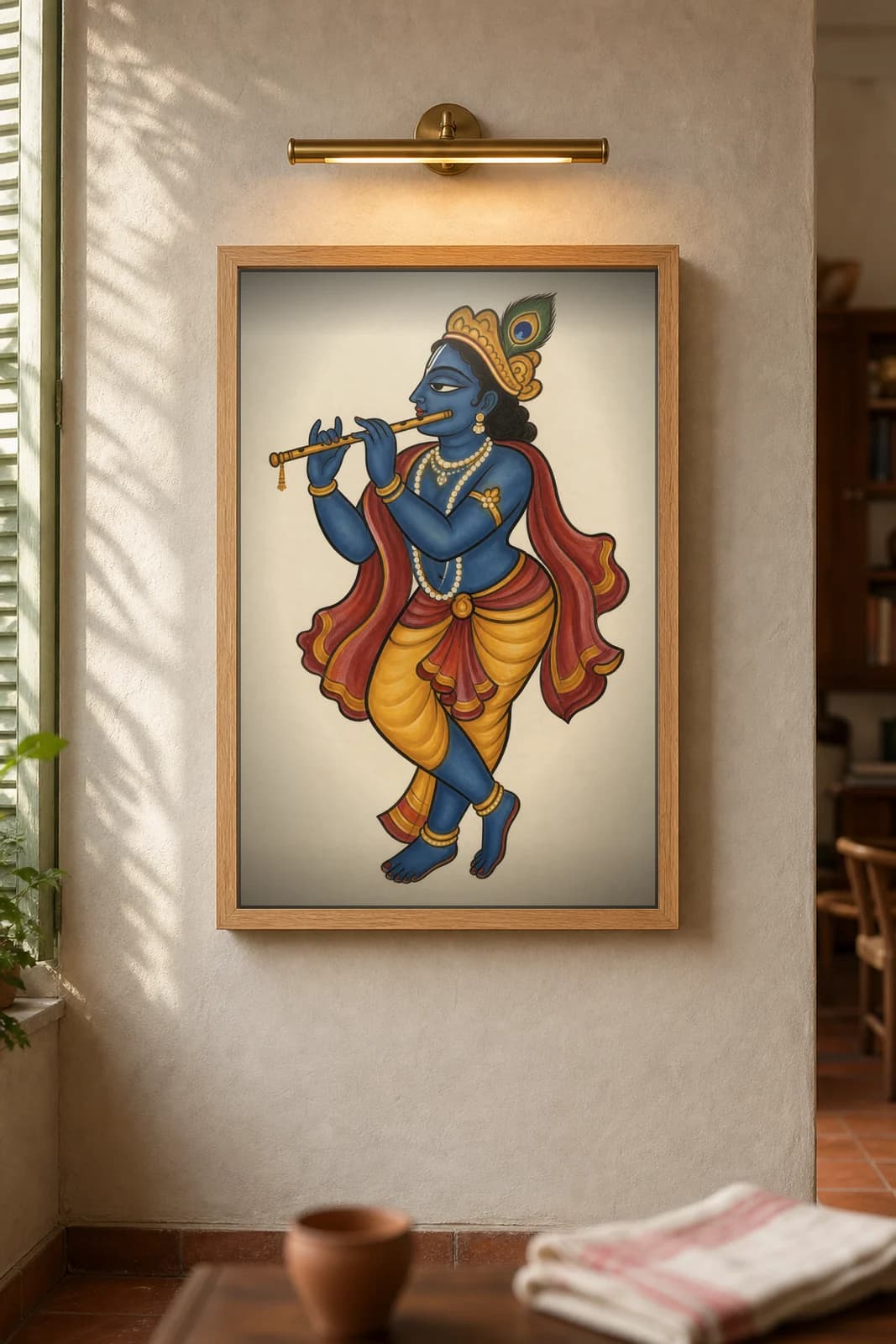
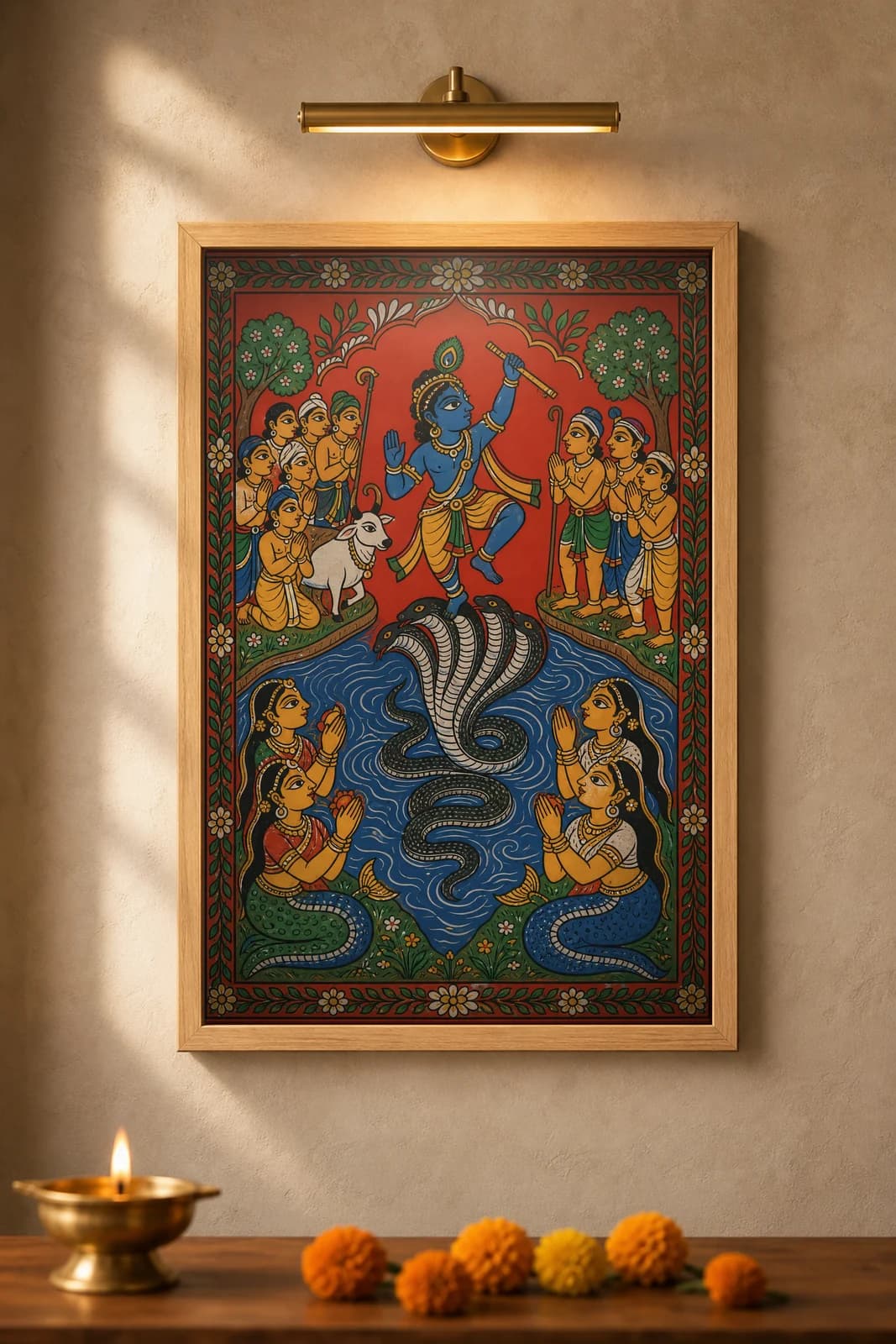
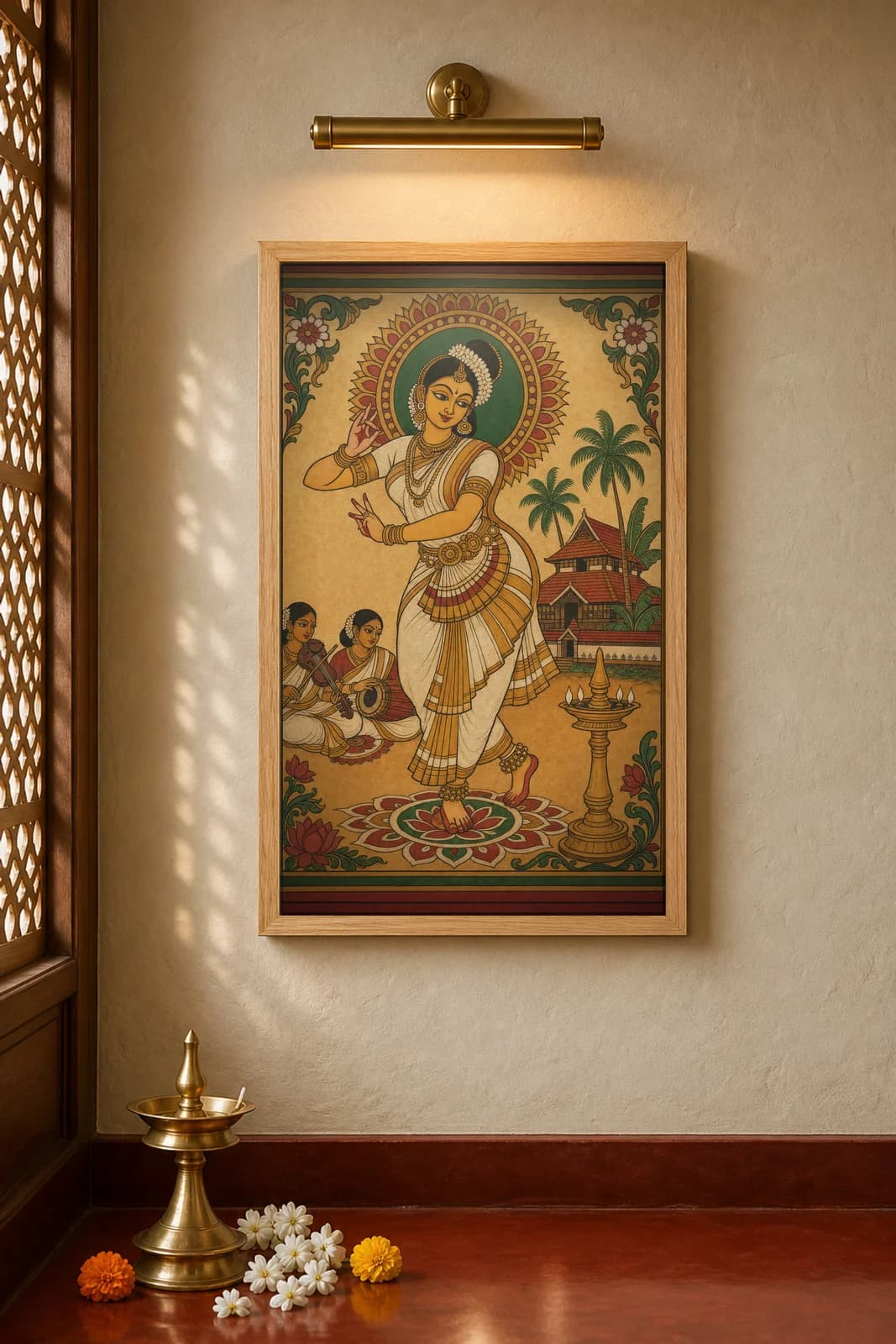
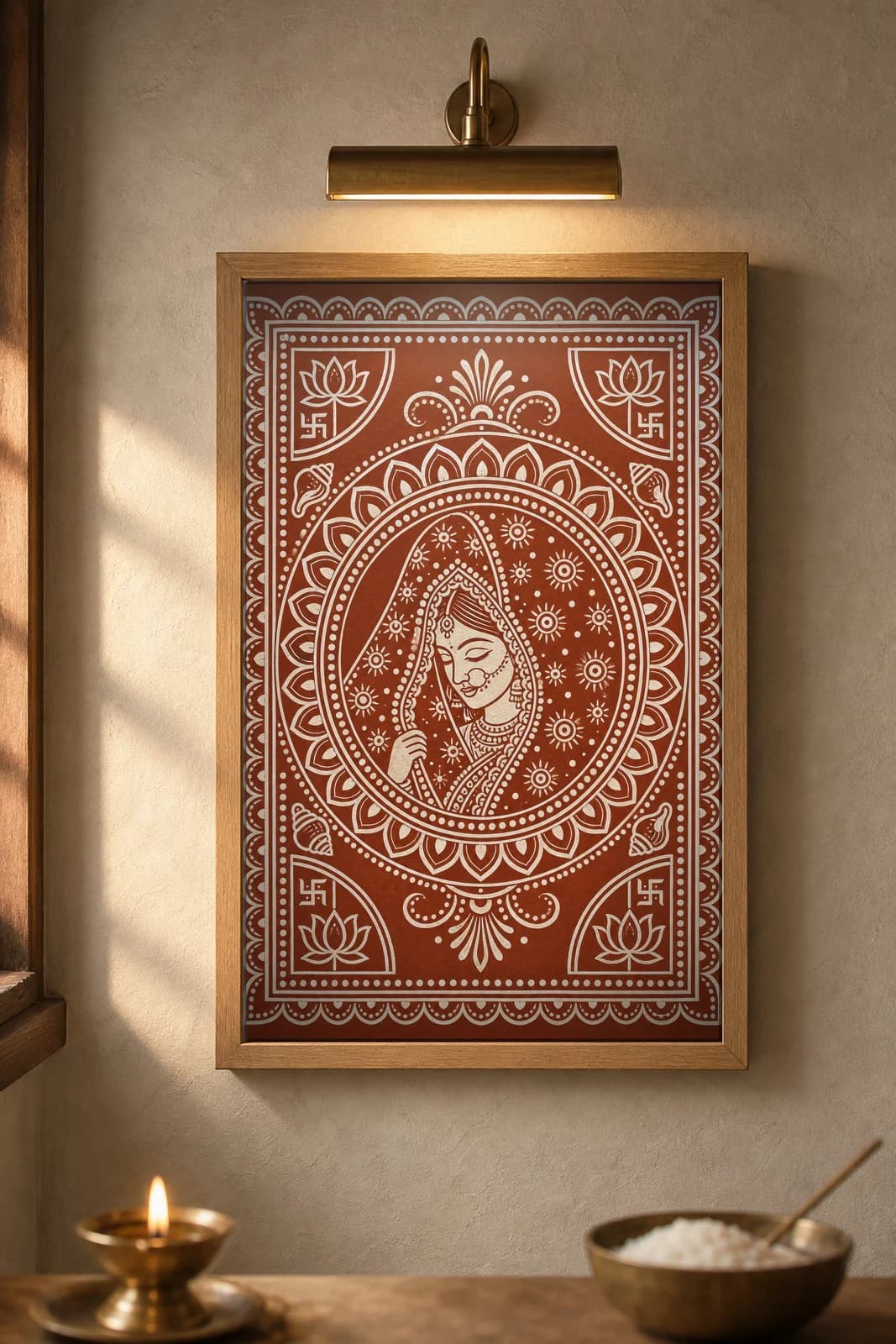
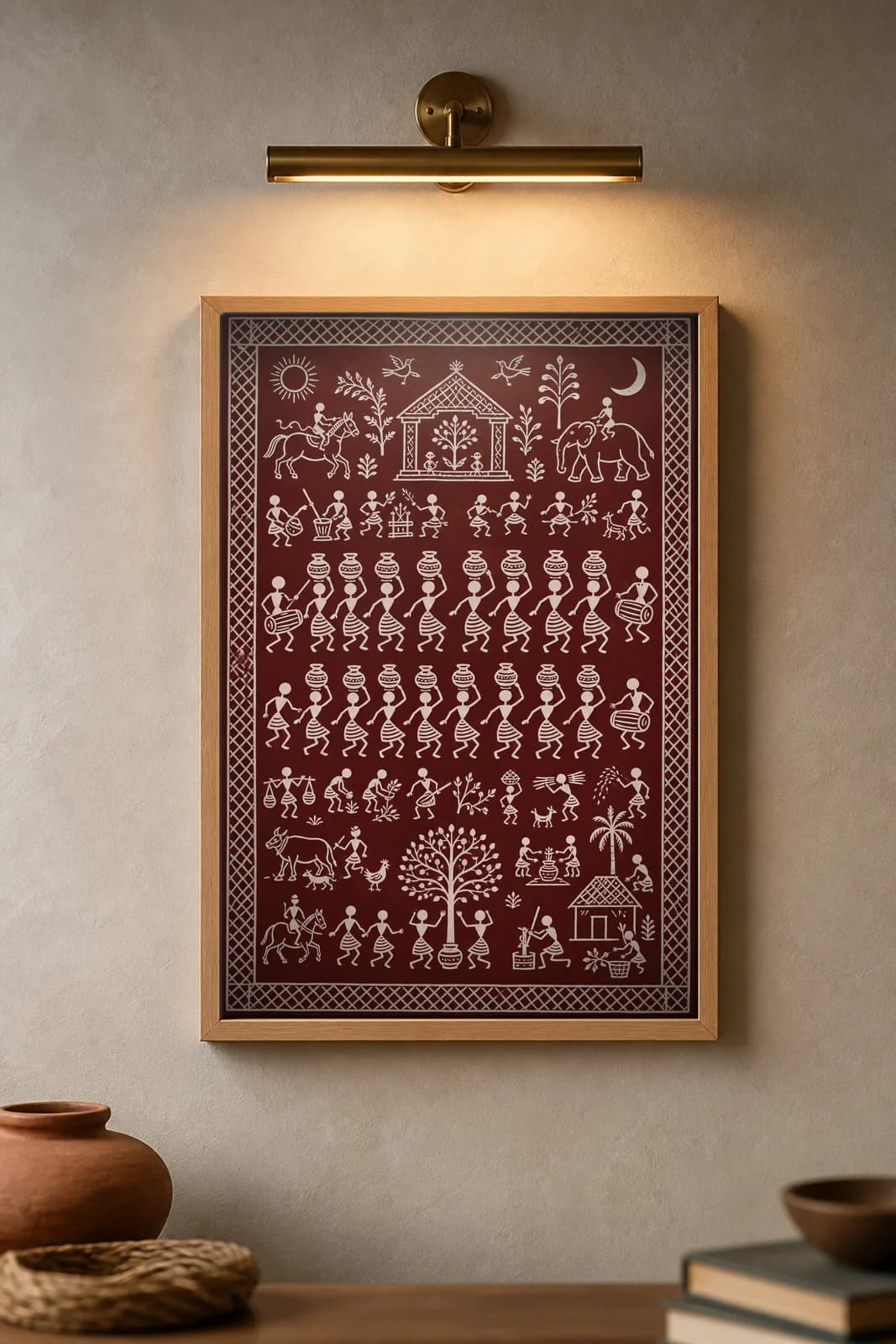
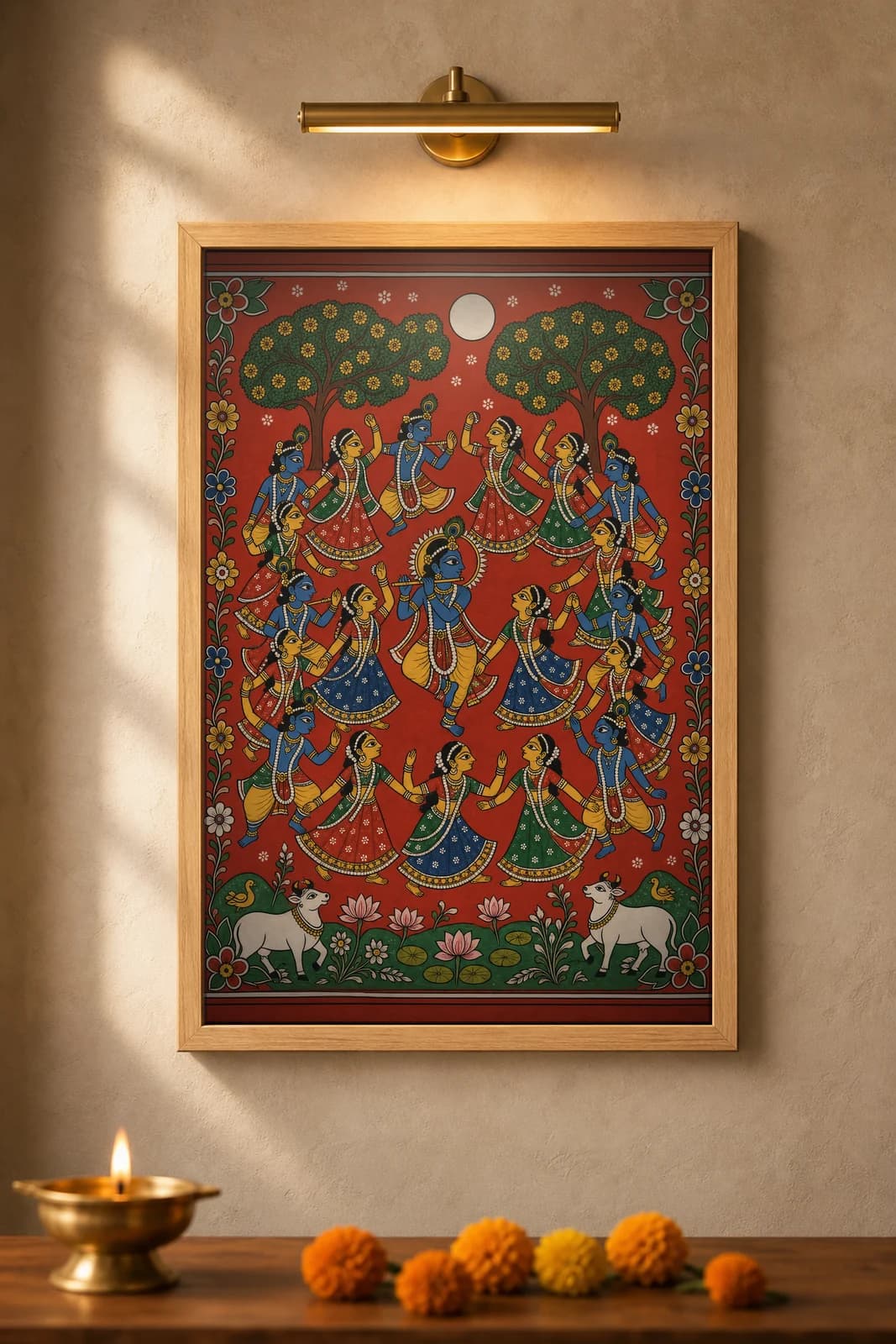
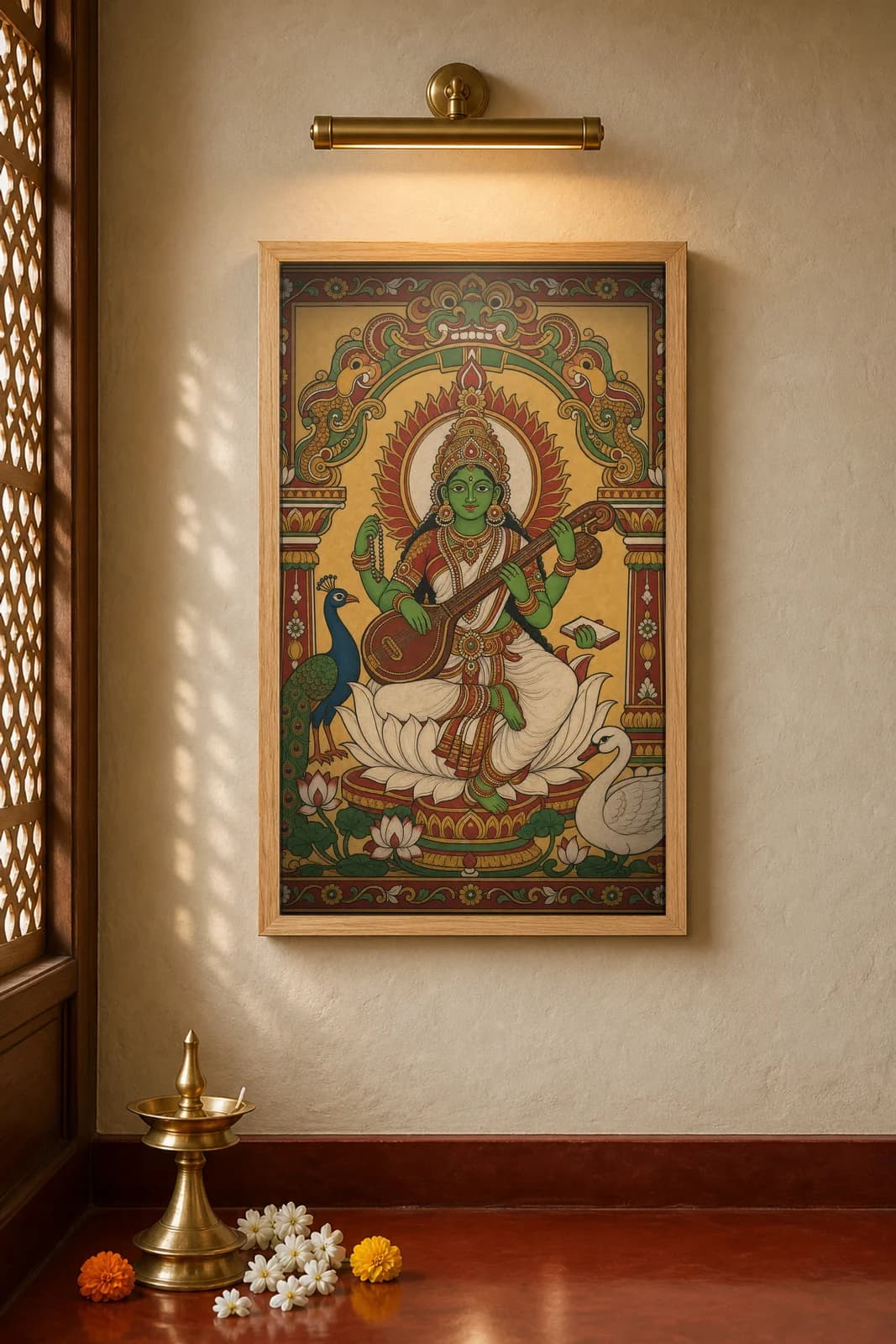
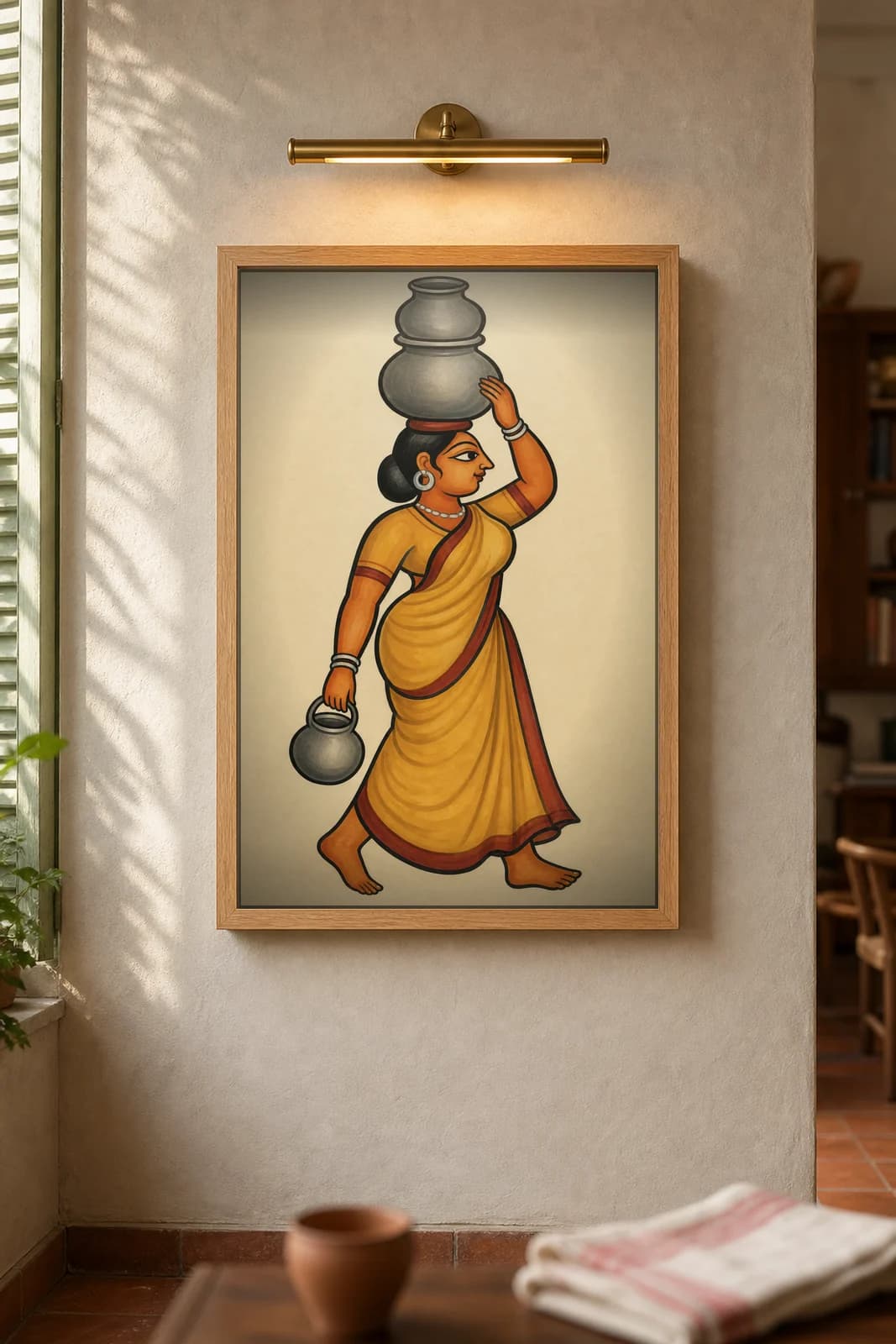
Graceful — 12 museum-grade prints that set the mood. DESIGN BRIEF: the brief was the women's pot dance, so the hero is full-width rows of dancers each balancing a stack of pots on her head, knees bent into the step, with barrel-drummers anchoring the ends of the rows. We held the fill to medium and kept the fish-net frame open rather than a packed mesh, leaving clear deep-maroon ground between the rows so the balanced pots and the bent-knee bodies read at a glance and never blur into one mass. Kalighat Pat grew up in 19th-century Kolkata, painted by migrant patua (chitrakar) scroll-painters who settled near the Kalighat Kali temple and sold quick watercolour souvenirs to pilgrims. Working on mill-made paper with a bold single black brush outline and soft 'boneless' shaded strokes on a plain ground, they painted gods and goddesses alongside what is often called India's first modern social satire — sharp, affectionate caricatures of the colonial 'babu' and the hypocrisies of Calcutta life. Aipan is the ritual floor- and wall-art of the Kumaon region of Uttarakhand, drawn traditionally by Kumaoni women with white rice-paste (biswar) on a geru (red-ochre) earth ground. The pichhora is the Kumaoni ceremonial veil-cloth — traditionally an ochre or yellow ground scattered with sun, swastika, conch, and bell motifs — worn by women at weddings and important rites; it shares its vocabulary with Aipan itself.