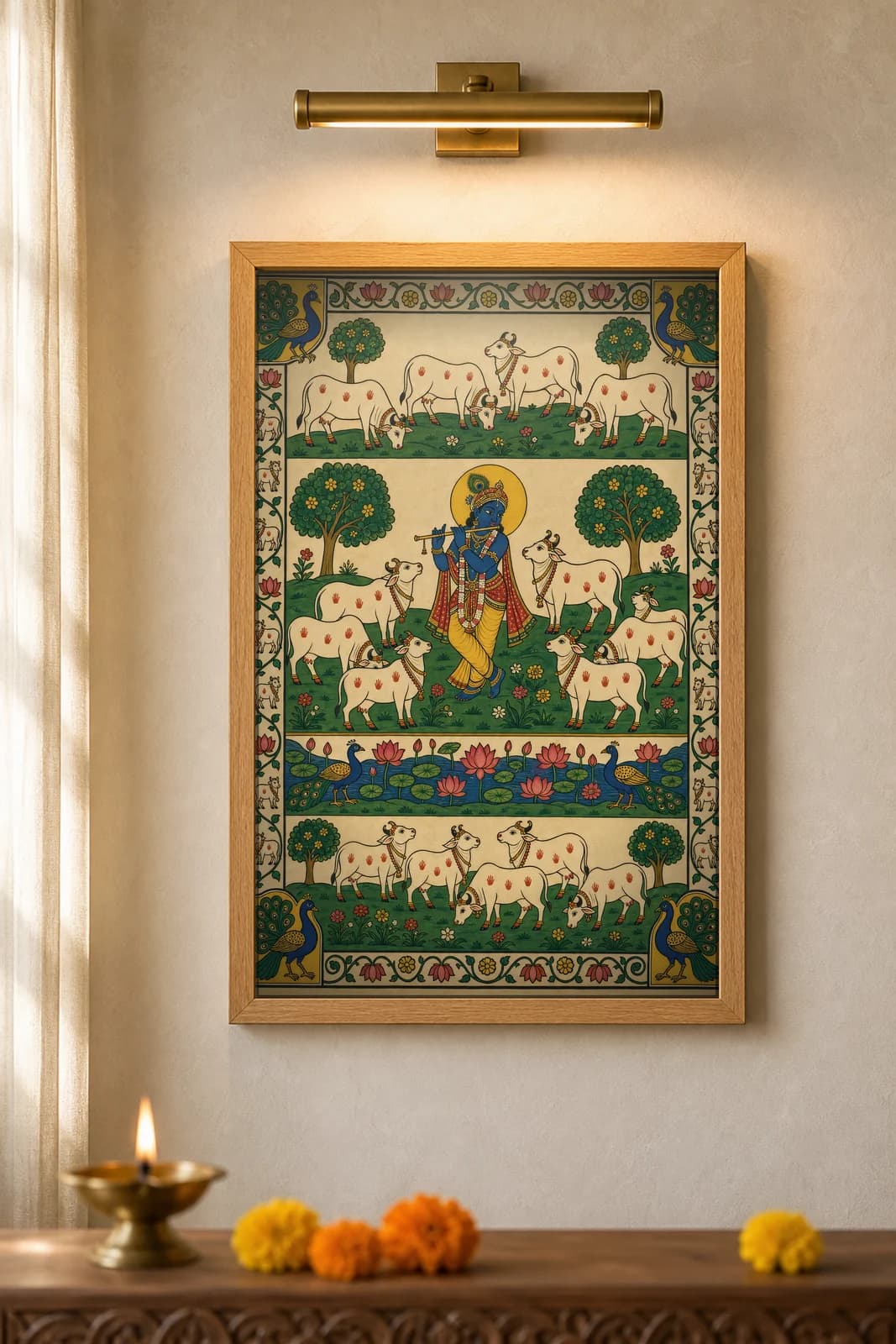
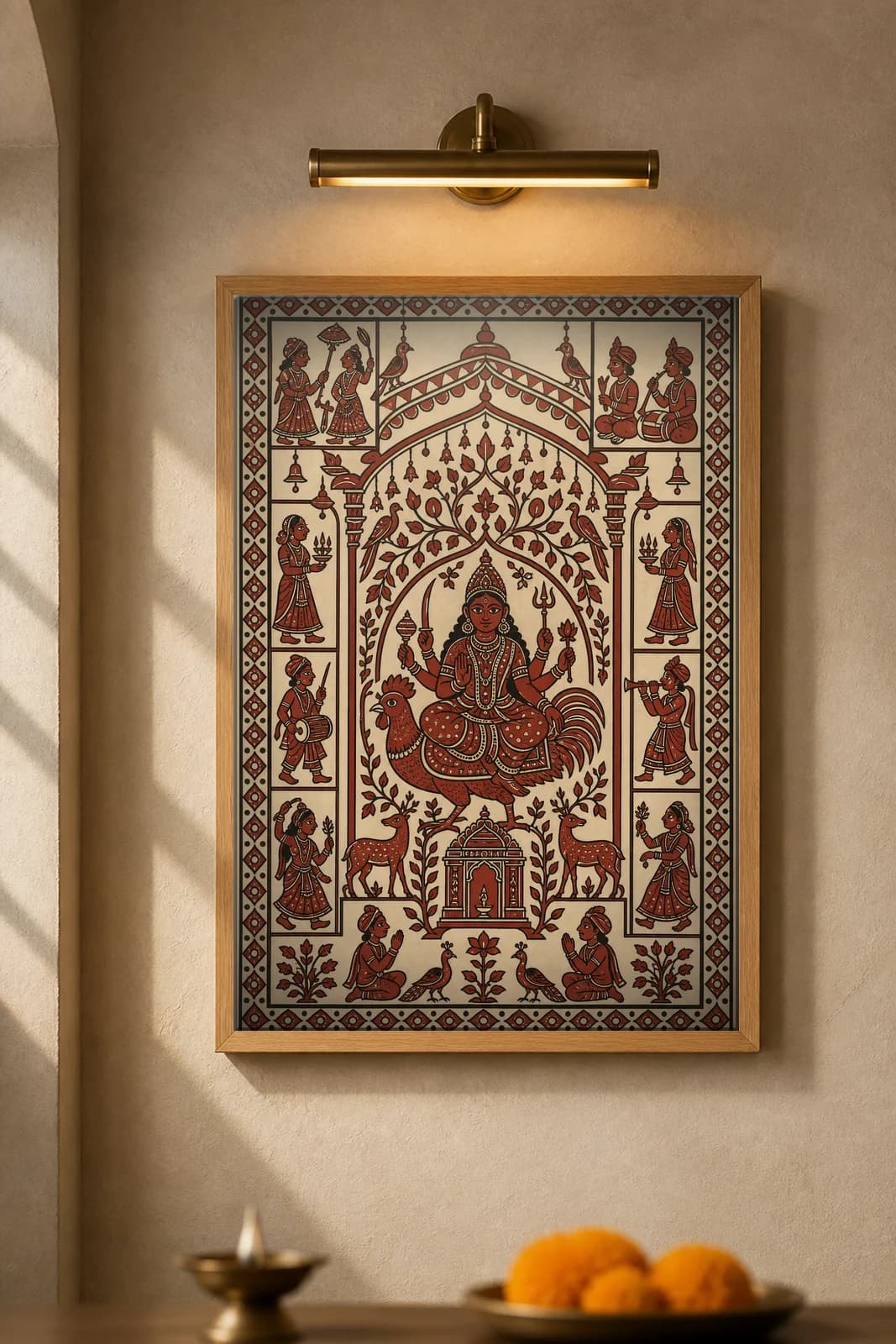
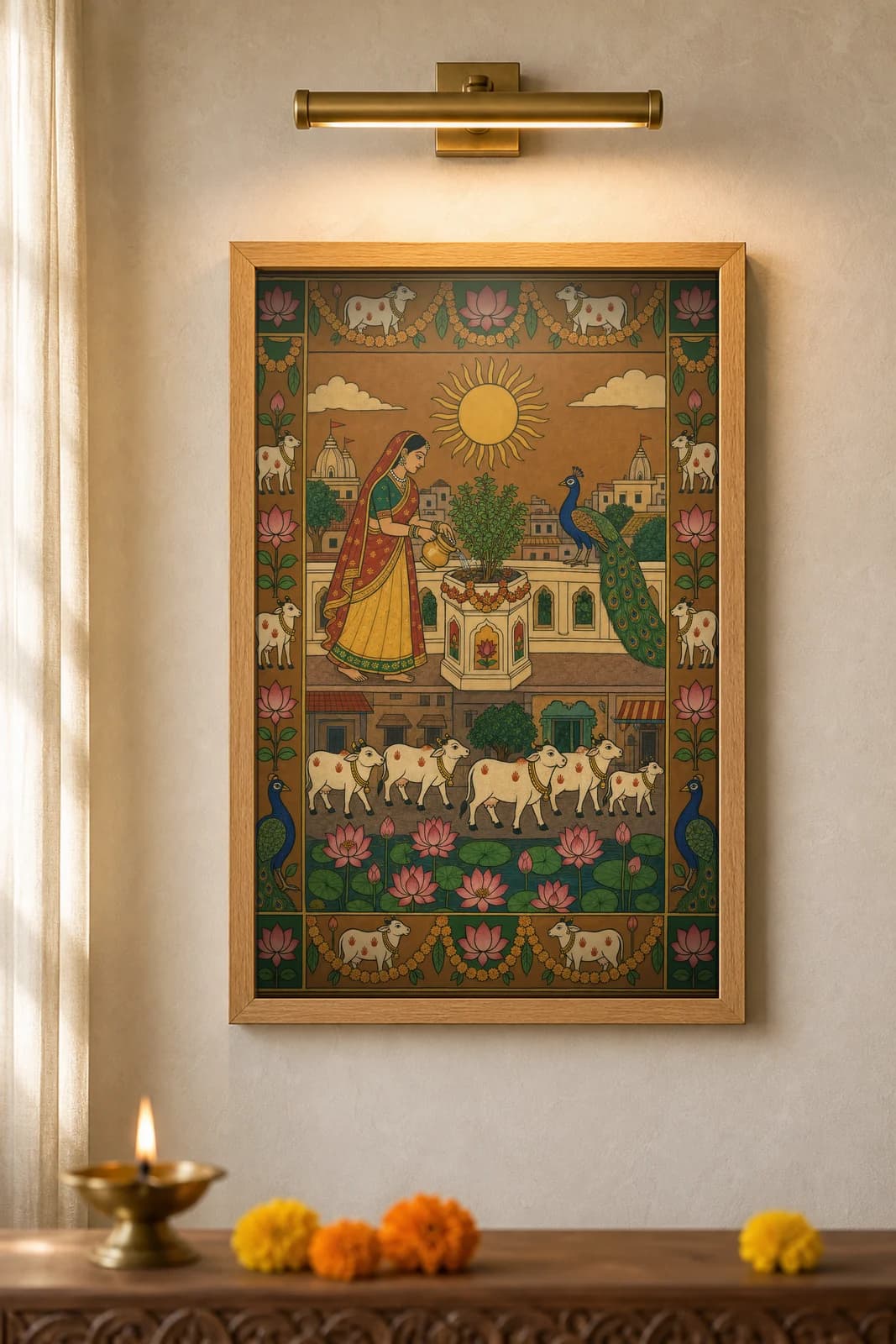
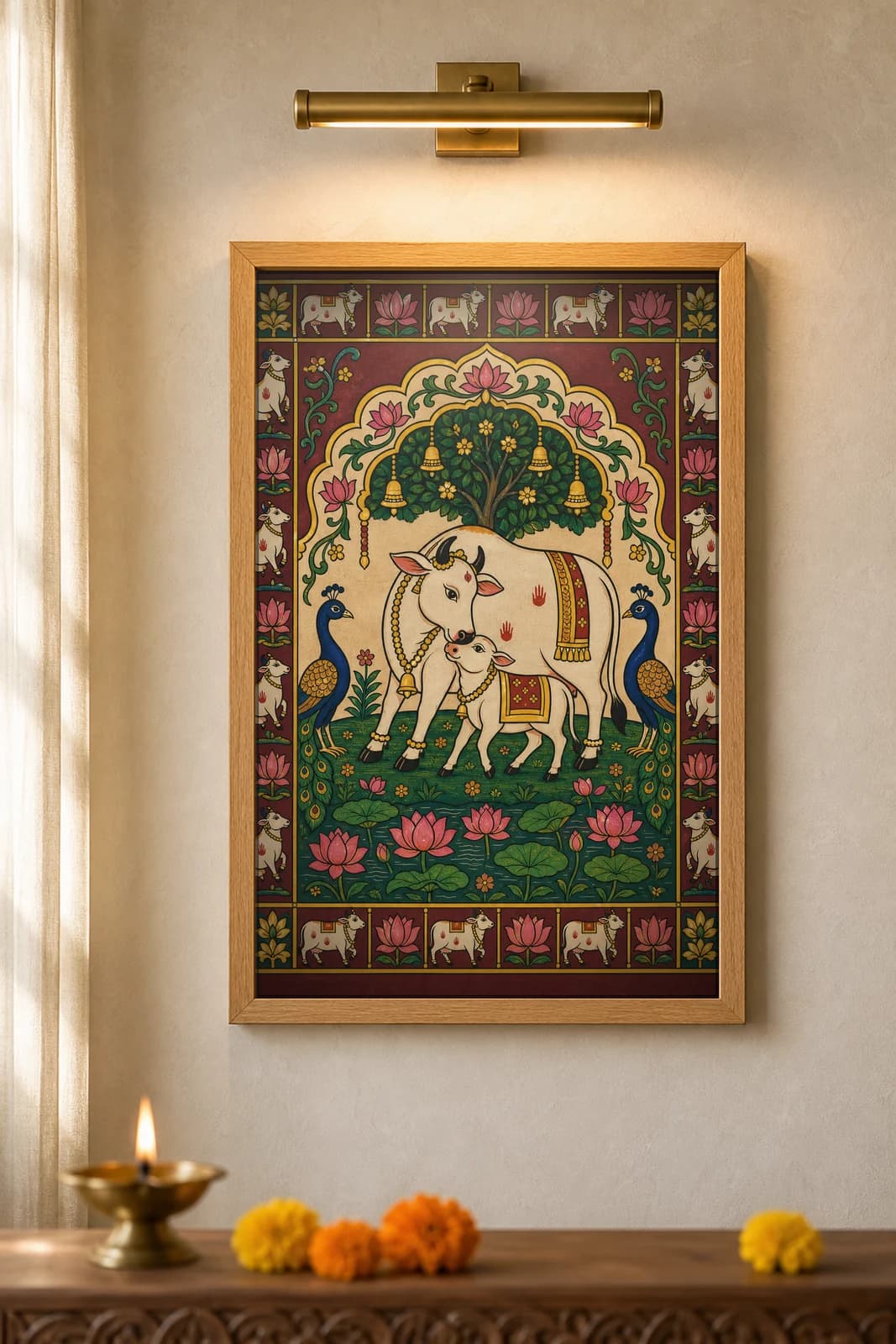
Gentle — 7 museum-grade prints that set the mood. Mata ni Pachedi means 'the cloth of the Mother Goddess' — a ritual shrine textile of the Vaghri / Devipujak ('worshippers of the Goddess') community of Ahmedabad, Gujarat. Historically barred from temples, the community painted the Goddess on cloth and carried their own portable shrine. Tulsi (holy basil) is revered in Vaishnav households as a form of the goddess and a daily seva, watered and circled each morning — a homely devotion close to the Pushtimarg (Vallabh) spirit of seva centred on Shrinathji, the child-Krishna of the Nathdwara haveli-temple in Rajasthan. A pichhwai (literally 'that which hangs at the back') is the painted cloth hung behind the deity to set the scene; here its grammar frames a household ritual. Krishna grew up a cowherd, and gau charan — taking the cows to pasture — is at the root of his name Gopala and of Pushtimarg (Vallabh) go-seva, the care of cattle that is inseparable from worship of Shrinathji, the cowherd child-Krishna of the Nathdwara haveli-temple in Rajasthan. As Venugopala he plays the flute that gathers the herd.