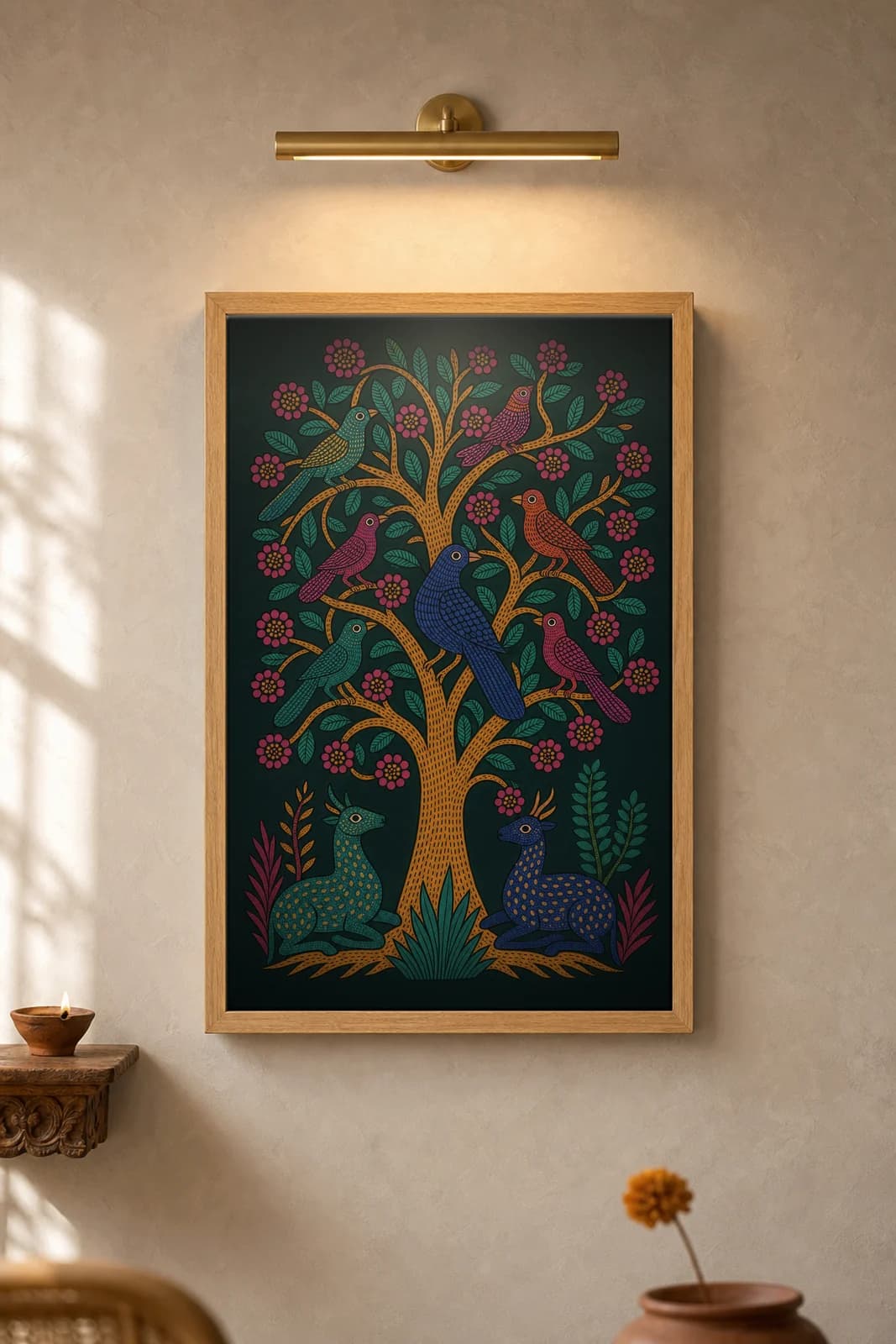
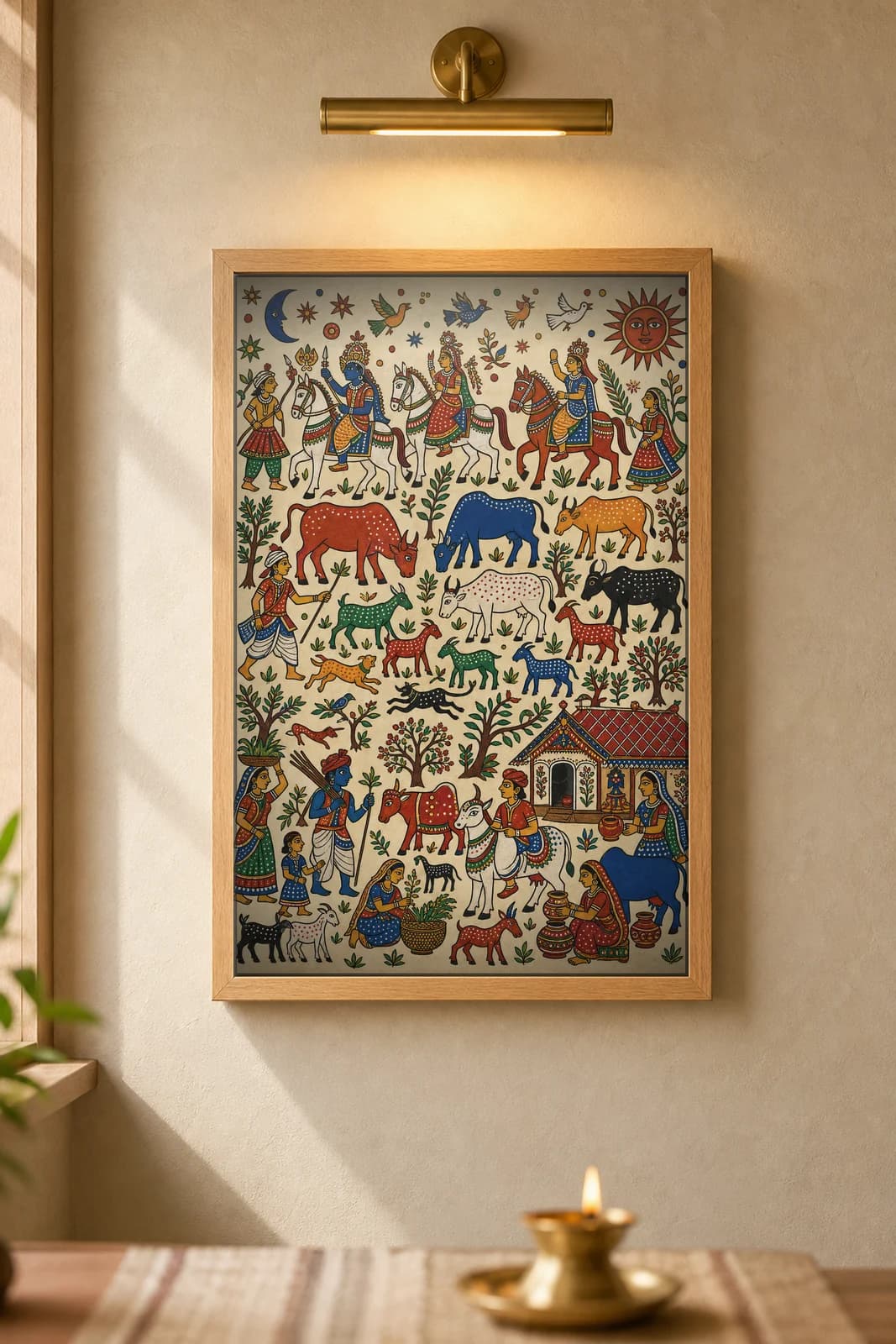
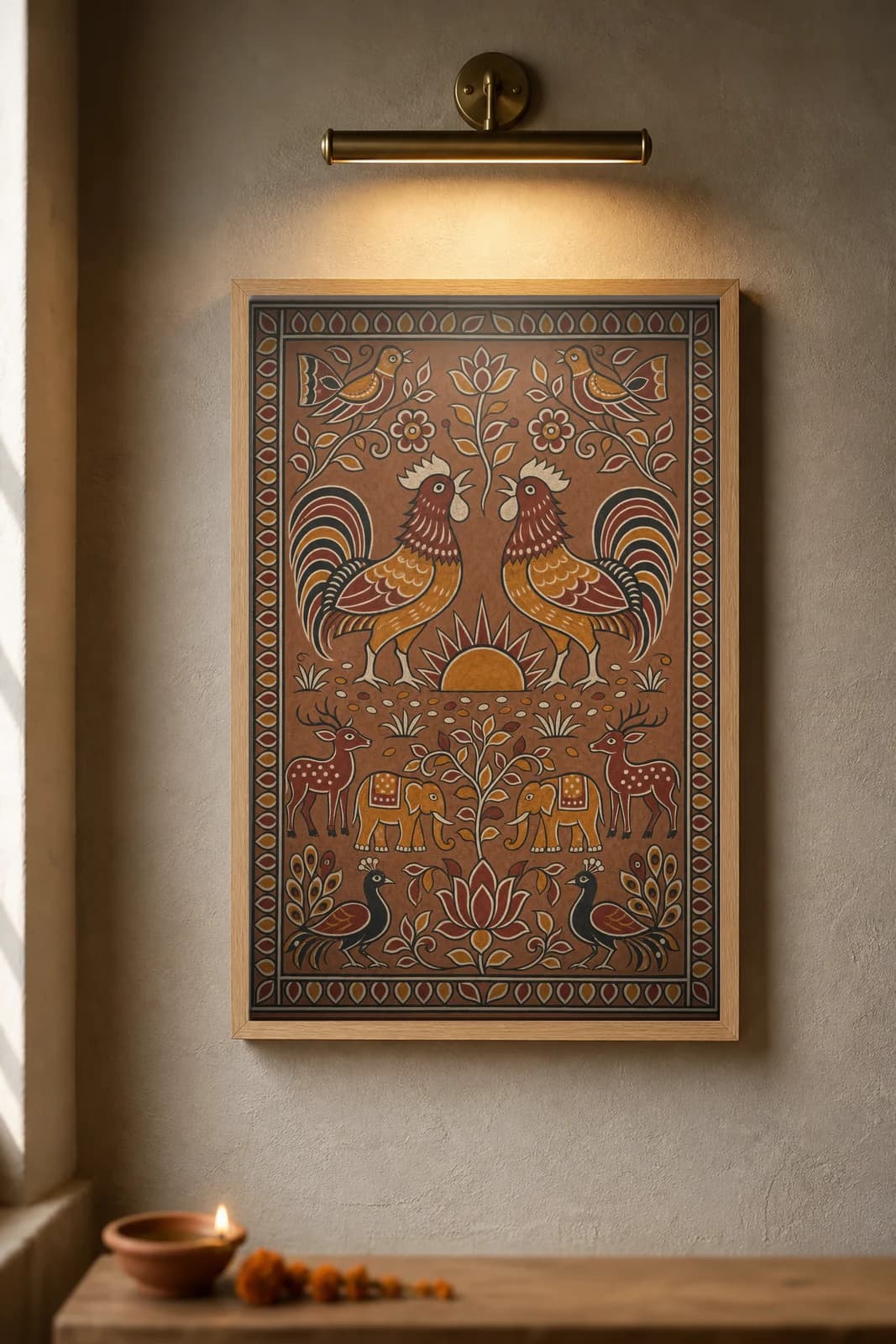
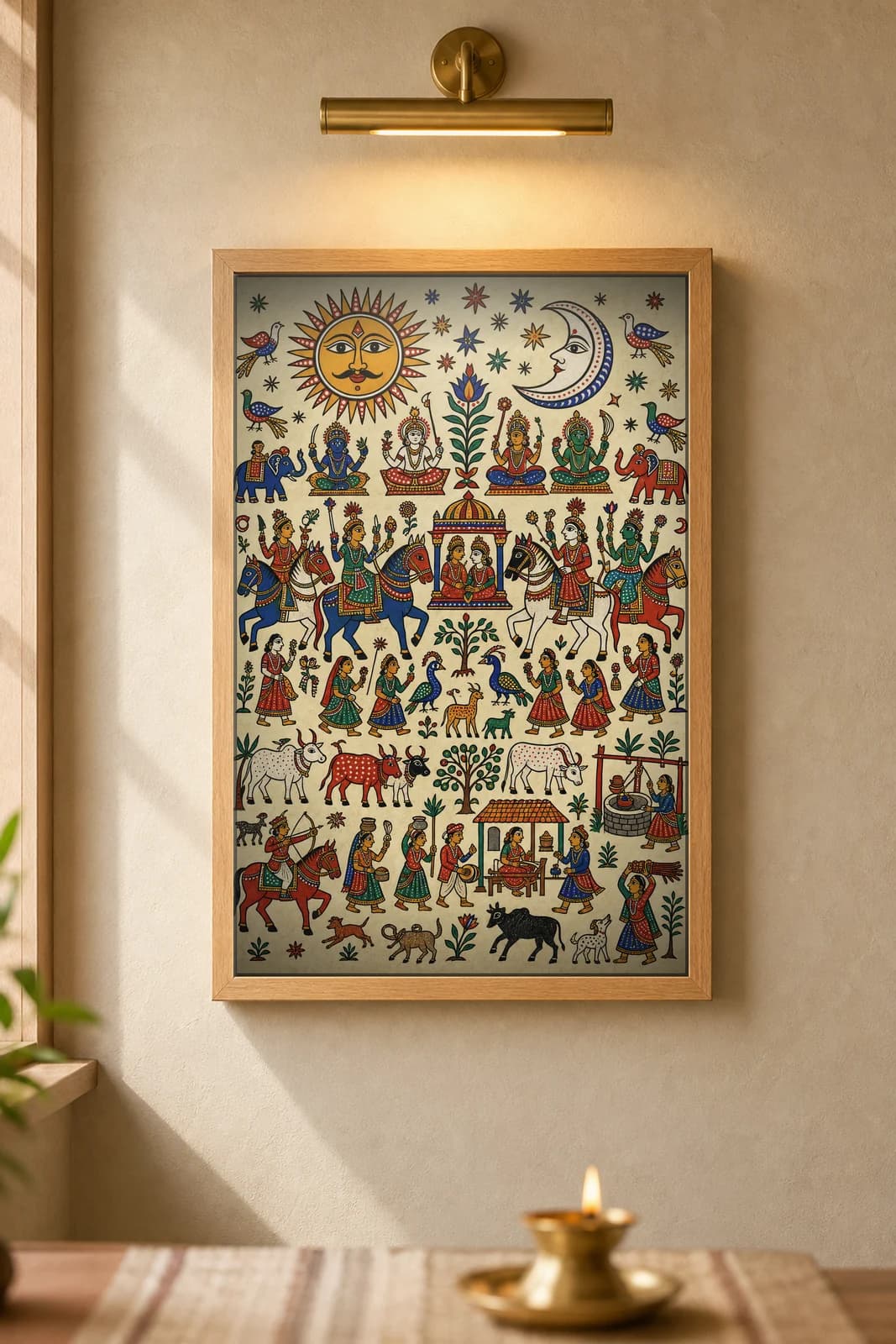
Cheerful — 4 museum-grade prints that set the mood. Gond painting comes from the Gond Adivasi communities of central India, with its best-known school formed by the Pradhan Gond of Patangarh and the wider Dindori region of Madhya Pradesh. The contemporary form is largely the legacy of Jangarh Singh Shyam (1962–2001), whose distinctive line-and-in-fill manner — every form bounded by a bold outline, then filled with rows of dots, dashes, commas and scales — became known as Jangarh Kalam and was carried on by his family and students. Pithora is the ritual wall-painting tradition of the Rathwa, Bhil and Bhilala Adivasi communities of Chhota Udepur in eastern Gujarat (and the adjoining belt of Madhya Pradesh and Rajasthan). The wall is vowed to Babo Pithoro and painted on the inner wall of the home as thanksgiving or to fulfil a wish; only the Lakhara — the priest-painter, also called the Gor — may execute the sacred wall, working to the chants of the badva. Sohrai is a harvest-season wall art of Hazaribagh district, Jharkhand, painted by women of tribal and Kurmi communities in natural earth pigments — manganese black, hematite red, kaolin white and ochre yellow — on a daubed mud wall to welcome cattle home after the rice harvest, around Diwali. Roosters, deer, elephants and peacocks are part of the everyday animal world Sohrai walls celebrate, and a crowing-cock-and-sun motif reads as the morning of the harvest season.