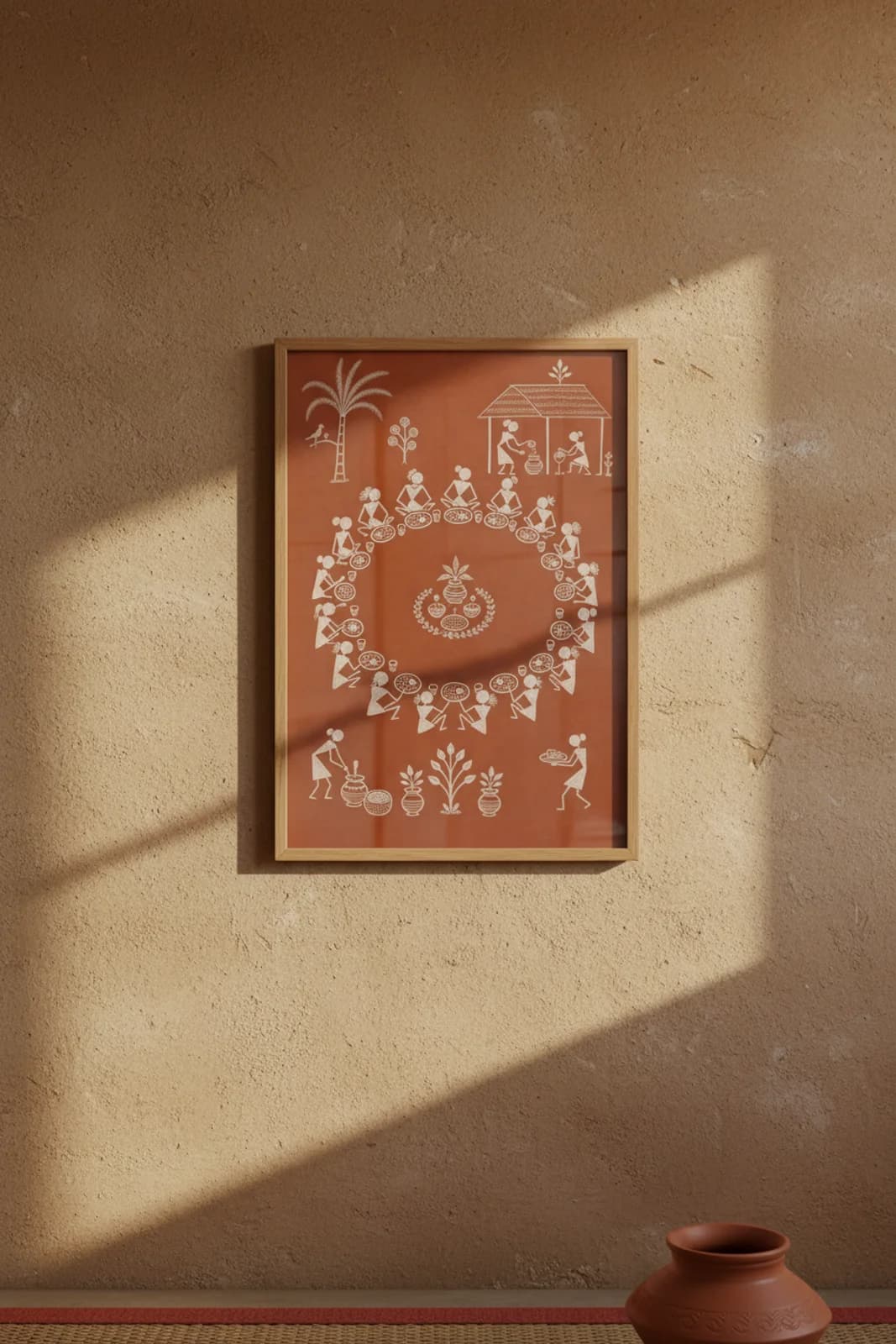
DESIGN BRIEF: communal-ring symmetry for a marriage feast subject — not tarpa standing dance, not chauk-central ritual square with Palghat Devi, not forest-scatter. Marriage feast in Palghar grammar means seated figures in a perfect circle sharing thalis — the communal meal that follows wedding rituals, drawn the way rice-paste walls once showed everyone eating together before the dance ring began. Communal-ring was the layout fix: sixteen triangle bodies face inward with circle plates and cylinder cups at equal spacing, kalash with five leaf sprouts as fertility centre-piece inside a semi-circular garland — harvest blessing vocabulary without painting the full lagnacha chauk. What we refused: standing tarpa dancers, concentric dance spiral, perspective depth on hut roof, multicolor food fills. What we kept legible: cook figures in upper hut pouring and stirring, lower stirrer with ladle, tray server walking toward ring, palm and bird for village nature, three potted shrubs for domestic ground. Light density (~45% fill) preserves ochre breath between seated figures — the empty ring space is communal silence before the first bite.
 WALLIMILIST