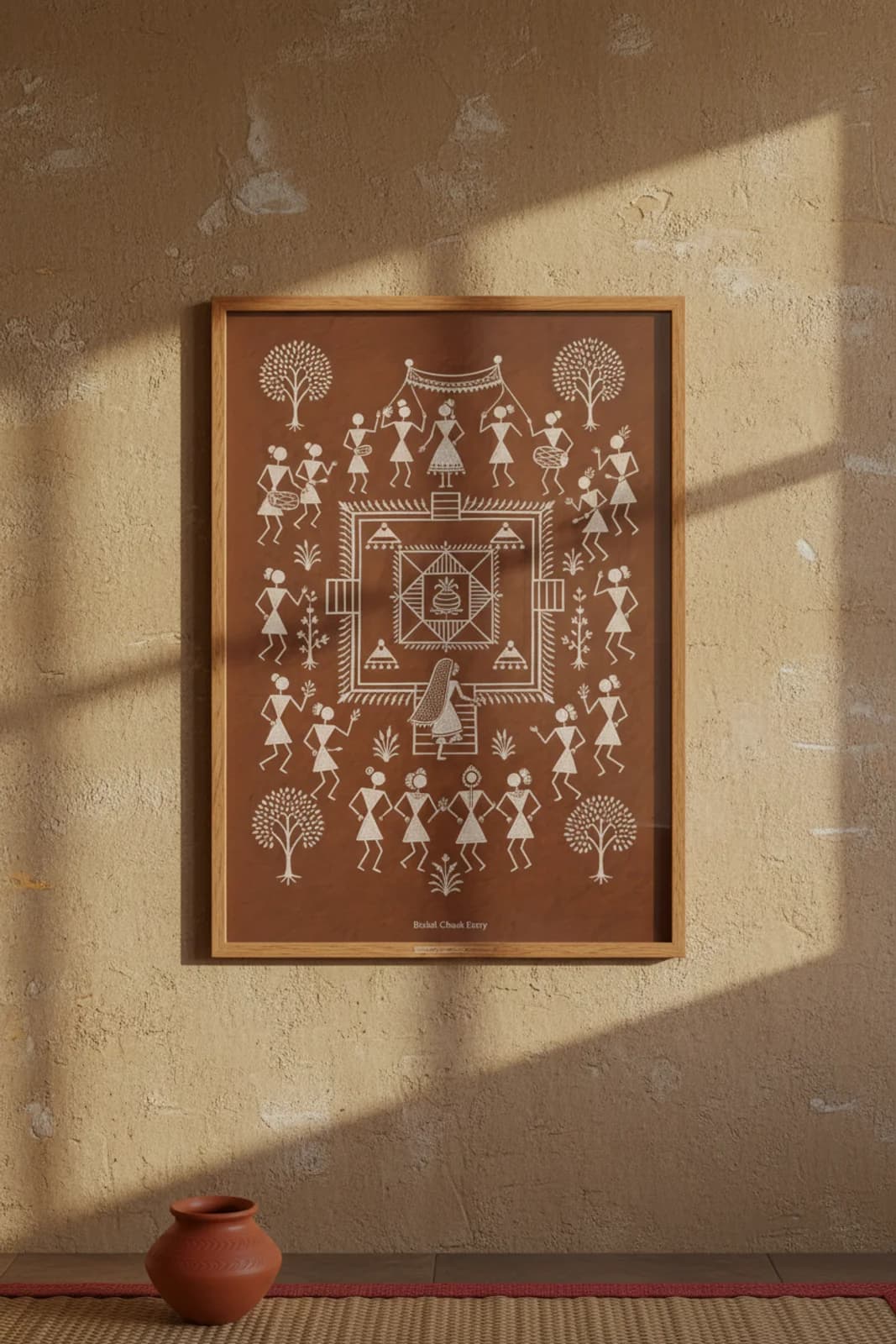
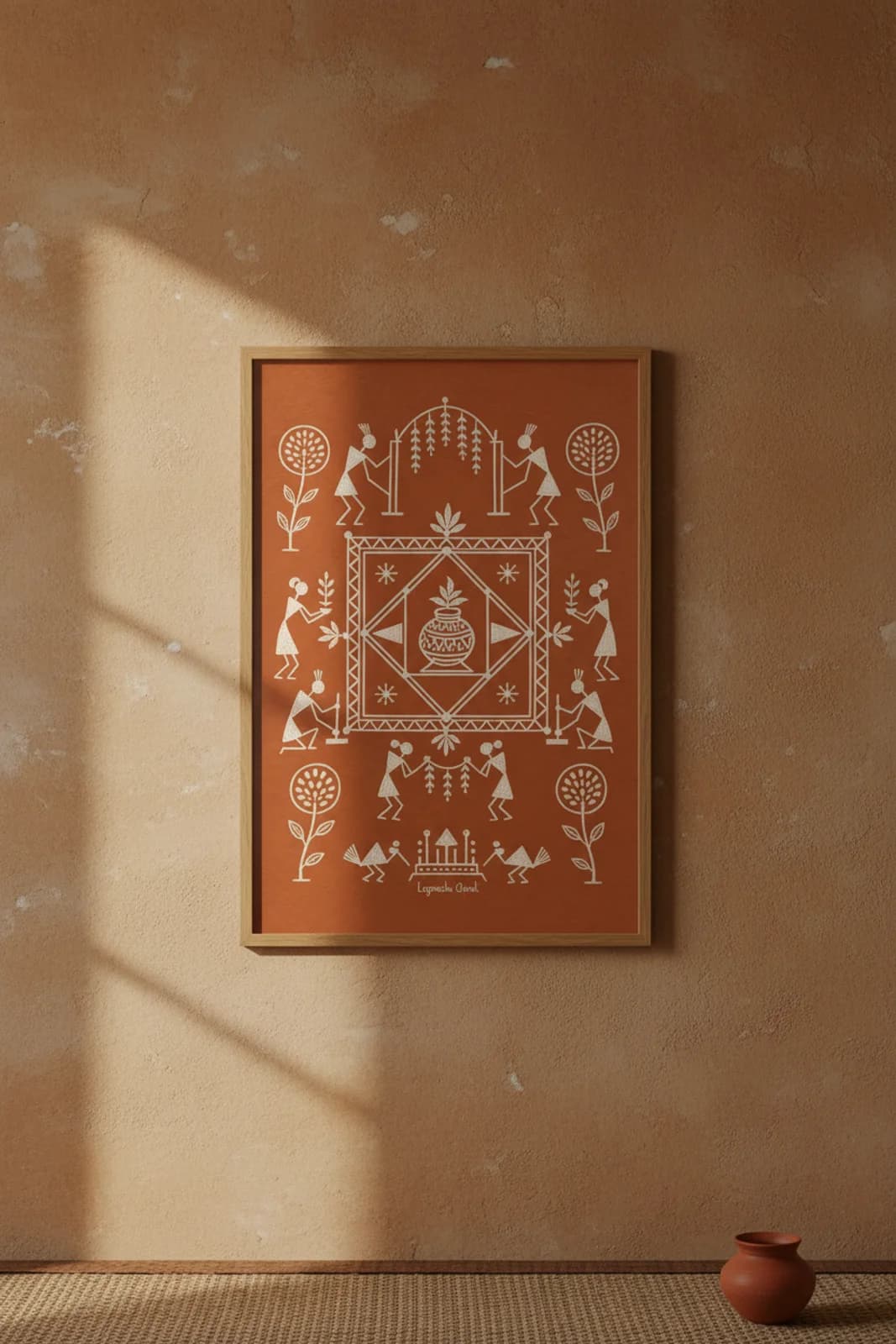
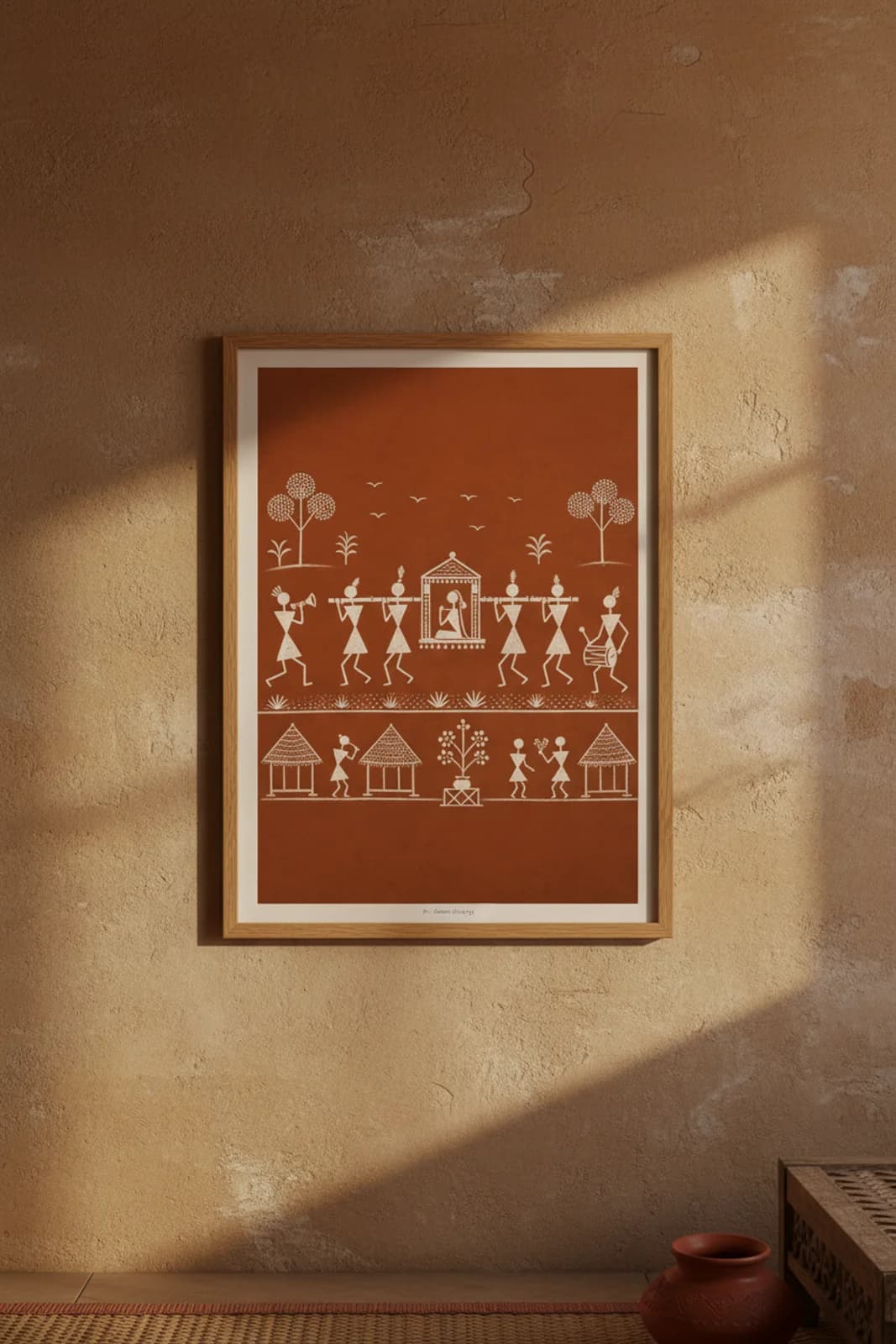
The brief was chauk-central marriage ritual, not the marketplace Warli poster that stacks sun, moon, huts, spiral dancers, and a random peacock on every ochre wall. Bridal entry into lagnacha chauk is a layout problem: the square must dominate as sacred enclosure while the bride remains a moving figure at the threshold, not a static icon trapped inside Palghat like a postage stamp. Chauk-central symmetry was the fix — nested squares with four gated stair entrances let the composition read as architecture first and narrative second, the way Suvasini painters build Chaukat before figures arrive. What we refused: tarpa circle dance (this is wedding geometry, not harvest ring), perspective depth on the shamiana canopy, multicolor Madhubani fills, and dense all-over pattern that would bury the ochre ground breath classical Warli needs. What we kept legible: triangle-fringe chauk border, kalash sprout at inner centre, bride's dotted ghunghat on the bottom stair, drummers and shamiana band across the top register, linked-hand witness row at the base, and four dot-canopy trees pinning the corners like village guardians. Light-mid density (~50% fill) leaves enough geru wall visible that the chauk feels drawn on mud, not printed on poster stock.
 WALLIMILIST