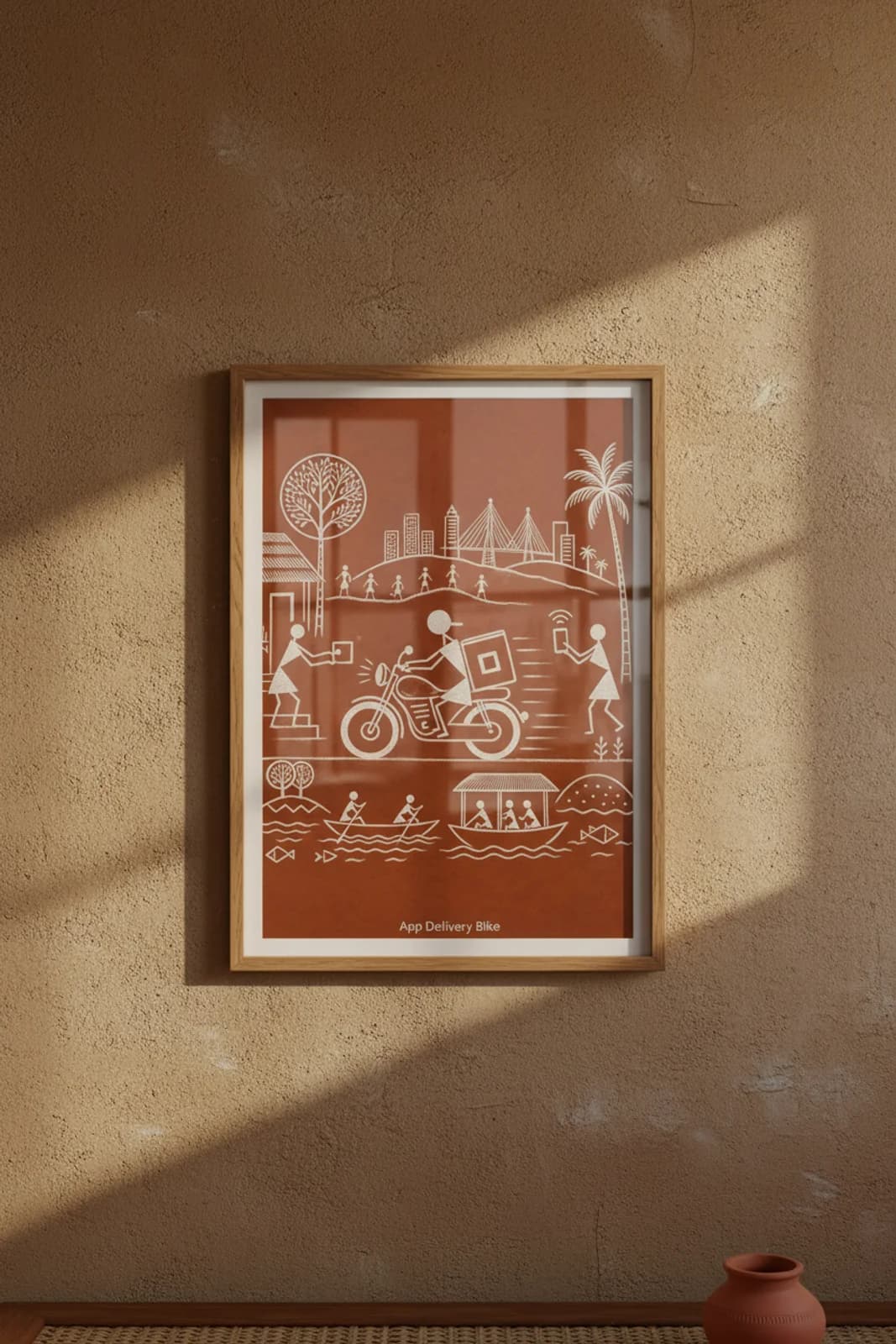
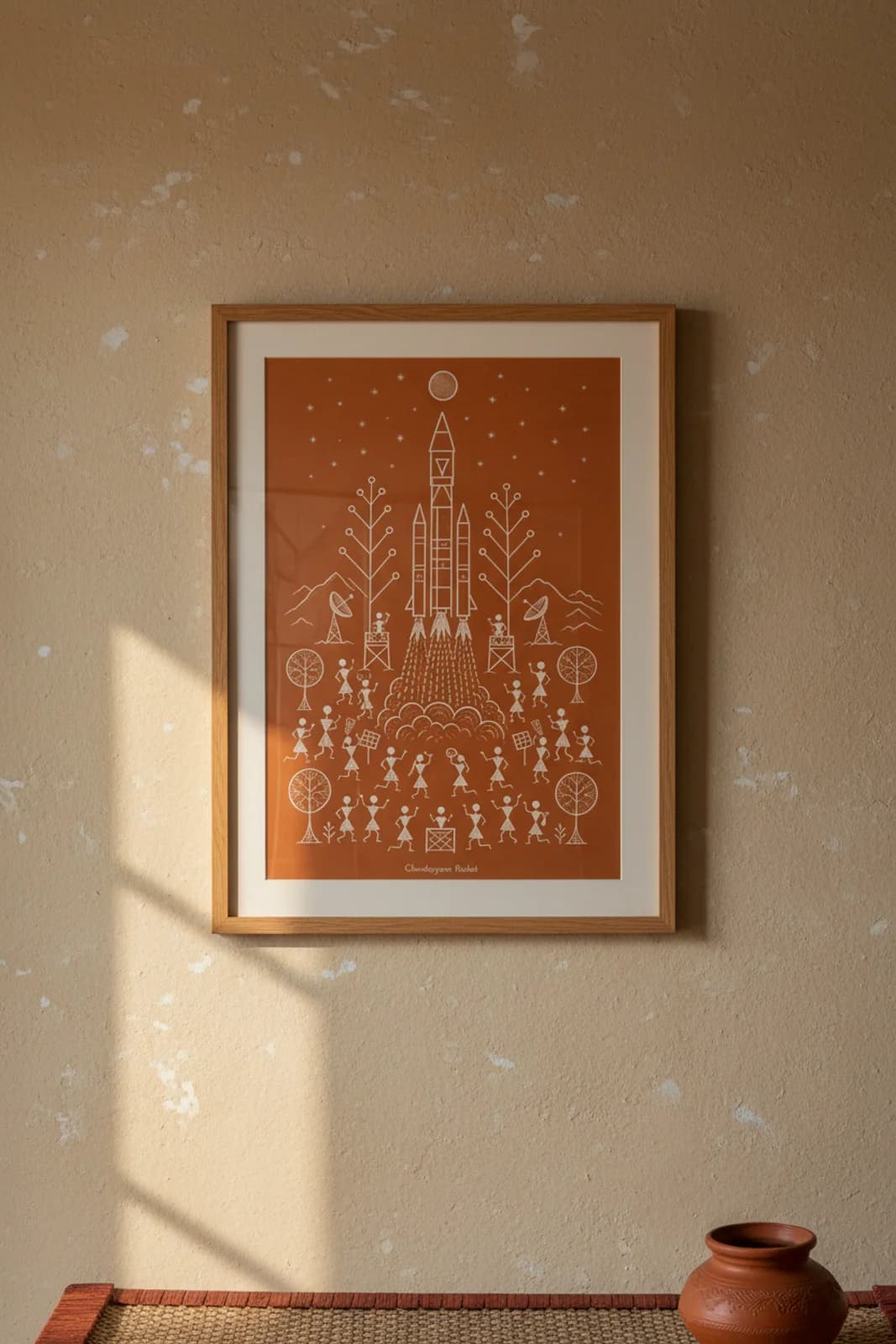
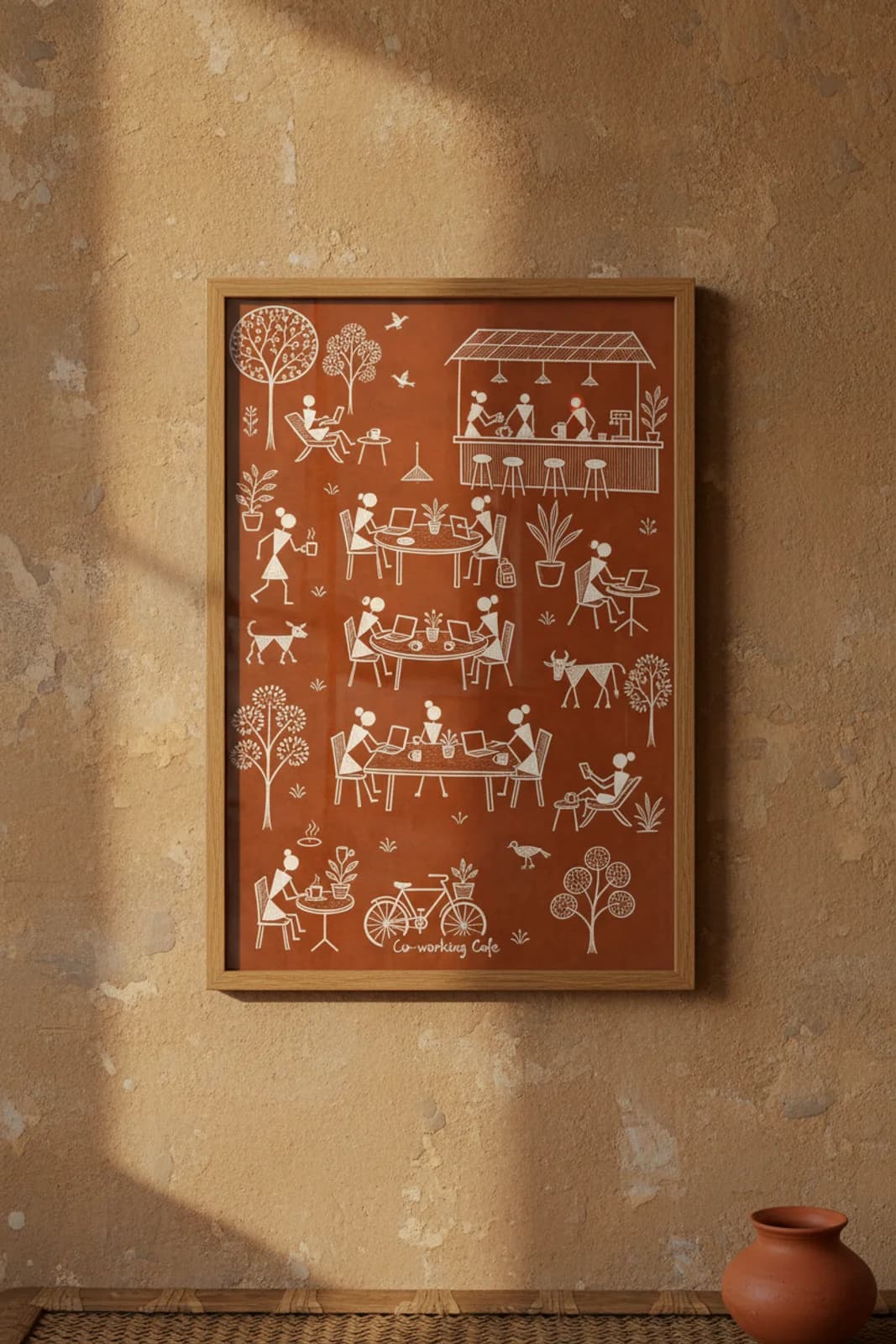
White Rice Paste Line — 3 museum-grade prints in this palette. Warli painting is a tribal mural tradition of the Warli (Varli) Adivasi community in the North Sahyadri Range of Maharashtra and adjoining Gujarat — villages in Palghar, Jawhar, Dahanu, Talasari, and Mokhada where rice-paste white pigment on red ochre cow-dung or geru-coated walls recorded harvests, hunts, weddings, and daily labour. Women historically painted lagnacha chauk and dev chauk ritual squares for nuptial and festival occasions; tarpa circle dance appears in harvest-eve scenes with musicians at the centre — motifs this fusion piece deliberately omits because the subject is urban remote work, not ritual dance. Warli painting comes from the Warli (Varli) Adivasi communities of the North Sahyadri range in Maharashtra — Palghar, Dahanu, Jawhar, Talasari, and adjoining Gujarat — where women traditionally painted interior and exterior mud walls with white rice-paste pigment mixed with water and gum, using a bamboo stick brush on cow-dung and geru-coated surfaces. Motifs favour daily life, farming, animals, and ritual occasions rather than mythic tableaux; geometric grammar reduces the world to circles (heads, sun, moon, tree crowns), triangles (bodies, roofs, mountains), and squares (chauk ritual frames).