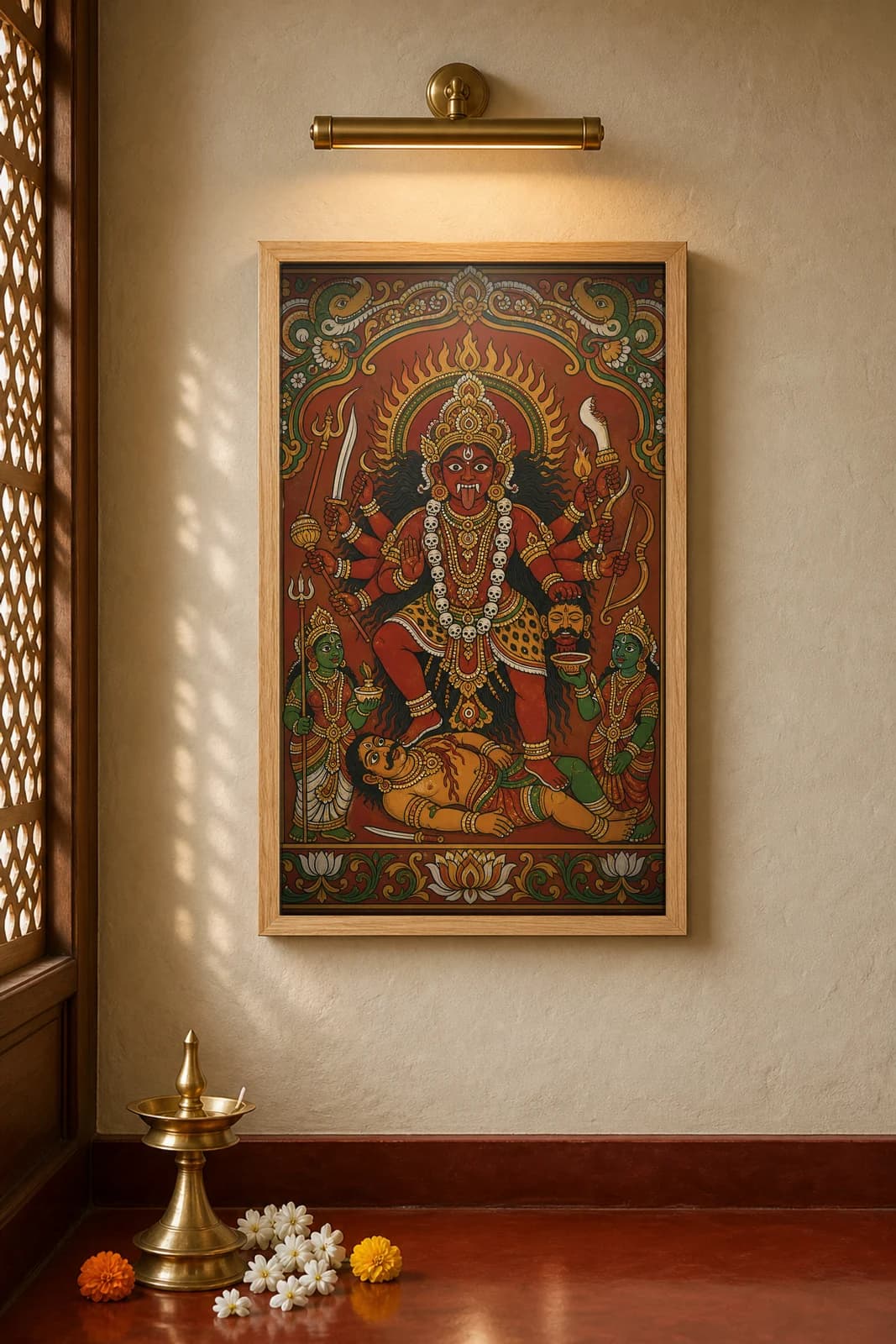
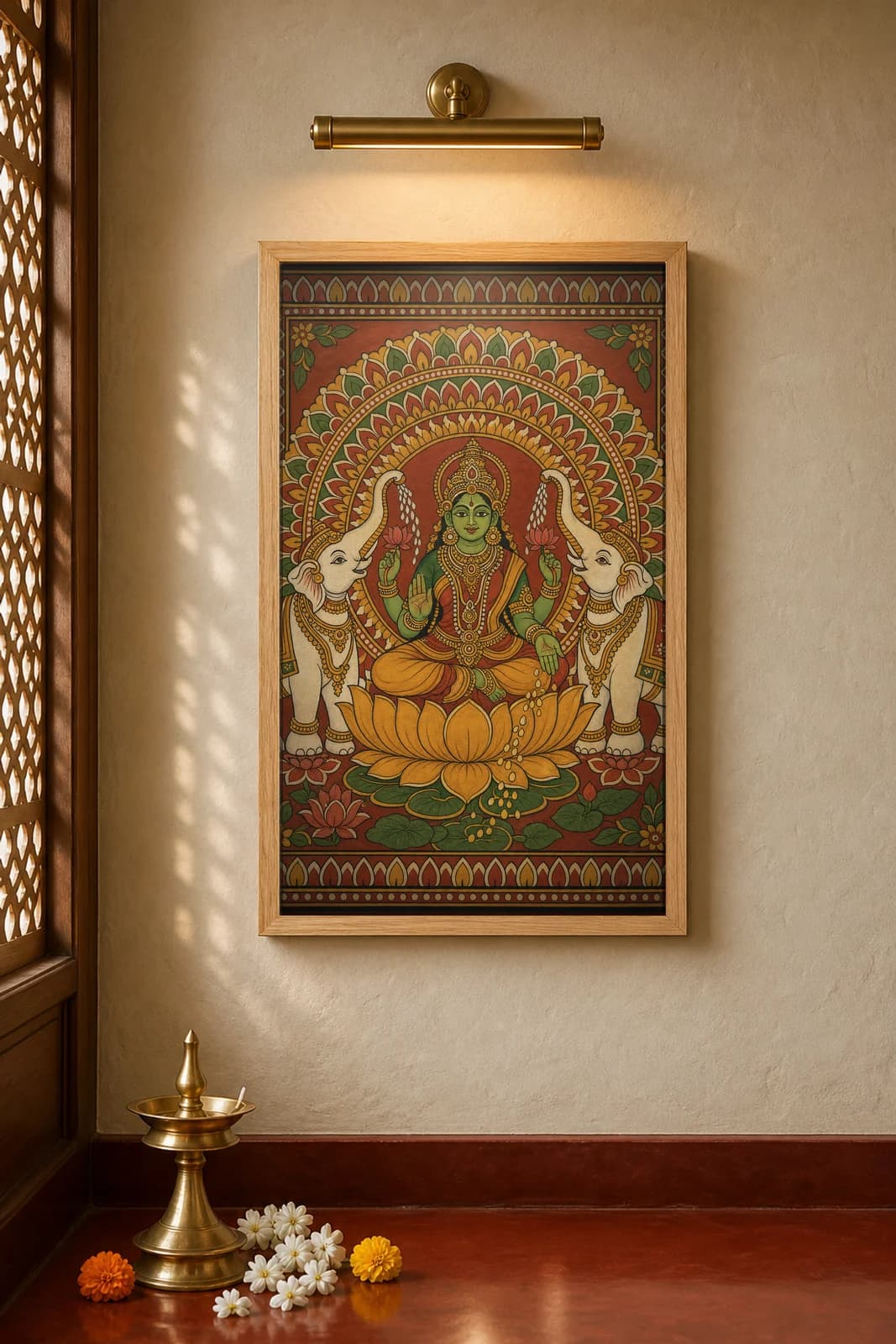
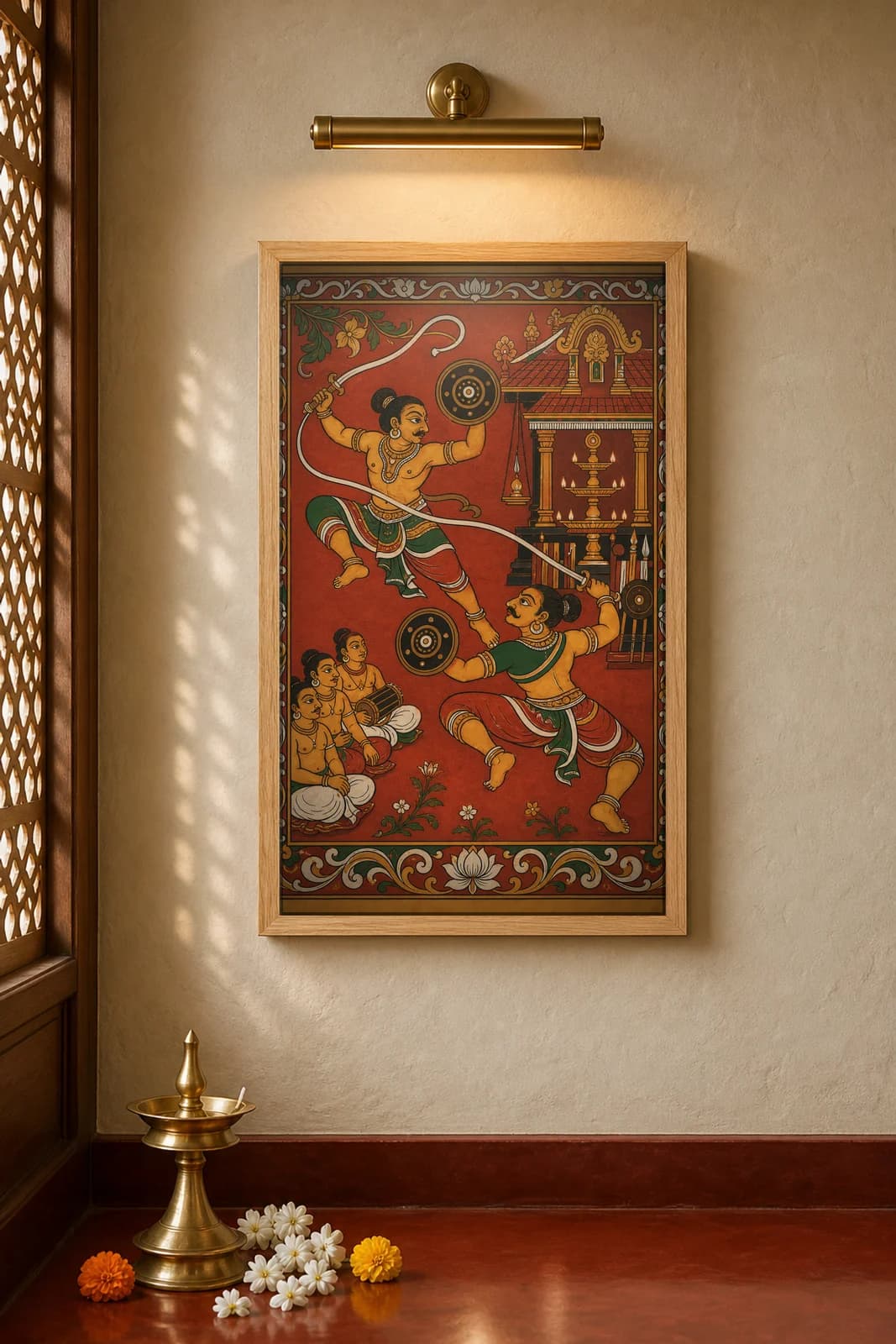
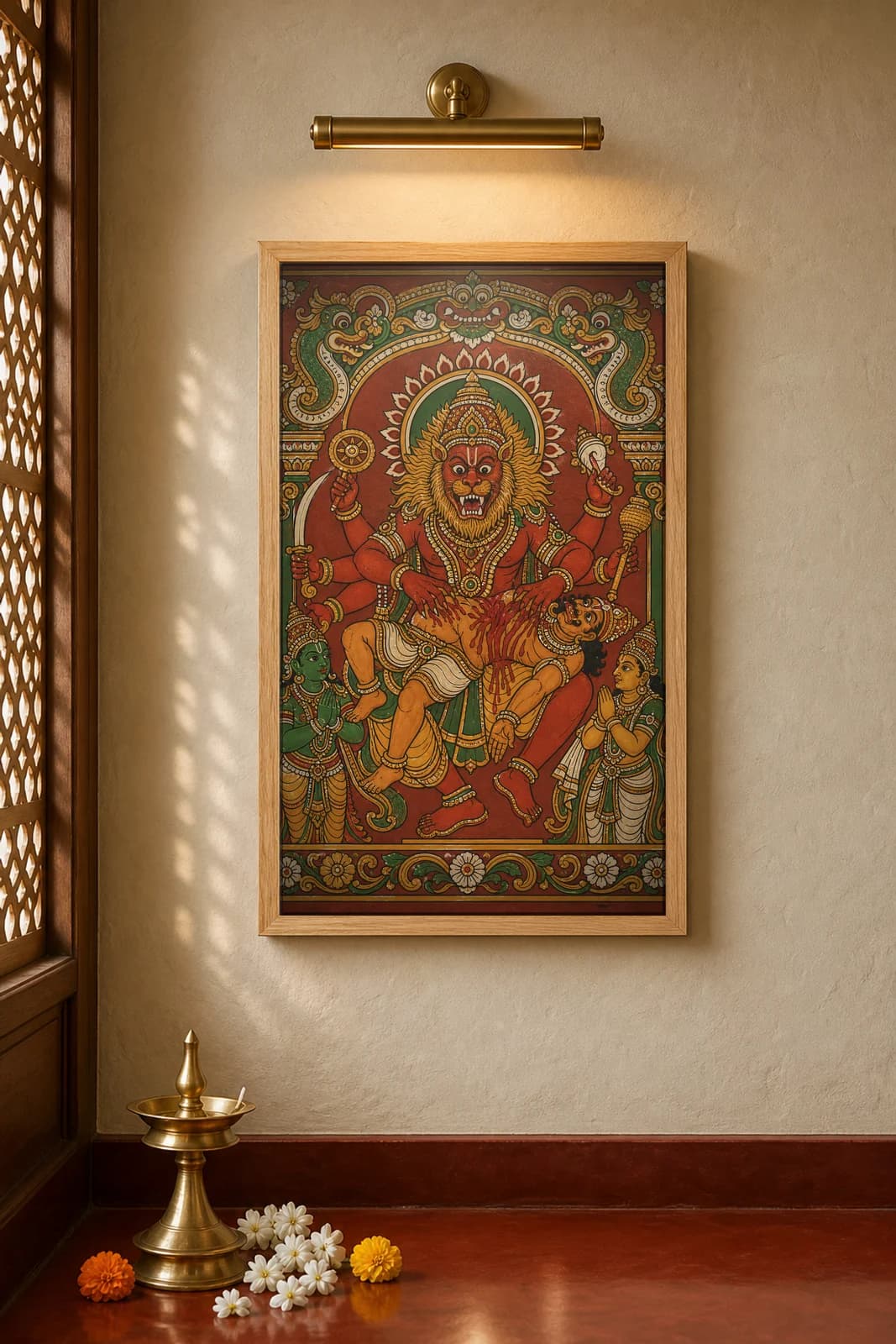
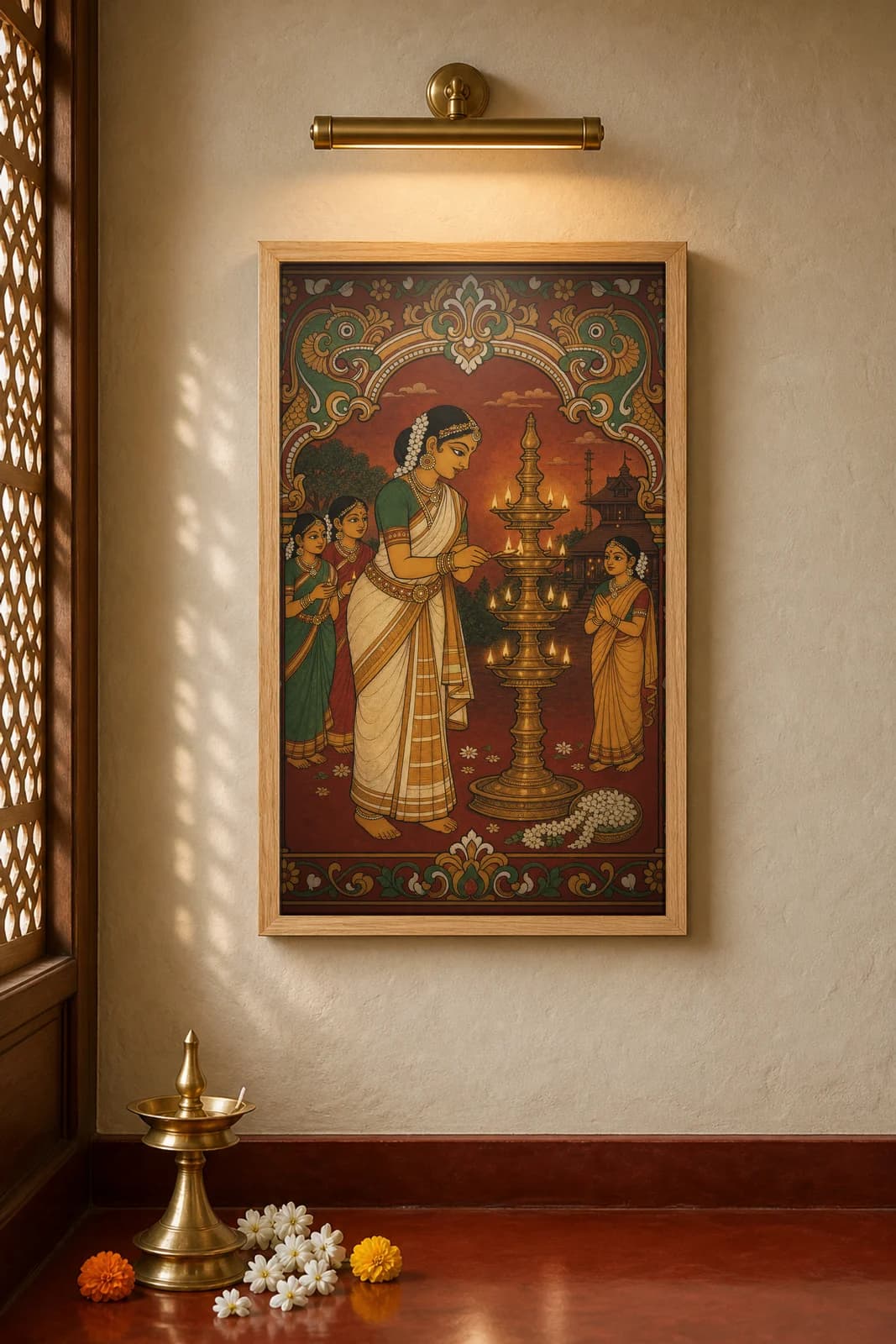
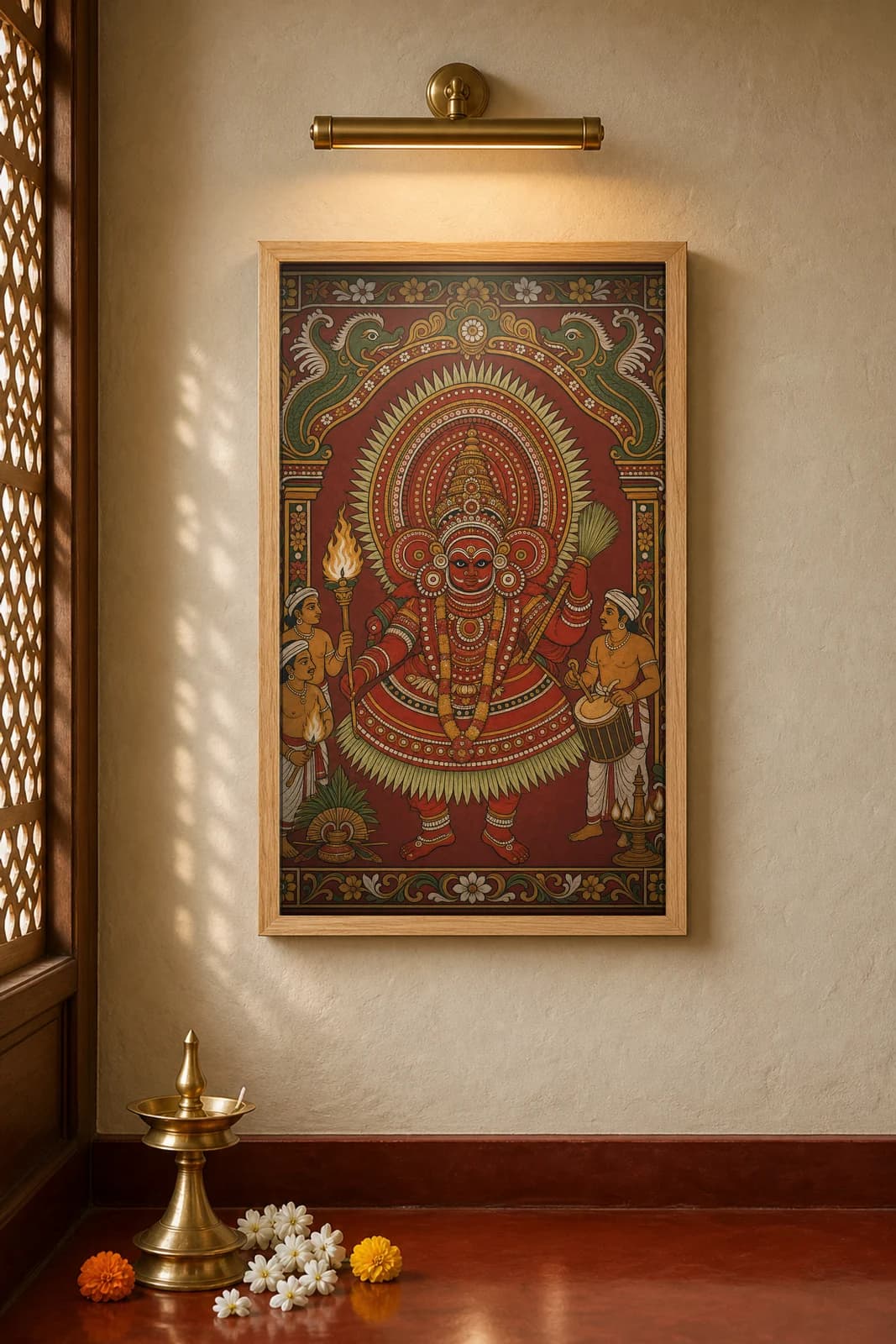
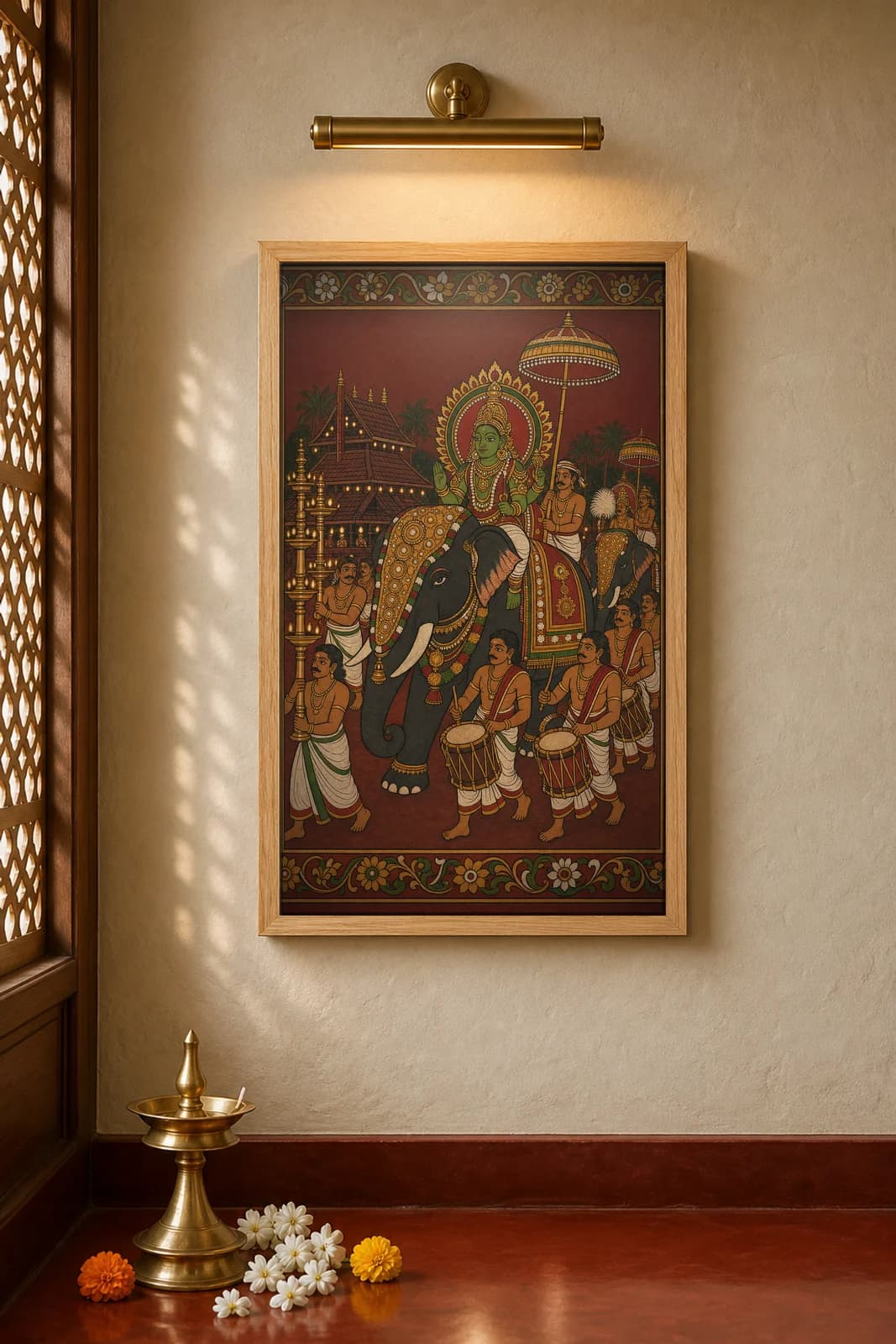
Temple Red — 8 museum-grade prints in this palette. Bhadrakali — the fierce form of the Goddess born to slay the demon Darika — is the presiding deity of countless Bhagavati kavus across Kerala, and her myth is enacted in temple rituals and in Mudiyettu, a ritual theatre recognised by UNESCO. In bhitti chitra, Kerala's temple-mural tradition (flourishing roughly 16th–19th century and still painted today), she is shown red-bodied with a flame crown, protruding tongue and skull garland. Kalaripayattu, practised in the kalari training pit, is among the oldest martial traditions of India, native to Kerala and combining strikes, leaps, weapons and a deep link to healing and devotion — training often begins with obeisance at the kalari's shrine lamp. This print sets a sword-and-shield bout inside bhitti chitra, Kerala's temple-mural tradition that flourished roughly from the 16th to 19th century and is still painted today: flat panchavarna pigments (red, yellow, green, black, white over an ochre or red ground), a bold lamp-black outline and the school's elongated lotus-shaped eyes. Gajalakshmi — Lakshmi flanked by elephants who anoint her with water from raised pots — is one of the most auspicious forms of the goddess of fortune and abundance, an ancient motif across Indian temple art. Here she is painted in bhitti chitra, Kerala's temple-mural tradition that flourished roughly from the 16th to 19th century and is still painted today, in its ornamental-mandala mode: flat panchavarna pigments (red, yellow, green, black, white over an ochre ground), a bold lamp-black outline, the radial lotus-mandala prabha and the school's elongated lotus-shaped eyes.