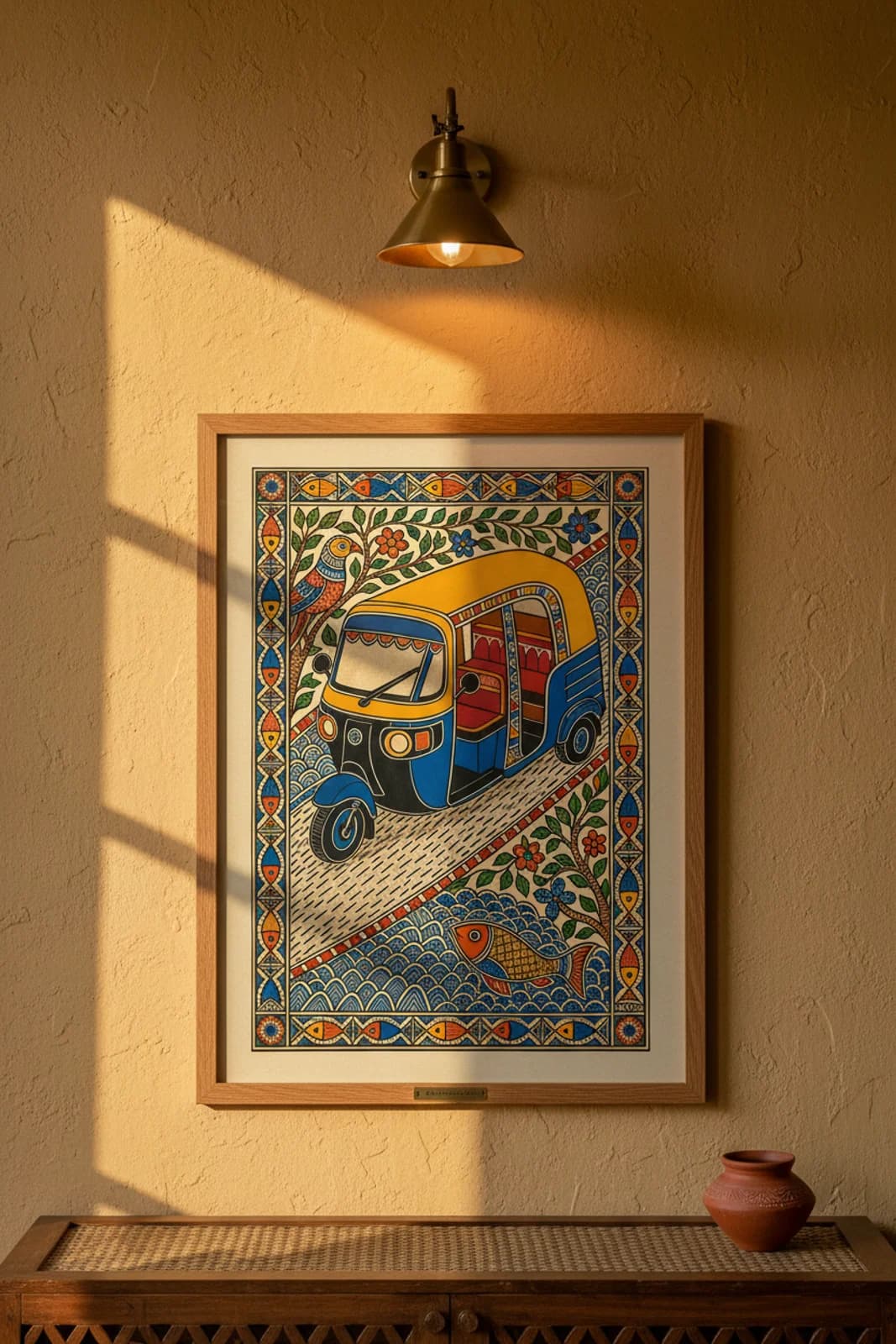
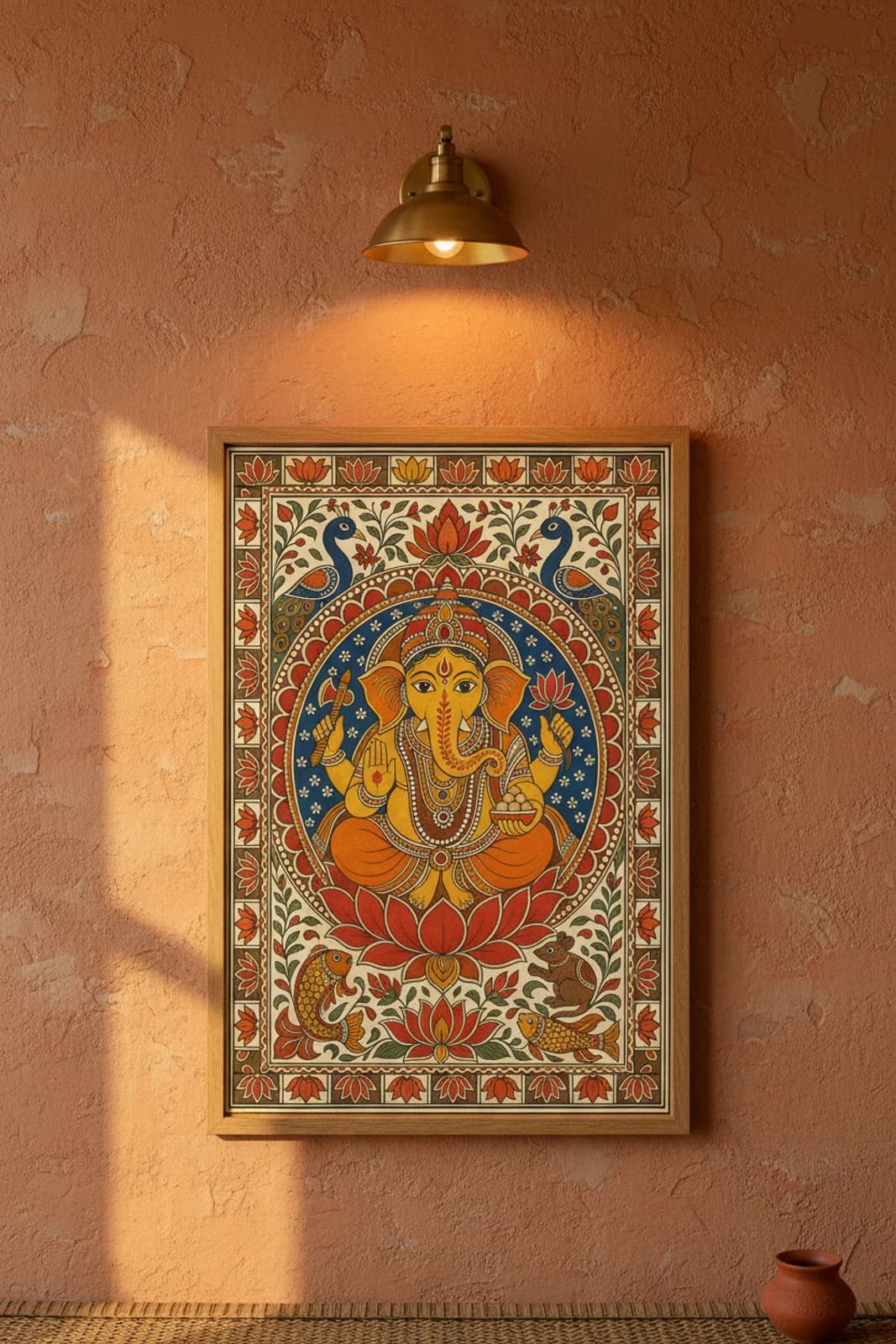
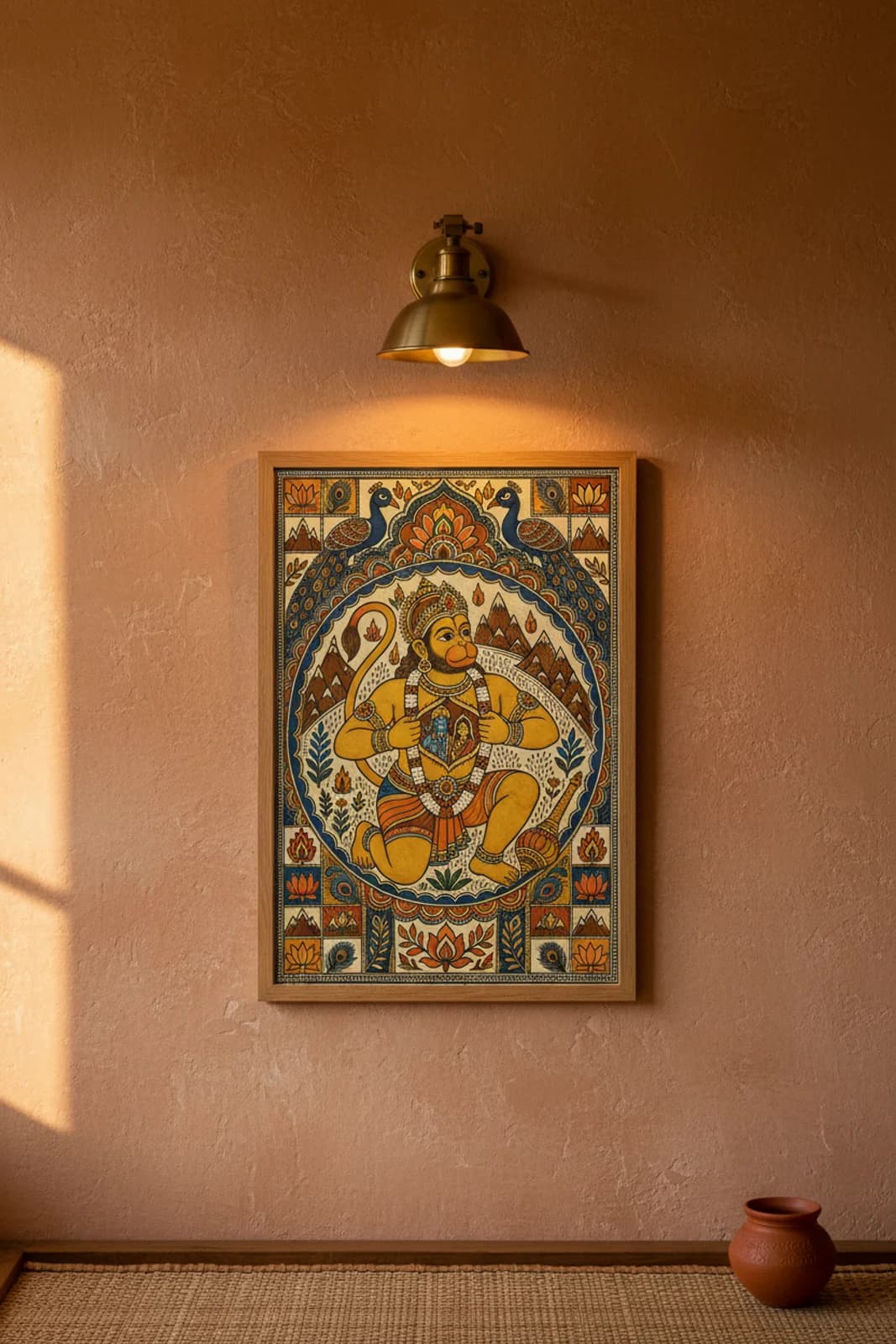
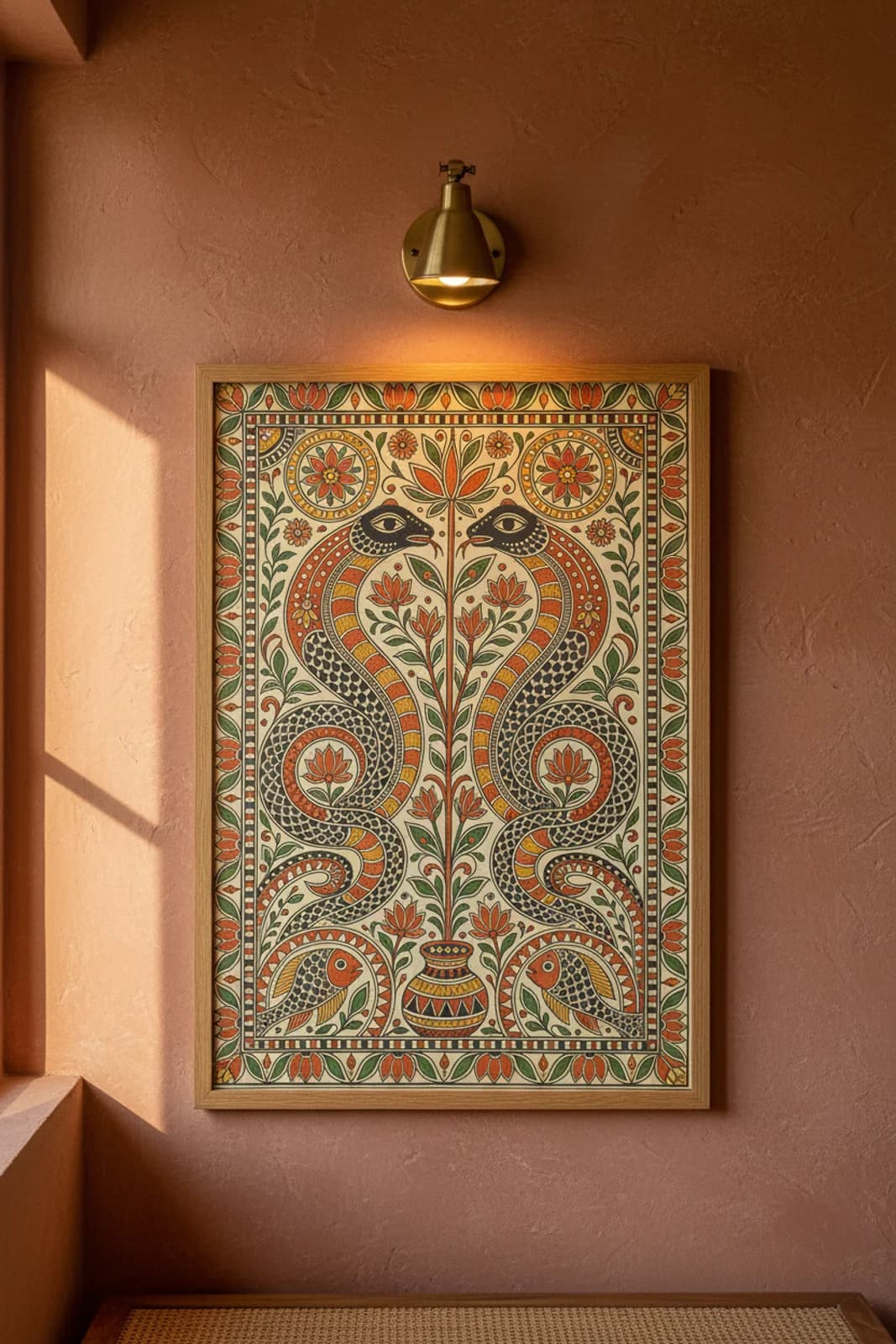
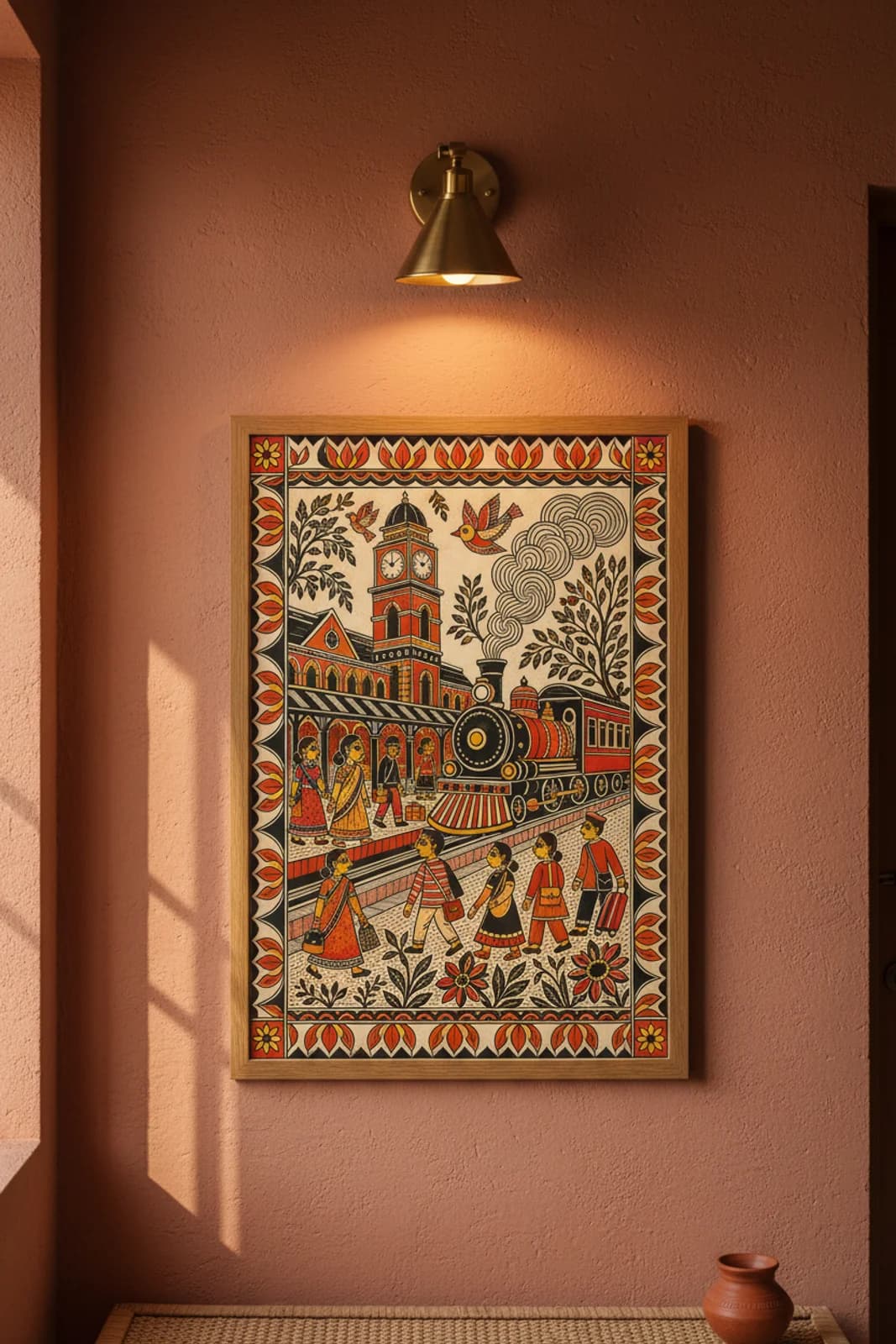
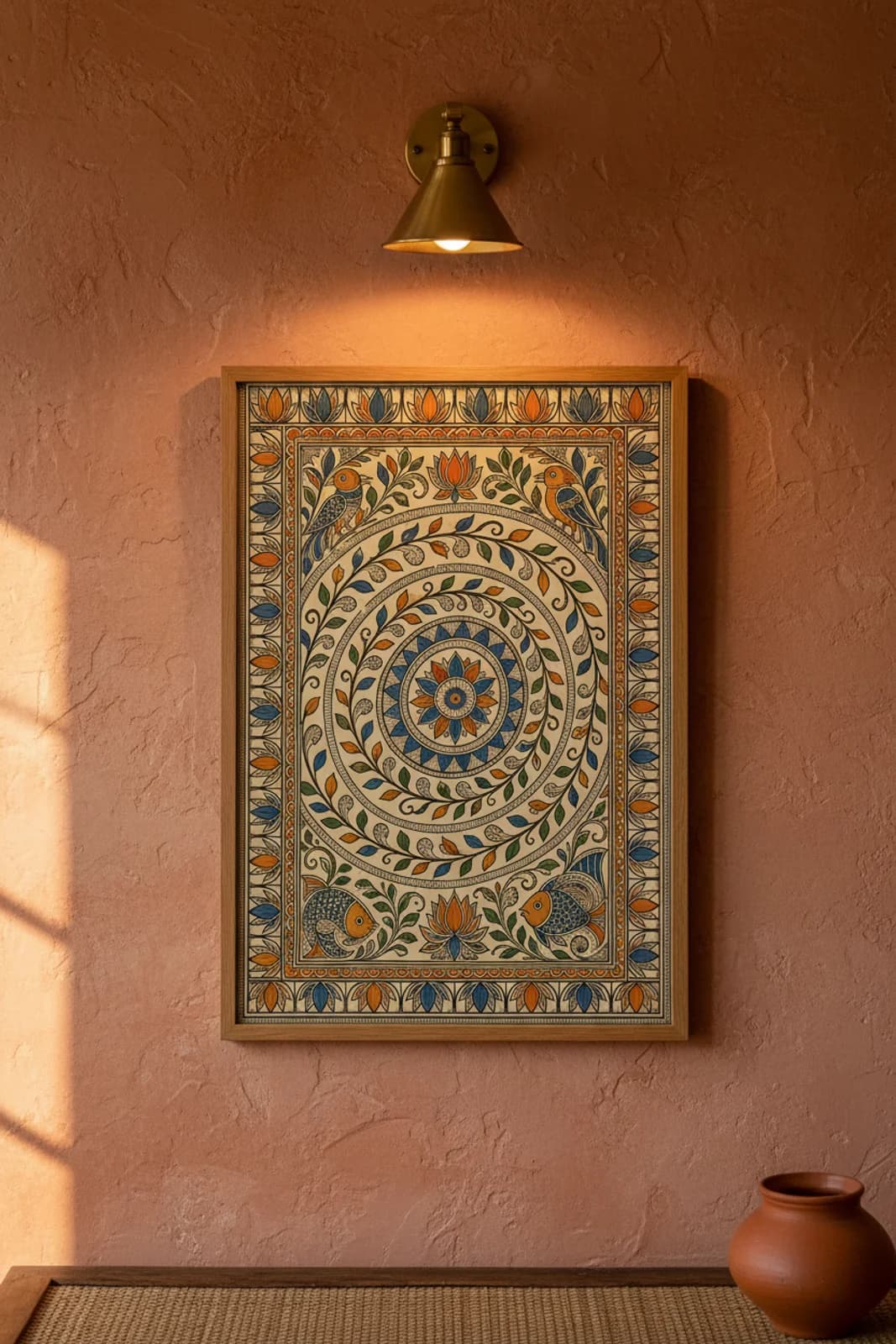
Forest Green Accent — 8 museum-grade prints in this palette. Madhubani — Mithila painting from the Madhubani district of Bihar and adjoining Nepal — traditionally adorned courtyard and interior walls for weddings, festivals, and seasonal rites, with knowledge passed matrilineally among Brahmana, Kayastha, and other community lineages. William G. Kohbar — also called puren in Kayastha households — is the Madhubani style tied to the nuptial chamber (kohbar ghar) where Maithil bride and groom spend their first nights after marriage. Women in villages including Ranti, Jitwarpur, and Madhubani town traditionally painted these walls with cow-dung and mud base coats, rice-paste line, and natural pigments — vermillion for auspicious union, ochre from turmeric or geru, lampblack from soot. Bharni — from the Hindi word for filling — is the Madhubani tradition associated with Brahmin women painters who flooded enclosed outlines with vibrant flat colour: vermillion, ochre, indigo, and lampblack on cream or cow-dung-washed grounds, distinct from Kayastha Kachni line-only panels and Dusadh Godna tattoo dot grammar. On classical walls Bharni rendered festival deities, wedding processions, and village harvest scenes; on paper it became the chromatic discipline of artists like Sita Devi after the 1960s famine-era transfer from mud-wall ritual to market craft.