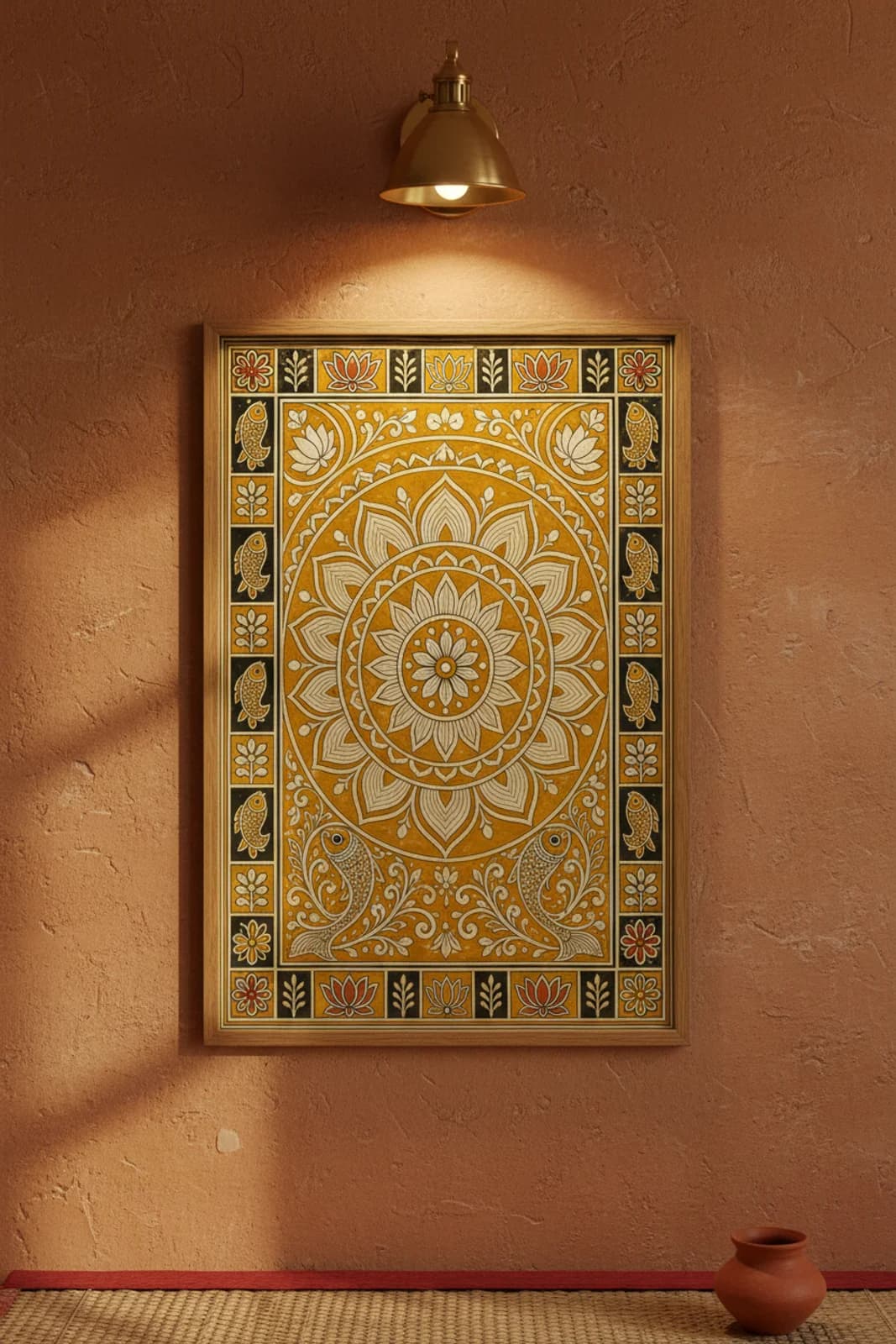
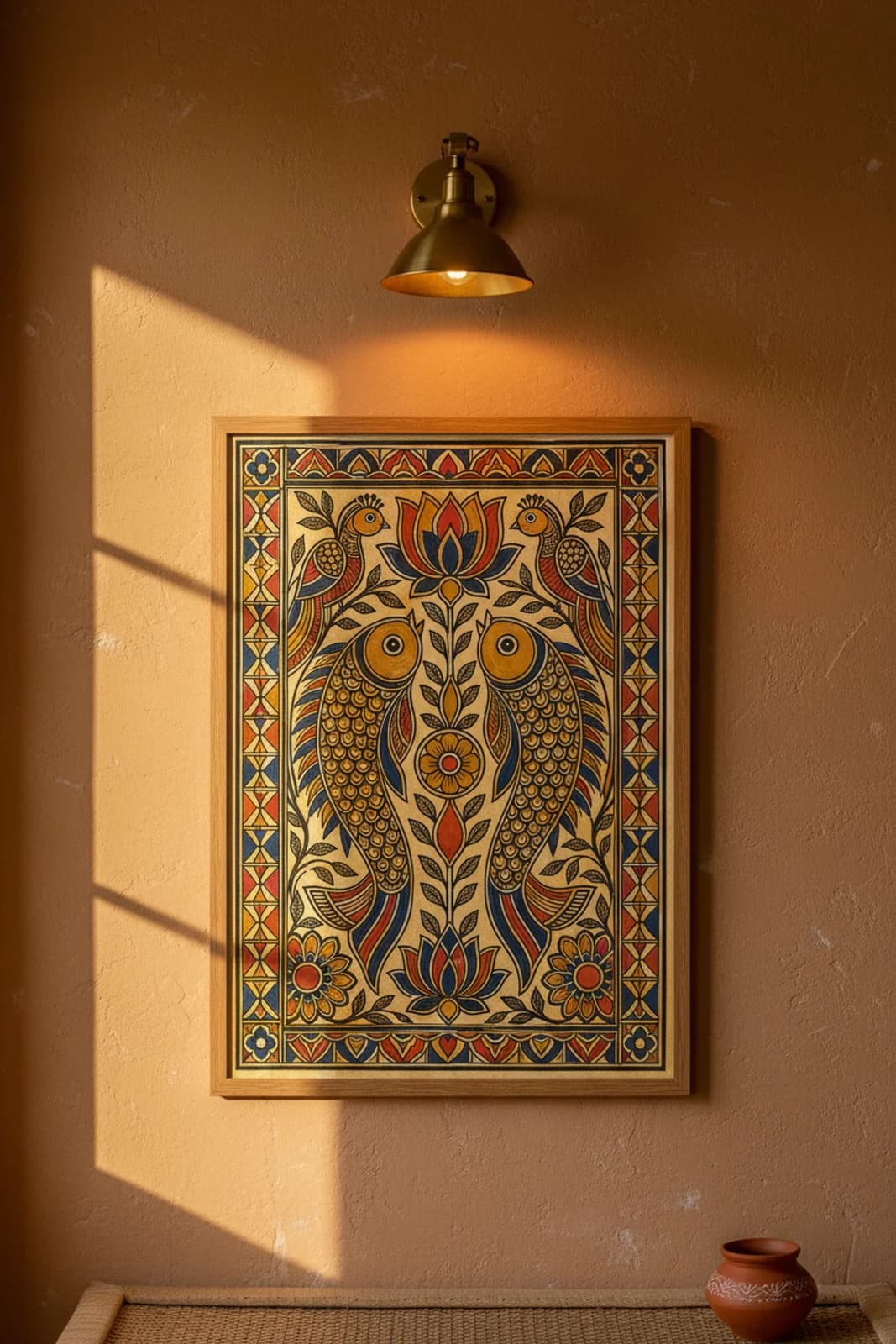
Mithila Painting Wall Art — 2 museum-grade prints on the theme. Aripana — also spelled Aripan — is ritual floor painting from the Mithila region of Bihar and adjoining Nepal, traditionally executed by women known as aripana deniharis before puja, weddings, thread ceremonies, and seasonal vratas. The surface is prepared with cow-dung wash; designs are drawn freehand with fingers dipped in pithar, a wet paste of soaked and ground rice, often finished with dots of sindur vermillion. Geru — also spelled geroo — is a natural iron-oxide ochre pigment (hematite) used across Indian folk traditions as both colour and wall preparation: in Mithila villages, cow-dung and geru washes once coated mud walls before ritual painting, creating the warm rust-brown ground against which lampblack and rice-paste white performed. Art historian Neel Rekha and earlier writers including Pupul Jayakar classify Geru as one of the distinct Madhubani style families that emerged when women artists moved from ephemeral wall work to paper in the 1960s–70s — characterised by strong black lines, minimal ornament, and ochre-dominant palettes, distinct from Kayastha Kachni line density and Brahmin Bharni colour fill.