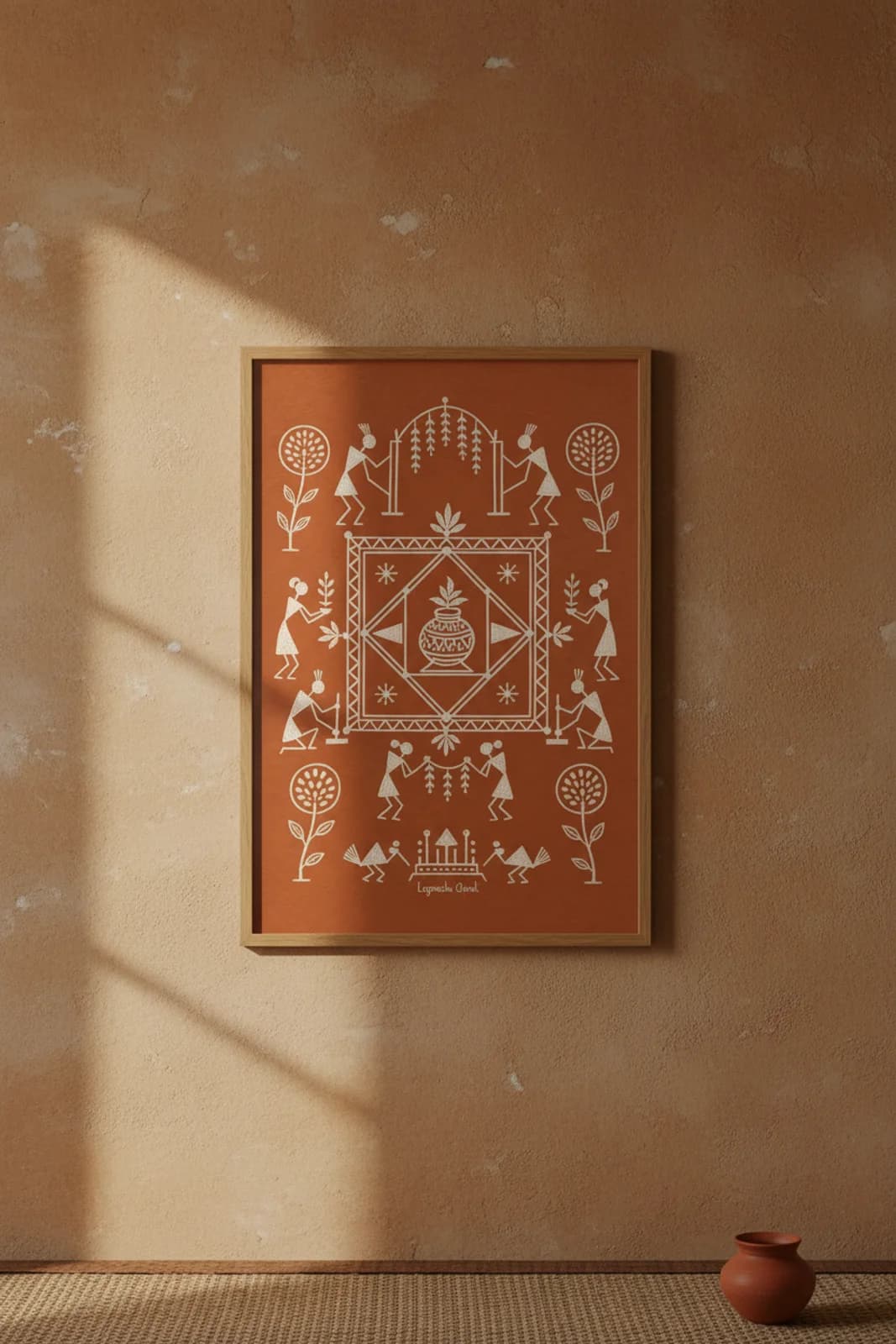
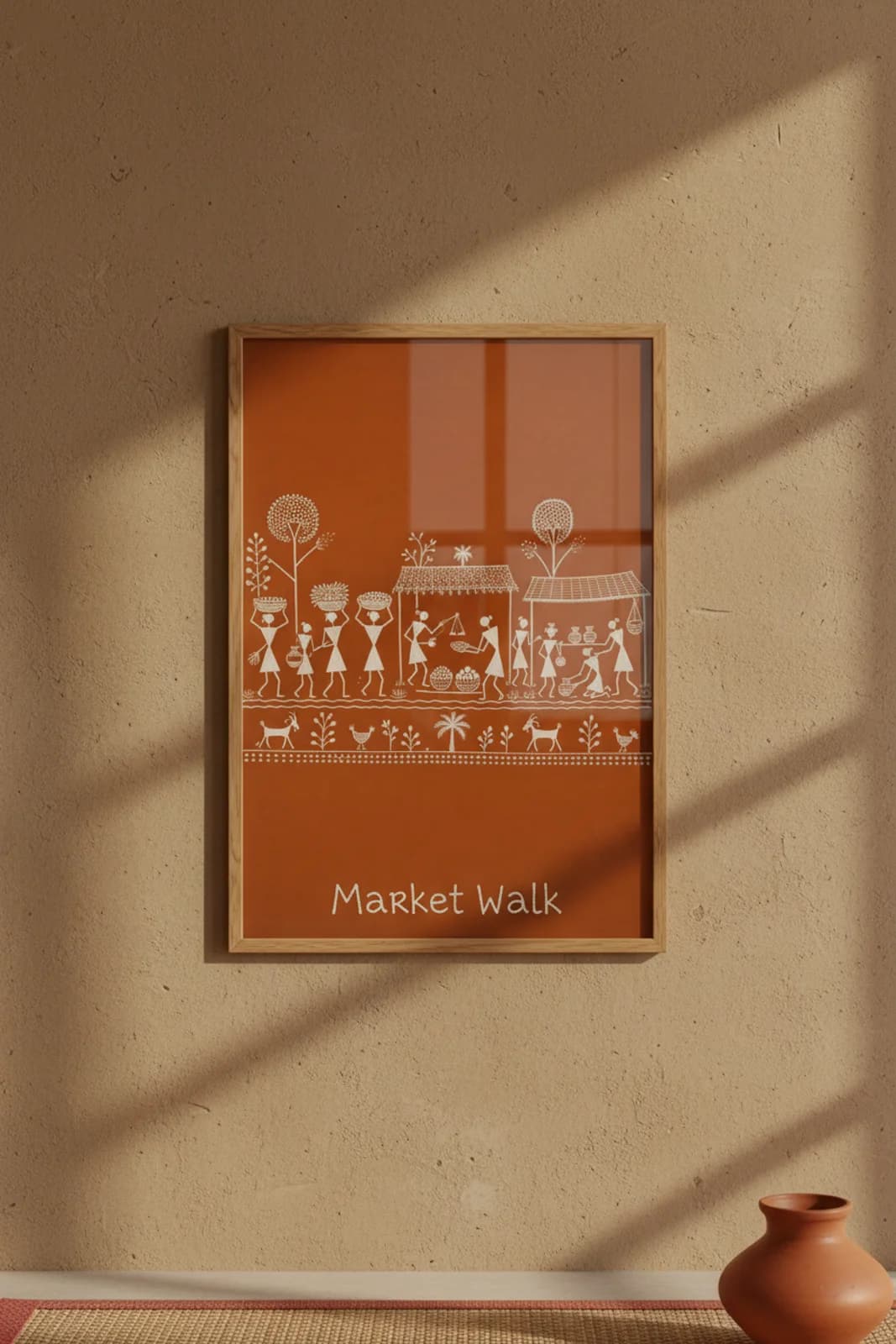
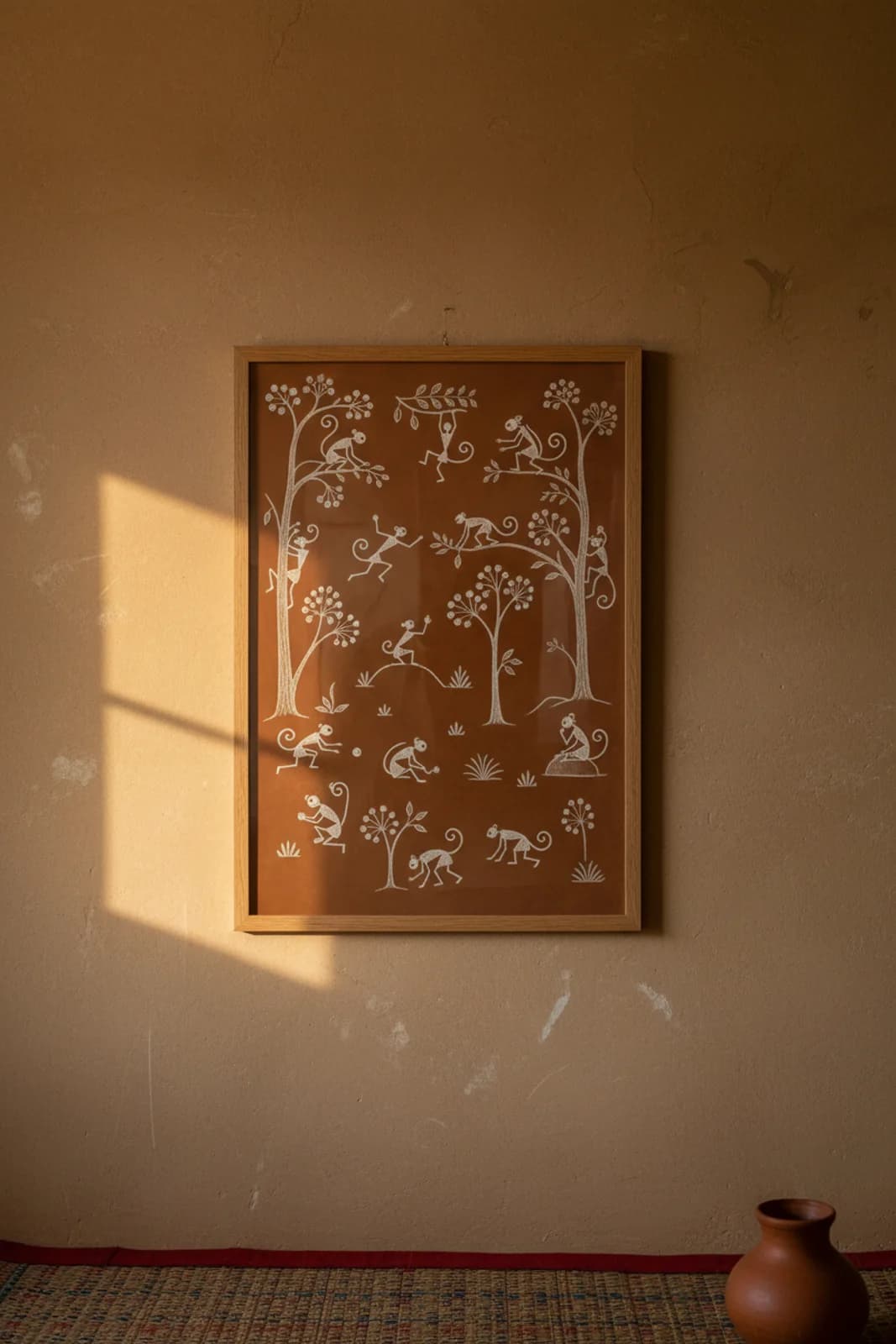
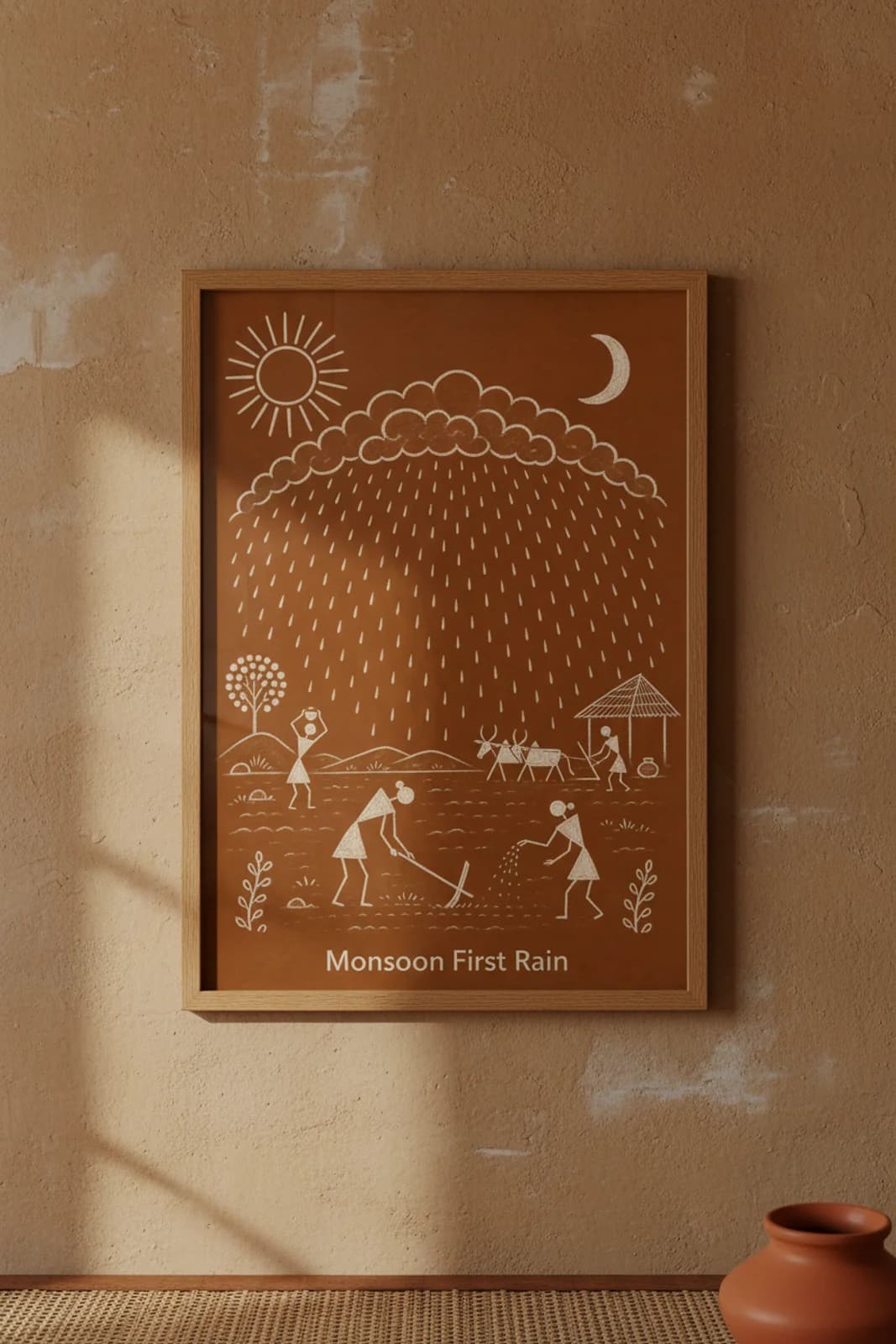
Jawhar Folk Art — 4 museum-grade prints on the theme. Warli Adivasi communities of Jawhar and the North Sahyadri live adjacent to forest where langurs and macaques are daily neighbours — not exotic backdrop but shared canopy. Classical Warli forest-life scenes include monkeys, deer, and birds as community-with-nature vocabulary, distinct from hunting chase scatter and from marriage chauk geometry. For Warli Adivasi communities of Jawhar, monsoon arrival transforms empty fields into the year's central labour — tilling, sowing, and ox-plough teams are classical farming vocabulary on geru walls. Sun and moon appearing together in Warli celestial bands signal timeless natural cycles rather than clock time. Lagnacha chauk — the marriage square — is among the most sacred geometries in Warli wall painting, traditionally drawn by Suvasini women on interior hut walls during wedding ceremonies in Jawhar, Palghar, Dahanu, and adjoining talukas. The chauk or chaukat is human-invented geometry distinct from circles (sun, moon, heads) and triangles (bodies, trees): it invokes divine presence for fertility and union while human figures remain outside or at the perimeter as witnesses, not decorative filler.