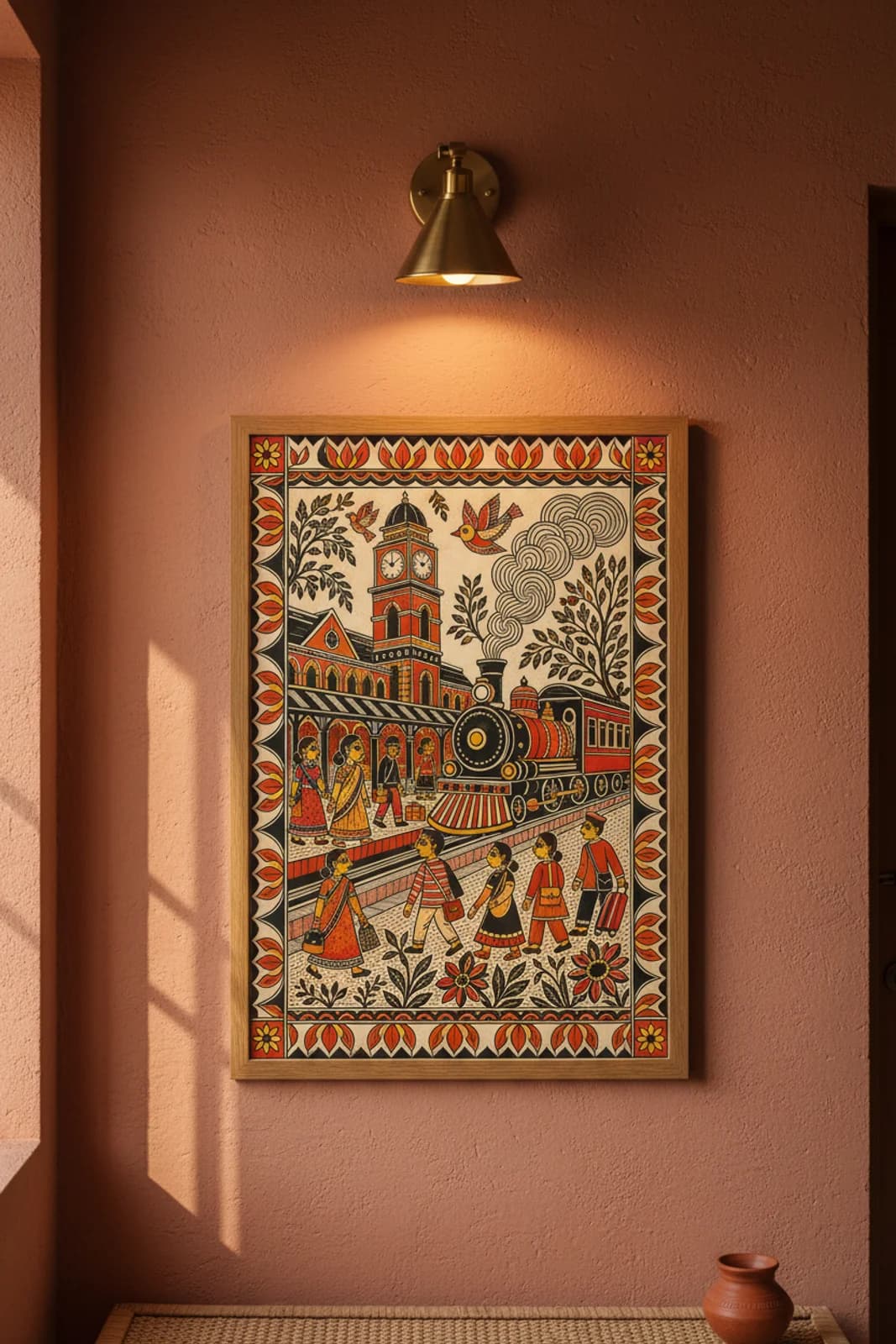
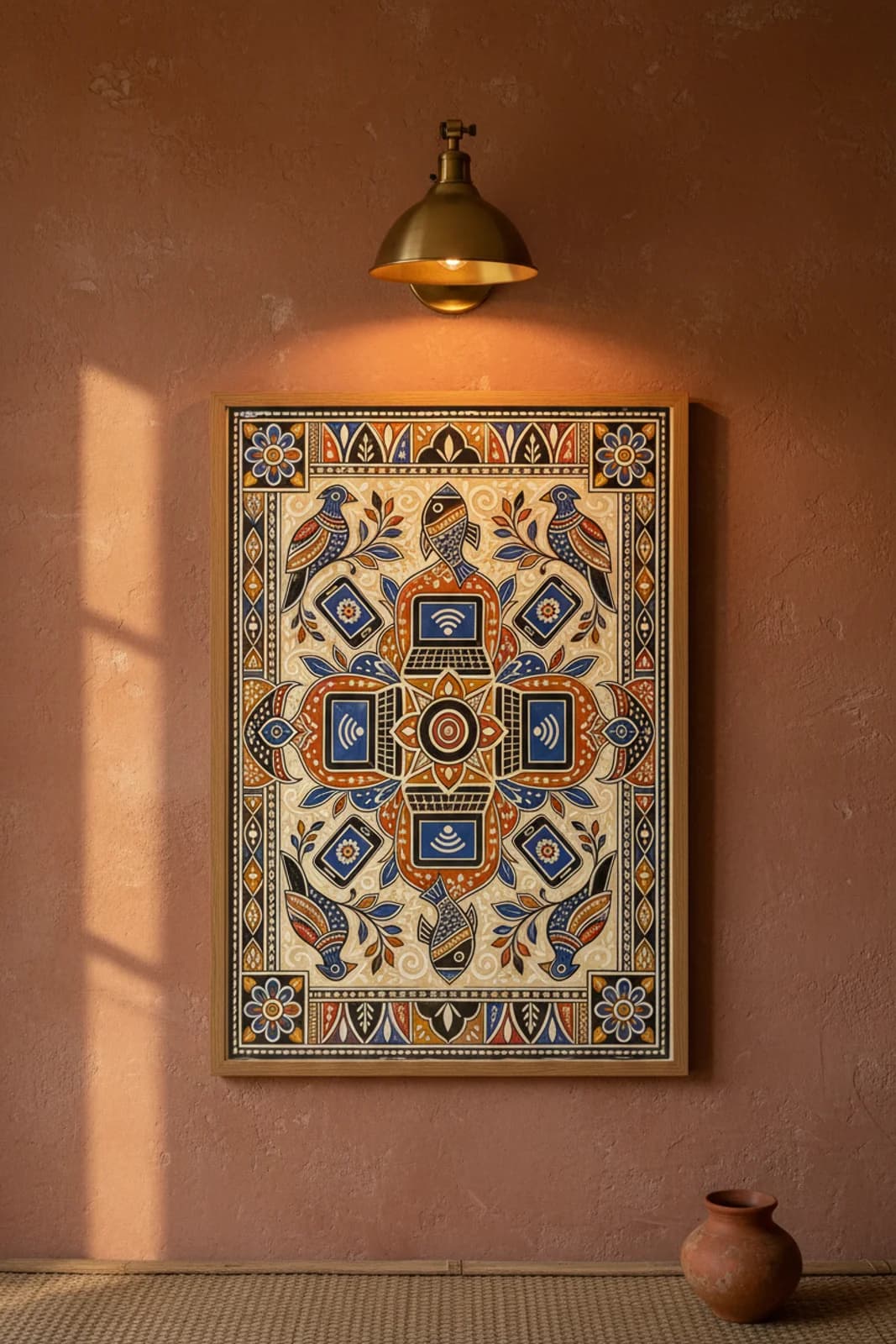
Contemporary Fusion Prints — 2 museum-grade prints on the theme. Aripana — from the Sanskrit alepan, to smear — is the Kayastha and Brahmin women's floor-diagram tradition within Mithila art, historically drawn with rice paste or cow-dung-clay on purified ground for weddings, Dev Uthani Ekadashi, Kamaldah lotus-pond rituals, and daily threshold blessing. Aripan is the Bihar cognate of Tamil Nadu kolam: both begin with a centre bindu and expand through confident geometric line work; kolam at Chennai thresholds often appears at dawn before household activity, while Mithila aripan accompanies vermillion papers and marriage processions. Bharni — from the Hindi word for filling — is the Madhubani tradition associated with Brahmin women painters who flooded enclosed outlines with vibrant flat colour: vermillion, ochre, indigo, and lampblack on cream or cow-dung-washed grounds, distinct from Kayastha Kachni line-only panels and Dusadh Godna tattoo dot grammar. On classical walls Bharni rendered festival deities, wedding processions, and village harvest scenes; on paper it became the chromatic discipline of artists like Sita Devi after the 1960s famine-era transfer from mud-wall ritual to market craft.