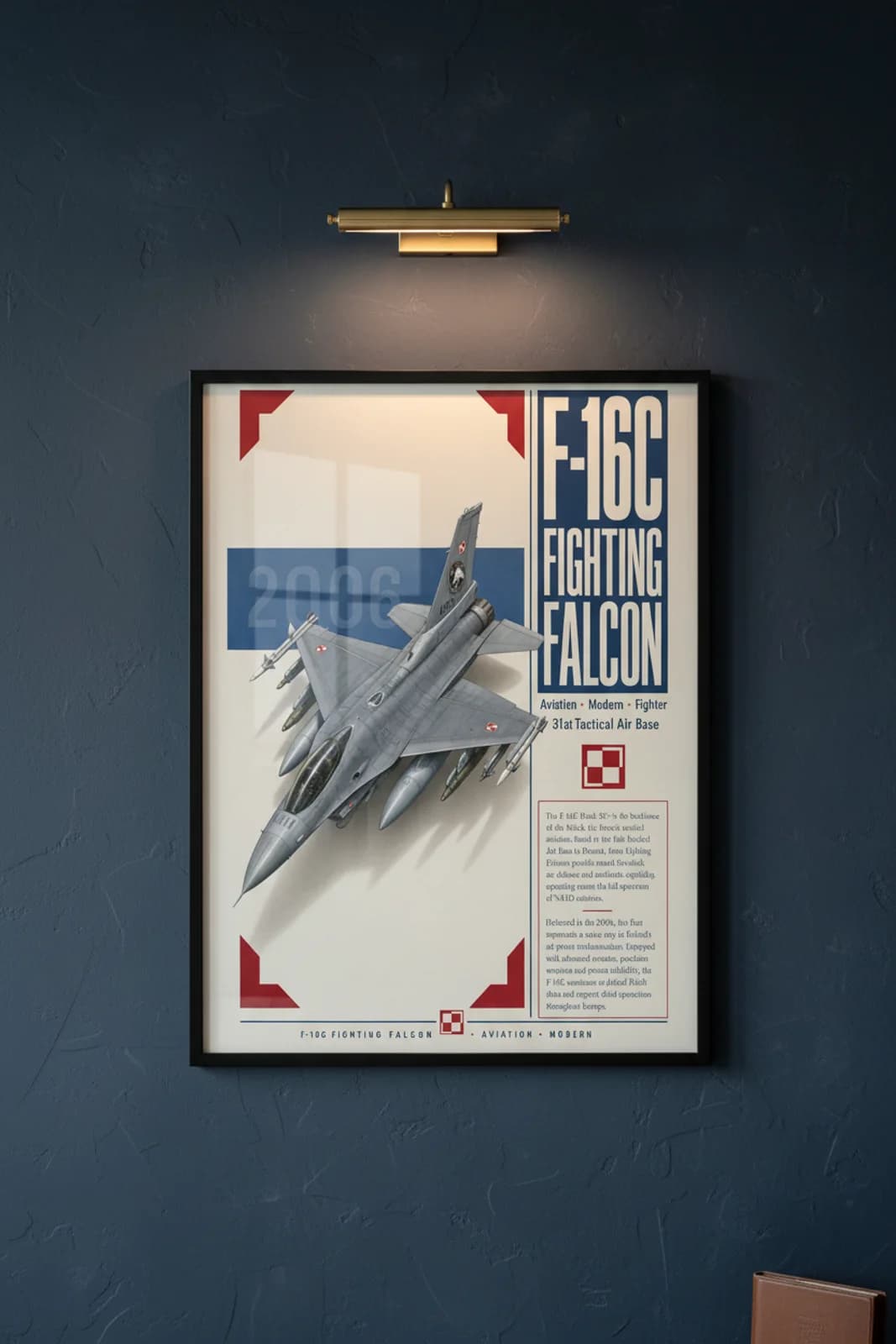
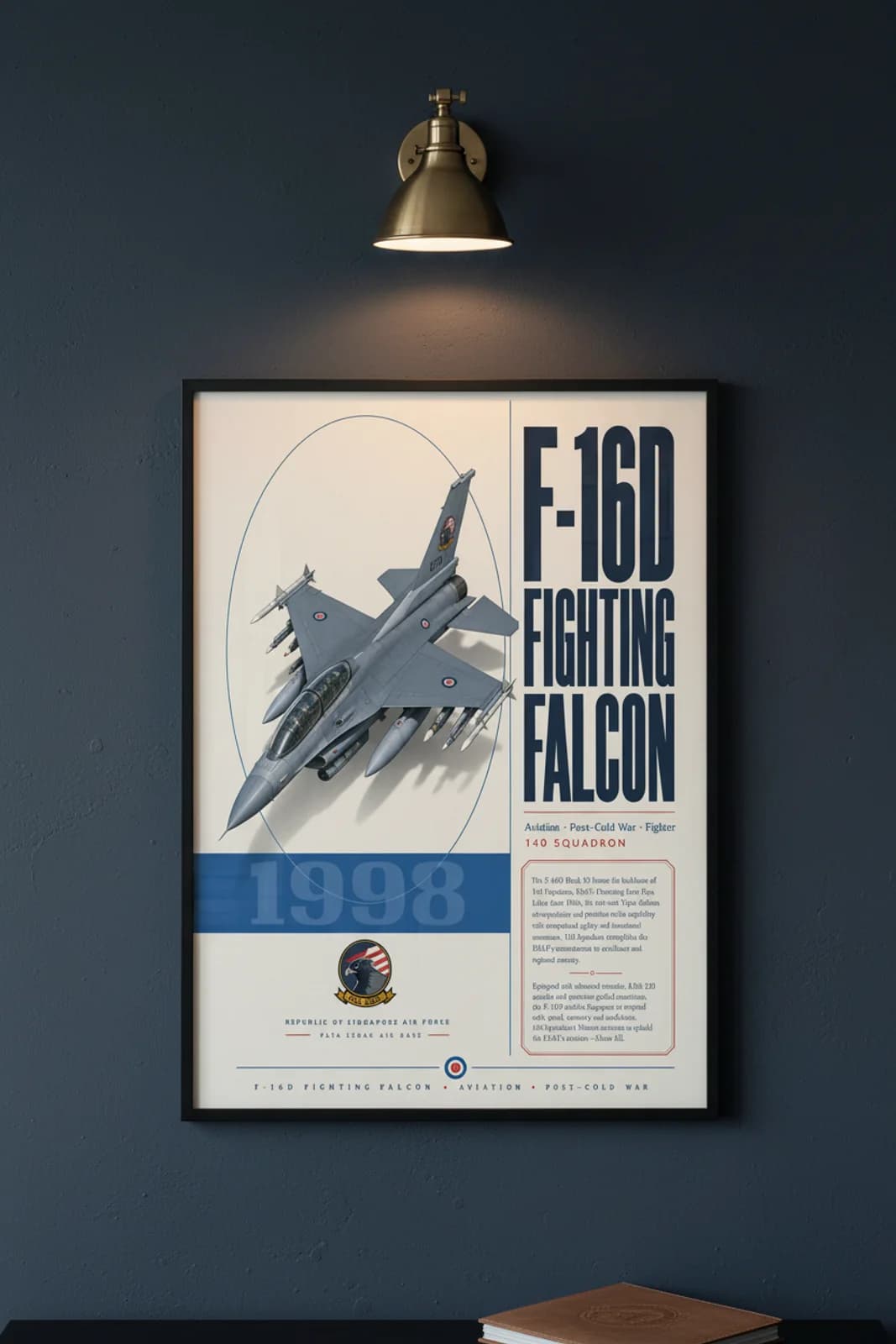
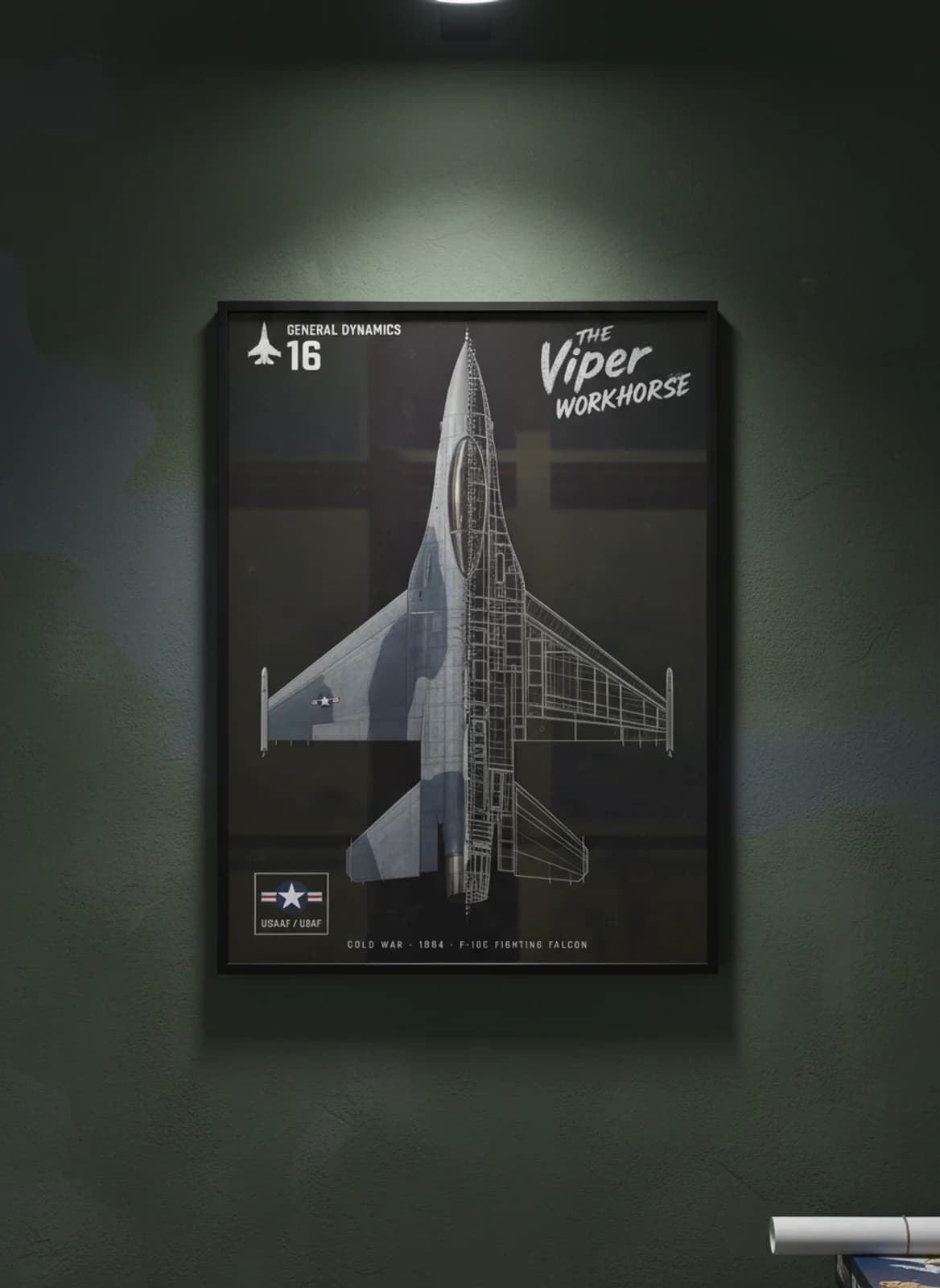
F-16 Fighting Falcon — 3 museum-grade prints, engineered to a wall. Poland selected the F-16 Block 52+ in 2002 after a competition against other fourth-generation fighters, signing a contract in April 2003 that covered forty-eight aircraft, spare engines, precision munitions, and a multibillion-dollar industrial offset. Locally nicknamed Jastrząb — northern goshawk — the fleet marked Poland's largest post-Cold War air-power leap. The F-16 Fighting Falcon became the backbone of Western air power projection — more than 4,500 airframes delivered to twenty-eight nations, with production continuing under Lockheed Martin long after General Dynamics sold the Fort Worth line. The Lightweight Fighter program's emphasis on energy manoeuvrability and pilot visibility reshaped fighter design doctrine away from the heavy interceptors of the 1960s. 140 Squadron carries the "Osprey" nickname and motto Stand firm in defence, with a red checkered tailband tradition dating to its F-16A/B era at Tengah. The squadron was the RSAF's last Hunter operator before transitioning to the Fighting Falcon, and later absorbed Block 52 F-16C/D airframes as training contracts in the United States wound down — a handoff profile-print collectors document under Osprey markings and serials in the 600-series range.