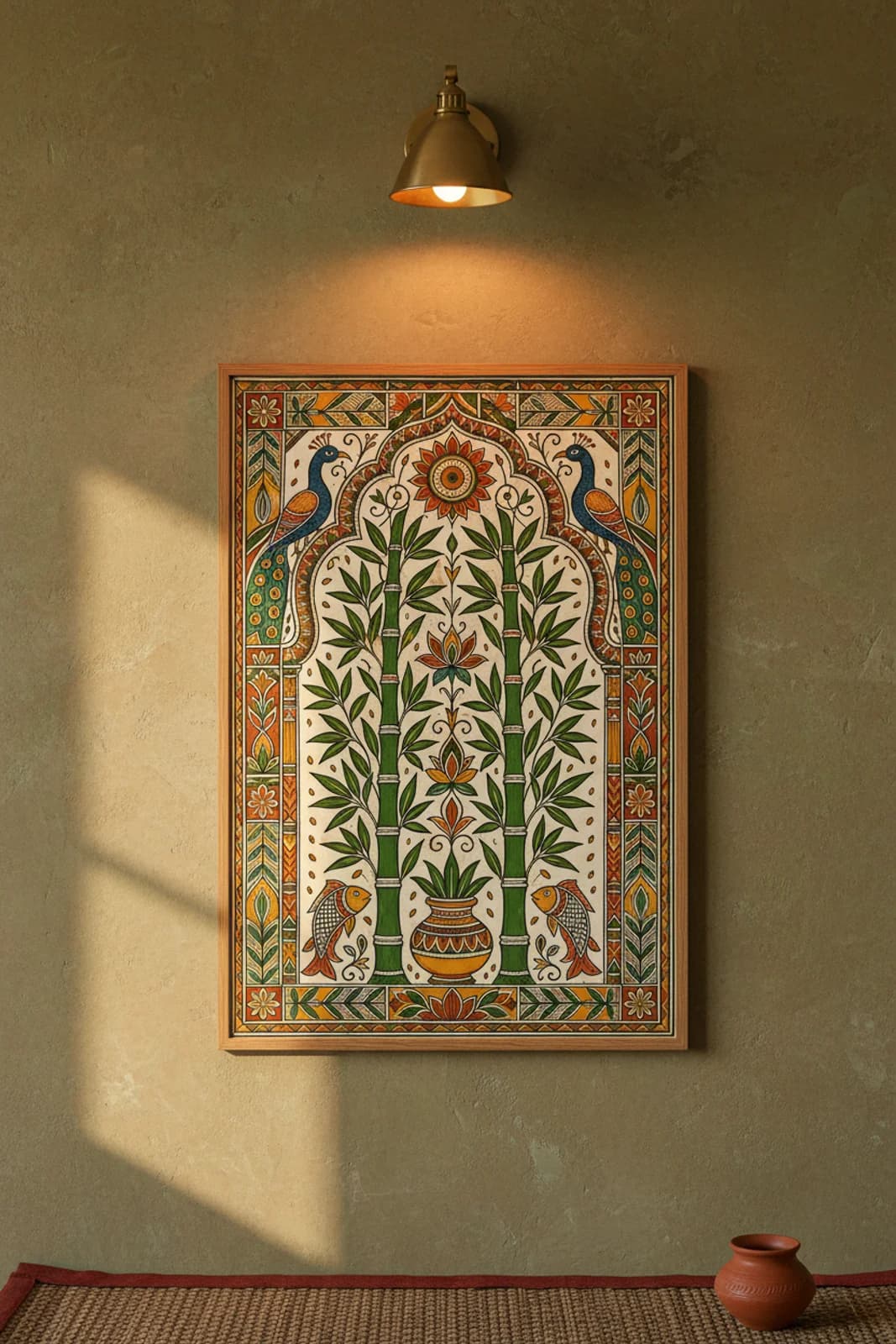
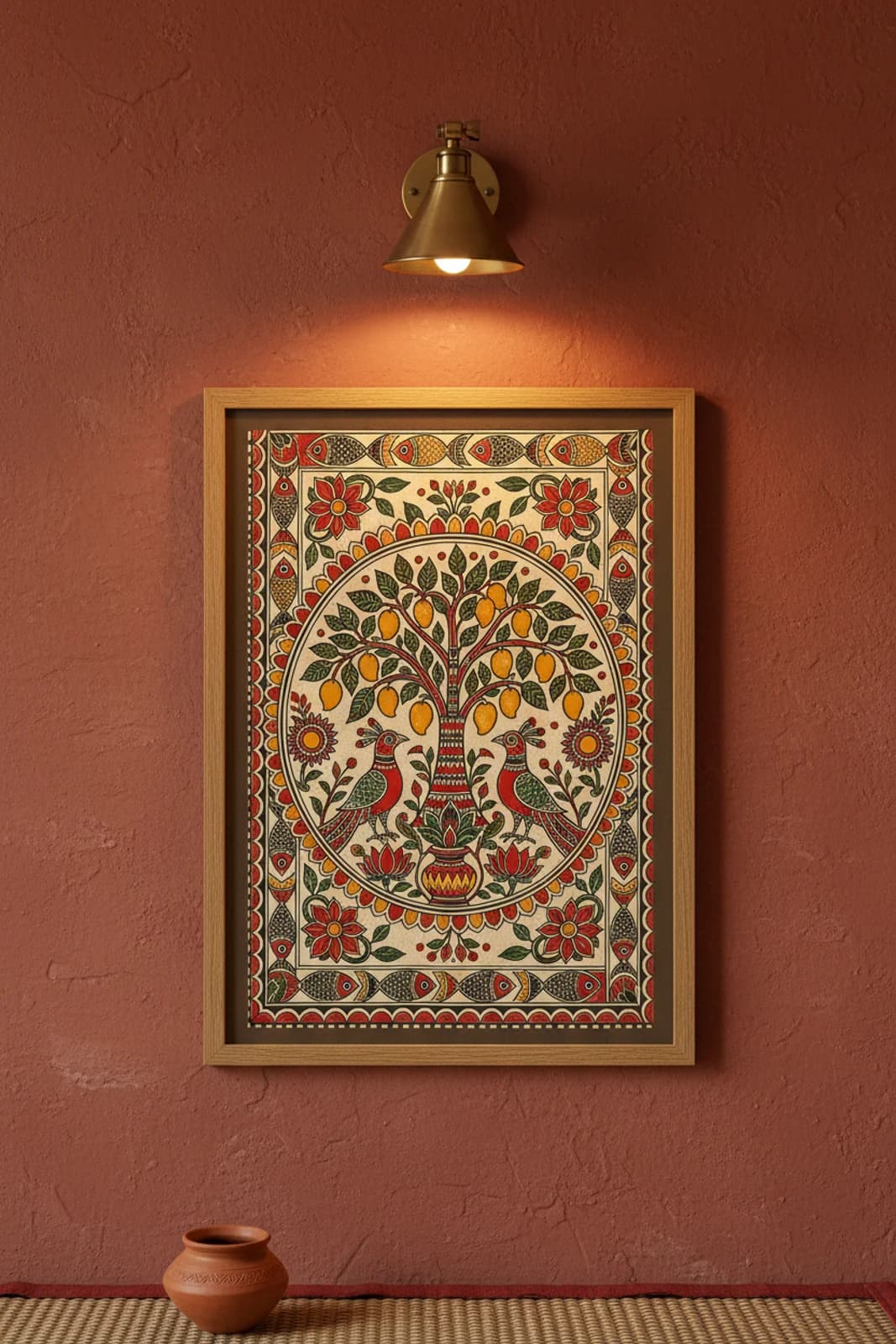
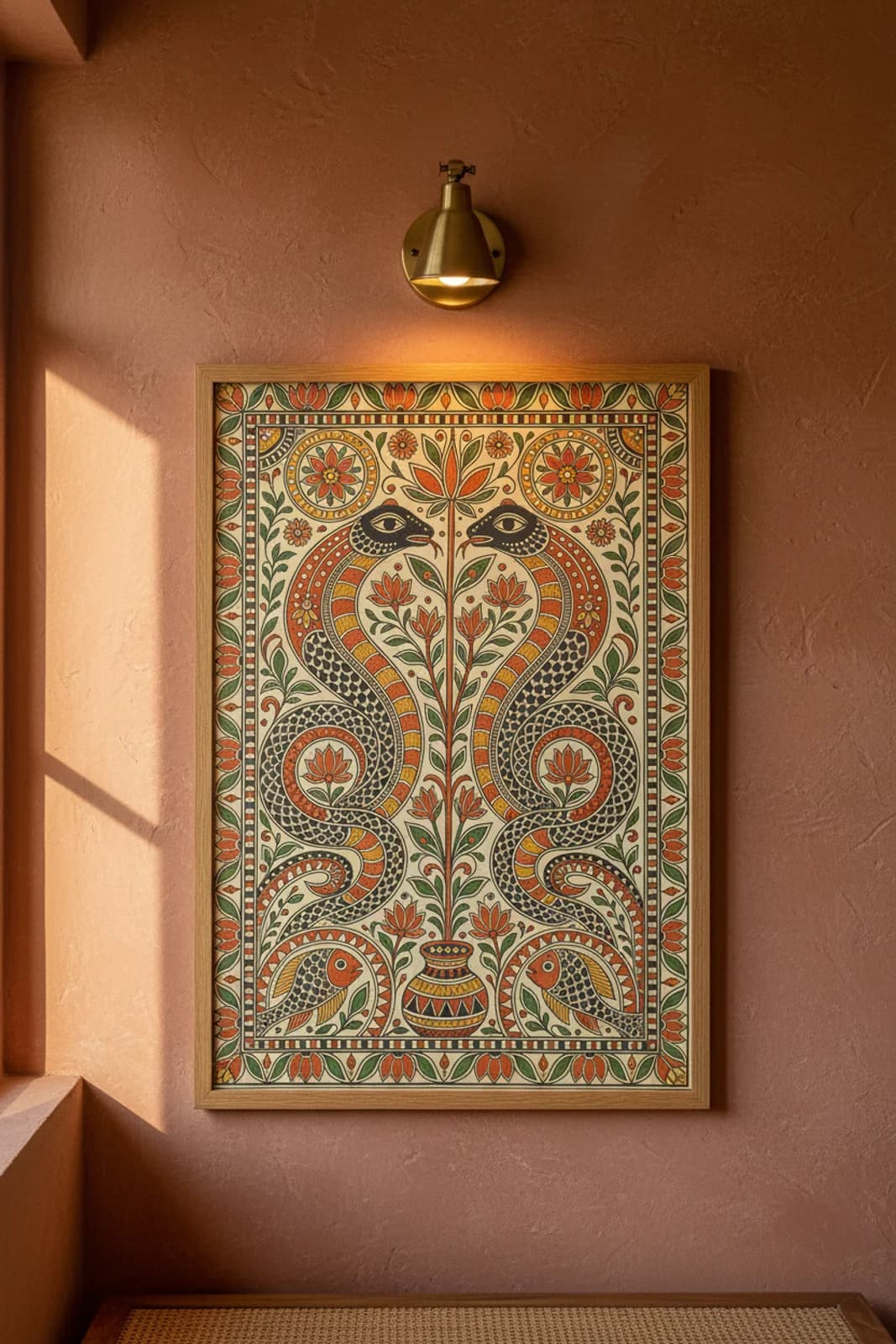
Heritage Study — 3 museum-grade prints sized and toned for the room. Kohbar — also called Puren in some Maithila villages — is the Madhubani style reserved for the bridal chamber (kohbar ghar), painted by women of the household to bless a new marriage with fertility, prosperity, and harmonious union. Unlike Bharni festival deity panels or Kayastha Kachni line work, Kohbar carries a fixed iconographic checklist: bamboo for male lineage and proliferating family lines, lotus for feminine life force, fish (matsya) for fertility and abundance, sun and moon for cosmic balance, birds such as peacocks for beauty and auspicious presence. Kohbar — also called puren in Kayastha vocabulary — is the ritual Madhubani style painted for the Kohbar Ghar, the nuptial chamber where Mithila brides and grooms spend their first nights after marriage. Traditionally executed on cow-dung-washed mud walls by women of the bride's family, Kohbar panels invoke fertility, prosperity, and marital harmony through symbolic flora and fauna rather than narrative portraiture alone. Kohbar — also called puren in Kayastha households — is the Madhubani style tied to the nuptial chamber (kohbar ghar) where Maithil bride and groom spend their first nights after marriage. Women in villages including Ranti, Jitwarpur, and Madhubani town traditionally painted these walls with cow-dung and mud base coats, rice-paste line, and natural pigments — vermillion for auspicious union, ochre from turmeric or geru, lampblack from soot.