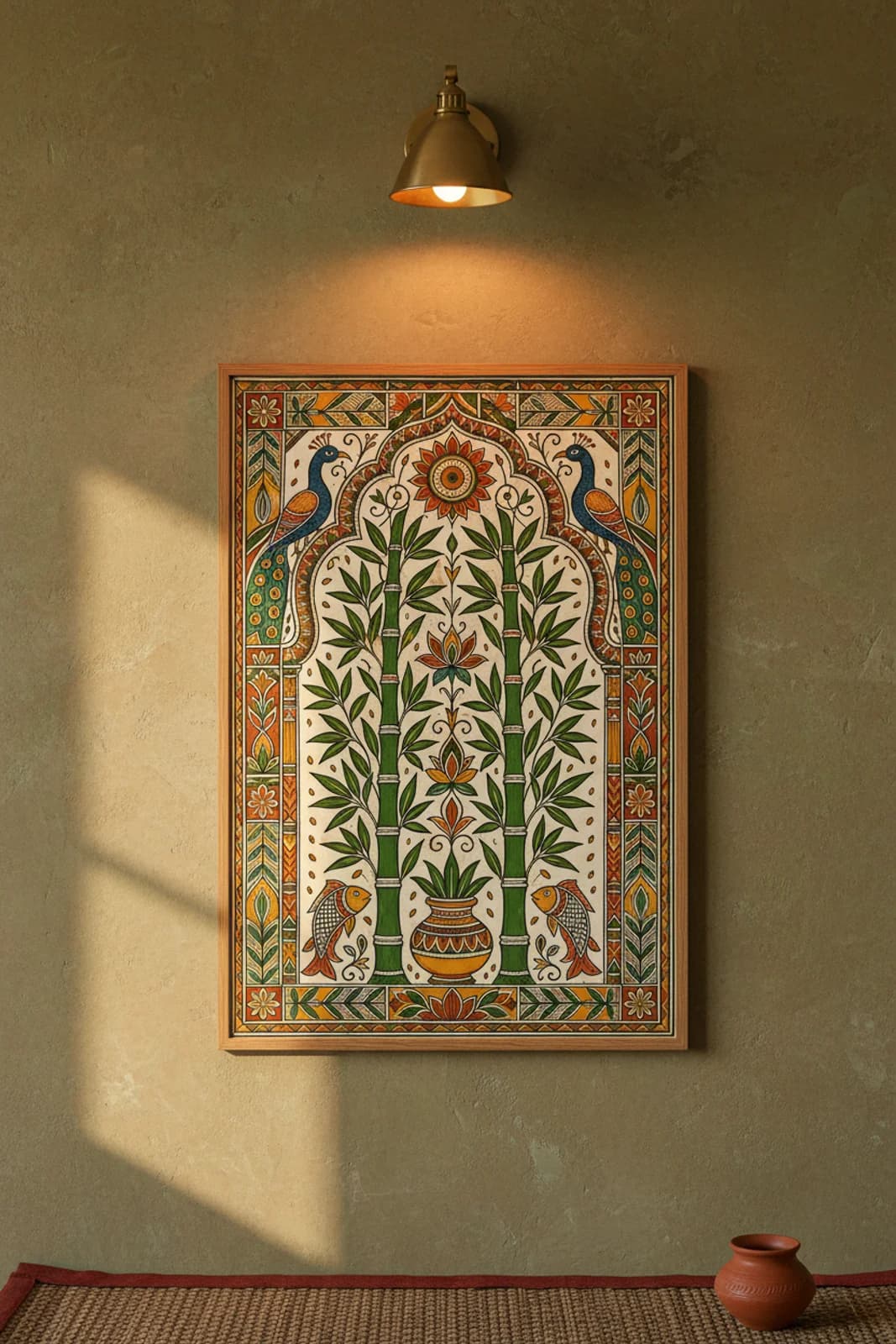
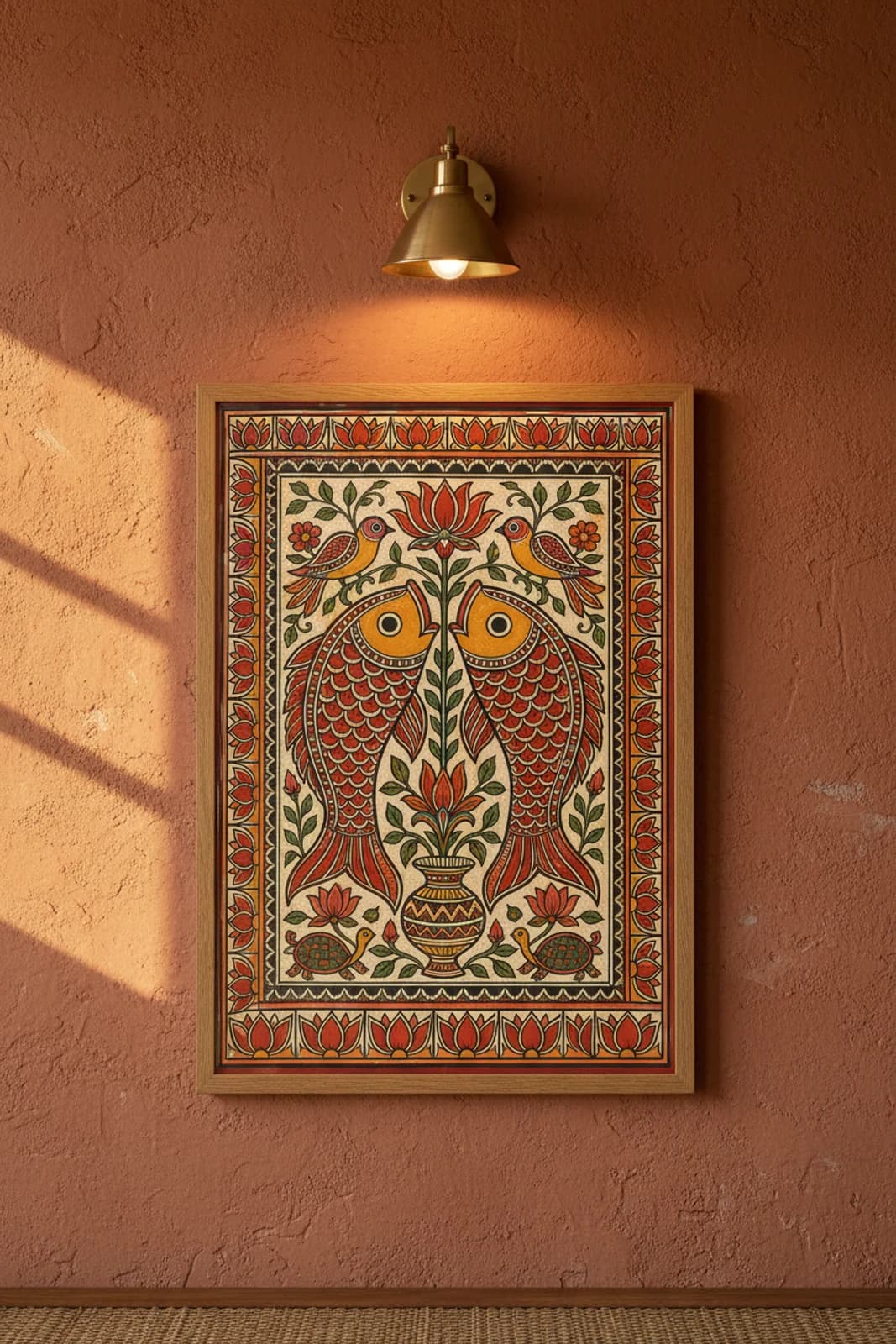
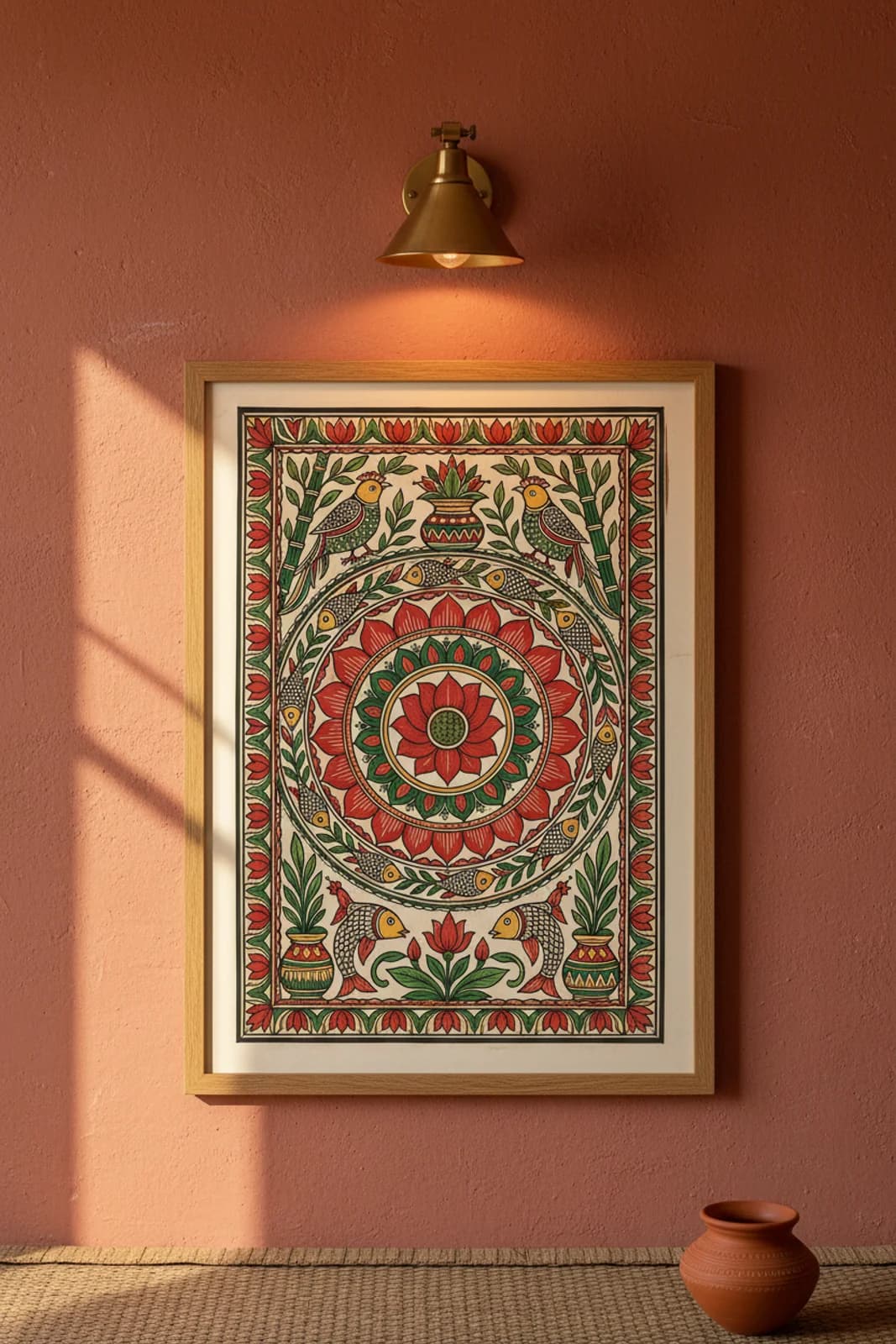
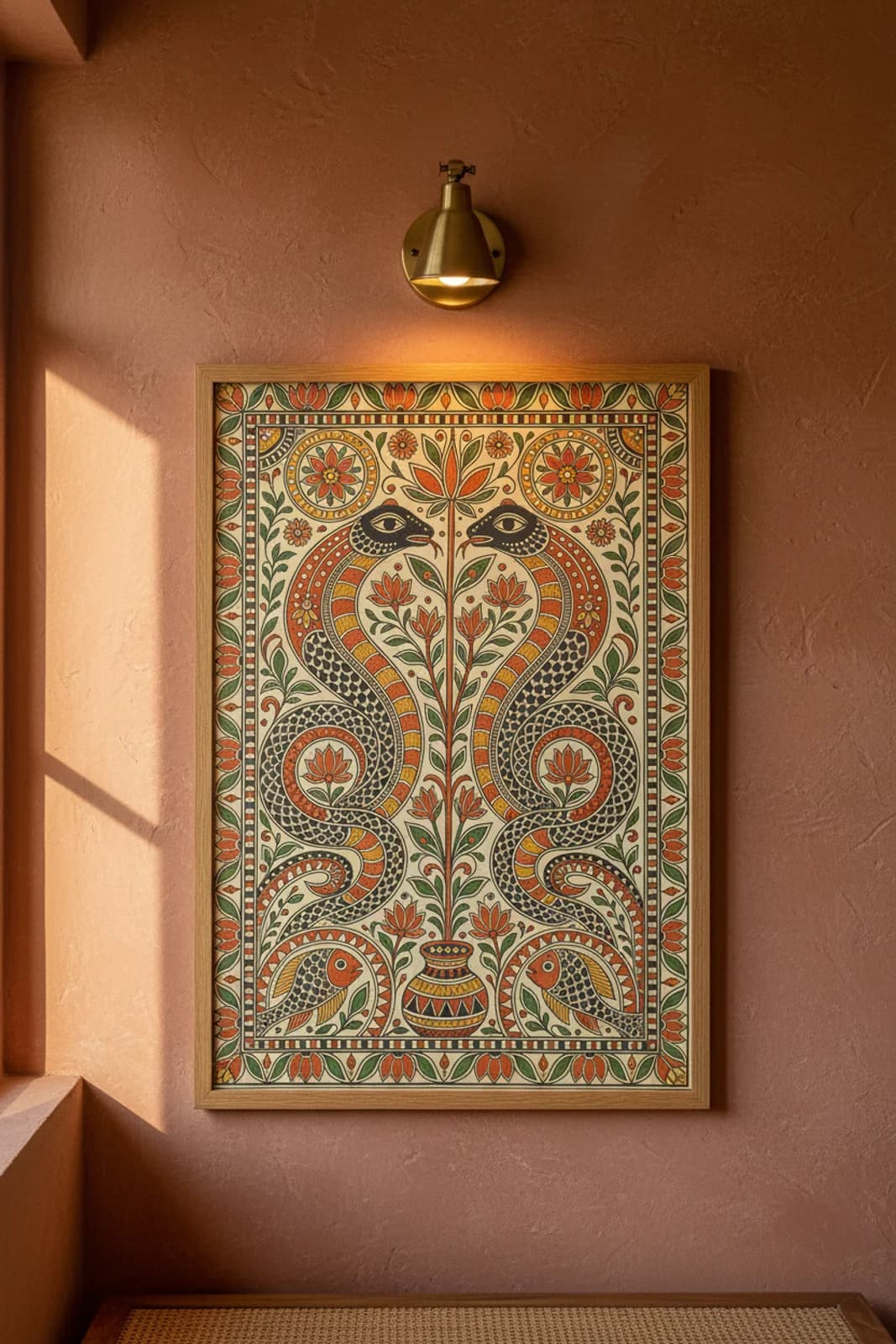
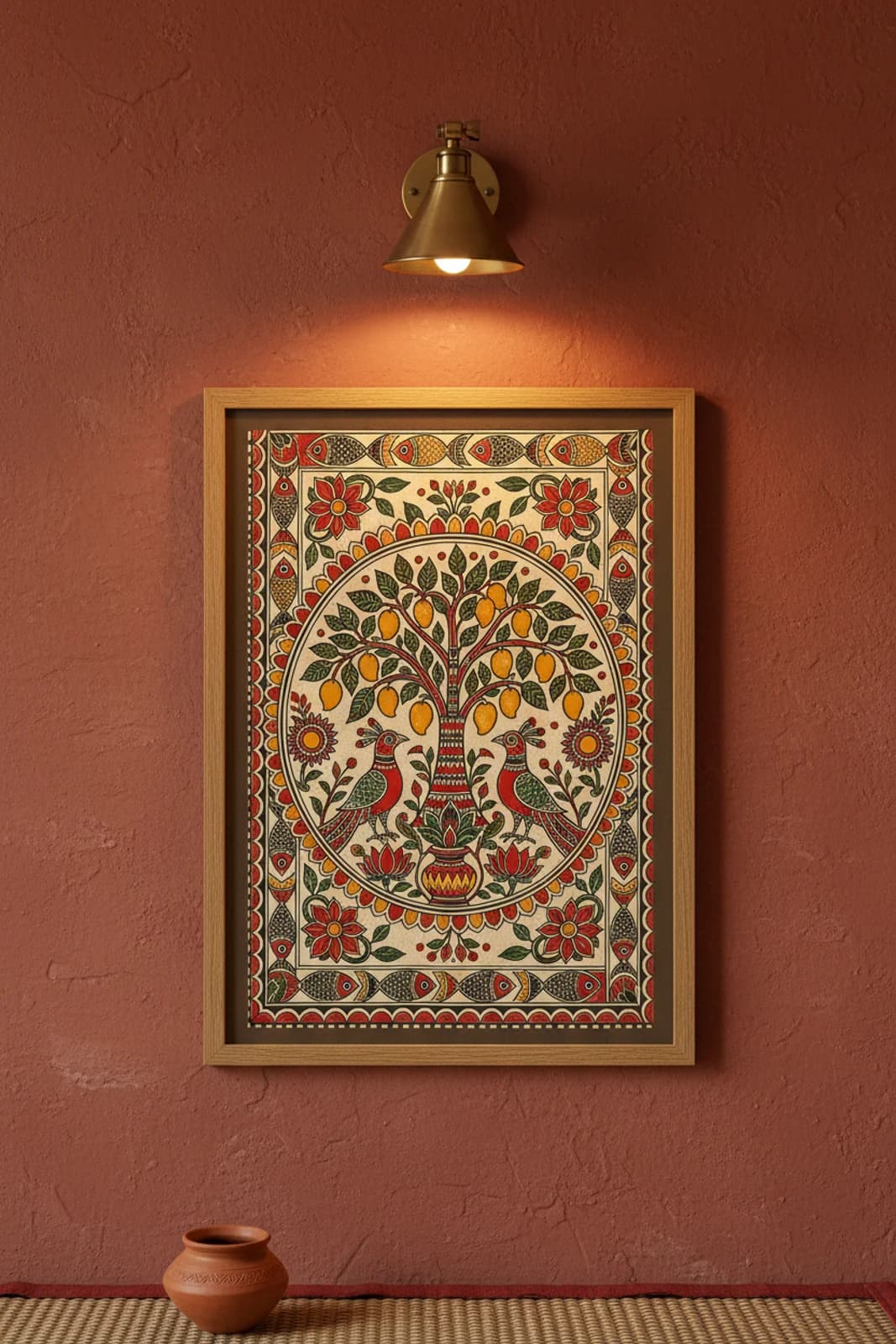
DESIGN BRIEF: Kohbar Madhubani is not a generic folk bouquet — it is the painted blessing wall of the kohbar ghar, and every motif on that wall carries matrimonial work. I chose vertical-bilateral symmetry because bamboo in Maithila wedding grammar stands for the groom's patrilineage: the word for bamboo (baans) sits a breath away from the word for lineage (bans), and women artists have long iconised multiplying culms as a stand-in for proliferating family lines. Pairing two green stalks on a single vertical axis solves the layout problem cleanly — the eye reads grove before it reads decoration, and the bilateral mirror keeps the chamber wall feeling anchored rather than narrative-heavy. The scalloped arch is borrowed from peacock-arch Kohbar compositions without importing a full bridal procession scene; peacocks perch on the shoulders facing inward so the arch reads as threshold, not zoo panel. Kalash at the base, lotus vine rising through three blooms, sun bindu at the crown — that vertical fertility stack is the classical Kohbar spine: earth vessel below, floral ascent above, cosmic cycle at the peak. Fish mirror at the base because matsya fertility symbols belong on Kohbar walls the way corner guardians belong on Godna spirals — abundance facing inward toward the union axis. Green and ochre-yellow fill density stays high because authentic Kohbar ghar walls were meant to leave no auspicious inch bare.
 WALLIMILIST