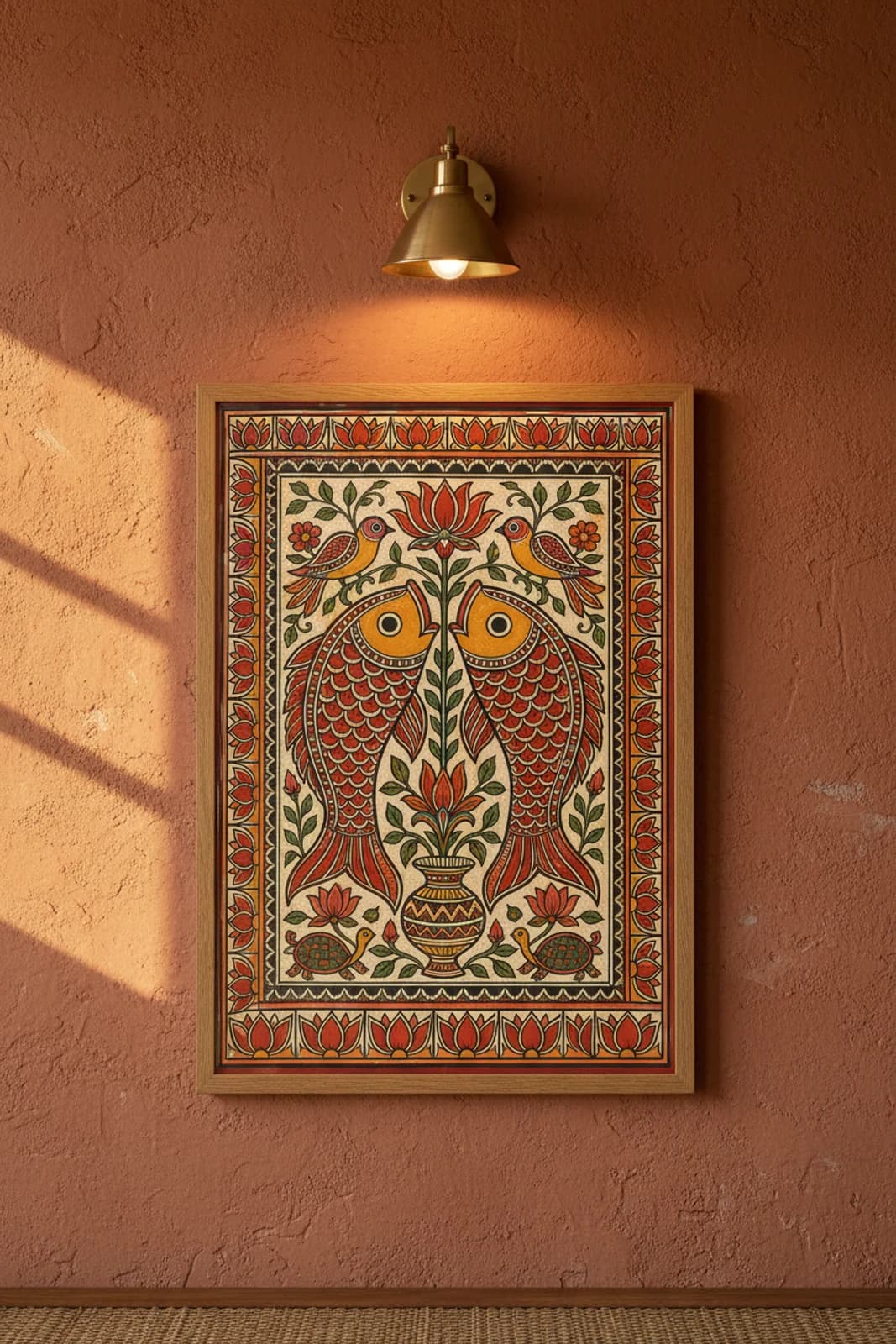
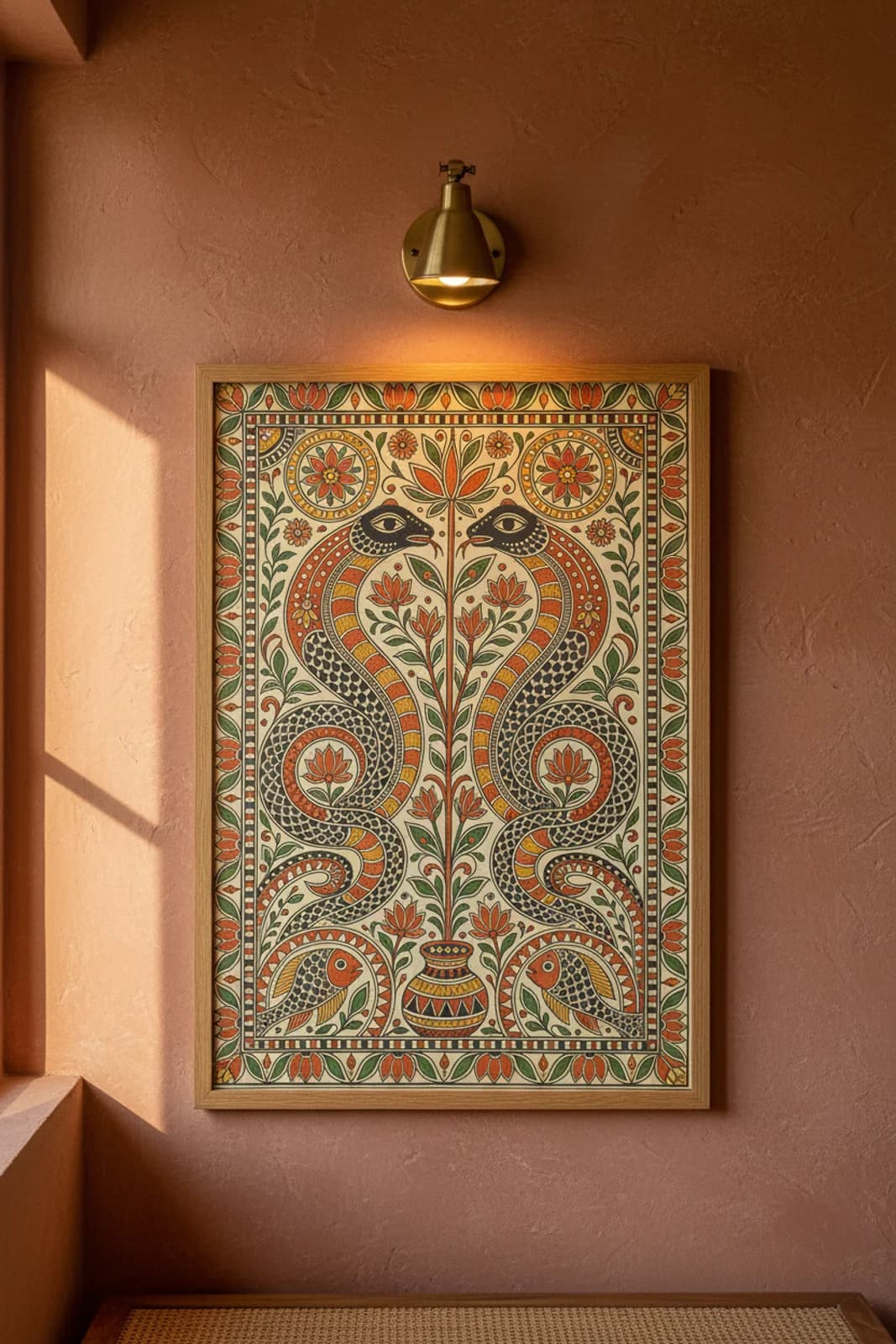
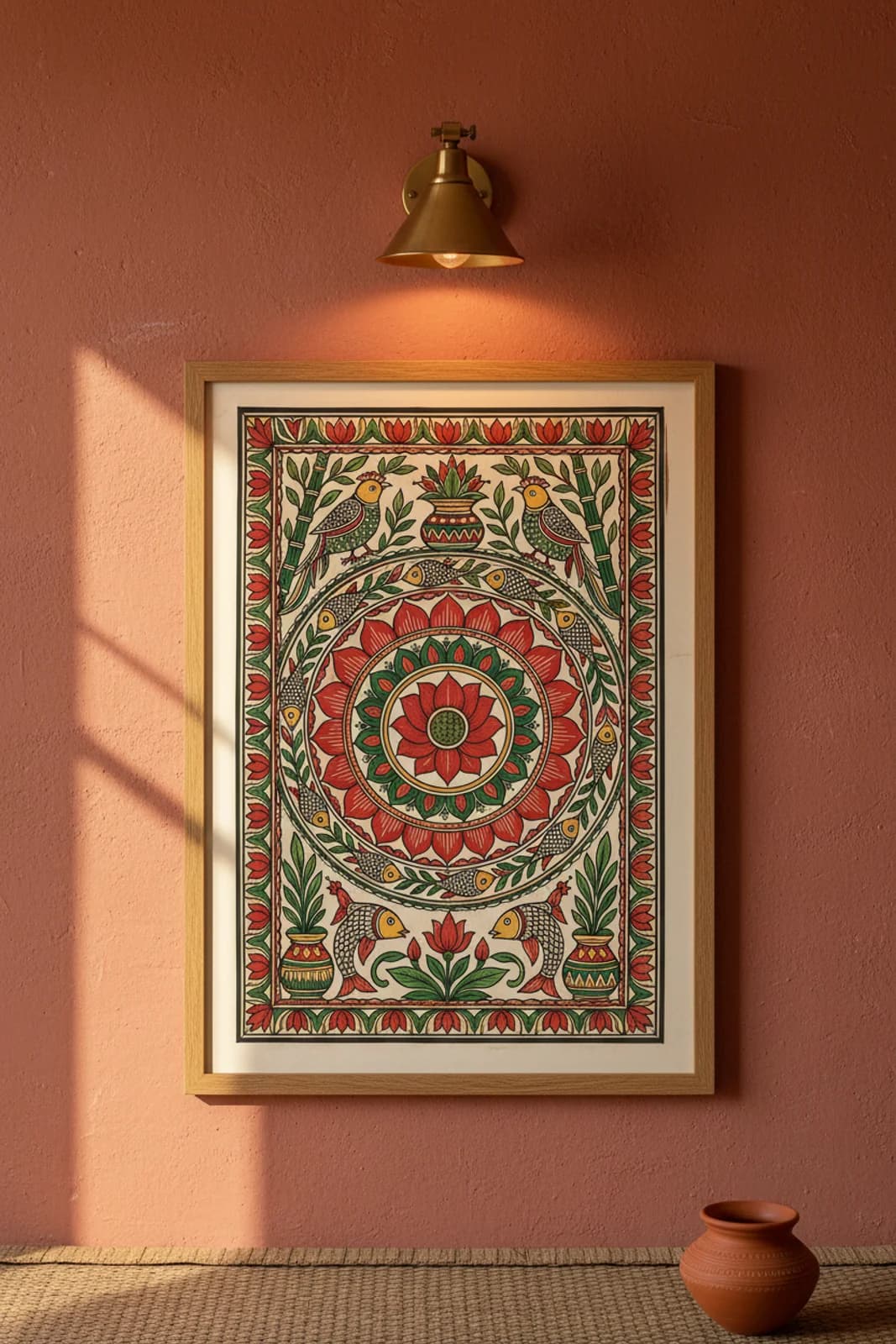
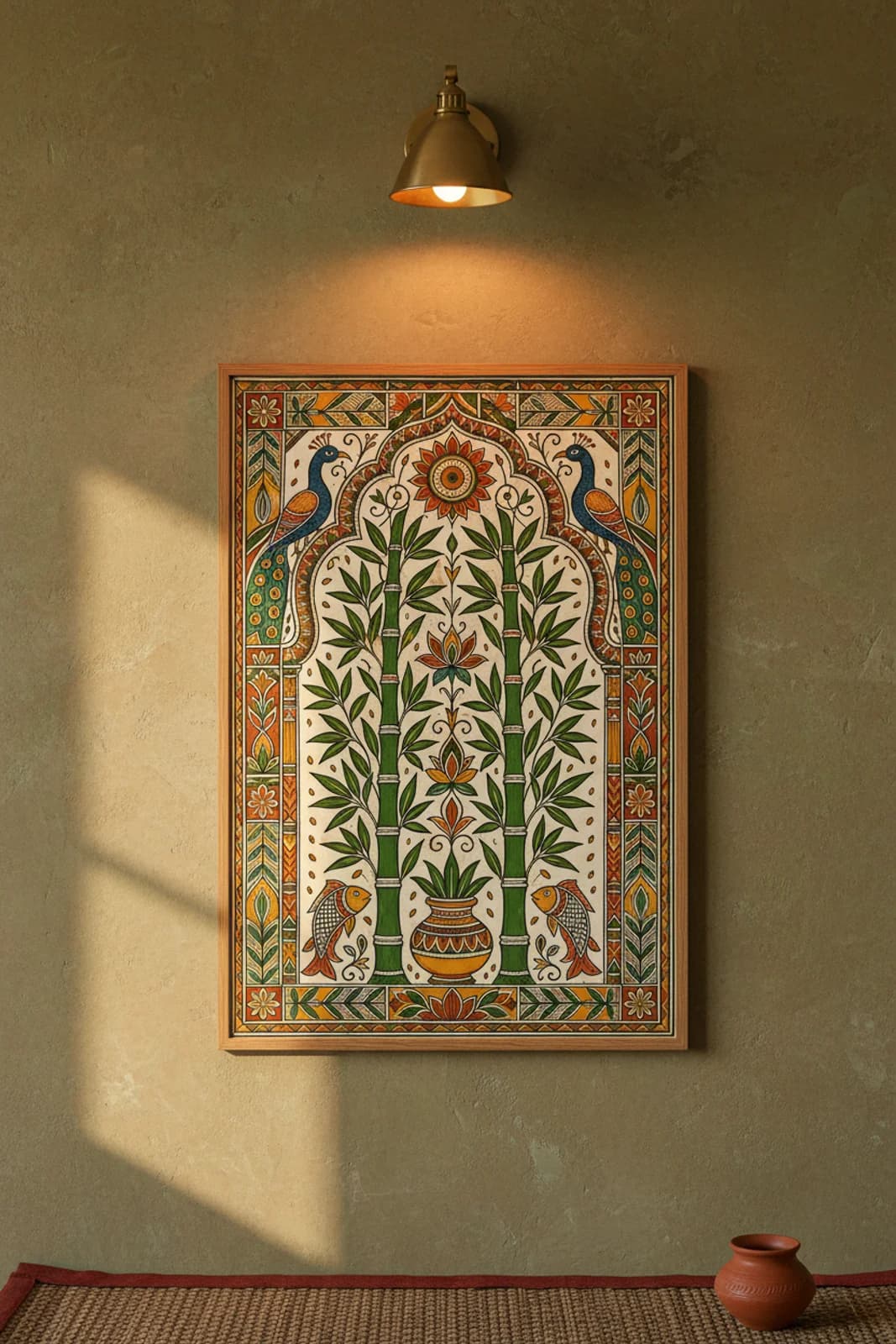
DESIGN BRIEF: Kohbar panels for the nuptial room (kohbar ghar) do not narrate a story left-to-right the way a wedding procession scene does — they assemble auspicious symbols into a bilateral field the bride and groom can read from either side of the bed. Horizontal-bilateral symmetry solves that: the paired matsya fish face each other across a vertical axis so neither figure dominates; fertility reads as mutual, not directional. I anchored the composition on the kalash-and-lotus stem because Darbhanga Kohbar grammar treats the pot as the generative vessel and the lotus crown as the feminine bloom — fish flank it the way they flank the bamboo-lotus axis in full wedding-wall diagrams, but here the fish carry the whole prosperity message without importing the entire Ram-Sita narrative strip. Corner parrots borrow the love-and-procreation vocabulary of Kohbar bird pairs; base turtles add longevity without crowding the central fish — stability at the threshold, abundance at the heart. Wedding red stays dominant because Kohbar ghar walls were the most saturated room in the bridal home; ochre heads and green foliage keep the palette within natural-pigment logic rather than poster-bright acrylic. Every interstitial gap gets a flower — horror vacui is not decoration here, it is the protective fill that keeps negative space from reading as void on a chamber wall meant to bless four nights.
 WALLIMILIST