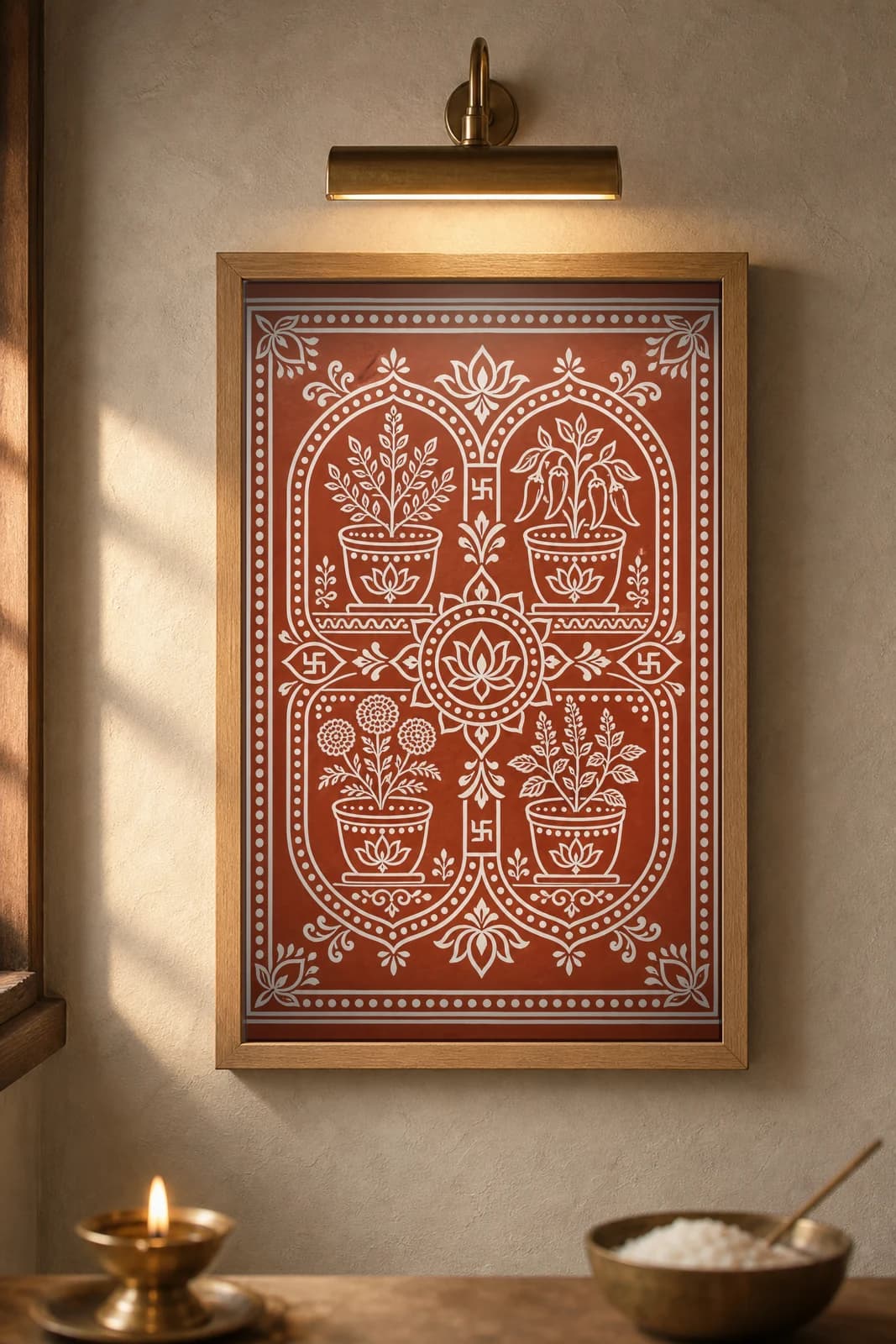
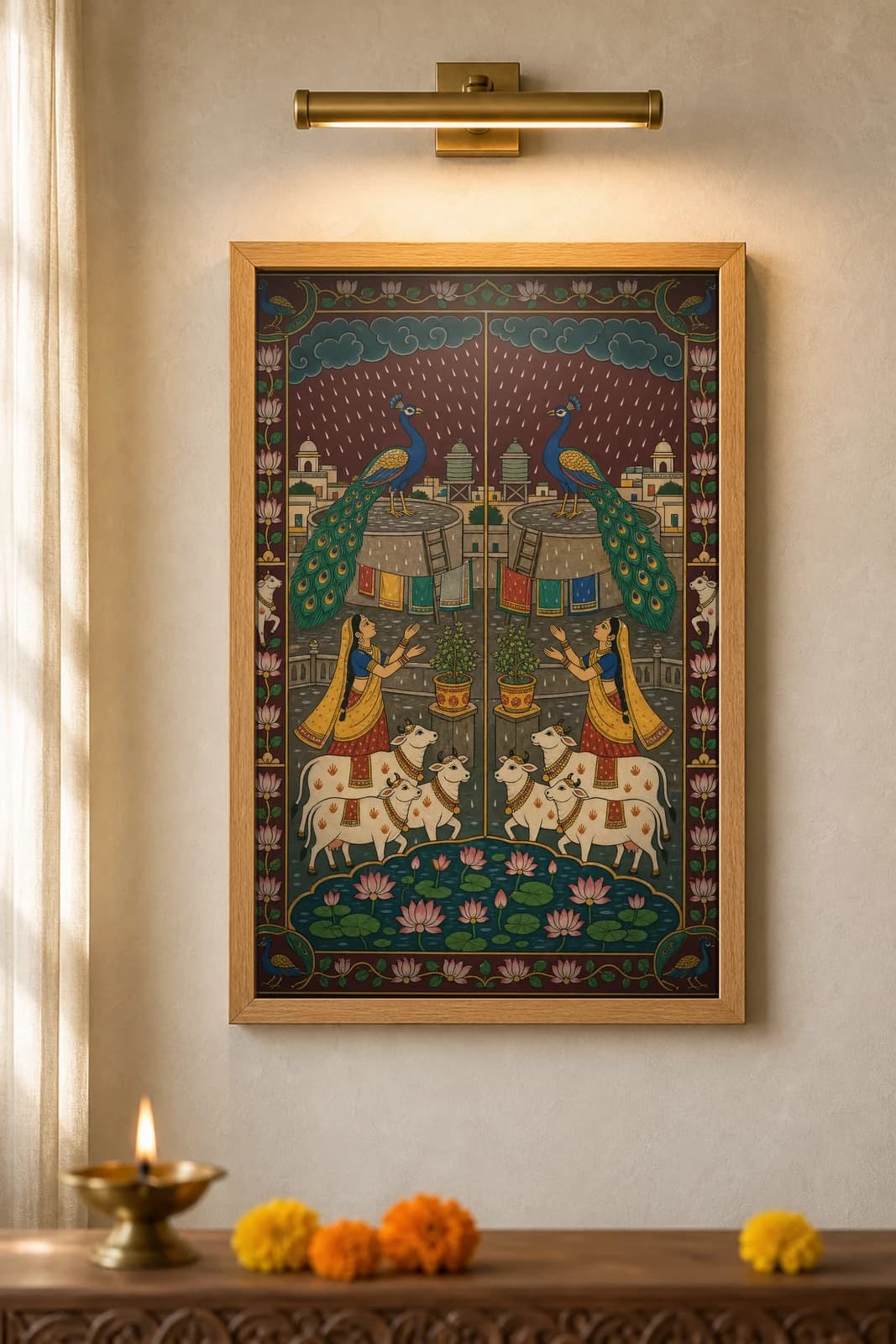
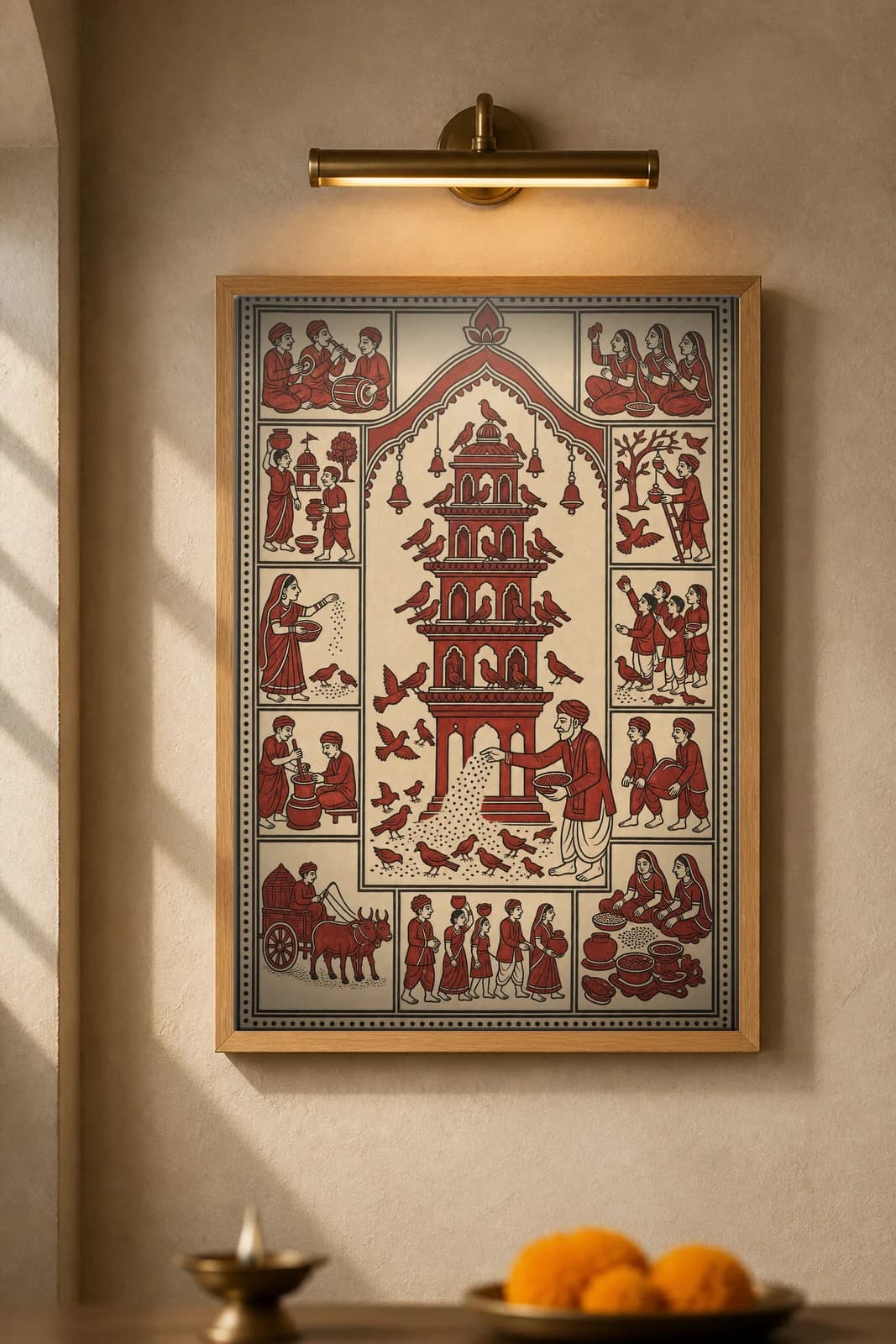
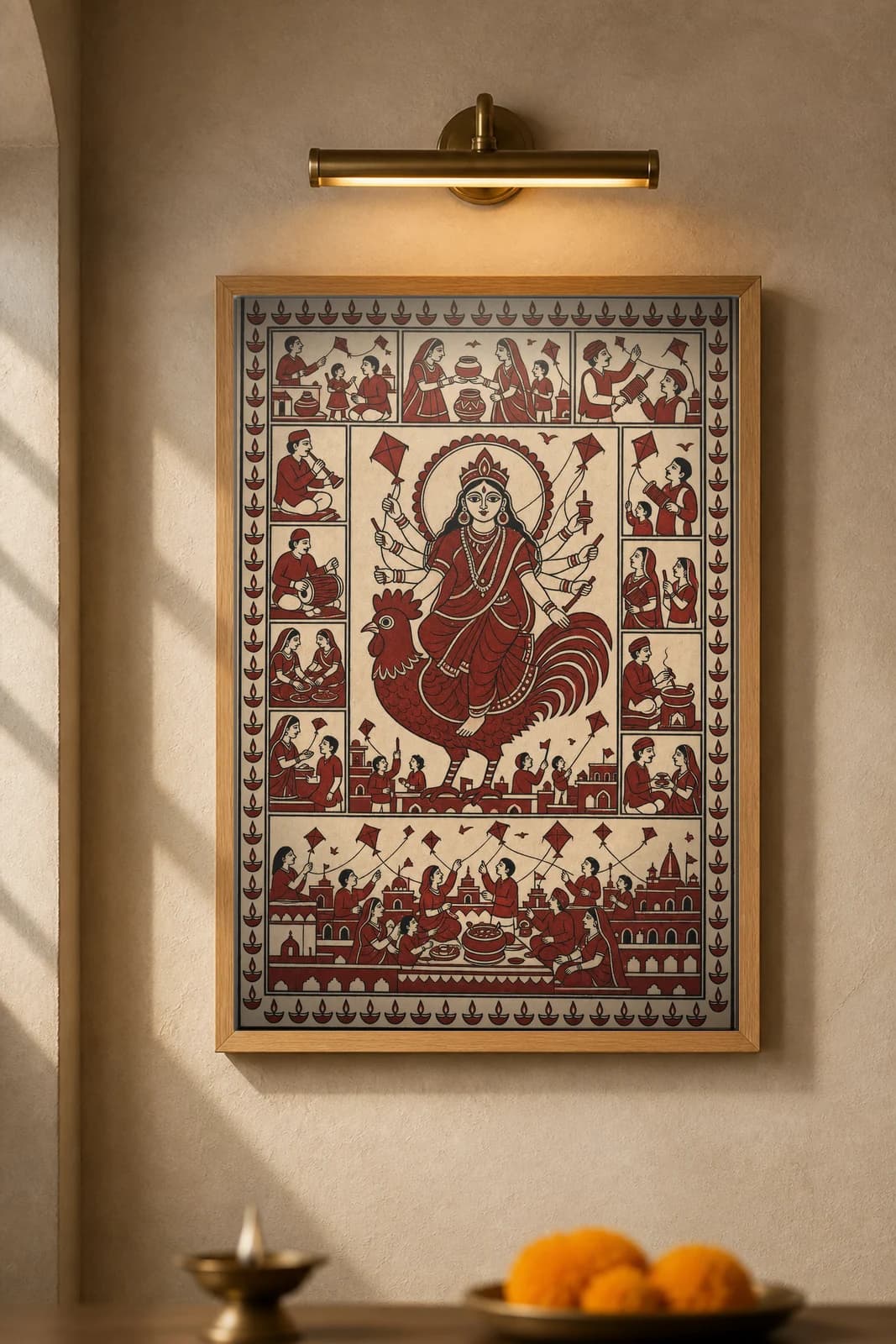
Balcony — 4 museum-grade prints sized and toned for the room. Aipan is the ritual floor- and wall-art of the Kumaon region of Uttarakhand, drawn traditionally by Kumaoni women with white rice-paste (biswar) on a geru (red-ochre) earth ground. The chhat bageecha — the rooftop or courtyard kitchen garden of pots and saplings — is part of everyday hill-home life, with the lotus and swastika carrying the auspicious note. Mata ni Pachedi means 'the cloth of the Mother Goddess' — a shrine textile of the Vaghri / Devipujak community of Ahmedabad and Gujarat, who, historically barred from temples, painted the Goddess on cloth to create their own portable shrine. The chabutaro is the tall communal bird-feeding tower common across Gujarat, where grain is left for sparrows and pigeons as a daily act of compassion; here it is given the cloth's central place in the shrine-cloth grammar. Peacocks still nest and display on Rajasthan rooftops as the monsoon breaks, and the peacock-and-rain pairing is the heart of the seasonal peacock-monsoon pichwai. A pichhwai (literally 'that which hangs at the back') is the painted cloth hung behind the Shrinathji deity to set the season; the rain-month cloths bring out peacocks, clouds and green.