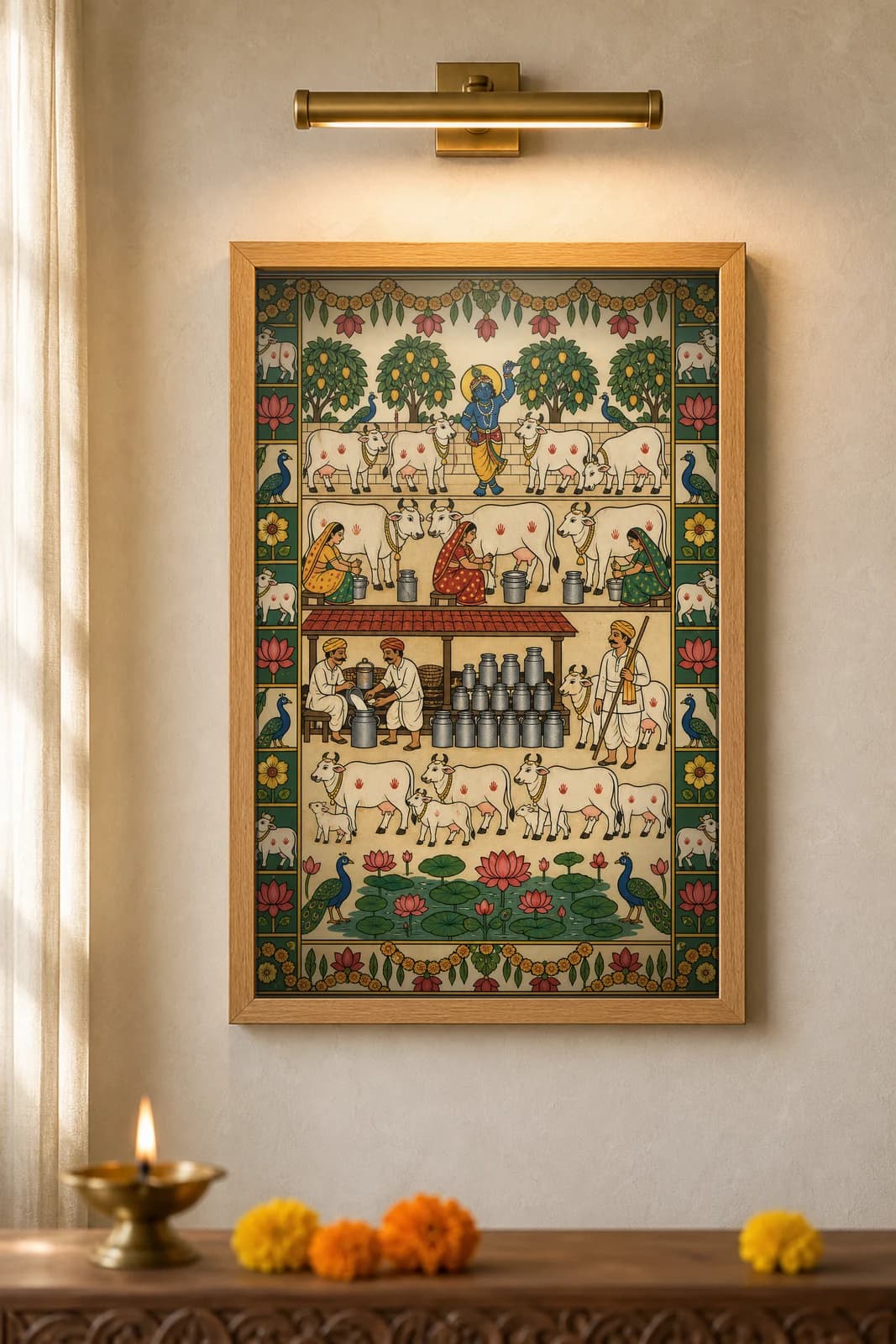
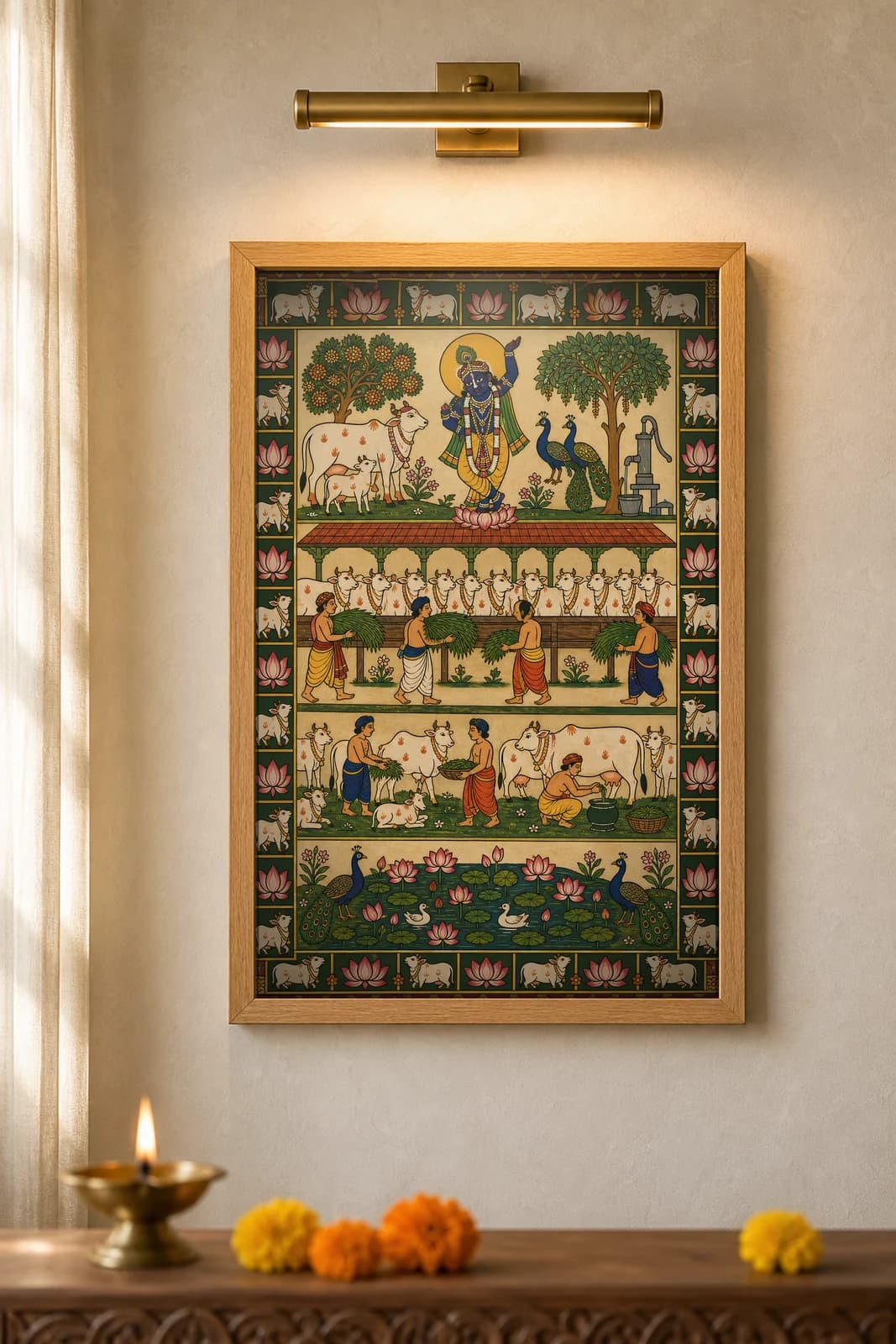
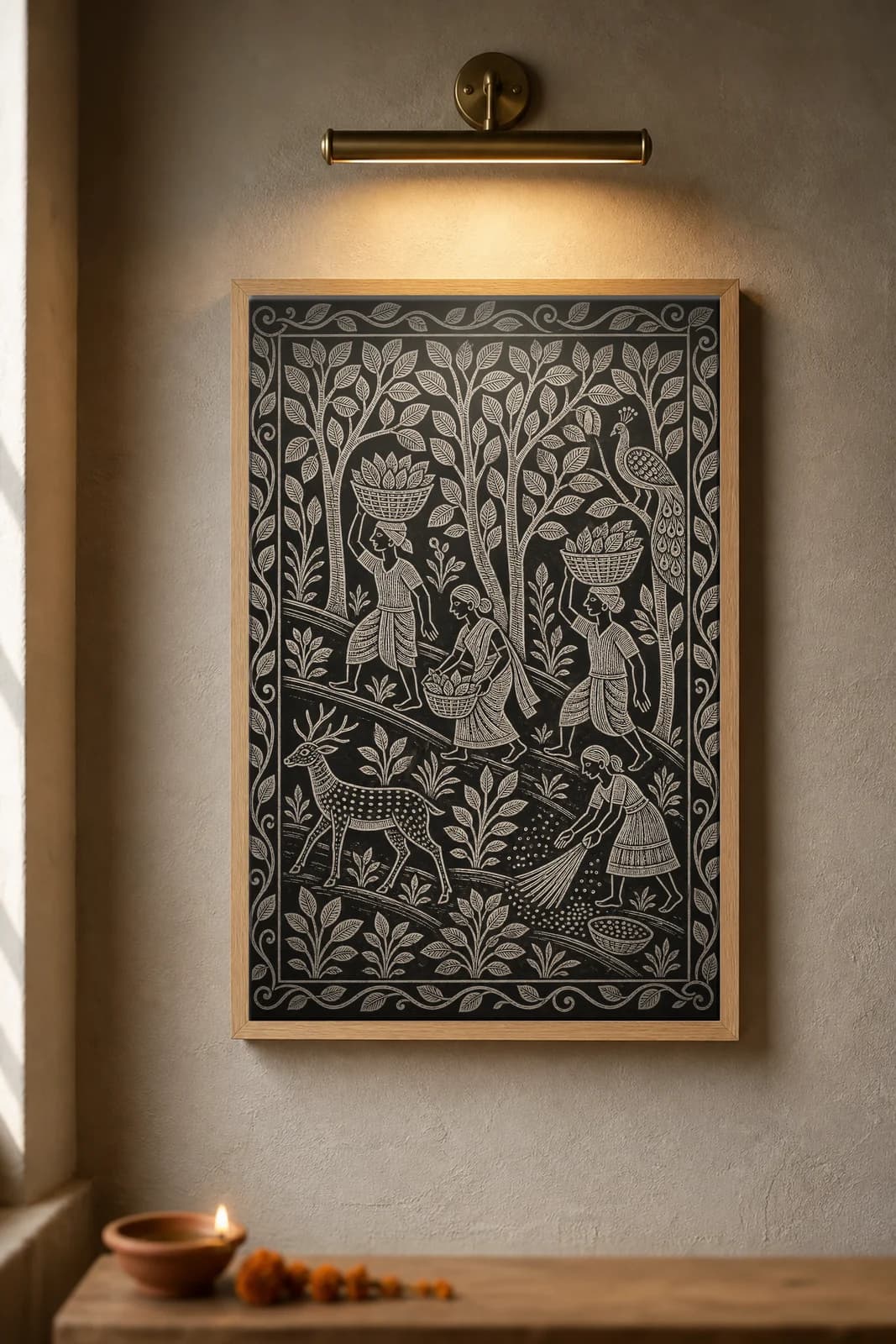
Working — 3 museum-grade prints that set the mood. Cows are the heart of Pushtimarg (Vallabh) devotion — go-seva, the care of cattle, is inseparable from worship of Shrinathji, the cowherd child-Krishna of the Nathdwara haveli-temple in Rajasthan. The horizontal cow-register is a classic pichwai motif; here it carries a contemporary dairy economy. A goshala is a shelter for cows, often community- or temple-run; cow-protection and go-seva are central to Pushtimarg (Vallabh) devotion, inseparable from worship of Shrinathji, the cowherd child-Krishna of the Nathdwara haveli-temple in Rajasthan. The horizontal cow-register is a classic pichwai motif; here it carries the labour of a modern cow-shelter. Khovar is the marriage wall art of Hazaribagh district, Jharkhand, combed by women of tribal and Kurmi communities onto the bridal chamber before a wedding, using a sgraffito technique — wet white kaolin slip over a dark base coat, combed and scratched away with a broken comb so the dark ground reads as line. The sal tree (Shorea robusta) is the backbone of the plateau forest economy: its leaves are stitched into the leaf-plates (pattal) used across eastern India, and its fallen seed yields oil — gathered chiefly by Adivasi forest families.