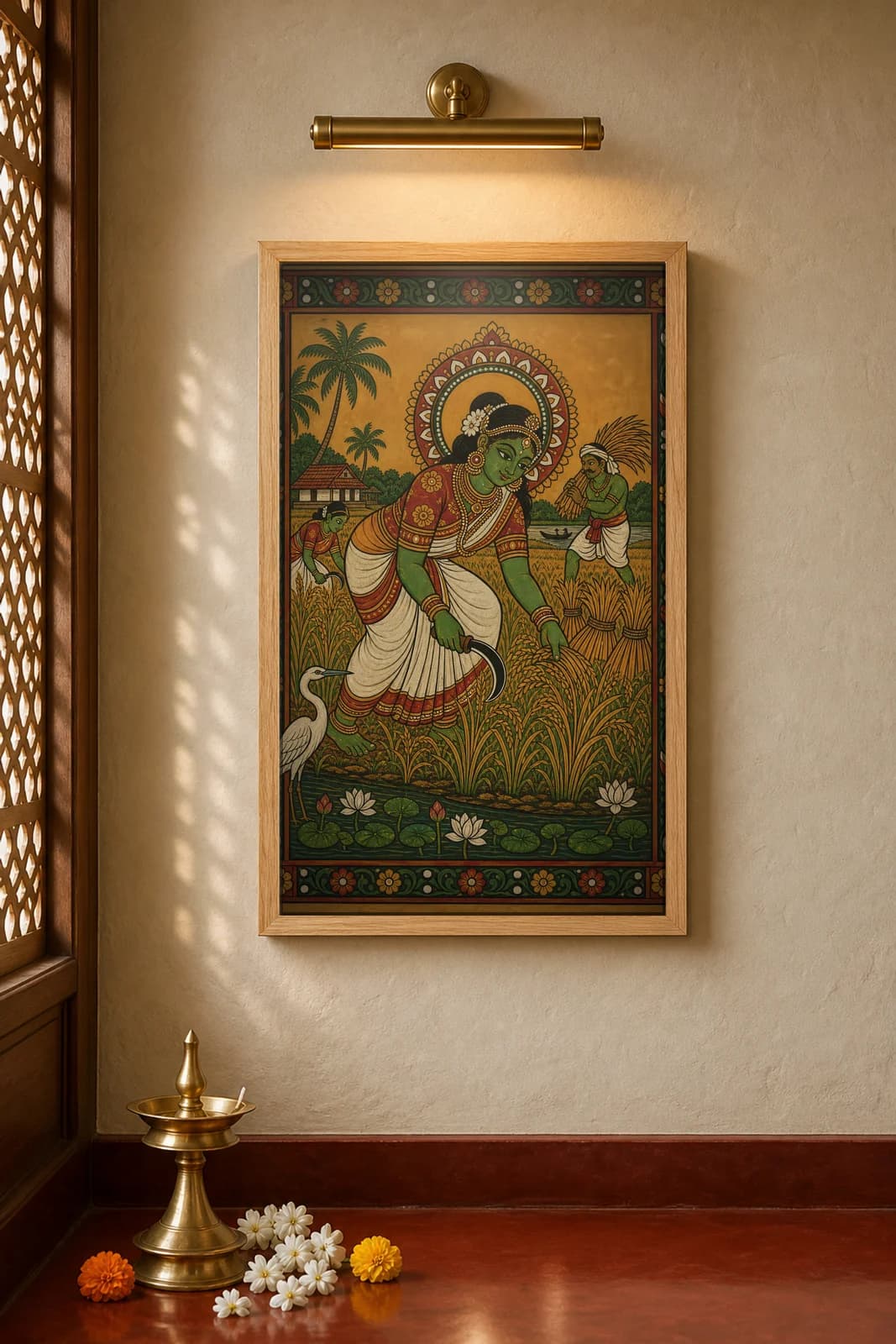
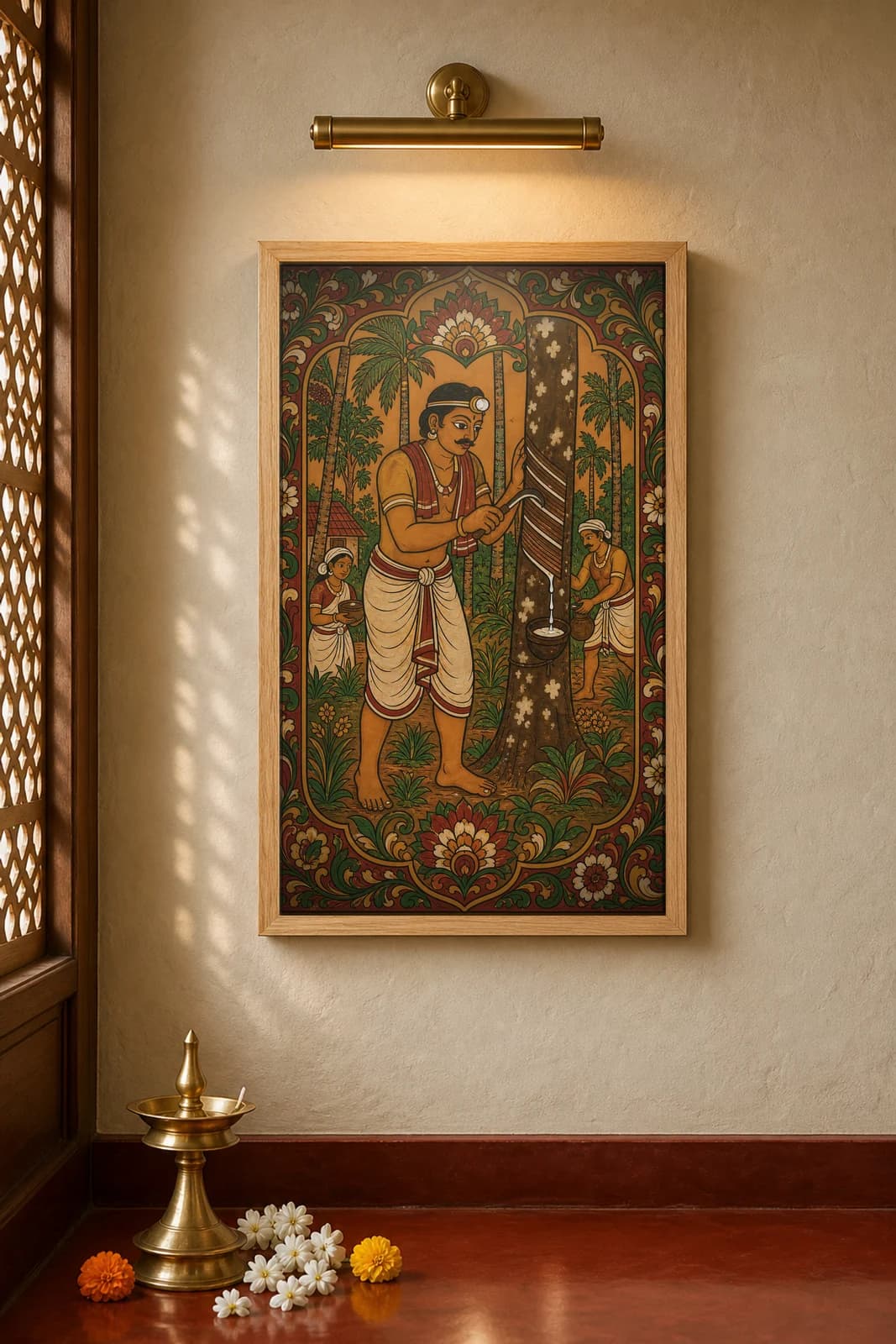
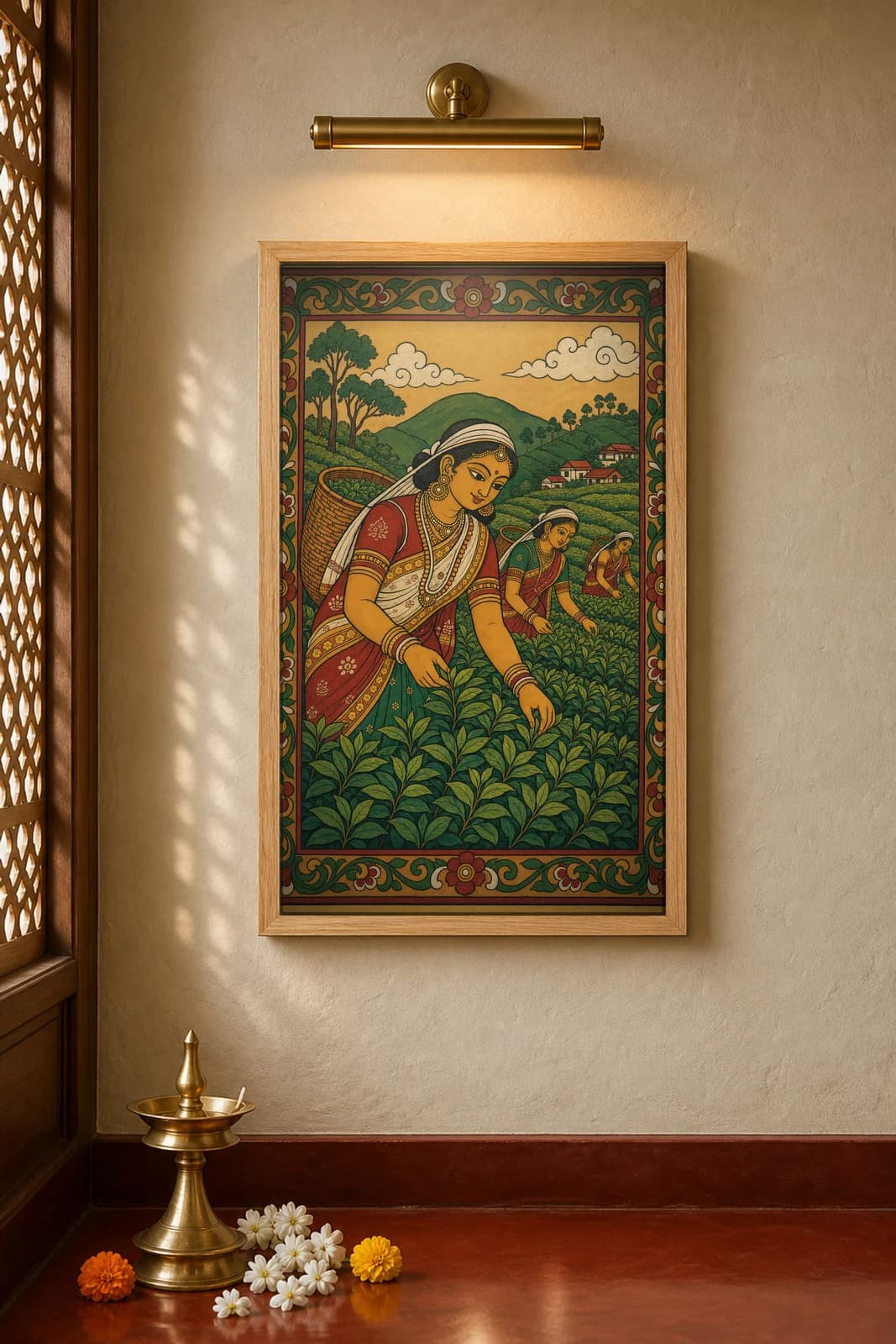
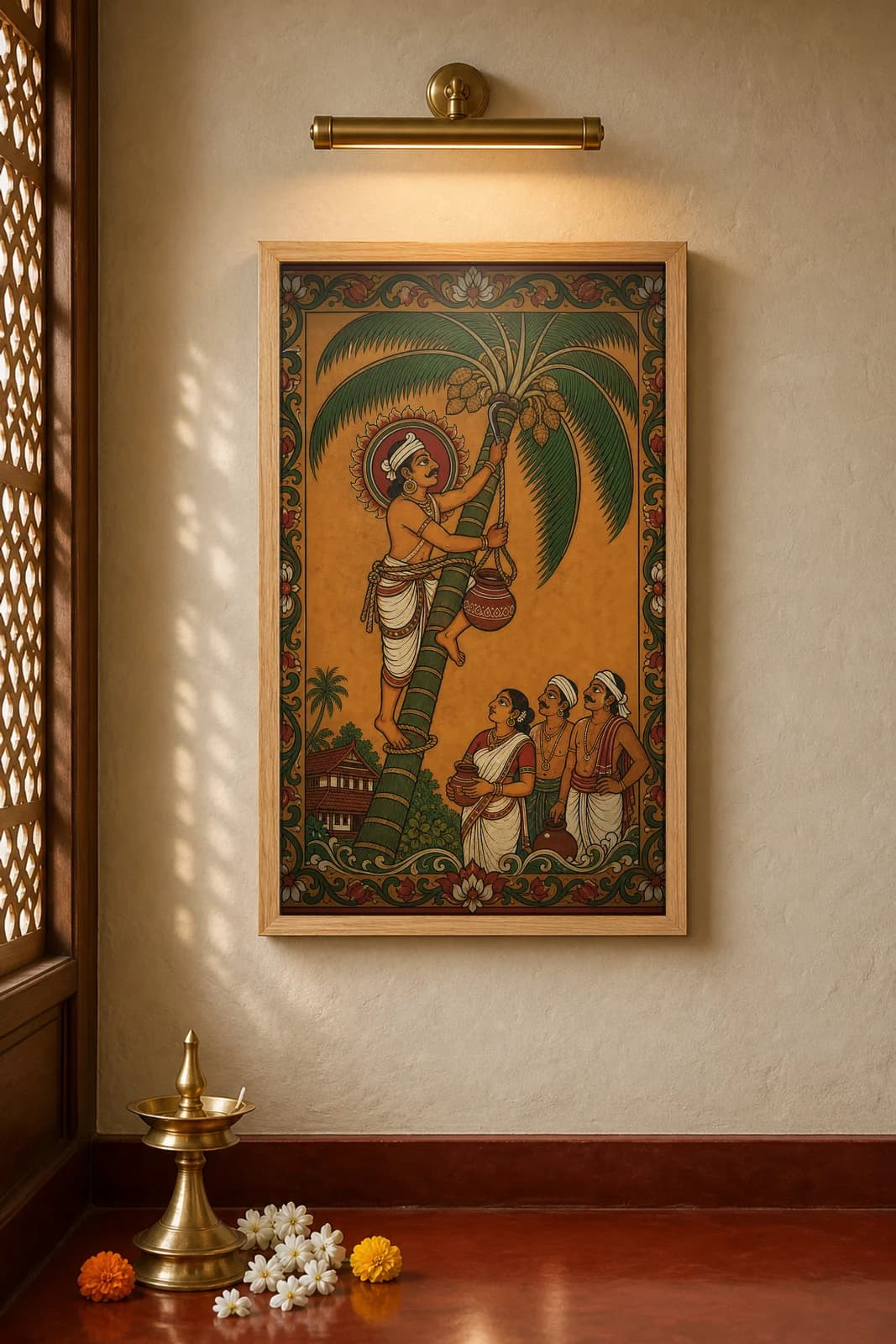
Warm Rural — 4 museum-grade prints that set the mood. Kuttanad, in Alappuzha district, is one of the few farming regions in the world cultivated below sea level — a network of reclaimed backwater paddy fields, often called the rice bowl of Kerala. The harvest, koythu, is done by hand with curved sickles, and women have long carried much of the reaping. Rubber is central Kerala's signature plantation crop — the Kottayam–Pala belt is the heart of Indian natural-rubber country — and tapping is skilled dawn work: a shallow spiral cut scored into the bark so latex drips into a cup before the day's heat slows the flow. The picture is built in the idiom of bhitti chitra, Kerala's temple-mural tradition, which uses the panchavarna five-colour system — red, yellow, green, black and white over an ochre ground — in flat opaque fields bounded by a bold lamp-black outline, with the school's signature elongated lotus-shaped eyes. Munnar, high in the Idukki hills, is one of South India's great tea-growing regions, its slopes carpeted with clipped tea bushes since the colonial plantation era; the harvest is hand-plucking — 'two leaves and a bud' — carried in cane baskets slung from a forehead strap, work long done largely by women. The picture is built in the idiom of bhitti chitra, Kerala's temple-mural tradition, which uses the panchavarna five-colour system — red, yellow, green, black and white over an ochre ground — in flat opaque fields bounded by a bold lamp-black outline, with the school's signature elongated lotus-shaped eyes.