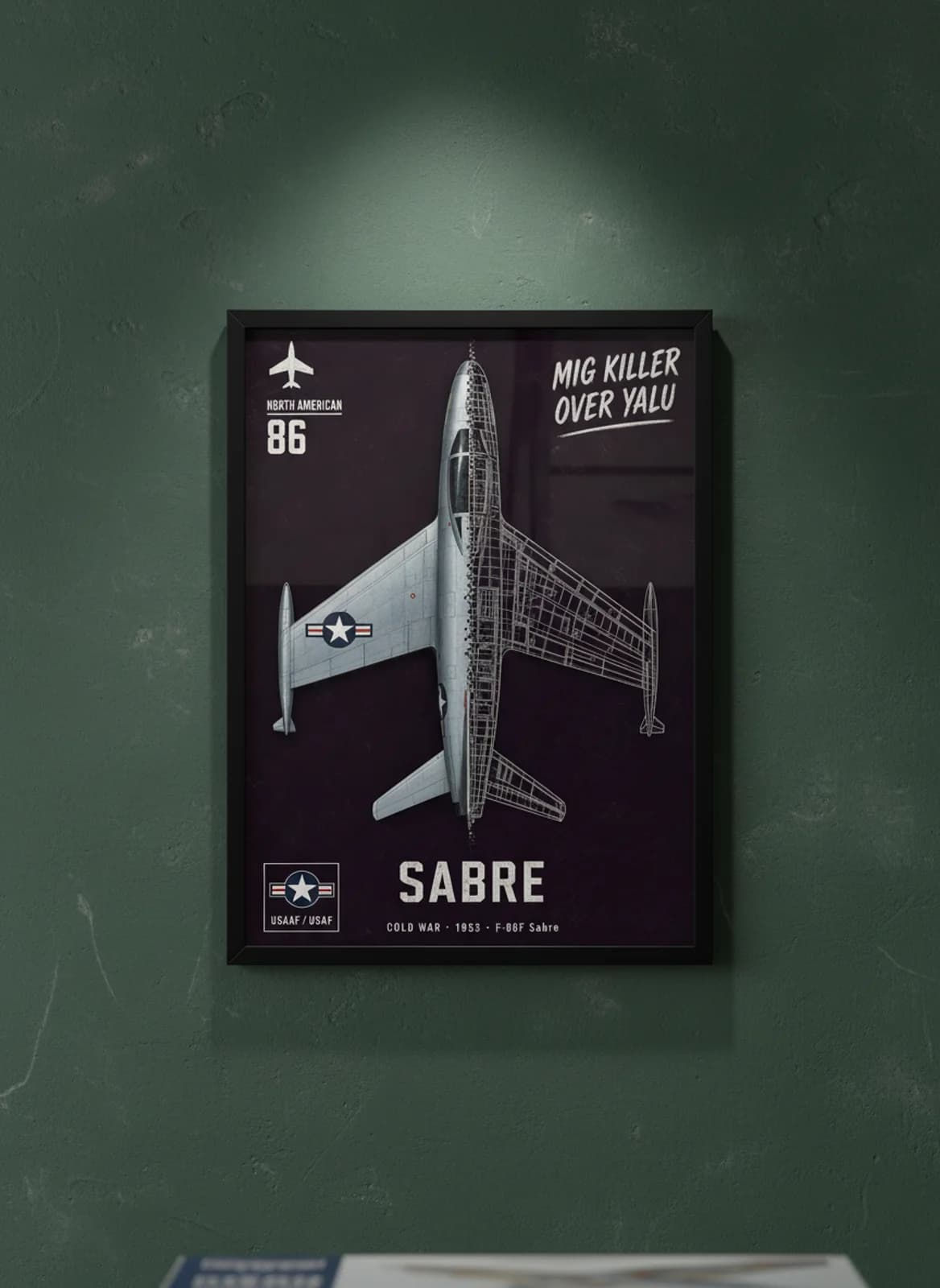
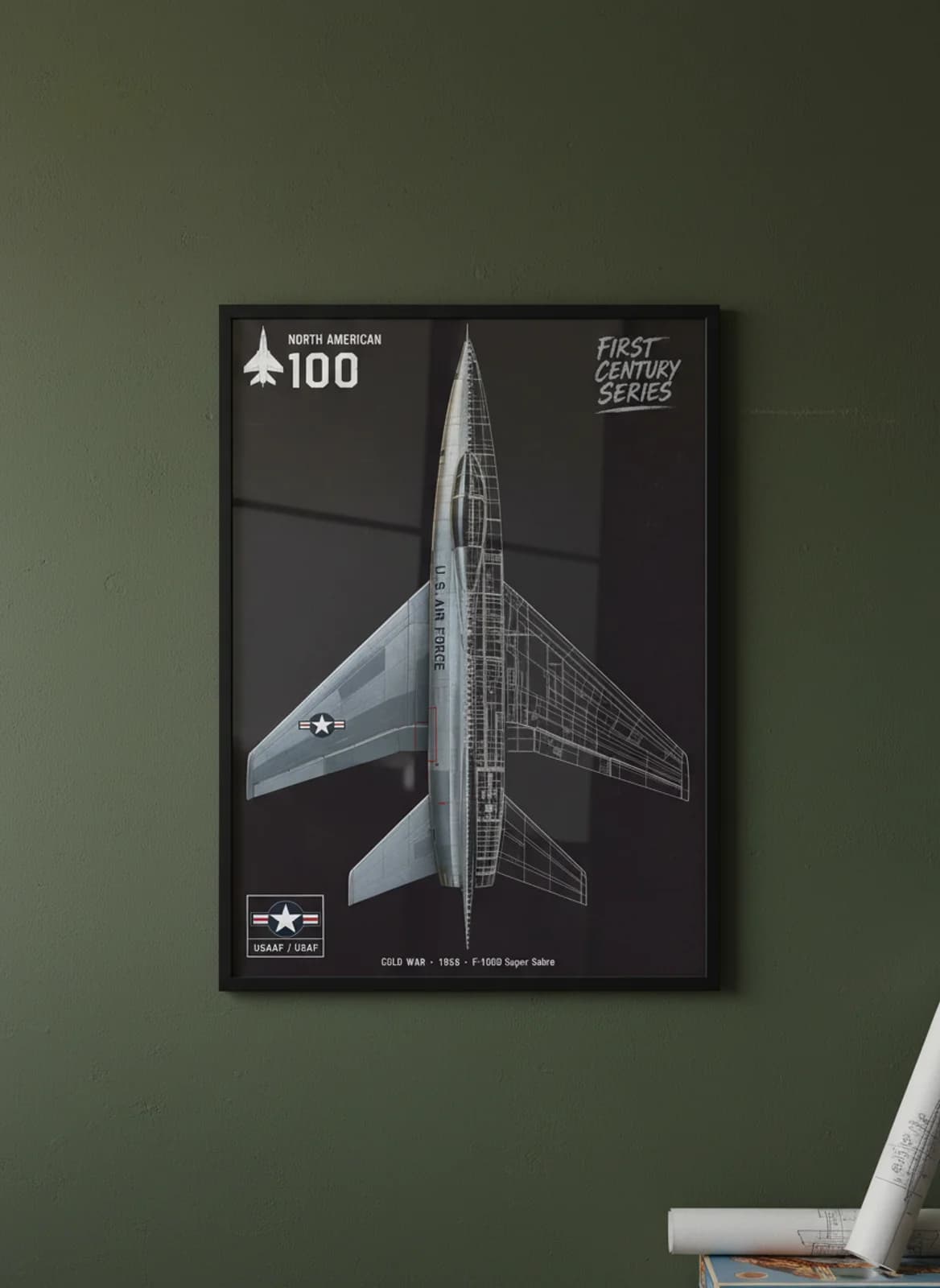
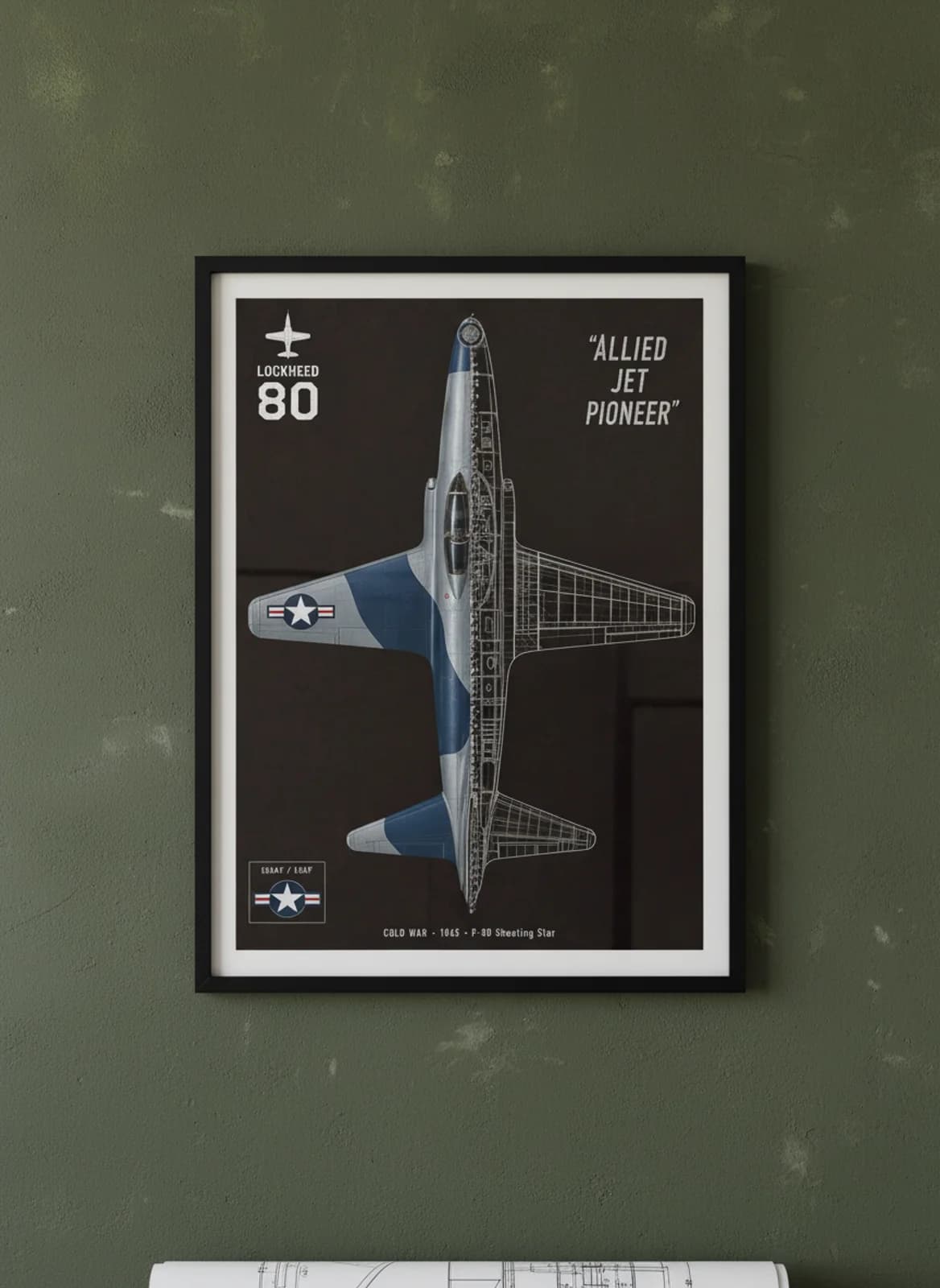
Usaf Heritage — 3 museum-grade prints that set the mood. The P-80 Shooting Star proved that American industry could design and mass-produce jet fighters without relying on captured German research alone — a Skunk Works achievement that accelerated every subsequent Lockheed program from the F-104 to the F-117. Though it arrived too late for World War II combat, the Shooting Star's Korea service as the F-80C and its T-33 trainer derivative trained a generation of jet pilots on both sides of the Iron Curtain. The F-100 Super Sabre bridged the Korean War Sabre era and the Vietnam War Century Series fleet — a single-seat fighter whose afterburning J57 made Mach 1 routine for Tactical Air Command pilots who had watched F-86s flirt with the sound barrier only a few years earlier. Thunderbirds silver schemes and NATO deployments made the Super Sabre silhouette as recognizable in Europe as the F-86 had been over Korea. The F-86 Sabre claimed a confirmed victory ratio near ten-to-one against MiG-15s over Korea — statistics that cemented the swept-wing fighter as the defining air-combat platform of the early Cold War. North American's design team incorporated German swept-wing research to solve transonic compressibility; the result influenced MiG-15 evolution and every subsequent generation of fighter.