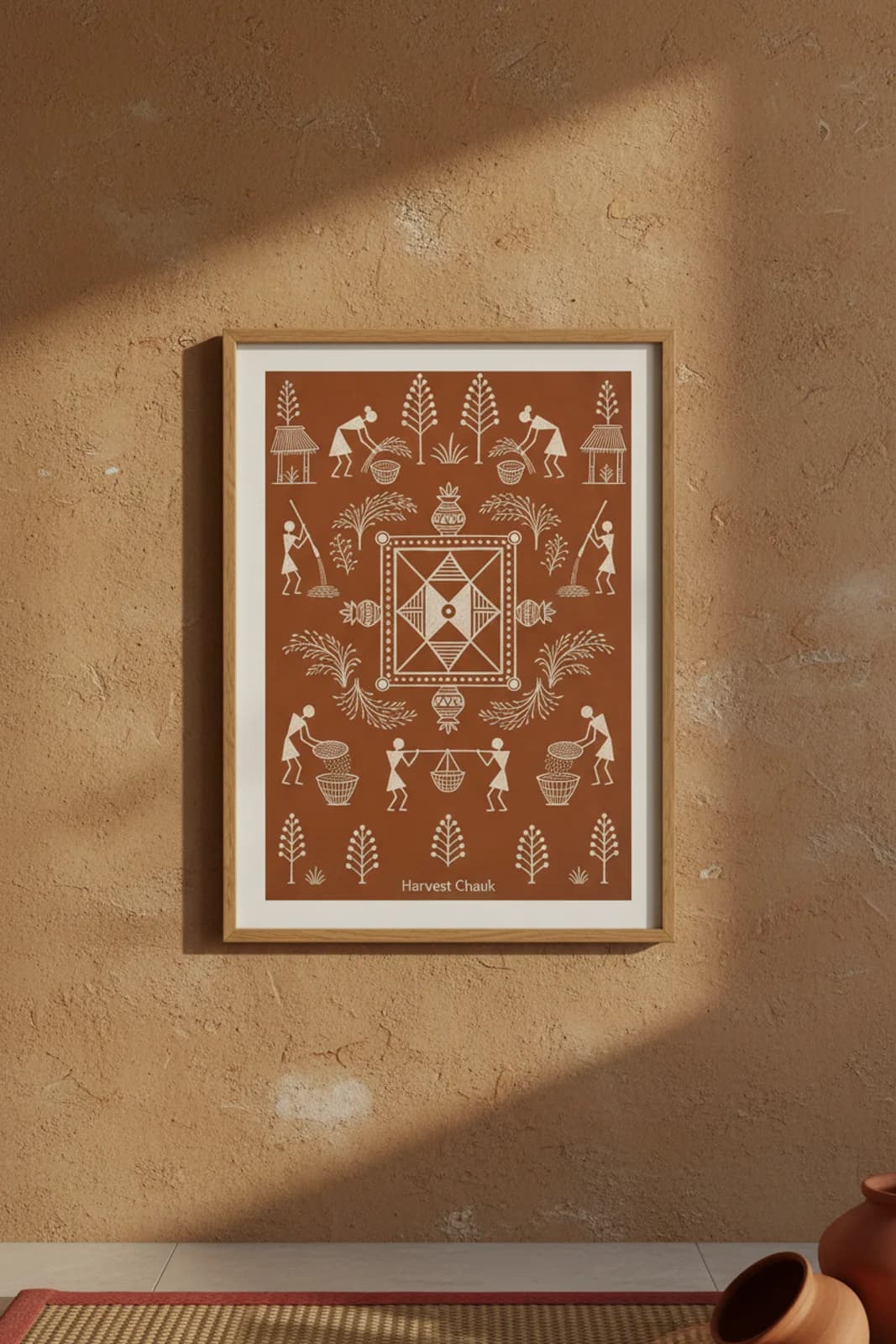
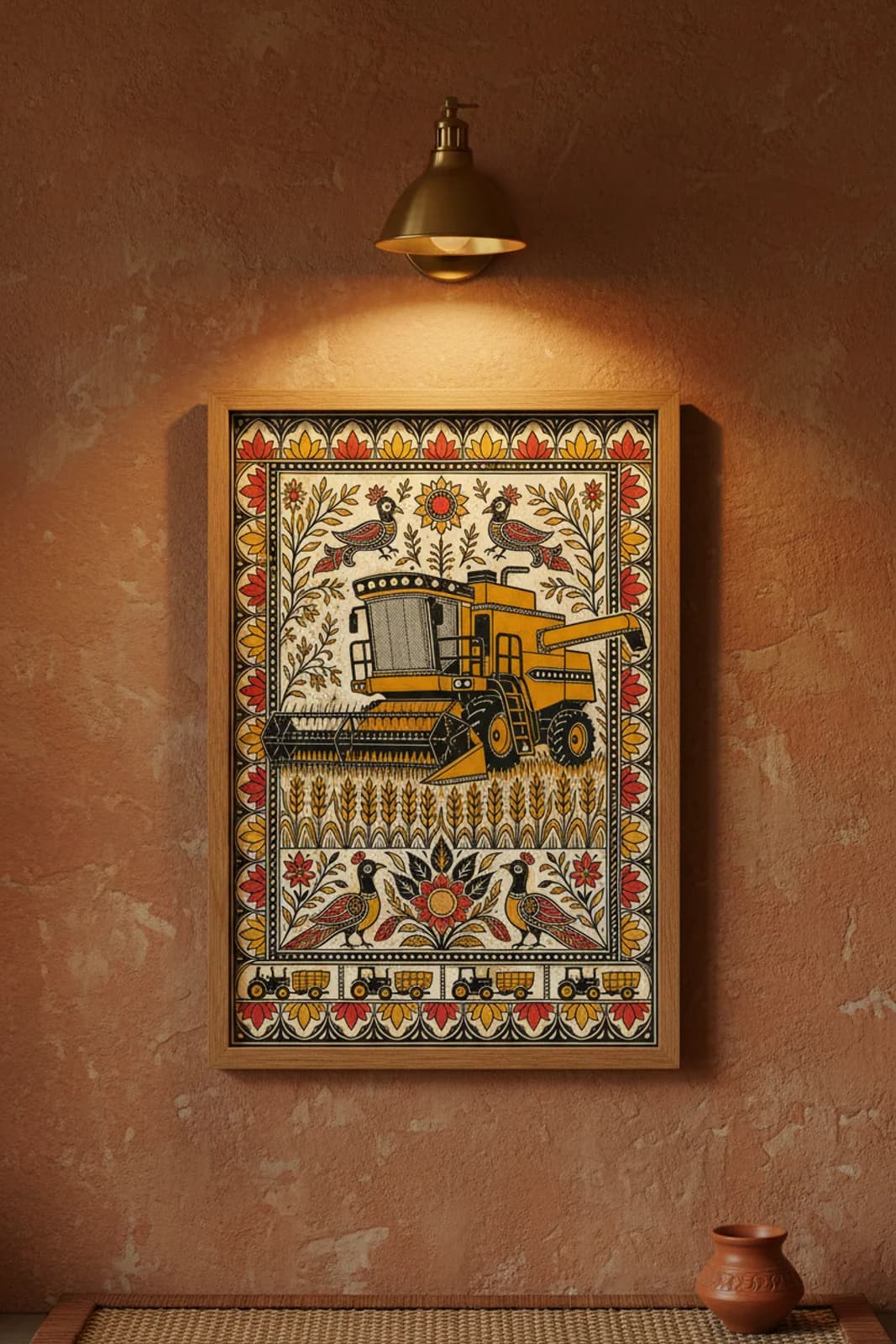
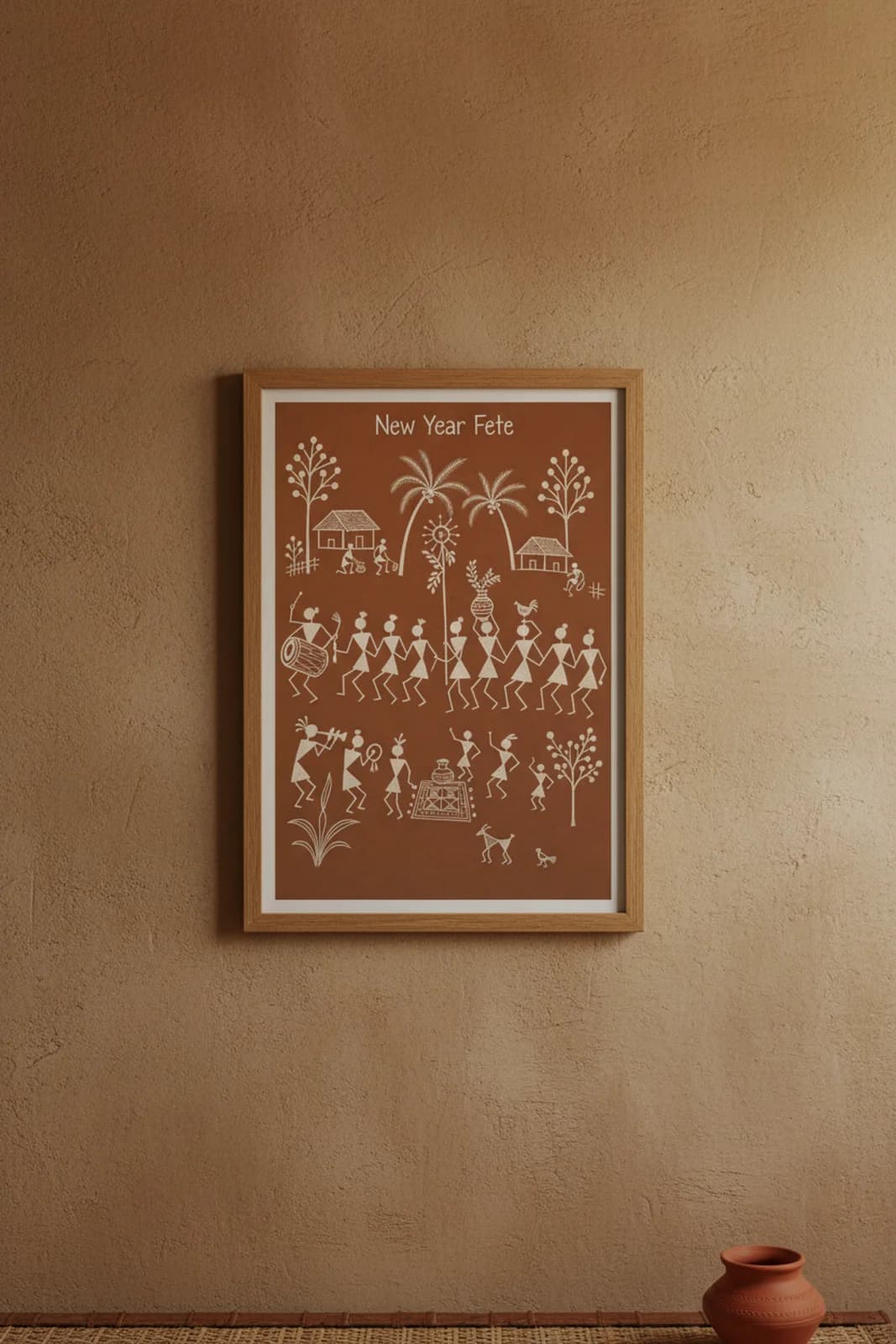
Harvest Gratitude — 3 museum-grade prints that set the mood. Warli painting belongs to the Warli Adivasi community of the North Sahyadri range in Maharashtra — practiced across talukas including Dahanu, Talasari, Jawhar, Palghar, and Mokhada. Women traditionally painted interior hut walls with white rice paste, water, and gum applied through chewed bamboo sticks, over a ground of red geru soil mixed with cow dung. Bharni — literally "to fill" — is the Mithila colour-flood style historically associated with Brahmin women painters in villages such as Jitwarpur, Ranti, and Rasidpur; bold black outlines enclose vermillion, turmeric, and ochre fills on wedding walls and, after the 1960s Bihar drought commercialisation, on handmade paper. Harvest scenes belong to the oldest Mithila subject matter: women gathering grain, chaurchan and kojagara festival panels, and Anaj ka Aashirwad motifs that celebrate agrarian labour and seasonal reward — Ambika Devi and other contemporary masters still paint harvest women in Bharni fill for farmhouse and cultural interiors. Warli festivals mark agricultural calendar turns — sowing, harvest, new year — through white rice-paste narratives on geru walls. The tarpa circle dance is distinct from harvest-procession walks: musicians centre a ring for post-harvest eve, while new-year fetes often show linear processions with drums and linked hands.