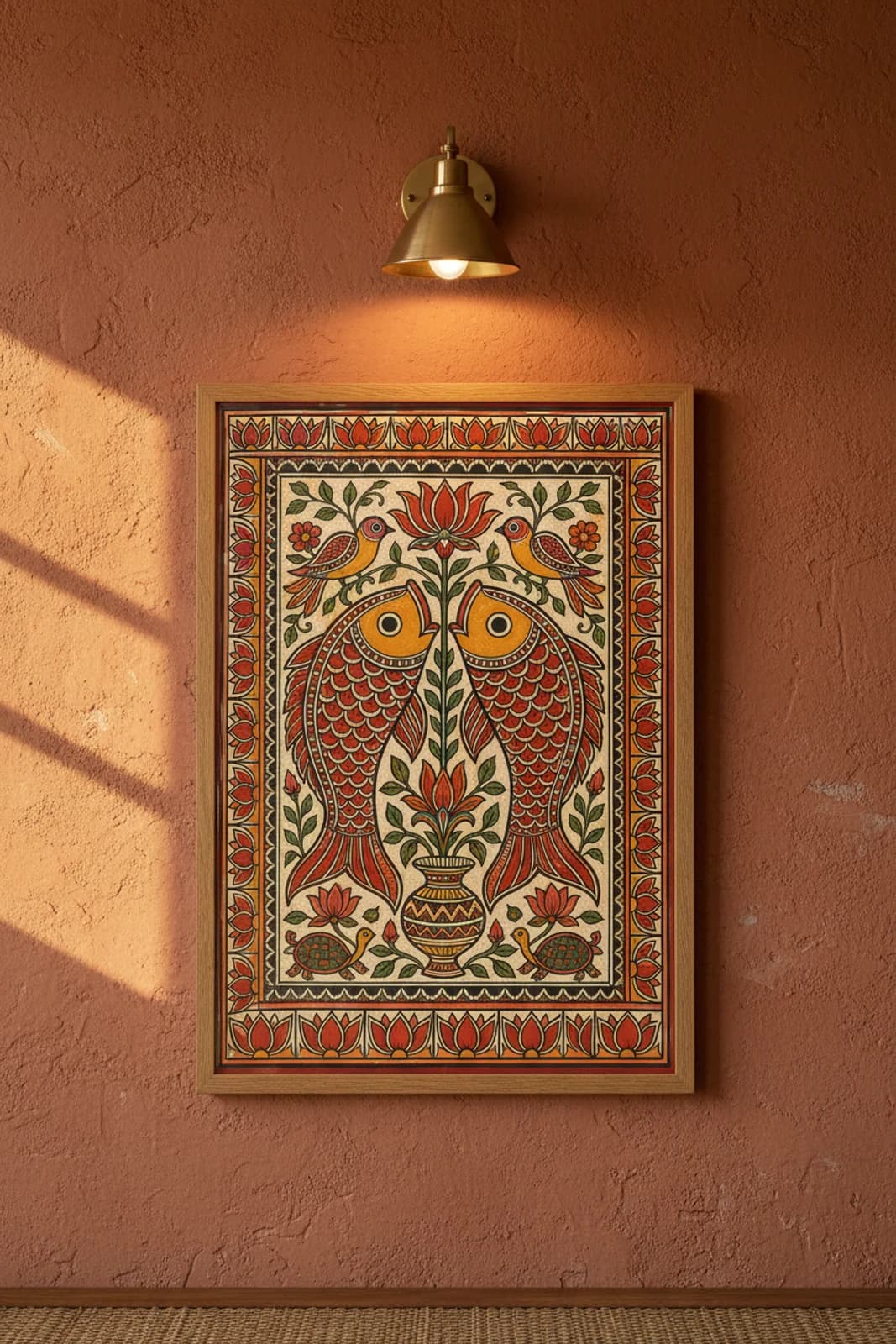
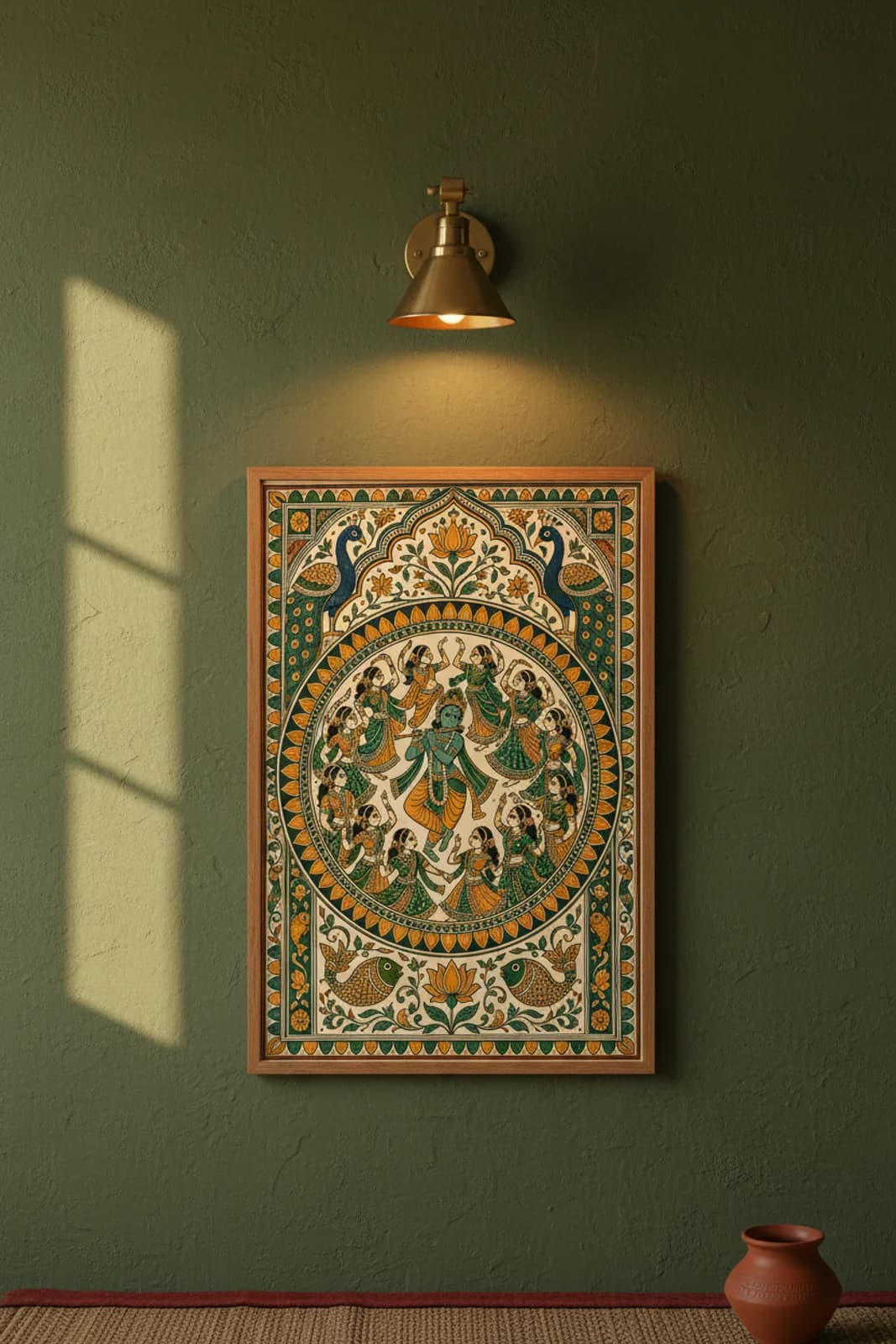
Auspicious Warm — 2 museum-grade prints that set the mood. Kohbar — also called Puren in some Mithila villages — is the Madhubani style reserved for the bridal chamber (kohbar ghar), the most vibrantly painted room in the wedding house where newlyweds traditionally spent their first four nights. Women of the household coated walls with cow-dung and mud plaster before painting auspicious symbols in natural pigments: lotus and bamboo as generative motifs, paired fish (matsya) for fertility and marital harmony, turtles (kurma) for longevity and patience, parrots for love and procreation, snakes for protection. Bharni — from the Hindi word for filling — is the Madhubani style associated with Brahmin and upper-caste Maithil households who painted saturated colour fields for deities and mythic scenes on interior and courtyard walls, distinct from Kayastha Kachni hatching, Dusadh Godna tattoo dots, and Kohbar nuptial chamber panels. Rasa Lila (rasa meaning aesthetic emotion, lila meaning divine play) depicts Krishna's circular dance with the gopis of Braj — a Vaishnava theme expressing ecstatic devotion through collective movement; Mithila artists render it as radial mandala compositions with Krishna at centre and gopis in ring formation, often crowned by peacocks and anchored by fish and lotus fertility motifs.