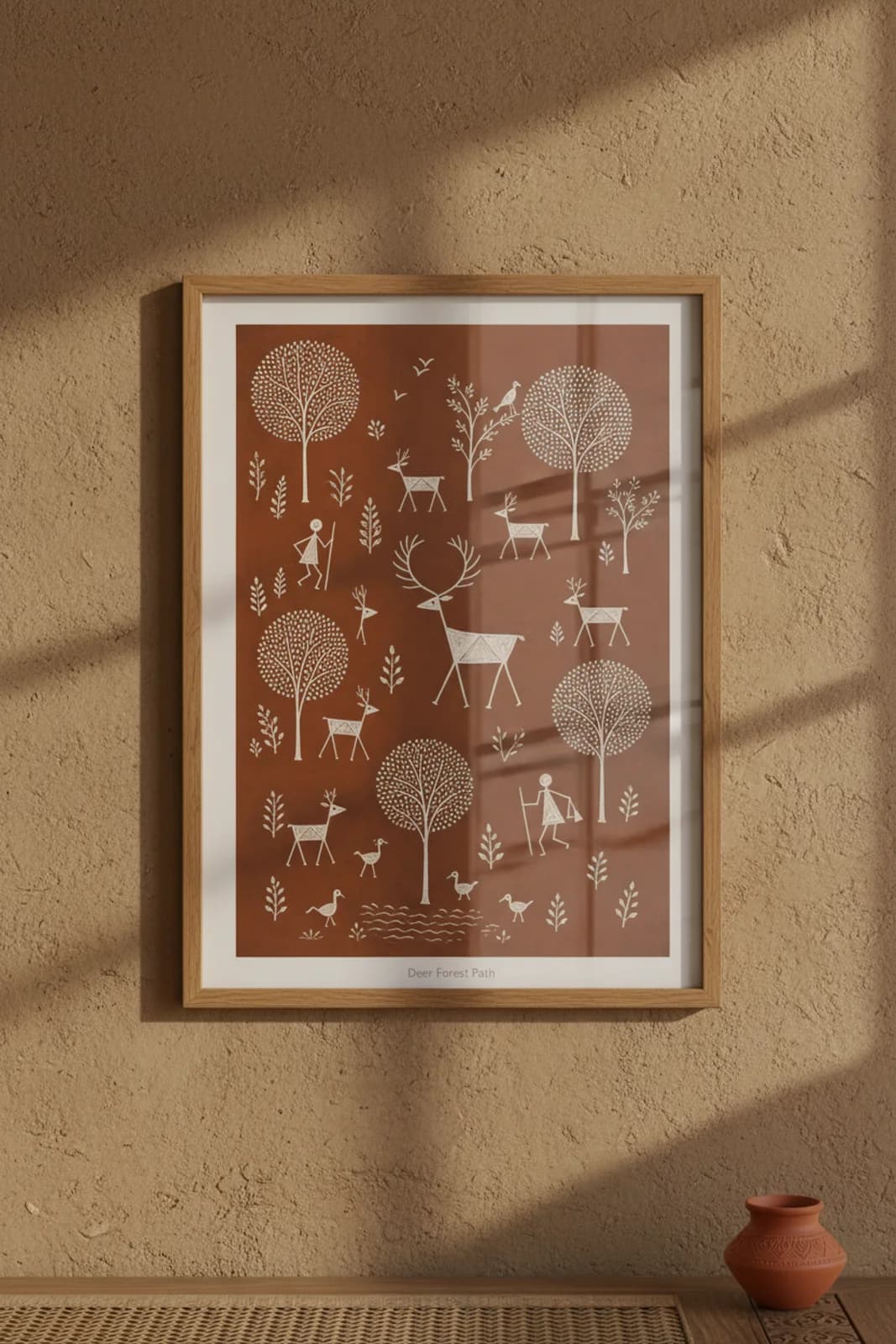
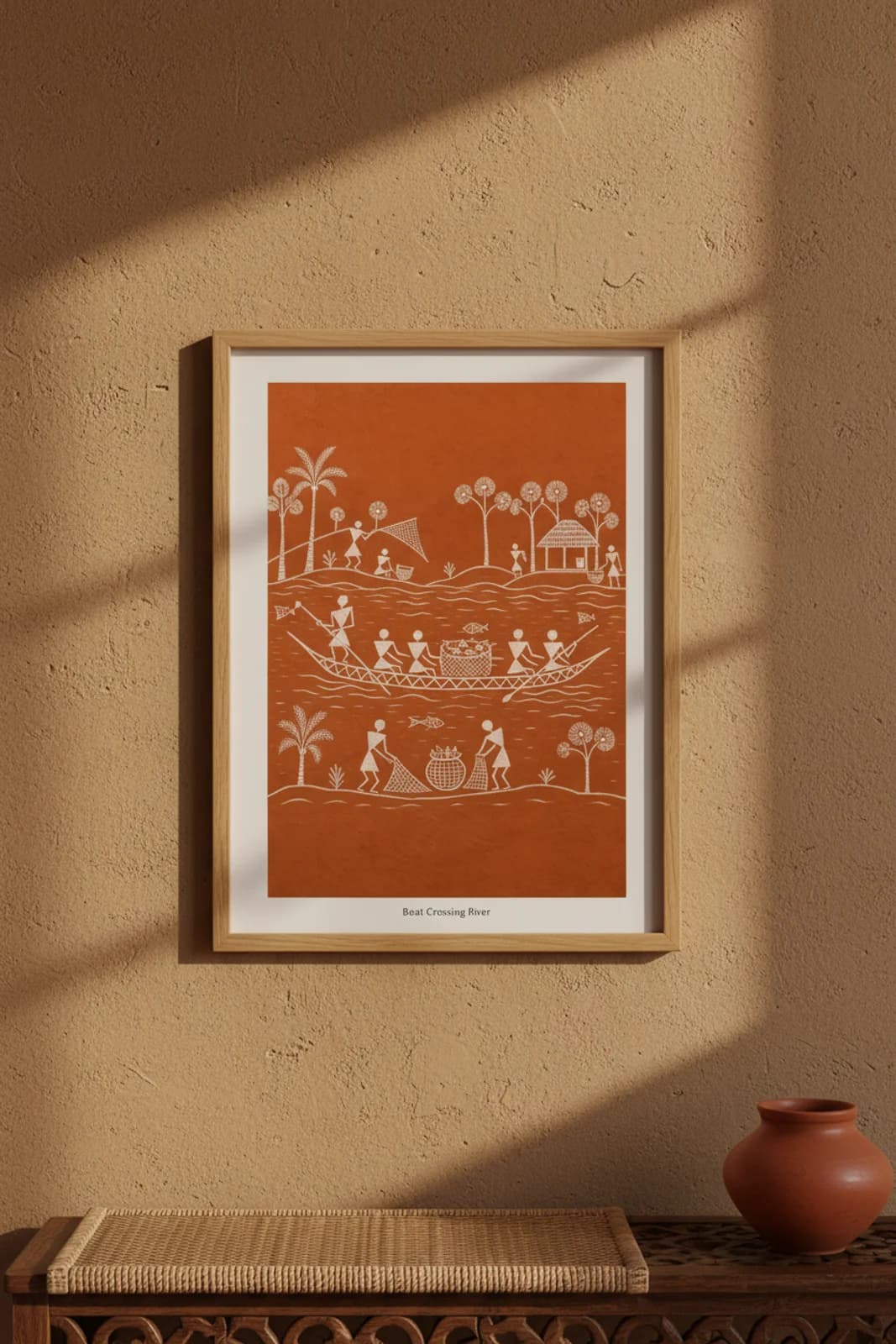
The brief was forest-scatter symmetry for a classical forest-life subject — not the marketplace Warli default of sun, moon, hut, spiral, and every animal in one tourist frame. Deer among triangle trees is a Vikramgad grammar problem: how do you show a herd, two foragers, and a water edge in one vertical portrait without a tarpa dance ring or central chauk square that belongs on marriage walls? Forest-scatter was the fix — motifs distributed across ochre ground with a hero stag centre-frame and smaller deer at varied heights, the way classical wall painters placed animals in lived forest rather than zoological catalogue. What we refused: concentric dance spirals, sacred chauk geometry, perspective depth, and dense all-over fill that would choke the airy ground Warli needs. What we kept legible: branched antlers as stick-fan lines, dot-filled circle canopies as classic tree vocabulary, staff-carrying foragers as forest-gatherer walking figures, and wavy stream bands anchoring the bottom register. Light density (~50% fill) lets ochre breathe between deer — empty ground is forest air, not unfinished wall.
 WALLIMILIST