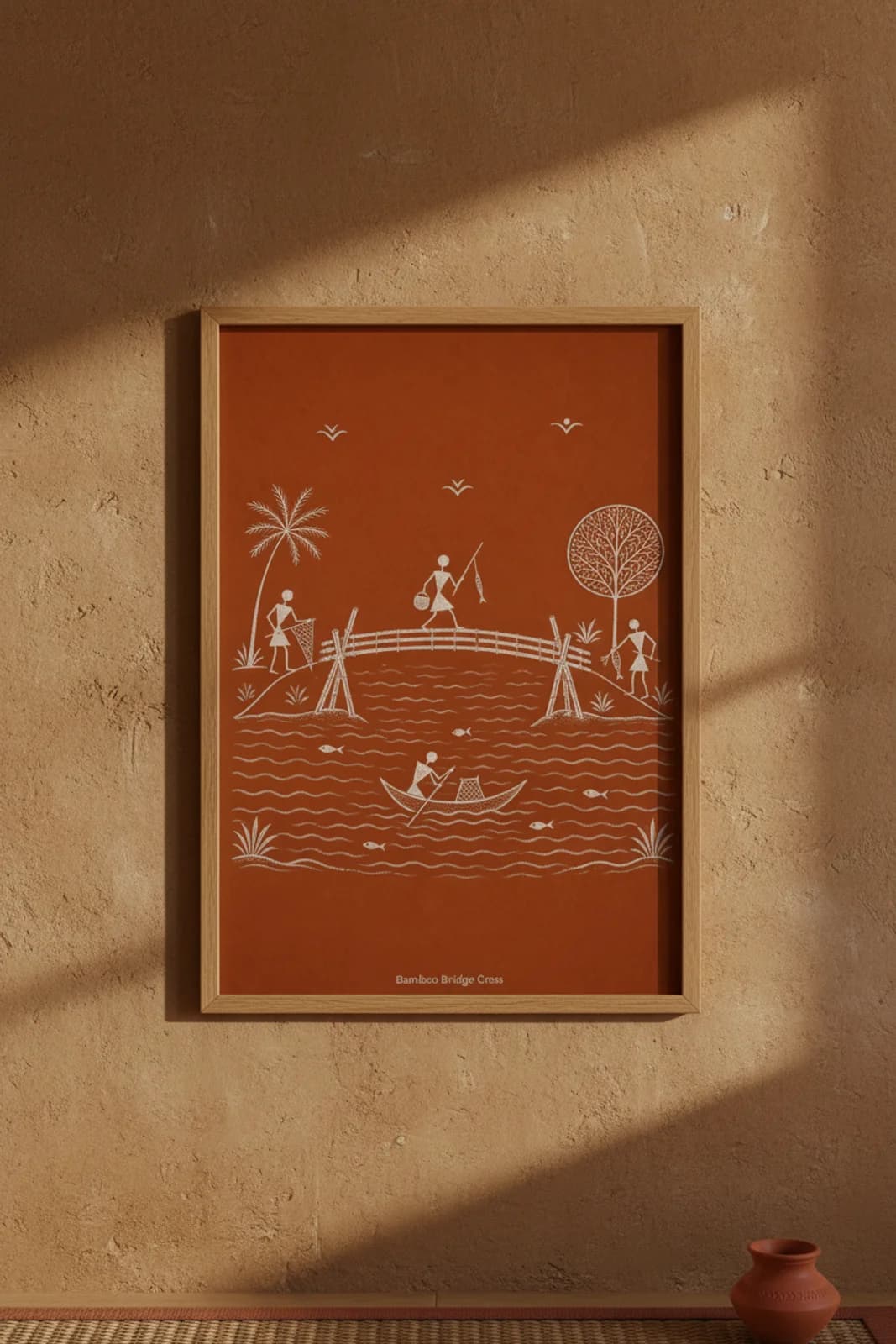
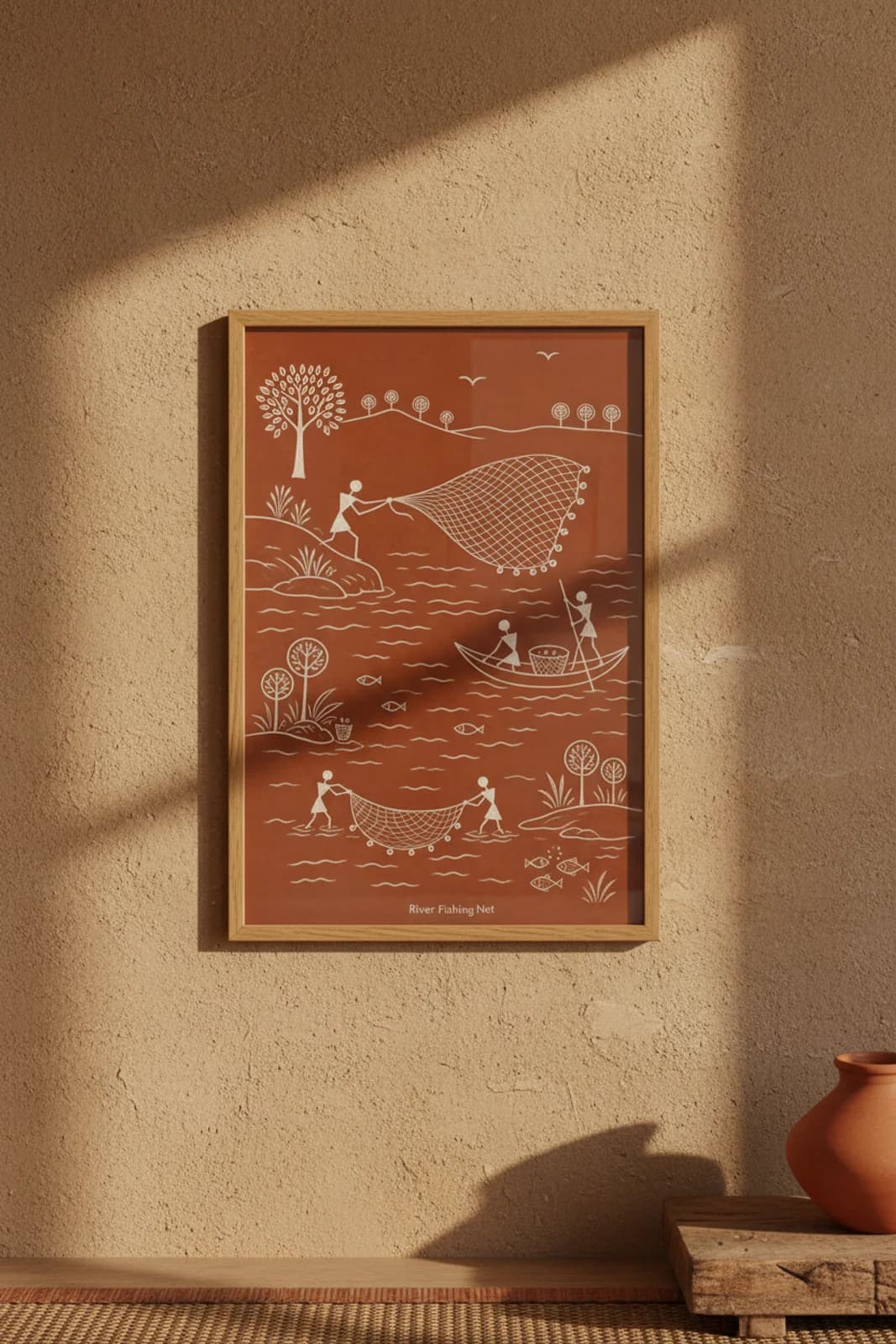
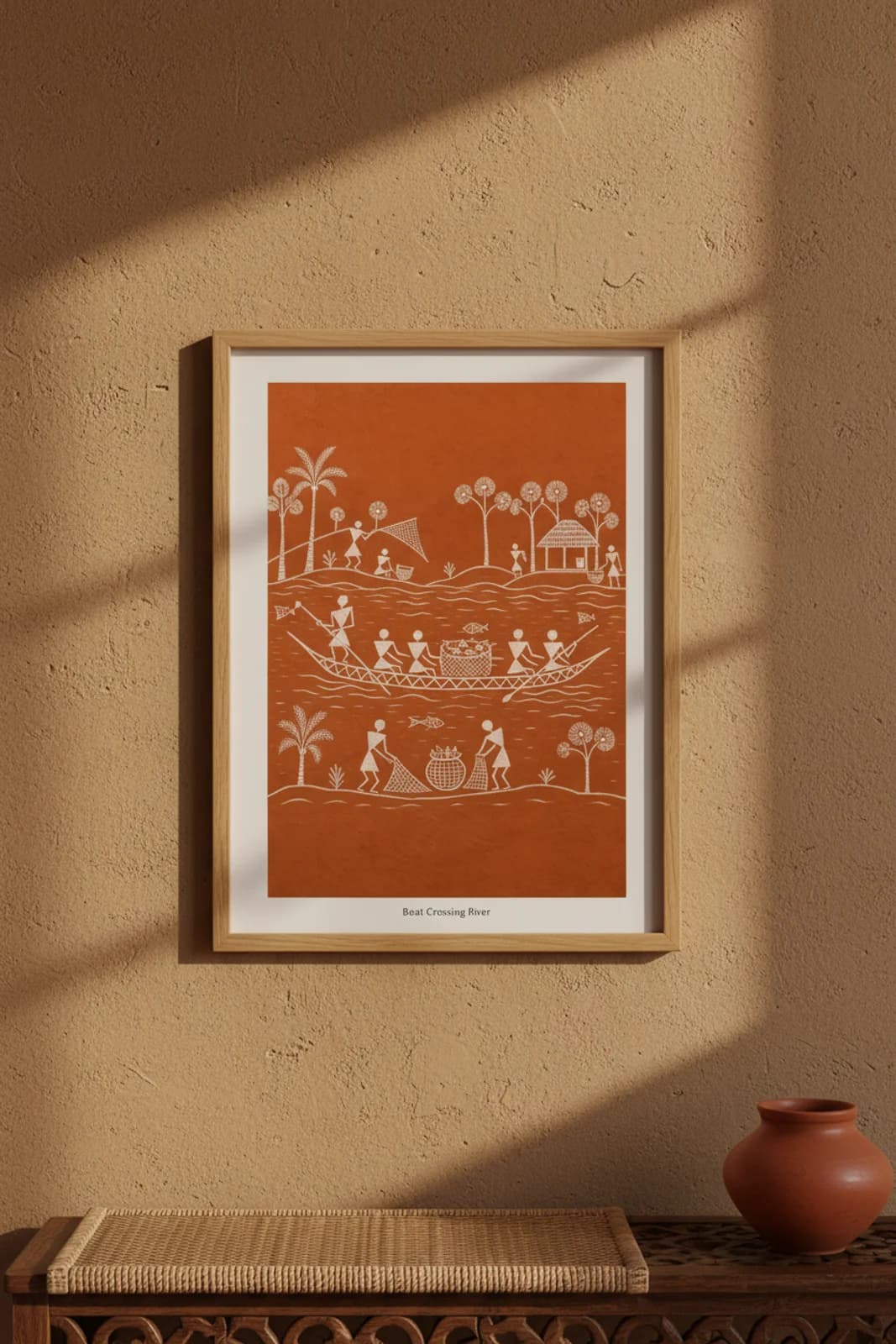
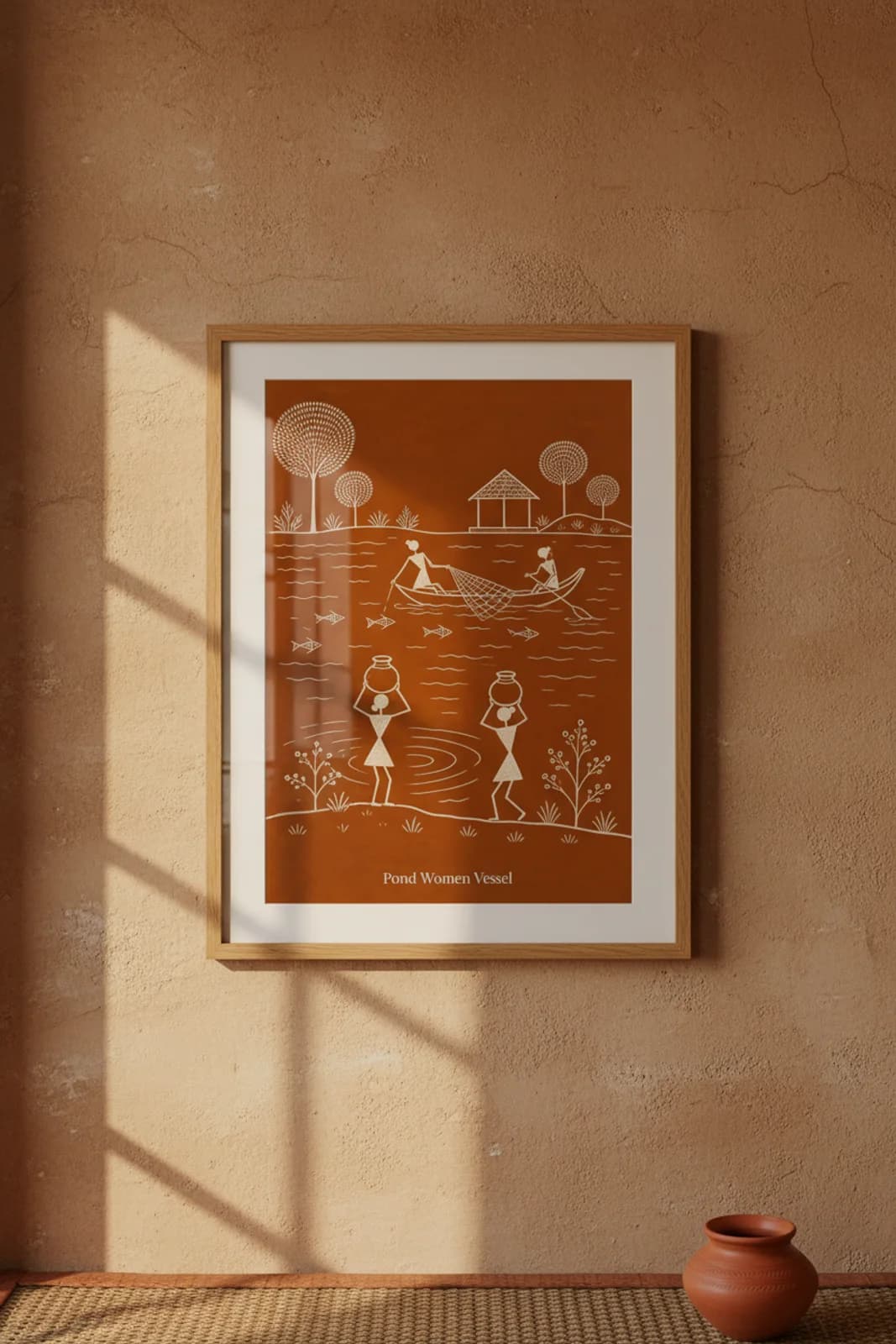
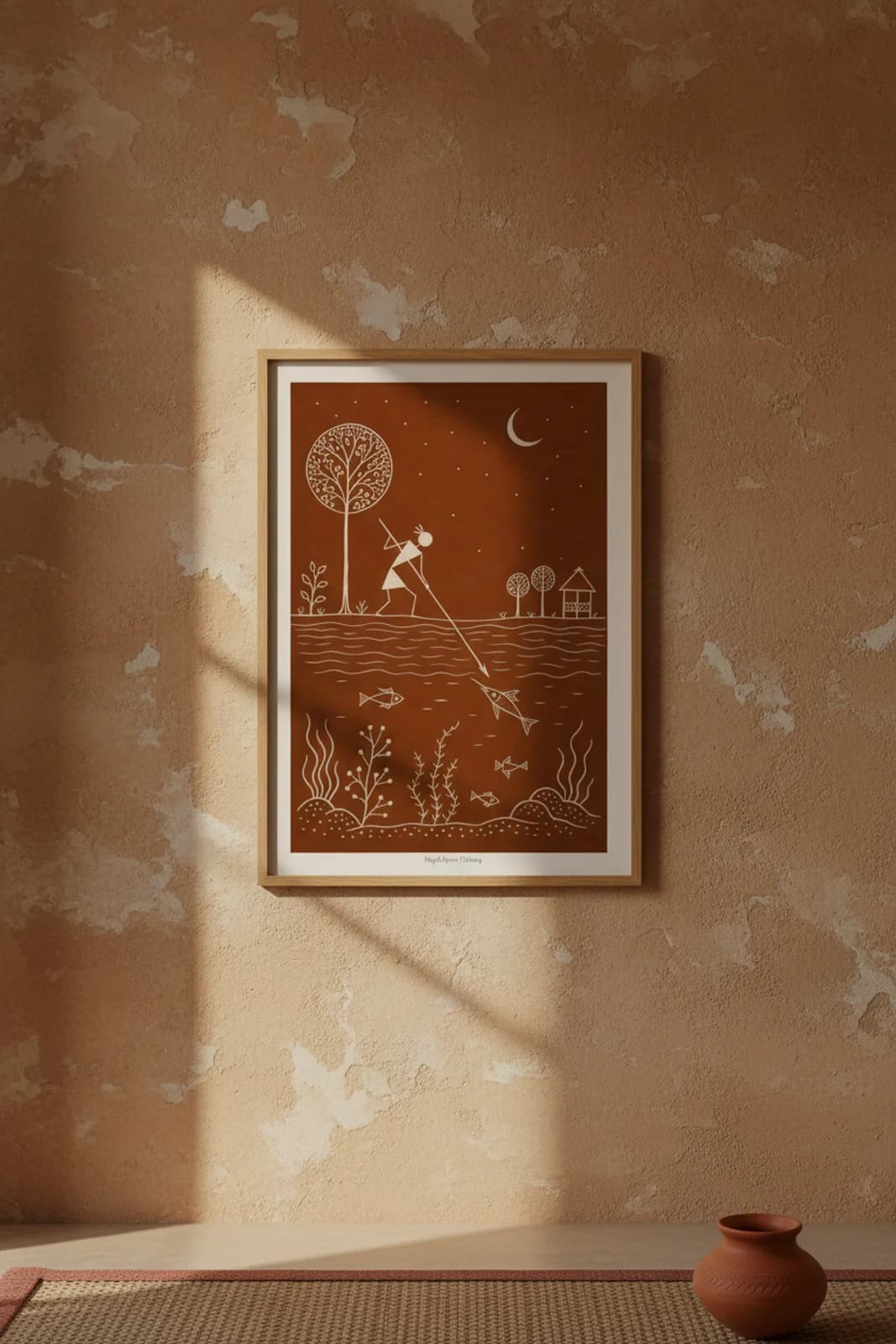
The brief was a river-flow layout for a fishing subject, not a tourist poster mash-up. Bamboo bridge over stream is a daily Talasari grammar problem: how do you show crossing, casting, and rowing in one vertical frame without defaulting to the tarpa circle every marketplace Warli print falls back on? River-flow symmetry was the fix — horizontal water bands anchor the lower two-thirds while the bridge arch creates a natural horizontal hero across the centre, letting figures read at bank, mid-span, and hull level simultaneously. What we refused: a central chauk square (this is stream labour, not lagnacha ritual), concentric dance rings, perspective depth on the bridge, and any second narrative layer like sun-moon-hut clutter. What we kept legible: crossed bamboo stilts, pole-by-pole bridge decking, triangle net on the left bank, rod-and-catch pair on the right, and the rower under the arch where the water lines compress. Light density (~45% fill) preserves the ochre wall breath that classical Warli needs — the empty ground between birds and bridge is part of the composition, not unfinished space.
 WALLIMILIST