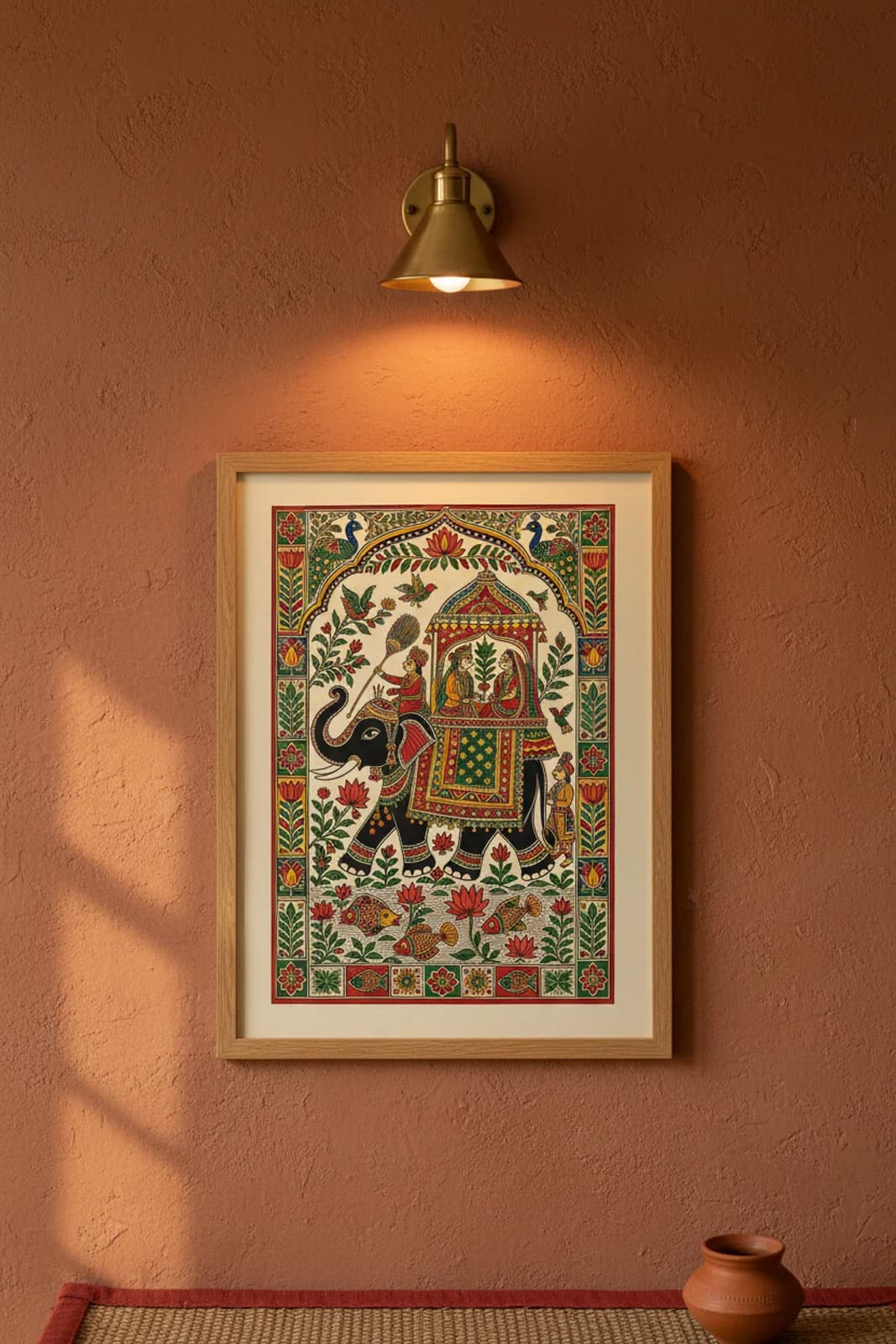
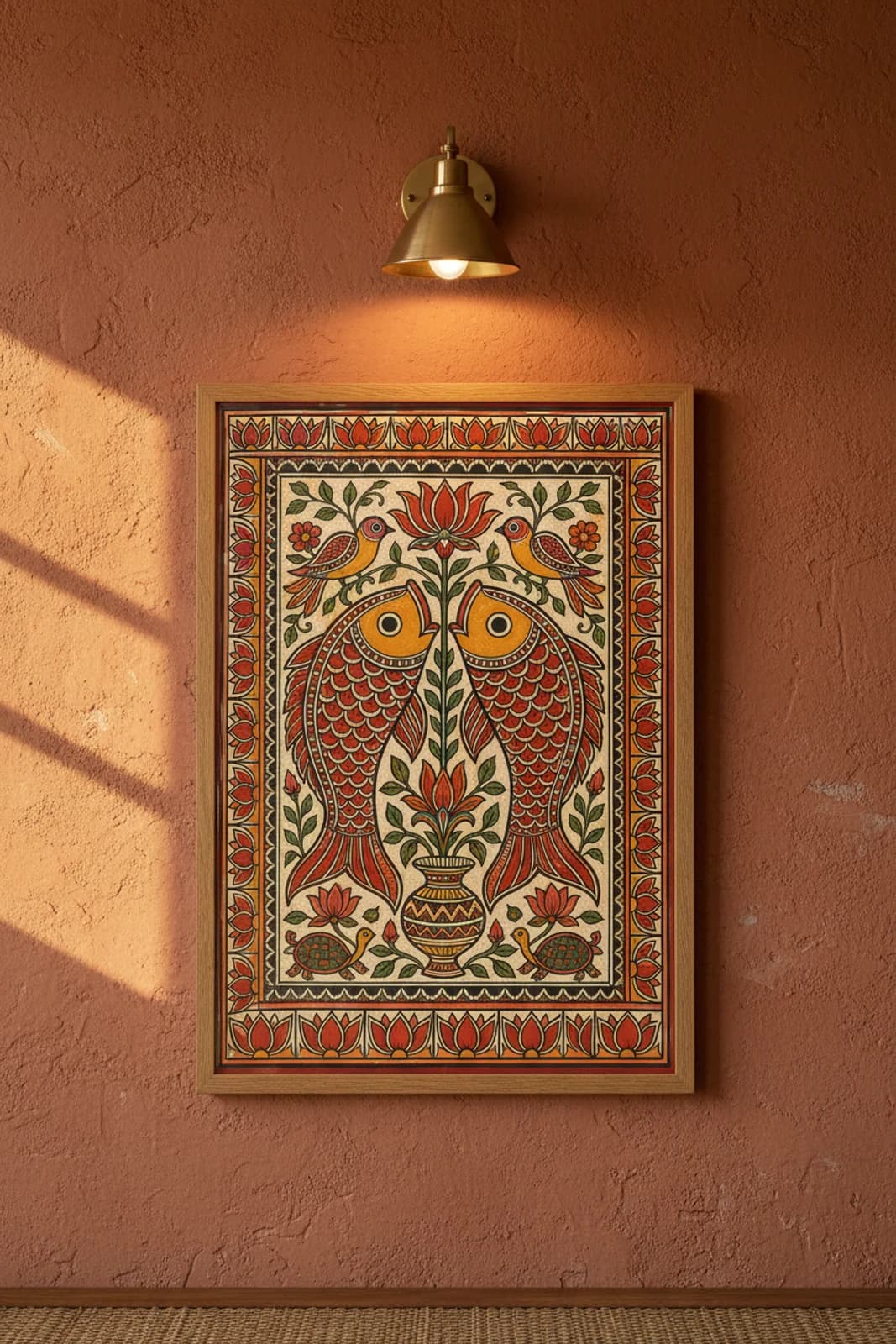
DESIGN BRIEF: Kohbar wedding walls narrate the union before the couple ever shares a room — and the elephant procession is the loudest chapter in that story. Asymmetric left-right narrative solves a layout problem radial mandalas cannot: the caparisoned mount must read as movement, not a static emblem. I anchored the elephant facing left so the eye enters at the mahout's chauri, travels through the howdah where bride and groom face each other across a shared sapling, and exits at the attendant trailing behind — the same left-to-right reading Mithila women paint when they wrap wedding scenes around a kohbar ghar doorway. The pointed torana arch above borrows bridal-chamber crown grammar without importing a full sindoor-bindu central pillar; it simply frames the procession as sacred threshold. Corner peacocks are not decorative filler — Kohbar panels place them as romance and beauty guardians at the arch crown, facing inward toward the couple. Three fish below the elephant feet ground the scene in fertility symbolism the way paired fish anchor horizontal Kohbar panels, but here a triple band under the mount suggests abundance flowing beneath the auspicious ride. Vermillion red and deep green carry wedding-chamber pigment logic — Bharni flat fills for the howdah canopy, caparison panels, and lotus petals; Kachni hatching on the black elephant hide and wavy water lines. Horror vacui is intentional: empty cream in a Kohbar wedding panel reads unfinished, like a bridal room still waiting for the first night blessing.
 WALLIMILIST