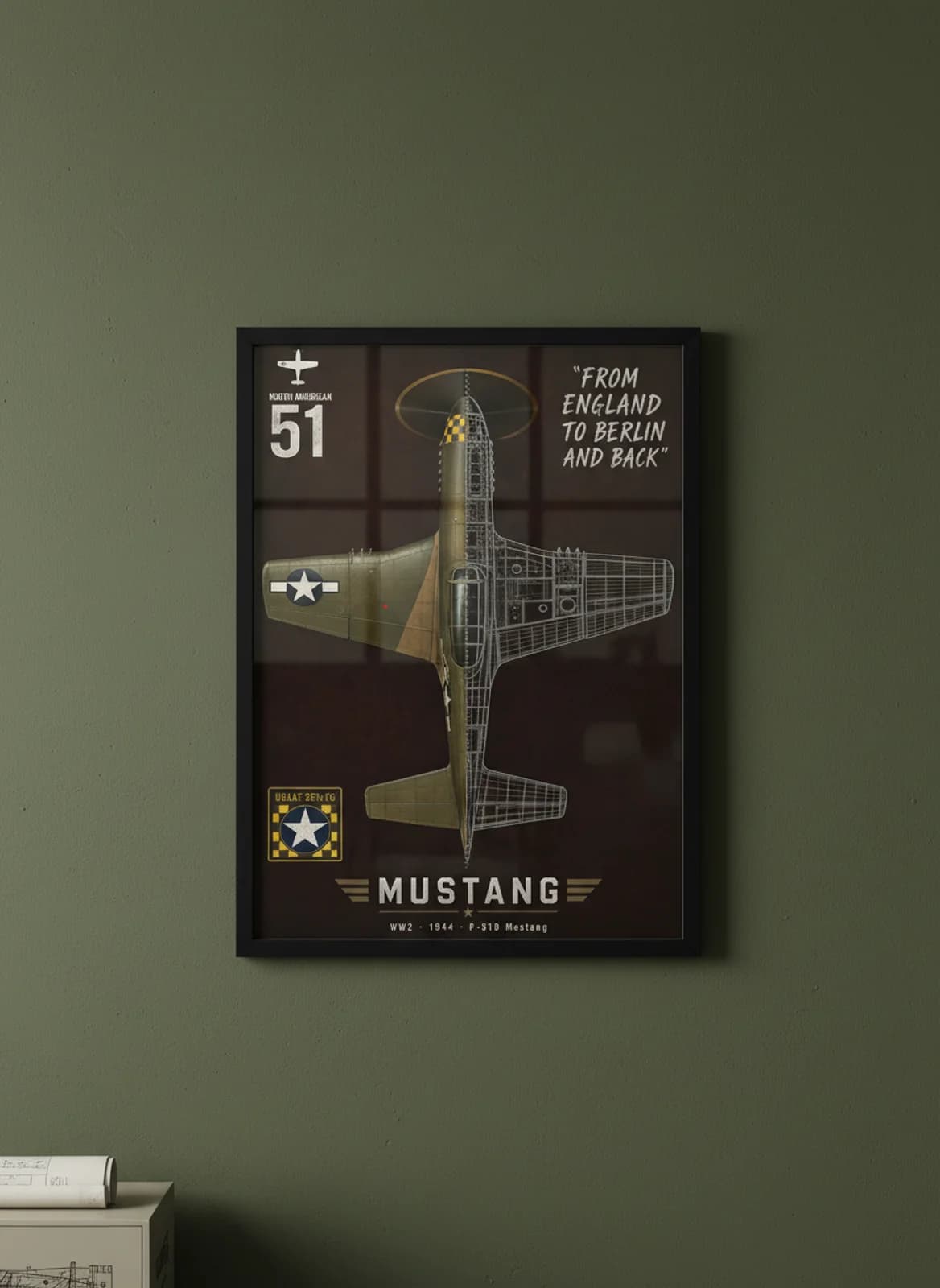
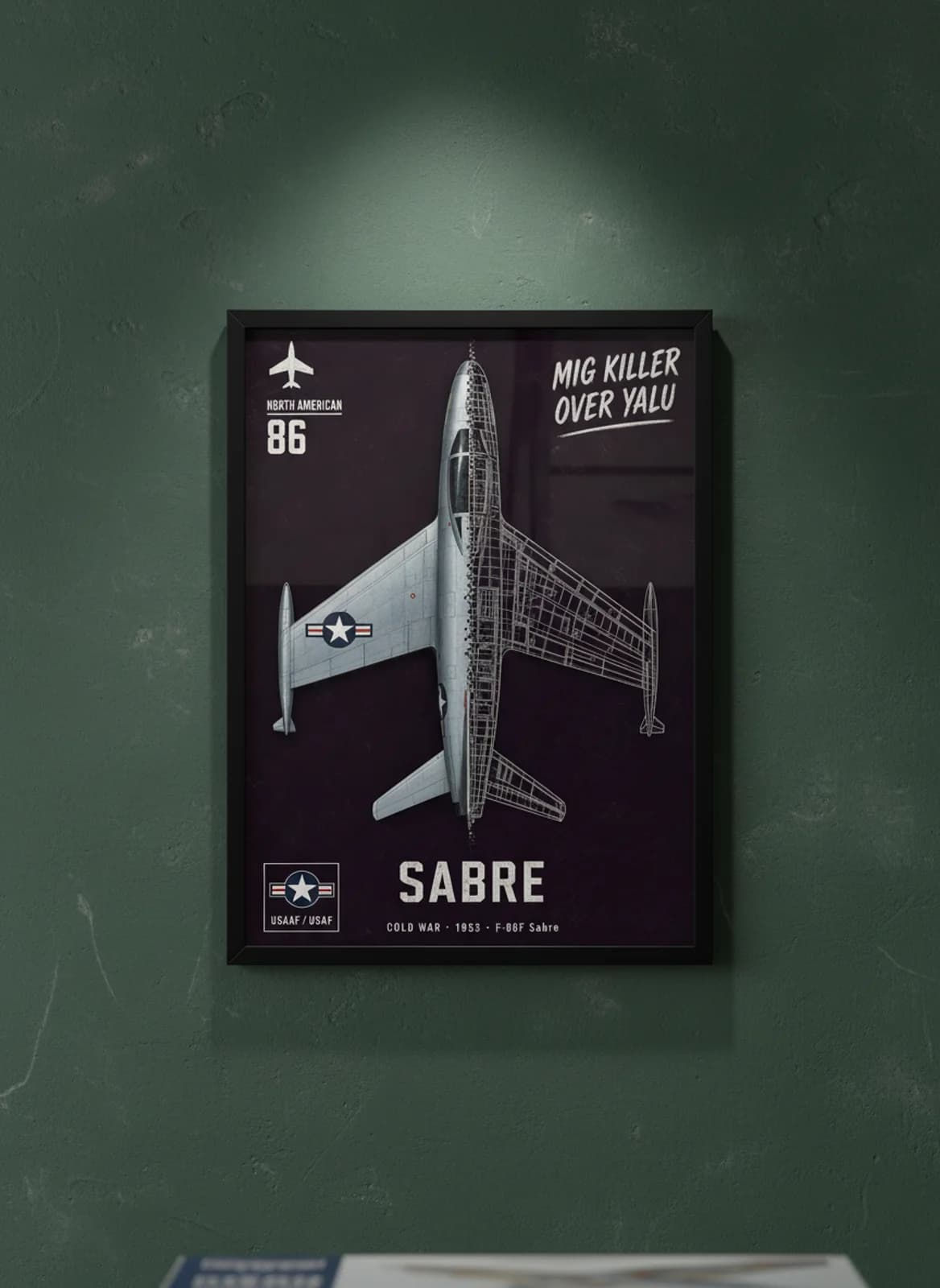
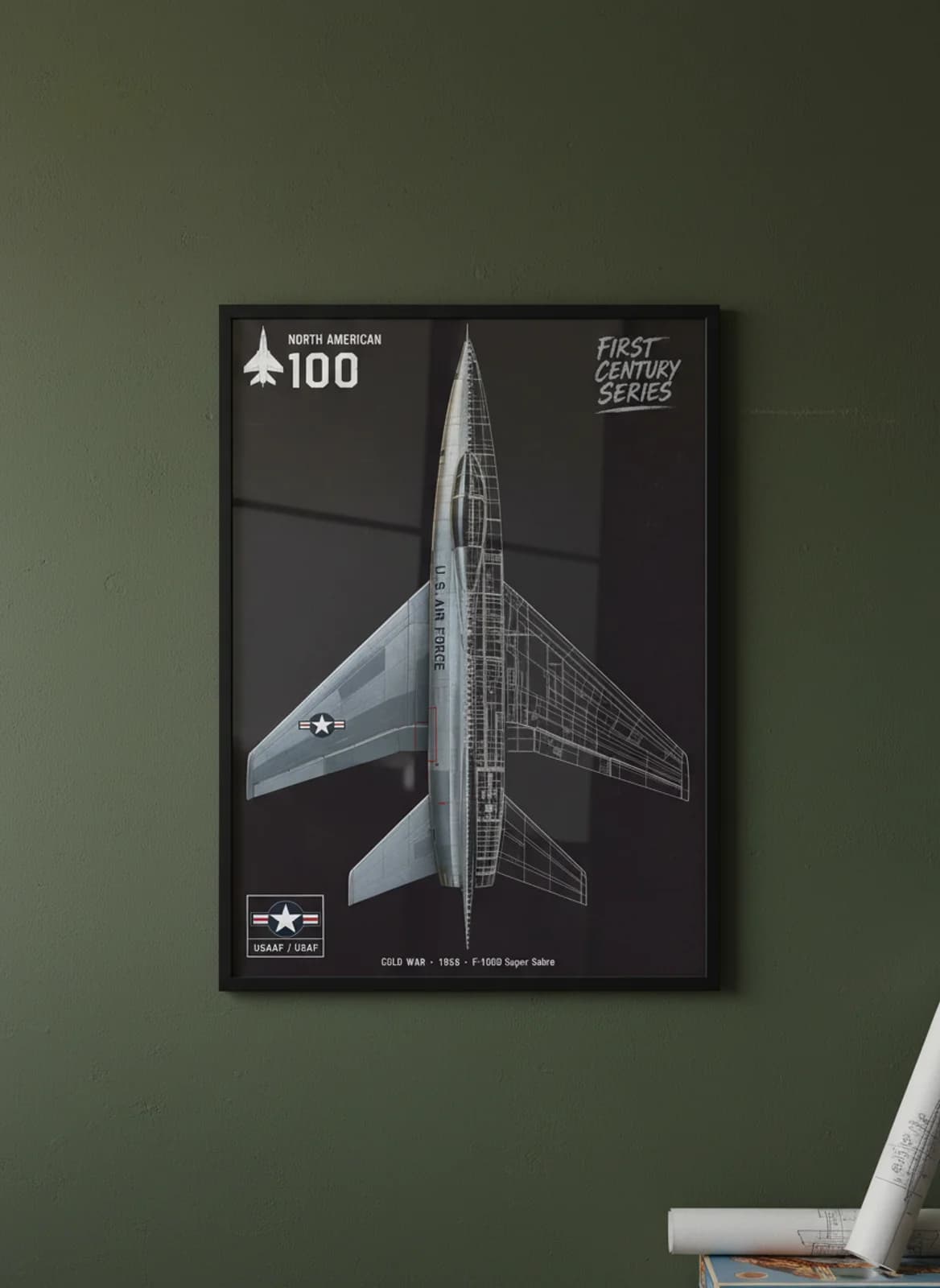
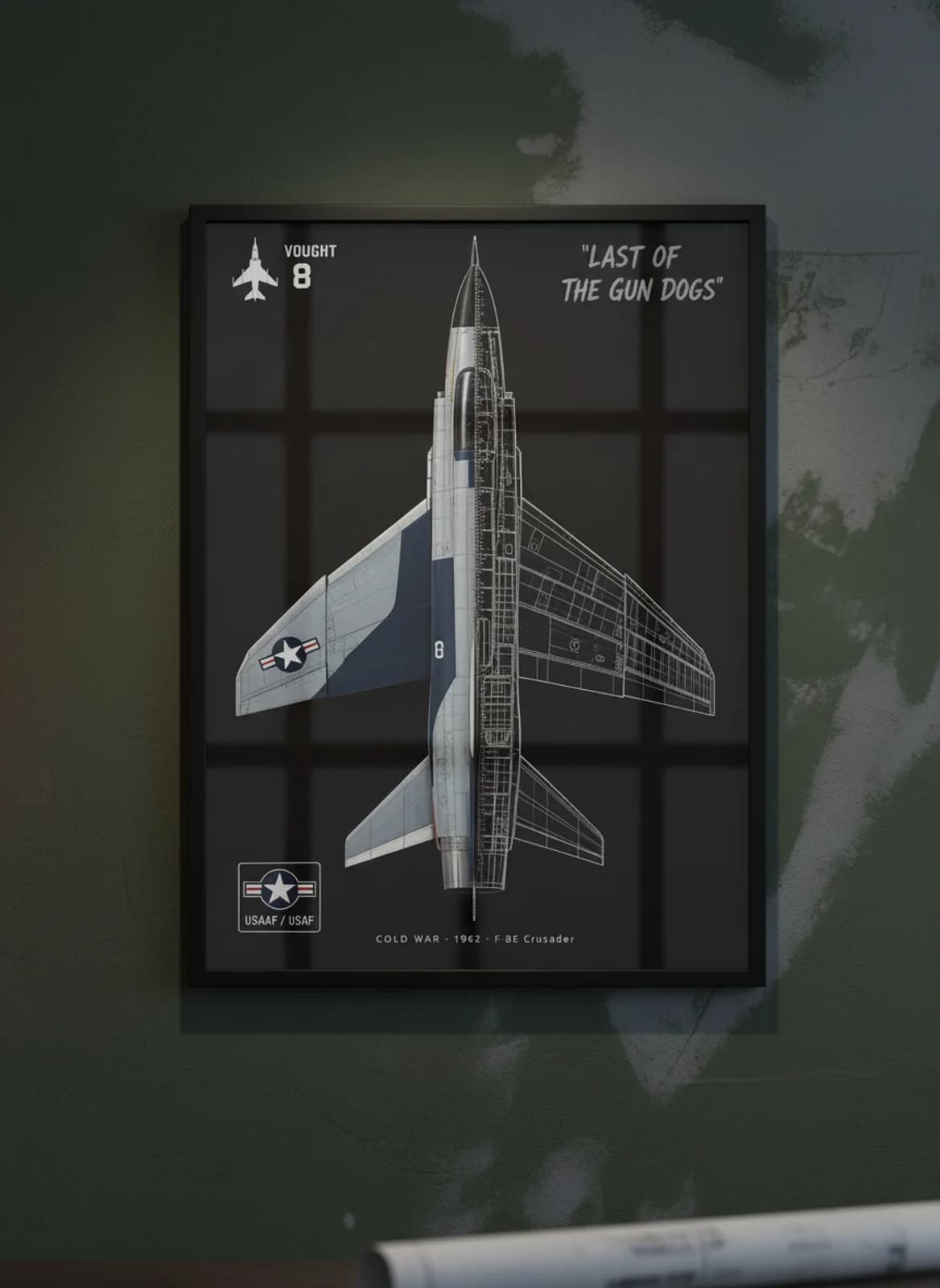
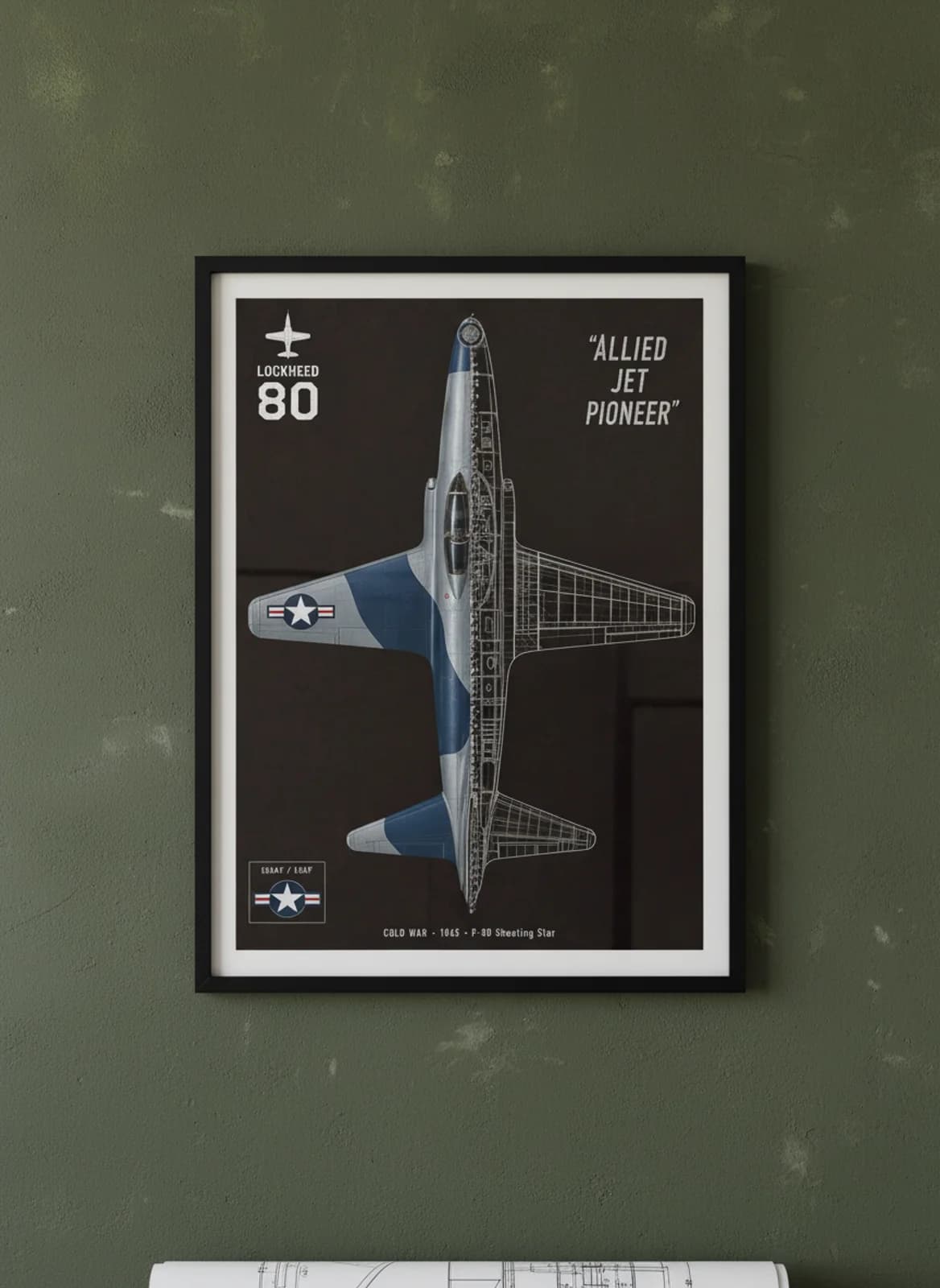
Star And Bar Blue — 5 museum-grade prints in this palette. The P-80 Shooting Star proved that American industry could design and mass-produce jet fighters without relying on captured German research alone — a Skunk Works achievement that accelerated every subsequent Lockheed program from the F-104 to the F-117. Though it arrived too late for World War II combat, the Shooting Star's Korea service as the F-80C and its T-33 trainer derivative trained a generation of jet pilots on both sides of the Iron Curtain. The P-51 Mustang's combination of range, speed, and agility allowed USAAF daylight bombers to reach Berlin and back with fighter cover — a capability that accelerated Luftwaffe fuel and pilot attrition in 1944. The 357th Fighter Group, referenced on the plate insignia, produced some of the Eighth Air Force's highest-scoring aces flying Mustangs from England. The F-100 Super Sabre bridged the Korean War Sabre era and the Vietnam War Century Series fleet — a single-seat fighter whose afterburning J57 made Mach 1 routine for Tactical Air Command pilots who had watched F-86s flirt with the sound barrier only a few years earlier. Thunderbirds silver schemes and NATO deployments made the Super Sabre silhouette as recognizable in Europe as the F-86 had been over Korea.