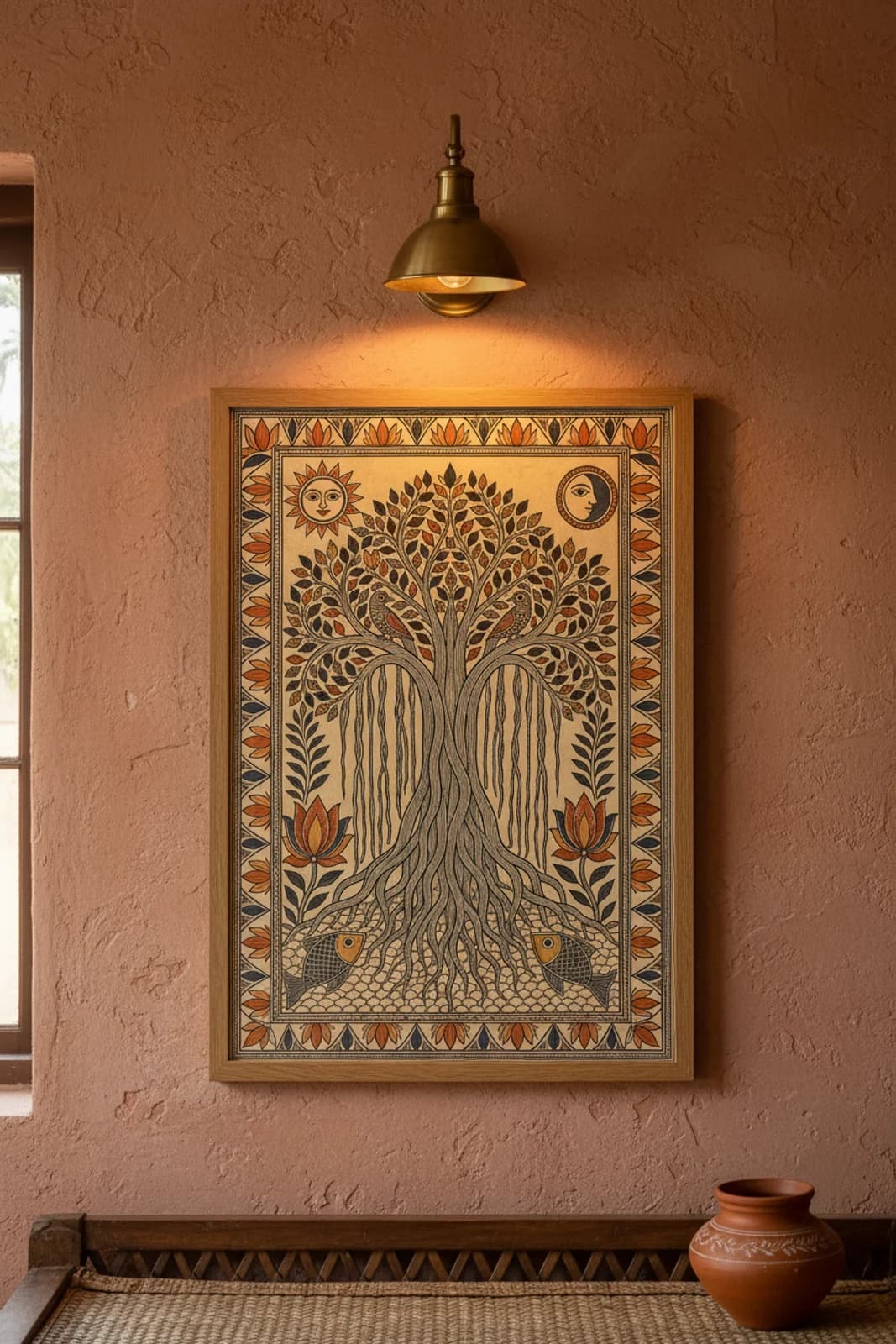
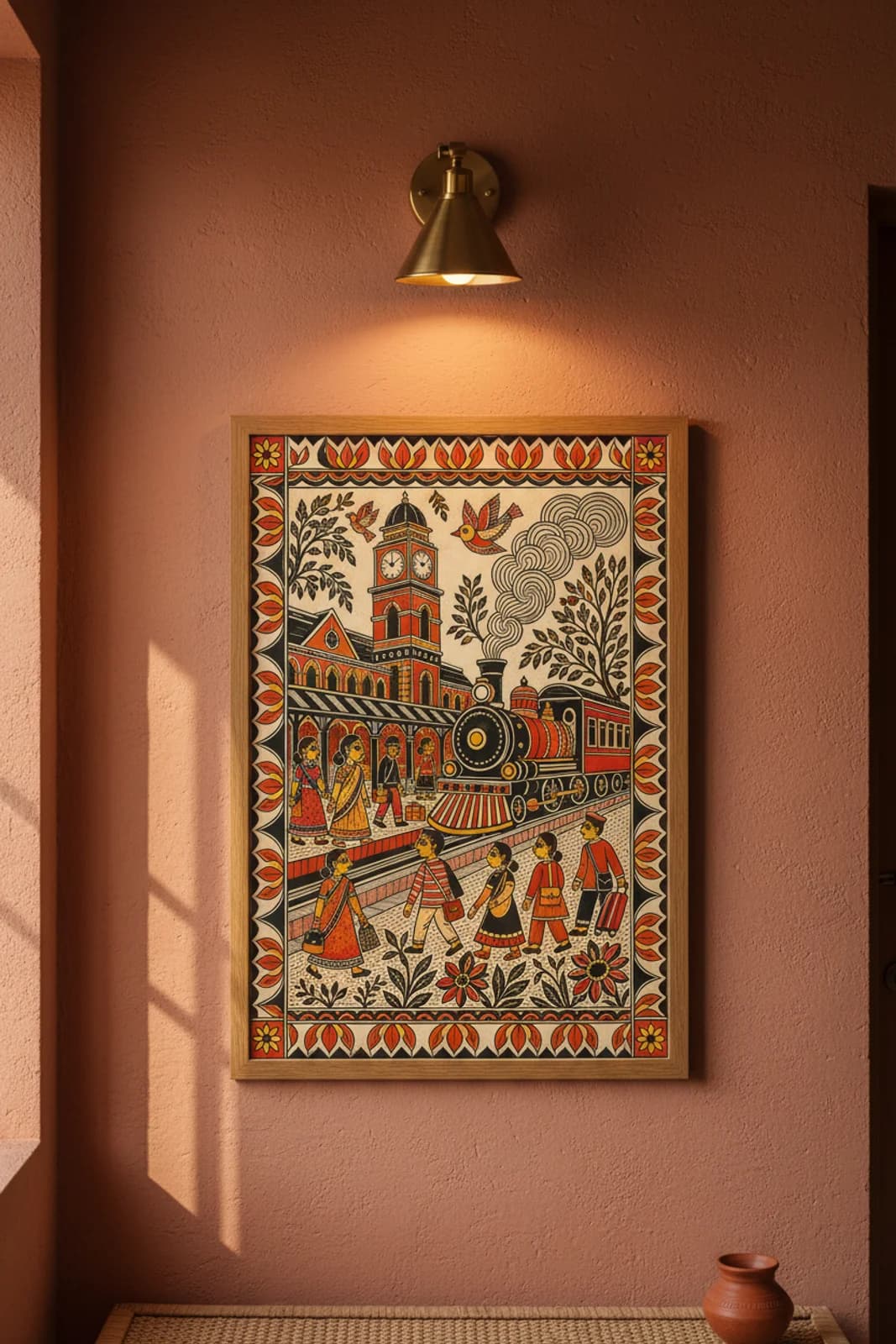
Ochre Turmeric — 2 museum-grade prints in this palette. Madhubani painting — also called Mithila or bhitti chitra — developed among Maithil women who originally rendered ritual imagery on freshly plastered mud walls in the Mithila region of Bihar and adjoining Nepal. The banyan (Ficus benghalensis, vata vriksha) appears in folk panels as a village shade tree and as a tree-of-life analogue related to kalpavriksha iconography in kohbar wedding-chamber schemes, where lotus ponds, bamboo, fish, and paired birds surround auspicious union symbols. Bharni — from the Hindi word for filling — is the Madhubani tradition associated with Brahmin women painters who flooded enclosed outlines with vibrant flat colour: vermillion, ochre, indigo, and lampblack on cream or cow-dung-washed grounds, distinct from Kayastha Kachni line-only panels and Dusadh Godna tattoo dot grammar. On classical walls Bharni rendered festival deities, wedding processions, and village harvest scenes; on paper it became the chromatic discipline of artists like Sita Devi after the 1960s famine-era transfer from mud-wall ritual to market craft.