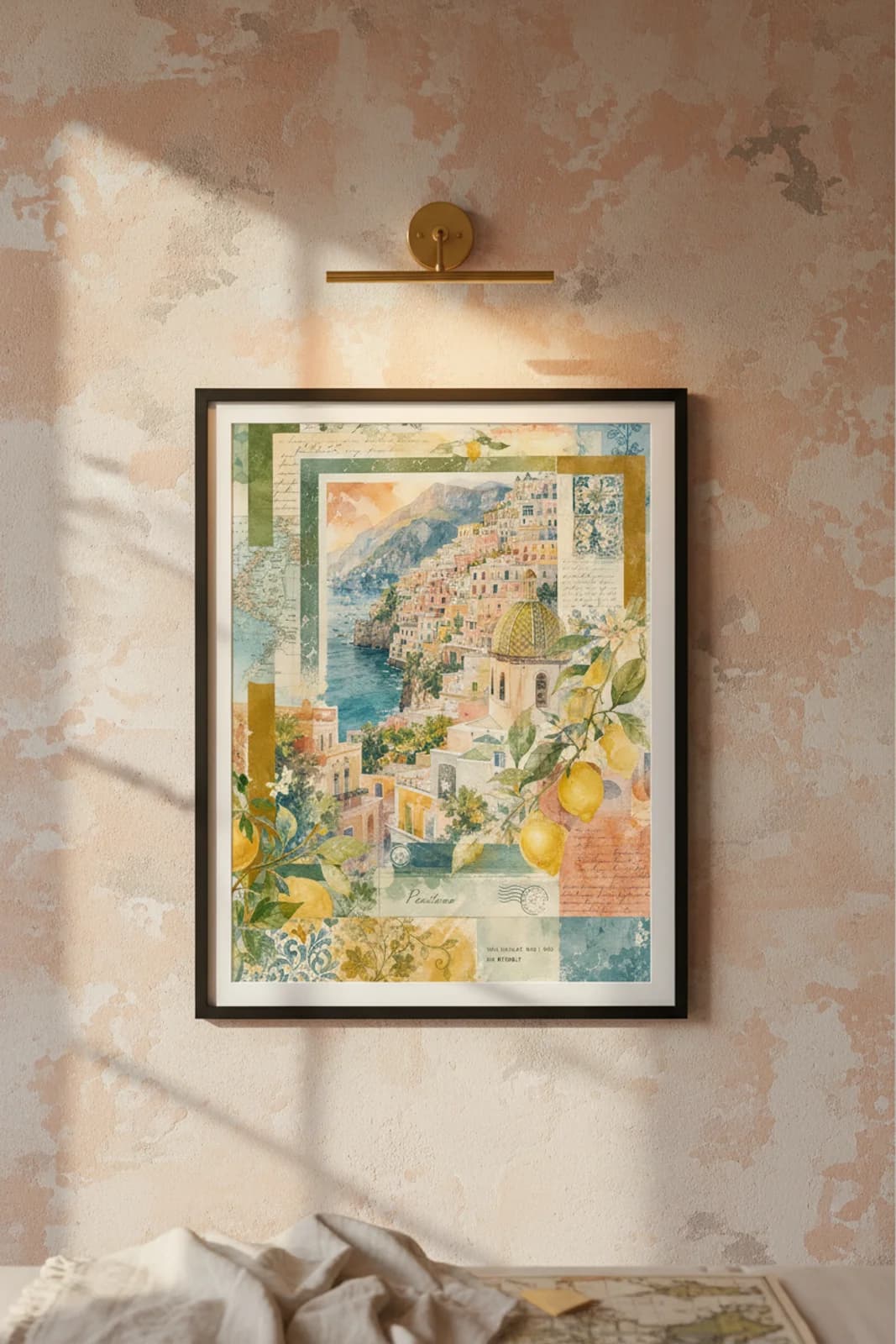
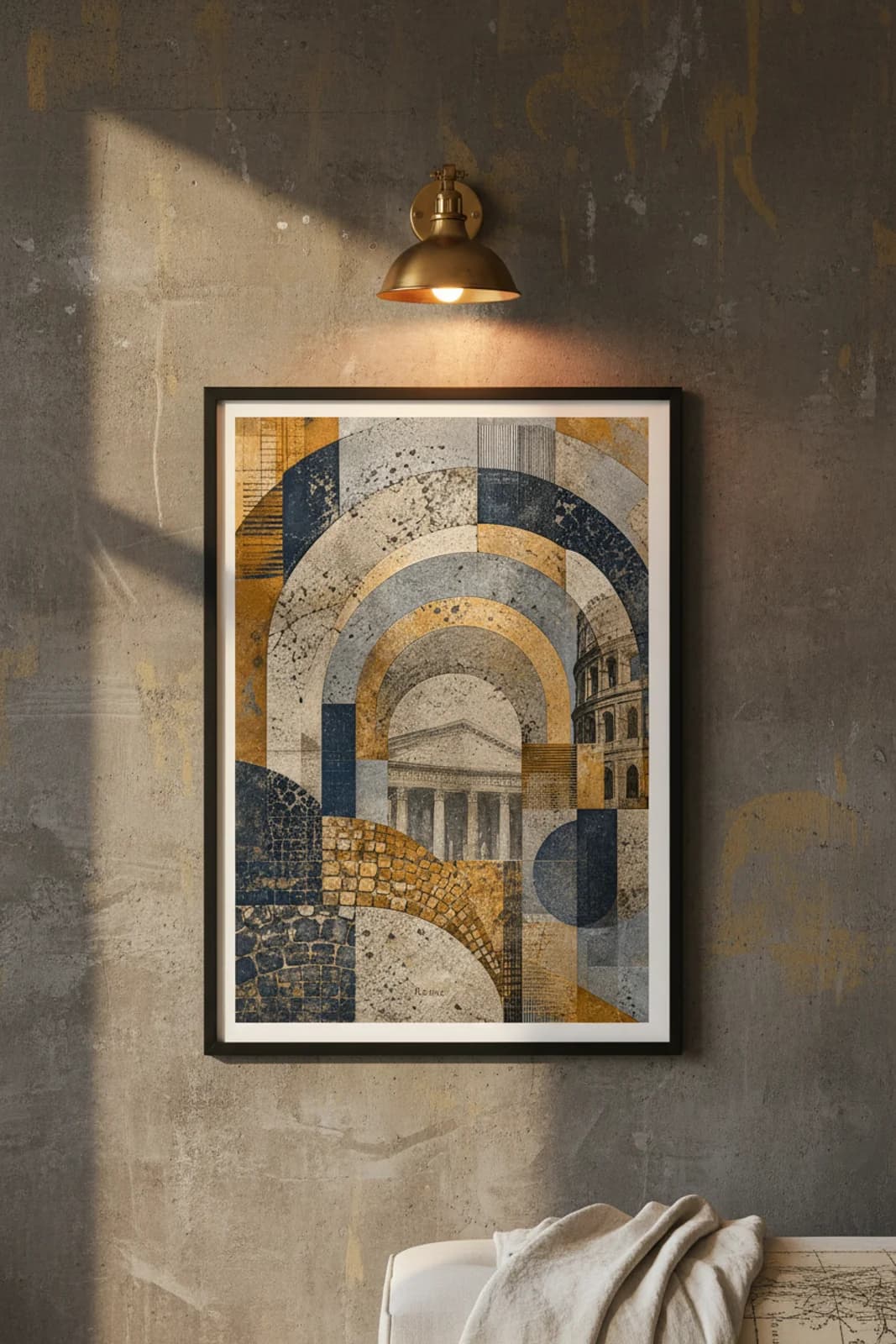
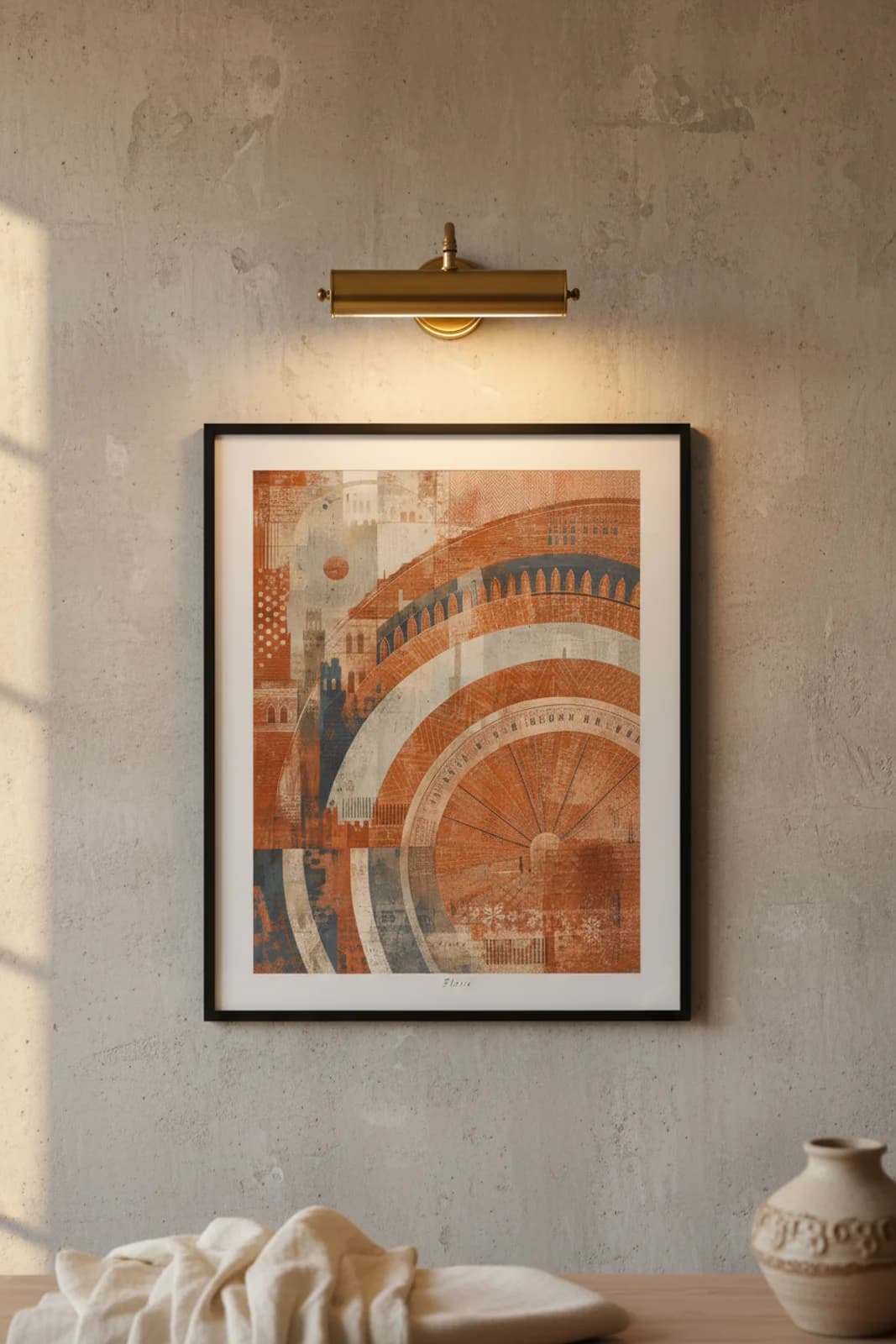
Italy Wall Art — 3 museum-grade prints on the theme. Siena's Piazza del Campo — divided into nine sections in memory of the Nine Lords who governed the city — remains one of Europe's most distinctive public squares and twice-yearly host to the Palio horse race. The Torre del Mangia, built beside the Palazzo Pubblico in the early fourteenth century, is among Tuscany's tallest medieval civic towers. Rome — the Eternal City — layers two millennia of public architecture into a single skyline vocabulary: the Colosseum, completed under the Flavian emperors, and the Pantheon, whose pediment still carries Agrippa's dedicatory inscription. The geometric treatment here references that masonry heritage — amphitheatre tiers, classical columns, cobbled centro storico — without naming a single piazza, a pragmatic choice when the art is mood-first rather than map-precise tourism. Positano grew from a quiet fishing village into one of the Amalfi Coast's most photographed destinations after John Steinbeck's 1953 Harper's Bazaar essay put the cliffside town on the international travel map. The Church of Santa Maria Assunta, with its Byzantine-inspired majolica dome, anchors the village skyline above the Spiaggia Grande — a pairing of sacred architecture and Tyrrhenian waterfront that defines how most travellers remember Campania's vertical coast.